I remember returning to Occidental after fall break my first year burdened with loads of bags, struggling up the hill leading to my dorm. After the comfort of being at home, the empty campus felt austere and lonely. Just as I was about to give up, a stranger I’d never met swooped in to help me. She effortlessly shouldered my bags and walked me the rest of the way, offering advice about college life.
This was just one instance of the generosity that I would soon learn defines the people at Occidental. In my first semester here, I was in awe of the culture of care that was cultivated by everyone around me. I found myself caught up in the liberal arts utopia where I felt safe to wander the neighborhood alone at night. I was welcomed into new spaces with open arms, and I could always count on someone to hold the door open for me.
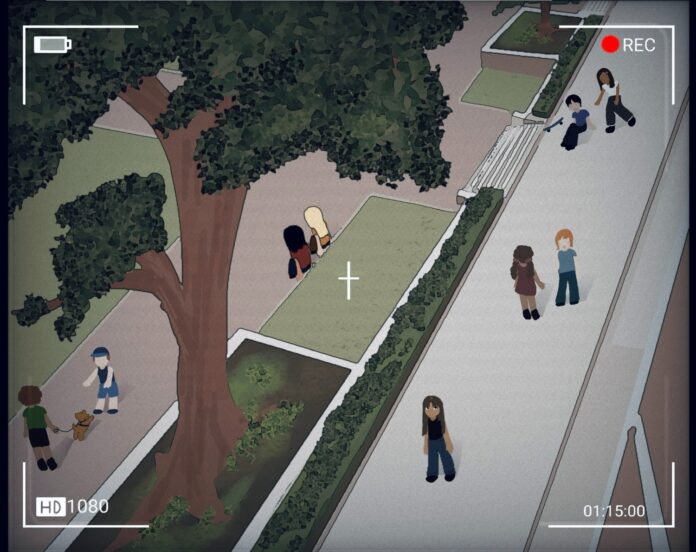
I can’t say when exactly I felt this culture of care begin to slip, as the signs were subtle at first. When I returned to campus this year as a junior, I was shocked at the number of new security cameras installed everywhere I looked. I haven’t gotten used to the doors of academic buildings being set to card-access only. I can’t ignore the fact that there is an increased police presence on campus, even when we have a 24-hour campus safety unit in place.
The culture of care at our school is being replaced. Technological and administrative decisions that are stated to be for our protection seem more like a steady increase in surveillance, even with confirmation that the cameras are not being continuously monitored. While security cameras can provide footage that may be used as evidence in the aftermath of an event, they can only stand by and watch passively. It is up to us as active members of our community to intervene in moments of insecurity and help one another.
As the threat of ICE raids, school shootings and sexual assaults on campus remain ever-present, our administration must resist the instinctive urge to implement policies that can only reduce harm, rather than preventing it entirely. What is missing from the new policies is the fundamental aspect of trust. Our school needs to recultivate the sense of mutual responsibility which held our community together before we developed a reliance on these external methods of security.
This trust has been deeply fractured by administrative decisions, from invasive film shoots on campus to the crackdown on student protests during college President Tom Stritikus’ inauguration. The values our school is supposed to uphold, namely a commitment to social justice, are being compromised.
How our school responds in moments of conflict speaks volumes about where our priorities lie, and we need to act not out of fear, but out of genuine concern and care for those around us.
In the instances where the administration fails us, we have a responsibility to look out for one another. At the peak of midterm season, a friend of mine baked cookies and handed them out to anyone and everyone. Amidst difficulties operating a campus shuttle for students with disabilities, there is a facilities worker who stays overtime to help drive people to their destinations. When the threat of immigration raids was high, professors invited vulnerable students to stay in their homes to ensure their safety.
Actions done in service of others carry a profound significance. It’s easy to look after the people in our inner circles who inhabit a large part of our lives, but a real community of care is one that is grounded in the kindness both of and to strangers.
I was on the quad the other day and saw someone trip and fall. She wasn’t badly hurt, but still began to cry. In a moment of hesitation, I thought it might be best to stay put. After all, nobody else made a move to help her. Then I remembered the person who had helped me with my bags in freshman year. The professor who walked me to my class when I was lost. The worker in the MP who made a meal for me before the kitchen officially opened so I could make it to rehearsal on time. All of the moments of grace that have been so generously offered to me would be wasted if I did not pass them forward.
So I helped her get back on her feet, dusted the leaves from her shirt and tried to offer some of the words I needed to hear when I first arrived here. What separates us from technology is the ability to act when we see another person struggling. We cannot expect to solve our problems through purely external means. There is an internal compass of compassion that we must cultivate if we want to repair the shattered sense of trust that only leads to loneliness.
Security cannot be reduced into surveillance. It is instead the commitment to acts of kindness that render us capable of recognizing the tremendous impact we can have on each other’s lives. At this critical juncture in the history of surveillance on college campuses, where other institutions may turn towards restrictive and punitive policies, Occidental should be an example of how to foster a community of genuine care.
Contact Athya Lodhia Paramesh at paramesh@oxy.edu