Students who participated in Occidental’s Campaign Semester program this fall have returned to campus after midterm elections to participate in a seminar and reflect on their experiences. Students chose campaigns in contested races, working in a program that no other college in the U.S. offers. Every campaign that students worked on emerged victorious during the midterm elections this fall, except for Mary Peltola’s bid for senate election in Alaska, which has yet to be called at the time of writing this article.
E.P. Clapp Distinguished Professor of Politics and Urban & Environmental Policy, Emeritus Peter Dreier said although he retired a year ago, his love for Campaign Semester keeps him at the college. Dreier said he worked with Professor and Politics Department Chair Regina Freer to found the program during two-year Occidental attendee President Barack Obama’s first presidential campaign in 2008. According to Dreier, the program allows students to grow in many different ways because they have to adapt to new situations.
“There’s no formula,” Dreier said. “Things change all the time. Every day there is a new crisis or something you have to deal with. They have to be flexible and resilient. It’s usually pretty intense, working 50 or 60 hours a week for 10 weeks […] They develop skills that will be useful for them for the rest of their lives.”
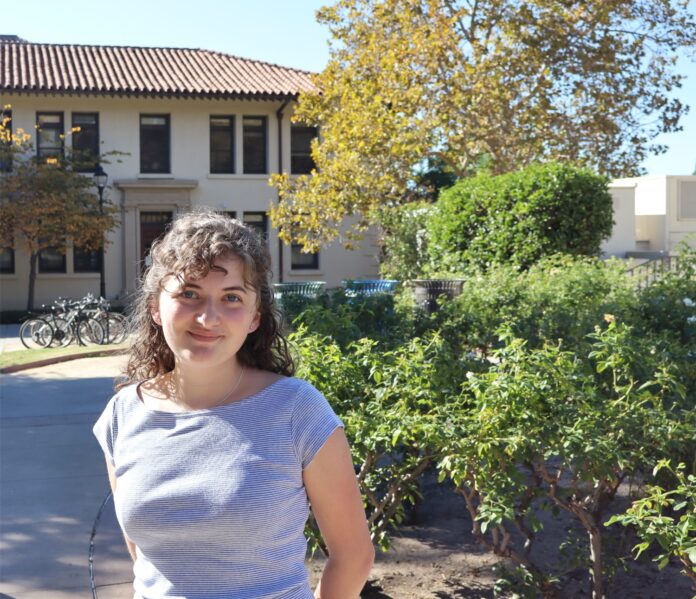
Molly Gerston (sophomore) worked in Ohio’s ninth congressional district for democratic candidate Marcy Kaptur, who was fighting for re-election against republican candidate Derek Merrin, whom she narrowly beat in 2024. Gerston said her daily schedule changed throughout the semester to cater to the needs of the campaign.
“Typically I would start around 10 a.m. or 10:30 a.m., and all of the field team would be door knocking,” Gerston said. “I would choose a packet, between 40 and 60 doors, out in a neighborhood and I would go door to door until around 4 p.m. I had to be back at the office for call time, which is when we started making phone calls to recruit volunteers. We would do that from about 4 to 8 p.m. and then the day would be over.”
Gerston said her campaign used a listening first script, in which door knocking volunteers were instructed to prioritize making residents feel heard.
“We were basing [the script] off of recent polls that show just about half of Americans don’t feel either party is listening to them,” Gerston said. “We approached all of our conversations on the doors just going up, introducing ourselves and then asking them how they felt about the state of the country and what issues they care about.”
Gerston said on other days, she would do more work in the office, rather than the field.
“Sometimes it was my job to stay at the office to lead the campus launches,” Gerston said. “I would train new volunteers how to knock doors, I would tell them about our script, and I would stay back and do reporting.”
Dreier said students also learn skills that are applicable to a variety of uses.
“They know how to organize people,” Dreier said. “It’s a very compelling thing, learning how to get other people mobilized. Quite a few of our students don’t go into Campaign Semester looking for a career, but they come out thinking, ‘This is something I could do.’”
Rosa Hochschild (senior) said she had not considered working on a political campaign before she participated in the program, but has since been led to more opportunities in the political field. Hochschild said during her Campaign Semester experience as a sophomore, she worked on a union campaign called Unite Here Local 11, as one of 2,500 canvassers, in 2024.
“It was so inspiring to work in campaigns alongside a labor union, and I was introduced to some politics that I had never been exposed to before,” Hochschild said.
Dreier said students expand their worldview by living in another state, away from the Occidental bubble.
“You can learn about politics in the classroom, you can learn about politics on the ground or you can learn about it both ways in this program,” Dreier said. “You have to be a good listener, and you can’t judge [people] right away; you have to be open-minded.”
Gerston said she was compelled to participate in the program in order to widen her perspective on U.S. politics, after previously only living in majorly democratic cities.
“I grew up in Seattle, and I go to school in Los Angeles, and those are two very, very liberal cities,” Gerston said. “I wanted to talk to people who I disagreed with, and I wanted to talk to people who lived in an area I’d never been before, and I was able to get all of that.”
According to Gerston, Campaign Semester gave her the perspective she sought out, connecting with Ohio residents through door knocking.
“I [ended] up talking to a lot of Republicans and […] I was surprised by how willing anyone, regardless of party, was to talk to me,” Gerston said. “It was really great because I was able to really connect with people on a lot of different topics, even if we disagreed politically.”
Gerston said the campaign knocked on around 94,000 doors by the time it was over, and that she believes it contributed to Kaptur’s win.
“I was having conversations with people on the doors where I would be there for 20 to 40 minutes, and by the end of it, I would have convinced a Republican to vote Democrat, or to vote for [Kaptur] at least.”
Gerston said it shocked her to see signs for opposing parties in neighbors’ yards while she was working in the ninth district.
“Being in Ohio, in a very mixed district, I really felt like it was a sort of microcosm of the American electorate as a whole, because I was talking to people from all across the political spectrum,” Gerston said.
Hochschild said Campaign Semester gave her a very well-rounded educational experience.
“[Campaign Semester] taught me so much more than just about politics,” Hochschild said. “Being forced to talk to that many different people [means] witnessing that many different lives, talking to people who believe completely different things from you [and] learning how to communicate and connect with people outside of your political opinions.”
Contact Lila Weiner at weinerl@oxy.edu