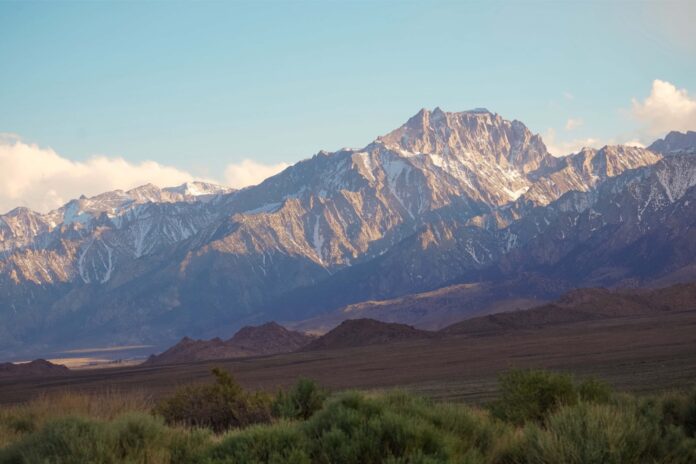
The sacred bloodstream of our natural land takes an unnatural path into LA’s desolate valley. Do you know where the drops from your faucet originate? Underground flows are an ecological source of life that feed the LA area, but our history of extraction runs deeper than the water does today.
Occidental College
Occidental College was founded in 1887 and established in the Eagle Rock area in 1898. Bevin Ashenmiller, professor of economics with a specialization in environmental economics, said water is often seen as a pollutant instead of as a resource, because it is classified through its waste.
“We don’t manage storm water as a resource,” Ashenmiller said. “When you have a large weather event, the water in the storm drains rises and makes it into the sewer, and then you end up having really bad pollution outcomes that go through waterways into the rivers and the ocean.”
Alison Linder, Occidental’s director of sustainability, said she works to collect and interpret Occidental’s greenhouse gas footprint data. According to Linder, those statistics are meant to inform Occidental’s climate action plan, which is nearing its final draft after a three-year process.
“It’s a little bit more holistic in its goals and action areas,” Linder said. “What are the main values that we want to highlight in the plan, what are some of the criteria we’ll use to determine our action items, with the public outreach and participation process going to be. Then, finally, drafting the plan.”
According to Ashenmiller, climate change is impacting natural resources. Ashenmiller said snow in the Sierras traditionally becomes a natural storage place for the water, which then melts toward LA.
“Climate change has impacted that system, and we need to rely more on rainfall than snowpack,” Ashenmiller said. “We’re not set up to do that because that isn’t how we have had to do it. That’s why there’s some propositions with lots of money to try to come up with ways to manage the water.”
According to Linder, Occidental’s plans for sustainability focus on the most cost-effective changes. However, recent laws have forced the college to rethink ground coverage regarding nonfunctional turf, pushing the campus in a new direction.
“I think one of the next phases for Oxy would be considering our ground cover and ways to be drought-tolerant,” Linder said. “Landscaping has a lot of benefits in terms of shade, wildlife provision, carbon sequestration and water storage.”
According to Ashenmiller, while it is important to look at the most cost-effective large-scale carbon footprint reductions, it is also essential to consider the potential of small-scale changes. Ashenmiller said that the more cities de-pave and manage storm water where it hits the ground, the cleaner water will be.
“There’s this big conflict with engineering [scholars] who just want to build one million dollar projects with bigger storm drains because now we have 100-year storms that are happening every ten years,” Ashenmiller said. “Instead of managing it like a pollutant, we could actually manage it like a resource, which would be better for us.
In 2023, Occidental College used 56,929,745.45 gallons of water, which is equal to about 285,000 gallons per student. The highest usage comes from residence halls and athletic fields and buildings. Ashenmiller said many United States water rights have been developed on the basis of the British riparian doctrine, connecting the right to use water with the ownership of land adjacent to a body of water.
“The way you want to think about it is that water is not market-priced,” Ashenmiller said. “So it screws everything up. It means that what the water savings people are doing isn’t going to be cost-effective for them, because it’s an underpriced resource. That comes from the fact that we have this historical British system of water rights that has been around forever.”
According to Linder, everybody on campus plays a role in water conservation and simple everyday changes can have a major impact on sustainability. Linder said the act of scheduling an annual check would greatly contribute toward ensuring sprinkler heads are pointed in the right direction and their timers are set properly.
“Not only are we all responsible, but we can all find something that connects our own passions and interests with ways to reduce or to eliminate the climate crisis,” Linder said.
Ashenmiller said there have been several small-scale projects at Occidental with the focus of making campus more environmentally conscious.
“There is a stormwater collection tank underneath Stearns, and it’s working,” Ashenmiller said. “It was put in a long time ago and then it went defunct and then some students worked over the summer to get it going again. […] [Students] also put together [a process in which] QR codes [are placed] around campus, so students could notify facilities of broken sprinklers.”
Linder said she was hired in 2022 faculty, board members, students and staff recommended the campus reopen the Office of Sustainability. Linder said another recommendation of that committee was the Second Nature Climate Commitment, which was signed by former college president Harry Elam in 2024.
“Water is a resource, and water is a resource for everybody,” Ashenmiller said. “The reality is we have what we have and we should be doing more with less, not less with more.”
Eagle Rock
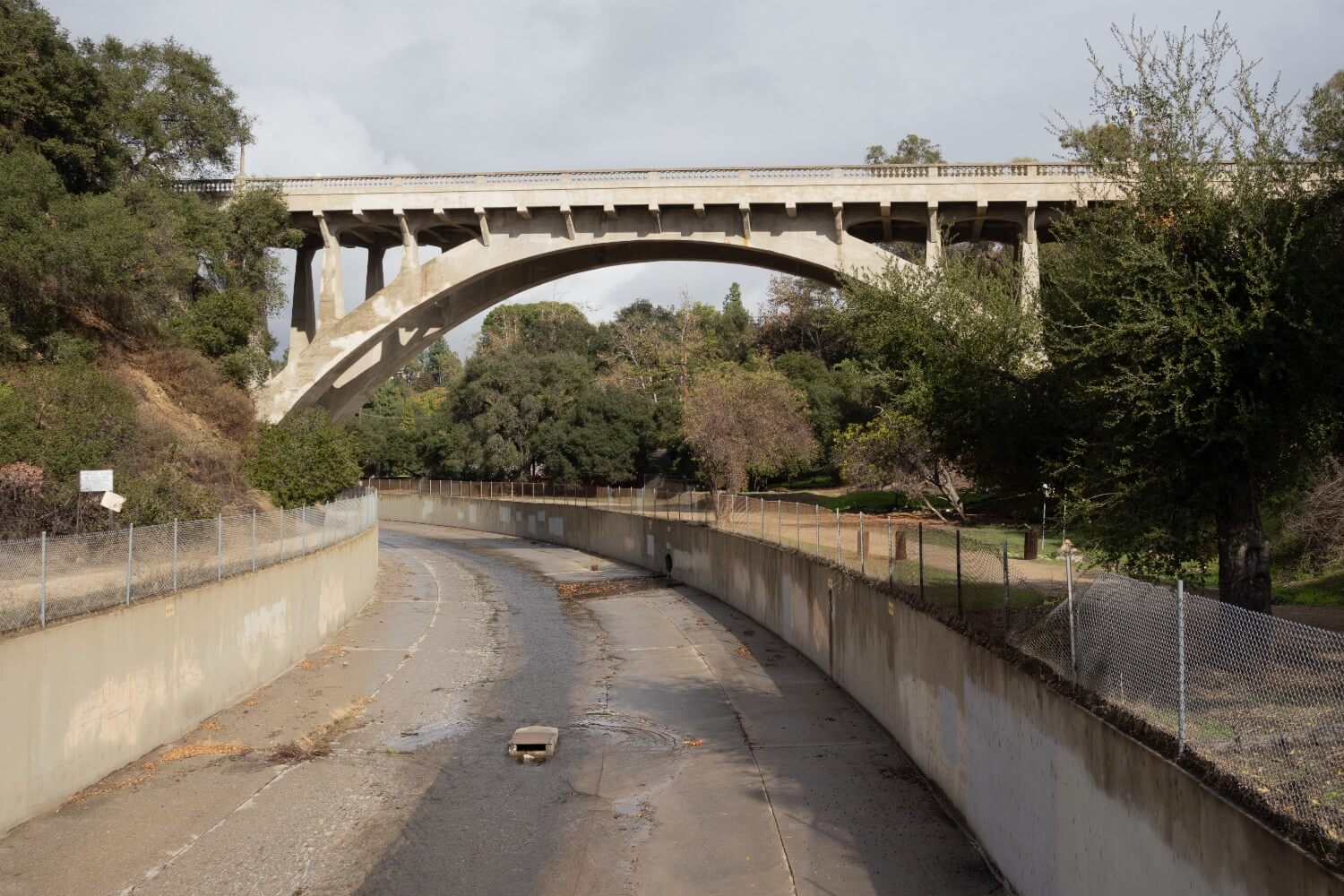
Eagle Rock flourished as a city in 1911. It has a long-standing history of pastoral agriculture and was first home to the Kizh nation. Artist and watershed planner Jane Tsong compiles the history of water in Eagle Rock area through maps, archives and oral histories.
“We have spent more than a century transforming the landscape,” Tsong said. “If you go back into these newspapers from 100 years ago, all people talk about is how there was this constant process of people trying to improve the city, but in that process they made every block the same. We ended up with this conception of urban space that is so generic.”
According to Tsong, underneath the concrete jungle lies the same geology that formed the springs and creeks of California’s natural history.
“No matter what neighborhood you live in, in LA there is a water history that’s specific to that place — there was a spirit of each place,” Tsong said. “The Indigenous people certainly knew that spirit. Going back and looking at the history of when people started coming here from Europe or the East, people treated the land as something to extract something from.”
Tsong said Eagle Rock has its own oral history dating back to the late 1800s, when settlers described the soil as very moist. According to Tsong, water coming down from the hills would keep the soil wet and farmers could raise crops in the flat land without irrigation.
“Eagle Rock is unique in LA because there is this aquifer underneath us,” Tsong said. “We want to replenish the groundwater in our aquifers so that we can have amazing native habitats. Let us plant things where the roots can tap into the low ground and create carbon sequestration and shade, like nature’s free air conditioning.”
According to Tsong, Sparkletts Water Delivery is the only company that is allowed to withdraw water from the Eagle Rock aquifer.
“We are in this time where we are looking back at the period of history where property rights determine who has the right to water,” Tsong said. “But we’re in this time of water scarcity, we are kind of looking back at this history saying, ‘That was a time where we were being so destructive, we would never do things like that.’”
Damon Atkins, author of the indigenous-centered California history “We Are the Land,” said history is often represented through maps, which can lie by omission, extraction and extrapolation. According to Atkins, those power dynamics are impactful because they are not often seen.
“[Maps] neutralize or naturalize power relationships and express them as under the sort of guise that maps are like photographs and photographs capture something real,” Atkins said. “[However], photographs don’t capture something that’s real , so maps don’t capture something that’s real. They just lie.”
Tsong said in popular maps, road symbols are yellow, green represents natural land and water is often shown with just a blue line, regardless of whether the river is channelized and concrete or a natural stream.
“When you go back to the maps from early on in Los Angeles history, the earliest maps in the 1700s and the 1800s, people were drawing the land as they saw it,” Tsong said. “There’s springs, wetlands, swamps, bogs, rivers, marshes, there’s so many words that we use, but when you look at the old maps, It’s like an artwork when people are describing water, there wasn’t just a blue line. I call that hypersensitivity.”
According to Tsong, LA has a stereotype of being a dry, desolate building-filled landscape, but in reality, the water underneath Eagle Rock is being cut off at its source.
“We are so cut off from our land and the natural processes [in LA],” Tsong said. “In Seattle people learn when rain falls, it soaks in the ground, and it moves underground and forms rivers, but people don’t understand that that happens in LA too.”
Tsong said they recently had to bike down the Rio de Los Angeles Park where there used to be a stream that would flow down the approximate path of Eagle Rock Boulevard, starting from Sparkletts, and it reminded them of the water that used to be there.
“Basically three miles from my house I only have to use 20 bike pedals to get there because that’s the flow of the water,” Tsong said. “Sometimes I go fast, sometimes I go slow. I imagine where I’m going really slow water pooled there, and when I go faster, it might have been a bit of a trickle.”
Indigenous histories of California
According to Atkins, the complex history of water in LA begins before anyone was discussing the formation of the current water distribution system. Atkins said LA’s aqueduct system sits on Indigenous lands with a storied history of Indigenous peoples, specifically the Yakut people who occupied the Central Valley and the Paiute who held the lands of the Owens Valley.
“By the 1870s, 1880s, most native communities throughout the coastal and northern valley region had been deeply decimated,” Atkins said. “Up until the Gold Rush, there [were] thousands of Yakuts spread across villages and organized into some complex politics.”
Atkins said the general narrative of the aqueducts in LA is centered around William Mulholland’s engineering creativity and his recognition that LA would not be a city without acquiring water. However, according to Atkins, Mulholland carried out a series of underhanded dealings, which are now praised for providing a vital resource but critiqued for his exploitation of the natural land.
“The LA Department of Water (LADWP) took the water from the settlers, so you have a sort of a stacked, colonial history in which people saw themselves as fighting for justice proclaiming that [LADWP] were making their water, their land unusable by taking water, [which they said] is an injustice,” Atkins said. “We’re going to fight for justice on land we stole from native people.”
According to Charlene Buff, water empowerment organizer for Friends of the Inyo, California holds a long history of Indigenous land stewardship which is often forgotten in the history of the aqueducts.
“No matter how many times you try to remove the people from this valley, whether they’re Indigenous or even just the early settler families, they always come back,” Buff said. “[California] isn’t just a place where people lived temporarily, it’s somewhere an entire culture lived for thousands of years prior to even first contact. There was and is no other home to go to.”
According to Buff, fellow water protector Jeremiah Joseph describes the water in LA as being incarcerated.
“All of the aqueducts, the valves and pumps have a number — it’s very much like our legal system and our criminal justice system,” Buff said. “So water’s not really free in California. I don’t mean monetarily — it’s not free to just move about when it wants to. It’s always being controlled.”
Buff said the history of LA’s water reflects Indigenous peoples’ histories. According to Buff, much of the early knowledge many current water protectors have comes from oral histories passed down by families and storytellers.
“We really have to look back at history and look at the data and say, ‘We already know that these things actually happen and that this is proven, it’s not like this isn’t just hearsay,’” Buff said. “We have to take that and do better: if we know that the Indigenous voice has been quieted in so many of these conversations, we need to be amplifiers, we’ve got to be storytellers and knowledge sharers.”
According to Atkins, Mulholland disregarded all parties who had a claim to the land, both Native and settler. Atkins said Mulholland’s pride at the time in the engineering marvel of the water system does not speak to how he is now discussed throughout LA’s history.
“LA exists on an engineering of hubris,” Atkins said. “When [LA’s aqueduct system] doesn’t work, its failure is nothing other than a critique of the whole system. A deeper channel, a better flood control plan, is not the answer. That’s just the way you put the hubris back in place.”
According to Buff, there is still a level of control exercised by the LADWP that affects the land itself. Buff said her own tribe, the Lone Pine Paiute-Shoshone, does not have water access as there are no natural creeks flowing through the reservation. Thus, the tribe depends on the controlled supply of water. The Owens Valley Indian Water Commission (OVIWC) is a grassroots organization formed for the purpose of negotiating tribal water rights with LADWP.
“The relationship between the Indigenous peoples and LADWP didn’t used to be very good,” Buff said. “LADWP made all the decisions and we just fell in line. Over time we’ve become a little more equal at the table. We’ve got a lot more Indigenous staff on our water commission, there’s a lot more of our Indigenous voice there.”
LADWP management
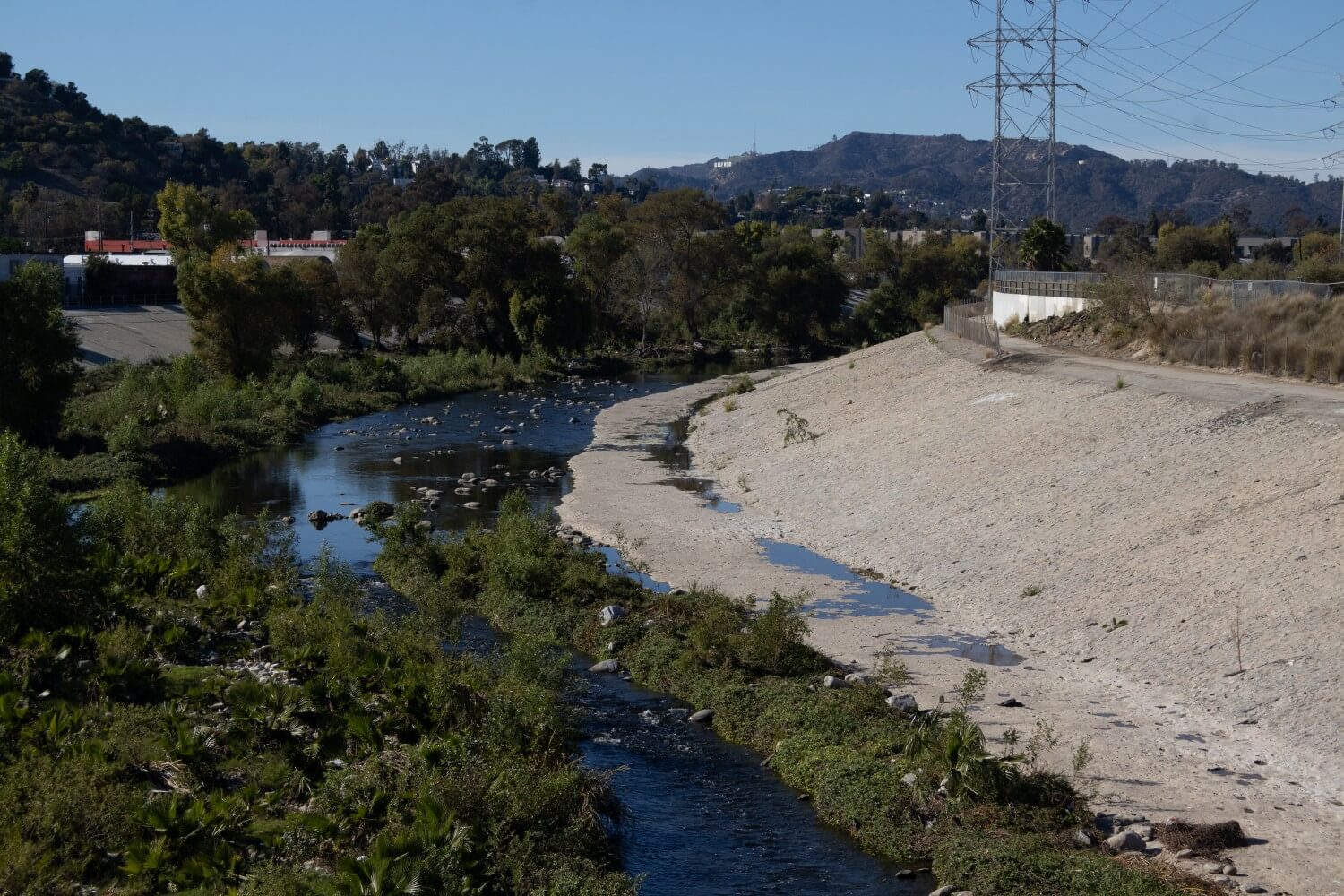
Interim LA Aqueduct manager Eric Tillemans said he grew up in the Eastern Sierra before moving to Glendale, where he has been working for LADWP for the last 31 years. According to Tillemans, LADWP’s approach today is very different from the early aqueduct era: LADWP has spent decades implementing environmental mitigation projects in the Eastern Sierra, including habitat restoration and dust-control efforts, and the department’s current approach emphasizes balancing water supply reliability with environmental stewardship and local commitments.
Tillemans said roughly 70 percent of the water associated with LADWP’s Eastern Sierra water rights remains in the area to support environmental and local needs, while the remaining portion contributes to LA’s water supply. According to Tillemans, LA relies on a diversified water portfolio that includes the LA Aqueduct, imported water supplies delivered through Metropolitan Water District systems (both Colorado River and California State Water Project), local groundwater, recycled water and stormwater capture.
“It’s important you know your waters that are close by, and you know where the waters that you put into your body are coming from,” Buff said. “I always encourage people to come to the valley. Explore it, see it in its real land.”
According to Buff, the original caretakers of the land were major irrigators, not controlling the land for their own sake, but helping to keep it nourished.
“[A sustainable future] is when LADWP comes into some kind of collaboration with the tribes on not just water stewardship, but land stewardship,” Buff said. “From the extraction of water, we have all these side effects like vegetation changes and invasive species that are just tearing through these droughted parcels and spreading everywhere.”
Tillemans said certain water delivery obligations in the Owens Valley are governed by longstanding agreements and land-exchange provisions. Under those agreements, qualifying tribal lands are entitled to receive specified water deliveries, generally described as up to four acre-feet of water per acre of eligible land. LADWP works with tribal representatives regarding the timing and administration of those deliveries in accordance with applicable agreements.
According to Atkins, recognizing the fact that the United States is a settler state and that its legacy continues to harm people in the present is essential to understanding the modern world. Atkins said progress can be made by people pivoting toward a focus on settler harm reduction, thinking of settler colonialism as a hazardous toxic substance.
“We can work to reduce that toxicity through efforts like ensuring we’re supporting Native and Indigenous claims to sovereignty […] land back movements or more control over land, tenure systems and management,” Atkins said. “Even just at the level of recognizing if we’re not doing that, we are spewing more of this toxic material into the environment.”
Tillemans said LADWP maintains ongoing communication with tribes in the Owens Valley and regularly engages with tribal representatives to understand their priorities and discuss issues related to land, water delivery and resource management within the framework of existing agreements.
According to Buff, while LADWP has been more focused on Indigenous voices of the past and present, there is also room to learn from original Indigenous caretaking practices and implement them on a smaller level.
“We need to have some kind of collaboration between the tribes and LADWP where we can go out and we can take care of our land,” Buff said. “[LADWP’s] solution is often drastic. If we say there’s a field over here and it has some pepper weed, then they want to bulldoze the entire field when where we’re like, ‘Wait, we could probably get people out there on the land to handpick it.’”
Buff said tribes in what is now LA were connected not just to the water but to the land. Buff said their food and medicine came from plants that cannot grow without water.
“Our connection to [water] really does carve out our path through life,” Buff said. “I truly believe that people who aren’t connected to the water in their home space, whether that’s where they grew up or where they live — if you’re not connecting to the water, it’s almost like you’re becoming stagnant. Water really has power: it can recharge you, it nourishes our bodies. We are water.”
According to Tillemans, during dry years LADWP must continue meeting environmental and regulatory obligations in the Eastern Sierra. Water available for export through the LA Aqueduct can be reduced depending on hydrologic conditions, placing greater reliance on other parts of the city’s water supply portfolio.
Tillemans said when drought conditions require conservation measures, many residents adopt water-saving habits that continue even after restrictions are lifted. Those lasting conservation practices have helped LA reduce its overall water usage over time, but restricting water flow nonetheless puts pressure on the other sources from which LA acquires its water.
According to Tillemans, LA today uses roughly 30 percent less water than it did decades ago despite serving a larger population due to long-term conservation efforts. Tillemans said students should continue to practice water conservation and recognize the role such efforts play in the region’s water reliability.
Buff said people often look at the valley unfairly, seeing it as a desolate desert and urban landscape. According to Buff, the story begins with recognizing how each small use of water comes from an unseen process which can be difficult to understand.
“People get very comfortable in their normal routine each day and they don’t really think about things in the actual moment,” Buff said. “When you turn on your faucet, you don’t think about where that water came from. You don’t think about the mountains and streams that came all the way down the hill, hit the aqueduct and took that water all the way here.”
From the past to the future
Water is a driving force behind life. The roots of our land feed off the rain, and the mountain’s snow melt drains into the valleys below.
LA occupies the territory originally cared for by the Tongva, Tataviam, Serrano, Kizh and Chumash Peoples. I pay respect to the elders who came before us and the people working to continue their wisdom.
According to Linder, change starts small with everyday practices.
“No one has to be a martyr,” Linder said. “I heard this quote, which I really liked: ‘A lot of people doing things a little bit better is better than a few people doing things perfectly.’”
Tsong said understanding natural land is the basis for change, which is essential in the urban environment of LA.
“I would encourage — if people feel helpless, which is so easy — to get to know your own neighborhood and our local land,” Tsong said. “The land here is different from the land across the river; it has its own story.”
Contact Cole Banks at cbanks@oxy.edu