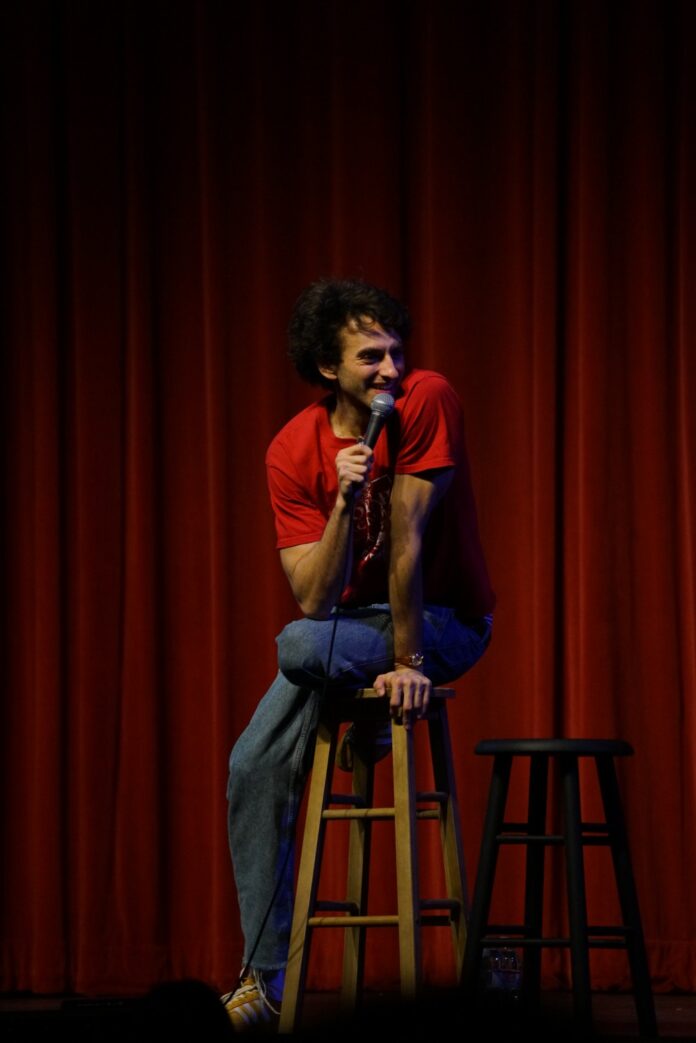
Stand-up comedian Gianmarco Soresi has built a national following over the past few years with sets that range from family dysfunction to politics and post-grad job anxiety. Ahead of his debut Netflix special next month, the New York-based comic has been touring clubs and universities across the country.
Soresi stopped at Occidental College Nov. 11, performing a show in Thorne Hall alongside comedian Katherine Blanford and Occidental student Avery Dauer (senior). The show was a part of Student Leadership, Involvement, and Community Engagement’s (SLICE) fall comedy event, “Laugh Your Class Off.”
According to Steve Eulenberg, assistant director for student involvement and concert production, Soresi’s name had appeared consistently in student feedback forms over the past three years, prompting Eulenberg to secure him for a performance during a November break in his fall tour.
“Trying to find someone who has enough heat and is coming up, but is still in a bookable range and still open to doing college shows, is a very narrow window,” Eulenberg said. “Gianmarco falls into that window right now.”
Eulenberg said bringing touring comedians to Thorne Hall saves students the $60 to $80 cost of a Los Angeles comedy club outing while offering rare, effortless access to live entertainment right on campus.
“When you get older, you don’t have every opportunity to walk down the road from your room and see this world-class performer,” Eulenberg said. “So do it while you can; if nothing else, you’ll get a really amazing night of entertainment.”
According to Soresi, performing in a college auditorium requires immediately gauging the demographic mix of the audience to ensure his set does not focus on adult milestones like weddings or family planning, which undergraduates may not relate to.
“The second I go out there […] I find out what the mix is,” Soresi said. “Are there adults from outside that are coming in? Are there faculty, are there seniors, are there grads?”
Soresi said his current set taps into shared anxieties by focusing on artificial intelligence and the uncertain job market awaiting graduating seniors.
“I’m most worried about college kids because they’re paying this top-dollar tuition studying for jobs that might not exist by the time they graduate,” Soresi said.
Soresi said his theatrical, high-energy delivery stems from his background as a musical theater major at the University of Miami, where hitting a wall in his singing career pushed him to merge dramatic movement with joke writing and delivery.
“Once I figured out joke writing, there was a marriage between, ‘Oh, now I feel like I have the jokes, and suddenly I can use this seemingly useless degree,’” Soresi said. “I can reappropriate those skills for stand-up to make the jokes feel alive.”
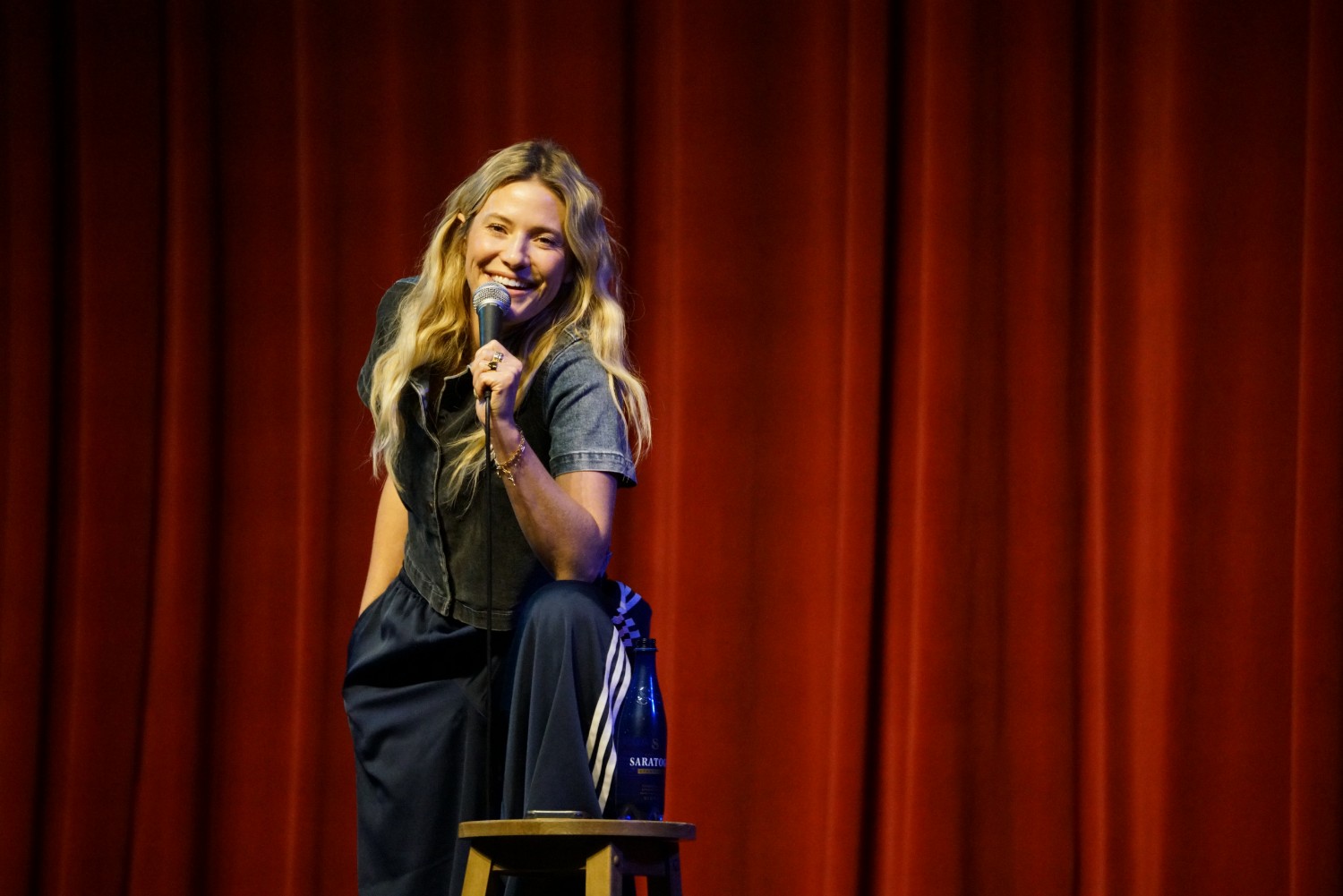
According to Soresi, performing for politically aligned liberal arts students is less about preaching to the choir and more about finding and crossing whatever boundary surprises a specific room.
“No matter what the room I’m in, whether it’s a hoity-toity thing where I can’t curse at all, or it’s a group of artsy kids, I’m trying to find the thing that makes [them] go, ‘Oh, my God,’” Soresi said. “What can I give them that they can’t get when they’re with their peers or with their teachers or in their classrooms?”
According to Sydney Mitsunaga-Whitten, professor of Comparative Studies in Literature and Culture, stand-up comedy traces its lineage to ancient Greek old comedy, which mocked leaders and rigid social norms to keep the public space open and equal.
“Comedy has to exist in order to attack those who would try to overwhelm that space or dominate it,” Mitsunaga-Whitten said. “Comedy is always going to push back on that idea that human beings can be put into neat little boxes and dismissed.”
Mitsunaga-Whitten said live comedy fosters a vital sense of community by leveling social hierarchies without relying on the destructive impulse of pure satire — an effect Eulenberg said he sees firsthand in Thorne Hall when students, faculty and staff sit side by side laughing together.
“We need to level the playing field a little bit, but without destroying anyone,” Mitsunaga-Whitten said. “So you learn, by studying comedy, that there is a fundamental human instinct towards the communal.”
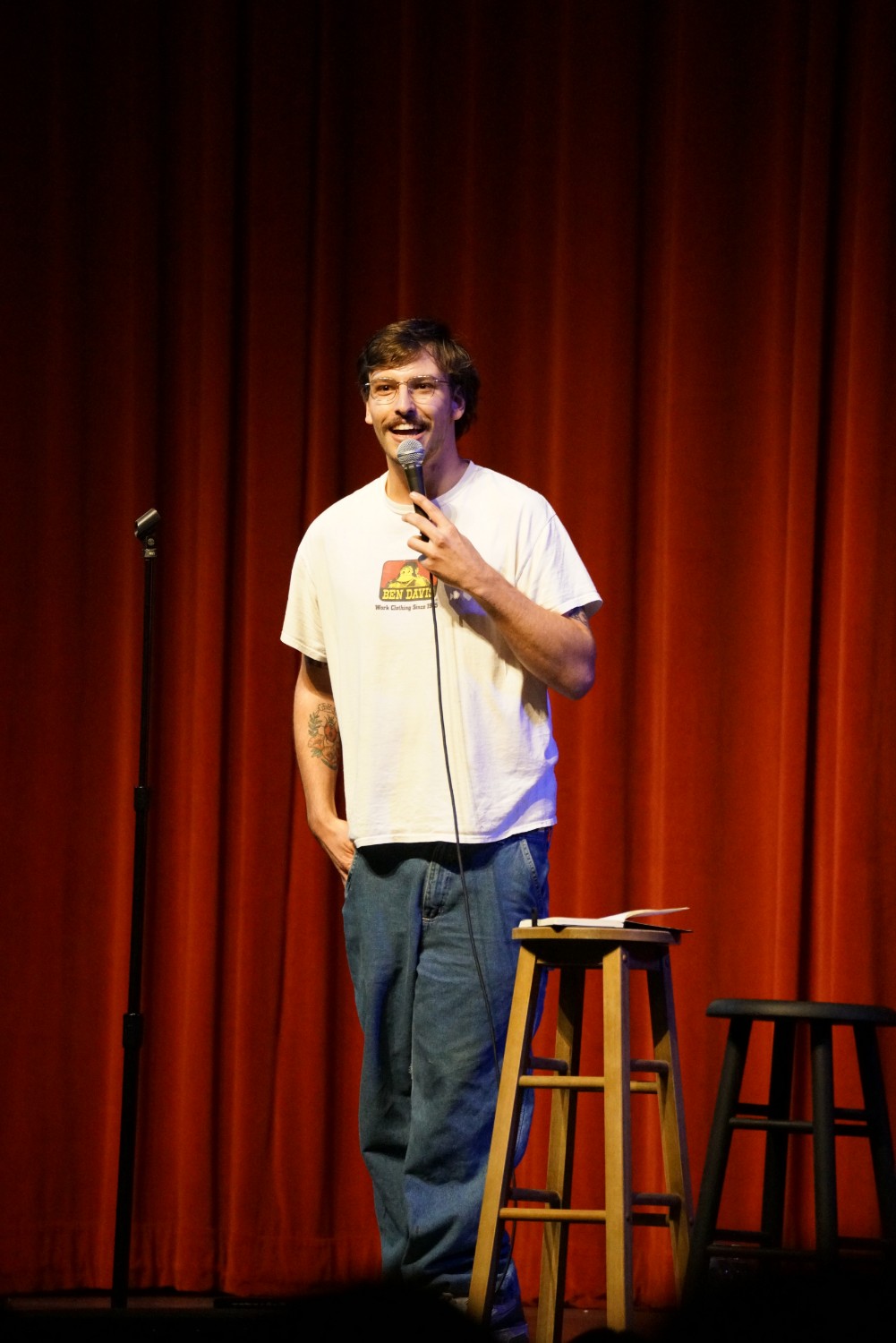
According to Soresi, the biggest hurdle for young comedians entering the post-grad entertainment world is finding a supportive space where they can test new material and develop their voice.
“If you want to be a live performer, you have to be somewhere, maybe it could be LA, but you got to fight for it,” Soresi said. “Your goal is to find a place where you can keep fine tuning […] find a place that you can fight to [hone] your craft.”
Contact Mira Wirk at wirk@oxy.edu