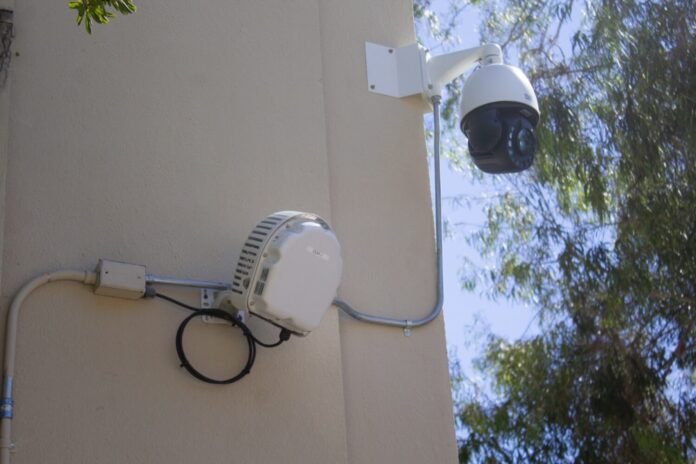
Vice President for Information Technology and Chief Information Officer James Uhrich said in an email statement he sent to the college March 16 that the school would be upgrading to the old wireless network and security camera infrastructure. This email was cosigned by Vice President for Student Affairs and Dean of Students Vivian Santiago.
“Over the next several weeks, we will oversee projects at Bell Young, E. Norris, Haines and around the Quad to repair and upgrade existing security camera systems, install new cameras and install outdoor wireless access points,” Uhrich said via email.
Director of Campus Safety Stacy Spell said the security cameras are from a company called Digital Watchdog Spectrum, and that Occidental has been using the same company’s cameras for the last ten years. Spell said the college uses various types of cameras, including bullet cameras, Pan Tilt Zoom (PTZ) Cameras, Fisheye Cameras and Vandal Dome Cameras. Spell said different cameras are placed in different parts of campus depending on their capabilities.
“Vandal Dome cameras may be at a location where they can be potentially vandalized, [while] PTZ cameras may be placed where there is a longer amount of distance to cover,” Spell said via email. “[Cameras] are set up based upon needs.”
According to the Digital Watchdog website, the Fisheye camera has “near-total darkness technology” that allows for “crisp, clear images in the absence of ambient light.” One type of PTZ camera has “deep learning analytics” and “detects and tracks objects intelligently across up to 40 customizable zones,” according to the website.
According to Spell, the new cameras have 4K resolution and are therefore better than the old analog cameras around Occidental.
“The digital cameras are capable of using AI features such as firearms/weapons detection, facial recognition and geofencing,” Spell said via email.
Spell said the AI features come at an extra cost, and the college does not use them, primarily out of respect for the privacy of the students and community.
According to Uhrich, two places on campus where cameras were set up for the first time Spring 2026 were Haines Hall and Norris Hall. Uhrich said in some places, they replaced cameras that were very old or not working properly.
“What’s worse than not having cameras is having a broken camera,” Uhrich said. “If you have cameras that aren’t working, you create an expectation that there [are] some sort of safety parameters or safety environment.”

According to Uhrich, the college does multiple assessment tests considering visibility and operational needs to determine which type of cameras are necessary for different types of locations.
Spell said senior leadership, ITS, Campus Safety and the Campus Safety Advisory Committee share their collective input on the assessments.
Uhrich said the security assessment also helps determine which areas on campus are high priority. According to Uhrich, one area of high priority is the quad, where high visibility is necessary, and other high-priority areas are building entrances.
Uhrich said the cameras are not continuously monitored, but Campus Safety views them retroactively, after an incident has occurred and been reported.
“They can look at live images, but that’s not a practice that we have in place,” Uhrich said. “In almost all cases, [viewing footage] is done retroactively after something has occurred that would bring [Campus Safety] to the point where they’re doing some sort of investigation.”
Uhrich said one case in which Campus Safety would track a live feed would be during an emergency or life-threatening situation.
In a Sept. 24 town hall meeting open to all students, President Stritikus said the inefficiency of security footage was an issue in the Brown University mass shooting that occurred Dec. 13, 2025.
Alexandra Fulcher is Occidental’s Assistant Vice President, Civil Rights and Title IX Coordinator. Fulcher said when investigating reports that have happened on Occidental’s campus, she sometimes needs to ask for camera footage.
“There have been times in my time here where we’ve been conducting an investigation, and I’ve asked for footage, and I’ve been told either we don’t have cameras in that location or the cameras were broken and there’s no footage,” Fulcher said. “I think [having cameras] is a good thing, especially as it relates to my job and being able to respond to things.”
Fulcher said in 2013, there was a case of sexual harassment at Vanderbilt University which the college was able to respond to quickly because of the presence of cameras.
“There was video footage of [the victim] being carried into the residence hall by members of the football team, and because there were cameras at the entrance of that building, the players were identified and prosecuted,” Fulcher said.
Spell said camera footage is stored via the Digital Watchdog Service with no external drive.
“There are administrators who have access to footage, and it is stored for 90 days,” Spell said.
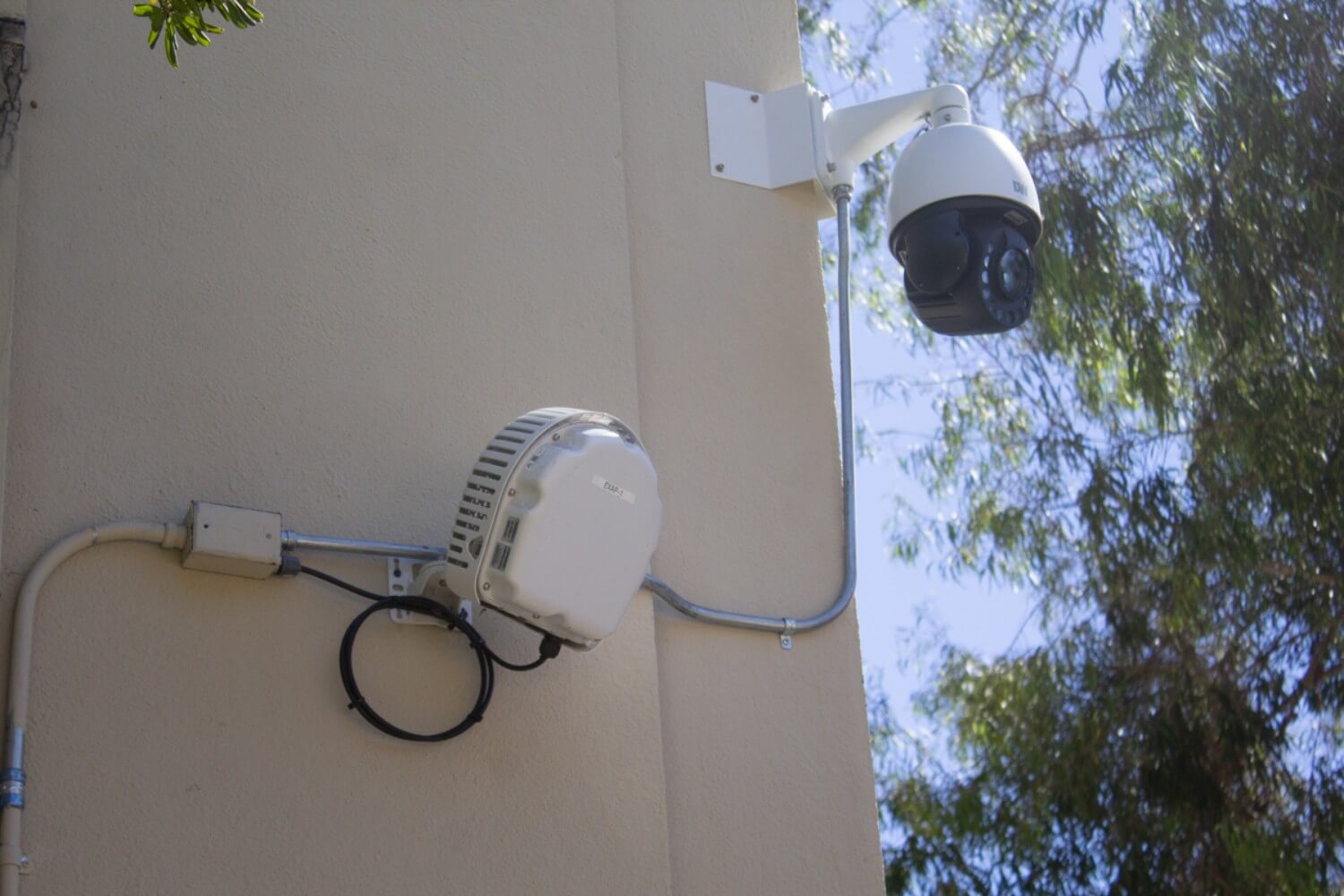
Uhrich said the camera upgrades are part of an overall goal of continuously keeping the campus safe, and not in response to any specific event. According to Uhrich, other safety changes the college has implemented as a part of this goal are shelter-in-place locks and requiring key card access to academic buildings.
“We have a responsibility to think about the overall health, safety and well-being of the entire community,” Uhrich said. “Having cameras in specific locations to be able to look at footage retroactively or be able to help support our campus safety department in things that they’re required to do, while at the same time being responsive to incidents that do occur on campus — those are the key drivers for why we should upgrade [our cameras].”
Contact Francine Ghazarian at ghazarian@oxy.edu