
Occidental College welcomed a new class of first year students Aug. 17. Behind the scenes of orientation, student leaders and the Student Leadership, Involvement, and Community Engagement (SLICE) office undertake the responsibilities of embracing the first year class.
Sabrina Ruesch-Willison, Orientation & Student Development and Senior Associate Director, helps manage orientation student leaders and the overall orientation process. According to Ruesch-Willison, her work begins at the beginning of the year, when she reaches out to other organizations on campus involved with orientation.
“I start meeting with campus stakeholders between February and March to begin planning for the upcoming fall orientation,” Ruesch-Willison said. “From there, I meet individually with departments to plan the various sessions, activities, and late-night events.”
According to Ruesch-Willison, the Orientation Program Coordinators’ (OPCs’) responsibilities include running events and serving as the main point of contact for new students.
“Orientation Program Coordinators plan late-night events, such as craft or board game nights, with various departments to create additional touch points for high-impact resources,” Ruesch-Willison said. “Simply to give incoming students something fun to help them meet new people.”
Ruesch-Willison said one of her biggest worries when it comes to orientation is the weather, because so much planning happens with the notion that skies will be clear.
“We made adjustments to do more physical rotations in the mornings to avoid it, but unfortunately in August there’s not much I can do to keep us out of the sun,” Ruesch-Willison said. “The Academic Resource Fair, FYS Meet and Greet, and First Year Individual Advising are too big to host indoors and unfortunately have to be outside.”
According to Ruesch-Willison, orientation is always in the process of change. Over the several years she has been working for SLICE, Ruesch-Willison said she has pushed for orientation to be more active and engaging.
“When I started here in Fall 2022, we were transitioning back from the pandemic and Orientation was held all day for four days in Thorne Auditorium.” Ruesch-Willison said. “We’ve been able to move out of Thorne into three smaller rotations.”
Ruesch-Willison said she is always trying to find ways through which orientation can grow and evolve. She hopes to build community inside and outside of the orientation groups while also teaching people about the ways they can find support at Occidental.
“I’m always striving to build a bigger and better program,” Ruesch-Willison said. “My consistent goal is to have students meet a peer that’s outside of their FYS or O-team group and residence hall, learn about a resource that will help them academically and know at least one student support resource to connect with if they need help during the year.”
Ruesch-Willison said she is grateful to welcome new students into a new period of their lives.
“I really love my job, working with the Orientation Team, planning with the Orientation Program Coordinators all year,” Ruesch-Willison said. “I just really enjoy helping students find community and develop a sense of belonging.”
Orientation Program Coordinators
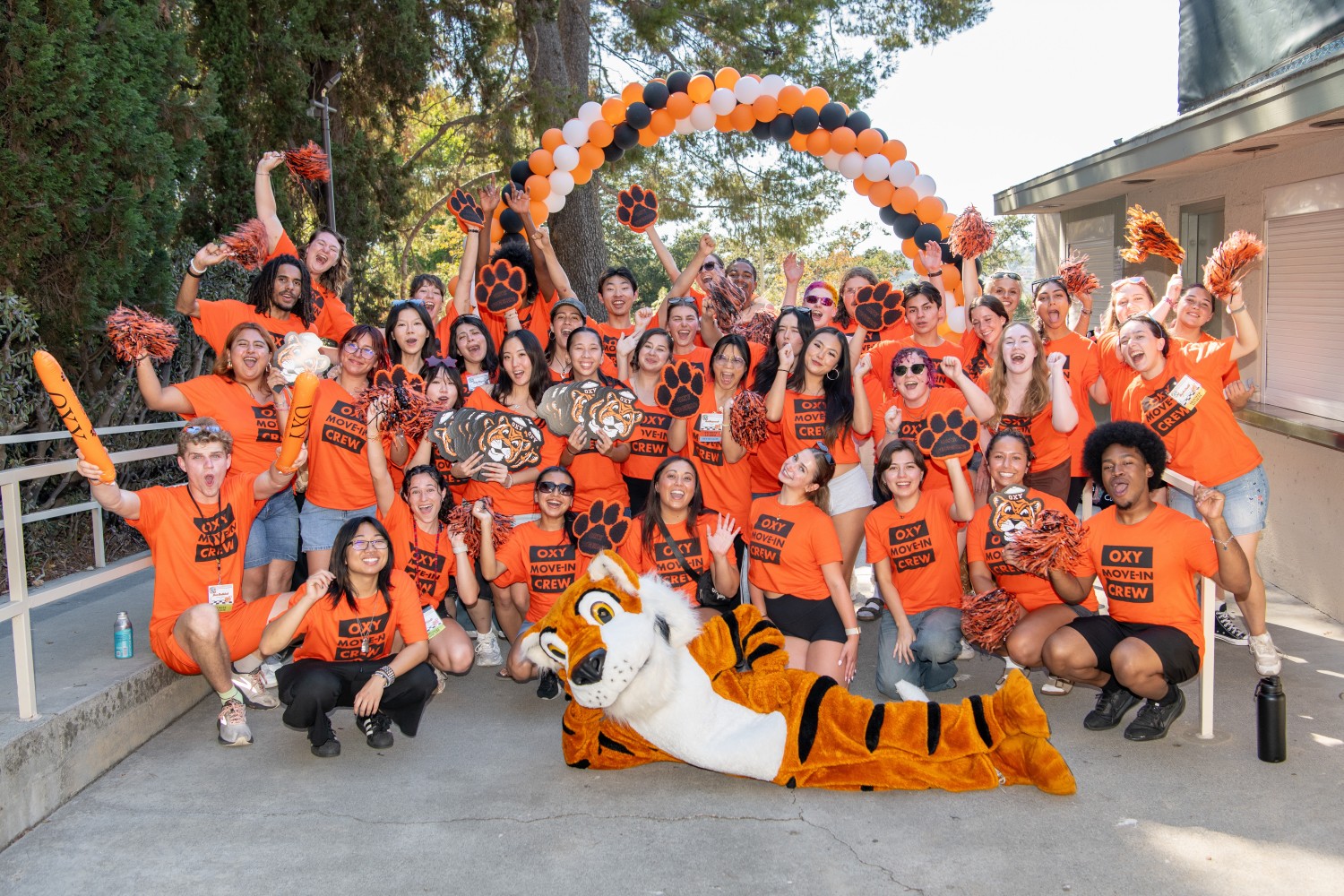
Malakai Strong (senior) was one of the four Orientation Program Coordinators (OPCs), who help manage the orientation program as student leaders and serve as points of contact for orientation volunteers. According to Strong, this was his first year being an OPC, but he has worked orientation every year he has attended Occidental.
“This is my first year being an OPC, but I have been an O-team leader every year,” Strong said. “Being around the other O-team people setting up all the stuff — that was what really helped me feel more confident once we were in the thick of it.”
OPC Shaiel Tapia Cabrera (junior) said she was inspired to help lead orientation due to her experience as a first year and her own orientation leader Amare Askerneese ‘26.
“Askerneese was my O-team leader when I was a first year,” Tapia Cabrera said. “His energy and how welcoming he was inspired me,” Tapia Cabrera said. “I felt welcomed by Oxy and I was so excited to be doing the same thing as him. I wanted to have the same impact that he had on me.”
According to Strong, the OPCs start preparing for orientation in the middle of June, which helps them feel ready early in advance.
“There is just a lot that goes into those two weeks in June,” Strong said. “Due to that work we can coast. The sooner we can get started, the better.”
Tapia Cabrera said before the orientation team began working together, they scheduled a program about conflict resolution to help foster community between each other.
“As OPCs we were going to be there to protect, take care and also advocate for the freshmen,” Tapia Cabrera said. “With all the OPCs, we did a session regarding conflict resolution to make sure, as an O-Team, we are like a family.”
OPC Meredith Burke (senior) said the OPCs organized a set of goals for this year’s orientation week that included being the primary resource for O-team leaders.
“In one of our training sessions we wrote down goals we had for orientation,” Burke said. “We wanted to make sure the freshmen knew that they are not alone, that they could reach out to an O-team leader for anything.”
Strong said his goal for the orientation leaders was to be the help the first year class needed, and to feel like they have played a role in welcoming the students to Occidental.
“I hoped they had the chance to make connections with their freshmen, so that they can have the experience of being a pillar for the new students,” Strong said. “I want to make sure that the O-team leaders can feel like they make a difference for students’ lives.”
According to Strong, organizing orientation has become easier every year due to new perspectives.
“I know that I can say as an O-team leader that every year it just got better.” Strong said. “We always find new bumps and find new ways to smooth them out.”
Strong said each person involved in orientation plays a part in its growth.
“All of the changes to orientation happen because of the OPCs, SLICE, Sabrina and so many more people,” Strong said. “All these people try and do their best to mitigate difficulties while also making it fun and engaging”
According to Burke, orientation student workers play a role in the development of orientation over the years.
“It’s been cool to see how it’s evolved in just the four years that we’ve been here,” Burke said. “I feel like this year really set a new standard to how the O-Team operates. Incorporating student feedback in the orientation process has been really helpful.”
Strong said he admires new students and other orientation student leaders because of how invested in the process they were.
“It’s really interesting to watch the students learn how to take down their own walls,” Strong said. “From the O-Team leaders to the new students, it’s very endearing to see how much everyone cares.”
According to Burke, as an orientation leader she was inspired by first year students to become involved in community gatherings.
“I also learned from the freshmen because they’re so brave,” Burke said. “You don’t know who you’re gonna see and eventually you’re gonna create those friends, and yet they are so willing to participate in everything.”
According to Tapia Cabrera, this year’s student leaders formed a tight knit community that was able to work together effectively even under the grip of exhaustion that orientation entails.
“This year’s group of O-team leaders was very united — everyone was always giving their own icebreaker ideas and helping each other out,” Tapia Cabrera said. “There was a lot of communication and flexibility, they were working a lot and were pretty exhausted after training, but they still kept all that energy.”
Tapia Cabrera said, through tears, that her time working at orientation created a strong community difficult to leave behind.
“Within two weeks you build that sense of family, a sense of closeness,” Tapia Cabrera said. “I even cried at the end of orientation.”
Orientation Student Leaders
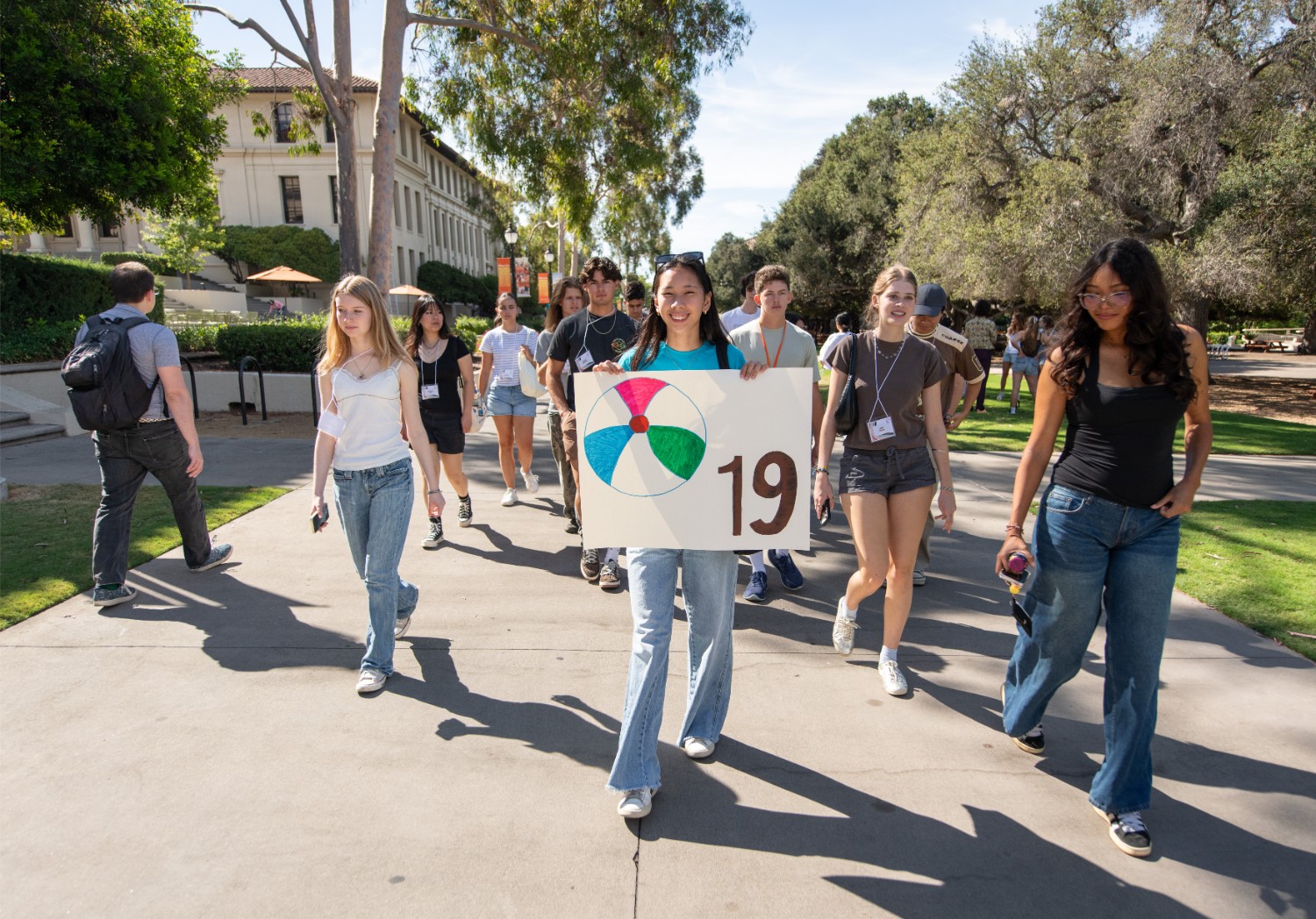
Ethan Fernandez (junior) is one of many student leaders who help the orientation process run smoothly. According to Fernandez, he was the main leader of a smaller group of students.
“These are 17 students that come from different places and different backgrounds,” Fernandez said. “I was pretty heavy on learning each other’s names and getting to know where everyone was from.”
According to Fernandez, he was inspired to be an orientation leader because of Strong. Fernandez said he wanted to be the same kind of friend for the first year class.
“My O-team leader was Malakai when I was a freshman, so it feels like a full circle moment from when I had orientation,” Fernandez said. “Your O-team leader is [your] first representation of a student, which is why O-team leaders are so important.”
Alisa Clayton (junior), another orientation student leader, said she was nervous to join a new group of people, but was able to become closer to people she may not have met before.
“I was walking into a new group of people who I didn’t necessarily know super well,” Clayton said. “It was a great opportunity to kind of get to know those friends of friends better, we all bonded really well.”
Fernandez said he wanted to help guide students through the lectures and check in on each student when necessary.
“I tried paying attention to how [first years] are feeling throughout the lectures because they are long,” Fernandez said. “They’re sitting in Choi or Lower Herrick for a few hours a day. I tried doing constant check-ins and reading the room with my group.”
Clayton said she was also able to make those connections and is grateful for the lessons she learned due to being an orientation leader.
“I feel really lucky to have become friends with a majority of my kids,” Clayton said. “What I’ve learned, like my past two years, is that every single person in the grand majority of things wants to be your friend and wants to know about you.”
According to Fernandez, he was able to be both a leader and a classmate to his smaller group of students.
“I think my experience was pretty easy to navigate as a student and also a leader because I was able to express how my previous years have been and things I wish I knew before, like going to office hours,” Fernandez said. “I was also able to tell them more about the work experiences because I’ve worked at the Cooler and the Moore Lab of Zoology.”
Fernandez said the moment he looks back on most fondly is when he saw his first year students sitting together when not required to.
“What was really impactful to me was when on the second or third day, I saw seven of my students eating lunch together when they didn’t have to,” Fernandez said. “It felt really wholesome.”
According to Clayton, the fast-paced environment of orientation can be mentally and physically taxing, so she wanted to be a friend who can help along the way.
“You’re pushing yourself mentally, socially, physically. It’s so hot outside. You want to make friends. You want to make sure that you feel comfortable in this space.” Clayton said. “There’s just so much change that happens at such a fast pace.”
First Year Perspectives
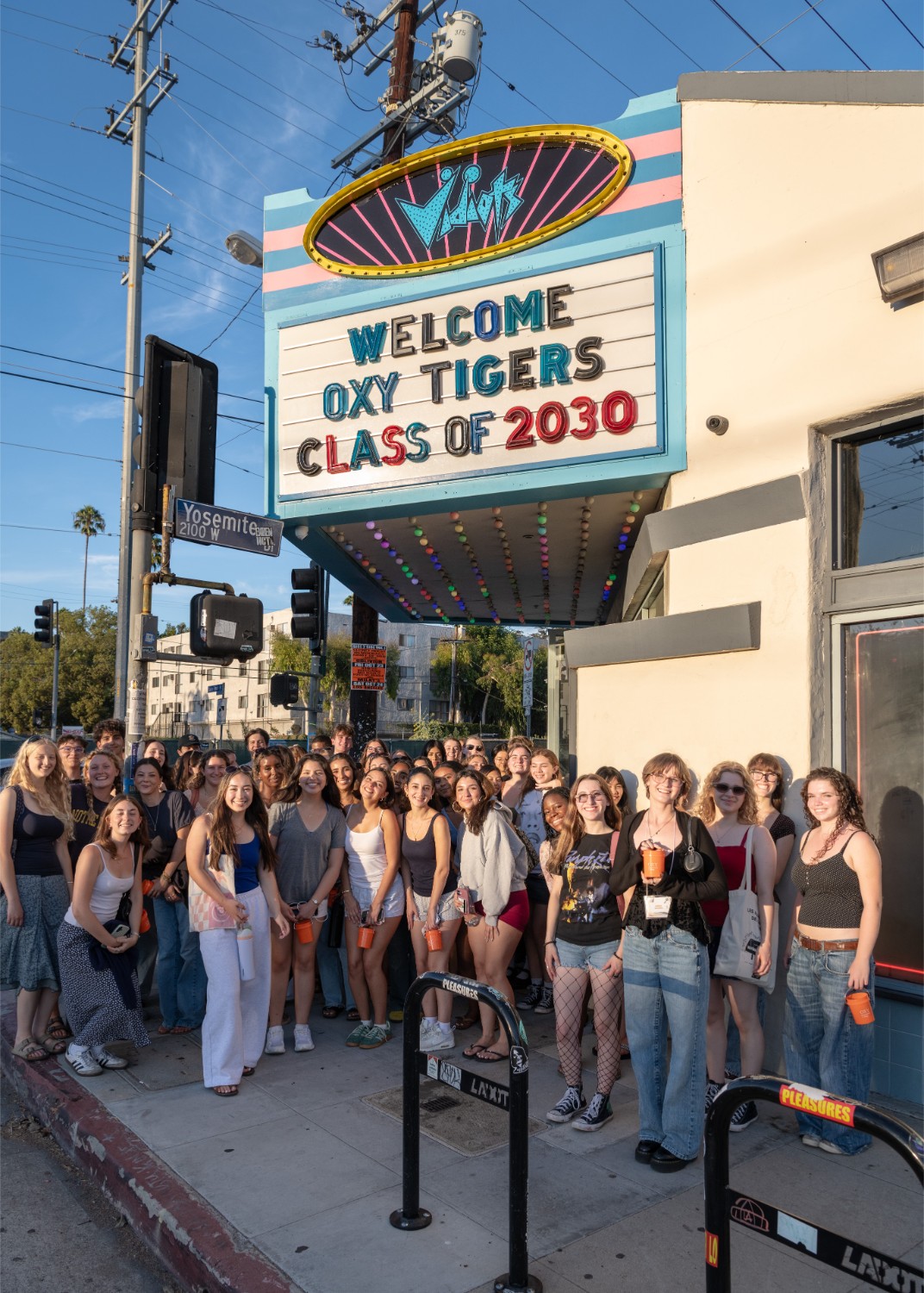
Mia Sirota (first year) attended orientation this year. According to Sirota, the orientation leaders helped foster a welcoming community.
“I felt incredibly welcomed and incredibly lucky,” Sirota said. “I think the fact that it was organized by your first year seminar was so helpful because everyone had similar interests.”
According to Stella Glazer (first year), her orientation team leader played an important role in welcoming her to Occidental.
“Ella Pearl (senior), our O-team leader, went the extra mile to make sure we had an enjoyable time, she wanted to get to know us and help us get to know each other,” Glazer said. “Since we already met each other before our class, it feels like we’re all kind of friends.”
According to Sirota, the busy schedule of orientation often makes it difficult to process feelings for first years, but orientation leaders assisted students in any way they could.
“It’s, in general, a pretty difficult time,” Sirota said. “On top of that, you’re busier than you are any other normal day throughout the entire year. The programming was so dense, giving you no time to actually process your feelings.”
Sirota said it was difficult to find time for herself with everything happening both organized in the school and outside.
“I actually needed the time to myself, but the fear of missing out was keeping me from taking it,” Sirota said. “I was exhausted. I was over-inserting myself.”
Glazer said she found the time outside of orientation to recenter herself before another busy day.
“At the end of the day, I would sort of crash,” Glazer said. “I would just go back to my dorm not wanting to talk to anyone else besides my roommate until the next day. It was sort of the only time where I could catch my breath.”
According to Clayton, each person involved in orientation helped foster a community of care which further improved the organization and welcoming of the first year class.
“Everyone was so willing to get to know each other and be friends just because we were working towards a common goal,” Clayton said.
Contact Cole Banks at cbanks@oxy.edu