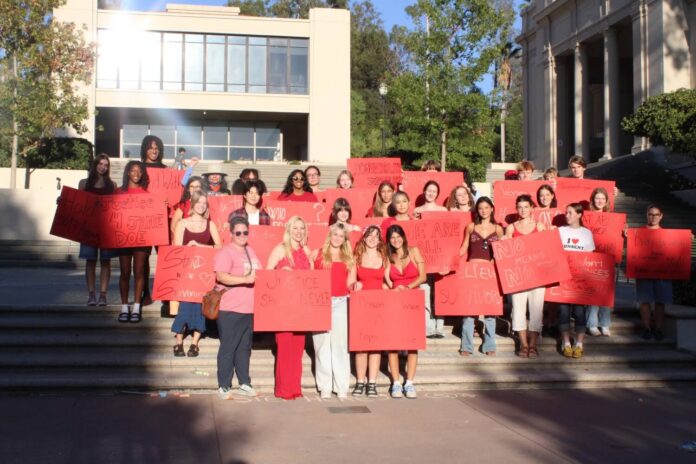
OxyJustice, with support from the Gender, Women, & Sexualities Studies department and Stand With Survivors, held a rally on the quad Oct. 8. An estimated 80 people attended, according to organizer Lola Forbes-Black (sophomore). Forbes-Black said the rally was held to support all survivors of sexual violence in addition to those at Cornell.
The Cornell Daily Sun reported Sept. 18 that a former Cornell student alleged she was drugged and sexually assaulted by members of the Chi Phi fraternity in 2024. According to the Daily Sun, two of the fraternity members were expelled while five others were given suspensions and wrote essays as punishment for their actions.
Greta Fick-Furlotte (first year), an organizer of the rally, said some people will see the Cornell Seven case as a rare occurrence rather than something that could happen to them or someone they know.
“The rare occurrence is actually that people are hearing about it, because this happens all the time, it just is usually silent,” Fick-Furlotte said.
According to Fick-Furlotte, OxyJustice is an organization that she and fellow first-year Ava Ragoowansi created for the rally.
“I really wanted to bring attention to the fact that it’s not just a woman’s issue,” Fick-Furlotte said. “It’s not just Jane Doe’s issue, it’s not just victims’ issues, it’s not just Cornell’s issue, it’s everyone’s issue.”
Forbes-Black said many students at Occidental want to help dismantle the systems that allow campus sexual assault to occur, yet campus protests only tend to happen after national news, like the Cornell Seven case.
Julia Pletcher (junior), who attended the rally, said the reason the Cornell Seven case is so troubling to students is that students across American campuses have been failed by their institutions not taking proper action to punish sexual assault. Fick-Furlotte said Occidental also used essays as a punishment for on-campus sexual assault cases in 2013.
Forbes-Black said the rally had an important message for everyone on campus, even to those who were never survivors of sexual assault themselves.
“We all know someone who’s been affected by sexual violence on a college campus,” Forbes-Black said. “We all see the structures that can uphold this rape culture, and it is connected to everyone’s lives, even if you’re not a survivor yourself.”
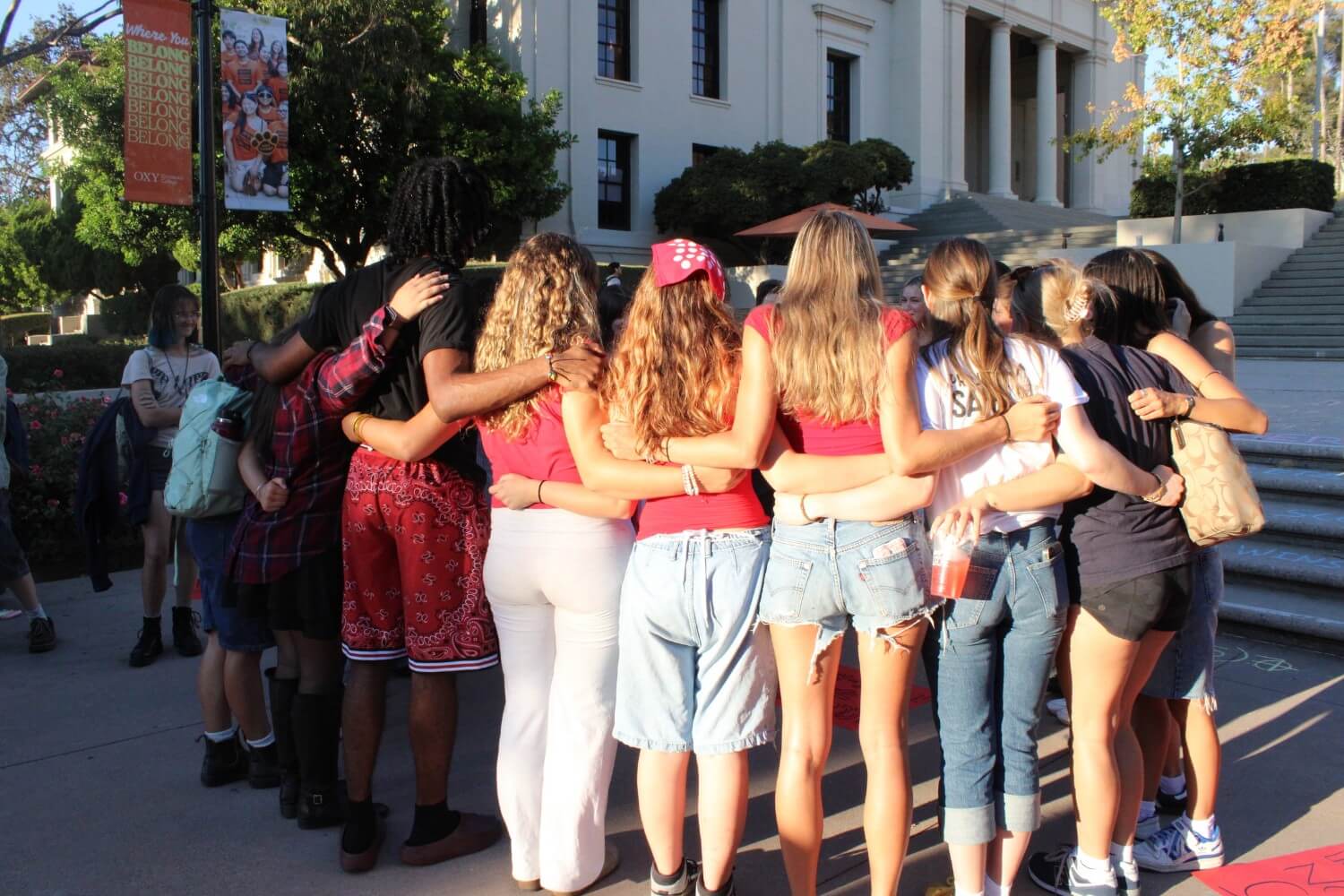
Forbes-Black said the rally gave survivors of sexual violence a chance to speak about their experiences and provided a chance for representatives of Project Sexual Assault Free Environment (Project SAFE) to talk to students.
“We are really going to be focusing on what we can do every day to support students and survivors,” Forbes-Black said. “This rally is a great way to be in community, and let people express their emotions when such a big event happens and is plastered all over the media.”
Ragoowansi said rally organizers also provided chalk for participants to write messages on the quad, allowing for those who did not feel comfortable speaking to leave a message.
“[The rally] lets people have a voice of their own, somewhat anonymously, and speak out about their experiences,” Ragoowansi said.
According to Forbes-Black, it was important to have something physically left behind from the rally so in the following days students could stop and see what was written.
“It was a fantastic way for people to let off some of the anger that they were feeling and create something beautiful,” Forbes-Black said.
Pletcher said this rally felt different than others she had attended at Occidental because it had a healing environment.
“[The rally] did not put pressure on any individual person to feel obligated to share their story or talk about something they weren’t comfortable with,” Pletcher said.
Ragoowansi said that she knows a lot of people at Occidental are concerned about sexual assault and want to stand up for survivors.
“It felt [like a bonding experience], and we felt safe in the space to talk about our concerns and what’s going on,” Ragoowansi said. “We were all present in the moment.”
Pletcher said she worries that as the Cornell Seven story loses relevance, conversations around sexual assault will disappear with it.
“There is still work to be done, even if we’re not hearing about it,” Pletcher said.
According to Forbes-Black, getting involved in advocacy and organization is immensely important, as well as listening to stories of survivors in all instances.
“I think it’s important to educate yourself,” Forbes-Black said. “That’s the way we start dismantling [rape culture]. It’s one step at a time.”
Contact Emma Williams at ewilliams4@oxy.edu