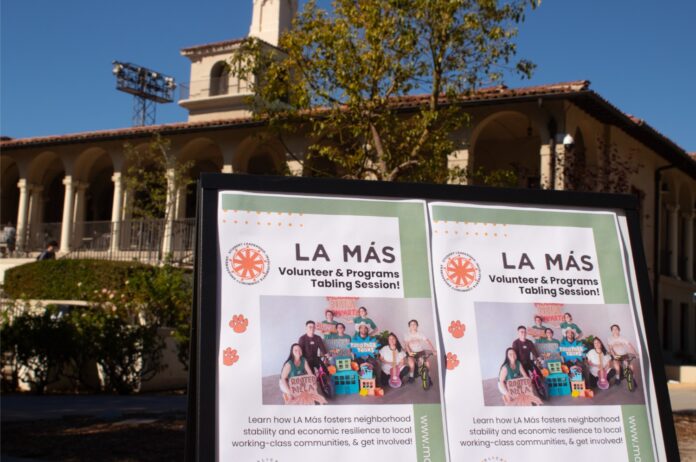
LA Más was established in 2012 as an urban design nonprofit supporting communities across Northeast LA (NELA).
Miguel Ramos, director of community economies at LA Más, said the nonprofit’s mission is to ensure economic stability and affordable housing for working-class NELA residents.
“We buy property where rents are already low and where there are working-class people living,” Ramos said. “We buy it, fix it up and we ensure that the rents remain low and the people that are living there continue to live there.”
According to Deputy Director Dani Ortíz Padilla, LA Más directly competes with big real estate developers in order to purchase apartments or homes before speculative investors can flip them.
“Our work is really about identifying homes that are going to be flipped and go way beyond the market rate and then acquiring the buildings before that happens,” Padilla said.
Padilla said vigilant community members often contact LA Más and bring attention to buildings that are in danger of being flipped.
“We [La Más] will often get leads about properties saying ‘I live in a building and I think they’re going to sell it,'” Padilla said. “This interaction from the community themselves is housing stewardship. And that ensures class solidarity among neighbors.”
Padilla said a home is more than just a place to live.
“Your home is well beyond a structure. It carries memories, and it carries the ways that you relate to yourself in the world,” Padilla said. “For me, it’s about ensuring that people who want to remain in the community have the power to say whether or not they want to remain.”
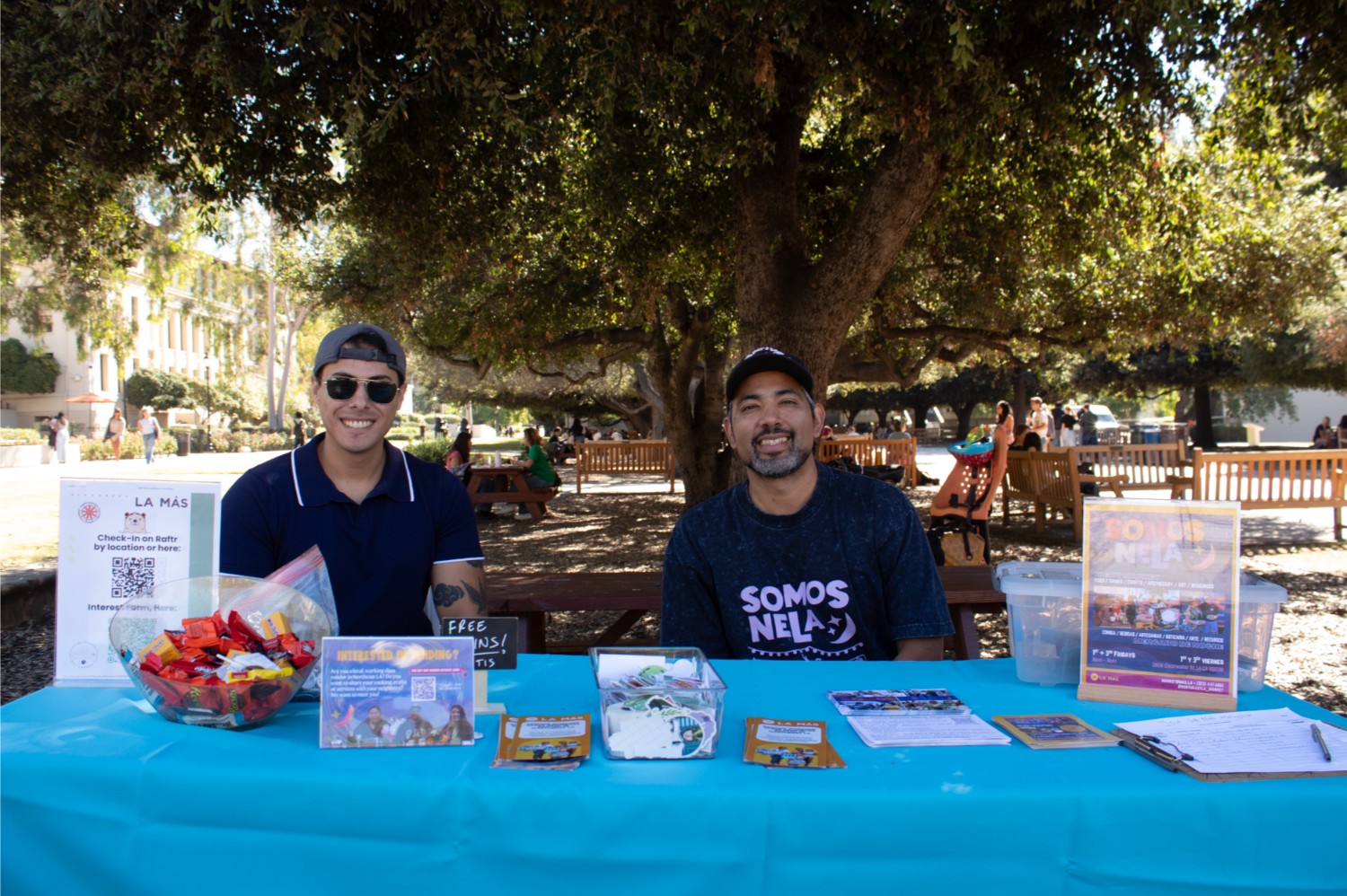
According to Ramos, one of the ways that LA Más supports community economics is through the Somos NELA bimonthly night market.
“[Somos NELA] is not just a place where there’s a transaction between products and money,” Ramos said. “We also have cultural performances. We have art workshops, we have kids’ activities and it’s really a place of belonging.”
According to the LA Más website, the goal of Somos NELA is to generate $3,000 in vendor sales each week.
“We see Somos NELA as a social infrastructure, to really think about how we keep money in the neighborhood,” Ramos said.
According to Padilla, Somos NELA is unique in that it does not charge vendors an extra fee for their store space, and it provides vendors with everything they need.
Padilla said the market also offers a safe space for people targeted by the U.S. Immigration and Customs Enforcement.
“[We are] a really safe space where the community can actually come into a physical space rather than being on the street themselves,” Padilla said. “They can actually create some safety for themselves and their family.”
Ramos said LA Más also sees Somos NELA as a way to preserve culture.
“I remember growing up in Highland Park, and every day there was a paletero [a popsicle vendor], and nowadays you’re missing this,” Ramos said.“For a lot of people that live here in this community, that connection that they have and the relationships they build with their paleteros is something that they want to bring back and practice.”
According to member of the LA Más Board of Directors Eva Maria Chavez, working with LA Más has been a deeply rewarding experience that has allowed her to be of service to others.
“My experience has been beautiful,” Chavez said. “I always want to show up in a way that is reciprocal, and I know that I’m going to provide some type of support or help to my neighbors.”
Padilla said she feels it is important to prevent NELA families from being displaced from their homes — something she has seen happen before.
“I think keeping families in Northeast LA is important because there’s just so much history and culture,” Chavez said.
Padilla said she wants LA Más to keep housing in the community’s hands.
“A lot of times, folks who’d been here [in NELA] for generations were contributing to the local economy,” Padilla said. “Folks who have been displaced often didn’t get to feel the fruits of all of their labor and contributions to the community.”
Chavez said she wants Occidental students to support small businesses and get to know the residents and cultures behind them.
“I think the best way for students to get involved is just to show up and diversify your levels of supporting small businesses in our area,” Chavez said.
Padilla said she loves working with people who want to change systems that no longer serve the community.
“It’s beautiful to be able to experiment with what the future can look like together, in a community, with people who also want to feel into what’s possible if we’re able to move the needle,” Padilla said. “We’re able to move forward and bring forth life, imagination, creativity and art into the community.”
Contact Marco Zapien at mzapien@oxy.edu