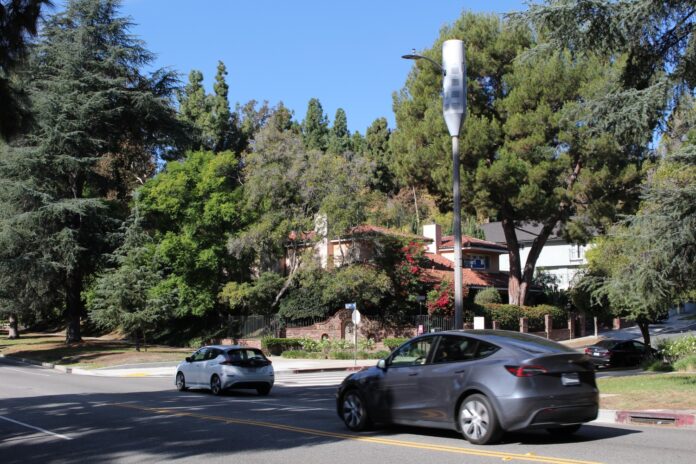
The Los Angeles Department of Transportation (LADOT) began its Speed Safety System pilot Oct. 26. According to the LADOT website, 125 speed cameras were installed at high-crash locations across the city, and there is currently a speed camera under construction on North Figueroa Street, between South Cessna Lane and West Avenue 45. LADOT’s website said the department anticipates that all systems will be activated by the end of 2026.
Colin Sweeney, public information director for LADOT, said via email that locations of speed cameras were carefully selected using a variety of data, focusing on streets with the highest rates of speeding and speed-related crashes.
“The analysis also considered locations with a higher concentration of vulnerable people, such as near schools, senior centers and unmarked crosswalks, and stakeholder feedback,” Sweeney said via email. “Council Offices were also consulted on locations, and the Los Angeles City Council approved the final list. LADOT aimed to ensure neighborhoods across the city are included in the pilot and prioritized speed camera locations in each Council District.”
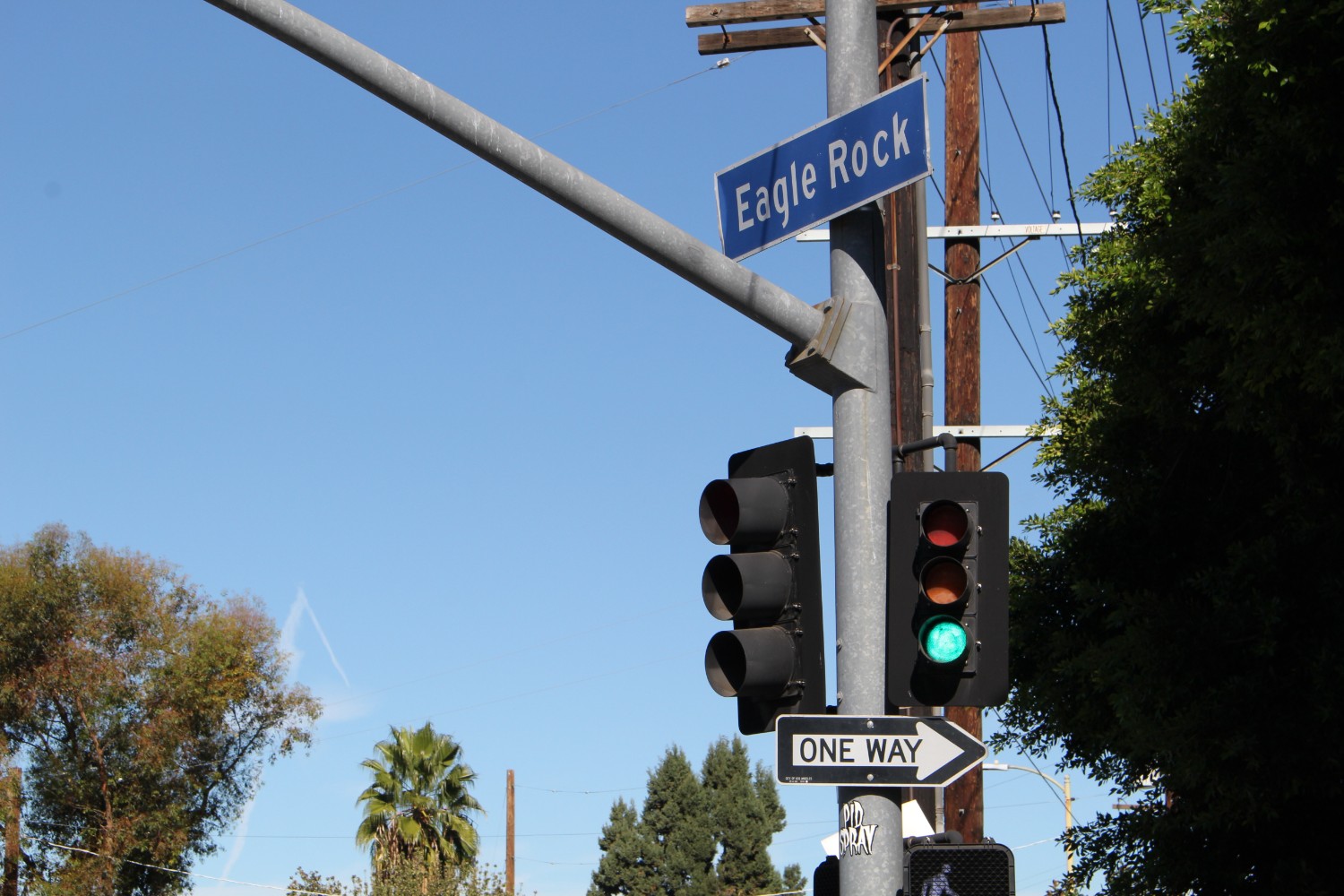
Streets Are For Everyone (SAFE) is a nonprofit that aims to improve the quality of life for pedestrians, bicyclists and drivers alike by eliminating traffic fatalities. Damian Kevitt, executive director of SAFE, said Figueroa Street is known as one of the deadliest roads in LA. Kevitt said he felt speeding on Figueroa is something that should have been addressed a long time ago.
“Speed cameras are known and have been proven to reduce speeding where they are placed,” Kevitt said.
According to Kevitt, San Francisco adopted a similar speed camera program in 2025. Kevitt said that San Francisco’s 18-month report showed an 80 percent drop in speeding and a 42 percent drop in traffic fatalities in locations where speed cameras were implemented.
“The speed camera program is actually designed so that the cameras are hopefully put out of business,” Kevvit said. “You make the road safer, you make it so that it’s a calmer, slower, and safer road, and you don’t need a camera there anymore.”
Judith Goldstein, owner of Luca Essentials, said the speed camera program feels like a distraction from more pertinent issues facing Northeast LA (NELA).
“I’ve owned a store in Figueroa for six years, and I lived in Highland Park for three years,” Goldstein said. “I have never, not one time, seen a car accident on Figueroa.”
Goldstein said she is suspicious of LADOT, and that she is confused why the city is addressing speeding when she believes its priorities should be elsewhere.
“I’ve seen about 10 humans, mostly women, get punched in the face by crazy people on drugs that live in the street,” Goldstein said. “I’ve seen people being hit by bottles. I’ve seen people exposing themselves […] in front of women. I’ve seen many small businesses go out of business. I’ve seen tons of trash in the street.”
Goldstein said speeding is an inevitable problem in a big city like LA, but that she feels the speed cameras are an invasion of privacy.
“I want my tax dollars to find housing for houseless people or to find rehab for them or to fix the problems,” Goldstein said. “I want drugs out of my streets. I want people to stop being assaulted. I want businesses to stay in business.”
According to Kevitt, any revenue that is generated from speed cameras can only be used to address increased traffic and pedestrian and bicycling safety measures, which he said make roads safer.
“The location [for the speed camera] that was chosen in CD-1 [Council District 1] on Figueroa is right next to a school and right next to a park,” Kevitt said. “So it’s an important area if you’re going to slow any road down and make sure that people are driving safely.”
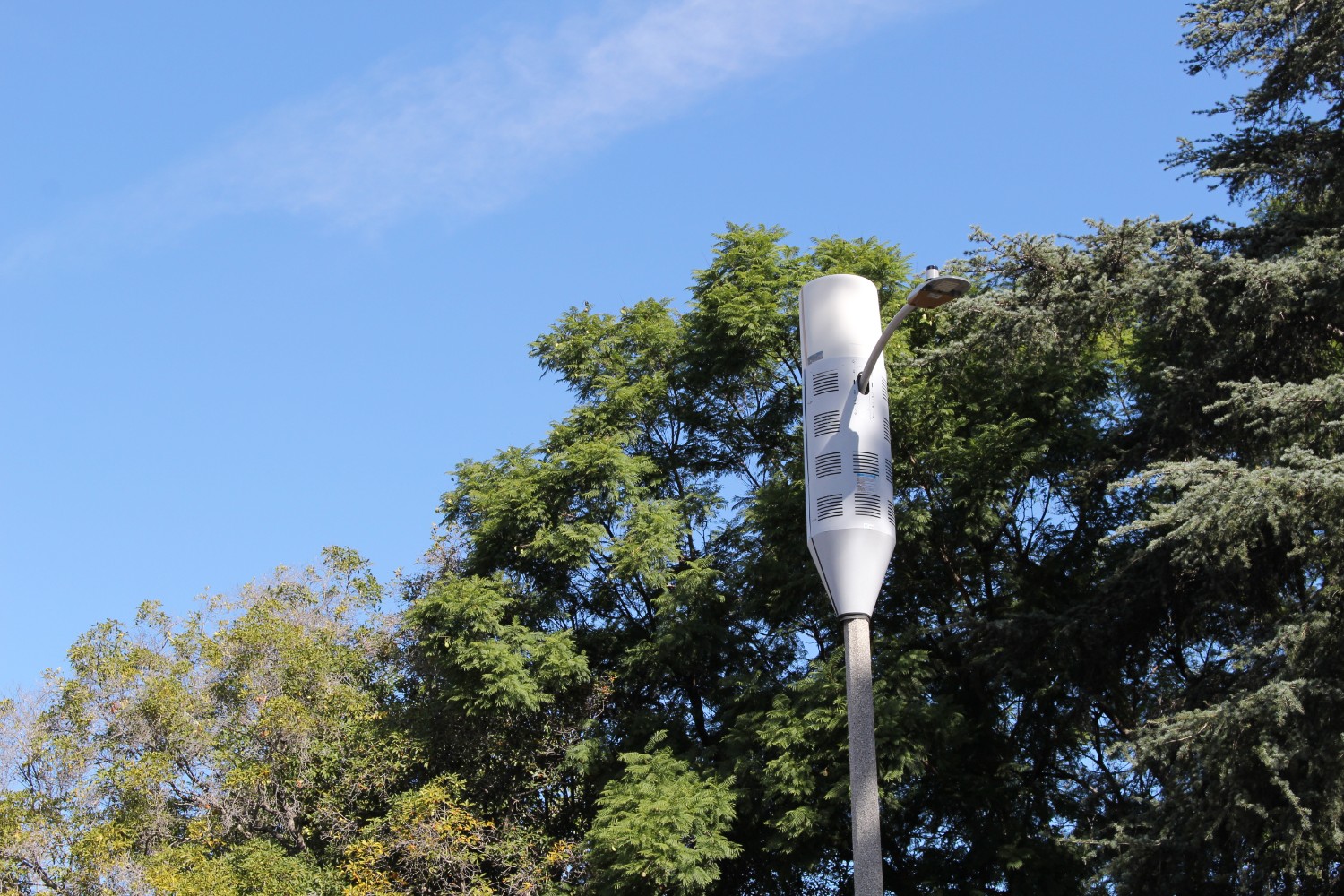
Kevitt said that SAFE made changes to the legislation that make stronger privacy protections and prevent any possibility for their use as surveillance. Kevitt said that LAPD (or any other law enforcement agency) has no jurisdiction over the speed camera system.
“They can only be administered by public works or the department of transportation,” Kevvit said. “It is written in the law that none of the data is allowed to be shared [with the police department] unless there is a court order.”
According to Kevitt, the only thing that can be reported with the speed cameras is a single photo of a driver’s rear license plate.
“[The cameras are] not allowed to take a picture of a person’s face,” Kevitt said.
According to Kevitt, an LA city employee has to review and issue every ticket reported by a speed camera. Kevitt said anyone that gets a ticket is allowed to review the data and appeal it if they wish to dispute the violation.
“If a recording or a picture is taken and it’s not actually a real violation, it must be deleted within five days,” Kevitt said. “It cannot be stored in a system. It cannot be kept in a database. And once a ticket is resolved, that picture of the ticket and the location of the ticket must be deleted within 30 days.”
Kevitt said he understands community concerns about additional surveillance via speed cameras, but urges community members to look into the laws that are in place to protect their privacy.
“If you really look at this, and if you read and not just take what other people say, you will see that it’s designed to prevent surveillance, and [is] only designed to make roads safer,” Kevitt said.
Contact Marco Zapien at mzapien@oxy.edu