It was the beginning of June when my life changed in an instant. In just a week, the relaxed feeling that summer had brought vanished. It was replaced with a medical emergency that would turn my life into a completely new reality.
I was diagnosed with a rare but severe condition called Cauda Equina Syndrome. If it is not treated quickly, it can cause irreversible paralysis.
At just 20 years old, an age where you should be your strongest and most resilient, I could hardly walk.
June 10, the neurosurgeon walked into my emergency room. He didn’t sugarcoat the situation; he gave me the harsh reality: the damage to my spine was so extensive that I needed surgery immediately if I wanted any possible chance of ever walking again.
My neurosurgeon Dr. Daniel Nagasawa acted quickly, and prevented me from being paralyzed. June 16, I underwent a four-and-a-half hour surgery that involved six spinal procedures.
The doctors assured me that it would all go well and put me at ease before they operated on me, playing a song from my favorite artist, Gracie Abrams. This surgery would not only save my life but change its trajectory forever.
The months after the surgery were defined by intense physical rehabilitation and perseverance. While many of my peers were hanging out with friends or working summer jobs, I was relearning how to navigate the world in a fragile body.
As August arrived, a cloud of anxiety came upon me. I asked myself: How in the world was I supposed to return to Oxy?
Higher education is tough under any normal circumstance, but returning to a hilly campus with a healing spine felt like an enormous mountain to climb. I feared that my medical reality — as I was less than two months post surgery — would force me to take a leave of absence, isolating me from my friends and peers, my education and the junior year that I was looking forward to.
Desperate for answers, I hopped on a Zoom call with Felicia Flores, Director of Disability Services and Student Support, and laid out my situation.
Filled with anxiety over how this conversation would go, I wondered if it would even be possible to return this fall.
That feeling washed away immediately as I was met with compassion and genuine care. Flores listened to my many fears, understood the stakes of my recovery and went to work on my situation right away.
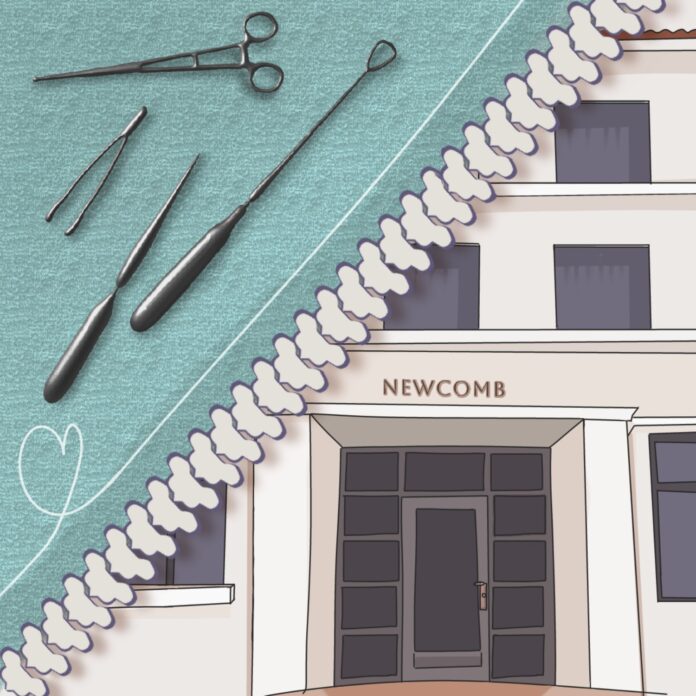
Within a short amount of time, the housing department stepped in and accommodated me with an accessible ADA unit in Newcomb Hall.
Move-in day for my junior year finally arrived Aug. 20. I couldn’t believe it. Against all odds, both emotional and physical, I had made it to this special moment.
On our campus, general housing accommodations mean being assigned to one of the designated ADA units on the ground floor of Newcomb Hall, located on lower campus. There are about six ADA units in Newcomb and these rooms are specifically tailored by Housing and Disability Services. The process begins when a student submits their medical documentation; from there, you wait for approval before you are officially slotted in the specific ADA dorm assignment.
Last week, facilities finalized a critical upgrade to these units: a newly installed tap system. Now, residents can tap their student ID from the outside, or press an interior button, to automatically open their door.
When I walked to where my dorm room was, I was relieved to see that my new room was fully accessible. Everything inside was set up at waist and height level, ensuring that I would not have to break my spinal precautions of bending, lifting or twisting.
For the first time while at Oxy, I could exist in a room without the looming anxiety that a simple movement could potentially cause re-injury or even undo my surgical process.
But accessibility cannot stop at a bedroom door; a college campus is an entire ecosystem of stairs, hills and long walkways.
I feared I would not be able to make it up an entire hill with a 12 pound backpack — the most I could carry due to my spinal precautions. To go up the hill seemed impossible as I knew it would cause more pain to my healing spine.
Two of my classes this fall meet in Berkus Hall which I simply wouldn’t be able to attend without transportation. Thankfully, facilities have a golf cart transit system that is operated through the disability services to get me around safely. This accommodation effectively bridged the gap between my living space and my academic requirements, turning what could have been a very painful barrier into a manageable and reliable routine.
True institutional equity is not only writing or emailing students and parents polished statements about diversity and inclusion; it is also about allocating resources, moving quickly in a crisis and most importantly, viewing each student as a human being who needs help.
Without the compassionate support system provided by the college, my return to campus this fall would have not been possible.
Thank you, Oxy, for seeing my struggle, meeting it with action and giving me my junior year back.
Contact Maddie Gamble at mgamble@oxy.edu