Prior to coaching student-athletes at Occidental, golf head coach Will Morris, men’s tennis associate head coach Jackson Frons, men’s soccer head coach Rod Lafaurie and swim and dive head coach Haley Meryl had not considered coaching a college sport.
Will Morris said he coached while working as a high school teacher before attending law school at the University of Wisconsin, Madison, and then practicing tax and transactional business law.
“I coached golf, I coached basketball, [and] I coached football — all high school,” Morris said. “Then […] I went to law school and I practiced law for a long time and [I got] drawn back into the sports world after that.”
Morris said that his best friend encouraged him to start coaching again.
“My best friend would call me every year and ask me to come coach with him,” Morris said. “I thought, ‘I better do this while I can,’ because if and when I get married or have kids, my wife or kids may not let me quit practicing law, because I made more money that way and [was] established and all.”
According to Morris, as a collegiate golf coach he interacts with potential athletes, similar to interacting with clients — an aspect of practicing law he enjoyed.
“One reason I really like golf is not only the interaction with the current players at Oxy, but I [also] like recruiting,” Morris said. “I enjoy talking to prospective new players and prospective new families, and telling them all about Oxy and what it’s like to live and go to school in Los Angeles and play golf for us.”
Jackson Frons said he has combined his interest in tennis and writing.
“I studied English and I also have an MFA in creative writing from Syracuse, and I’ve taught undergrad at Syracuse as well as Middlebury College,” Frons said. “I have written for Racquet magazine and more regularly write for The Second Serve, who publish a magazine called Open Tennis.”
Frons said he started playing golf when he was young and began competing seriously around age 12. Frons said he has coached intermittently since finishing his undergraduate degree at Middlebury, where he was on the tennis team. Frons said he never planned to pursue a career in tennis.
“I’ve kind of coached on and off since I finished undergrad,” Frons said. “I love tennis and love helping people get better, so [I’ve] followed it for the last few years.”
Frons said writing articles has allowed him to have a perspective on how people think about their sports as well as their practice habits.
“Doing tennis writing has been a fun blend of two main passions of my life,” Frons said. “It’s fun to get out and do some narrative journalism now and then.”
According to Rod Lafaurie, his path to coaching began while he was still playing. Lafaurie said his collegiate and professional experience strengthened his appreciation for the sport.
“Being around the highest levels makes you, or made me at least, enjoy the game and love the game that much more,” Lafaurie said.
Lafaurie said one of the biggest differences between collegiate and professional soccer was the range of individual motivations among professional players.
“Not everyone is there for the same reason,” Lafaurie said. “Some guys are there because they were always the best players, some guys are there because they work really hard and some guys are there because they were given an opportunity.”
Lafaurie said he learned about the coaching opportunity at Occidental through a former soccer player who encouraged him to pursue the position.
“Los Angeles is where I’m from, and so [the] opportunity to coach locally was […] interesting to me,” Lafaurie said.
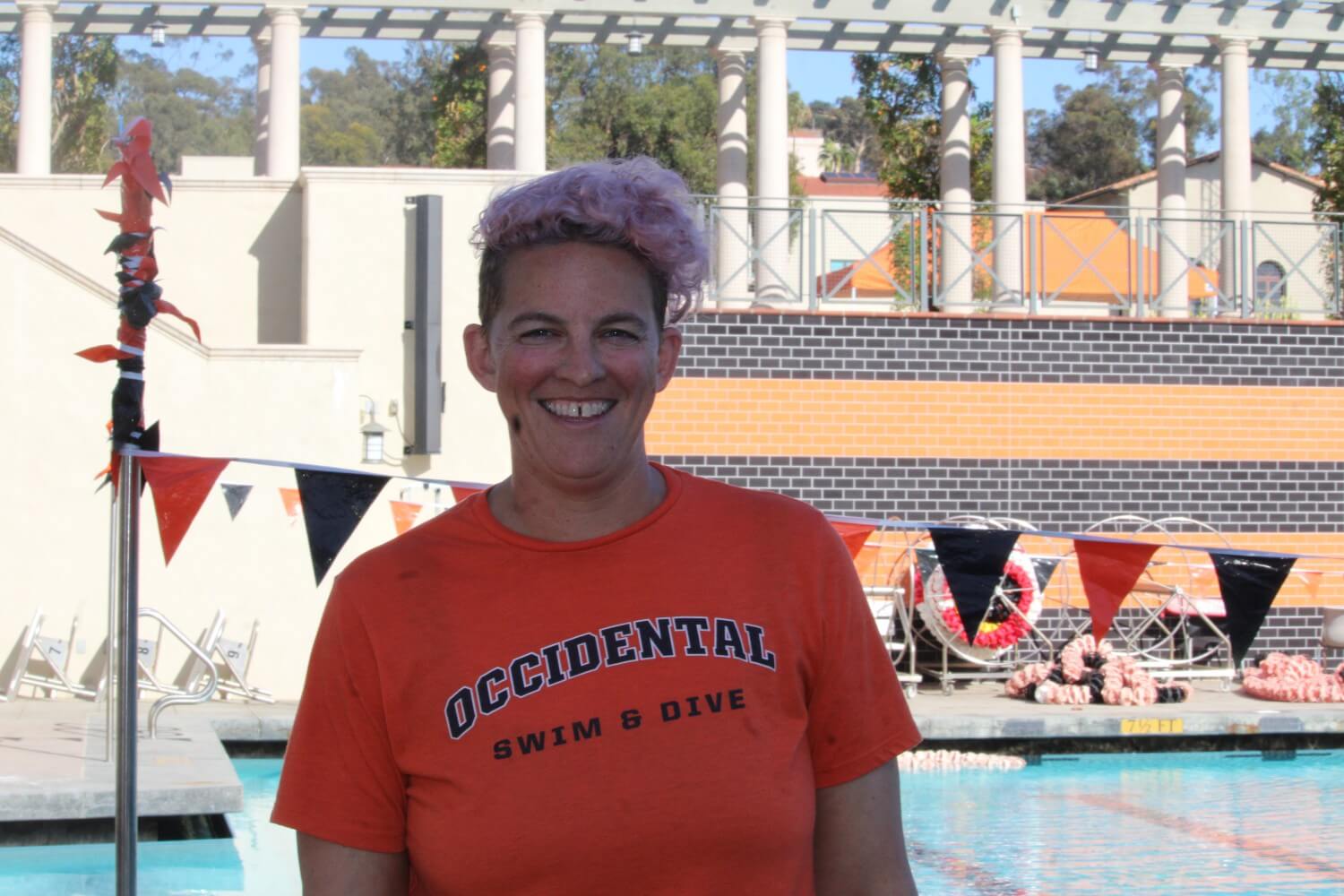
According to Haley Meryl, coaching was not originally part of her career plans after graduating from Ohio State, where she had competed as a student-athlete.
“I kind of walked into coaching,” Meryl said. “I originally was going to get an MBA and be a grad assistant […] and then that fell through. My college coach asked if I wanted to be a volunteer assistant and coach the younger kids on the club team, and see if coaching is something I want as a career.”
Meryl said she hesitated to pursue coaching because she remembered being a challenging athlete to coach, but that her experiences as a swimmer helped her understand and connect with athletes facing similar challenges.
“When I did coach people like me, I was able to be empathetic,” Meryl said. “I know how you feel; this is something I experienced, and I can help.”
Meryl said working at Kenyon introduced her to Division III athletics and the opportunities student-athletes have outside of the pool.
“[Kenyon] is where I fell in love with DIII swimming,” Meryl said. “They’re able to do a lot more internships and research and cool things that we weren’t able to have time for at a place like Ohio State.”
After coaching at Kenyon for three years, Meryl returned to Division I athletics at Army West Point where she realized that she preferred the environment of smaller academic institutions.
“Allowing more space for individuality at DIII schools has been the most important aspect for my coaching,” Meryl said. “Anytime somebody has great success, seeing them celebrate with their teammates and how happy they are for each other is my favorite thing.”
Contact Sophia Au at aus@oxy.edu