I’ve started to wonder how much I actually know about my body.
When I exercise, I can see my heart rate, calories burned and how close I am to whatever goal I have set. I can log my meals in calorie tracker MyFitnessPal, count my steps and measure how much of my day has been spent being “active.” I have become well-acquainted with the numbers that control me, telling me how I’m doing before I can figure it out for myself.
None of this initially felt restrictive to me. It felt responsible. It felt like wellness.
The distinction between how these wellness practices should feel and how they actually feel stood out to me after starting my First Year Seminar, taught by professors Damian Stocking and Sydney Mitsunaga-Whitten. They taught about phenomenology, a philosophical approach concerned with the first-person lived experience. Phenomenology asks us to look past external explanations for our actions and emotions, and instead to pay attention to what it feels like to inhabit our bodies and navigate the world. For the first time, I had a framework for understanding the divide between what my body was telling me and what I was being told about my body. I began to notice how often I looked outside myself for an answer I already had. I didn’t just want to know how I felt — I wanted to know whether how I felt was “right.”
Emerging as a movement emphasizing holistic health and self-care, the modern wellness movement rejected the idea that there was one correct way to live or care for ourselves. Instead, it encouraged us to dedicate time to ourselves and focus on the patterns and behaviors that shape us. Rather than following a universal definition of what it meant to be healthy, wellness emphasized individuality and self-awareness. At its best, wellness was guided by what makes each of us feel good, not by a set of rules.
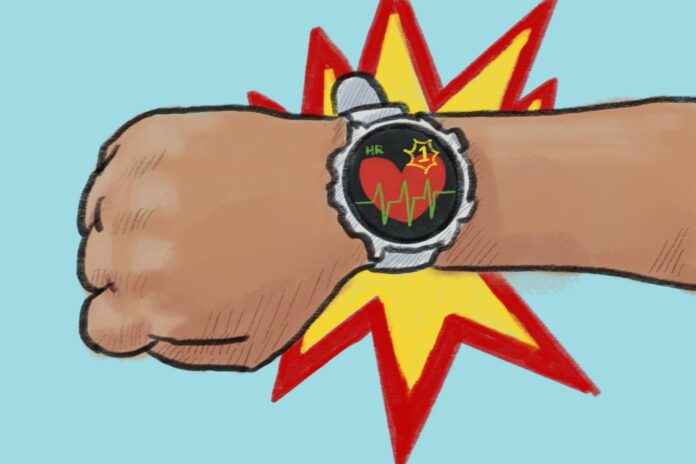
Wellness liberated us from rigidity, only for us to make it rigid again. Today, almost everything can be measured. A 2026 study estimated that in 2024, 107 million U.S. adults used wearable devices, a 58 percent increase from 2019. We can track our sleep, steps, heart rate, recovery, exercise and nutrition. While useful, these technologies have altered wellness. It is no longer enough to feel healthy; we want evidence that we are healthy. We have become so accustomed to being given information about our bodies that we can start to distrust our own perceptions without it.

This shift in the way wellness is framed shows up online in videos where influencers outline their elaborate wellness optimization routines. One influencer detailed her sleep routine, complete with red lens glasses, a sleep tracking smartwatch and ashwagandha supplements as she encouraged viewers to optimize every aspect of their sleep. While her individual habits aren’t necessarily the problem, what interests me is the idea that something as natural as sleep can become another practice to perfect.
This is where wellness starts to resemble achievement, a shift I have myself contributed to. As co-head of my high school’s Wellbeing Council, I helped organize and create wellness challenges with the genuine intention of making our school a healthier place. But looking back, I can see how even these efforts turned wellness into something students were expected to participate in and perform. In trying to make wellness a priority, I also framed it as an achievement. At the time, I paid attention to how many students engaged with each challenge, whether people completed them and how much participation I could help generate. I saw those metrics as signs that we were successfully making wellness part of our school culture. The more visible wellness became, the more effective I believed we were. I didn’t think to ask whether the people participating actually felt any better.
That realization makes it difficult for me to claim that modern wellness culture is something imposed on us by corporations or by social media. We also create it ourselves. We take something personal and turn it into a goal, then a habit, then a standard to live up to. The problem arises when the measurement becomes more authoritative than the experience.
The answer is not to reject wellness culture or stop caring about our health. Data has value, and taking care of ourselves matters. But wellness should not become another metric to dominate.
One place to start is by noticing when taking care of ourselves starts to morph into proving something. We can ask whether we are making choices that genuinely improve our lives or simply trying to meet the standards we have come to associate with being healthy. Maybe I slept well because I feel rested. Maybe my workout was effective because I feel that familiar burn in my quads. Maybe that was a nice meal because it tasted delicious and I feel full. Maybe I can listen to my body without using a device as a translator.
Wellness was supposed to help us become more attuned to ourselves. If we want it to remain that way, we have to learn when to stop keeping score.
Contact Mira Wirk at wirk@oxy.edu