

I sat in a high and uncomfortable chair, which felt like one made for a man. I glanced at my small legs dangling as my vision blurred out. To my right, I spotted a fluffy, black ball slowly falling to the floor. I jerked to see what it was and a hot tear streamed down my cheek. The buzzing above my ears was confirmation. I frantically patted my head and it felt lighter.
It felt foreign.
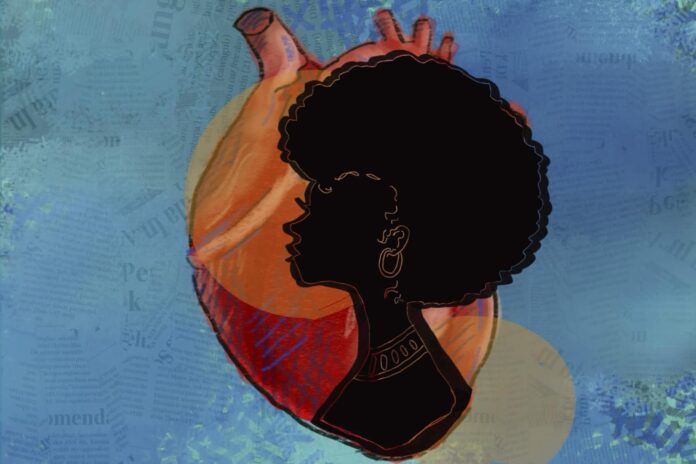
The tears, the lightheadedness and the airy breeze over my scalp are things millions of African girls experience. Being required to cut our hair low for school is an age-old anti-Black indoctrination method that scars many of us and has far broader mental health consequences than we recognize.
This conditioning is rooted in conservatism as well as an outdated reverence for the white man’s standard of professionalism.
Haircutting has always been a part of several Ghanaian and other African cultures for certain occasions and rituals, sometimes symbolizing status and life experiences. The Dansinkran hairstyle worn by queenmothers, for example, emphasizes their societal status in Akan tradition. However, during the colonial era, the English mandated short hair in Ghanaian schools in the name of “modesty and cleanliness.”
The idea that to be clean means to have your hair cut has led to the distorted notion that black hair is untidy. Many Ghanaians today use the word “bushy” to describe thicker and longer black hair, and in many schools, it is a signal that you have to make another trip to the barbershop.
My hair was “bushy” so my teacher had the right to use a pair of scissors to cut a triangle in the front of my hair, forcing me to have it all cut at the barber’s.
My hair was “bushy” so my teacher had the right to threaten my classmates and I with exclusion from our exam, unless we did what was necessary.
My hair was “bushy” so it warranted cane whips from my teachers.
To prevent these punishments, many of us would stand in front of our mirrors and apply intense pressure on our heads to flatten our hair. To “pat” our hair down was what we called it.
Growing up, I heard advocates of this practice proudly spread backward explanations for cutting our hair.
“If you keep your hair, you will distract the boys and the male teachers.”
Many viewed longer hair as a self-indulgent vanity that makes girls look “mature,” erasing the school’s educational purpose, ultimately sparking romantic interactions and attracting predators.
“It’s a distraction to you.”
What becomes a distraction is the infantile knowledge young African women have when it comes to caring for their hair. Like toddlers developing their balance, we are often left with the frustration of not knowing a skill we could have developed much earlier. This results in many of us doing whatever we can to minimize contact with our hair.
The Ghana Education Service argues that colonial haircutting policy has grown into a part of Ghanaian culture, a convention that promotes simplicity, uniformity and discipline. It argues that rejecting haircutting because of its colonial origins would also mean rejecting formal education, the court system and more.
I beg to differ.
Colonization brought good things to Ghana and other African countries, but it undoubtedly brought many negatives. Mandatory haircutting is an experience several African women and I dreaded growing up. We didn’t fancy looking like the boys in our class, not because it was wrong, but because we simply did not desire to.
Young African women have dealt with lowered self-esteem which has led to deep feelings of worthlessness and insecurity. We were taught that success partly came from looking suitable and to do so was to have low-cut hair. When we got older, we despised the hair on our heads because it confirmed our feelings of inadequacy. If a woman can’t properly care for her hair, what does that say about her?
Many of us longed for looser and straighter hair. The tears we cried with a broken afro pick in one hand and thick, black coils in the other weren’t a remedy for the physical and emotional pain we went through. An easy solution was to apply dangerous relaxer chemicals to our hair — the same relaxers that have been linked to increased risk of ovarian, uterine and breast cancer in Black women.
Low self-esteem led to our withdrawal from others. Cancelling events because our hair wasn’t “cooperating” is one of the many ways we were sucked into chronic stress and social isolation.
No girl should have to go through the years of frustration, stress and poor self-image that the little girl in the barbershop chair had to deal with. Discipline can be taught without diminishing a child’s self-esteem by labelling her longer hair as “wrong.” It is time for the Ghanaian education system to reassess why uncut hair is deemed unacceptable and what that message tells the girls who are forced to cut it.
Contact Ama Owusu-Agyemang at owusuagyeman@oxy.edu



I love love love this piece. Keep up with the good work!!!!!