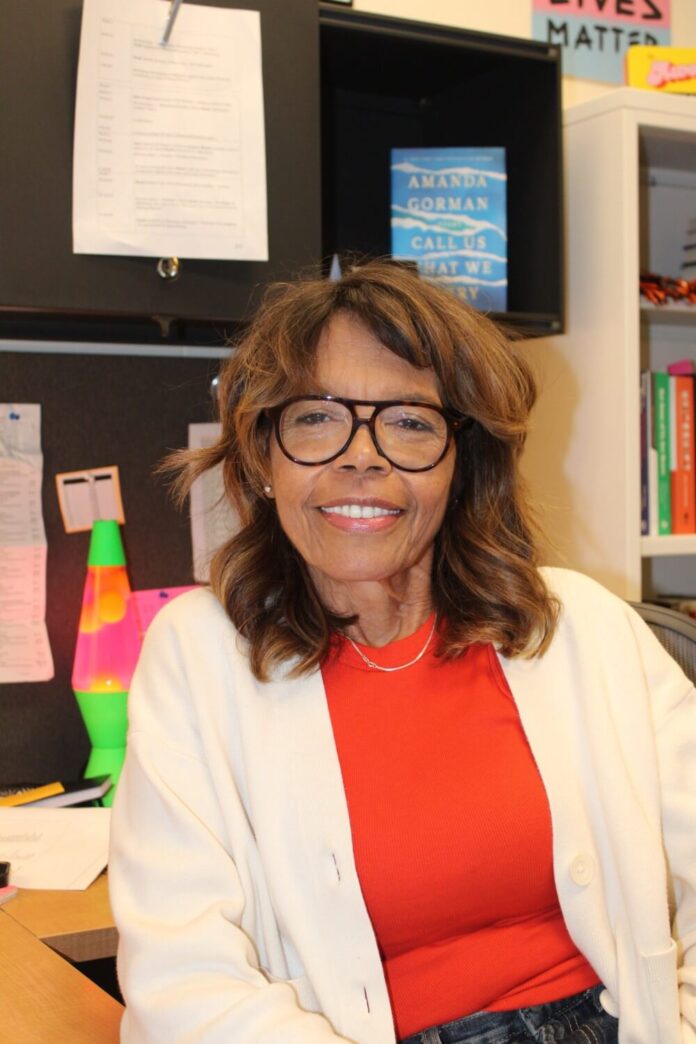
Anita Zachary, visiting assistant professor of the Occidental College Writing Program, was the keynote speaker at the Colonel Allensworth State Historic Park’s 50th Rededication event Oct. 10 — an annual ceremony celebrating the transition of the historic town into a state park. Zachary is the great-granddaughter of Allen Allensworth, the first Black American to serve as a lieutenant colonel in the U.S. Army and a founder of the historically Black town of Allensworth, CA.
According to Zachary, her great-grandfather Allensworth was born a slave in Kentucky in 1842. He later escaped enslavement and joined the Union Army during the Civil War. There, he was a chaplain for the all-Black 24th Infantry Regiment called the Buffalo Soldiers, Zachary said.
“He was lieutenant colonel, and at that time, that was the highest rank of a Black officer in the Union Army,” Zachary said.
According to Zachary, after Allensworth retired, he moved to LA with his wife Josephine and two daughters, where he hoped to replicate the self-sustaining Black community that Booker T. Washington had created in Tuskegee, Alabama. Allensworth, along with four other men, purchased property in Central California and founded the town of Allensworth in 1908, Zachary said.
Lori Wear is a Senior Park and Recreation Specialist, serving as an interpreter for Allensworth State Park and other state parks. Wear said she makes historical and archeological language more accessible for the public.
“Throughout his life, [Allensworth] had this dream of creating a Black town where former military men and their families and other African Americans could live free from the discrimination of the Jim Crow era,” Wear said.
Wear said the town became a state park after the assassination of Martin Luther King Jr. One resident, Ed Pope, created a movement when he approached California State Parks and urged them to do more to commemorate Black Californian contributions, Wear said.
“Colonel Allensworth State Historic Park preserves the historic Black community of Allensworth and highlights the contributions of Black Californians to the development of our state,” Wear said.
According to Zachary, she did not know about her family legacy until she was 14, the same year that the town became a state park.
“My father told me that he had sold some property that he had in Allensworth,” Zachary said. “[He] had donated it to the state for this park, and that’s when I first learned of it.”
According to Zachary, she did not dwell on her family legacy much when she was younger. Zachary said she also did not hear many stories about it, especially since her father, Allensworth’s grandson, died when she was 19.
“When I started to do my own research, especially when I went to college, then [the legacy] became much more meaningful to me,” Zachary said. “Then my reaction was really a sense of pride.”
According to Zachary, the first time she went to the park was when she was 22.
“I just couldn’t believe that; it was really a picture of a living town,” Zachary said. “You can see the way there’s [the original] schoolhouse there, there’s my great-grandfather’s home […] There’s a library, there’s a hotel, and I saw all of these things for the first time, and it was just really amazing.”
According to Wear, she reached out to Zachary and asked her to join the “Dreamkeepers of Allensworth,” a group made up of stakeholders and descendants of the Allensworth pioneers. This group will provide advice for what the new visiting center of the park will look like. Wear said Zachary has spoken at several special events and has also introduced her daughters to the park.
“At our Juneteenth event, she brought her father’s baby book, which recorded visits to Allensworth when he was a child,” Wear said. “It’s so moving for people to hear her speak about her family and to know that these aren’t just people from the past, and that their legacy lives on.”
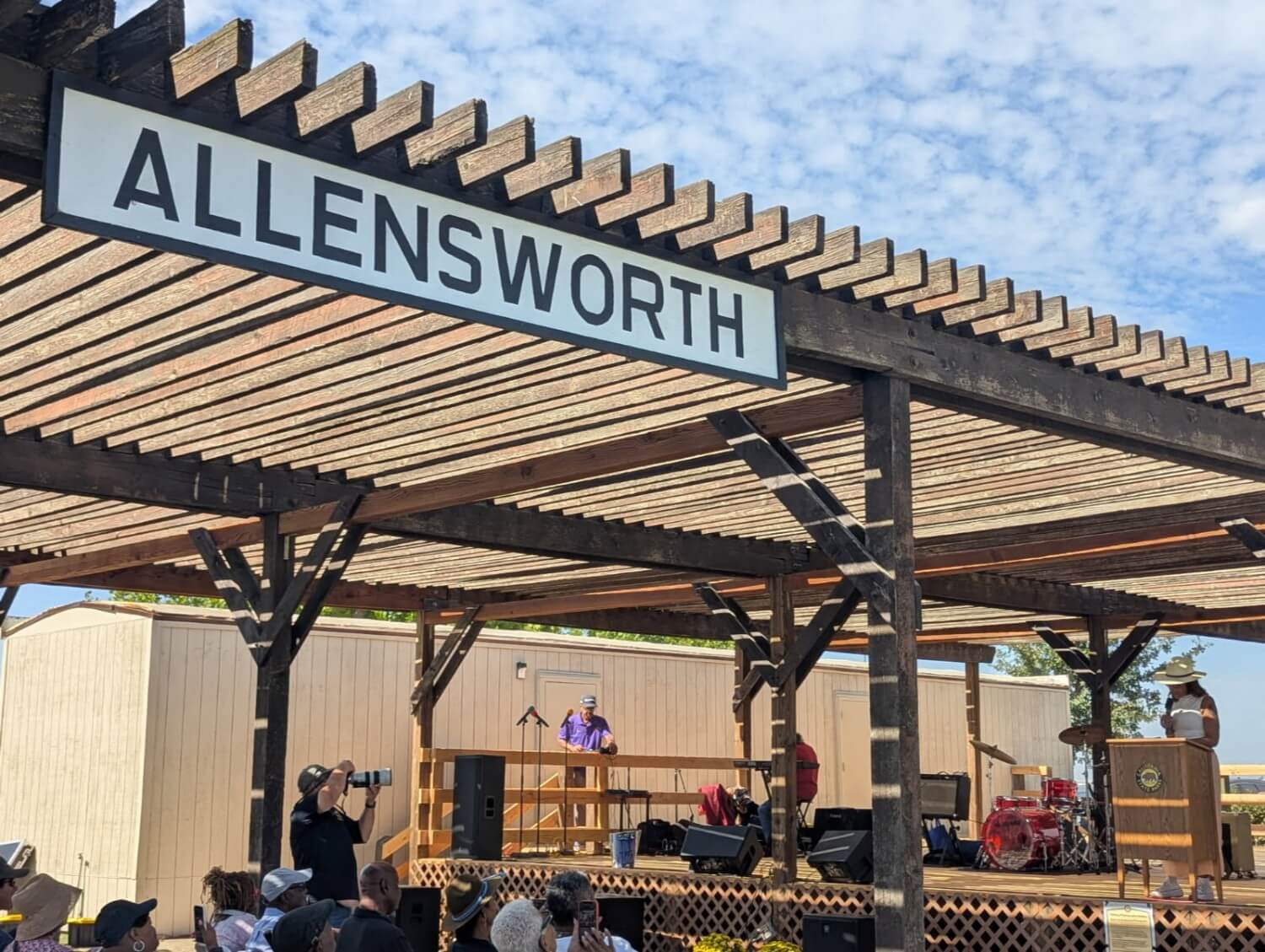
Wear said the park was first dedicated and opened to the public Oct. 9, 1976.
“Every year, we renew the commitment to Californians, to preserve the history of Allensworth and the contribution of African Americans to the state and the nation,” Wear said.
This year’s rededication ceremony was based on the first dedication event that happened 50 years ago, following a very similar program, Wear said. The event began at 8 a.m. with a 5K run, Zachary said, and the park opened officially at 11 a.m. There were also vendors, performers and tours of the various buildings in the park as well as a reenactment of the Buffalo Soldiers on horseback.
Wear said the event included numerous speakers and performers: Koumba Diallo sang the Star Spangled Banner, State Parks Director Armando Quintero spoke about preserving California’s rich diversity and Secretary of the Smithsonian Institute Lonnie G. Bunch III sent a recorded message.
Zachary said it is important to celebrate Allensworth State Park as it is tied to Black history.
“This is something that we need to celebrate as a community, as Black people in general,” Zachary said. “It’s not necessarily my legacy, but it’s a legacy that we all share about the possibilities and the resilience and the ways in which we make history ourselves.”
Zachary said while she is proud of her family legacy and heritage, she feels that it is not something that she earned. Rather, Colonel Allensworth just happened to be her great-grandfather.
“It has taken a larger space in my life as I’m getting older, but I don’t think that this is some story that I need to tell because of my relationship,” Zachary said. “I feel that it’s a story that everyone needs to know and that everyone owns, particularly Black people. It’s our story.”
Zidaan Sattar (first year) is currently in Zachary’s First Year Seminar class, “White Privilege, White Grievance, and Why We Don’t Talk About Class.” Sattar said Zachary did not bring up Allensworth or her family legacy until the week before the rededication ceremony.
“I think she likes to focus on aspects of herself and her personality rather than her legacy so much,” Sattar said. “She prefers to focus on her personal achievements as a measure of herself rather than just her family’s.”
According to Zachary, the park has been getting more visitors over the years, with many RV travelers traveling between Southern and Northern California stopping overnight to stay.
“I hope that it will be a park for all people, that it will be a point of history that all Californians, and perhaps all Americans, will be interested in knowing and learning about [when] visiting the park,” Zachary said. “I want to see it be thriving 50 years from now.”
Contact Francine Ghazarian at ghazarian@oxy.edu