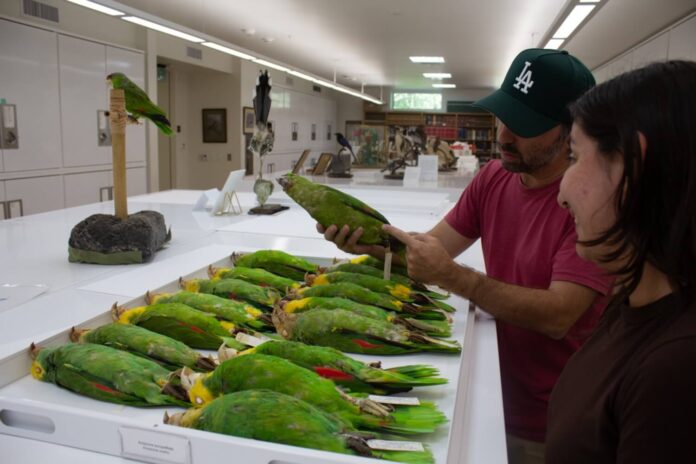
Occidental’s Moore Lab of Zoology collaborated on a research study published June 14 2026, which located the specific geographic source of a frequently poached bird species — the Yellow-headed Parrot (Amazona oratrix).
According to John McCormack, professor of biology at Occidental and director and curator of the Moore Laboratory of Zoology, 18 Yellow-headed Parrot nestlings were discovered hidden in the vehicles of wildlife traffickers during a U.S.-Mexico border crossing from Tijuana, Mexico in 2021. McCormack said the birds were then rehabilitated at SoCal Parrot, a wildlife rescue near San Diego.
“Pat Lataz, who is a parrot conservationist who works with [SoCal Parrot], got in touch [with the Moore Lab], asking if we could do DNA analysis to figure out where [the 18 parrots] came from,” McCormack said.
According to Brenda Ramirez, a research technician at Moore Lab and lead on the Free-Flying Los Angeles Parrot Project, Occidental was involved in this study because of its large collection of bird specimens. The collection consists of animal specimens from Mexico that are curated by Moore Lab. The Free-Flying Los Angeles Parrot Project collects data on the parrots introduced by illegal wildlife trafficking in Southern California, Ramirez said.
“What was really exciting for this project was the opportunity to sleuth out where those confiscated parrots could potentially be from using the incredible resource that is the museum collection,” Ramirez said.
According to Ramirez, bird specimens are not collected at the Moore Lab. The collection came from ornithologist Chester C. Lamb who was hired in 1933 by Robert T. Moore to collect bird specimens. In 1951, Moore moved the bird collection to Occidental College.
“Each bird specimen has a date collected, locality and a lot of information that is useful today,” Ramirez said.
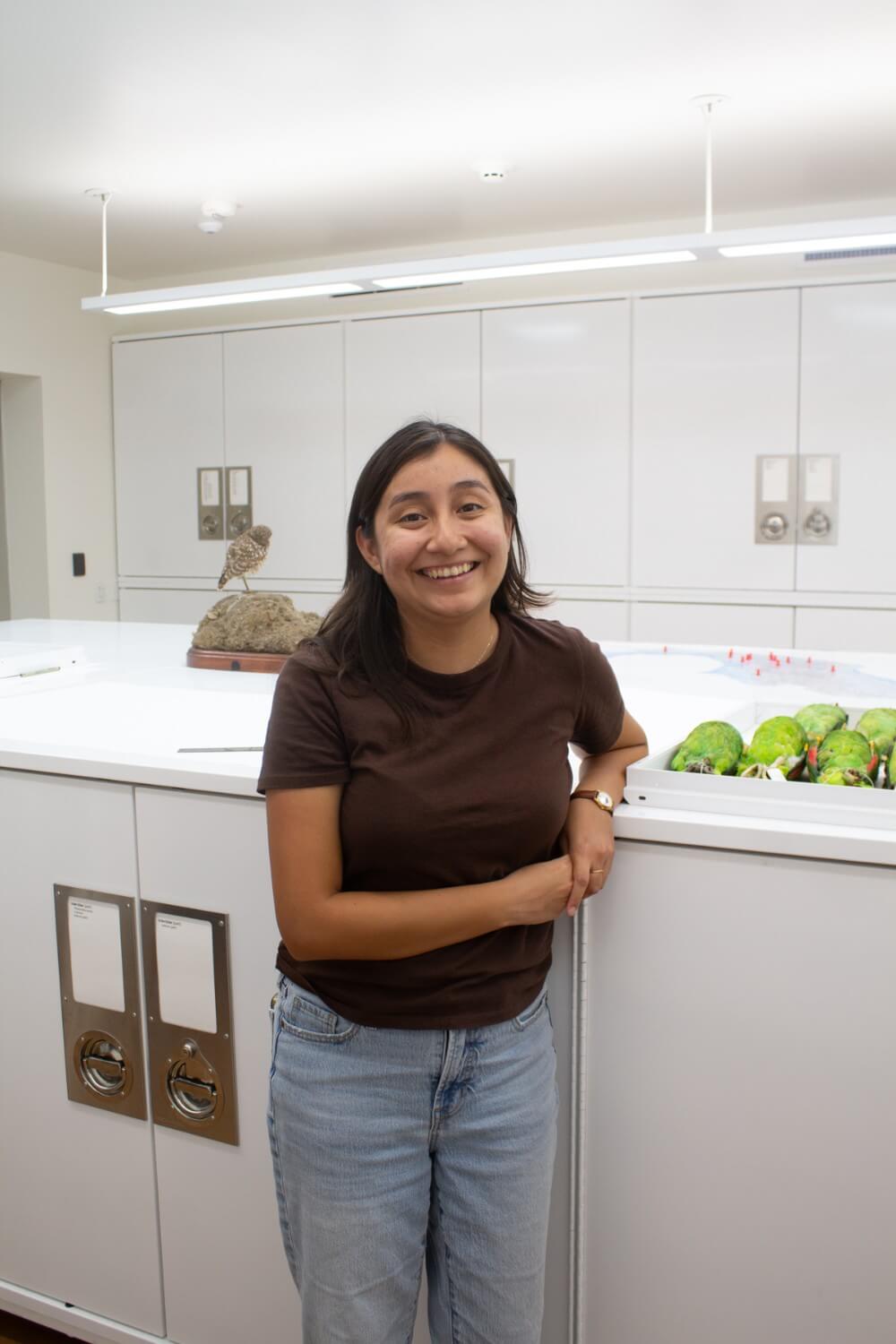
According to McCormack, Lamb worked in Mexico for more than two decades and traveled to approximately 300 different geographical locations within the country. His collections in these areas added up to 40,000 birds, which are located at Occidental College, said McCormack.
“[Lamb’s collection] is the largest collection of Mexican birds in the world,” McCormack said. “It is a coverage of the whole country for all parrot species.”
According to McCormack, the collection of birds from Mexico has grown to 50,000 over the years. Using the DNA from existing specimens of Mexican Yellow-headed Parrots from this collection, the team was able to build a genomic map for the species to pinpoint the original geographic locations of the 18 trafficked parrots, McCormack said.
“It would be very difficult to go around to all the places Yellow-headed Parrots currently exist to get the DNA,” McCormack said. “You wouldn’t expect from an old bird collection that some see as a musty Victorian thing, that this very modern, immediately relevant science could come out of it.”
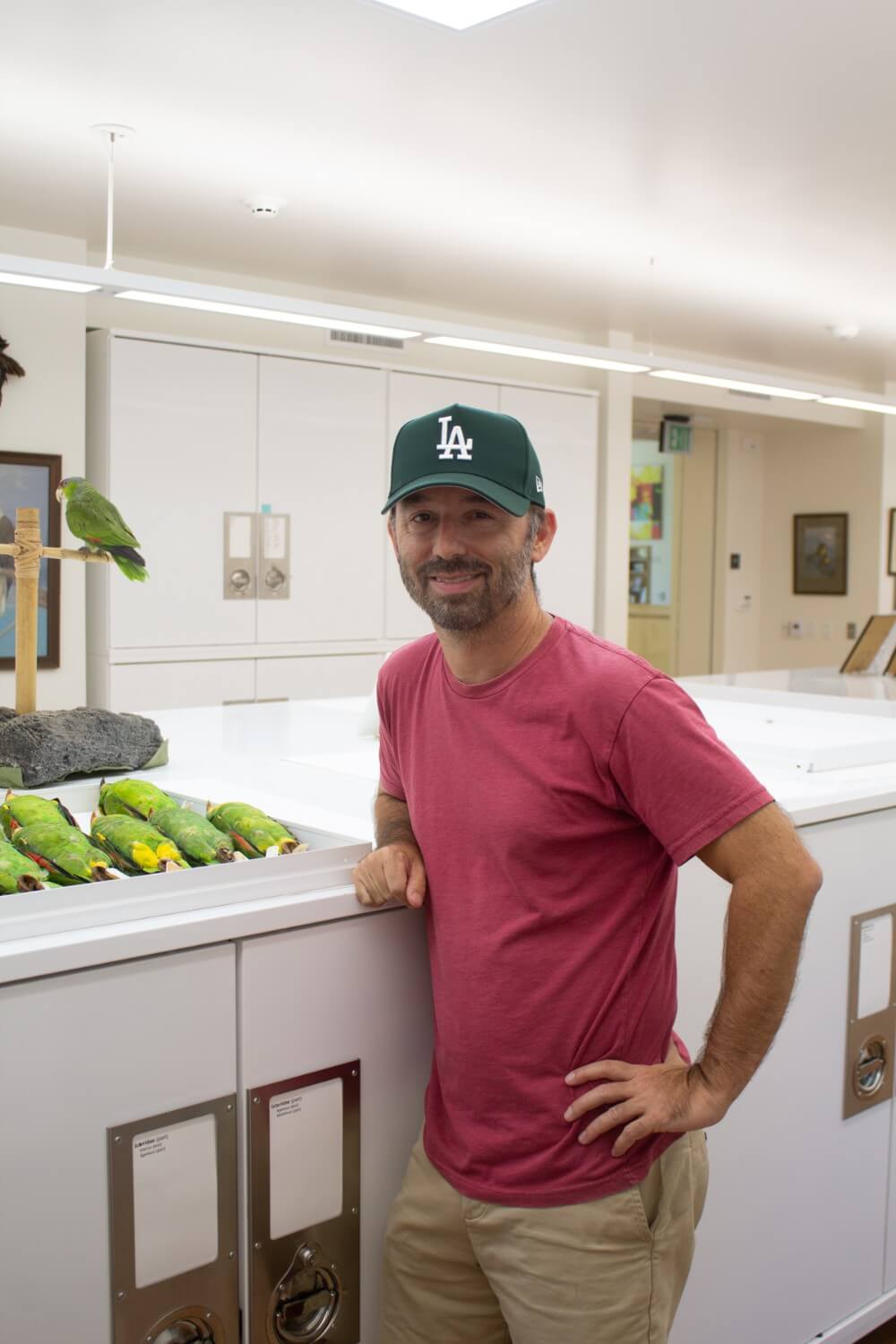
According to McCormack, Allison Mulheim ’23 contributed to the DNA collection of the study as an undergraduate student at Occidental College.
“[Mulheim] was specifically extracting DNA from both the blood samples, that we got from SoCal Parrot, of the confiscated birds and also from clippings from the toes of the historical museum specimens,” McCormack said. “It was a process of matching and figuring out the genus.”
According to McCormack, the DNA samples collected were then analyzed by Ramirez and Devon DeRaad ’17, a postdoctoral ornithology researcher at UCLA and Occidental College alumn.
“[The study used] the historical material from the native range of the Amazona oratrix parrots […] combined with the modern samples from the Southern California population [which] has changed since they have been introduced from their native range,” DeRaad said.
According to Ramirez, the modern specimens curated by Moore lab came to the lab as a result of their partnership with SoCal Parrot, previous to the recent study.
“If an injured parrot gets taken to [SoCal Parrot], they try their best to rehab it, but unfortunately all of them don’t make it,” Ramirez said. “The ones that don’t, get donated to us to be included in our museum collection to give them a second life.”
According to McCormack, SoCal Parrot’s mission is to re-release parrots that have been rehabilitated back into their habitat of origin and to care for parrots that cannot be re-released into the wild.
“If you release them in the wrong place, they could be not adapted to their habitat, or they could intermix and dilute the specially adapted populations there,” McCormack said.
According to McCormack, the 18 parrots confiscated from traffickers by SoCal Parrot came from Eastern Mexico, Southern Veracruz, Tabasco and an area in the southeastern region of Mexico.
“If you can trace confiscated birds from the border back to where they came from, you start to understand routes of smuggling,” McCormack said. “You start to understand operations and […] potentially new sources of poaching.”
According to McCormack, the study’s method of wildlife forensics allows biologists to identify poaching hot spots quickly and remotely.
“[The study] is in Evolutionary Applications, which is an important journal for applied evolutionary questions,” McCormack said. “It was a sign that this kind of work is important to today’s questions. […] Oftentimes you’re looking back at things that happened millions of years ago […] but the [source of poaching] turns out to be a question that we need to know about today.”
Contact Sophie Ha at has@oxy.edu.