

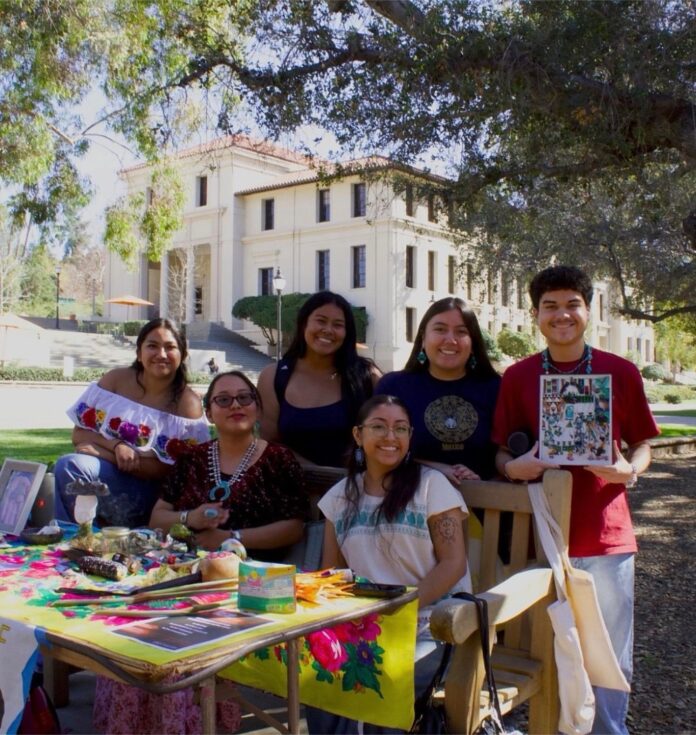
For Indigenous students at Occidental, Resilient Alliance of Indigenous and Native Students (RAINS) is working to create a dedicated space to explore cultural identity and foster community. Formed in Spring 2026, RAINS brings attention to the active presence of Indigenous students on campus.
Co-president Nevaeh Navarro (junior) said the idea for formalizing RAINS as a student organization began when she and fellow co-president Yolitztli Torres (senior) connected through the Center for Community Based Learning and shared their similar experiences as Indigenous students at Occidental.
“We wanted to create the club to have a space where we could celebrate our cultural identities,” Navarro said. “It was important for us to have a place on campus where we felt we could be recognized.”
Club treasurer Destiny Lee (senior) said she had also considered starting an Indigenous student club, but did not feel there was enough support until she heard other students were organizing one.
“It was challenging because there [are] only a handful of students on campus with Indigenous roots,” Lee said. “When I heard that someone else was trying to start up a club […] I jumped in from there and started going to the meetings.”
According to Torres, a beading workshop hosted by the Intercultural Community Center and led by local Indigenous artist Kimberly Robertson brought together the students who would later form the club.
“We stayed after the event and talked with each other,” Torres said. “Several of us Native students connected and began forming the e-board of the club then.”
According to Lee, RAINS was able to connect with Robertson and her organization, Meztli Projects, to plan a second beading workshop.
“[Robertson] shared with us the teaching of gratitude and gift-giving,” Lee said. “In her tradition, when you bead for the first time, it’s always important to create it as a gift for someone else.”
RAINS community outreach coordinator Fatima Flores (senior) said she became involved with the club in Fall 2025, after hearing about its formation while taking the course “Indigenous Feminisms.”
“Our goal is to show that Indigenous students are here,” Flores said. “We want to create a community and we want our voices to be heard.”
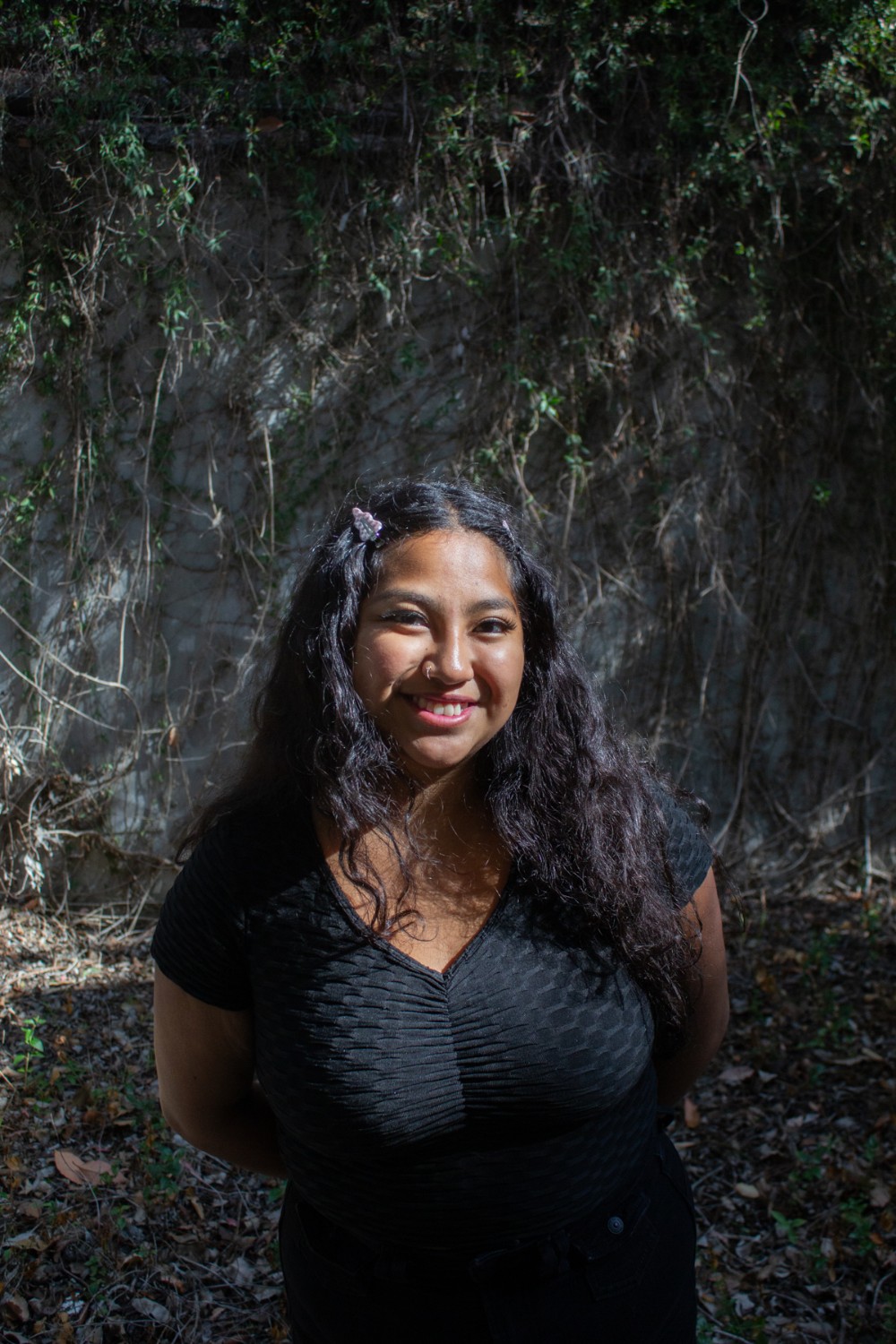
Lee said students with mixed Indigenous backgrounds may face uncertainty in navigating their cultural identities.
“It’s definitely hard to reconnect with one’s roots. There’s a sense of identity questioning that happens,” Lee said. “[We want] to reassure students that they are welcome despite the belief that if you are not fully Indigenous you don’t belong.”
Flores said she first learned around age 12 that her grandmother’s side of the family was Mixtec, an Indigenous Mesoamerican people, but growing up in a predominantly white town made her hesitant to identify with that part of her heritage.
“I didn’t even fully consider myself Indigenous until I got to Occidental,” Flores said. “This space has been really beautiful to affirm that it’s okay to not know who you are. [We are] creating a place to talk about identity.”
Flores said seeing other people share their cultures made her want to learn more about her own identity and develop a stronger connection to her ancestry.
“Seeing how Indigenous people are still very much alive and are still participating in their communities has been inspirational,” Flores said. “[It] has also helped me be more curious about myself.”
Lee said RAINS had their first fundraising event in the spring where they sold fry bread on the academic quad.
“The majority of our club members didn’t know how to make fry bread,” Lee said. “The whole experience was definitely a bonding moment between myself and my club members.”
Lee said the experience of making fry bread was meaningful to share because fry bread carries a history of food resistance in her tribe.
“During the Navajo Long Walk in 1864, the Navajo tribe was forcefully relocated to Bosque Redondo [the former internment camp in Fort Sumner, New Mexico],” Lee said. “At the camp, they were given food that was not nutritious […] but from those items, there were ingredients that could make fry bread.”
According to Navarro, they sold out of fry bread in under an hour.
“The community really showed up,” Navarro said. “That’s what showed us that Occidental really has our backs.”
Navarro said RAINS hopes to challenge the misconception that Indigenous people do not exist in the present.
“There is still a prominent Indigenous and Native community in Los Angeles,” Navarro said. “A lot of the terminology [around Indigeneity] uses past tense […], but we’re trying to reframe that way of thinking.”
Navarro said as the only junior on the executive board, she is thinking ahead about how to ensure the club can continue after a majority of its founding members graduate.
“The institution can feel super isolating for Indigenous and Native folks, but we’re here and we show up,” Navarro said. “The community is what I’m so passionate about with RAINS.”
Lee said she hopes more people will recognize that Native American and Indigenous communities are still thriving.
“My hope for this club is to bring awareness to cultures that are overlooked by society — to have people understand that we are still here as Indigenous students and people,” Lee said. “We aren’t people of the past, or people from history books.”
Contact Amelia Gehlhaus at gehlhaus@oxy.edu



Another job well done- I hope Navarro doesn’t have to serve alone next year!