World Series preview – Mac Ribner
If this year’s MLB postseason was intended to be a referendum on the infallibility of big market baseball, such a notion has been decisively quashed. This year’s World Series is between the Tampa Bay Rays and Milwaukee Brewers — two teams entrenched solidly in the bottom half of MLB’s payroll rankings. By the time this article is published, the World Series may be over, as the Brewers have a 3-0 lead at the time of writing. The Brewers have dominated in all facets of the series, much to the surprise of the vast majority of baseball journalists. Brew Crew bats have caught fire, while the Rays offense has been simultaneously suffocated.
For both teams, the road to baseball’s biggest stage has been paved through a path of uncertainty and inconsistency. The Rays are just one season removed from a dismal 77-85 finish, and the Brewers haven’t even made a World Series since 1982, when Milwaukee was still an American League franchise.
Despite the Brewers entering this postseason with a franchise-high 103 regular season wins, fans were skeptical of the team’s postseason prowess due to prior October failures. However, such skepticism was swiftly quelled as the long-awaited Brewers vs Dodgers rematch culminated in Milwaukee decimating their West Coast foes in a sweep.
There is a reason for this lack of a successful precedent — both Milwaukee and Tampa are forced to operate within a razor-thin margin for error. For small market franchises, the amenities enjoyed by baseball’s most prominent teams are simply not available. Relentless splurging might seem breezy when a dismal contract is the equivalent of a baseball mulligan (looking at you, Dodgers) but such a blunder is basically a death sentence for teams operating on a shoestring budget.
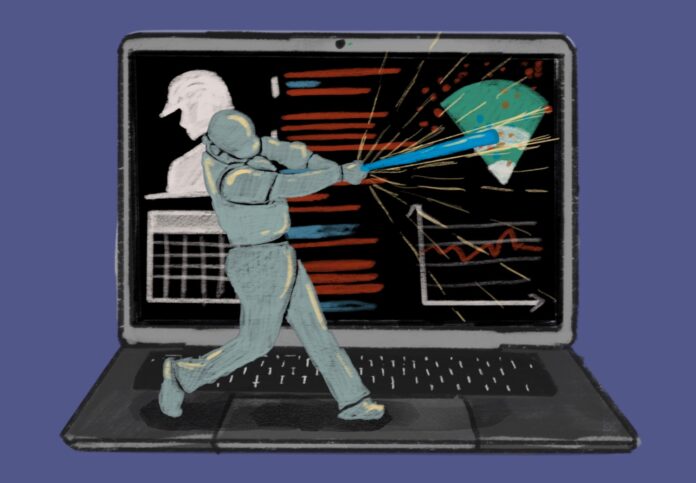
Naturally, underfunded teams like the Brewers and Rays must find value in unconventional ways. Bereft of the ability to out-muscle their baseball contemporaries, small market teams must earn their keep by outsmarting everyone in the league. It’s no coincidence that both World Series teams were early adopters of baseball analytics — from tracking on-field biomechanics to pitching release points and even fatigue monitoring, Milwaukee and Tampa have been on the cutting edge of baseball technology long before the cool kids in New York and San Francisco started doing it. The managers of each squad — Tampa’s Kevin Cash and Milwaukee’s Pat Murphy — have each received two Manager of the Year awards in their careers, with much of that success attributed to their early adoption of analytics.
Of course, these squads’ baseball innovations go far beyond computer analysis and navigation of budget constraints. Having access to unparalleled levels of data is worthless if you can’t apply it correctly, but the Brewers and Rays have channeled their research into unorthodox strategies that somehow just keep working. Without the money to poach towering superstars from other teams, both teams stacked their lineups with short, compact hitters in order to maximize efficient movement across the field. As a man who stands at a paltry 5’7″, I applaud these franchises for their faith in the vertically-challenged.
With both teams boasting a plethora of short, compact hitters, many would expect this World Series to be one contested with a combination of slap hitting and bunts. And while both teams certainly adopted the “small ball” identity in the regular season, this postseason has seen the Brewers completely transform their identity into that of power maestros. With an unprecedented 47 percent “three true outcomes” rate in the NLCS, it only takes one at bat for Milwaukee to turn a cutthroat contest into a blowout.
Power-speed threats like Jackson Chourio, as well as Jake Bauers, have turned protracted at-bats into an art form. Milwaukee’s catcher, William Contreras, has blossomed into a two-way maestro over the past few seasons, combining expert framing with clutch hitting as he seeks to join his brother Willson in the annals of baseball history as a World Series champion. That being said, the Brewers have only notched one home run in the whole Series at the time of writing, while hitting .327 with 27 singles. The Brewers’ motto, “Win Our Way,” is evident in their ability to adapt their playstyle to whatever the situation calls for.
While their roster isn’t nearly as lauded as Milwaukee’s, the Rays have a unique weapon of their own this postseason: a game-altering talent in the form of Chandler Simpson. Simpson is the exact opposite of a prototypical baseball player: he stands at a wiry 5’11”, 170-pound frame and hasn’t hit a home run in his MLB career. What Simpson lacks in power, however, he more than compensates for on the basis of pure speed. His breakneck pace allows him to turn even the weakest of infield hits into a four-second emergency for opposing fielders. Milwaukee certainly possesses the defensive prowess to counter Simpson’s sonic speed, but even the slightest of errors could turn a routine ground ball into a cataclysmic disaster.
While Simpson may be the most exciting player in the Rays lineup, he’s by no means the team’s only star on the field. Tampa Bay boasts one of MLB’s premier power trios, with Junior Caminero, Jonathan Aranda and Yandy Diaz slugging a combined 86 home runs this season en route to powering the Rays’ championship hopes.
Regardless of how the Fall Classic shakes out, it will end with a newcomer lifting one of the most coveted trophies in North American sports. And while the ensuing winter will likely be dominated by lockout discussion and financial conflict, MLB has given its fans one last gift prior to its potential suspension: a World Series for and by baseball nerds.
The virtues of modern coaching – Angus Kapstein Parkhill
Long gone are the days of towel drills, running poles and getting on top of the ball. We’re in an age where every bullpen is a miniature laboratory, with slo-mo video capture, pitch break and velocity down to a decimal point. Since every ounce of output force is measured, it raises the question: What’s even the point of coaching anymore?
Tom House was one of the first universally lauded pitching coaches, and he used early analytics in the form of video capture in his teachings. The former big leaguer worked with inner circle Hall of Famer Nolan Ryan while simultaneously fixing Randy Johnson’s mechanics and turning him into arguably the greatest pitcher of all time. House was influential because he broke convention — he famously made his pitchers throw footballs instead of baseballs to teach them proper sequencing — and by doing so, began the evolution of baseball coaching. House also still continues to be a trailblazer for how modern pitching is approached.
We’re now seeing myriad methods of optimization throughout the league, and none do it better than the Rays and their pitching coach Kyle Snyder. This year, he fixed Freddy Peralta’s Mets-iness, made an ace out of Drew Rasmussen, facilitated Nick Martinez’s best season (who was the World Series Game 1 starter), and guided Bryan Baker to lead MLB in saves, along with numerous other notable pitching breakouts and standouts.
That’s not to discredit the hard work of the Rays’ analytics department; as previously mentioned, they were early adapters and innovators of many modern tactics in the league (such as pitch framing and openers) and continue to prioritize using undervalued data and tech to maximize results. Still, even Pedro Martinez, arguably the greatest pitcher of all time, is impressed by what Snyder himself has accomplished with the Rays’ pitchers, all of whom at least partially credit Snyder with their success.
Good coaching also extends beyond getting the most out of pitchers alone. Ron Washington has long been lauded as a defensive mastermind, as seen in his work with former Oakland Athletics first baseman Scott Hatteberg — immortalized in “Moneyball” — and more recently journeyman Luis Arraez’s newfound prowess as second baseman. Though his position might also be “incredibly hard,” Arraez has gone from one of the worst-qualified defenders in the league to one of the best within less than a season.
Arraez credits his monumental improvement to his work with Washington, who took him from 2nd percentile and 3rd percentile fielding run value in both 2024 and 2025 to 91st percentile in 2026. Arraez’s drastic improvement led to an All-Star appearance and a career-high 4.1 Fangraphs Wins Above Replacement this season, even after a disappointing second-half stint with the Phillies. Unlike Snyder and the Rays, Washington doesn’t coach using fancy technology to analyze biomechanical inefficiencies or sequencing patterns, but rather through “old-school” drills that pattern good habits and instincts.
Unfortunately, for every good coach, there are a hundred notably terrible ones. It’s easy to gaze at the past with rose-colored glasses on, but I have to say I don’t have fond memories of my own experiences with baseball coaching. When I joined my first travel ball team at 15, I was subjected to the whims of old men from South Brooklyn who had about as much technical knowledge of the sport as I did of aeronautical engineering. Like most of my team, I was decent with my glove and terrible with my bat, so to fix that issue our coaches made us run suicides and race around the bases until we would throw up in the hot summer sun. It didn’t do much for my bat-to-ball skills, so I got myself a tee and started swinging on my own time.
The next season, when I had actually learned how to make contact, I tried out for a team an age division up. In the hitting portion of tryouts, the coach threw to me from about 30 feet away without a net. On my first swing, I sent it right back to where it came from and drilled him in the head. I was worried that would disqualify me, but luckily they saw it as a good marker of ability and let me join the team. I ended up primarily pitching that season, and was told by a teammate’s dad that I was good at “coming down the mound.” Even though said teammate threw roughly twice as hard as I did, his dad decided it was in his son’s best interest to learn how to pitch differently, and gave him a towel drill to work on “getting more extension.”
A good coach can determine a player’s skill ceiling, and real data collection is essential to analyze what can be improved. Good coaches are the conduit for translating that information, showing players how to incorporate it into their game and making their teams better as a result. Still, Washington, Arraez, Snyder and I can all testify that data is only helpful if there’s a positive player-coach relationship and a commitment to improvement that comes with it. If you find yourself wondering why the Rays and Brewers made it all the way to the World Series, look no further than their coaching staffs.
Contact Mac Ribner at ribner@oxy.edu and Angus Kapstein Parkhill at parkhill@oxy.edu