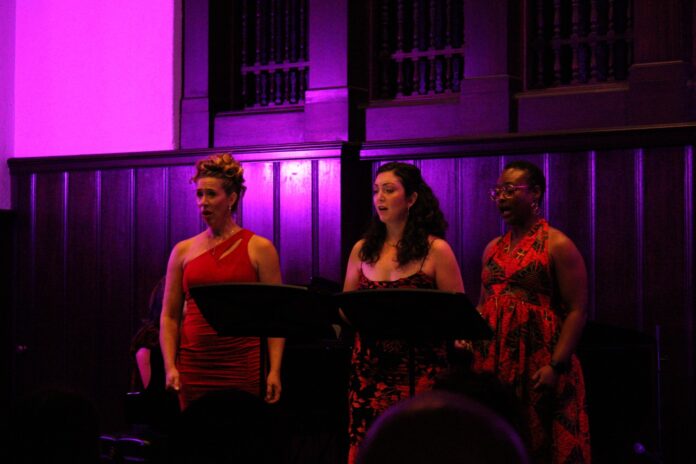
Friday, Oct. 9, the faculty recital “A Cabaret by HERS: Music Ensemble” showcased female vocalists, composers, and instrumentalists with close ties to Los Angeles at Occidental’s Bird Studio. The performance featured sopranos Karen Hogle Brown and Alina Roitstein, composer and mezzo-soprano Zanaida Robles and pianist Jennie Jung, alongside cellist Evelyn Catanzaro (junior) and flutist Mia Sirota (first year). The evening also featured a guest appearance by soprano Désirée LaVertu, Occidental’s director of choral and vocal activities.
According to Hogle Brown, who is a voice instructor at Occidental and serves as founder, vocalist and director of HERS, the idea for the ensemble was sparked during the COVID-19 pandemic, when she and her fellow local female musicians began discussing systemic inequalities women face in music.
“One of the biggest disparities we’ve noticed is how little music was written by women in the standard repertoire,” Hogle Brown said. “[HERS] was born out of [the potential] that we could perform the way we want to.”
Hogle Brown said one of the drivers behind the ensemble’s mission is the exclusion of female creators from standard classical repertoires.
“There’s half a planet of composers who have been forgotten or written out of history,” Hogle Brown said.
According to Hogle Brown, statistics reveal standard opera productions typically have three and a half times more roles for men than women, leaving female vocalists to face highly unfavorable audition odds.
“If you look at the repertoire for most standard operas, there’s usually one soprano role, one mezzo role, two tenor roles, a baritone and a bass role,” Hogle Brown said. “They’re already hiring twice as many men than women.”
Hogle Brown said this gender disparity is reinforced by ageism which restricts role opportunities for mature female singers.
“Those of us who have been here a while are saying ‘please don’t forget about us’,” Hogle Brown said. “We have experience, we have knowledge and we are getting hired less and less because we don’t look a certain way.”
According to Hogle Brown, the HERS ensemble was built to combat cutthroat industry competition with female solidarity.
“Instead of competing with my fellow sopranos for so few roles, I get to sing with my fellow sopranos,” Hogle Brown said on stage during the HERS showcase.
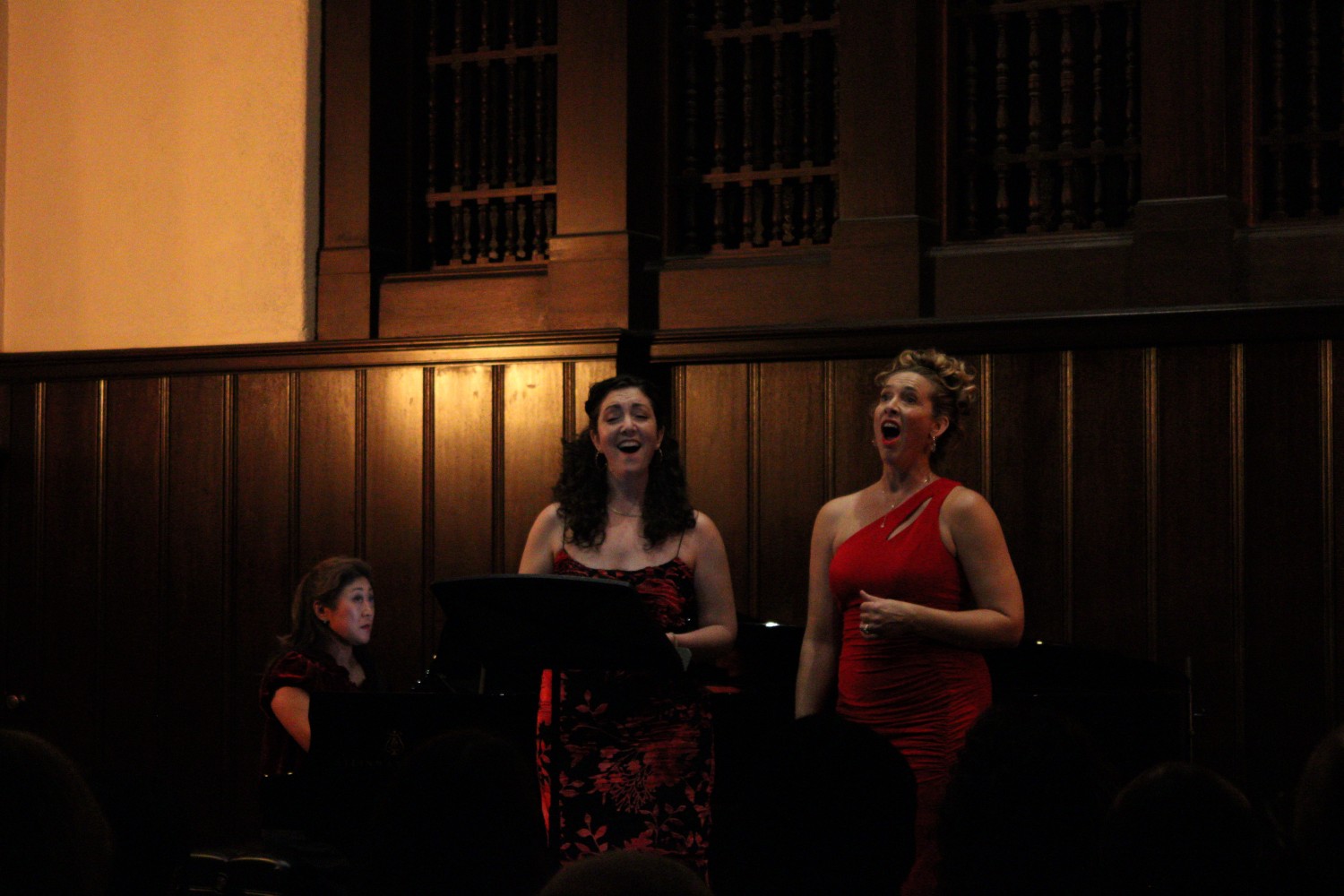
According to Hogle Brown, the name of the group was chosen to reflect collective ownership and artistic autonomy.
“We started calling [our ensemble] HERS because it is hers,” Hogle Brown said. “It belongs to us as a group.”
According to Roitstein, who is a Pomona College music lecturer as well as a HERS vocalist, the interactive cabaret format serves as a tool for dismantling the formal distance between classical performers and their audiences.
“With a cabaret recital, you get to go to a performance and feel like you know the [performer] afterwards,” Roitstein said.
According to Hogle Brown, the cabaret layout also allows the ensemble to tell authentic stories about women’s diverse experiences, moving away from traditional cliches.
“We staged a couple of pieces such as Dolly Parton’s ‘I Just Might’ and Sara Bareilles’, ‘Everything Changes,'” Hogle Brown said. “[These songs] were more realistic and representative of who we are as women, rather than the standard opera tropes, where we can’t marry the guy we love and we have to die. That’s just sad and pointless.”
According to Roitstein, traditional musical hierarchies are heavily male-dominated, leaving female performers feeling sidelined and hesitant to speak up.
“[At HERS] we are doing what women do — fighting for and creating our own opportunities when other people aren’t,” Roitstein said.
According to Hogle Brown, the cooperative atmosphere of HERS intentionally subverts standard industry power dynamics.
“To say what we [are] thinking, collaboratively, musically and artistically, [is] a breath of fresh air,” Hogle Brown said.
According to HERS composer and vocalist, Robles, the showcase provided a dynamic sonic landscape for the audience.
“We go from acapella singing [with] sparse high harmonies [to] singing that has more character and punchiness with the piano,” Robles said. “It will be a feast for the ears.”
According to Robles, individual compositions act as vital steps toward broadening the musical repertoire for future generations.
“It takes unknown numbers of raindrops to create a lake or a river, and I think all of us are contributing our drops,” Robles said.
According to Robles, her compositions are fundamentally shaped by the distinct geographical and cultural layout of Southern California.
“Los Angeles’s rivers, local mountain ranges and beaches [all] come out in my music,” Robles said.
Experiencing synesthesia allows her to translate the colors of sunshine and regional landscapes into distinct musical keys, Robles said.
“Southern California is very sunny and that sunshine connotes […] a brightness and a warmth,” Robles said. “[I associate] those reds and oranges with keys like E major and D major […] so I write those feelings.”
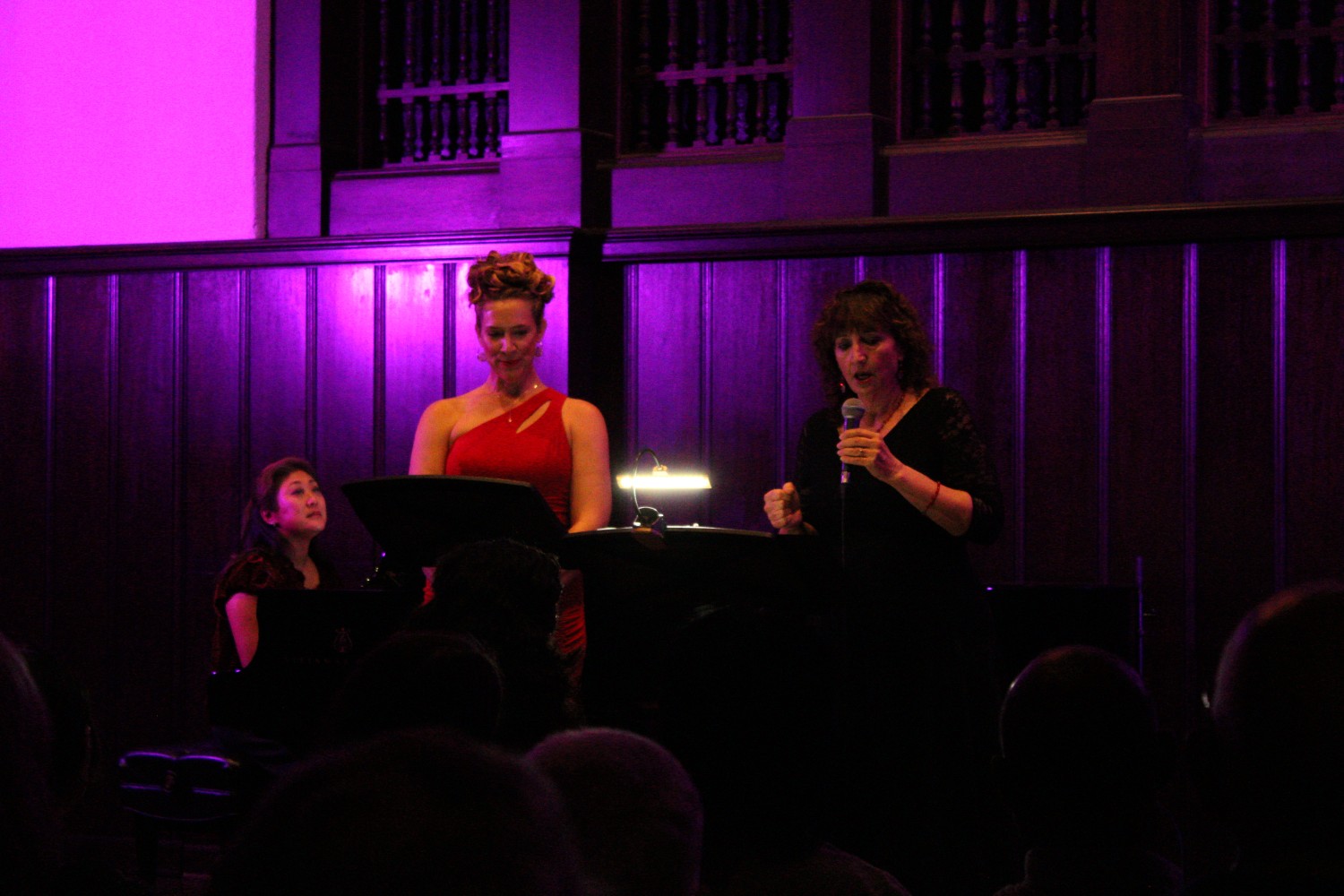
According to audience member and vocal coach Victoria Kirsch, self-governed ensembles represent the future of classical music.
“Making your own organization is really beautiful,” Kirsch said. “[The showcase] was wonderful.”
According to Robles, bringing professional collaborations to campus shows students that powerful artistic movements are taking place within their community.
“We have the capacity right here in our backyard,” Robles said. “We have people among us who are really extraordinary musicians and are doing extraordinary things […] I hope that they feel empowered to go out and make their own contributions to the musical landscape.”
Contact Mira Wirk at wirk@oxy.edu