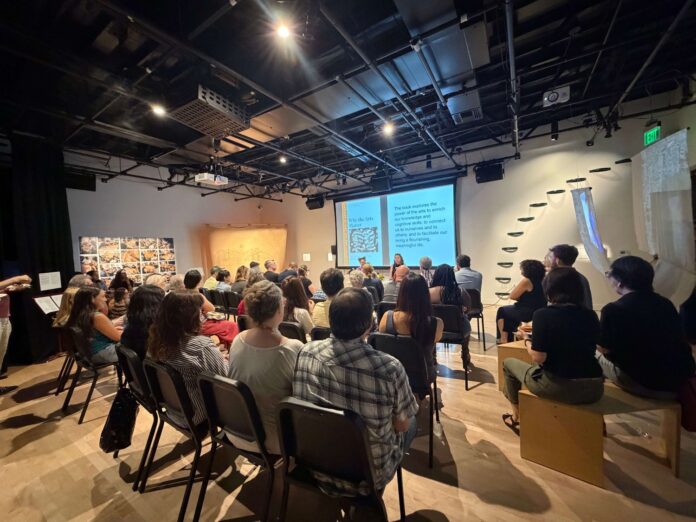
A book launch event was held at Oxy Arts Oct. 6 to celebrate the publication of “Why the Arts Matter,” written by Clair Morrissey, professor of philosophy and faculty director for Partnerships with LA, and Sasha Sherman, department chair and professor of cognitive science. The book was published June 2026, but the two began their project in 2022 after finding what they described as gaps in the general perception of art, Morrissey said via email.
According to Morrissey, both professors agree that enjoyment is only a small part of how humans cognitively understand the value of engaging with art.
“[The book] was really about trying to draw from [a] broader perspective and philosophy, but also from art makers themselves, like artists, art therapists or educators, who have a much broader and more expansive way of thinking about the value of art,” Morrissey said. “[We] used that perspective to think in new ways about what the scientific questions could be and how they could be studied.”
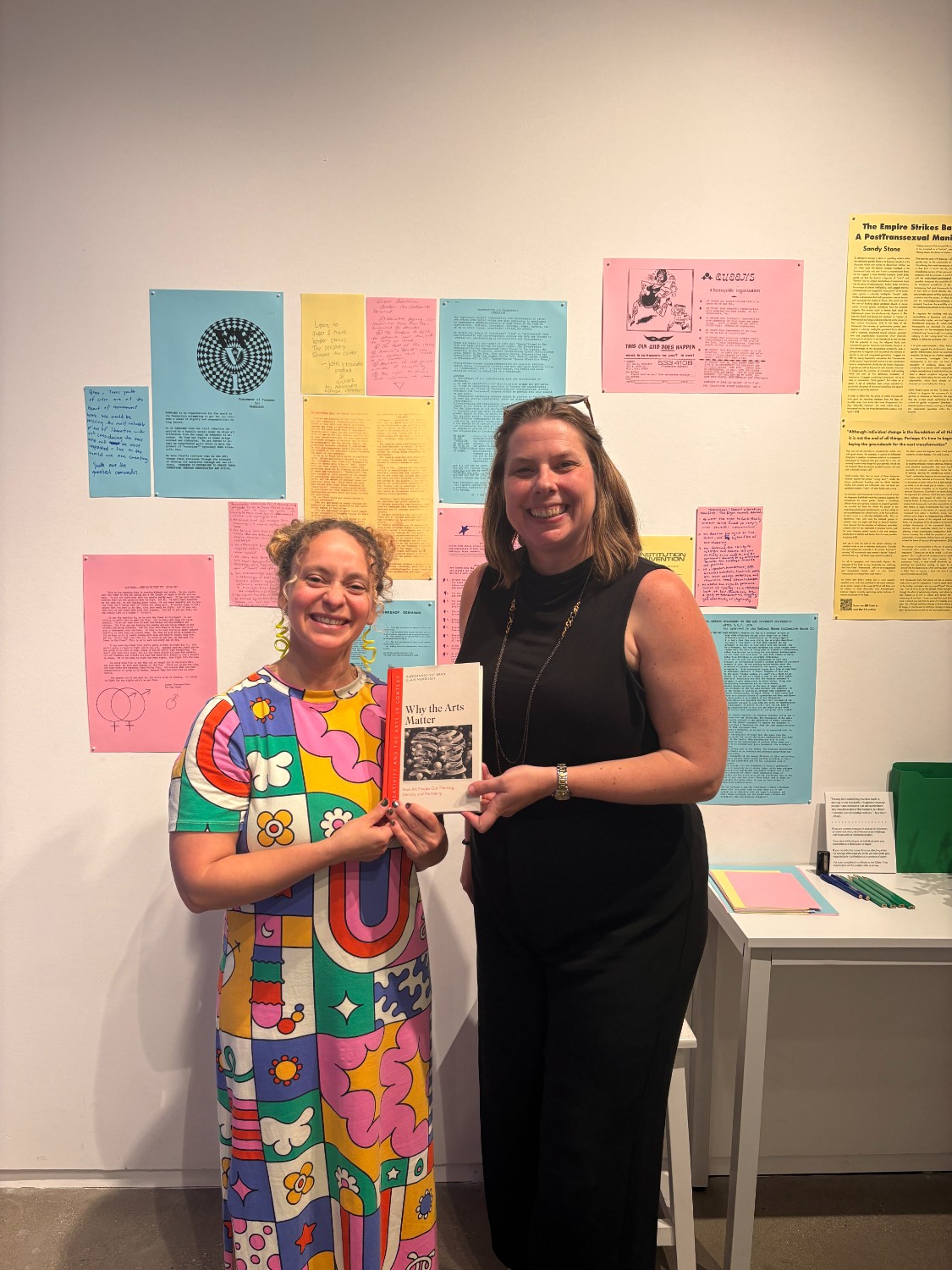
At the event, Morrissey and Sherman said this understanding prompted them to write “Why the Arts Matter”: to encourage readers to think about how their engagement with art influences their self-identity.
According to Sherman, the book highlights core skills in art engagement: observation, attention, emotional intelligence, open-mindedness and creativity. Sherman said while these themes are organized into clusters, they are interconnected rather than distinct.
“It doesn’t mean that each of these concepts are mutually exclusive from each other,” Sherman said. “Thinking about observation and attention isn’t distinct from thinking about emotional perception or empathy, which also isn’t distinct from open-mindedness and creativity.”
According to Morrissey, writing a book that bridges two different fields of study posed challenges, as Sherman and herself were accustomed to separate methodical processes.
“[It was] really challenging because we both have [our own] personal habits and ways of doing things, but also are training these really different disciplinary ways,” Morrissey said. “Every day and every element of the process was a little bit different.”
Morrissey and Sherman said during the event that they worked together on every book chapter, attempting to connect their respective disciplines. Morrissey said during the research and writing process they sought to develop a common language.
“We worked really hard to try to understand each other and integrate our different perspectives […] while also maintaining the integrity of both of our disciplines,” Morrissey said. “I think it’s a translation project, but it’s [a] more specific way of organizing concepts.”
Sherman said she was able to expand her understanding of art by collaborating with Morrissey.
“Philosophical approaches are really helpful in making those [definition] distinctions and making them really precise,” Sherman said.
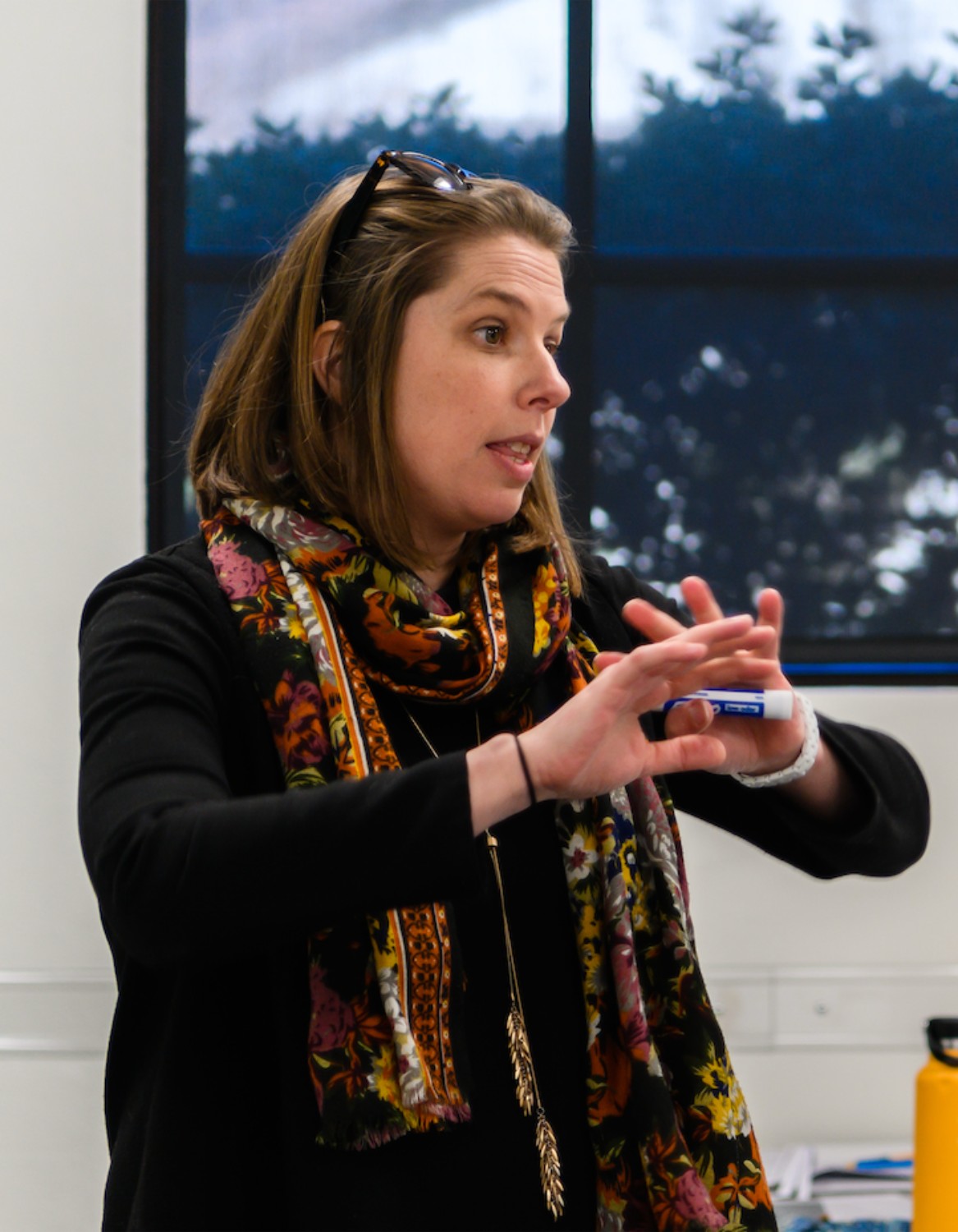
According to Sherman, art is foundational to who she is. Sherman said reading “The Wind-Up Bird Chronicle” by Haruki Murakami during graduate school was a transformative experience.
“It changed the way that I understood literature and books,” Sherman said. “Especially with respect to closure and how much closure is needed.”
Beatrice Neilson (junior), who attended the book launch and has taken Morrissey’s classes, said the book emphasizes the role of art in human life.
“It is an important contribution to the discussion about what we can gain from engaging with art, not just as a […] luxury, but as something really essential to the way we live and learn,” Neilson said. “[The event] helped me appreciate the ways that art can help communities and individuals, cognitively and socially.”
Robert Sanchez, department chair and associate professor of philosophy at Occidental, said while he has not read the book yet, he believes it situates art through a new lens.
“It sounds like an amazing project that will shed some light on the value of the arts for all of us,” Sanchez said.
Sanchez said the book talk challenged his understanding of art through his own discipline, and situated a push for interdisciplinary research.
“As a philosopher, I tend to think of things from the humanistic perspective, so it was really nice to hear how they collaborated in terms of offering both scientific evidence and a humanities perspective,” Sanchez said. “[During the event] the dialogue developed between the two of them […] about the value of art interdisciplinarily.”
At the end of the event, Sherman discussed the practice of engagement — the importance of slowing down and encouraging readers to embrace the unknown.
Morrissey said art allows humanity to appreciate one another’s individuality. According to Morrissey, asking questions and interrogating one’s own perspectives can challenge personal assumptions.
“What is empathy? What is the value of it? What do you mean by identity?” Morrissey said. “All of these huge questions are treated differently in each discipline, that was kind of what we [wanted with the book].”
*Beatrice Neilson was a staff writer for The Occidental
Contact Irene Jung at ijung@oxy.edu