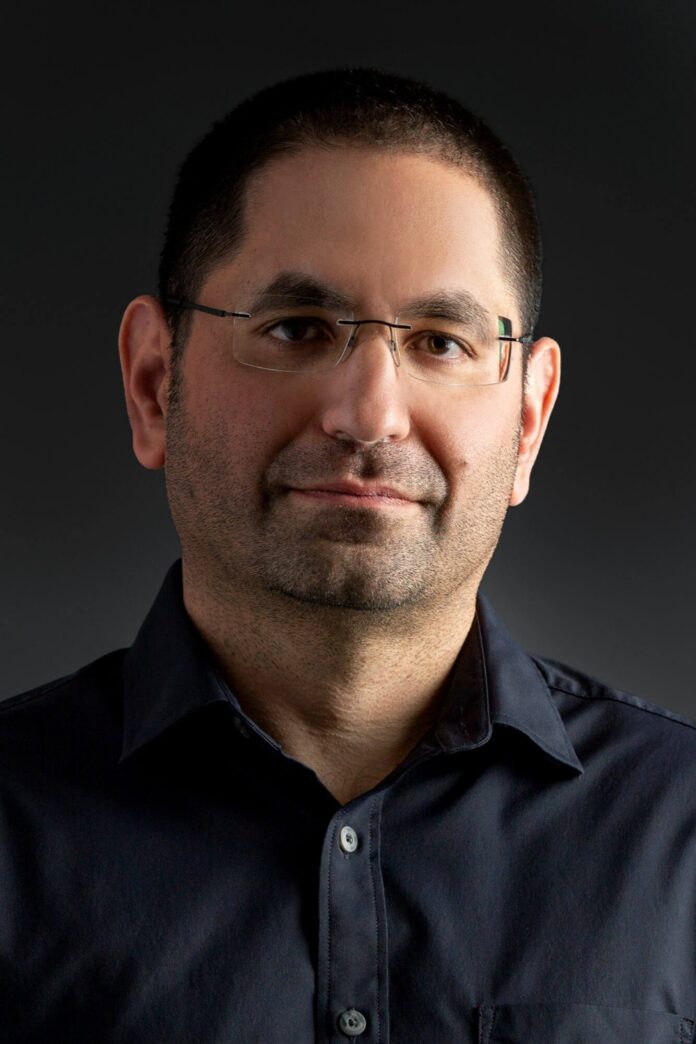
Investigative journalist and author Brian Joseph spoke at the Seminar for Survivors event in Choi Auditorium Sept. 19. The event was hosted by Survivor Strategies and Joe Dunn, former California state senator, who coordinated conversations for survivors of sexual assault.
Joseph said he advocates for survivor representation through various media outlets.
“I believe [sexual assault] is an issue that needs to be discussed and really wrestled with in a way the public can understand,” Joseph said. “Those kind of stories aren’t being covered.”
Dunn said the premise of the seminar was to condense the content of a semester-long course he taught on political advocacy at Irvine Law School, with former California state sen. Dick Ackerman, into one day.
“[The seminar] had a number of formerly elected [politicians] — both Republicans and Democrats — men, women and staff throughout the day, that followed a set agenda, which I worked with the survivor community leadership to put together,” Dunn said. “The most powerful voice in politics for survivor rights is the survivor themselves.”
Occidental professor and chair of Gender, Women & Sexuality Studies Caroline Heldman said organizers of the event were from Sexual Predator Accountability Institute and Survivor Strategies, which she co-founded along with Sam Maloney.
“[Joseph’s] work stands apart in that he is trauma informed […] I feel comfortable having him speak with survivors,” Heldman said.
Joseph said Dunn has been very supportive of his book, “Vegas Concierge: Sex Trafficking, Hip Hop, and Corruption in America.” According to Joseph, he started his career doing investigative work in foster care and then the juvenile justice system in LA County.
“I think one of the things that was important to extending my career as a journalist was figuring out the kinds of stories that are important to me,” Joseph said.
Co-founder of Survivor Strategies Sam Maloney said she is grateful the seminar provided a conversation about political advocacy.
“Unless you know what goes on in the inside, it’s really difficult to try and get some of these laws passed,” Maloney said. “You’re banging your head against the wall if you don’t understand how exactly the system works.”
According to Joseph, when he meets with survivors of sexual abuse, he takes the time to explain his role and why he asks the questions he does during an interview. Joseph said it is important to refer to allegations, police reports and lawsuits in stories.
“For me, stories and sources and truth have always come first,” Joseph said. “It’s important as a journalist, to base your reporting on verifiable and confirmable facts and to be sober-minded in the reporting of those facts.”
According to Joseph, California passed a look-back window in 2019. Joseph said it reopens cases which have passed the statute of limitations, and allows victims of sexual abuse to file a lawsuit against the perpetrator.
“This look-back window allowed victims of sexual abuse involving public institutions, to go back and file lawsuits on incidents that occurred after the statute of limitations,” Joseph said. “That look-back window resulted in a deluge of lawsuits and claims brought against Los Angeles County.”
According to Joseph, LA county settled around 10,000 claims for a total of $5 billion.
“Los Angeles county did not actually adjudicate any of these cases, did not do discovery, did not do anything of that nature,” Joseph said. “They just settled these cases.”
Joseph said he covered the process of LA County working with the state to pass SB 577.
“[SB 577] was approved by the legislature at the very last minute in August to essentially limit the rights of sexual abuse survivors to file future lawsuits of this nature,” Joseph said. “The argument for that is it protects government workers.”
Joseph said although social media can be an avenue for survivors to bring attention to their stories, it does not necessarily provide the same level of credibility as legacy news sources do.
“A book provides a very large format to write about issues in a way that even legacy media does not allow for,” Joseph said. “These issues can be quite complex.”
Heldman said social media offers an alternative path for survivors to find justice, which could look like telling their story to the public.
“Given that only two percent of rapists will ever be held accountable by our, quote unquote, justice system, [the legal process] is terrible for survivors,” Heldman said. “You get to the other side and you don’t get any justice. But there might be another avenue, which is media justice.”
Heldman said she helped coin the term “media justice.”
“When I’m meeting with a new survivor, the first question I will ask them is, ‘what does justice look like for you?'” Heldman said. “They’re probably not going to find it in a court of law, but they might find it by being able to name their predator in a public setting.”
According to Heldman, reporters are playing a bigger role since the #MeToo movement in debunking rape myths. Heldman said being trauma informed is to recognize that discussing traumatic events can be triggering.
“It’s [about] creating a space where survivors can be more forthcoming because they don’t fear that they’re going to be re-traumatized,” Heldman said.
Heldman said Joseph is informed and knows how to approach a conversation by creating a space for survivors to tell their story.
“In reality, over 80 percent of sexual violence is committed by somebody you know […] it’s often happening in homes or spaces where you are liable to feel comfortable,” Heldman said.
Contact Lila Weiner at weinerl@oxy.edu