

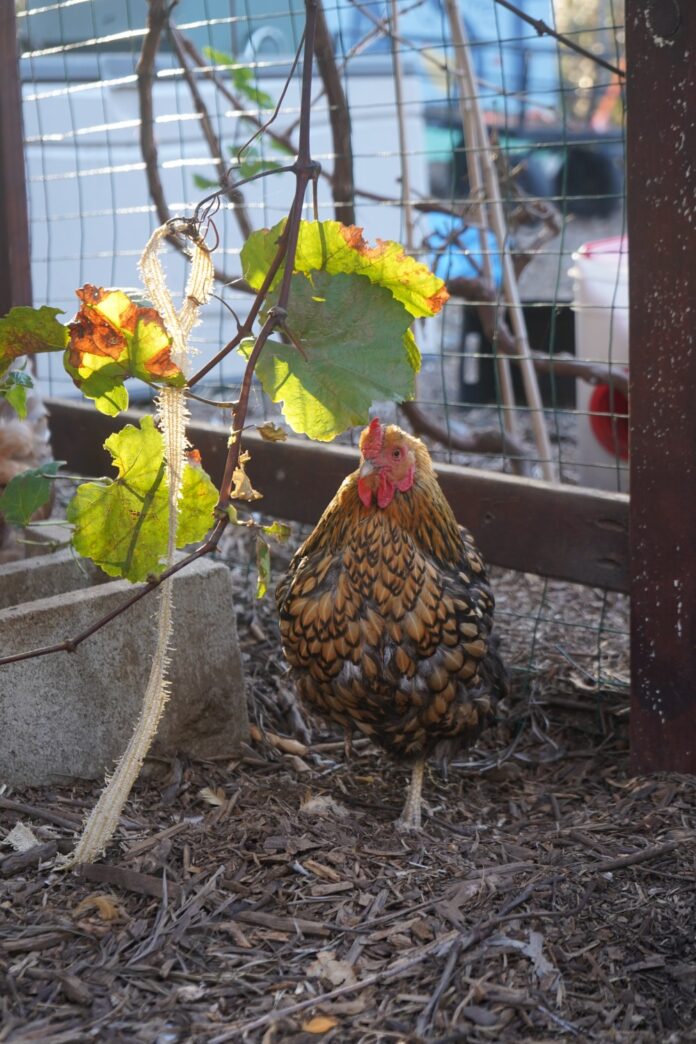
Fostering chickens is essential coursework for “Urban Sustainability: Raising Animals as a Part of Regenerative Agriculture,” an Urban & Environmental Policy (UEP) course. According to visiting UEP instructor Jordanne Dervaes, she takes full advantage of the Food, Energy and Sustainability Team (FEAST) Garden on campus by using chickens and poultry as a starting point for the class.
Dervaes said once the class begins each semester, she develops related lessons and creates a web of topics important to food and how we consume it.
“[Chickens] are the guide animal that bring us through the class,” Dervaes said. “We begin with the chicken, and then we start to explore more […] you start seeing the inter-connectedness of the world.”
Dervaes said she spends a lot of time teaching her students to understand the chickens rather than simply how to use them. According to Dervaes, the course starts with a process called ‘demystifying the chicken,’ which consists of examining their history and behaviors.
“Our relationship with the chicken is something on a plate,” Dervaes said. “We really get down and examine them as what kind of creatures they are, their history, and how they came to be this food source that is so abused and misused.”
According to Dervaes, the way chickens are treated by the meat industry is incongruent with their nature.
“They’re just considered cheap meat,” Dervaes said. “They’re highly abused when they are complex, social, intelligent creatures.”
Dervaes said, she puts emphasis on regenerative agriculture, limiting outside influence on agriculture and self-sustenance. Dervaes said one way she and her students implement these practices within the FEAST Garden is by turning chicken manure into fertilizer to help the food grow.
“[Growing food will] become more of a closed loop cycle, rather than just reaching for a bag of feed,” Dervaes said.
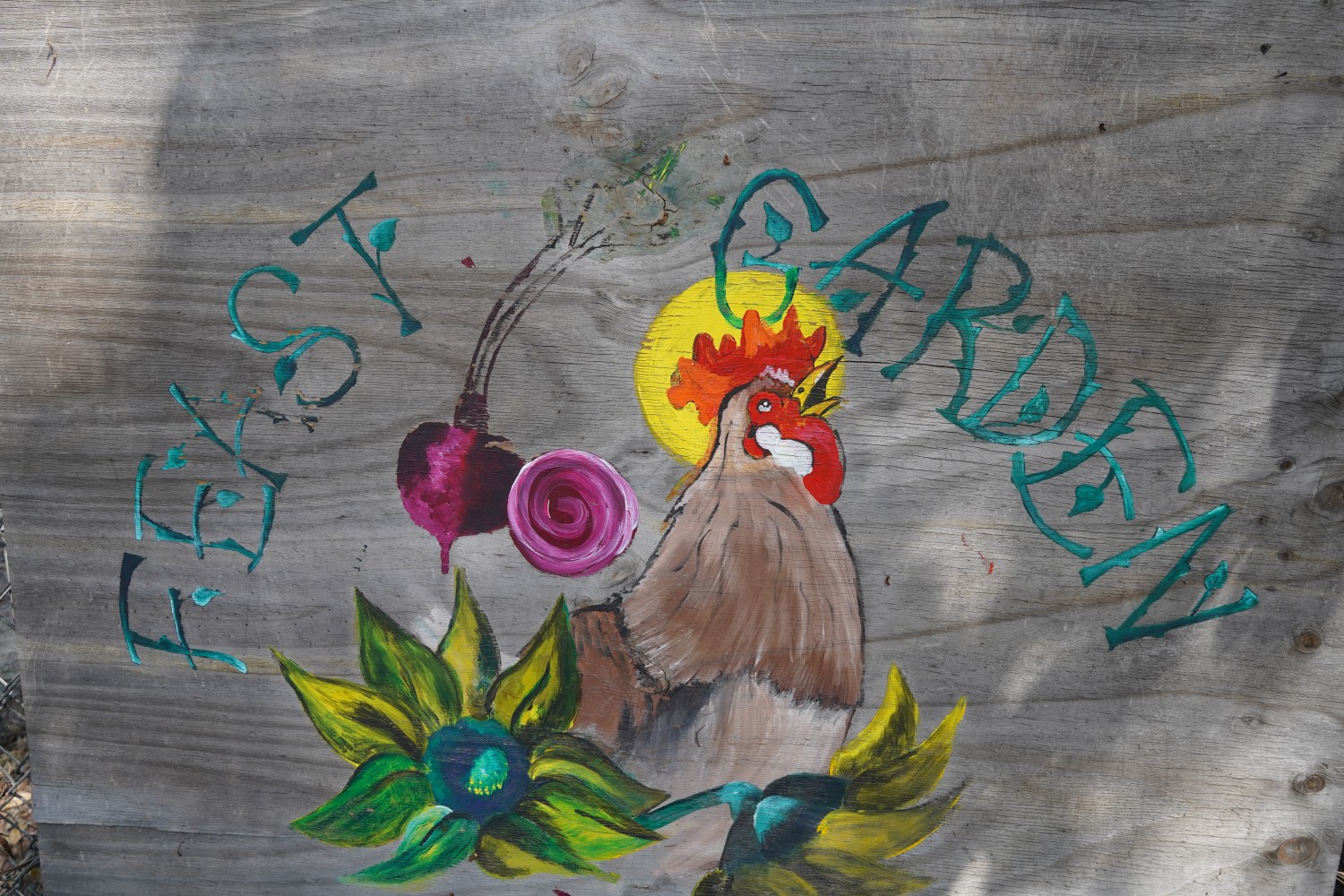
Sabine Beale (junior), a UEP minor, is a compost coordinator at FEAST Garden, which entails gathering organic waste from the Marketplace and repurposing it. According to Beale, the class encouraged her to apply for the position.
“I hadn’t been interested in farming or gardening before coming to Oxy, but having a hands-on perspective was very informative for me,” Beale said. “The class is a great way to spend time in nature with animals and connect to the food system.”
According to Dervaes, another goal of the course is contributing to a broader understanding of life itself.
“It’s beyond chickens, it’s beyond farming,” Dervaes said. “It’s about who we are as people, and how we treat each other, and the respect we have […] It’s that philosophy: reverence for life.”
Dervaes said the treatment of animals as just a mere source of food is ultimately harming our society, and these kinds of lessons are the ones she teaches her students.
“It’s a human issue, not just an animal welfare issue,” Dervaes said.
According to Dervaes, this philosophy also reflects the greater focus she has on the mental health of her students. She said she had a strong emotional reaction when she read the evaluations from her students.
“I’m honored and I’m humbled by what they wrote, because I don’t think I have that much of an impact,” Dervaes said.
According to Dervaes, this is an important aspect of the course.
“It’s about connecting back to yourself,” Dervaes said. “We need to understand that we are a lot more connected to nature than we are encouraged to be.”
Alexa Rose (senior), a UEP major and a current student of Dervaes, said the FEAST Garden was a big draw for her. Rose said the outdoor location benefits her and other students’ mental health.
“I like to be in nature, and I found that the FEAST Garden was a really good escape for me,” Rose said. “This [course] gives me an excuse to be more hands on, and another good excuse to be back in the garden.”
According to Rose, one of the reasons she wishes more people could take the class is the interactions with the chickens.
“It was nice to have the baby chickens that are still little,” Rose said. “I definitely wish people could experience that.”
Dervaes said one of the most important things that she wants to bestow upon her students is an awareness of the agriculture system’s flaws.
“Pull the thread and the whole system unravels, and I don’t know how to put the system back,” Dervaes said. “I just want you to be aware of what is wrong, and we could talk about how we can make choices we feel are moral.”
Contact Colin Robinette at crobinette@oxy.edu



I took this class in my sophomore year at oxy and loved it! Jordanne is a wonderful teacher and spending time with the chickens is still a highlight of my oxy experience! I hope this class continues to be taught!