

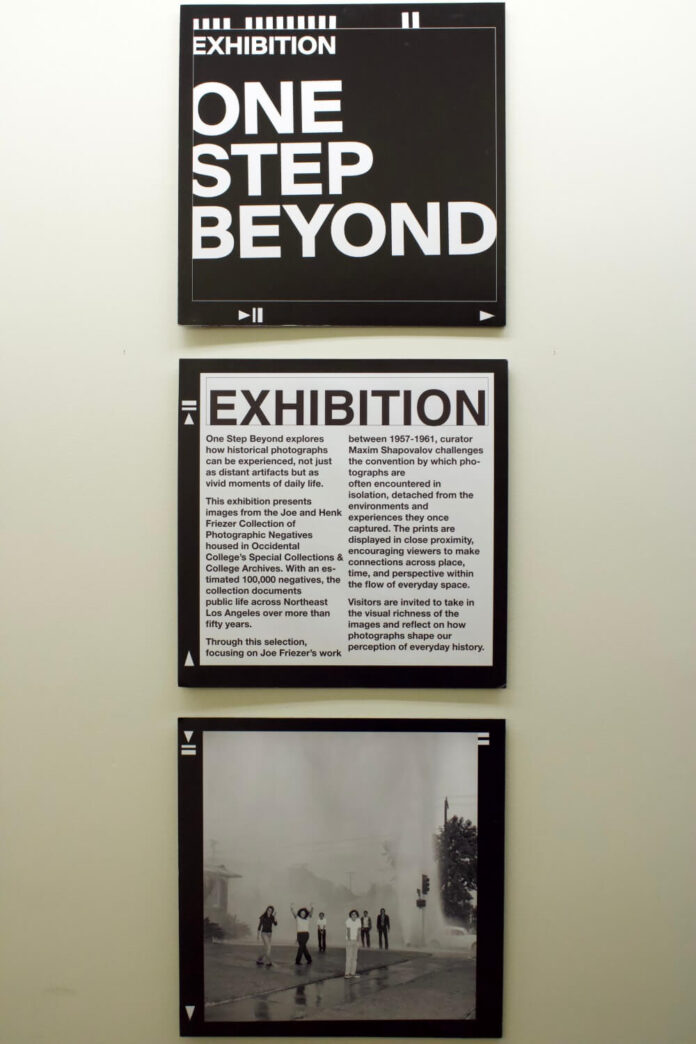
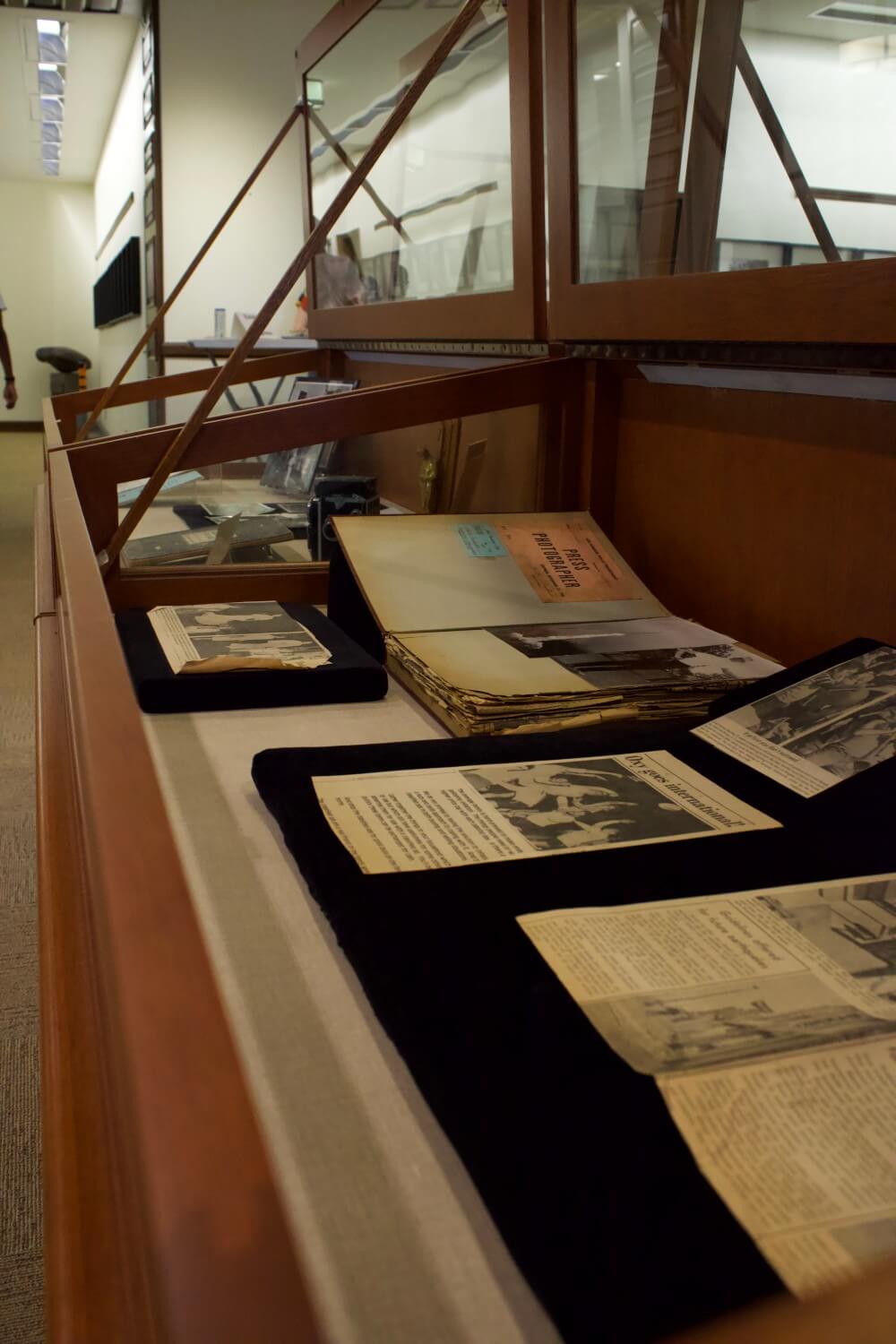
The Joe and Henk Friezer Photography Negatives came to Occidental’s Special Collections in 2015. “One Step Beyond,” an exhibit which opened Sept. 10 in the Mary Norton Clapp Library, displays 43 black-and-white prints from the Friezer collection, dating from 1957 to 1961.
Alanna Quan, Occidental Special Collections archivist, said the father-son duo worked in and around Northeast LA (NELA), with Joe Friezer having established Friezer Photography after immigrating to Eagle Rock from the Netherlands with his family in 1955.
“The result was that a huge portion of their archive documents the history of Northeast LA.” Quann said.
Maxim Shapovalov, curator of “One Step Beyond,” said he selected the five-year period as a starting point for introducing the collection to the public.
“To show everything is impossible,” Shapovalov said. “I decided to start from the year when Joe Friezer immigrated to the United States.”
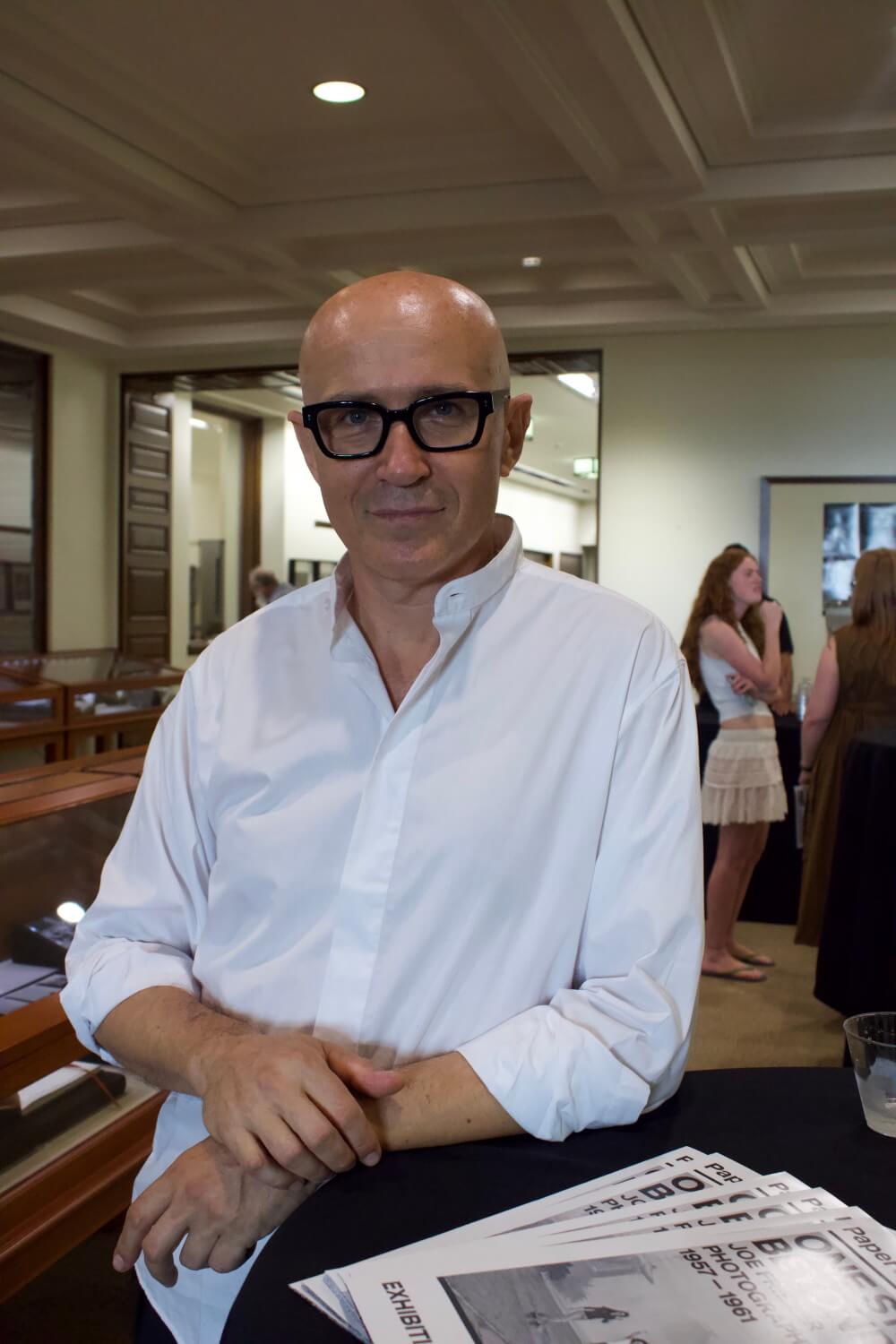
Shapovalov said his method for selecting photographs for the exhibit was influenced by his own experience as a photographer.
“It’s something intangible,” Shapovalov said. “There is something that you see in the photographs and it grabs your attention — the subject, the background, the lighting, the moment. All the ingredients come together,”
According to Shapovalov, instead of choosing a singular focus, he chose images that could collectively tell a story about Northeast LA.
“It’s a little bit of [car] accidents, a little bit of children, a little bit of streets, a little bit of everything,” Shapovalov said.
Shapovalov said the variety of Joe’s photography made the curation process easier.
“They called him one-shot Joe. He didn’t just waste film. He was very selective,” Shapovalov said. “There was a huge variety, not just repetitive images.”
Helena de Lemos, Occidental Special Collections curator said the photographs have a strong artistic and aesthetic quality, even though they are intended to be photojournalism.
“I do love his framing and his great understanding of light,” de Lemos said. “He had the eye to see how they would play out in black and white.”
According to Quann, Joe Friezer would often use a police radio to locate accidents and events to capture.
“You get these little snapshots into people’s lives,” Quan said. “You can put yourself in their shoes, or in the scene, and feel a little bit of what it felt like to be there in that moment.”
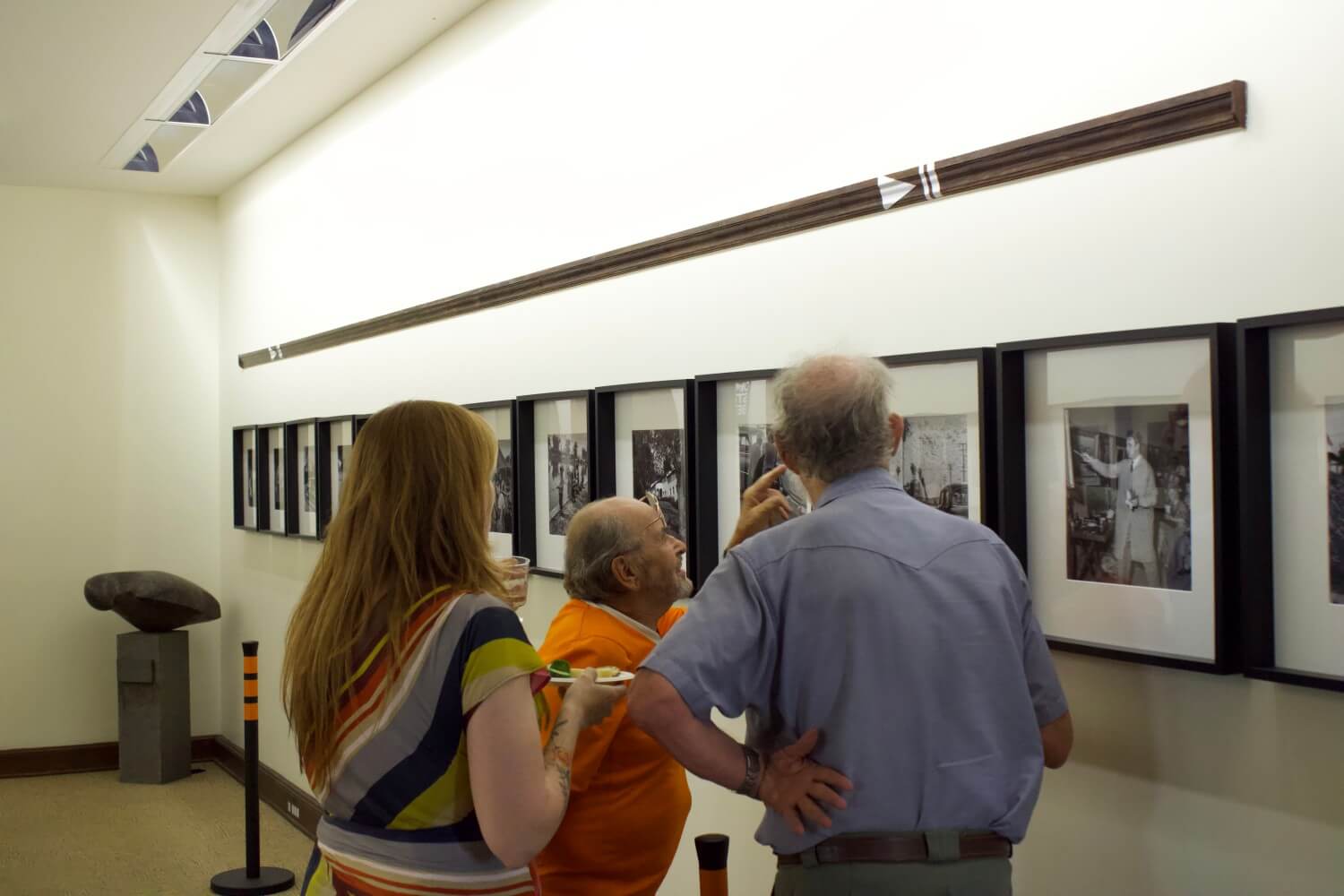
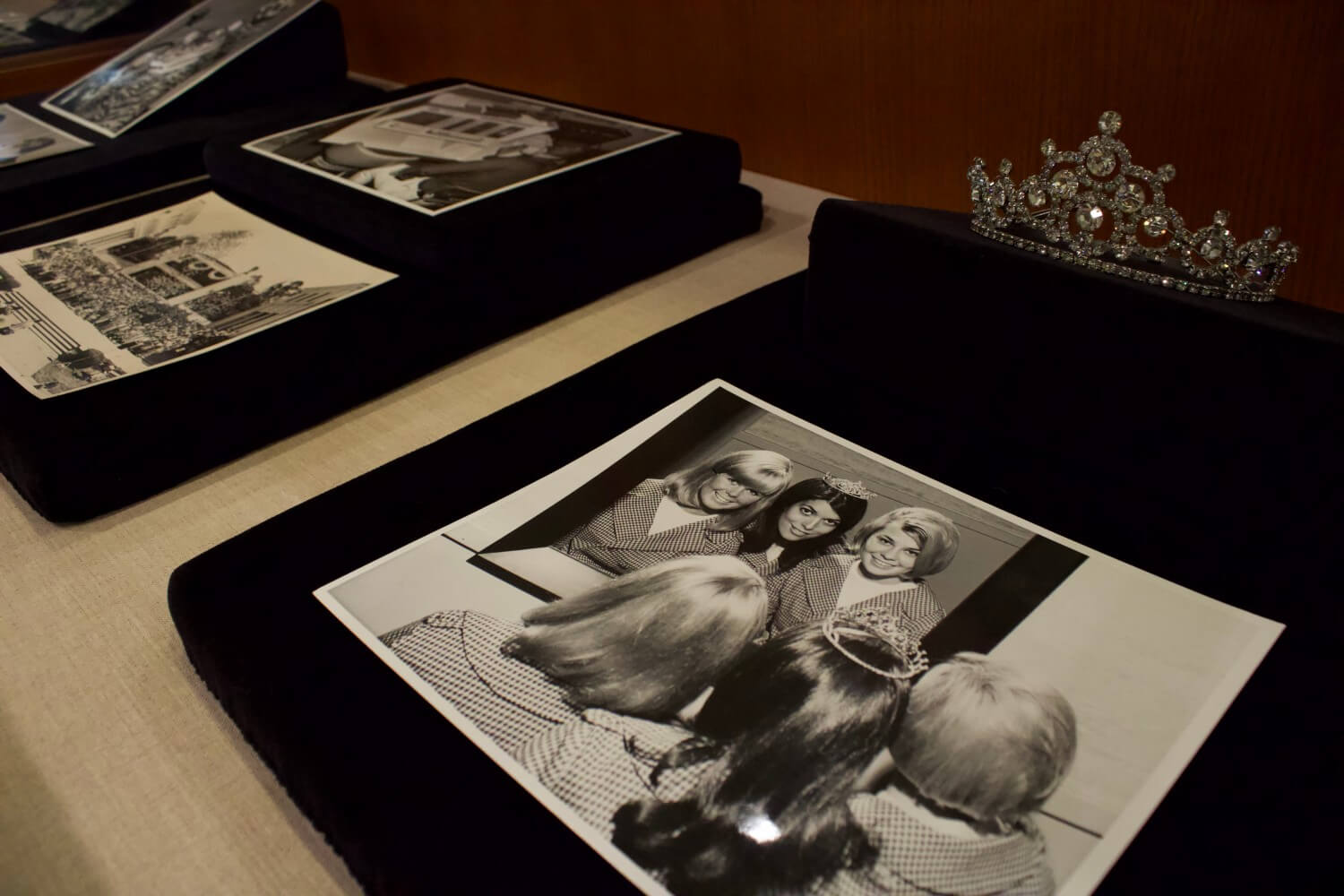
According to Shapovalov, the negatives he chose for the exhibit were from The Daily Bulletin, capturing the day to day of life in Northeast LA.
“His life was chaotic,” Shapovalov said. “I thought that the exhibit should be just like the chaotic every day of life.”
Quan said only a portion of the massive collection has been scanned because the process of digitizing negatives is incredibly time-intensive.
“For a long time, they [the negatives] were here and we were keeping them safe,” Quan said.“It would be very uncommon to digitize the entire collection. There are very few institutions that have the resources to do that.”
Quan said Shapovalov began digitizing a year ago and is now about two-thirds of the way through the collection.
“He started on box one and he’s been just opening up every envelope,” Quan said.
Shapovalov said patience drove his work in the collection.
“It’s like a hunt. [I am] constantly finding something else, something new,” Shapovalov said.
Henk Friezer, son of Joe Friezer, said he was in awe at the exhibit. Until the gallery opening, Henk Friezer said that he had only ever seen his late father’s negatives.
“Seeing the actual pictures — and this is only a fraction — it’s amazing. It’s great to see the work they’ve put into it,” Henk Friezer said.
According to de Lemos, the exhibit was a learning process for Special Collections, preparing the team for organizing future gallery events.
“The next round is going to flow smoother. We do many exhibits, but this is a level higher,” de Lemos said. “We’re really proud of what Maxim has put together.”
Quan said Shapovalov’s work has contributed to making the collection more accessible, but digitizing the negatives is only the first part of the process.
“Right now it’s just an obscure list of numbered files in our hard drives,” Quan said. “Getting it up somewhere where people can actually look at it and access it—that’s really the next step.”
Shapovalov said the digitization of the negatives brings a new perspective and life to the photographs.
“I think this is like a rebirth of this collection,” Shapovalov said.
Quan said she hopes people share the same emotions she felt when seeing the exhibit.
“These are amazing photos,” Quan said. “It’s an amazing glimpse into history.”
Henk Friezer said he is glad that he made the decision to donate the collection to Occidental.
“I didn’t want to see it end up in a trash can somewhere,” Friezer said. “Now the legacy will go on. I would like others to be able to enjoy it because there’s a lot of history, and you can’t change history.”
Contact Amelia Gehlhaus at gehlhaus@oxy.edu



Excellent job, Amelia -very interesting article – things I have not thought about before.