The Occidental Symphony Orchestra held its annual community collaboration concert with the Pasadena Youth Symphony Orchestra (PYSO) and Occidental Jazz Ensemble March 1 in Thorne Hall, featuring pieces by Duke Ellington, Antonin Dvorak and Gustav Mahler.
Choi Family Director of Instrumental Music and conductor of the Occidental Symphony Orchestra Chris Kim said the orchestra has been attempting to make youth the theme of their March concerts.
“Last year, we did an instrument petting zoo,” Kim said. “We had a local instrument maker place instruments on the stage so little kids could try them out for the first time.”
Kim said 12 of the 55 members of the Occidental orchestra are staff, faculty and people that live in the Eagle Rock neighborhood, while the rest are students.
“This will probably be an ongoing tradition…[collaborating with] other youth orchestras and high schools,” Kim said. “We’re trying to be present in the community.”
The concert began with Duke Ellington’s “Three Black Kings,” featuring the Occidental Jazz Ensemble and a solo by saxophone instructor Daniel Rotem. Kim said the three movements of the piece represent King Balthazar, King Solomon and Martin Luther King Jr.
First chair cellist Florence Lo (junior) said she was excited to play the Ellington piece, because jazz is not typically part of the repertoire of a classical orchestra.
“When we’re rehearsing at Thorne, it’s cool to listen to the feedback of the sound,” Lo said. “It’s a very resonant hall. Playing with that many other people and executing a piece well is really satisfying.”
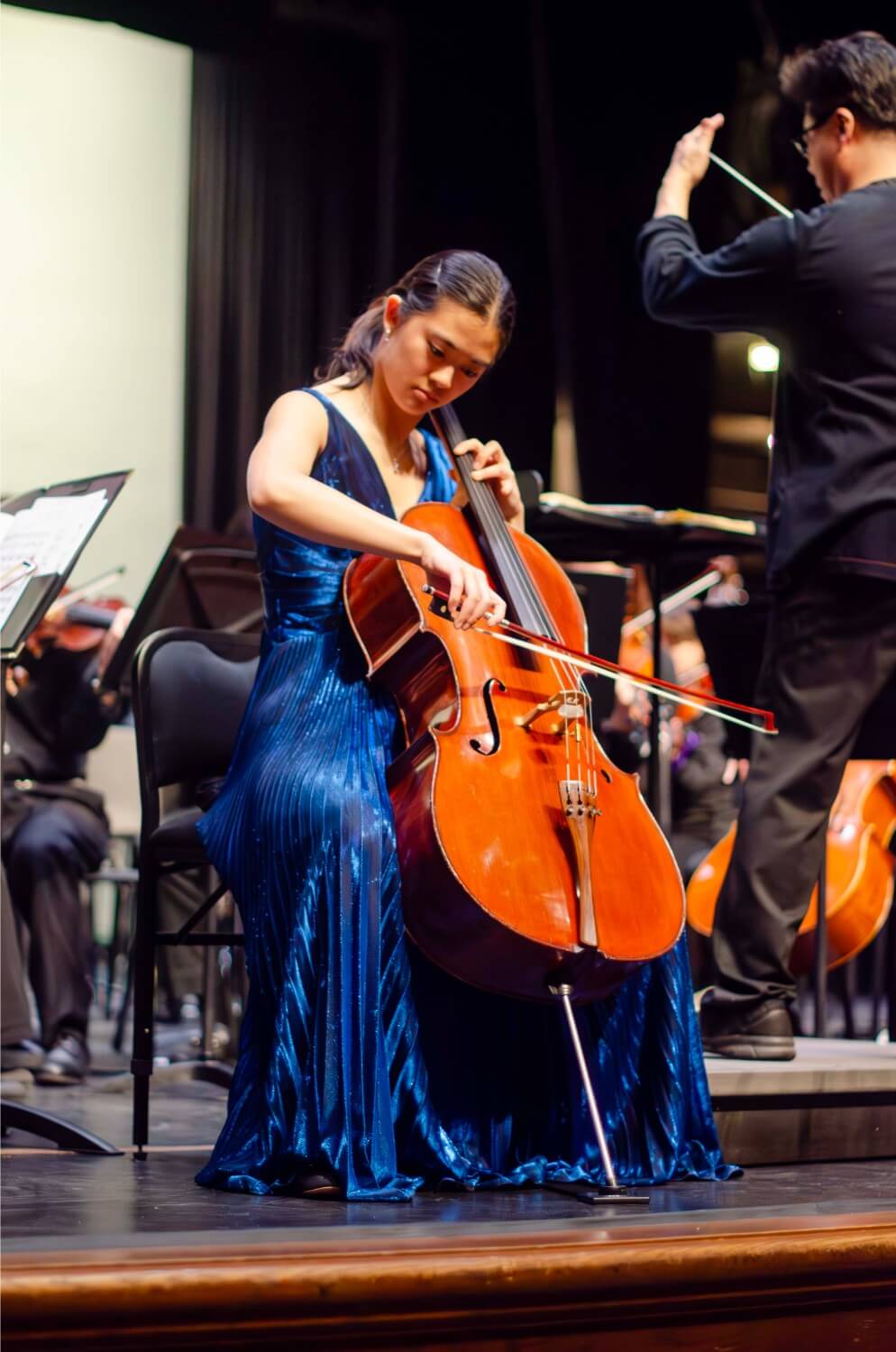
The performance continued with “Cello Concerto in B minor” by Antonin Dvorak, featuring PYSO cellist Kaitlyn Hong, and “Symphony No. 1 in D Major” by Gustav Mahler. Kim said he chose these pieces because he wanted to tackle a repertoire that is not normally open to the orchestra.
“The Mahler and Duke Ellington pieces call for over 100 musicians,” Kim said. “I knew we wanted to do something big [for this concert]. Usually when Oxy plays alone, we have to play orchestral pieces that are a little smaller.”
Flutist Anastasia Savastio (first year) said she loves being able to play music in different styles and that playing in an orchestra helps her manage her stage fright.
“It’s a fun variety of pieces. Chris Kim always tries to do different things,” Savastio said. “When you’re playing with other people in an orchestra, it’s easier to perform, because you’re not playing by yourself. Everyone is always supportive, which really helps with anxiety.”
Kim said the collaboration was easy to organize as the conductor of both the PYSO and Occidental’s orchestra, but physically fitting the three ensembles on the stage was challenging.
“We usually are just 55 people. I didn’t know if we were going to fit,” Kim said. “It’s tight quarters and we have to sacrifice a sound shell — which pushes the sound toward the audience — but we make up for it because we are such a big orchestra and are much louder.”
Kim said because the orchestra is so large, they must articulate every sound clearly to stay together.
“Imagine you’re making a speech, but you have to give that speech at the same time as 136 other people,” Kim said. “You have to coordinate how you articulate each sound, each word. It’s quite challenging, but it forces both groups to listen to each other very closely. It’s a great learning experience for both orchestras.”
Kim said the PYSO has been rehearsing at Thorne Hall since the Eaton fires damaged parts of Pasadena High School where they would normally practice.
“This semester, there are 30 families in the Pasadena Youth Symphony who lost their homes in the fires. Oxy was very generous and opened its doors to us, so now we can rehearse every Sunday night,” Kim said. “It’s nice to have this six-week period for rehearsal. A professional orchestra would have two short rehearsals and then a concert. We’re much more generous to students making mistakes.”
Lo said one of the challenges of rehearsing for the joint concert was trying to match different sounds and styles of playing with the PYSO.
“I’m the sectional leader here, but there’s also a section leader at [PYSO]. We had different bowings and articulations, so we had to try to create to a uniform sound,” Lo said. “Bowings are articulations that indicate different ways to play a note. There’s an endless amount of combinations you can have in a piece for a string orchestra.”
Kim said he values the experimental aspect of learning and teaching the pieces to his students.
“A lot of conductors tailor their rehearsals toward the final performance, but the journey of learning the piece together and trying things out is really important,” Kim said. “In the end, the concert is just a snapshot of a moment. It’s healthier to strive toward the [performance] by putting time and effort into practice.”
Contact Josey Long at jlong2@oxy.edu