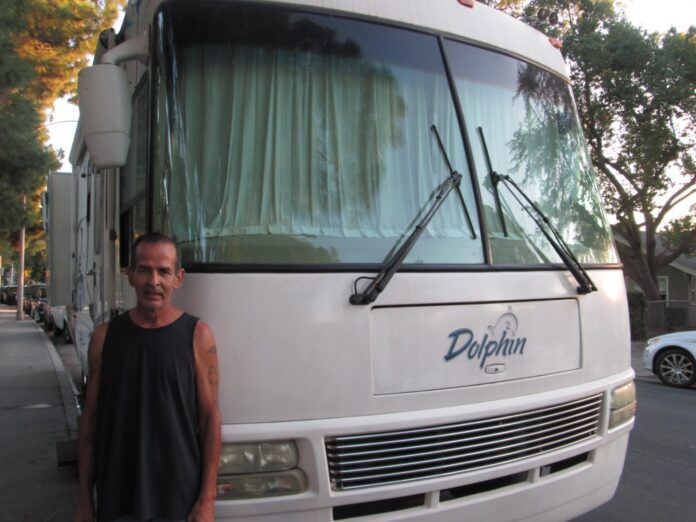
According to a report from the Los Angeles Homeless Services Authority (LAHSA), LA has seen a 7.9 percent increase in unsheltered homelessness from 2025 to 2026, driven in part by a 580-person increase in people living in RVs. As reported by the Los Angeles Times, some residents are apprehensive of this rise in occupied RVs in neighborhoods.
Chris Krasovic said he bought his motorhome six years ago and has been living in it for the last two years, parking on Campus Road near Occidental. Krasovic said he feels connected to the community on campus.
“When I go [to the college] with my dog, [the students are] happy to see her because they say it’s like therapy,” Krasovic said. “It’s like therapy to me too, because when I bring her back, she’s calmed down.”
Eric Bjorklund is an assistant professor of sociology at Occidental and lives in the same neighborhood as Krasovic. Bjorklund said his research specializes in how distributions of power shape material conditions and formal political processes.
“It is a little bit of an interesting thing to see RVs, but it quickly makes sense […] [given] the politics of housing around here and the housing market in general,” Bjorklund said.
According to Bjorklund, considering the price of housing and the limited amount of habitable space available, it is unsurprising that people have created alternative ways to try and survive. Bjorklund said he has never had issues with people who live in their RVs and believes that having RVs in his neighborhood is unobtrusive.
“I haven’t encountered any nuisance at this point; it seems everybody’s really nice and respectful — it’s just another car in the neighborhood,” Bjorklund said.
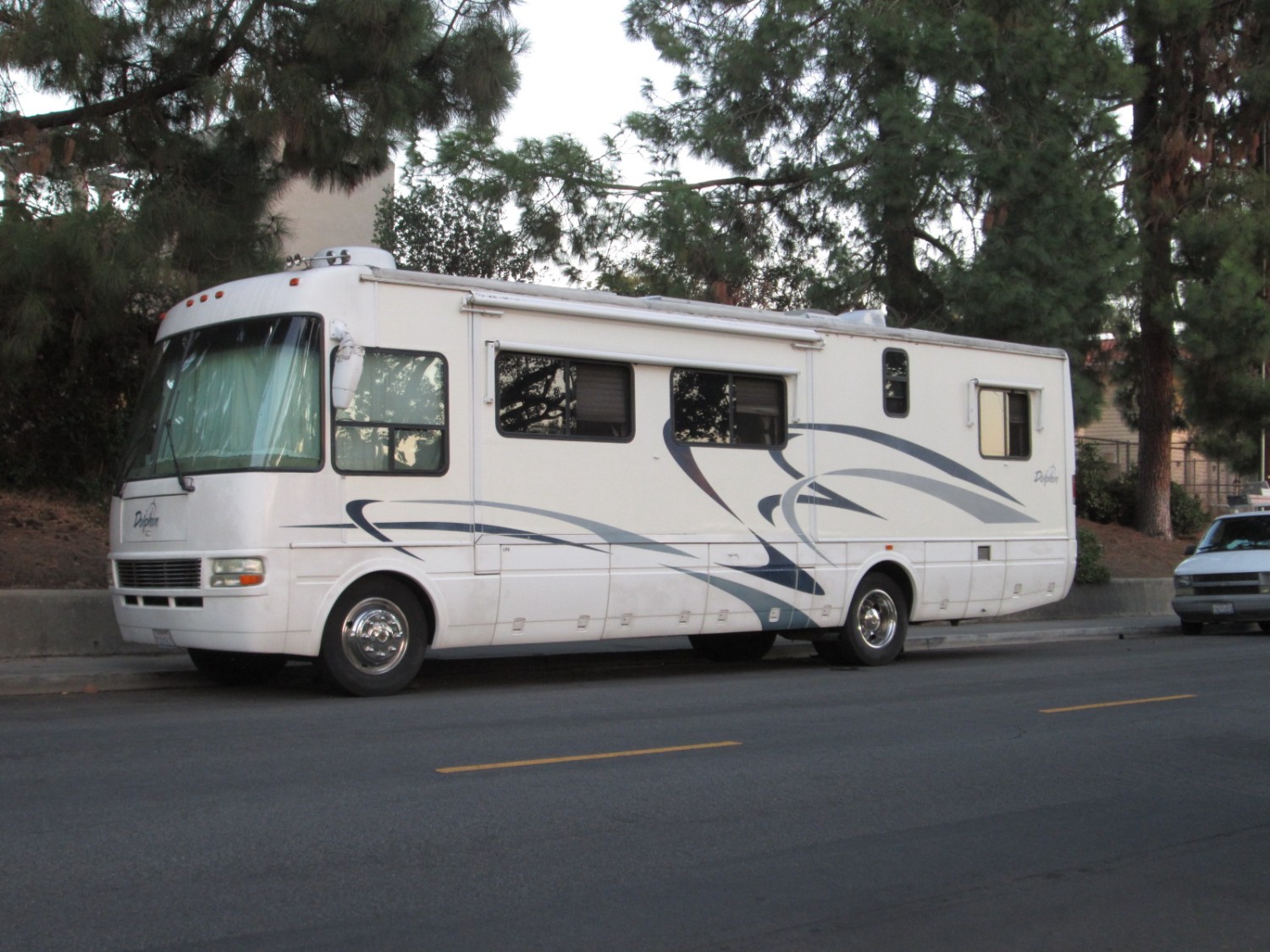
Jesus Martinez said he has been living in LA for more than 36 years and lives in an RV with his wife, Marisol Martinez. According to Martinez, he owns an apartment in Eagle Rock, but resorted to living in his RV due to accessibility issues his wife experienced. Martinez said a heart condition has made it difficult for his wife to climb a staircase.
“It’s hard to find a place to stay,” Martinez said. “Wherever you end up, people end up feeling uncomfortable with you being there. Sometimes they look down on you.”*
Krasovic said he is comfortable in his motorhome, and it holds a lot of sentimental value for him. According to Krasovic, he used to park his RV on Eagle Rock Boulevard near a Vons grocery store before he moved to Campus Road.
“The parking enforcement kept giving tickets because a lady kept complaining,” Krasovic said. “[Parking enforcement] put up signs and painted the curbs red, and [RV inhabitants] had to leave.”
Martinez said he has had some unpleasant experiences dealing with police officers while living in his RV.
“Sometimes the cops don’t even give you a chance to reason with them,” Martinez said. “It’s not all cops, but some don’t even give you the chance to move your RV before they come in and take it. Sometimes they take your RV when you still have important belongings or even your medication in there.”
Krasovic said there were only a couple of times when he encountered conflicts with other people and the police.
“When the cop came, I remembered him from when I was staying by Vons,” Krasovic said. “[The police officer] said, ‘You always keep it clean, but those other ones that aren’t listening are going to ruin it for all of you.’”
Martinez said it is humiliating when cops take people’s belongings from their RVs. Martinez said losing an RV can mean losing everything one has ever worked for.
“If I am causing no harm to the community, then why can’t they just let me live in peace?” Martinez said. “If I make a mistake, then so be it, I’ll pay the price, but I don’t like when [the cops] come in out of nowhere and force me to leave.”
According to the Los Angeles Police Department (LAPD), its goal is to protect public safety as well as people’s dignity.
“Homelessness is not a crime,” the LAPD said via email. “The LAPD recognizes that people living in vehicles are members of our community, and that many are facing serious hardship. The Department’s role is public safety.”
Krasovic said he has witnessed neighbors expressing anger towards people living in RVs.
“[A man] started yelling, ‘I’m so sick of you!’” Krasovic said. “Someone was going around putting signs on everybody’s motorhomes saying we were making it look like a trailer park trash pile.”
According to Krasovic, while permanent housing would be ideal, he would also love to see more stable, authorized long-term parking areas.
“If [the city] had an RV lot to help people get through that transition time, then you could move into an RV park or rent a spot in someone’s backyard,” Krasovic said.
According to Martinez, it is hard to live in an RV — there are times when simply eating or taking a shower can be difficult.
“To live in an RV is about survival, not living,” Martinez said. “You have to watch out for the cops, for thieves, even gangsters. There is a way to get along with them, but you have to know how to survive.”
*Interview with Jesus Martinez was conducted in Spanish and translated by Edgar Zatarain
Contact Lila Weiner at weinerl@oxy.edu and Edgar Zatarain at zatarain@oxy.edu