

According to a Sept. 3 press release, the Department of the Treasury and the Internal Revenue Service (IRS) have issued proposed regulations to end federal tax-exempt status for private schools that consider race, color or national or ethnic origin in administering educational, admissions, scholarship, athletic or other policies.
Since 1954, non-profit private universities have been granted tax-exempt status under Section 501(c)(3) of IRS exemption requirements. According to the notice of proposed rulemaking, the new regulations would affect private schools for taxable years beginning after May 31, 2027.
According to the notice, these proposed regulations build on precedent established by the 2023 Supreme Court ruling in Students for Fair Admissions, Inc. v. President and Fellows of Harvard College, which determined admissions programs that consider race violate the Equal Protection Clause of the 14th Amendment. The ruling against the dissenting opinion in the case stated ameliorating societal discrimination did not justify race-based state action.
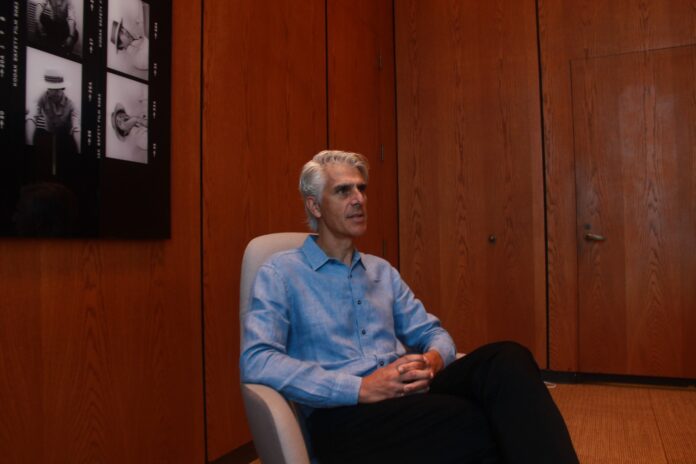
Occidental President Tom Stritikus said the college does not consider race in admissions or scholarships. Stritikus said Occidental believes in building an inclusive community and meeting the needs of a diverse student body while following the law.
“The administration is attempting to impose a particular perspective about what they believe the Students for Fair Admissions decision covers,” Stritikus said. “That decision outlawed race-based admissions practices. We do not use race as a factor in admissions. The administration is, in essence, overextending that ruling to apply to other aspects of campus life.”
Stritikus said the college does not intend to react prematurely.
“It’s important that we do not get ahead of the process,” Stritikus said. “This is a proposed ruling.”
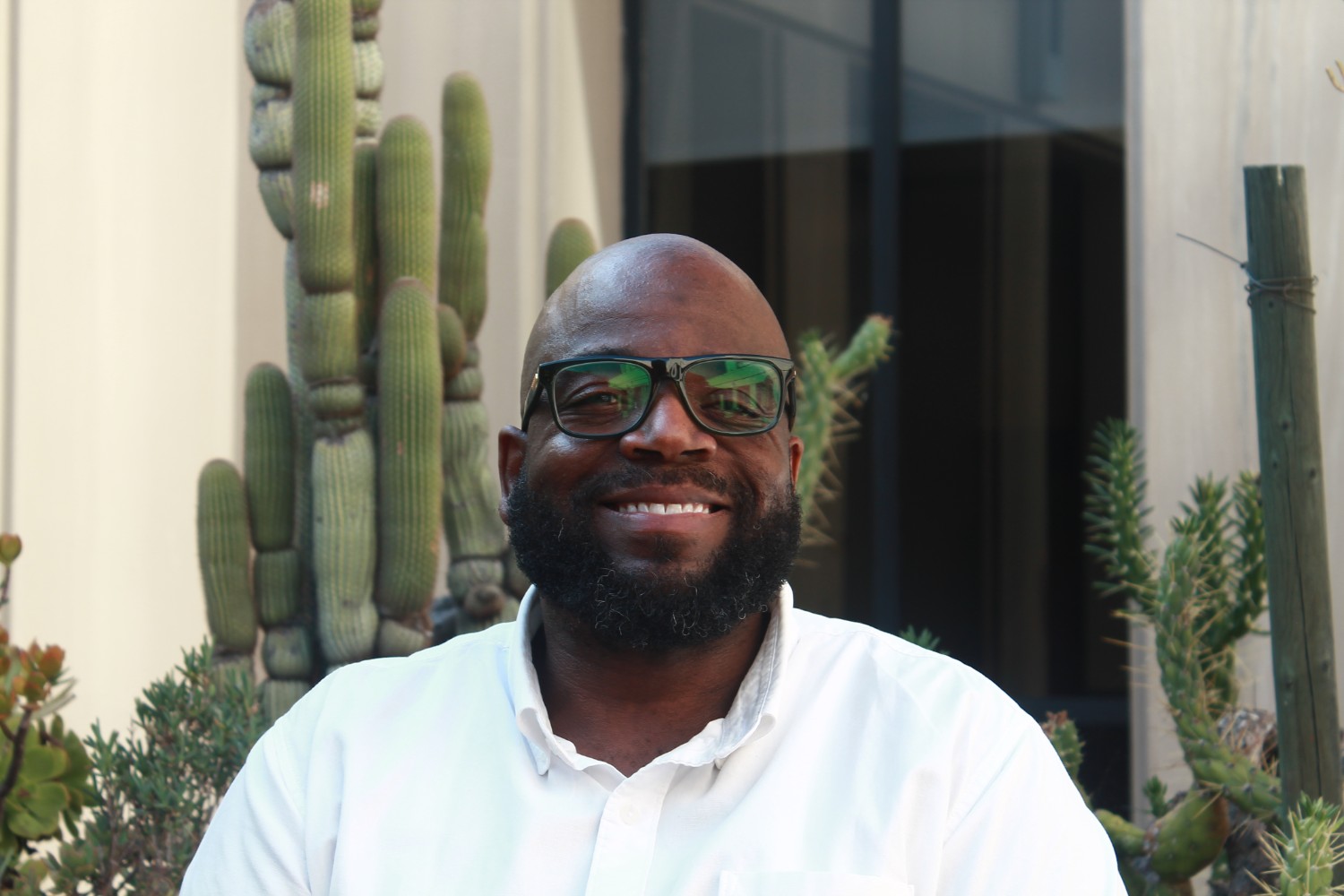
Occidental’s Vice President for Community and Equity Warren Anderson said Occidental permits free engagement in all campus activities.
“The programs and services that we offer are in line with our mission, vision and values which have never been contrary to federal law, and [have] never been contrary to what’s best for society in general,” Anderson said.
Anderson said he works to ensure all campus resources are accessible for all students, including the Intercultural Community Center (ICC) and the Office for Religious and Spiritual Life.
“Regardless of what programs you see, if they are targeting specific populations, it is for the betterment of everyone in our institution,” Anderson said.
Associated Students of Occidental College (ASOC) president Trisha Bhima said she has heard students describe this time as uncertain and frightening. Bhima said no matter what occurs on a federal level, ASOC remains committed to advocating for every community on campus.
“Our campus is so diverse,” Bhima said via email. “There are a lot of students [and] communities on campus that have expressed to ASOC or the school’s administration that they’re worried that federal pressure could mean the college scales back the support that’s meant so much to them.”
According to Stritikus, attempts to impact the landscape of higher education have changed in form throughout the Trump administration.
“We’ve gone from attacks on very visible institutions which make headlines, to now these more sustained [attacks] using the tools of government: grant distribution, accreditation, tax status,” Stritikus said. “[These tools are] being used to implement the Trump vision of education.”
According to Stritikus, every presidential administration introduces regulatory frameworks which institutions must adapt to. Stritikus said Occidental works to understand the policy implications of each regulatory environment, and that nothing the college is doing is currently illegal.
“We’ve seen this movie before,” Stritikus said. “This is an attempt to take an unsettled legal question and make it a settled legal question and get schools to preemptively comply.”
Anderson said Occidental will continue to support its entire student body while adhering to the law.
“A lot of these directives are going to go through so many hurdles before they become enacted, and Oxy is really good about taking a step back, making sure that what we have is in alignment not just with federal law, but with what’s best for our students, our faculty, our staff and our community,” Anderson said.
Anderson said Occidental will not have to pivot, regardless of how the proposed regulations proceed.
“We are not doing anything that is inherently or implicitly using programs and our services to advantage one population over another,” Anderson said. “What they’re talking about in this proposal is not something that I am too concerned with, because I know the kind of effort we go to to make sure we support every single individual here.”
According to Occidental’s 2025-2026 annual report, the college closed the fiscal year with a record high endowment of $835 million (pending final audit), with contributions from 4,667 donors. Stritikus said if Occidental lost its tax-exempt status, donors’ willingness to give could be affected.
“The impact of losing your tax[-exempt] status, for an institution like ours, would be tremendously negative,” Stritikus said. “It would certainly impact giving. It’s not the only reason people give, but receiving a tax benefit is certainly an incentive.”
Anderson said he does not believe the Sept. 4 IRS proposal will lead to a decrease in donations.
“The donors, the programs, the history and mission of the institution and federal guidelines have all been able to exist in harmony because we do not do anything that would one, violate federal law, [and] two, violate the trust that the individuals who spend a lot of money to come to Oxy have in us,” Anderson said.

The IRS proposal was a topic of discussion at a town hall held in Choi Auditorium Sept. 24, at which Stritikus and Anderson, alongside Dean of Students Vivian Santiago and Vice President and Chief Operating Officer Amos Himmelstein, fielded student questions. Bhima, who moderated the conversation, said she was glad to hear Stritikus and Anderson reaffirm Occidental ‘s commitment to diversity and equity at the event.
“Students will be watching to see the commitment made at the town hall be backed by real, sustained investment — not just in staff and budget, but in the everyday work of making sure every student on this campus feels supported,” Bhima said via email.
According to Anderson, the proposal provides an opportunity for discussion on how to expand access and opportunity at Occidental. Anderson said he is meeting with culturally affiliated clubs and organizations in order to best support students’ goals.
Stritikus said he appreciated the opportunity to engage with students at the town hall meeting and believes it is important to discuss the potential impacts of federal policy as a community.
“Diversity is the strength of our country,” Stritikus said. “I believe that because my parents were immigrants, I spoke a language other than English at home. I believe all of our education is enriched by being in a diverse environment.”
Contact Eli Heringman at heringman@oxy.edu and Ben Petteruti at petteruti@oxy.edu



After 400 years of systemic racism, students from disadvantaged communities deserve some special treatment. Rich white guys can’t possibly understand this, so they attack such “special treatment” as being discriminatory toward advantaged communities. Hogwash!
A quick look at recent Oxy graduates will illustrate how successful the school has been in promoting education for all students. These classes include people who are the first from their families to get a college education, and many of them have achieved awards for academic excellence.
When I was a student (almost 70 years ago!), the student body was almost entirely white. I have watched with great pleasure as the College has achieved its goal of having student bodies that more accurately represent the community at large.
Jim Craft ’63