Home Blog Page 57

Opinion: How can you not be romantic about baseball?

He stepped out of the batter’s box, removed his helmet and took in the crowd. It was a chilly night on the North side of Chicago, but the applause of 31,119 people warmly greeted No. 23 of the Detroit Tigers. Time stood still as Javier Báez slowly turned and waved to all corners of the stadium that his heart could reach. His eyes were smiling, but they looked a little sad too. This was the place and the people that had his back for seven glorious years.

The guy that was now standing in front of us in the heart of Wrigley Field — “Javy” or “El Mago” as we knew him — was not the same person that stood here 1,118 days ago, his last time in a Cubs jersey. The person who would take the field every day, proudly boasting the bold red Cubs’ “C” on his chest, number nine on his back and his heart on his sleeve. But, how could he be that person? Javy was now posting a .184 average for Detroit, batting at the bottom of the order.

But that didn’t matter at that moment; or, to me, ever. None of us had forgotten the mind-blowing defensive plays he made out at short in the green grass of Wrigley Field. The way his glove could seamlessly tag out baserunners and smother the heat on balls that were sure to make it into the outfield. No wonder he won a Gold Glove with us and represented our team at the All-Star game as a shortstop in 2018 and second baseman in 2019 — the first player ever to start an All-Star Game at both positions in consecutive seasons. None of us could forget his bat that won him a Silver Slugger Award in 2018, his signature swim move to swipe second base or his mad dash home to steal a run. This was the guy that gave our city its first World Series ring in 108 years. This was the guy that made me love baseball.

The Cubs beat the Tigers that day, 3-1. But don’t let that win fool you. A month later, with seven games left in the regular season, my Chicago Cubs were eliminated from postseason contention. With delusional hopes of a playoff run, I watched the Cubs lose 79 times this year, while the Milwaukee Brewers easily ran away with the division.

But while I watched the Cubs lose game after game after game after game (after game after game), I watched them win quite a few too. I watched Shota Imanaga, the Cubs’ rookie from Japan, stun opposing batters and make the Wrigley Field bleachers go crazy. I watched 22-year-old Pete Crow-Armstrong blaze around the bases and make tumbling, soaring catches to steal hits from opponents. I watched the Cubs’ outfield come together for a group hug after every win.

For 162 days a year, athletes from around the world step onto the diamond to chase their dreams and get their hearts broken. Historic records are shattered, and $18 dollar beers are bought. Despite devastating losses and watching my favorite players slump and get traded away, I keep finding myself coming back to the national pastime. Javy left Chicago the same summer that I moved to LA for college. Change is inevitable, people say. But some things just don’t. Here I am, still hopelessly cheering for the Cubs and rooting for a Javier Báez comeback (it will happen, people). Under that orange and gray uniform, maybe he still bleeds blue for the city of Chicago.

This year, I got to witness a story in its last chapter. The Oakland Athletics were packing up and heading to Vegas and would no longer be the Oakland A’s after the 2024 season. After a five-hour car ride, my friends and I made it to their 8th-to-last game of the season. Walking down the steps of the Oakland Coliseum, I immediately understood why the stadium was given the name. The way that the 63,000 green seats curved around the baseball field and sections stacked upon one another really did resemble the amphitheater of ancient Rome. The Coliseum’s round, winding structure made for a perfect wave (it went around the stadium 10 times, at least) and provided an intimacy that Dodger Stadium’s towering, grand structure didn’t. The faithful A’s fans chanted ‘LET’S-GO-OAK-LAND,’ banged on drums in the outfield and waved flags that had ‘SELL THE TEAM’ written on them with black spray paint. In five days, the Oakland Athletics would play their last game ever in that very ballpark.

I saw someone write a new story, too. Perched at the top deck of Dodger Stadium, I watched the sun set as Shohei Ohtani hit his 47th home run and stole his 48th base of the season. Ohtani was furiously drafting a new narrative in baseball, and nothing or no one could stop him. Never, in the history of professional baseball, had a player hit 50 home runs or stolen 50 bases in a season. Ohtani finished the regular season with a shy 54 homers and 59 steals. The ink on his pages certainly hasn’t dried and doesn’t seem like it will any time soon.

Hometown heroes come and go, franchises crumble and rise — but the magic of the game never really leaves. Every day, there is an old record to be broken or a new story to be told. You just have to see it.

Contact Emma Cho at echo2@oxy.edu. Go Cubs.

Loading

Athletes of the Week: Bosanac’s offense and Channell’s defense bring energy to Occidental’s fall sports season

Alex Bosanac

Courtesy of Alex Bosanac (first year)

Despite being new to Occidental, midfielder Alex Bosanac (first year) has consistently earned himself playing time on Occidental’s men’s soccer team. The team played Redlands College in a rematch of the 2023 SCIAC Championship Sept. 28, where Bosanac contributed the Tigers first goal en route to a 2-2 tie.

Bosanac said one of the adjustments of playing at the collegiate level is the high level of physicality.

“SCIAC is super physical, and a lot of the teams use that to their advantage,” Bosanac said. “We played at [Cal Lutheran] a couple of days ago, those guys were all huge, they all looked like bodybuilders. We won 3-0 because we don’t really rely on that. We play our game.”

According to his teammate Devin Bening (first year), he knew Bosanac before coming to Occidental because the two of them had competed against each other on different MLS Next teams.

“Alex is a very funny guy. He’s definitely very offensive. He loves to hit through balls and is always aggressive with his actions going forward,” Dening said. “Over the summer, we coached a soccer camp together, so I got to know him a bit more and he’s a nice guy and good with the ball.”

Men’s soccer Assistant coach Brian Wright said from a character standpoint, Alex is the type of athlete that puts the team first and foremost in his life.

“He’s always sacrificing for the betterment of the team and making sure that he’s doing the things on the pitch that are going to help us to be successful in games,” Wright said. “Off the pitch, he’s a good teammate and makes sure that he’s doing what needs to be done in order to help with the culture that we try to have.”

Bosanac said the team has a special tradition to raise the level of competition on the team.

“We do a lot of challenges. One of them we do every practice is whoever can get 55 passes with a partner in the quickest time,” Bosanac said. “I’ve won it one time. So, whoever wins those challenges, coach takes a picture of us and puts it in the locker room.”

Bosanac said the team has been playing a 4-4-2 diamond formation, and he’s been playing as the right attacking midfielder.

“I’d say my game is a lot of through balls and dictating the play,” Bosanac said. “Passing the ball and getting that assist — that’s my favorite.”


Eliana Channell

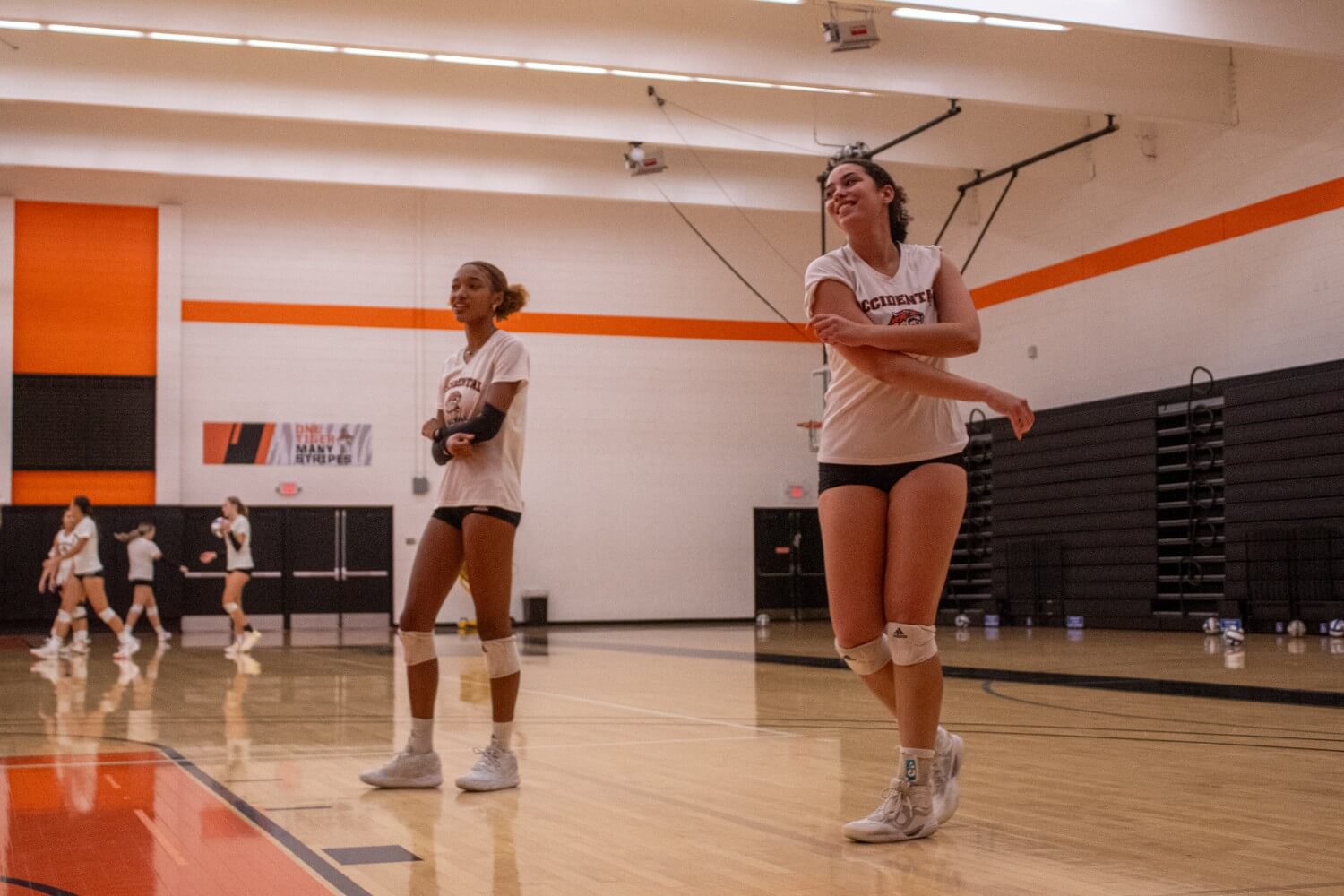
Eliana Channell (junior) at volleyball practice in the Rush Gymnasium at Occidental College in Los Angeles, CA. Oct. 2, 2024. Evan Lirette/The Occidental

During Occidental volleyball’s matchup against Claremont-Mudd-Scripps (CMS) Sept. 28, Eliana Channell (junior) hit six kills and had a pair of blocks. Channell said she started playing volleyball during her first year of high school and has mostly played middle blocker.

“My freshman year [of college], I played right side, but I’ve been a middle [blocker] my whole volleyball career,” Channell said. “Middle is a great defensive position where you […] defend from attackers and from other hitters.”

According to Channell, she has improved at different aspects of playing her position while at Occidental.

“I think I’ve gotten better at my blocking, pressing and getting up timing-wise [for blocks],” Channell said. “Especially this year, my arm swing has gotten a lot better with this new coach. I think she brought a lot to the table.”

Women’s volleyball Head coach Emily Foster joined the volleyball program along with eight first-year players this fall. Channell said the new personnel has given the team new energy.

“It’s been really good having more people, and practices have run better,” Channell said. “I love our freshmen. They just brought a good energy, and I think we’re more competitive in practices and then that translates to games.”

According to teammate Katelyn Cajigas (sophomore), Channell looks out for her teammates and brings energy to the court.

“Eliana is just like our mother on the team,” Cajigas said. “She’s always pushing us to fight harder, and she’s super competitive. But she’ll always be there for you too.”

Channell said that having the support of her teammates has reached far beyond just on the court.

“A freshman asked me if my friends were coming to our first scrimmage of the year, and I said, ‘they’re already here,’” Channell said. “You bond through the hardship of balancing classes and being an athlete.”

Contact Theodore Wilton at twilton@oxy.edu

Loading

Opinion: Where will Nǎinai go?

“Nǎinai* is gone! I am taking care of some funeral arrangements.”

The text from my dad announcing his mother’s death casually popped up on my screen while I was in the middle of putting on a clean set of short leggings for a trip to a rock climbing gym.

It was just another normal Wednesday evening in Eagle Rock. Golden beams that escaped through the strips of my window blinds were just beginning to retreat. Darkness was bleeding through the violet LA sky as features of the scattered houses on the anonymous hill outside my other window were gradually wiped out, leaving spots of twinkling lights behind.

As I stood next to my bed with the shorts half way up my legs, the words spiraled in my brain for another minute or so and finally began to sink in. It felt like things came to an indefinite pause — my exhaustion from working and studying during the day, my anticipation and excitement for the carefully-curated walls of artificial rocks, my consciousness and sanity that dragged me through living a life in this foreign country.

I didn’t have a close relationship with Nǎinai. Unlike many only-children in China who grew up with their grandparents, my mom hired a nanny to take care of me.

The most prominent memory I have of Nǎinai is that she lived an extremely frugal life. Convincing her to turn on the heater during Shanghai’s brutally cold and humid winter was always an impossible task. Under her command, my 95-year-old Yéyé** would slowly crawl to the back of the electronically powered machine and unplug it. Then, to keep warm, they wrapped themselves up in many layers of clothing — some of which they recycled from my old school uniforms — and a blanket after they finally managed to sit on the couch. In contrast to her prudent lifestyle, Nǎinai’s gesture of love was shoving me cash wrapped in a plastic bag that she saved from a random grocery errand.

When it was time to leave for college in the United States, Nǎinai’s gestures became more desperate — it had gotten to the point where all layers of wrappings were discarded, and I was presented with a naked stack of cash pulled straight out of her green patchwork tote. I never understood the urgency behind this. I did not bother to ask her either, probably because I was the sole beneficiary of this absurd, yet harmless act. Almost punitively, Nǎinai took her answers with her as I read her obituary via text.

Although the text came with an exclamation mark, it felt abnormally calm, even indifferent. It felt like reading one of those “Breaking News” push notifications from the New York Times — a shocking event gets unraveled in front of your eyes, out of the blue, with one or two concise and carefully structured sentences. The information embedded in the text might be of importance, but unlike a “shooting” alert where you have to act instantaneously, nothing was expected from me.

Words felt cold from the text, not because of its function in declaring Nǎinai’s death, but because it confirmed how disconnected I am from my family in China. I am at the age where the elderly members in my family are inevitably beginning to pass. First it was my great grandmother, my Ātài; then my grandmother on my mother’s side, my Wàipó; and most recently, Nǎinai.

They all departed suddenly, and I was never there when they left.

The chaos and sorrow made up of fragmented pieces of information were always compressed into texts and sent slightly delayed. During this time, my parents had already paid the funeral home multiple visits, purchased cremation urns, booked restaurants for family gatherings after the funerals and processed the deaths on their own. By the time I received the text, everything was already arranged and thought through with the underlying assumption that none of them should be of concern to me. Life moves on from there.

It finally struck me that I’ve never attended a funeral. All I’ve done is what I call second-hand mourning, mediated through texts and calls. Just like second-hand smoking, the grief has already been metabolized by someone else, and I was left with the last of the pungent and bitter hints.

On tóu qī, the seventh day after Nǎinai left us, my dad and aunts gathered at Nǎinai’s old apartment. According to my dad, in Chinese culture, the deceased’s soul has not fully left the human realm at the seventh day, and the family needs to say their last goodbyes at the place where Nǎinai once lived. They lit incense while talking to Nǎinai and burned spirit money with the hope that Nǎinai will set foot with a full wallet.

I was initially puzzled by my non-religious family’s intention to practice superstition.

“If we didn’t believe in transcendence or heaven, where will all the paper money you burned for Nǎinai end up at?” I asked my dad on video call.

“It is more of a ceremonial tradition than actually worrying about where they are headed,” my dad replied.

Days later, I realized my attempt to seek the spiritual destination for the burned paper money was actually my desperation to know where Nǎinai will go. The absence of an afterworld in my belief terminates Nǎinai’s existence after her death, but I was not given a chance to properly watch her leave. But money, marking one’s footsteps, ensuring one’s safety through enabling a degree of certainty at an unknown place, carries the best hopes and wishes. Nǎinai used to hand it to me with or without a plastic bag, but now, she deserves the same blessings.

*Grandmother on father’s side, **grandfather on father’s side

Contact Renee Ye at rye@oxy.edu

Loading

Opinion: JD Vance flunks the beer test—and the debate

One of the oldest cliches in American politics is the so-called “beer test:” which candidate would you rather have a beer with?

It’s one of those stock political platitudes that eggheads love to bloviate about on cable news. Nevertheless, it drives at an enduring truism of American politics, which is that voters value authenticity. They want assurance that the candidate they vote for will fight for the same things when the cameras are off and the talking points are put away.

This theory of candidate authenticity might help us understand how George W. Bush — an affable goofball who seemed at times incapable of taking his foot out of his mouth — beat such polished political professionals as Al Gore and John Kerry in 2000 and 2004, respectively; Bush’s own aides told reporters Kerry was “better than Cicero” on the debate stage. For that matter, even in spite of all his political failings, no one could seriously accuse Donald Trump of not speaking his mind.

All of this was front of mind for me Oct. 1 when Tim Walz and JD Vance faced off at the 2024 Vice Presidential Debate. On style, the contrast was clear: JD Vance delivered a sharp, polished performance, while Tim Walz was more plain-spoken, even fumbling at times. Many political prognosticators have thus pronounced Vance the debate’s clear victor (of course, insofar as vice presidential debates even matter). But to me, even on style alone, the beer test suggests that the pundits are wrong: JD Vance looked like a slippery politician. Tim Walz looked like he was speaking from the heart.

Over and over, Vance found clever ways to wiggle himself out of difficult questions. But it would be insulting to the voting public to act as if all (or even some) of those rhetorical acrobatics passed the sniff test.

In response to a question on climate change, for example, Vance weirdly began conducting a thought experiment: “One of the things that I’ve noticed some of our Democratic friends talking a lot about,” he said, “is…this idea that carbon emissions drives all the climate change. Well, let’s just say that’s true, just for the sake of argument.”

Far from busting out his LSAT flashcards, when CBS’s Norah O’Donnell passed the question over to Walz, he kept it real: “my farmers know climate change is real. They’ve seen 500 year droughts, 500 year floods, back to back,” he said.

On abortion, Vance denied his previous support for a national ban, advocating instead for a “minimum national standard” — whatever that means. Meanwhile, Walz made clear his support for abortion rights and spoke about his own experience going through fertility treatments with his wife.

When asked about gun violence in schools, Vance suggested installing stronger locks and windows. Walz simply replied: “It’s just the guns. And there are things that you can do about it.”

Towards the end of the debate, Walz asked Vance point-blank whether or not Donald Trump lost the 2020 election — and Vance shamelessly deflected, saying “I’m focused on the future.” Evidently not.

Many beltway pundits thought Vance performed well, because he sounded like a well-trained politician. What they seem to have missed is the fact that sounding like a politician is hardly an asset in an era of deep and widespread public cynicism about politics.

And post-debate flash polls bear this out: according to CNN, voters thought Walz was more in touch with “the needs and problems of people like them” than Vance — by a margin of 48% to 35%. They didn’t poll it, but I’m willing to bet that the beer question would have turned up similar results.

There are some obvious problems with choosing a president based on perceived authenticity. For instance, it should count for very little that a candidate is “unapologetically their true self” if their true self is, I don’t know, a racist. Still, we can at least understand why authenticity matters in an era of deep skepticism towards political institutions. If what you see is what you get, it goes a long way towards building trust between candidates and voters. To the extent that the perceived authenticity of the vice presidential candidates will matter in the remainder of this campaign, it’s safe to say Tim Walz pulled out a win for the Harris camp on Tuesday night.

It helps, of course, that deep down, Walz is just a jocular midwestern dad. Like most of us, he didn’t go to Yale Law School, and he doesn’t debate like Cicero — and that’s okay. Our leaders should reflect who we are as a country. And unless we’re a nation of ex-memoiristex-venture capitalist, careerist windbags (which, last I checked, we are not), I think it’s pretty clear who passes the beer test in a Vance-Walz matchup.

Contact Beatrice Neilson at neilson@oxy.edu

Loading

‘Special tacos here and there’: taco trucks are vital to the Occidental community

After the Occidental Marketplace closes its doors for the day — as early as 2 p.m. on Saturdays — some students look off campus for dining options, including one of the eight taco trucks that lie within a mile of Occidental’s campus. Alex Mincone (first year) said he would choose to eat at a taco truck over the Marketplace and that he always goes to the trucks with his friends.

“It’s easier to be walking with friends and spontaneously get a taco than it would be to sit down somewhere,” Mincone said.

Paloma Benach (junior) said small businesses like the taco trucks are useful for college students in particular.

“It’s a big deal,” Benach said. “It’s simple, easy, accessible and really good quality food.”

Radhika Patel (junior) said she gets more fun out of a visit to a place like Charlie’s Tacos than other dining options.

“You get to walk there and back,” Patel said. “It’s more of an experience than just going to a restaurant and grabbing takeout.”

Ruby Robertson (first year) said that from her perspective, small businesses have a homey feel to them.

“I think food trucks are fun because they’re kind of novel and casual, and it’s also pretty affordable for a college meal that you can go and get with your friends, versus a restaurant,” Robertson said.

Leo’s Tacos truck in Los Angeles, CA. Oct. 1, 2024. Quincy Howard/The Occidental

Patel said taco trucks expand her access to quality vegetarian food. She said she likes a good potato taco.

“The smaller businesses are able to offer more authentic vegetarian options versus the more simple bean and cheese option that I usually get at big chains,” Patel said.

Mincone said he supports small businesses whenever he can.

“It feels better knowing where what you’re eating and what you’re wearing is coming from,” Mincone said.

Benach said she values supporting the small food businesses in the Highland Park area in her day-to-day life.

“It’s better than going to different corporate organizations just to keep feeding massive millionaires,” Benach said. “You’re helping the people in your neighborhood and the people in your community that want to build up their business.”

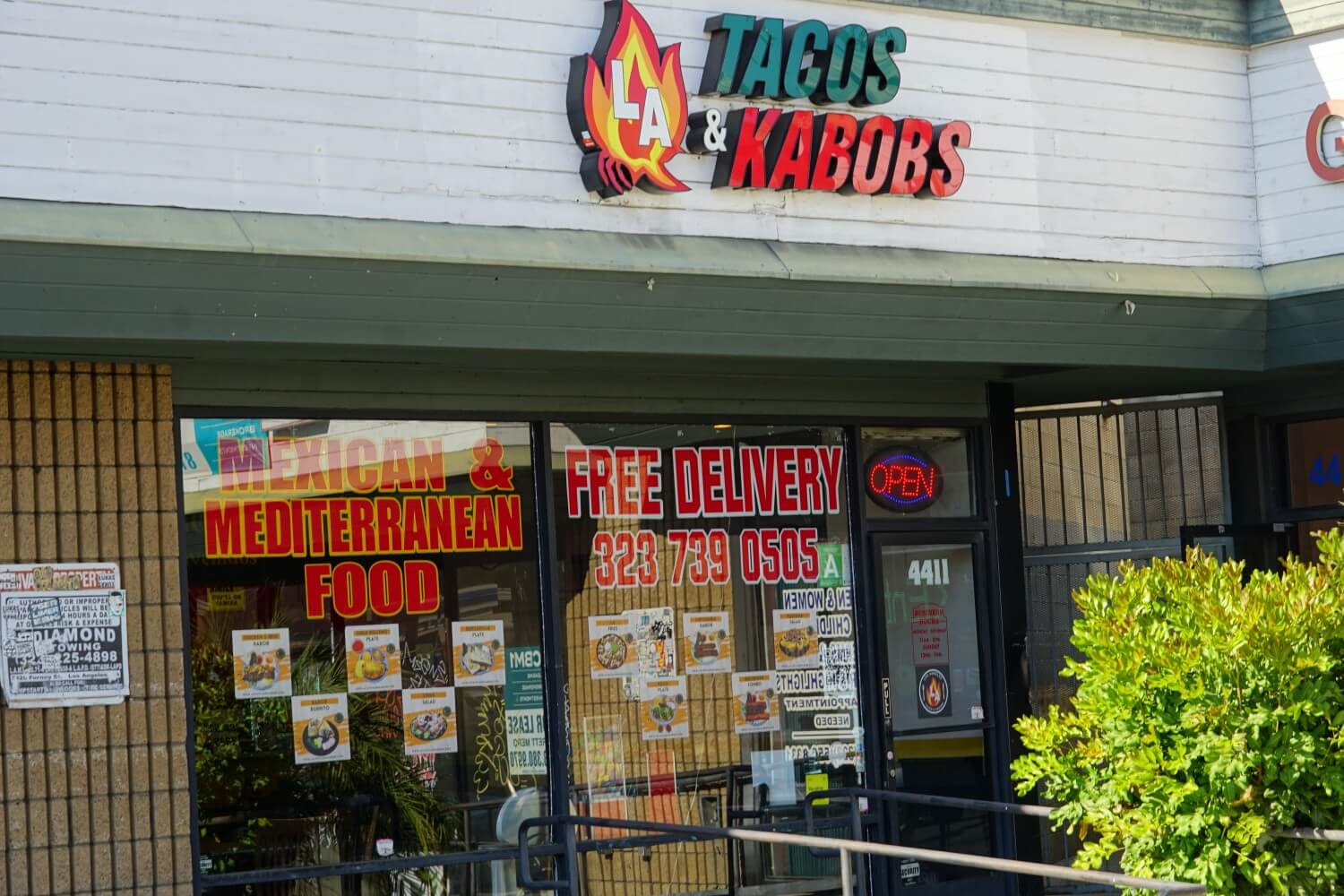
LA Tacos & Kabobs co-owner Juan Gonzalez said he is aiming to hire more employees to expand their fully family-owned business.

“My dad’s been bringing in special tacos here and there, we have my mom’s rice and any other little thing we feel like we could add,” Gonzalez said.

Exterior of LA Tacos & Kabobs in Los Angeles, CA. Oct. 1, 2024. Quincy Howard/The Occidental

Gonzalez said he started his business in Highland Park and has developed it here since.

“I’m very proud of running a business in the same neighborhood that I was brought up in,” Gonzalez said. “The ‘LA’ in our name — that’s really what it means. I feel like I’m representing LA.”

Mincone said he felt well taken care of at Charlie’s Tacos.

“[The man at the counter] was very kind. I remember he paid a lot of personal attention, as well as just normal customer service interaction,” Mincone said. “I give him five stars, he was amazing.”

According to Renee Guzman, a cashier at Charlie’s Tacos, the business does not just give back to students, but also the wider Highland Park community.

“[Charlie’s Tacos has] given [food] to the local elementary school, and then he’s also worked with some other schools in the community as well, and then on holidays, he would tend to give out free tacos as well,” Guzman said.

Benach said that Angel’s Tacos is her favorite of the trucks.

“I get a burrito, usually,” Benach said. “Something about watching them take the pork off the giant rack, I really enjoy that.”

Contact Toby Wepman wepman@oxy.edu

Loading

Black woman-owned bookstores in LA offer spaces of resilience and representation

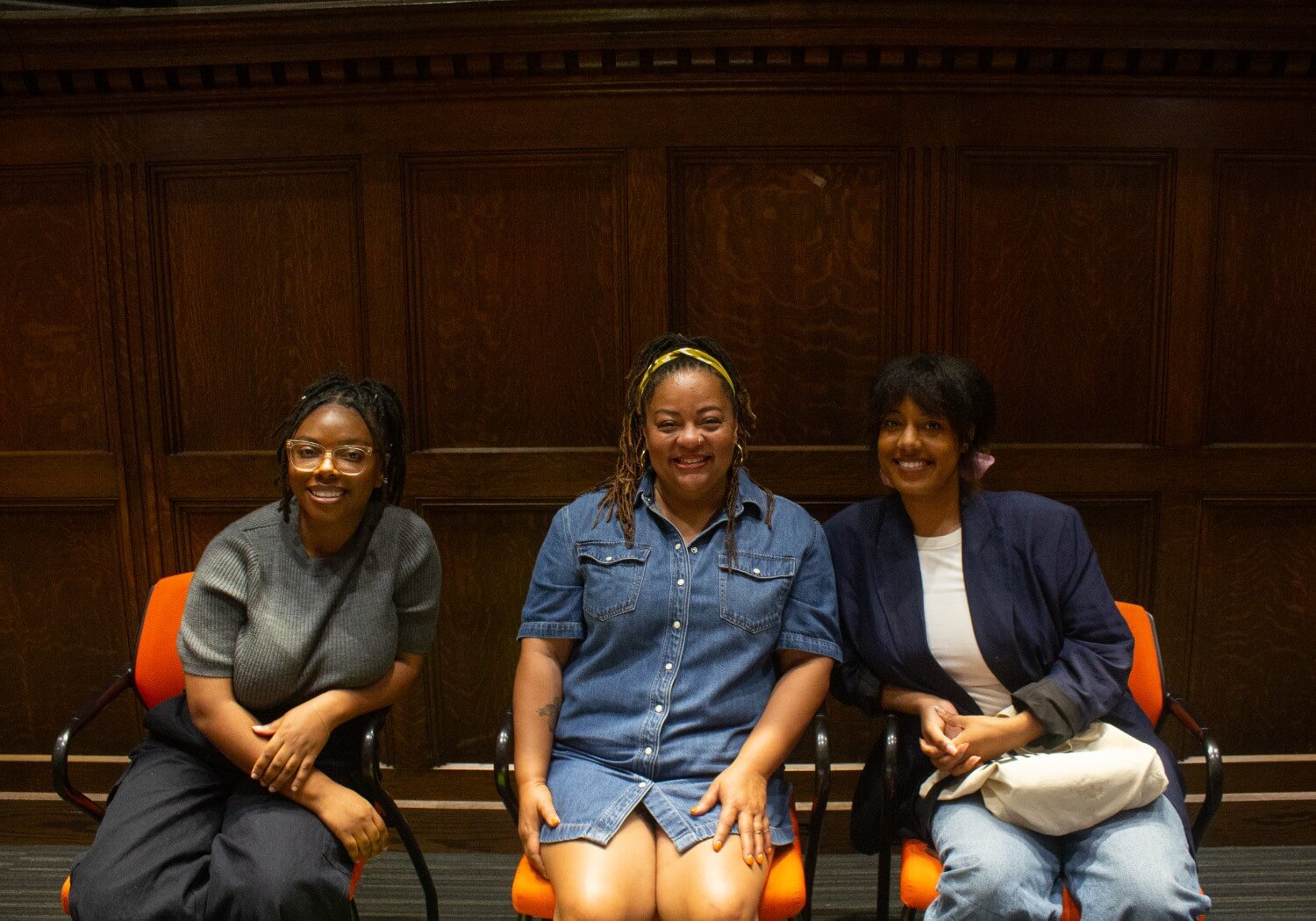
Associate Professor of Black Studies Yumi Pak, and Humanities for Just Communities (HJC) peer mentor R’Anna Donastorg (sophomore) hosted a panel on Black woman-owned bookstores in Choi Auditorium Oct. 4. The panel discussion featured three bookstore owners, including Jazzi McGilbert of Reparations Club, Nikki High of Octavia’s Bookshelf and Asha Grant of The Salt Eaters Bookshop.

According to Pak, the event’s vision was to foster an understanding of the role of bookstores in community building and social justice and highlight the nuanced contributions of Black authors. Pak said she wanted to organize an event that would align with her course’s theme and engage students in meaningful dialogue.

“I knew of these three bookstores — Octavia’s Bookshelf, the Salt Eater’s Bookshop and Reparations Club — as three Black women-owned small bookstores in LA,” Pak said. “I wanted to bring the three owners together so that they can be in conversation with one another and my peer mentor [and I] could ask them questions.”

According to Donastorg, the event was also driven by the necessity of diverse representation on campus.

“I think it would be good to have the representation on campus — to see Black women in entrepreneurial endeavors is going to be so impactful,” Donastorg said. “To be able to reach out and talk to them is going to be great.

Jazzi McGilbert, Nikki High and Asha Grant in Choi Auditorium at Occidental College in Los Angeles, CA. Oct. 4, 2024. Marty Valdez/The Occidental

The event was run as a part of Pak’s Black Studies class, Black Women Write Social Justice, within the HJC curriculum. The panel began with an introduction by Pak, where she thanked the HJC program for its support, recognized Donastorg’s work in organizing the event and introduced the three panelists.

Additionally, Pak said that the transformational power of writers, such as Bernardine Evaristo, Octavia Butler, Ntozake Shange and more, has challenged the idea that the world people live in is the only one that is possible.

“They taught me, as Toni Morrison has said many times, that artists and writers are dangerous because they never stop asking two burning questions: ‘What if?’ and ‘Why?’” Pak said.

The conversation began with introductions from the panelists themselves including information about their bookstores. Reparations Club and The Salt Eater’s Bookshop are both located in South Central LA, while Octavia’s Bookshelf is located in Pasadena. All three owners said their bookstores are spaces that highlight and center Black writers.

According to High, Pasadena is known as a hotspot for writers and readers as the city is full of bookstores and libraries. However, High said that Pasadena’s deep history of segregation has left a lasting legacy on the city’s diversity, including the literary culture.

“[I visit] bookstores every time I travel, and I was always in search of stories that reflected my experiences or experiences that I wanted to learn about,” High said. “I wasn’t entirely exposed to that growing up in Pasadena. Those spaces just didn’t exist outside of a Black History Month table at the library.”

According to High, her bookstore was envisioned as a space to foster diversity in the literary sphere and speak to marginalized communities. High said the bookstore is also an homage to American science fiction writer Octavia Butler’s hometown roots in Pasadena.

“What better place to have a space like Octavia’s Bookshelf [than] in Pasadena?” High said. “We’re three blocks away from her middle school — I mean the story sort of writes itself.”

High said she discovered Octavia Butler — a MacArthur Fellowship-winning author known for “Parable of the Sower” and “Kindred” — at the age of 16, at a time when she didn’t feel connected to the science fiction genre due to its lack of representation of people of color. According to High, Octavia Butler shifted her perspective on science fiction as a transformational genre.

“As many of you know, she writes sci-fi and dystopian, but she does it in a way that layers really current issues of gender and class and race,” High said. “To this day, I’ve never read anything by a single human that touched me in the way her works have.”

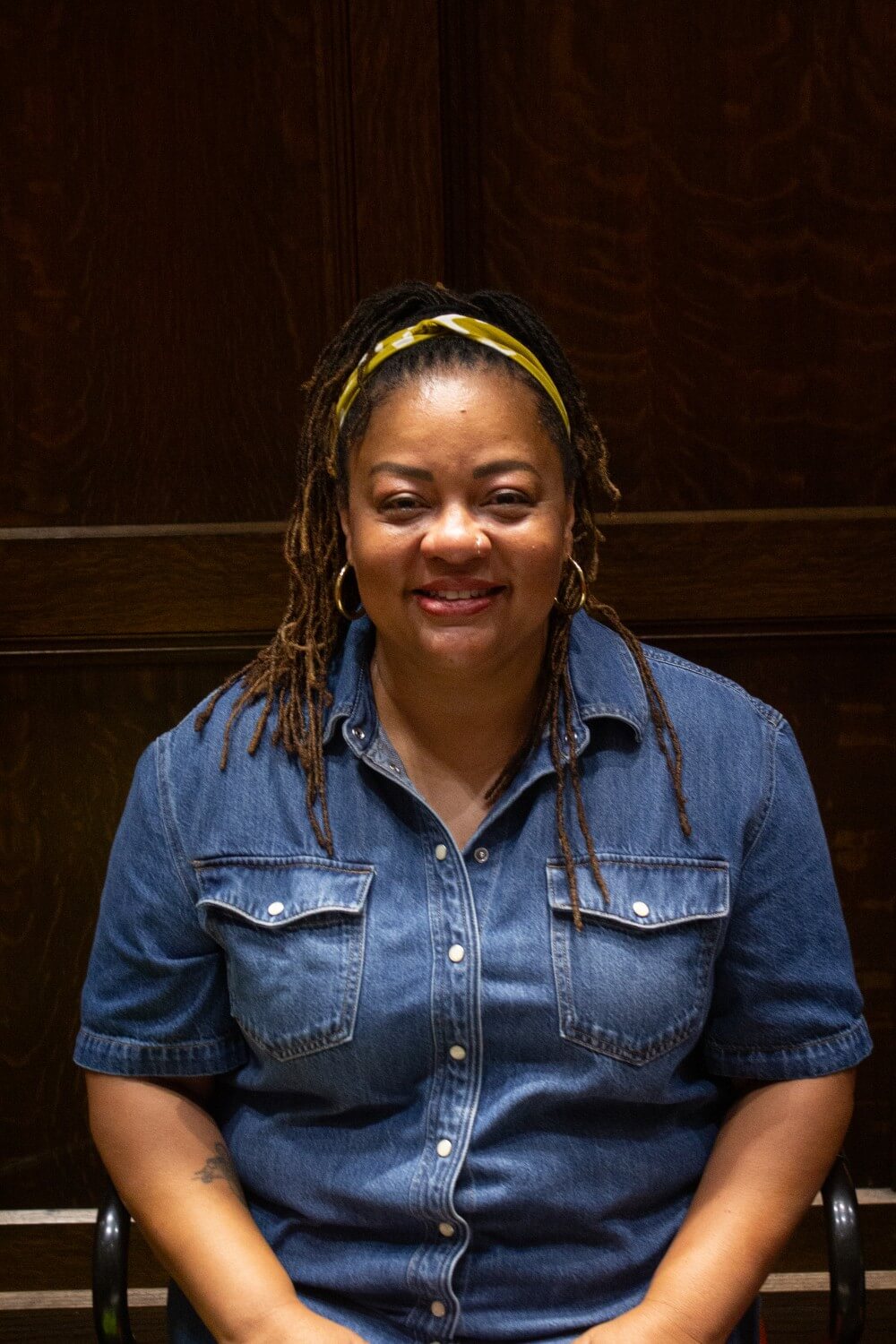
Nikki High in Choi Auditorium at Occidental College in Los Angeles, CA. Oct. 4, 2024. Marty Valdez/The Occidental

Grant said her hometown of Inglewood, where The Salt Eater’s Bookshop is located, has always been welcoming and loving. According to Grant, there’s a senior center near the bookshop which fosters an invaluable intergenerational exchange at the bookstore. Grant said the community aspect of her bookstore resembles a Black version of “Mr. Rogers’s Neighborhood”.

“We’re right next to Sip and Sonder [and] Hilltop, which are two Black coffee shops,” Grant said. “We’re a very tight-knit community. It’s very borrow-a-cup-of-sugar-from-your-neighbor, we’re always using each other’s chairs and fans if something goes wrong.”

Asha Grant in Choi Auditorium at Occidental College in Los Angeles, CA. Oct. 4, 2024. Marty Valdez/The Occidental

High said she hopes her bookstore can serve as a space to share stories that push us to think differently by widening our imagination.

“I’m often asked if I write, and I’m not a writer,” High said. “I’m just someone who is so deeply grateful that there are storytellers who believe in their craft and who gift us stories that stretch my imagination and allow me to escape and learn.”

Contact Julian Villa at jvilla@oxy.edu

Loading

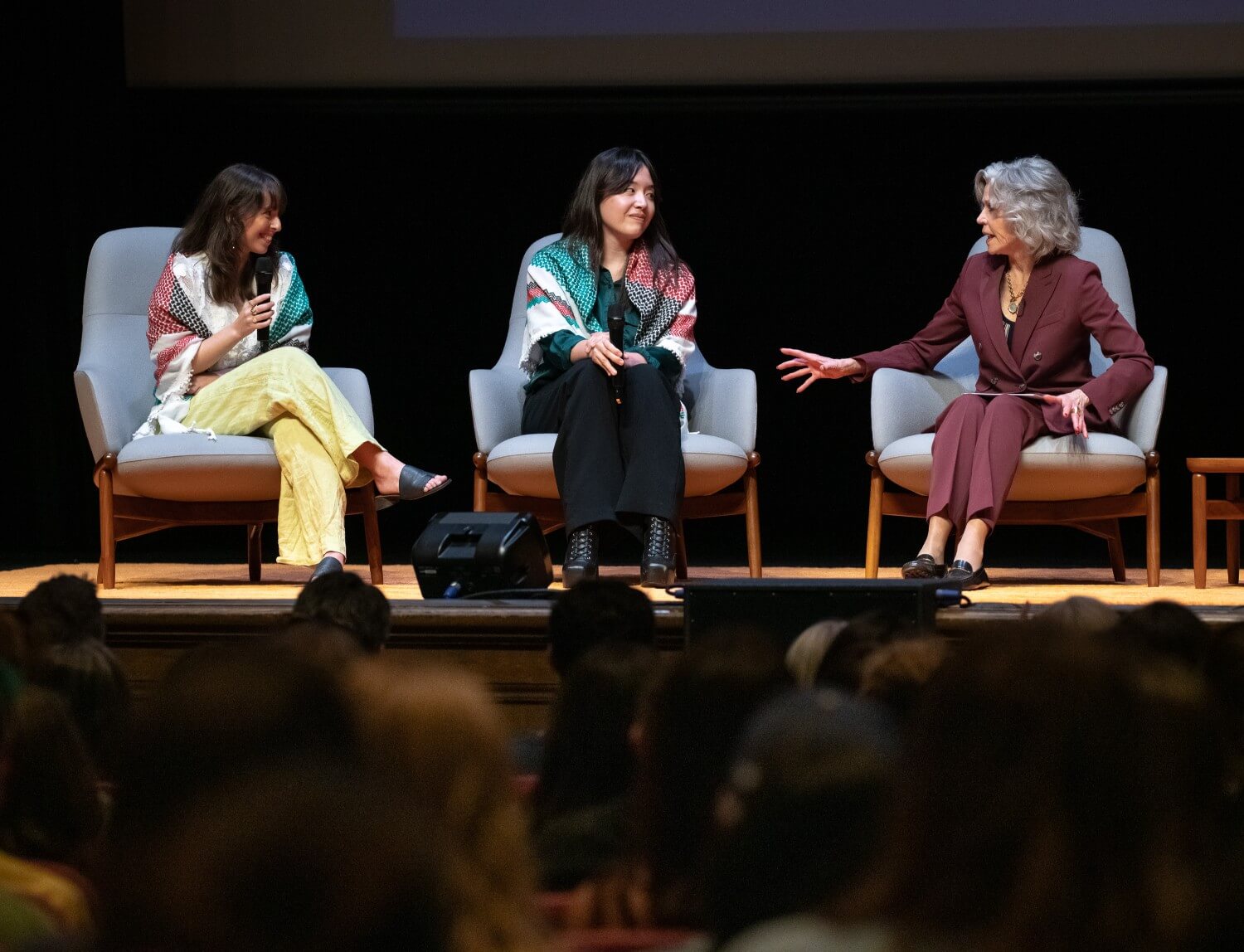
Jane Fonda and Greg Dalton ’86 discuss environmental justice activism at Thorne Hall

Seven-time Golden Globe-winning actor and lifelong activist Jane Fonda and radio producer and Climate One founder Greg Dalton ’86 sold out Occidental’s Thorne Hall Oct. 1. Their conversation centered around the local and global implications of climate change and how young activists can frame their careers to address it. Fonda highlighted the importance of organizing as a community and encouraged young people to get involved in activism.

The event was hosted by the President’s Office, in conjunction with Occidental’s Urban & Environmental Policy Institute, Institutional Advancement and the Office of Marketing & Communications. Associate Professor of Urban & Environmental Policy Bhavna Shamasunder and Dalton had the idea of hosting Fonda at Occidental so the community could learn from her 50 years of activism.

“It’s a lot of sustainable efforts on campus coming together,” Shamasunder said. “Thinking about how students can get involved as climate activists and also activism in general.”

An hour before the main event, Fonda met with students, faculty and alumni involved in climate justice activism in the Occidental community for a private reception. Audience members began filing into Thorne as early as 4:15 p.m. and filled the front half of the seats. At 5 p.m., four empty chairs and a coffee table stood on stage, soon to host Fonda, Dalton and later, youth activists Emma Galbraith (senior) and Emma Silber ’23.

The event began with a conversation between Fonda and Dalton, followed by a clip from the documentary “District 15,” depicting the fight to end oil drilling near residences. Galbraith and Silber facilitated a discussion after the screening with a brief Q&A.

One of Dalton’s first questions to Fonda referenced her well-known work, the 1980 comedy “9 to 5.” Dalton said his intention in starting the conversation with this question was to connect different generations of the audience — those familiar with Fonda’s activism and those who knew her from her films.

“I came in wondering, ‘How do Oxy students today know Jane Fonda?'” Dalton said.

Dalton said the goal of his conversation with Fonda was to connect with the Occidental community while simultaneously incorporating the interconnectedness of Fonda’s acting and activism.

Courtesy of Marc Campos

During the conversation, Fonda said that at 60, she began to think about how she wanted to shape her legacy and decided to prioritize climate justice.

“I figured 60 was the beginning of the last third of my life, and I had no idea how I was supposed to live it,” Fonda said. “I thoroughly advise you [to] start thinking now about the end of your life.”

Halfway through the event, a separate three-minute clip was played portraying the ecological and health impacts of toxic chemicals in Wilmington, a neighborhood west of Long Beach near an oil drilling site.

Assane Wade (sophomore) and Anna Miller (sophomore) said they appreciated the video’s spotlight on the urgent racialized environmental impacts near Occidental.

“There are certain demographics and people of different economic statuses that will face the impacts before others,” Wade said. “I really liked that they made the distinction in the video, and Fonda doubled down on that when she was talking about it too.”

Wade and Miller said the racialized distribution of toxic waste plants makes certain people bear the climate crisis’s impacts sooner.

“It’s interesting, in a horrifying way, to see how systematically companies choose where to drill for oil or place toxic waste plants, all connected to income and race,” Miller said.

After the video, Galbraith and Silber joined the stage to speak on the local movement against toxic waste, and with a warm welcome from Dalton, Fonda asked them about their climate activism careers and student life. Dalton ended their conversation at 5:57 p.m. to invite audience questions.

Courtesy of Marc Campos

During the audience Q&A, Urban and Environmental Policy major Izzy Wang (senior) asked for Fonda’s advice for the student union organizing group, Rising Occidental Student Employees (ROSE). Fonda voiced her support.

Wang said it was important to mention ROSE because of Fonda’s experience and appreciation of raising the voices of young activists.

“She knows when to step in and step out of the center,” Wang said. “I loved how human she is. She gets very impassioned about things, and she’s a community member just like the rest of us.”

Wang said Fonda’s sympathy and support for young climate organizers provide activists with a unique influence in the climate justice movement.

Fonda said that being young is difficult and the trajectory of your life becomes more clear as you get older. She said nothing is harder for young people than what they are going through now.

“Hang in there. When you get depressed, turn to activism,” Fonda said. “[Organizing] is delicious, fun work.”

Contact Melisa Blau at blaum@oxy.edu

Loading

Campaign Semester 2024 gives students practical political experience and professional connections

Every two years during midterm and presidential elections, Occidental offers the Campaign Semester program to all students. Since its establishment in 2008, Campaign Semester has given students the opportunity to work on a political campaign in any swing race across the country. After spending 10 weeks working for a campaign, students return to reflect on their experiences in a seminar class with the founders of Campaign Semester — Professor of Politics Regina Freer and E.P. Clapp Distinguished Professor of Politics and Urban & Environmental Policy Peter Dreier.

Dreier said he dropped out of college to work on Robert F. Kennedy Sr.’s 1968 presidential campaign, but he wanted students to be able to work for a campaign without it interfering with their education. Dreier said that in 2008, many Occidental students wanted to work for Barack Obama’s presidential campaign without dropping out or taking the semester off.

“I talked to the Dean of Students at the time, [Dean Eric Frank],” Dreier said. “Then I talked to Professor Freer, my colleague in the policy department. And I said, ‘Why don’t we do something like a study abroad program where the students can go work a campaign anywhere in the country?’”

Since the first Campaign Semester when students departed to work for Obama’s 2008 campaign, Dreier said there have been roughly between 12–35 students in any given election year who participate.

“We have more during presidential years than midterm years because presidential years get people more excited,” Dreier said.

This year, there are 23 students across 15 different states participating in Campaign Semester. Dreier said the students are placed solely in swing races to understand the true competitive nature of politics.

“You get to see politics a lot better up close and personal if it’s a very competitive race,” Dreier said. “You can read about it in a book, you can talk about it in a classroom […] but once you’ve done it, you have a level of understanding about how politics works that is just so different and unique.”

Lucy Toft (sophomore) said she was assigned to work as a field organizer for Democratic Representative Marie Gluesenkamp Perez’s reelection campaign, the last of the 2024 Campaign Semester cohort to be assigned to a campaign. She said after she applied to work for Perez in July, she began working in Vancouver just one week after being hired.

“What I’m assigned to do is handle volunteers and recruit volunteers for our canvas launches,” Toft said. “The field involves getting the word out, making sure that people know who their candidates are, talking to voters, talking to volunteers and increasing our support base.”

Courtesy of Lelia Pedersen

Canvassing involves knocking on people’s doors and providing details about a campaign. Toft said the campaign team is in their persuasion phase of canvassing — persuading voters why voting for Perez is the best thing for their community and district.

“We have to make sure that everyone’s showing up [and] making sure that we’re using persuasive language so that they come to our launches,” Toft said.

Toft said she is the youngest of the campaign managing team, working alongside media staff, the political director, the finance team and the campaign manager.

“Because I’m so young, people wanted to help me out,” said Toft. “When people on my team saw that I was curious and open to learning more, they were willing to help me.”

Toft said she has expanded her political knowledge and learned how to use persuasive language when recruiting volunteers.

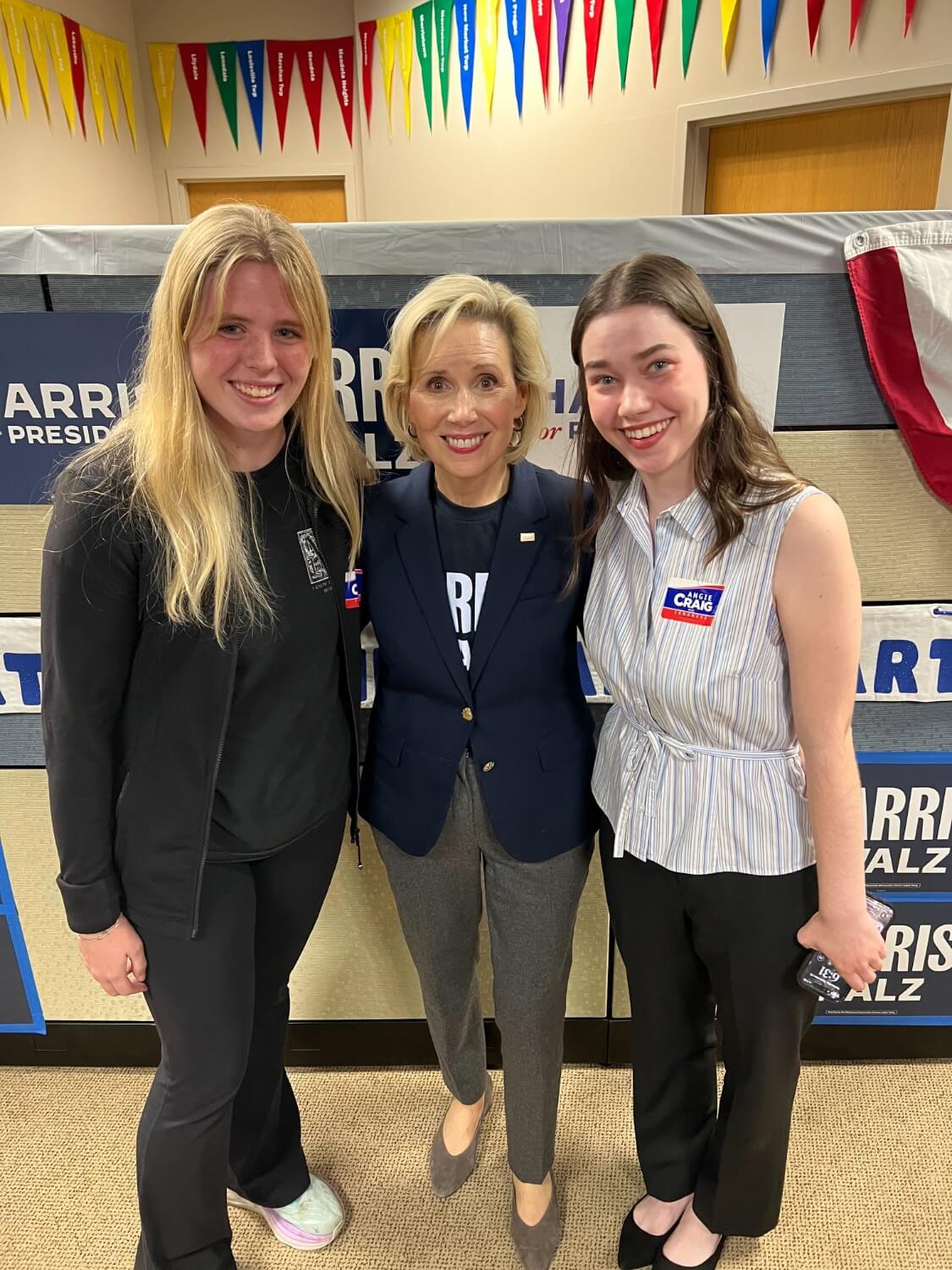
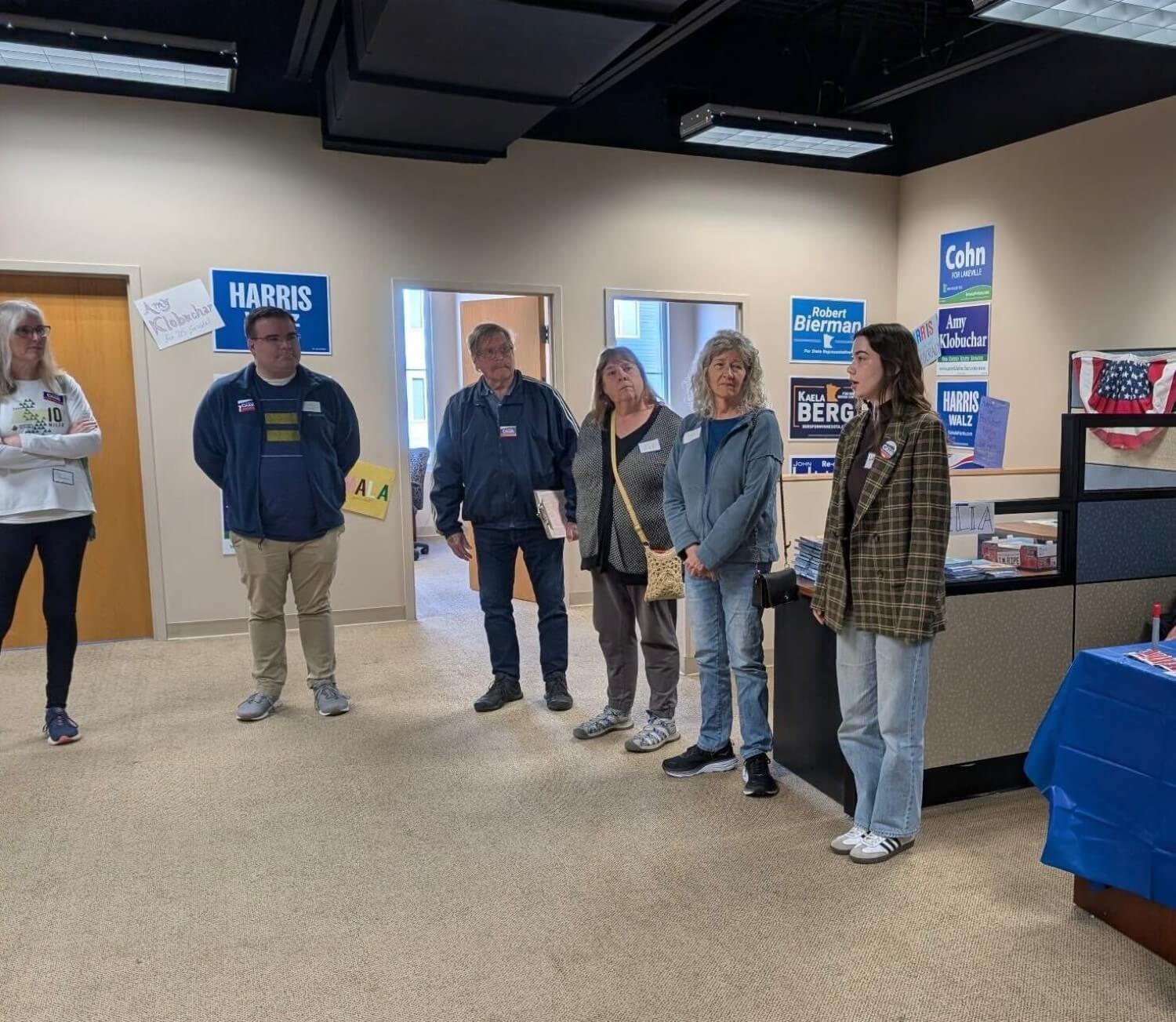
Lelia Pedersen (junior) said she is currently working as a field organizer for Representative Angie Craig of the Democratic-Farmer-Labor Party in Minnesota’s second congressional district. Pedersen said Campaign Semester has taught her skills that she would not have been able to learn in a classroom.

“I really don’t think there’s anything that can prepare you to just knock on someone’s door and ask them about their beliefs and if they support your candidate,” Pedersen said. “I feel like I know the theory behind campaigns, but there wasn’t anything I could have done in class that would have truly taught me how to talk to voters.”

Pedersen said there are challenges that come with working with diverse political opinions in a swing state.

“Oftentimes, I’m talking to people across a broad political spectrum,” Pedersen said. “I walk into all conversations assuming that somebody doesn’t necessarily always want to talk to me, but there is something that we can share in common. Most folks don’t want to talk about politics with me and that’s to be expected, but it has surprised me what people are willing to discuss and what they share.”

Courtesy of Lelia Pedersen

Pedersen said committing to Campaign Semester can be a daunting task.

“It’s a big ask, moving to this place you’ve probably never been before, working with people on a job you don’t fully understand,” Pedersen said.

Despite those challenges, Pedersen said Campaign Semester has given her rewarding professional experiences and lifelong connections.

“This is such a formative experience and these people are people that I’m going to know for the rest of my life,” said Pedersen.

Contact Amelia Gehlhaus and Ellie von Brachel at gehlhaus@oxy.edu and vonbrachel@oxy.edu

Loading

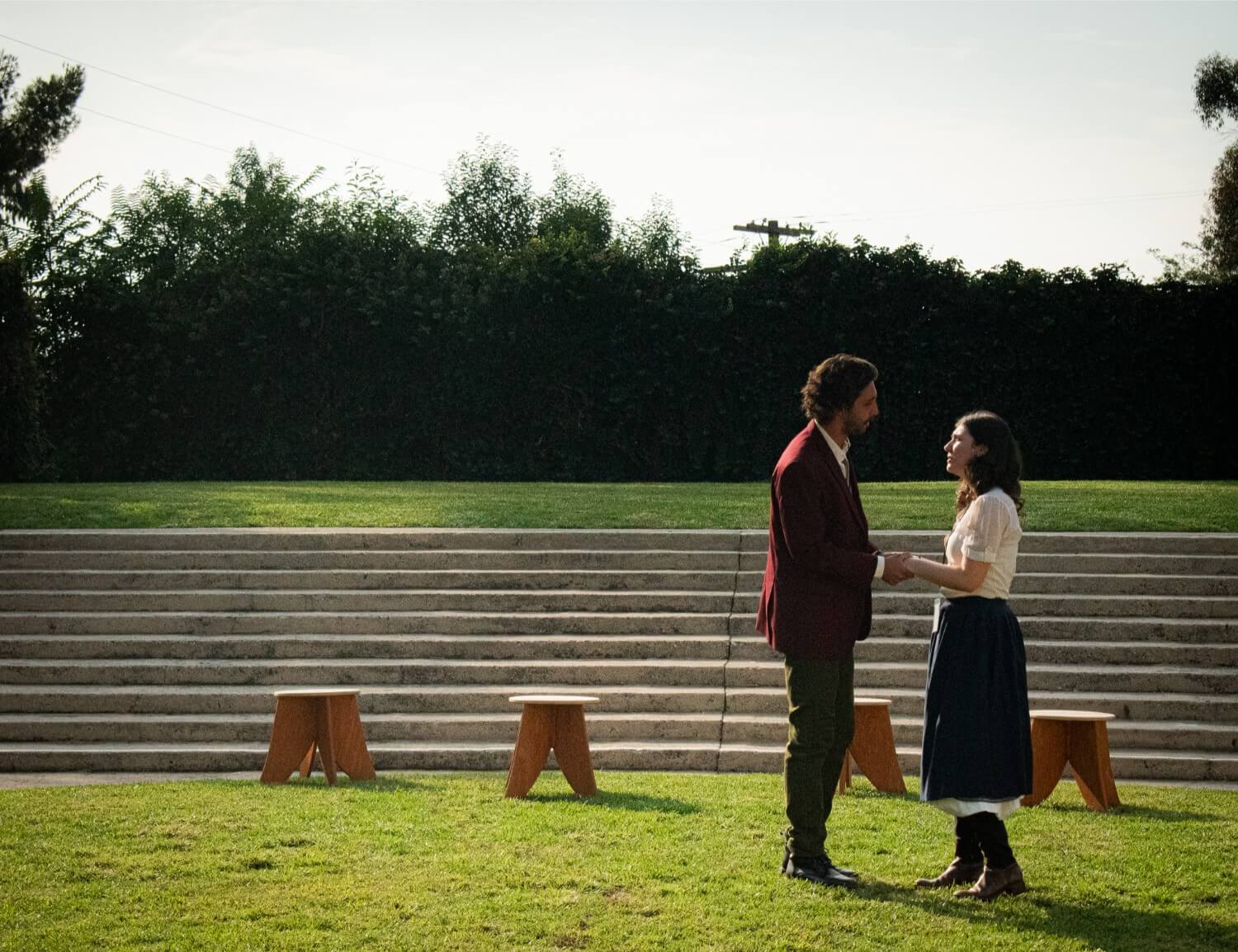
Student-run production of “A Midsummer’s Night Dream” is a love letter to outdoor theater

For one night only, a student-run production of Shakespeare’s “A Midsummer’s Night Dream” graced the stage of the Remsen Bird Hillside Theater Oct. 5.

Theater & performance studies and politics double major, and the play’s director Keelyn McDermott (senior), said the idea for the “Midsummer” production started with wanting to put Occidental’s Greek Theater to use after watching outdoor theater Theatricum Botanical’s take on “Midsummer.” From there, she said she saw the potential of what could be done in Occidental’s own amphitheater, despite lacking the technology of Keck Theater.

“[The Greek Theater] hasn’t really been used and for legitimate reasons,” McDermott said. “But I think approaching second semester of junior year, I was like, ‘How can I make my mark? How can I go out with a bang?’”

Director of “A Midsummer Night’s Dream” Keelyn McDermott (senior) outside the Tiger Cooler at Occidental College in Los Angeles, CA. Oct. 4, 2024. Aung Myat Htet/The Occidental

McDermott said that once she decided she wanted to put on a show in the Greek Theater, she began recruiting people that she wanted to collaborate with again, reserved the space and got to work. Throughout the summer, McDermott said she and other members of the production started meeting to dissect the script, characters and dynamics.

One such member was Carolina Arap (junior), who played Helena in “Midsummer.” She was also the production’s choreographer, social media manager and intimacy coordinator, where she supported actors through scenes that involved physical contact. According to Arap, the outdoor venue was an exciting part of the production.

“[The outdoor venue] is one of the things that most of the cast is the most passionate about with this production,” Arap said. “Especially being in the theater department here at Oxy, one of the things that we as a collective feel is our most underused resource [is] that gorgeous Greek amphitheater sitting there.”

According to McDermott, the technology used for “Midsummer” was influenced by the outdoor venue. She said it was minimal, but due to the nature of the play, McDermott believed it added to the magic of the production.

“[In the Greek Theater], things need to be bigger. Things need to be louder. We’re not using mics, so that kind of informs the style of acting,” McDermott said. “[But] it’s complimentary to the play itself […] it is a little larger than life, outlandish and hilarious.”

Arap said being in the Greek Theater also allowed the play to be more immersive. Several characters entered and exited throughout the theater, as well as ran through the audience. Unlike many theater venues, there were no official, controlled wings.

According to McDermott, “Midsummer” was a passion project for her and her directing debut. Before “Midsummer,” McDermott said she had been mainly involved in theater as an actor.

“I feel like through this process, I have found my own artistic voice,” McDermott said. “I decided that I wanted to challenge myself in a way that I’ve never challenged myself creatively before.”

According to Arap, McDermott wasn’t the only one taking on something new for this production. Arap said she stepped in as the intimacy coordinator without training to be someone that people could go to if they had concerns and be a middle-ground between the director and the actors.

“A Midsummer Night’s Dream” rehearsal at Occidental College in Los Angeles, CA. Oct. 4, 2024. Aung Myat Htet/The Occidental

Several cast members also made their acting debuts, which Arap said created a dynamic learning environment intertwining their various experience levels. Arap said that while she believes many of the people newer to theater may have learned from those with experience, the theater veterans also learned a lot by seeing the budding actors’ fresh takes on the play’s well-known characters.

“I am just so thrilled for the people doing their acting debuts and so thrilled for them to have that experience,” Arap said.

According to McDermott, this learning environment was also prevalent as the entire production was student-run. McDermott said everyone had to keep themselves accountable and put trust in the people around them. McDermott said she learned how to balance her ideas and ambitions with trusting the community she built around the show.

Zola Morris (sophomore) is a theater & performance studies major at Occidental. She was the stage manager for this production of “Midsummer.” According to Morris, some challenges were introduced because the production was fully student-run. However, she said McDermott took the time to be an exemplary leader and director.

“I think we’ve done a great job of cultivating an environment where we see each other as professionals and adults,” McDermott said.

McDermott said she believes they were able to succeed with this show because they put trust in each other.

“This show is really magical and special, and we have such a talented and dedicated group of people working on it,” Morris said via email.

According to Arap, the community they were able to build during this production was a huge part of what made it special.

“’Midsummer’ is a celebration of the community you can build at Oxy,” Arap said. “[It’s] a love letter to classical work and a love letter to theater, and a love letter to just connection and what it is to be with people […] I just hope that people love it as much as I’ve loved doing it.”

Contact Ava Anderson at aanderson5@oxy.edu

Loading

Opinion: A Chinese adoptee’s continual and bittersweet reckoning with a life lost

I’ve always known I was adopted. It’s hard not to when your parents look nothing like you. My family occasionally gets stares in public, but I hardly notice since being a transracial adoptee is all I know. I spent my childhood in Texas trying to make sense of who I was while defining my own Asian America situated in the shadows of the American South. No matter how complex my identity is, my desire to remain close to China is a constant, grounding force. I think about my home country and romanticize the person I could have been in China despite everything my adoptive parents have given me.

I have mixed emotions about China’s recent decision to halt international adoptions. I know there’s a sociopolitical perspective that can be used to interpret what it means for China’s economy and population. However, when I first heard the news, I couldn’t help but think about the 160,000 Chinese children who have been adopted internationally since 1992, a majority of them being females due to the One Child Policy. I am fulfilled with my life here in America, but I mourn the culture I could have experienced if I never came. This is undoubtedly because of my appreciation for and proximity to Chinese culture from a young age.

A common misconception of Chinese adoptees in America is that they are all “whitewashed” and want to be more “Americanized.” However, I’m very conscious that my experience as a Chinese adoptee is quite the opposite of that.

My parents sent me to, not one, but two, Chinese language schools a week to ensure I was exposed to as much Chinese culture as possible. I was also fortunate to grow up in Austin, TX, which has a sizable Chinese immigrant population. I befriended their kids at school. I attended their holiday celebrations. I was accepted into their community because of our shared knowledge and culture. They couldn’t have cared less about my parents’ ethnicity. I always felt like “one of them.” It never bothered me that I was adopted, because I felt so secure in my Chinese identity and had successfully assimilated into the culture I was surrounded by.

A few years ago, my mom mentioned that when I was younger, she urged my dad to get a job in China so our family could move there. She said she wanted me to experience life like an “ordinary” Chinese kid. I realized that as much as I “completed” my parents’ lives, they also felt guilty about taking me away from my home country. No matter how much they have provided for me in America, nothing will replace the loss they indirectly caused.

Many conversations about transcontinental adoption are only positive — the fruitful life the child has in the new country, the wonderful family they gain and the job opportunities available to them when they’re an adult. However, adoption is full of loss. I lost my biological family. I lost a language, culture and country. I lost an entire identity. Looking back, I now know that my parents crammed my week full of language school and cultural activities to give me back any bit of my lost Chinese identity. I wonder who I would’ve become if I never left China.

Strangely enough, I haven’t returned to China since leaving 19 years ago. However, I think about China every day. I want to visit where I was born in the mountains of Guangxi and smell the misty air. I want to see the lush, towering landscapes and hear the chatter and bustle of my people. I want to experience everything that was taken away from me. After all, it wasn’t my choice to leave.

I feel conflicted about China’s new adoption policy because I recognize everything that Chinese adoptees abroad have lost. While this doesn’t discount the quality of life we currently have, I am still unsure about how to feel because we were forcibly relocated, even if it was for the better. I can’t say if this policy is a completely positive or negative thing for children in orphanages now. My opportunities in America are probably far better than anything I could’ve imagined in China, but there is a life in China that I will never live. I have a whole lineage that I don’t know, and it hurts not knowing where you came from.

My adoption story is bittersweet. The Chinese adoptee experience is not monolithic. Everyone’s story is different. Be open to hearing other’s stories, especially if they don’t fit into the preformed mold you have in your head. It’s okay to let certain parts of your past define who you are and shape how you perceive the world. It’s okay to not know certain parts of who you are. Allow yourself to accept the difficult journey of unearthing your past.

My adoption never gets easier to talk about — it just gets easier to sit with. I feel secure enough in myself to talk about my identity and sense of belonging. I hope my conversations inspire other Chinese adoptees to confront their pasts and recognize everything they lost, no matter how heartbreaking and uncomfortable it may be. At the end of the day, I’m still just a girl from China.

Contact Anna Beatty at beatty@oxy.edu

Loading