Home Blog Page 56

Athletes of the Week: Schroeder and Lindeman overcome injuries to score on national champions

Jack Schroeder

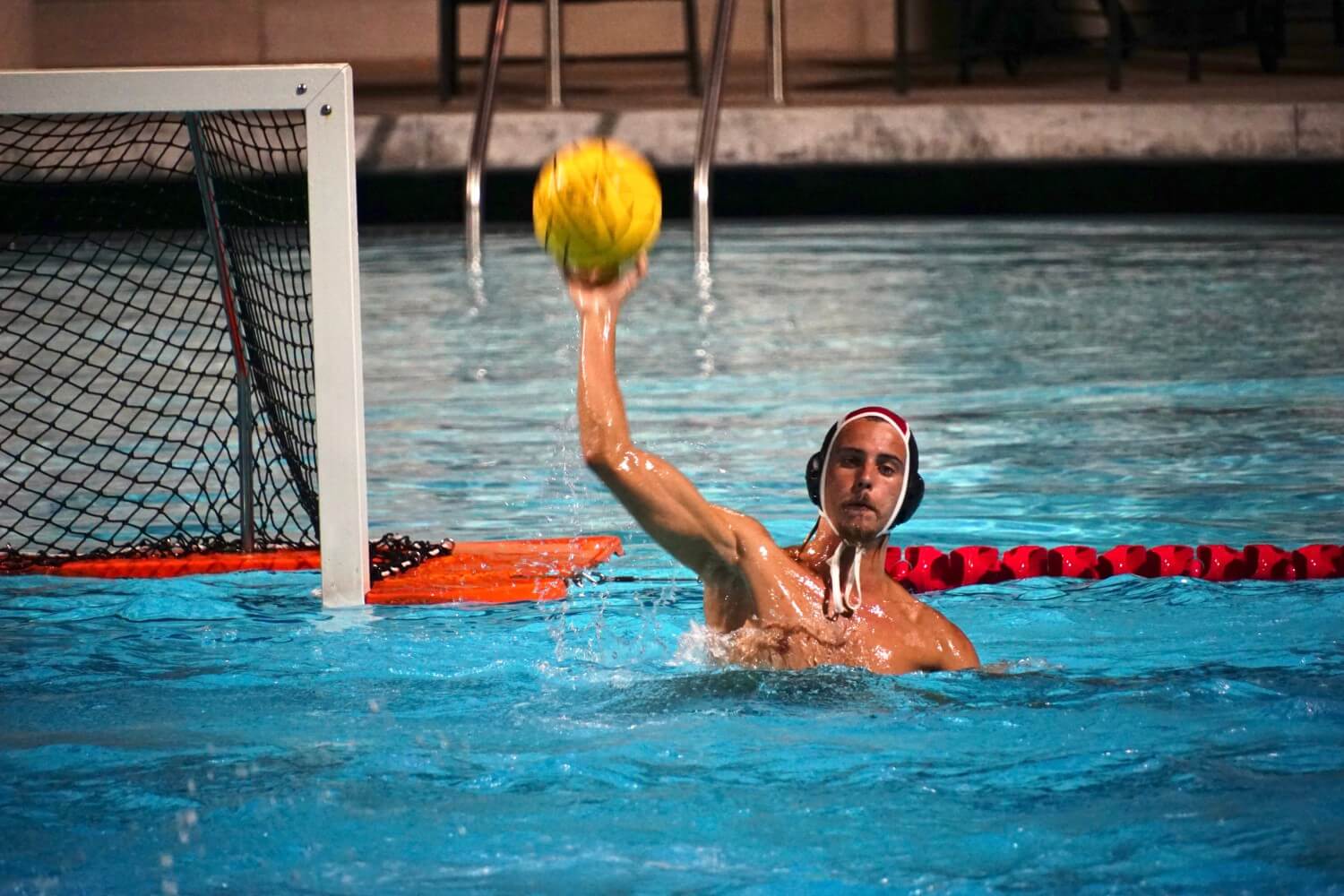
During the Oct. 2 Occidental men’s water polo game against defending Division III men’s water polo champions Claremont-Mudd-Scripps, goalkeeper Jack Schroeder (junior) had two saves late in the fourth quarter. With only one second on the clock, Schroeder took a shot at CMS’s open goal, scoring from across the pool and earning a 15-14 win for the Tigers.

“We beat the number one DIII team in the country […] with a last second shot there. That was really exciting. That was a really huge win for us,” Schroeder said.

Schroeder said he took up water polo after an ACL injury in the seventh grade.

“I used to play football and basketball and the tall, big-person sports. Then, I partially tore my ACL and had to quit playing land sports,” Jack said.

Men’s water polo head coach Lindsey Garcia said Schroeder’s biggest strength is his eagerness to improve.

“He’s worked a lot on his legs, feet and being a little bit lighter on his hands. He works really hard, and he’s really coachable,” Garcia said.

Calvin Anderson (first year), also a goalkeeper for men’s water polo, said Schroeder is both helpful and holds the team to a higher standard.

“He’s just a great guy to know. He helps you out when you need it,” Anderson said. “He’s just the standard.”

Schroeder said he is able to rely on his team’s support when he starts to feel pressure.

“It’s really nice to have a team to back you up and get your head back in the game,” Schroeder said.

According to Garcia, Schroeder is an encouraging presence on the team.

“[We make] sure that [water polo’s] a place where we […] want to be part of it. It’s one of the things that Jack Schroeder is actually really good at. He’s super encouraging,” Garcia said.

Despite a recent loss against Pomona-Pitzer, Schroeder said he is hopeful for the rest of the season.

“We lost to Pomona on Wednesday […] but overall the season is going really well, and I have high hopes for the rest of the year,” Schroeder said.
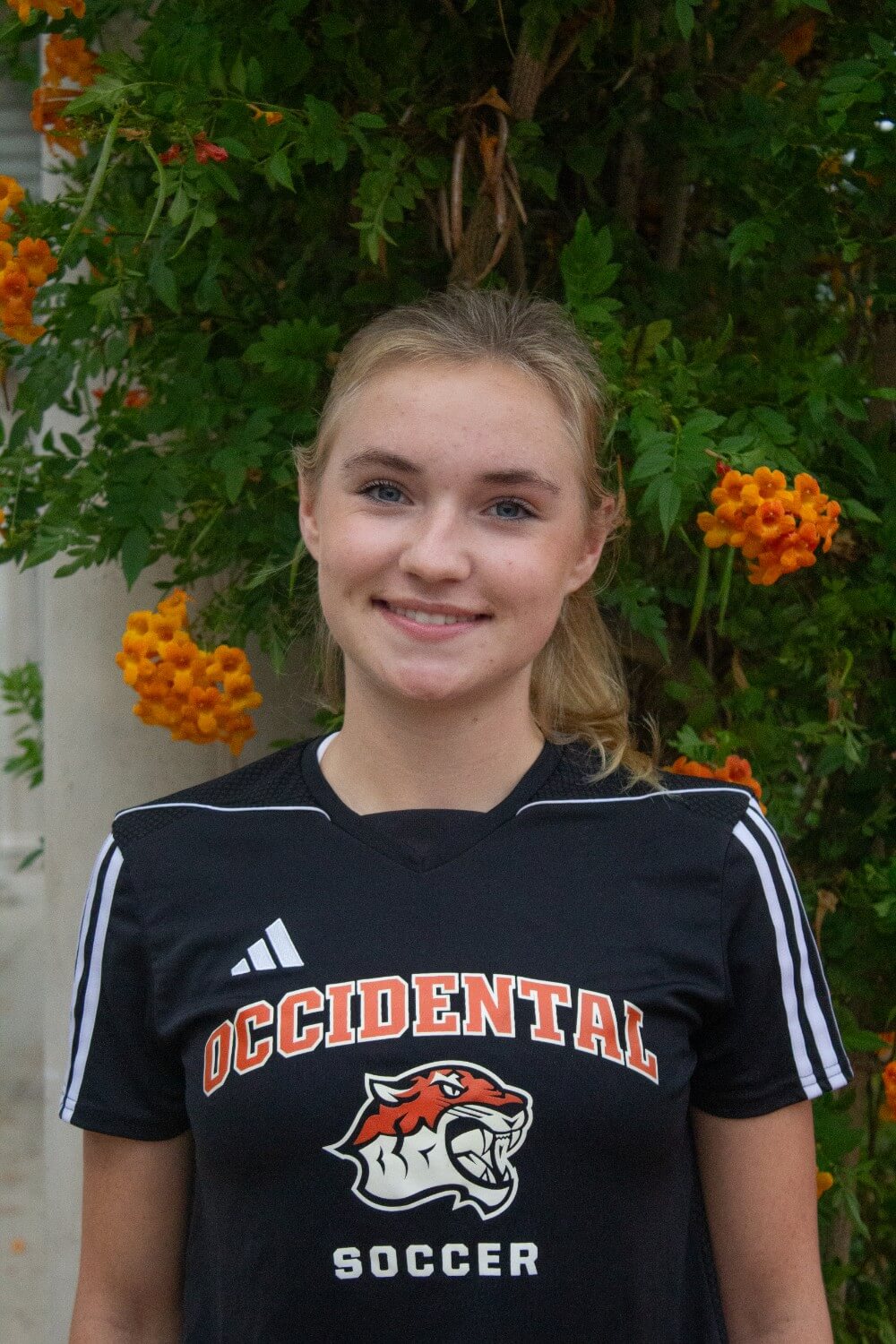
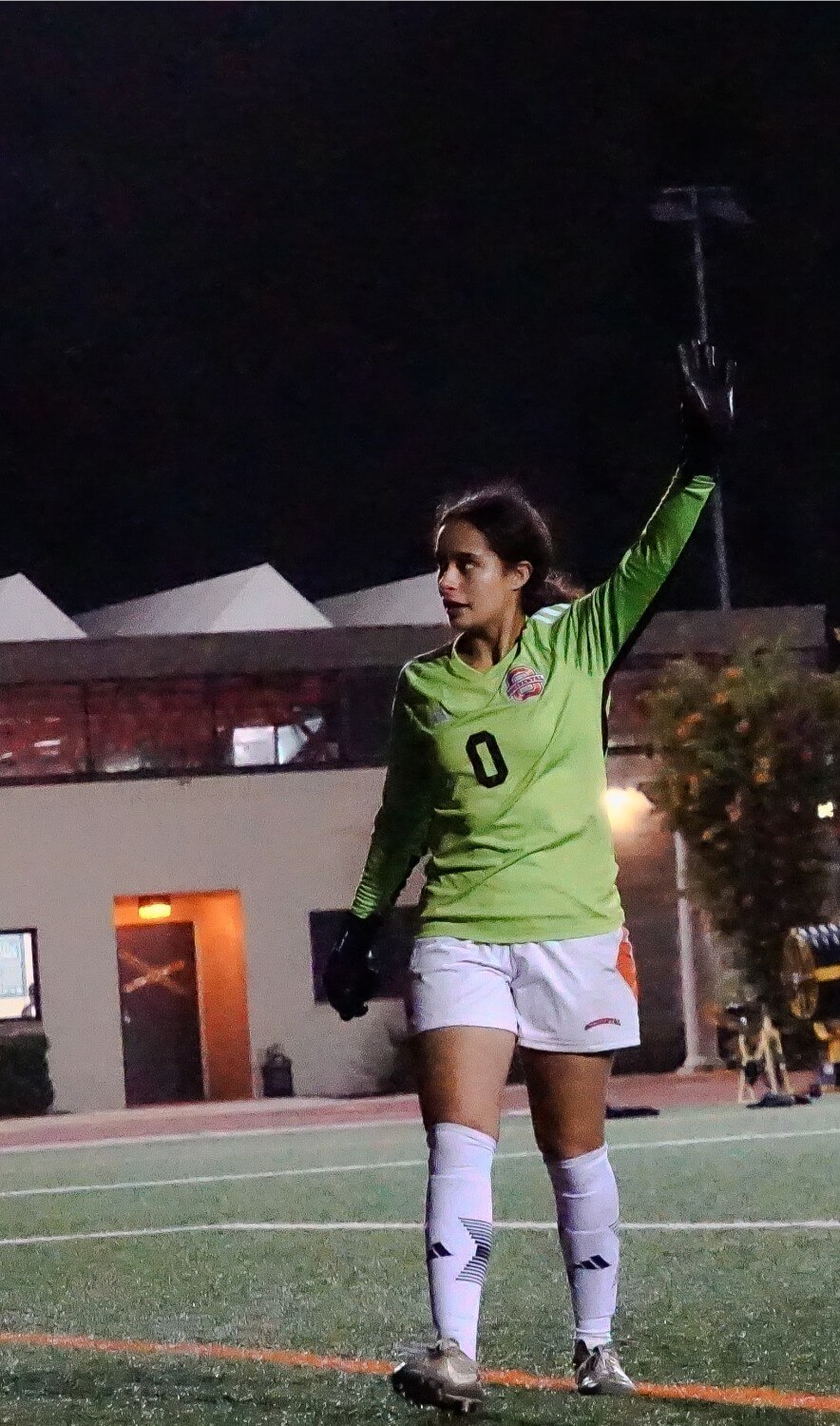
Mira Lindeman (first year) at Jack Kemp Stadium at Occidental College in Los Angeles, CA. Oct. 16, 2024. Marty Valdez/The Occidental

Mira Lindeman

During Occidental women’s soccer game against Cal Lutheran Oct. 2, defender Mira Lindeman (first year) scored against the reigning DIII national women’s soccer champions with less than 10 minutes to go, keeping the game close for the Tigers.

Lindeman said she inherited her family’s love of soccer and has played the game for as long as she can remember.

“I’ve played soccer basically all of my life at the club level,” Lindeman said. “My family is a very big soccer family. That’s the sport we all focus around.”

Assistant Athletics Director and Women’s Soccer Head Coach Colm McFeely said one of the things that made Mira unique in the recruiting process was her ability to kick well with her left foot.

Quality left-footed players are not that easy to come by, and Mira’s got a very sophisticated left foot. Her right is not bad either, but she’s primarily a left-sided player,” McFeely said.

Lindeman said the strong dynamic within the team will set them up for future success.

“I think we have great chemistry together,” Lindeman said. “Our results haven’t been quite what we wanted, but those things will come with time.”

McFeely said he was impressed by how Mira was able to adapt to her increased role on the team as a first year due to injuries impacting other players.

“The fact that we had so many injuries propelled Mira onto the field, probably a little bit quicker than she might have thought. Boy, did she take it like a duck to water.” McFeely said.

Lindeman said being on the team and bonding with her recruiting class has helped tremendously with her adjustment to college.

“Having that group of 11 [first years] that you just immediately click with […] definitely helped the transition be easier, because I always have that group of people surrounding me,” Lindeman said.

McFeely said he believes she will remember the night she scored her first goal at Occidental fondly.

“I would imagine she is going to remember for the rest of her life, and certainly the rest of her days here at Oxy, that she scored her first goal here […] against the national champions,” McFeely said.

Contact Tessa Taylor at ttaylor@oxy.edu

Loading

Occidental goalkeepers thrive under pressure

Various Occidental goalkeepers across men’s and women’s soccer and men’s water polo said they find the position of goalkeeper as rewarding because of its challenge.

Jack Schroeder (junior), a goalkeeper for men’s water polo, proved that goalies can score goals too when he scored the game-winning goal against Claremont-Mudd-Scripps (CMS) Oct. 2.

According to men’s water polo head coach Lindsey Garcia, Schroeder made a crucial save right before he scored. She said Schroeder played a big part in Occidental’s win over CMS, who, at the time, were ranked No. 1 in DIII men’s water polo.

“I think having really good goalies, which we do, makes the team even better,” Garcia said. “He was so aware of the clock, so aware of the situation — he knew to catch the ball and shoot it right away.”

According to Schroeder, it is hard not to blame himself when the ball goes into the goal, even if it’s not entirely his fault.

“It’s one goalie — it’s just you,” Schroeder said. “Everything is your fault, including the wins.”

Schroeder said he wants people to know that lob shots are a lot harder to block than they look.

“I get dumped on a lot by a lot of people for letting in a lob, and a lob is really hard to block,” Schroeder said.

Men’s Water Polo goalie James Derrod (senior) during a game in the De Mandel Aquatics Center at Occidental College in Los Angeles, CA. Oct 10, 2024. Quincy Howard/TheOccidental

Calvin Anderson (first year), another men’s water polo goalie, said all the goalies on the team are very close and that they have their own little corner that they practice in. He said Schroeder and James Derrod (senior) are great mentors to him.

“They’re amazing,” Anderson said. “James is incredibly skilled, as is Jack — I learn so much from them everyday in practice.”

Melanie Rodriguez (first year), a women’s soccer goalkeeper, said she started playing the position at age eight because she loved the pressure.

“When it’s that last moment, it’s all up to you to [make the] save and to determine what happens in the game, so I kind of love that,” Rodriguez said.

Rodriguez said that while she has always felt appreciated on teams, she believes that goalkeeping is culturally under-appreciated.

“People remember the Messis and Ronaldos, but not the Courtois,” Rodriguez said.

Women’s Soccer goalie Melanie Rodriguez (first year) during a game in Jack Kemp Stadium at Occidental College in Los Angeles, CA. Oct 16, 2024. Quincy Howard/The Occidental

Riley Nyhan (senior), the men’s soccer team’s starting goalkeeper, stumbled into the position of goalkeeper during his sophomore year of high school after previously playing in the field.

“Who wants to be a goalkeeper?” Nyhan said. “Nobody’s growing up and [saying] like, ‘oh my gosh, I just really wanna be a goalie.'”

While Nyhan did not initially choose his position, he said he now loves being a goalkeeper.

“I love the feeling of a clean sheet and knowing that you’ve gone the whole game without letting others score,” Nyhan said. “[It] feels truly amazing, because it’s not just you, it’s a reflection of your entire team.”

According to Nyhan, being alone on the field can be a real mental challenge. He said there are moments during games where all he can do is walk around and think for the next couple minutes.

“Anyone who says it’s not boring is lying to you,” Nyhan said.

Nyhan said that even though he feels appreciated by his team, the nature of the goalie role lends itself to extra scrutiny.

“Thing about being a goalie is that you’re either a villain or a hero,” Nyhan said. “There’s no, ‘oh, you did a fine job today.’”

Casey Scott (sophomore), another men’s soccer goalie, said people notice when goalies mess up more than when field players do.

“If you make a mistake, it’s a lot worse than anyone else making a mistake, because there’s no one else behind you,” Scott said.

Both Scott and his teammate Nyhan said the goalkeepers on the men’s soccer team take care of each other and keep each other accountable.

“We call it the goalkeeper union,” Scott said. “We’re a very insular group of people who are sometimes a little crazy to be playing [this] position — you have to be a little insane to play [goalie].”

Contact Michelle Teh at teh@oxy.edu

Loading

Opinion: Jill Stein is undermining Kamala Harris in a critical election

As we approach another high-stakes presidential election, Jill Stein has reemerged on the political scene, this time with the potential to tip the scales toward Donald Trump yet again. Her latest campaign is capitalizing on the anger that many Palestinian and Arab Americans feel, but it’s essential to recognize that Stein’s role as a spoiler is not new — and it’s dangerous.

We’ve seen the consequences of this playbook before. In 2000, Ralph Nader’s Green Party candidacy helped elect George W. Bush, leading to the Iraq War and countless other disasters. In 2016, Stein’s Green Party candidacy helped siphon crucial votes away from Hillary Clinton in swing states like Pennsylvania, Michigan and Wisconsin. These states, with a combined total of 46 electoral votes, handed the presidency to Trump.

The math is clear: had Stein voters in those states backed Clinton, we would have a vastly different political landscape today. Instead, Clinton lost by narrow margins that Stein’s candidacy exacerbated. The stakes are just as high this election, if not higher. Will we let this happen again?

The notion that Stein is propped up by Republicans aiming to pull votes from Kamala Harris is not far-fetched. We’ve seen the consequences of this playbook before. MAGA-aligned donors have funneled money into third-party candidates, hoping to fracture the Democratic vote in key battlegrounds. Most recently, former KKK leader David Duke endorsed Stein. Stein may claim that she offers a meaningful alternative, but in reality, it threatens to divide the progressive vote, weakening the only viable option to defeat Trump.

Stein’s assertion that “there is very little policy daylight” between Harris and Trump is not only misleading but dangerously ignorant. Trump’s plans include tax cuts for the rich, the militarization of immigration enforcement and Project 2025 — a sweeping effort to dismantle government institutions. Trump continues to champion policies that would devastate working families, strip away healthcare and jeopardize programs like Social Security and Medicare. A Harris presidency, in contrast, offers a real agenda to lower costs for families, tackle climate change and provide crucial tax credits for middle-class Americans.

Stein would have voters believe there’s no difference between a Harris presidency and a Trump dictatorship-in-the-making. This is a dangerous fiction. Trump’s blatant disregard for democratic norms, his packing of the Supreme Court with far-right justices and his inability to accept the results of a free and fair election make him a direct threat to American democracy. Harris, while imperfect, stands in stark opposition to Trump’s authoritarian vision.

Perhaps Stein’s most cynical ploy in this election is her attempt to harness the Israel-Palestine conflict to gain votes. Many Arab American voters, especially in Michigan, are disillusioned with the Biden administration’s handling of the crisis. Stein sees an opening here, but her actions reveal her true motivations. When Palestinian human rights lawyer Noura Erakat was offered the VP slot on Stein’s ticket, it was with the condition that Stein would drop out if the Democrats secured a ceasefire and an offensive arms embargo. Stein refused, demonstrating that she is more interested in maintaining her candidacy than achieving meaningful change.

Stein has no real plan for advancing the Palestinian cause. She has no pathway to win the presidency, no support in Congress and no track record of organizing the kind of local races needed to build lasting political power. The Green Party has only ever had a handful of state-level representatives and currently has none. Stein’s campaigns are vanity projects that siphon off votes from candidates who could actually govern.

Many people are understandably frustrated with Harris’s perceived alignment with Biden’s policies on Israel and Palestine, but it’s important to consider the context. As the sitting Vice President under President Biden, a self-proclaimed Zionist, it’s unrealistic to expect Harris to openly contradict him on such a critical issue. We need to recognize that Harris and Biden are distinct individuals with different personal backgrounds, experiences and potential approaches to policy.

It’s crucial to remember that people’s views also evolve over time, as do political realities. Barack Obama, for example, did not support gay marriage in 2008, but by 2015 he was instrumental in its legalization. It’s premature to assume that Harris will never diverge from Biden’s stance on Israel and Palestine just because she hasn’t done so yet.

As Erakat aptly put it, “If voting Harris is your position — own it loudly and connect it to your self-imposed accountability. Make a pledge — don’t vote and disappear. Vote, take the front line and sacrifice. Make good on your theory of change.”

I plan to do just that. If Harris wins and we see no meaningful change within her first 100 days in office, you can join me in the streets protesting. I’ll continue writing, speaking out and demanding justice for Palestinians, and I encourage others to do the same.

At a time when democracy itself is on the line, we cannot afford to indulge the fantasy that all candidates are the same. Jill Stein may seem like a voice for the disaffected left, but her candidacy only serves to fracture the progressive vote and pave the way for Trump’s return to the White House. We cannot allow history to repeat itself.

Contact Tejas Varma at varmat@oxy.edu

Loading

Opinion: Why is the Internet telling me to lose weight?

Content warning: this article discusses eating disorders and disordered behavior.

As a 19-year-old woman, a lot of what I see on the internet is designed to make me feel bad about myself. I started feeling it when I first accessed the internet before I had social media. I would watch YouTube or get ads on computer games that talked about new workout fads or “healthy diets,” something that should not have been introduced to me at such a young age.

One memory will always stick with me. I was in the grocery store checkout line at about 8 or 9, when I saw a magazine cover that read How to Slim Thighs Fast.” I remember not realizing that thighs were a problem before then. I thought, “who would even care about that?” Looking back on that memory now, it’s sad to think about how I saw this at such a young age and how it stuck with me.

What used to be the cover of a magazine is now everywhere on the internet for girls younger than the age I was when I learned about reviled thighs. Now, diet culture surrounds us. It is inescapable, and it is suffocating. What used to be easier to ignore by not picking up the latest tabloid has become shoved in our faces through the media we consume daily.

Two weeks ago, I was scrolling through X (formerly Twitter) when I got a “thinspo” post on my feed. “Thinspo,” short for “Thin Inspiration,” is a grimy subculture of the internet that shows pictures of very skinny people (primarily young women and girls) for users to have pictures to “inspire” them. “Thinspo” rose to prominence on Tumblr and now houses its supporters on other social media sites, like X. The post was also completed with the hashtag #edtwt, translating to eating disorder Twitter. Using this hashtag, posts encourage eating disorders and include people with eating disorders talking about “hacks” on how to starve themselves more efficiently. These are not the only trends permeating social media to create horrific spaces for young, impressionable minds who are self-conscious about their bodies.

Another recent, noticeable trend on social media is influencers pushing their audience to buy certain products to lose weight or appearing in ads encouraging them to buy weight-loss products. This isn’t new — perfect-seeming celebrities have been centered in weight-loss ads since the beginning of time — but now, instead of young women in magazines or billboards, this content is branded as a “trend,” encouraging people of all ages (which, for apps like TikTok, could start at the youngest a child can consume content) to participate. One of these trends was the “cortisol face,” or a “chubbier” type of face that people seemed to believe was because of high cortisol levels. In reality, high cortisol levels can manifest in anyone, no matter what your size, as cortisol levels vary based on a given situation. However, cortisol was branded as evil, and products began promising to “lower your cortisol levels.”

There are many other things to cover in this diet-culture epidemic: it truly feels like the need to be skinny is overwhelming. After so much work and progress in body liberation and neutrality, are we reverting to older ways of thinking, possibly even worse?

Unfortunately, body sizes go in and out of style. The nineties’ “heroin chic” is back and in full force. And, with new accessibility to weight-loss drugs like Ozempic and an increasingly overwhelming social media feed that tells you to become as skinny as possible, the pressures are undeniable. In Karmalita Fox’s YouTube video, “Skinny is the New Birkin,” she explains how skinniness is seen as a form of currency and status. When you’re skinny, you have money, privilege and “everything figured out in your life.” Of course, women aren’t the sole target of this scary message. Unhealthy messages about men’s health have also circulated on social media, causing a significant rise in body dysmorphia among men.

Even if someone is not a social media user, this content is still shoved in their face online. Advertisements in any app can promote a new weight-loss supplement, a targeted fat-loss surgery or anything that tells the viewer they need to act to fix their bodies. Before, some of this propaganda’s consumption was avoidable; now, it is ingrained into our brains. These trends will have long-lasting damage, such as disordered eating and hormonal dysregulation.

I hope that future generations will collectively learn how to unlearn diet culture sentiments that are pushed in our faces and point out harmful content when we see it. It takes thinking critically about trends or “hacks” and understanding that your body should be treated with respect and love. You do not need to change anything about yourself to please the algorithm’s desires.

Contact Eliana Joftus at joftus@oxy.edu

Loading

Occidental men’s water polo community turns team bonding into tournament success

Occidental men’s water polo won three out of four games in the Gary Troyer tournament Oct. 4-5. According to Kevin Castellanos (first year), one of the team’s qualities that helped them reach their success in the tournament is their camaraderie and ability to deliver constructive criticism.

“There were some times when morale was low, but we know how to rebuild as a team and have positive talks with each other, saying ‘it’s good what you did here, but we would rather have you do this instead,’” Castellanos said.

According to head coach Lindsey Garcia, constructive criticism has been a primary focus for the team this season.

“I think one of the big switches that we’ve been discussing is self-accountability and making sure that we are supporting each other […] even if something didn’t go as well as we had wanted,” Garcia said.

Another focal point for the team this season has been strategic game planning and tailoring practices in accordance to the team that Occidental is competing against, according to Tate Miller (senior).

Miller said practice is essential when competing at the collegiate level.

“In high school, you’re used to having three seconds to make a decision, and now it’s one,” Miller said. “You’ve got to practice making the right passes, taking the right shots and knowing when to do stuff at that rate.”

Garcia said before game day, practices tend to consist of sprints and discussing which defensive strategies to employ.

“Yesterday, we also had a film, so we watched a film on Pomona-Pitzer so we could see how they play, what they do,” Garcia said. “We talked about the different hole sets we’re going to be guarding, the style of play we’re looking for, how we think we’re going to be successful against them.”

According to assistant coach Joe Cox ’22, there are 10 new recruits to men’s water polo this year. Cox said these players have been a valuable addition to the team.

“It’s really exciting that we have this awesome core returning group, and now we have these 10 new guys who only make us a better team and a better program,” Cox said. “A lot of them are showing, even as first years, a lot of potential. Some of them are playing in big games already.”

Water polo game at the De Mandel Aquatics Center at Occidental College in Los Angeles, CA. Sept. 11, 2024. Lupin Nimberg/The Occidental

Cox said he attributes the number of new recruits to the camaraderie shared between the prospective recruits and the current student-athletes.

“[It’s] really a testament to our returning student-athletes, because we have 17 people who came here and had such a good time with our men’s and women’s water polo players that they said ‘yeah, this is where I want to be for four years,’” Cox said.

According to Castellanos, he chose Occidental’s water polo team because of the team’s close bond.

“One reason why I chose it is because of how close everyone is within the team. We are not just teammates, we are brothers,” Castellanos said.

According to Miller, these friendships continue after graduation.

“The guys I played with four years ago still show up to every game and a lot of them still live in LA and come hang out with us on weekends. We’ll go to see them and support them in what they’re doing,” Miller said. “The community that Oxy water polo fosters is incredible.”

Occidental lost to Loyola Marymount University (LMU) 8-16 in the Gary Troyer tournament. However, Garcia said it was a valuable learning experience.

“Playing a team like LMU, you can really learn a lot. We can grow a lot, it’s just about how we approach it,” Garcia said. “Looking back at it and thinking, ‘better is definitely what we want to achieve’ and I think we did a good job of that.”

Garcia said she looks forward to continuing the culture of care that makes the Occidental water polo team so special.

“They enjoy being together and I think that’s what helps us be such a successful team,” Garcia said. “We’re always together, not just at practice.”

Contact Zaru Shchleglov @shcheglov@oxy.edu

Loading

Column: CTE, the NFL’s most dangerous injury is invisible

For many Americans, football is more than a sport — it’s a way of life. Since the merger of the AFL and NFL in 1966, football has ridden the wave of the American thirst for sporting action to become America’s new pastime. This growth has manifested itself in the NFL’s viewership numbers — the last Super Bowl was watched by over 120 million people. With such prevalent success amongst both casual and hardcore fans alike, the NFL has meticulously crafted its brand image to be that of the perfect sport.

Unfortunately, this is not the case.

If you’re a fan of the NFL, there’s a decent chance that you’ve heard of the term “CTE” before. CTE, or chronic traumatic encephalopathy, is a brain condition that causes the nerve cells within the brain to degenerate and die. Major symptoms of the disease include cognitive impairment, impulsive behavior, mood instability and impaired coordination. However, the symptoms do not normally develop immediately after trauma and often take decades to manifest. It’s important to note that CTE can only be diagnosed posthumously.

While research regarding CTE has mostly been conducted throughout the 21st century, curiosity regarding the condition has existed since the 1920s when doctors questioned the “punch drunk syndrome” that many boxers experienced after repeated blows to the head. Interestingly, it was not until 2022 that the United States National Institutes of Health acknowledged the link between cranial trauma and CTE.

With these advancements in the study of CTE, sports leagues across the globe have been scrutinized for what many believe to be inadequate player safety standards. And, as far as testimony from former players go, no league has fared worse than the NFL. In a survey conducted by Harvard University, one third of retired football players interviewed believed that they had CTE. Additionally, more than 300 players have been diagnosed with the condition after an autopsy, including infamous Patriots tight end Aaron Hernandez, who was convicted of first-degree murder in the prime of his NFL career. Hernandez was 27 years old at the time of his death in prison and has been cited as the worst case of CTE ever seen in a young person.

While the NFL has recently been making strides to improve player safety by increasing the amount of protective wear players can wear during games, concussions and CTE still linger. The rate of concussions suffered by NFL players has not significantly decreased — in fact, it slightly increased between the 2022 and 2023 seasons.

Miami Dolphins quarterback Tua Tagovailoa has been a major focus of recent player safety, as he has suffered his third concussion while playing in just his fifth season in the league. Many pundits and former players have requested that Tagovailoa retire in order to preserve his health, but Tagovailoa has stated that he plans to continue playing. Ultimately, while Tagovailoa’s injury history is concerning, it is far from the worst case in the NFL.

Perhaps no player in recent history is more memorable for his possibly CTE-related struggle than Antonio Brown. Seen as one of the best players of the 2010s, Brown, nicknamed “AB,” lit up the scoreboard in an illustrious nine year NFL career. He amassed four Pro Bowl selections from 2014-2017 with monster seasons. Brown was a longtime Pittsburgh Steeler, cultivating an excellent connection between him and franchise quarterback Ben Roethlisberger. But 2021 was Brown’s last NFL season.

When examining all the hits Brown may have taken that could have caused possible CTE, one stands out as the most violent. In the 2016 AFC Wild Card game, Brown was leveled on an uncatchable pass by middle linebacker Vontaze Burfict, who was coming across the field in the opposite direction. The hit knocked Brown out cold. Burfict, who was disciplined many times in his career for putting other player’s health at risk, was suspended the first three games of the next season.

Brown pulled his most notorious stunt in January 2022, during one of the final weeks of the 2021 season. In a show of defiance against a coaching and training staff trying to get him to play on an ankle injury, Brown stripped down to nothing but his bare chest in the middle of a game against the New York Jets. He left his pads and jersey near a sideline bench and chucked his undershirt and gloves into a confused crowd, prancing off though the tunnel to the locker room while waving goodbye. While the Buccaneers characterized the incident as “mental-health-related,” Brown insists that his unexpected outburst resulted in mistreatment from the team, saying that he was “thrown out like an animal” when asked to play through an injury. He advertised his side of the story in a lengthy interview with ESPN.

Brown has gone back and forth between believing that he does or does not have CTE. After his incident with the Buccaneers, he never mentioned the disease, but has since come on several different podcasts and platforms stating that he is, in fact, a victim. Brown has launched a musical career under the nickname “AB,” delivering hits such as “Whole Lotta Money (feat. Rick Ross)” and “Pit Not The Palace.” Brown also authors a pseudo-football beat reporter account on X (formerly twitter). Notably, each post is marked with his new favorite saying: #CTESPN.

For Brown, such flamboyant acknowledgement of his condition provides a new perspective on his legacy. While Brown’s on-field talent allowed him to craft a brilliant career, his recent actions have made one thing clear: his condition is one that will define him forever. Unlike other players, he isn’t shying away from it.

Contact Mac Ribner and Ben Petteruti at ribner@oxy.edu and petteruti@oxy.edu

Loading

Artist of the Week: From behind the camera, Patio Production brings passion and creativity to life

Founded in the Spring of 2024, Patio Production is a student-run independent film company composed of six sophomores: Elliot Herzog, Ollie Yue, Mason Olson, Zinnia Estes, Will Tarica and Reyli Ramirez, according to their website.

Each member tells a slightly different version of how they initially started working together, but said they agreed on a few key facts: they were friends before forming Patio, and their first major project was the short film “Regretfully Yours.”

“Regretfully Yours,” which premiered last May in Choi Auditorium, is a narrative short film portraying the importance of accountability, Herzog said. Working on this film helped the group realize the strength of their collaboration, producer Estes said, prompting them to turn their partnership into an ongoing project.

“It was halfway through the writing of that short film that we considered making [our group] a more long-term thing,” Estes said.

The idea for their name emerged as a tribute to their nightly meeting spot, writer Tarica said.

“We would meet every night at Stewie Patio,” Tarica said. “Eventually, we decided we would coin [Patio] as the name for the production group we were starting.”

A crucial aspect of the group’s dynamic, Ramirez said, is the diverse backgrounds each member contributes, including graphic design, fashion and editing. Ramirez was the designer for “Regretfully Yours,” and each individual member also had a role in making the film — Herzog, Olson and Yue served as the creative directors, Estes as the producer and Tarica as the writer.

While each member technically holds a unique role within the group, Estes said that their positions are flexible depending on the individual project and interest that they bring to it. Although their individual backgrounds and experiences in film and design vary, Olson said what they share is a powerful drive to create.

“Our souls need to make something in order to feel fulfilled and to feel good about ourselves,” Olson said. “Being surrounded by people who are driven with the same motivation is so helpful for creating beautiful work.”

Members of Patio Production at Occidental College in Los Angeles, CA. Oct. 3, 2024. Allen-Zachary Lipsett/The Occidental

Initially focused on their independent works, creative director Yue said the group has since expanded to include content creation services for paying clients. According to Estes, these services encompass photos and short form videos for local businesses, brands and musicians. Their online portfolio features work for JNCO’s, Highland Cafe and Baller Hardware, as well as promotional content for student athletes and artists.

“We don’t want to get too refined yet and only do one thing,” Olson said. “By experimenting with different types of projects we can take more risks.”

The transition from creating solely for themselves to working with paying clients was accompanied by the group establishing itself as an official LLC, Yue said. While that transition has been a difficult one, Ramirez said, it has also been extremely rewarding.

“Paid work is always up to the person paying, which limits creativity in a way,” Ramirez said. “But we still put our own flair into it.”

To combat this new constraint, Estes said the group has been focused on remembering to honor their own creativity even as they navigate pleasing their clients.

“A lot of the art is lost when money comes into play,” Estes said. “Luckily we think we’ve nipped that toxicity in the bud.”

Five of the six core members study within the Media, Arts and Culture (MAC) department, Herzog said, but many have felt unsatisfied with the production opportunities available to them through class.

“I think what’s so special about Patio is that it’s a space that a lot of us were worried we weren’t gonna have in school,” Estes said. “We want to see Patio grow into something that hopefully everyone on this campus can use one day.”

Carolina Arap (junior), one of the lead actors in “Regretfully Yours,” said she is grateful for Patio creating opportunities for student actors to practice their craft.

“As an actor, the only way you can get better is to act,” Arap said. “Having kids like Patio making films and being open to work with people they don’t really know allows us as actors to not just rely on the theater department [for experience].”

Arap said that her experience acting for Patio was a positive one, and she would be open to working with the team again for future projects.

“It was just so cool to see a group of young people coming together purely out of passion and purely out of creative fulfillment,” Arap said. “I was really blown away by the professionalism they showed on set. I think they all have very bright futures.”

All six members said they are currently looking for more creative and talented individuals to join their team.

“We are yearning for good ideas, no matter who they come from,” Herzog said.

Estes said she encourages anyone to reach out to Patio with their fresh ideas.

“If somebody comes to us with a vision, they are welcome to work with us and we will help that short film or that idea come to life,” Estes said. “Everyone can have a little piece of Patio if they want.”

Olson said that while Patio has grown immensely in the months since its creation, it remains, at its core, a platform for exploring creativity and making art.

“Our main motivation is purely just creating beautiful art,” Olson said. “Because that’s what fulfills us all.”

Contact Estel Garrido-Spencer at garridospenc@oxy.edu

Loading

Radical Self-Love Book Club provides a platform for marginalized voices to stretch and grow

Every Thursday at noon, a few students can be found gathering together with books in hand at the Emmons Wellness Center. They are meeting for Claudia Ortega and Dr. Paloma Franco’s weekly Radical Self-Love Book Club, which began Sept. 26 and will run for six weeks. Following last fall’s book club, this year students read “The Body is Not An Apology: The Power of Radical Self-Love” by Sonya Renee Taylor.

“[The book] takes a look into what systems of oppression are out there that create and thrive in the discontent of our bodies,” Franco said.

According to Franco, the book touches on themes of oppression, specifically the “-obias and -isms” in our world, and how rejecting negative thoughts with love can fight such oppressions.

“One of the themes is radical self-love and how it starts with us, and dismantling our ideas about bodies,” Franco said. “That has a ripple effect on people around us, like our family, friends [and] larger systems. It starts with one, and it continues.”

The format of the meeting is generally open discussion, though sometimes conversations are facilitated by the author’s own commentary in the book, Franco said.

“Sonya, the author, has reflections and questions throughout the book, they’re called ‘unapologetic inquiries,’” Franco said. “So there’s those and reflection portions [in the book], so it’s open-ended, and if there are spaces, we reflect on those questions.”

There are five chapters in the book, which Franco said allows the students to read, discuss and reflect on a new chapter each week. Franco said around six students have been attending over the past few weeks, and the group is focused on making a space for women-identifying and LGBTQIA2S+ students at Occidental.

“It’s wonderful to be able to have this space for students, where maybe they don’t have a space on campus to talk about this,” Franco said.

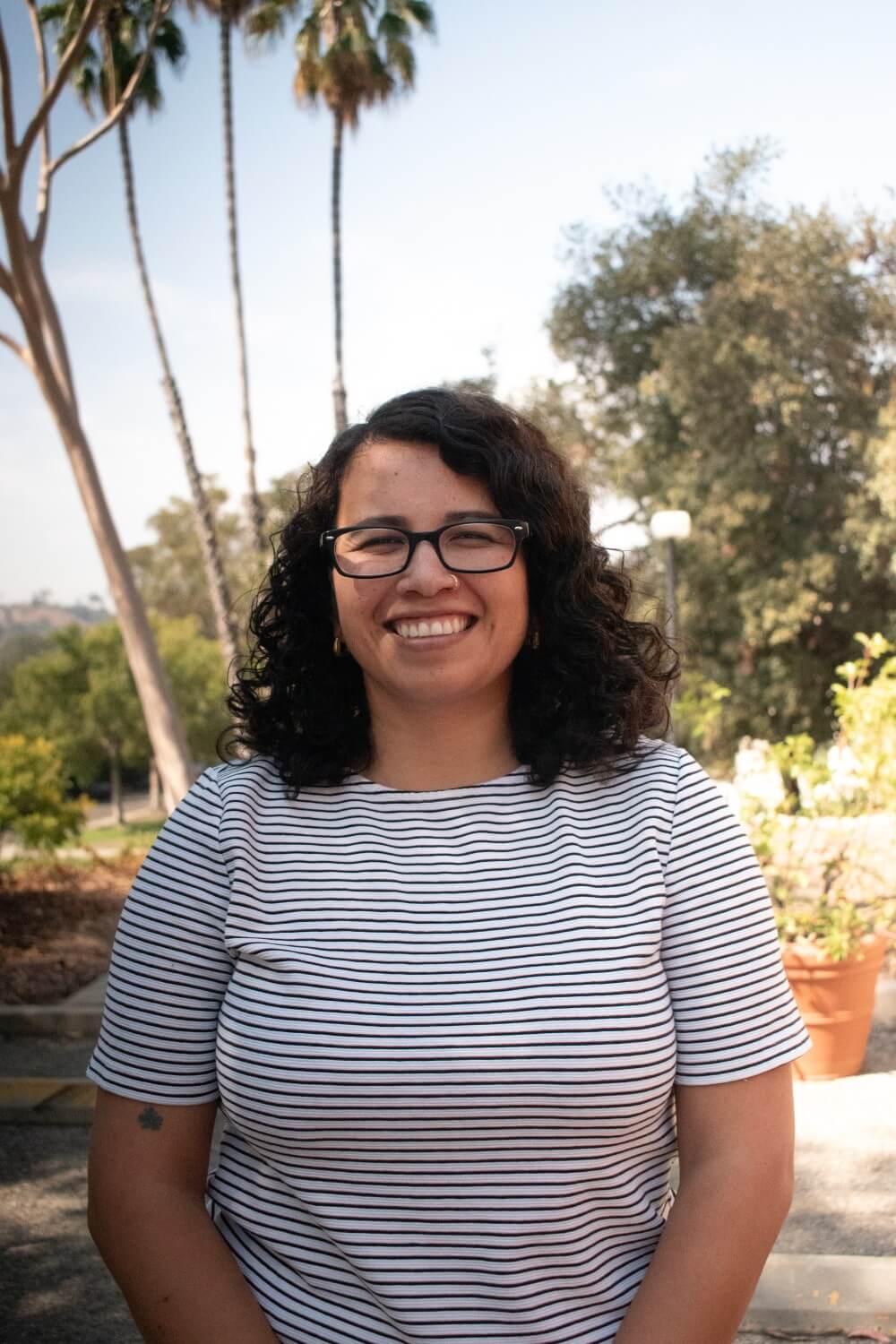
Facilitator of the Radical Self-Love Book Club Paloma Franco outside of the Emmons Wellness Center at Occidental College in Los Angeles, CA. Oct. 4, 2024. Aung Myat Htet/The Occidental

Anita Zachary, a visiting assistant professor in the college writing program, teaches courses on gender and sexuality, as well as white identity politics. She said that having intentional spaces for students like the book club is important on campus.

“Our body, which also encompasses our mind, needs to be affirmed, personally. Spaces for groups give the ability for people, who perhaps before coming to Oxy felt that they were unseen, to have a place where they can actually experience being seen and being affirmed by others,” Zachary said.

Zachary also said that the in-person aspect of the book club community is beneficial in a technologically-driven social environment.

“We just don’t have enough community as it is, in my view, in our modern age,” Zachary said. “Too much time is spent outside of relating to people, except for in technology.”

In her spring First Year Seminar, ‘Gender, Sexuality and the Politics of Pleasure,’ Zachary said students discuss similar themes around how bodies are treated in the world.

“We talk a lot about who in our society has the right to pleasure, which is specific to that course,” Zachary said. “But we look at all various ways in which society continues to marginalize and oppress others, not only in issues of race or gender, but in areas that we haven’t fully explored like disability, like sexuality.”

Zachary said that the themes present in the book and the discussion of these themes in a community can provide radical approaches to acceptance of oneself.

“Self-love, as the book describes, is probably the most important avenue in which you can begin to love and appreciate others,” Zachary said. “It takes some kind of experience coming to appreciate and love yourself, which gives you the ability to be empathetic and loving towards others.”

Project SAFE Program Coordinator & Survivor Advocate Stephani Candelaria said these spaces can help students form connections around difficult topics.

“Book clubs and other related spaces are such a resource, providing a platform for the voices of the historically marginalized to stretch and grow through discomfort, pain and trauma towards the realization of empowered well-being,” Candelaria said via email.

While Candelaria said phrases like ‘self-love’ and ‘body-positivity’ have become buzzwords in recent years, there is still work to be done.

“Unfortunately many folx still feel not only discomfort, but trauma around accessing their reality — whether due to the political climate, […] family pressures or other cultural norms,” Candelaria said via email. “It is crucial, therefore, that brave spaces are offered for the community, especially queer and BIPOC communities, to come together and explore topics of this nature together.”

Contact Mollie Barnes at mbarnes@oxy.edu

Loading

Alex Holmes explores anxiety with senior thesis film, ‘Boiling Point’

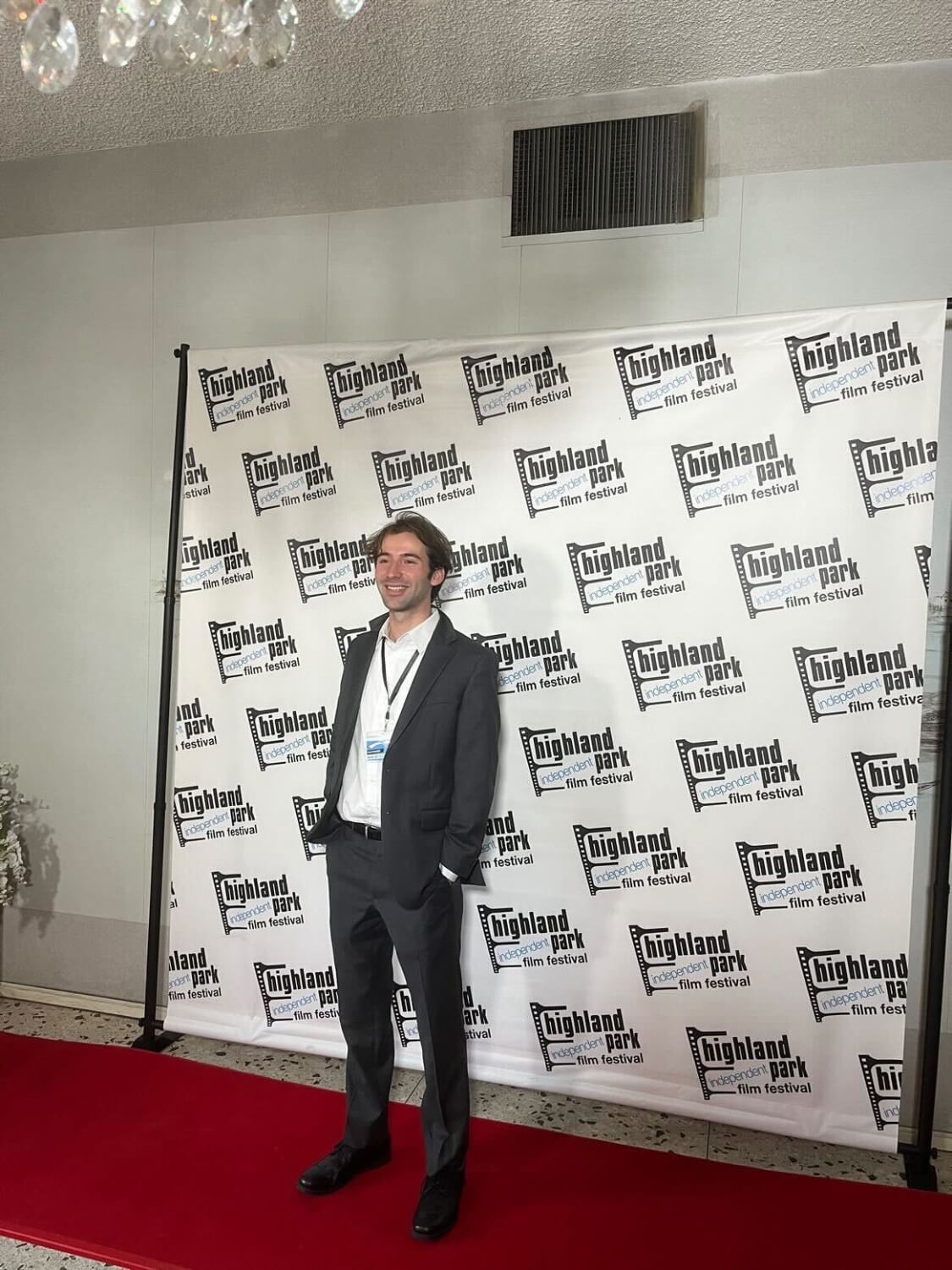
Alex Holmes ’24, who majored in Media Arts & Culture (MAC) at Occidental, recently had his senior thesis short film selected to be screened Oct. 4 for The Highland Park Independent Film Festival. Holmes said his short film “Boiling Point” references the anxieties that come with college life, focusing on those specific to the class of students that entered college during the COVID-19 pandemic.

According to Holmes, “Boiling Point” follows Michael, an anxious teen portrayed by actor Rodrigo Jimenez, awaiting the arrival of his dinner date. Michael plans to prepare an easy dish of pasta with sauce for dinner, though it proves to be much more stressful than he expected.

At the beginning of the film, Michael’s anxiety is highlighted by how he is reluctant to check out his groceries with the cashier and prefers the self-checkout, where interaction with another person is not necessary. Holmes said this is a reference to points of the COVID-19 pandemic in which it was encouraged to distance oneself from others as much as possible.

“I feel like COVID pretty majorly impacted my college experience,” Holmes said. “You didn’t have any socialization at all during COVID.”

Holmes said he had entered college during this antisocial period and wanted to portray his anxiety from this point in his life through the role of Michael.

Michael’s buildup of stress relates to the story’s title, “Boiling Point,” which reflects the anticipation of waiting for a pot of water to boil, according to Holmes.

Holmes said he used his every day experiences to be able to create a piece that effectively conveyed college-level stress from his own perspective, as well as the perspectives of those around him.

“You have to get in your head about the worst possible scenarios and what people are thinking about you and all that kind of stuff, and then in the end, it kind of turns out okay, but usually people are super nice and welcoming and so I just wanted to reflect that in the movie,” Holmes said.

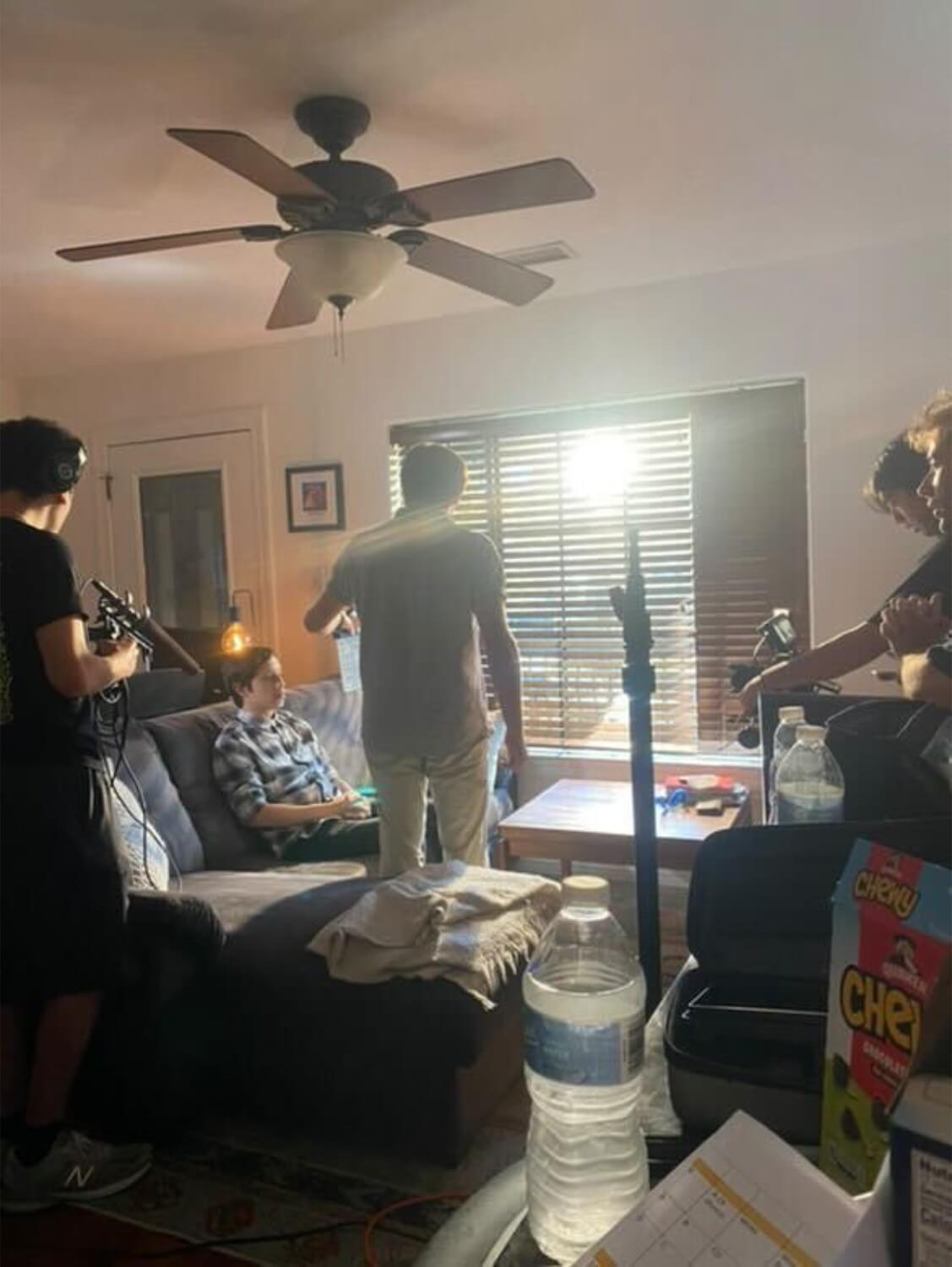
Courtesy of Alex Holmes

Holmes said he was able to complete this project with a number of Occidental students and a few Screen Actors Guild eligible actors. In the process, he partnered with fellow Occidental alum Timothy Shortell ’24, who scored the entire piece, according to Holmes.

Because a majority of the film takes place in a kitchen, Shortell said he decided to focus on centering his music around noises that could be found in the kitchen.

According to Shortell, he worked on finding different sounds, such as pots being hit, that could create interesting rhythms and complement the plot while building up the tension and anxiety that is displayed throughout the piece.

“I use different tapping noises, and I tried to kind of play into that nervous energy that sits in the background for most of the film but keeps the tension high,” Shortell said.

Holmes said Shortell’s music works well with the film, successfully capturing both anxiety and comedy in the score.

Holmes and Shortell’s contributions to the film were accompanied by Jimenez’s portrayal of anxiety, where Jimenez said he was able to apply his experiences of anxiety to the character.

“In my perspective, what the audience should take away from this story would be not to overthink, not to essentially let anxiety win — because when you do, it creates a whole bunch of problems,” Jimenez said.

Holmes said that the film took two semesters to complete. While some aspects did not turn out as he had expected, such as the sound quality and lighting continuity, Holmes said he is proud of the outcome of the piece and grateful to the entire cast and crew that worked on it.

Courtesy of Alex Holmes

After submitting the film to three different film festivals, Holmes got an acceptance from the Highland Park Independent Film Festival, which he said was very validating.

“I’m just very excited for it to screen in front of people,” Holmes said, “I liked the experience of screening it at Oxy when we did our comps presentations.”

Holmes said this piece was a learning experience of building confidence as a director, learning to work with actors and figuring out how to solve problems. Holmes said that timing was one of his biggest struggles, as he ended up having to cut scenes to fit within his time constraints, but these challenges all eventually allowed him to grow and learn as a filmmaker.

“I’m proud of it, and I put a lot of work in, and everyone who worked on it did a great job,” Holmes said. “I’m happy with where it’s at.”

Contact Amalia Rimmon at rimmon@oxy.edu

Loading

FloSports adds SCIAC to its roster with multi-year livestreaming partnership

The Southern California Intercollegiate Athletic Conference (SCIAC) announced their five-year media rights partnership with FloSports June 5. FloSports is a media sports company that livestreams athletic events of underserved sports communities.

According to SCIAC Commissioner Jennifer Dubow, FloSports reached out to SCIAC about a partnership. She said that after discussing plans with SCIAC athletic directors and seeing real value in the deal, both groups began discussing further steps for the multi-year agreement, including the concerns that parents and alumni may have about the paywall.

Viewers can sign up for a subscription of $19.99 per month or $9.99 when signing up with a .edu email. An annual subscription is also available for $107.88.

“We felt comfortable with the price point for what we hope it’s going to give to student athletes and to our staff,” Dubow said. “Our hope is that Flo views us as successful and that the numbers and the offerings continue to climb.

All SCIAC games and championships will be exclusively livestreamed on FloSports and, as of Oct. 15, broadcasted on FloCollege, a new FloSports platform aimed at covering college athletics — especially Division II and Division III programs.

Dara Tokeshi (junior) playing basketball against the University of Saint Katherine in Rush Gymnasium at Occidental College in Los Angeles, CA. Nov. 4, 2023. Nora Youngelson/The Occidental

FloSports Director of Global Rights Acquisition Kolby Paxton said there is growing opportunity and interest in showcasing Division II and Division III athletics.

“We’re able to approach our coverage of Division III and Division II schools and their athletes in a way that no one else has done before, and we’re able to cover them holistically beginning to end throughout a season,” Paxton said.

FloSports Vice President of Communications Brian Reinert said that FloSports plans to invest $50 million into FloCollege which will go towards supporting member conferences with technical support, developing institutions’ media departments and providing additional resources where necessary.

“We’re looking to serve the fans, and that’s part of what this is about — serving the fans and serving that community and building a community around the sport,” Reinert said.

Select student-athletes will be able to represent FloSports through an affiliate ambassador program, Reinert said, where student athlete ambassadors will gain more exposure via FloSports’ social media initiatives.

“They’ll post on social [media], we provide them assets and link out and push people towards those sports and then based upon the traction and engagement that they get, they’ll be rewarded monetarily,” Reinert said.

Dubow said this new partnership will not change the day-to-day routine of student athletes.

“We’ve always been streaming our student athletes. They’ve always been on our platform, it’s just a different platform now,” Dubow said.

According to Dubow, funding for athletics at Division III schools represents just 3.18% of revenue from the NCAA, which varies each year.

“That 3.18% equates to about $40 million and [Division III] uses 80% of that to fund our championships,” Dubow said. “To know that you can continue and compete on a national level is really fun, and I want to make sure that that’s still there in 10 years.”

Dubow said the incoming funding from FloSports will be evenly split among the SCIAC member institutions.

“We are getting our portion, and it will be divided up evenly between each institution and that was a very intentional decision by our athletic directors. We weren’t going to break it down by sport or what you have,” Dubow said. “We felt like FloSports was interested in us because of the SCIAC brand and who we are, and we each bring something a little different to that.”

Oury Diane (senior) of Occidental Men’s Soccer battles for Tigers’ victory against the University of La Verne on Patterson Field at Occidental College in Los Angeles, CA. Sept. 30, 2023. Jonathan Henry/The Occidental

Occidental’s Assistant Athletics Director for Communications Joe Perrino said this partnership will help provide better quality livestreams for parents and fans through the implementation of more cameras and advanced technology.

Perrino said that prior to the FloSports deal, games were broadcasted through a Hudl Cam, a fixed camera that automatically pans back and forth to follow the action. He said this new deal provides funding to buy more and better equipment to improve the viewing experience, as well as opportunities for students who want to work livestreaming events.

“It’s important that [student athletes] understand that this decision was made, really, for their benefit,” Perrino said. “The hope is that after these five years, that SCIAC gets ahead of the curve when it comes to Division III livestreaming.”

According to Perrino, this new deal will improve the coverage of sports games and also provide more exposure to student athletes at a much larger scale.

“I think that provides a great benefit for them, just for their college experience,” Perrino said. “As a department, we’re really excited for what this could become, especially for Oxy, and I know the conference is extremely excited too.”

Contact Karen Palacios Echeverria at palacioseche@oxy.edu

Loading