Home Blog Page 54

Herrick labyrinth provides students with a space of reflection and spiritual respite

For almost two decades, the canvas labyrinth in Herrick Interfaith Center has been a space for Occidental students to meditate, pray and focus on their spirituality. Every Wednesday, the labyrinth is rolled out in upper Herrick, and students are invited to walk along its path at their own pace while engaging in prayer, meditation or mindfulness.

Director for Religious and Spiritual Life Rev. Dr. Susan Young, who organized the purchase of the labyrinth in 2006, said it is an ancient religious tool with a complex history.

“Labyrinth patterns can be found all over the world in different cultures and for different purposes,” Young said. “They became more popular around the 13th century as a resource for Christians in Western Europe who wanted to engage in a spiritual pilgrimage in solidarity with people who were doing actual pilgrimages to Jerusalem.”

According to Young, pilgrims without the economic resources to go on a pilgrimage to the Christian Holy Land would visit labyrinths in their local churches and cathedrals and walk the designs embedded in their floors. Through this action, Young said Christian practitioners would feel communion with the people taking the long and arduous journey to Jerusalem. The labyrinth at Occidental is modeled on these ancient stone labyrinths.

“We designed ours to match the historic pattern of a labyrinth within the Chartres Cathedral just outside of Paris,” Young said. “Ours is slightly smaller, but it follows the same shape and walking pattern.”

According to Special Collections librarian Helena de Lemos, there are many different stories of varying historical veracity associated with the stone labyrinth in the Chartres Cathedral.

“One story mentions that pilgrims who couldn’t make the trip to Jerusalem would crawl along the labyrinth on their knees in order to empathize with the suffering of the pilgrims,” De Lemos said. “Another claims that the labyrinth originally contained a metal plate at its center containing an image of the minotaur, linking it to the ancient labyrinth of Minos.”

According to de Lemos, labyrinths have also had other secular functions throughout their long history, particularly in the gardens of the baroque nobility.

“In the 1600’s, it became popular to make these very elaborate labyrinths within French palace gardens, and it’s interesting, because the labyrinth kind of changes from representing the suffering of the pilgrimage to being a place of enjoyment for the upper class,” de Lemos said. “You can imagine all the secret kisses and political plots being devised within the thick foliage.”

According to Young, there are many different ways to engage with labyrinths, including the one at Occidental. Young said that despite the labyrinth’s Christian origins, it was important for the Herrick team to create a space that was welcoming for students of all religious orientations.

“There’s no right or wrong way to walk the labyrinth. They were originally used as a way of doing traditional Christian prayer, but over the years people have adopted different patterns and ways of walking them,” Young said. “My hope is that all students will be able to use the labyrinth as a place to center and ground themselves and to be at peace.”

Nicky Dobbs (junior) said he walked the labyrinth because he was interested in seeing how the college is cultivating a space accessible to both people of faith and people who might not consider themselves religious.

“In my class, there was a lot of debate about this, because Herrick Chapel is built like a traditional chapel and shaped like a cross,” Dobbs said. “But based on the interior, it really seems like an accepting and welcoming space. I feel that even if I wasn’t Christian, there would still be a benefit to walking the labyrinth.”

Dobbs said he has found Herrick Chapel to be a pleasant and quiet space that he can use for his religious needs, even when the labyrinth isn’t up.

“I go in there sometimes to pray, and it’s also just a nice place to free myself of stress and anxiety because it’s very calm,” Dobbs said.

According to Young, providing a calm space for meditation or prayer in the midst of all the pressures of college life is the most important function of the labyrinth.

“Being a college student can be really stressful at the best of times,” Young said. “At a time like this when we’re dealing with so many social issues and political polarization, finding a quiet place on campus to just reflect can be really hard.”

Young said that she hopes the labyrinth can be a place to find emotional respite for students who are personally affected by events happening around the world. According to Young, the Office of Religious and Spiritual life has previously used the labyrinth in workshops for students grieving tragedies abroad, such as the 2011 Fukushima earthquake.

“We all bring our own stories and lived experiences to the labyrinth when we walk it. That’s why I think it’s such an important resource to have,” Young said.

Contact Adam Zahavi Pildal at pildal@oxy.edu

Loading

Project SAFE reached all over the Occidental community for Empowerment Week 2024

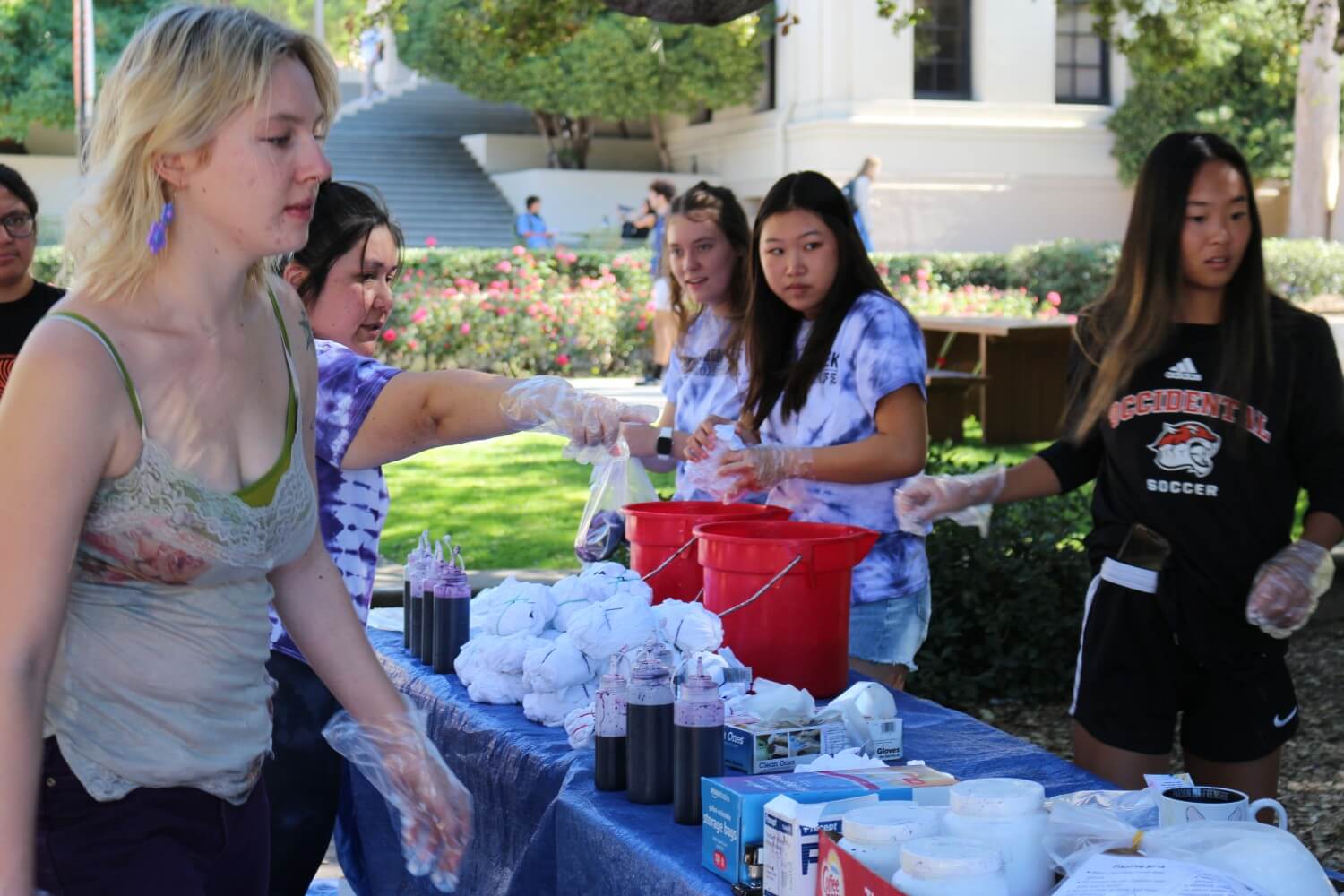
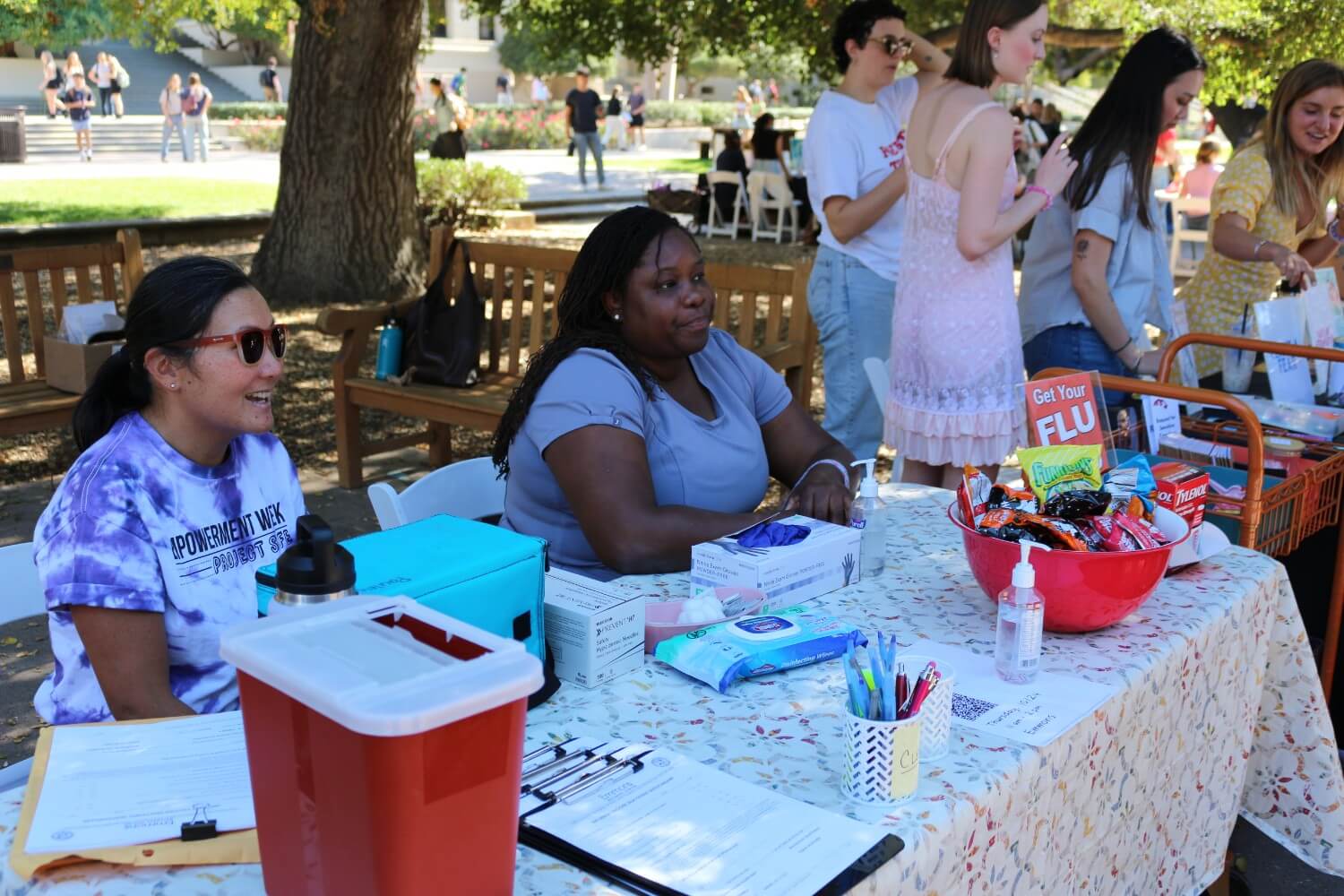
The quad was busy from 11 a.m. to 1 p.m. Oct. 23 with over a dozen tables featuring information about sexual health and domestic violence, and a purple tie-dying event held by Project SAFE. This was the Empowerment Fair, a part of Project SAFE’s Empowerment Week.

Empowerment Week is held annually in October at Occidental in honor of Domestic Violence Awareness Month. This year, it took place Oct. 21 to 25. Project SAFE Program Coordinator and Survivor Advocate Stephanie Candelaria said the week has been a tradition at Occidental for more than three years.

“We also have the spring equivalent, which is called ‘Take Back the Week’ for Sexual Assault Awareness month,” Candelaria said.

Project SAFE’s goal, according to their website, is to educate the Occidental community on sexual assault, dating violence, sexual harassment, exploitation and stalking and to advocate for and support people in need of help. The project aims to foster a community of “upstanders” who will speak out if they witness instances of violence.

Amelia Flynn (junior), peer advocate at Project SAFE, said community building and advocacy are the organization’s two intentions with Empowerment Week. Flynn said that Project SAFE was holding the Empowerment Fair as much for victim support as for spreading awareness of what domestic violence is and what the Project SAFE office does on campus.

“Even though it is about a very specific issue — sexual violence and preventing sexual harm on campus — [Empowerment Week] is part of our bigger goal to build community on campus,” Flynn said.

Project SAFE Empowerment Fair on the Academic Quad at Occidental College in Los Angeles, CA. Oct. 23, 2024. Aung Myat Htet/The Occidental

The coordination of the fair, according to Candelaria, usually falls under the supervision of Project SAFE’s Prevention Education Coordinator, but she said they do not currently have anyone in that role. Candelaria said she and Project SAFE Director Lizzy Denny have been sharing the responsibilities of the role and as a result, have been more heavily involved this year in the planning of 2024 Empowerment Week.

“I’ve been a point of contact for our off-campus resources […] while Lizzy has been working more on the budgetary side,” Candelaria said.

Candelaria said she organized to have seven off-campus resource tables at the fair, including the Jenesse Center, Los Angeles Administrative Services Credential (LAASC), The Feminist FrontReach LALA LGBT Center’s Mi Centro, the South Asian Network (SAN) and the South Asian Helpline and Referral Agency (SAHARA).

Candelaria said she had 11 Occidental affiliated groups table at the Empowerment Fair as well: the Title IX office, Intercultural Community Center (ICC), Equity & Justice Office, Occidental Athletics Justice, Equity, Diversity and Inclusion (JEDI) Committee, KOXY, Emmons’ Peer Power Program (PPP), Alpha Lambda Phi Alpha SororityDelta Omicron Tau Sorority, Women Inspiring iNner Kindness (WINK) club, Disabled Student Union (DSU) and the Rising Occidental Student Employees (ROSE) organization.

The intentions of both SAN and SAHARA include advocacy and victim support for domestic violence survivors, and they both offer services for support and healing from gender-based violence. SAN has a Community Health Action Initiative they call CHAI.

“Providing services in a language that we don’t have at Oxy can be really important for a survivor,” Candelaria said. “We are always trying to center marginal voices as much as possible. Survivors themselves can be considered a marginalized group, so [we are] bringing awareness to that experience of surviving violence and celebrating those stories [and] including everyone.”

Project SAFE Empowerment Fair on the Academic Quad at Occidental College in Los Angeles, CA. Oct. 23, 2024. Aung Myat Htet/The Occidental

Students stretched out on yoga mats on Stewie Beach in front of the Project SAFE office Oct. 22 as the sun set over campus. The Sunset Yoga event was co-sponsored by Project SAFE and First Gen Coalition. Candelaria said she was pleased with how the yoga session turned out.

“Sunset yoga last night was centered on somatic empowerment and what empowerment feels like in the body,” Candelaria said. “Here at the student patio, we have the best view on campus and we timed it perfectly for the yoga to be wrapping up right as the sun was setting. It was really beautiful.”

Down the stairs from Stewie Beach lies Sycamore Glen, where a large group met Oct. 24 to decorate mirrors and connect. This was the Project SAFE Confidence Building Workshop held on Purple Thursday by Project SAFE, PPP and WINK.

Peer Advocate Chloe Ford (senior) said the Confidence Building Workshop was aimed to help peers discuss healthy relationships, communication, consent and stress through the lens of empowerment and self-reflection. The workshop was mostly student-run, according to Candelaria, Ford and Flynn.

“We came up with the idea during our training week, right before the semester started […] We’ve been working on it slowly ever since,” Flynn said.

Ford said empowerment is particularly important for people who have experienced domestic or other forms of psychological or physical violence and that any marginalized Occidental student could benefit from the Confidence Building Workshop.

“Have you ever heard of the phrase, ‘Hurt people, hurt people’? Well, empowered people empower others,” Ford said.

Contact Grace Gonsalves at gonsalves@oxy.edu

Loading

Opinion: How an Idaho redneck became involved with ROSE

After an arduous 13-hour-long drive the previous day, we were finally here. The day was March 22, 2024, and we were ready to attend Occidental’s Early Decision Reception. Attempting to beat the LA traffic, we arrived hours before the day’s scheduled activities. As far as we could tell from our lost wandering, it was a normal day on campus. That was, until we left the bookstore.

I heard a commotion and bolted off to discover its cause. Surprisingly, I found hundreds of students demanding Occidental recognize their union. I was confused, yet excited. How many students can say that they have a student labor union, and not just a student union? Idaho is a right-to-work state, and only 4.5 percent of the workforce is unionized. By organizing on a scale inconceivable for Idaho’s full-time employees, they left me awe-struck. Here were all these people, working together to make a dramatic change. I realized that I could make a true difference here. My doubts about Occidental soon subsided, and my college story became intertwined with Rising Occidental Student Employees (ROSE).

I’ll admit, my nerves were through the roof before the Sept. 1 meeting. How would I fit in with the students who had already been there? Would I be able to speak up when needed, or would I choke under the pressure? In the past, I never engaged in political activism. Idaho is staunchly conservative, and the only groups with any real power are the “good old boys” and the far-right Idaho Freedom Foundation. It seemed like a lost cause to try to change things. Nonetheless, I was excited to take on a big role and to get involved with something meaningful in my life.

Contrary to what I feared, I was met with a warm welcome from the returning students. Once we completed introductions and I learned that ROSE won the election, I learned our mission for the next few months: getting people to fill out a survey so we could begin bargaining by the end of the semester. Geez, how was I ever going to talk to random students and get them to fill out this survey? I thought this might be easiest by figuring out what my “reasons why” were.

My reasons why are inexorably interwoven with my life since 2020. Since my father was disabled in a semi-truck accident in 2012, my mother had to work. She held a job until COVID-19 came around. When the company forced a return to the office, the building was not ready: the desks were dirty and the women’s bathroom lacked hot water. A few days after she pointed this out, she was fired. My family started a business after this, but our income is still inconsistent. That and the nothing-burger of my father’s disability case left us financially strained. Tuition is still a high burden with the financial aid, and working 10 hours a week doesn’t feel like enough. That’s not even including what will happen when I hit the earnings cap and get forced out of the jobs that I love. My family already worries about money enough; they shouldn’t have to worry about me as well. By helping ROSE succeed, I could reduce the stress tuition would be, helping my family and I.

I give credit to the family business for guiding my efforts in ROSE. Across our many craft bazaars and road shows, my family (and especially my father) could effortlessly engage with total strangers. By drawing upon that experience, a switch flipped in my mind, and I was suddenly able to reach out to others. I tabled whenever I could, even buying a table to allow for outreach after SAC hours. Sometimes, I was a little too engaged. One night, I decided to canvas next to my fellow Berkus House residents selling grilled cheese sandwiches to partygoers. My enthusiasm blinded my judgment at times, but I was always willing to reach out to other people. I wouldn’t have been nearly as successful if I didn’t have experience in my family’s business.

Before joining college, I was disconnected from my classmates due to a heavy online class load and missed out on building many of the soft skills that high school develops. Joining ROSE changed all of that. My college experience would not be anywhere near the same without them, and I look forward to seeing how we develop throughout the bargaining process and the remainder of the year.

Contact Tessa Taylor at ttaylor@oxy.edu

Loading

Opinion: Call Her Cronkite?

A trusted anchor for the CBS Evening News and a defining figure of the 20th century, Walter Cronkite was the man whose voice could be heard reporting the nightly news in Americans’ living rooms for decades.

Since his death, Cronkite — or “Uncle Walter,” as he was affectionately called — has become symbolic of a bygone era in American journalism when news used to feel objective, when the public trusted more of it. Eulogizing Cronkite at his funeral in 2009, President Barack Obama excoriated modern journalists for focusing too much on “instant commentary and celebrity gossip and the softer stories that Walter disdained, rather than the hard news and investigative journalism he championed.

While I agree that we could all benefit from the press doing a little more Cronkite and a little less “Man Bites Dog,” it’s not as if hard journalism died with Uncle Walter. The CBS Evening News still exists, after all, and its current host Nora O’Donnell is no less objective, no less thorough and no less trustworthy than her predecessors. The only difference is that today, essentially no one watches the evening news.

The way I see it, the mainstream media’s oft-cited decline has had less to do with a change in the content of reporting and more to do with a change in the attitudes of the American public. Far from being disillusioned by bias, data suggests that the American people are actively choosing to disengage from political news en masse. And among those still paying attention, social media is the most popular source of news, followed by opinion-based cable news shows.

Besides worsening political polarization, these shifts in media consumption have made it next to impossible for political campaigns to actually reach voters where they are. Increasingly, experimentation and risk-taking are the name of the game for political strategists who want their message to break through to the public. And the current campaign for president is no different. Both Donald Trump and Kamala Harris have maintained agile social media operations and appeared as guests on non-political podcasts in an effort to reach younger, more disengaged voters.

Harris sat down for one such interview Oct. 6 with Alex Cooper, host of the hit podcast “Call Her Daddy.” Cooper and Harris covered a wide range of topics, from womanhood and the modern family to reproductive rights and sexual assault. Many of the issues covered had largely been left out of national news coverage of the election, providing interesting insights about Harris’s background and perspective.

Astonishingly, though, many D.C. pundits criticized Harris for her appearance on the podcast, dismissing the show as vacuous and accusing the vice president of avoiding the media. To be certain, Harris has rather notably declined to sit down for extended interviews with print news outlets like the New York Times — a departure from tradition for a major-party candidate. But to say Harris is ducking the press is absurd. The same week Harris’s interview with Cooper aired, she held her own in a tough interview on 60 Minutes and responded to voter questions at a town hall hosted by Univision. She also sat down with Fox News’s Bret Baier a few weeks later, standing her ground in unfriendly territory. The only reason Harris isn’t chomping at the bit to sit for a three-hour print interview with a beltway dinosaur is because hardly anyone reads print media anymore, let alone undecided voters.

For what it’s worth, Cooper took her job as an interviewer seriously. She began the episode by addressing her “Daddy Gang” directly, telling them that while her show was not usually political in subject matter, she felt she had a duty, as the host of a podcast largely for and about women, to discuss women’s issues ahead of the election. Cooper also made clear that an invitation to interview had been extended to the Trump campaign. (Evidently, though, he has yet to accept it.) In these and other moments, I was struck by Cooper’s unyielding seriousness. As a non-member of the “Daddy Gang,” I was unfamiliar with her show — and perhaps I underestimated her.

But I also couldn’t help but feel like the world was asking too much of Cooper by insisting that she play the role of “journalist” while sitting opposite Harris.

The problem here, after all, is not with the press, the candidates or even the podcast circuits. It’s with the American public. Certainly, this new media environment often blurs the line between information and entertainment. But that’s only because the American public increasingly has a strong preference for the latter. Campaigns have thus found themselves in the impossible position of having to disguise vital messaging about our democracy in attention-grabbing packaging — like smothering a dog’s heart-worm pills in peanut butter.

This is worrisome and deeply cynical, I know. But it is also empowering. Because if we are the problem, that means we can be the solution, too. The CBS Evening News, of course, is still on. Every night. Usually, it’s no longer than half an hour — which is (on average) about three-fourths of an episode of “Call Her Daddy.”

That’s a small price to pay for an informed citizenry. I say we pay it.

Contact Beatrice Neilson at neilson@oxy.edu

Loading

Opinion: Why aren’t concerts about the music anymore?

If you’re someone who knows me, it’s likely that one of the first things you realized about me was that I love concerts. I probably romanticize concerts more than I should. I make an event out of going to one — curate a cute outfit, take pictures in the outfit as soon as I arrive, meet up with friends, scream every lyric, buy a hot dog from one of the many vendors outside the venue — the whole shebang. That being said, I have noticed certain things throughout my concert-going years that made me realize that not everyone experiences concerts the way that I do — things that have morphed the atmosphere of live music into something more toxic than it once was. And no matter which angle I view it from, all of these toxicities have been curated by one thing: stan culture.

For those unfamiliar, the word “stan” is slang that is used to describe an extremely or excessively enthusiastic and devoted fan. Stans often develop one-sided relationships with celebrities and will do anything to meet their idols. There are numerous issues with stan culture, but I will only be focusing on the effect it has had on concerts in the digital age.

If you attend a concert today, one of the first things you will notice is that almost every single person in the audience has their phone out the entire time. Of course, filming a concert is not inherently a bad thing. I admit that I do film the majority of the shows I go to. However, when I film, it is so that I can look back on the performances later on, especially since my mind often goes blank in the adrenaline of the moment. I also always enjoy myself while filming — I sing along, I dance, I don’t look through my phone screen to watch the show. This is not the case for everyone at concerts.

There are many people who will attend a concert with the sole purpose of filming videos that they can later post on social media for others to see. They are not doing it for themselves, they are often not even moving a muscle to sing or dance, because they don’t want to ruin their video.

The burning desire to have a viral video has influenced so much of what is wrong with concerts in this day and age. The need to be viral manifests itself in several ways, the most prominent being the ability to obtain an interaction with the artist.

Concert-goers will do just about anything to get noticed by the artist on stage. The easiest choice is, of course, to shout obnoxiously when the crowd is relatively quiet, which just annoys everyone in the vicinity. Another popular tactic is creating posters, ideally the funniest, weirdest, most insane thing you can think of so that you stick out. This is even more annoying than the shouting because the posters will block the view of many people behind the person holding it, ruining their experience.

Recently, there has been a trend at pop concerts where audience members will throw items at the artist on the stage. This has always been a thing — fans love to throw bras at their favorite male pop star — but in the past year or so, it has become more dangerous. People have thrown phones, water bottles, or other heavy items that could potentially injure the artist. This behavior is not only affecting other audience members, but the performers as well. Pop singer Bebe Rexha had to pause one of her performances and leave the stage after being hit by a cellphone in 2023.

If an audience member wants to have the highest probability of getting noticed by the artist, they must be as close to the stage as possible. This has created one of the worst aspects of modern day concerts — camping out.

Many concert-goers have decided that they must arrive at the venue hours, sometimes even days, before the doors open so that they have the best view possible. They will set up chairs and occasionally tents outside the venue to secure their front row spot. This causes multiple problems, including anxiety in those who do not arrive as early and an undesirable smell from fans who station themselves outside all day.

Venues will sometimes take notice of this camping issue and put out warnings for fans, cautioning them against it. This happened during Harry Styles’ “Love on Tour” and many fans defied the warnings that were given to them, camping out anyway.

All of these issues, which are the direct result of social media and stan culture, have turned the concert experience into something less enjoyable than what it once was. People no longer attend concerts to have fun, enjoy live music and create new memories. It is now centered around whoever can get the best interaction or the best video with the most likes. It has shifted from something communal to something individualistic, and that is unfortunate.

When I go to a concert, I want to listen to my favorite songs, meet new people, lose my voice while screaming and look cute while doing so. Music should connect us, not separate us.

Contact Izzy Shotwell at shotwell@oxy.edu

Loading

Athletes of the Week Cover and Hughes lead their teams to the finish line

Megan Cover

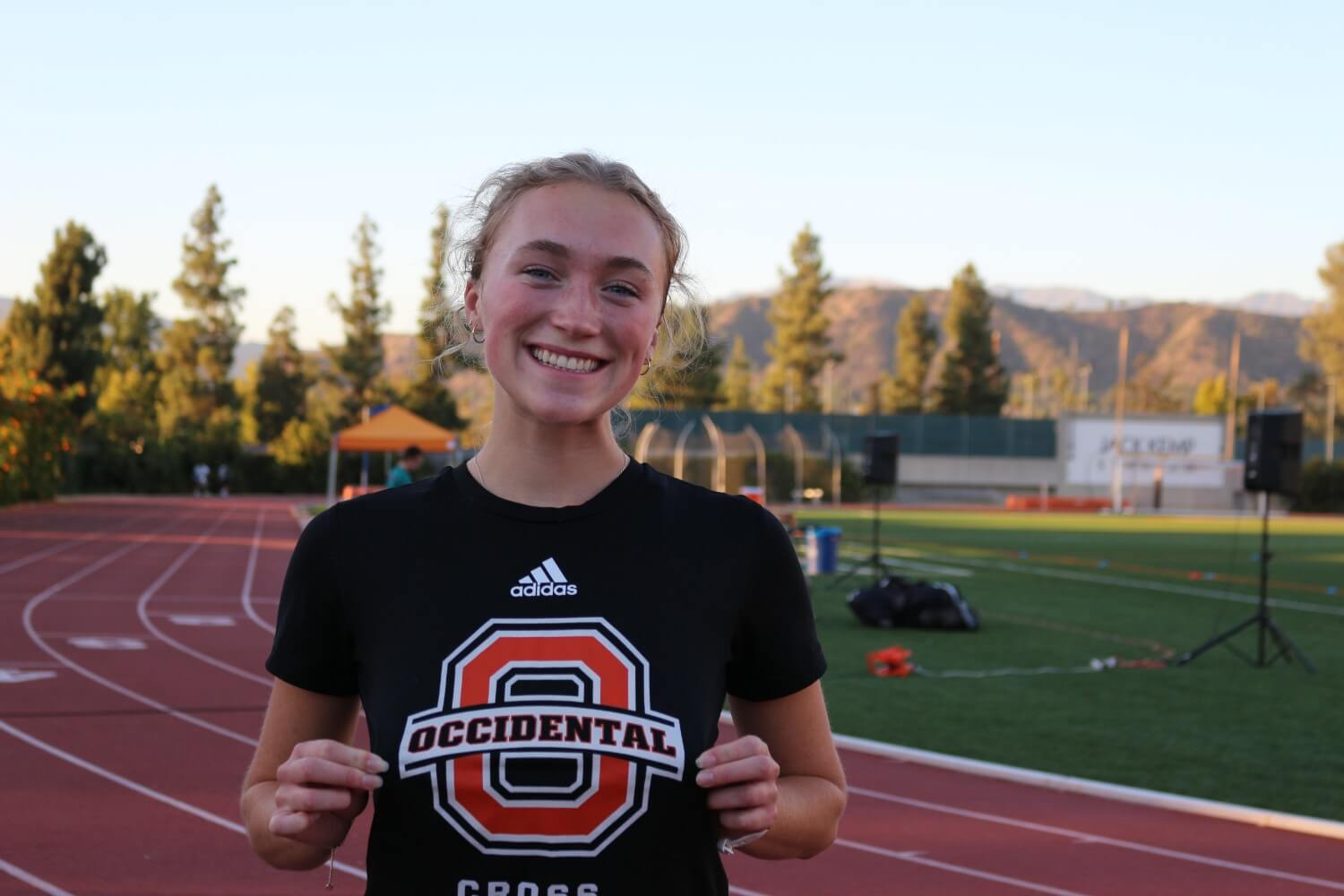
Megan Cover (junior) in Kemp Stadium at Occidental College in Los Angeles, CA. Oct. 23, 2024. Aung Myat Htet/The Occidental

Holding a steady pace at the Oct. 19 Pomona-Pitzer Invitational, Megan Cover (junior) placed 23rd out of 80 in the 6K, earning a personal record with a time of 23:21.4. Cover said that even though it is a big personal accomplishment she is proud of, her teammates are what made the race memorable.

“One thing [I try] to emphasize is running for the team. Even if you’re going through pain, you have to have the idea that the race is bigger than yourself,” Cover said.

According to Cover, she is satisfied with the cross country season so far, despite a recent mental block.

“The biggest challenge for me has been mental prep before races — prepping how it’s going to feel, what’s it going to look like and who I’m going to be racing next to,” Cover said.

According to Cross Country Assistant Coach Demi Marine, Cover is a strong and dependable runner.

“[Cover] thinks she’s only a track girl and doesn’t have it in her for cross country, but she has so much endurance, [and] she doesn’t even realize it,” Marine said.

Marine said Cover’s optimism and confidence are some of her biggest strengths.

“If Megan is having a bad day, she still continues to be positive and channels that energy toward the team to propel it forward,” Marine said.

Teammate MeiMei Bayman (senior) said she admires Cover’s determination and commitment to the team.

“Even as a senior, I definitely look up to her,” Bayman said. “She’s really fast. She’s had some injuries in the past but does not let those set her back.”

Bayman said that even away from athletics, Cover is someone you can depend on and is a person who cares for everyone.

“[Cover] is super busy, but she will still drop things to be there for you,” Bayman said. “She is so genuine and happy all the time and that affects our team dynamic in a positive way.”

According to Cover, having a good mindset while running is key to having a successful race.

“Being optimistic from the beginning before a race starts is important. It’s hard to turn a negative mindset into a positive one while in the moment,” Cover said.

Cover said she is looking forward to the rest of the season and maintaining the tight-knit team bonds.

“I really want to keep up the momentum [the team] has had the past races,” Cover said. “With SCIAC [Southern California Intercollegiate Athletic Conference] Championships coming up, I think we have a really good chance of scoring higher than at the last conferences.”

Travis Hughes

Travis Hughes (junior) next to Gilman Fountain at Occidental College in Los Angeles, CA. Oct. 24, 2024. Aung Myat Htet/The Occidental

Occidental men’s water polo played against University of Redlands Oct. 23, where Travis Hughes (junior) scored two goals.

According to Hughes, water polo seasons are always a roller coaster, but this year has been enjoyable with all the newcomers on the team.

“It’s been a really good experience to be a part of [this team],” Hughes said. “The team has been the biggest contributor of the season being a positive experience for me.”

Hughes said he has his eye on making the SCIAC Tournament. He said this goal helps motivate him and builds trust within the team.

“We know we have each other’s backs — it’s really important to,” Hughes said.

According to teammate Kevin Castellanos (first year), the team has played many successful games this season and is constantly learning from each one.

“The thing I like about [our] team most is that we never give up,” Castellanos said via email.

Hughes is a vital part of creating tight team bonds and is always willing to help people out, according to Castellanos.

“[Hughes] is like a big brother to all of us,” Castellanos said via email. “He keeps everyone in check and always ensures that we do everything right.”

Castellanos said Hughes is a great leader and someone you can rely on.

“He [has] taught me so much in such a little time,” Castellanos said via email. “He’s one of the best captains I’ve ever had.”

Hughes said he is excited to finish the season on a strong note and looks forward to playing his last games with the seniors.

“I’m trying to spend as much time as possible with [the seniors] and finish strong with them,” Hughes said. “We have such a good team culture. It’s been fun this year.”

Contact Anna Beatty at beatty@oxy.edu

Loading

Oxy community reacts to Dodgers championship push

Back in our first co-written column, we highlighted the Los Angeles Dodgers’ astronomical offseason spending — a rejection of the Moneyball philosophy that clubs had followed for years. Now, the Dodgers are facing off in the World Series against the New York Yankees and with a combined 2024 payroll of over $550 million.

Social Sciences and Data Literacy Librarian Kristin Peace said the star players are a reason they would like to go see a Dodgers game.

I’d like to see Shohei, especially once he starts pitching. I appreciate that Ohtani deferred so much of his money. That endeared him to me as a Dodger player,” Peace said.

Jay Ward* (sophomore) said Shohei Ohtani is one of the biggest success stories of the season.

“It’s a privilege to watch Shohei play,” Ward said. “He’s probably the best player I’ll see in my lifetime, and to be able to see him play in our stadium is pretty special. A lot of people go to games just to see him get up to bat.”

According to Peace, having a large payroll hasn’t been the “Dodger way” in the past.

“Not only do [the Dodgers] bring guys up through the minor league system, they do a really good job of getting players to buy into what it means to be a Dodger, so it doesn’t feel so mercenary,” Peace said.

Sheldon Schiffer, a Visiting Assistant Professor in Computer Science said he considers himself a life-long fan.

“I think I’ve been a Dodger fan since I was a very small child. I would have gotten into the team when I [first] went to Dodger Stadium, sometime in the 70s,” Schiffer said.

According to Schiffer, his family heritage has led to a lifetime of love for the sport.

“My mother’s side of the family is from Nicaragua. It’s a baseball country like the Dominican Republic or Venezuela. Nicaragua has had quite a few [important] players over the years. My grandmother was a huge fanatic, she was a foreman in the Garment District here in LA and was always listening to baseball as she made things,” Schiffer said.

Schiffer said he has lived through multiple LA championships, and it is a special experience.

“There will be a communal joy — people who live near the stadium love the Dodgers. There’ll be a lot of public parks where people will enjoy that experience. It’ll be very public and very exciting, whether they win or lose,” Schiffer said.

William Ruiz, has been the director of the Neighborhood Partnership Program at Occidental since July 2022. Ruiz is from LA and said he has been a Dodgers fan for the last 20 years.

According to Ruiz, the last time the Dodgers brought home the World Series title in 2020, the fans were never really able to celebrate in true parade fashion due to the COVID-19 lockdown.

Ruiz said that winning the World Series would not only allow fans to fully celebrate the Dodgers’ success but would also help heal the loss of late Dodgers pitcher, Fernando Valenzuela.

“Finally piecing it together and winning it all would mean a lot, just as a lifelong Dodgers fan and someone from Los Angeles,” Ruiz said. “So I’m hoping we get it done.”

TJ Hastings (sophomore), who is from the Pacific Palisades, said this season is a new era for the Dodgers faithful and noted increased local excitement surrounding the Dodgers this season.

“In past years, we looked towards October only to be bounced pretty much immediately,” Hastings said. “Ever since we showed that fight against the Padres, a lot of people realized that this wasn’t the same sort of story […] I feel like that instilled a lot of confidence in people.”

Hastings said Dodgers fandom has increased on Occidental’s campus.

“You see a lot of people wearing Dodgers hats to class,” Hastings said.

Ward said he is impressed with the dedication of Dodgers fans in the area.

“Back home in Colorado, there’s very little fan atmosphere for baseball,” Ward said. “Here, you can pretty much talk to anybody about the Dodgers. To see a community join together to support something like this is really nice.”

Contact Mac Ribner and Ben Petteruti at ribner@oxy.edu and petteruti@oxy.edu

*Jay Ward is a former staff writer for The Occidental

Loading

Men’s soccer hope to achieve better outcome this year despite some hardships

In their last three games, Occidental men’s soccer lost to Claremont-Mudd-Scripps (CMS), tied Caltech and tied CMS, bringing its overall record to 8-2-5. The Tigers have faced adversity as they have neared the end of the season but are still holding onto hope before the Southern California Intercollegiate Athletic Conference (SCIAC) tournament in November.

Tyler Na-Nakornpanom (junior), who plays forward, said this season has been a rollercoaster of emotions.

“This seems to happen every year, where we hit the wall at any point in the season. This one is coming a little later. But we tend to work through it,” Na-Nakornpanom said.

Head coach Rod Lafaurie said this season has not been under clear skies.

“We’ve had to deal with a lot off the field and a lot of injuries as well. There’s been a lot of challenges, but I am still pleased with the quality of the work and the ability of these guys. We still have a chance to hit all our goals, and that’s important,” Lafaurie said.

According to Lafaurie, the current team is relatively new despite the fact that only five players from last season graduated.

“We’ve had some season-long injuries with guys that we expected to be part of the team that just can’t be because of injuries. So, we’ve had a lot of first-years, and it’s almost been a new team,” Lafaurie said.

Last season the Tigers scored 40 goals and allowed 15. This year, as of the game against CMS Oct. 23, the Tigers have scored 36 goals and conceded 19 goals. According to Lafaurie, there have been big changes in the defensive lineup this season, which he said have likely contributed to the team allowing more goals.

“I think there were some parts with poor decision-making and things like that, but it’s also been a fairly new defending group. So, I think that’s to be expected,” Lafaurie said.

Diego Cavalie (sophomore) in front of the Tiger Cooler at Occidental College in Los Angeles, CA. Oct. 23, 2024. Aung Myat Htet/The Occidental

Diego Cavalie (sophomore) who plays attacking midfielder said last years backline consisted mostly of seniors who had more experience, which is the main difference from last year’s squad.

“In specific moments, lack of experience could potentially lead to mistakes. And I feel like that’s just something that is lacking right now because the quality of players that we have is phenomenal,” Cavalie said.

Na-Nakornpanom said the team has a very good chance of breaking last year’s goal-scoring record.

“Our offense is always good. We have a lot of firepower. We have a very deep bench. When it comes to attacking players, we have a lot of players that can play different positions,” Na-Nakornpanom said.

Occidental men’s soccer was ranked 14th nationally at the end of last season after the Tigers achieved their first-ever SCIAC championship title in school history. Lafaurie said that it is more about the process as opposed to the outcome — the team just needs to focus on what they need to do every day.

“I think for us, the focus is just on our work in games and training and doing the best we can,” Lafaurie said. “Then, hopefully at the end, we’re finished number one.”

According to Lafaurie, motivation and confidence are important for putting the players in situations where they can succeed.

“We do a lot of things off the field. We have team dinners and mentors,” Lafaurie said. “I think the guys are really good about being positive and helping each other. We try to stress being positive as much as possible.

Na-Nakornpanom said that building special bonds with teammates is the most important thing for him as a player. He said that the relationships from four years of playing soccer here will last forever.

Cavalie also said that making a positive difference, such as being a good influence on his teammates, is very important for him.

“I feel like being a part of the men’s soccer team is a lot more than just being a part of the collegiate team in general, because the team is more like a family,” Cavalie said. “We care a lot for each other, and I want to show how much I care about [them] in any way I can.”

Contact Aung Myat Htet at ahtet@oxy.edu

Loading

Nearly two months after a flood, the Occidental bell tower rings again

The Occidental bell tower recommenced ringing Oct. 3 for the 2024–2025 academic year. The bell tower was not working before, because the Johnson Student Center (JSC) boiler room flooded eight inches Aug. 11, according to an email from lead electrician Lope Bautista.

“The bell starts ringing at 6:00 am every 15 minutes until 10:00 pm, Monday through Friday, and on Saturdays and Sundays, it starts at 7:00 am until 10:00 pm,” Bautista said.

According to Bautista, the Occidental bells are not real bells, but rather an electronic Digital Chronobell system simulation of the Westminster Abbey bells.

“The power supply component of the bell system got damaged at that time [Aug. 11]. We shipped the component to Maas-Rowe, who is the manufacturer of the electronic Chronobell system,” Bautista said.

Paul Rowe, the owner of Maas-Rowe Carillons Inc. in Escondido, CA, said that their company manufactures bell systems that provide the sound for large bells. Some of their company products include carillons, cast bells, tower clocks and church signs. Rowe said they also make an automatic system that causes bells to ring or be set to ring at different times.

Rowe said that he has been in charge of the company since 1968, after his father, one of the partners in the business, passed away. According to Rowe, the company started over 100 years ago making brass chimes for organs and has installed thousands of bells in the US and internationally.

Balboa Park Tower in San Diego next to the San Diego Zoo is one of these systems that’s been installed since the World War II memorial,” Rowe said.

Rowe said they also have installations at different universities. Besides at Occidental College, the company’s bells are at The University of Southern California, the University of California, Los AngelesCalifornia State University, North Ridge and Pepperdine University.

According to Rowe, the company is named after Louis Maas, a pipe organ builder who created his own chimes. He said that at first, the systems were keyboard instruments, but then the developers became interested in automated systems.

“People could just program and not have to play it live. Rather than come in every day at noon and play a keyboard, it could be programmed so that you could change songs,” Rowe said.

Rowe said the original Occidental bell tower was installed around 1984, with the college having tubular chimes before that. According to Rowe, the original electronic system was updated in 1999, and in 2011, a CD player was added to the system.

According to Rowe, the bell tower’s equipment is located in a boiler room at the college, which floods often. In 2017, the bell tower started ringing again during Homecoming Weekend after not working for 10 months because a flood damaged the system, like the most recent incident.

“Part of it was underwater, so it quit working, and then they sent me pictures of how high the water was and everything, and we determined that it didn’t really damage everything except some small power supply that was at the bottom of the cabin,” Rowe said. “Everything else was higher up, and the water didn’t come up that high.”

Maeve Richards (sophomore) said she did not really notice the absence of the bells. According to Richards, it was not until someone brought it up that she realized the consistent bell system had not been present.

“When [the chimes were] missing and I realized [they were] missing, I was like, ‘Why is it missing? I miss the bell,’” Richards said.“But now that it’s here, I feel almost indifferent, or sometimes I think that it rings a lot.”

Maeve Richards (sophomore) and Kate Brown (senior) on the Academic Quad at Occidental College in Los Angeles, CA. Oct 23, 2024. Marty Valdez/The Occidental

According to Kate Bown (senior), the bells are helpful.

“It’s sort of grounding to have a marker,” Bown said. “It orients myself, and I’m like, ‘What time is it, what am I doing, do I need to be somewhere?’”

According to Richards, she shares the same sentiment on the bells as Bown.

“It just reminds me to check the time and figure out what I need to do that day,” Richards said.

Contact Francine Ghazarian at ghazarian@oxy.edu

Loading

Occidental students engage with global policy during Oxy at the UN

Each year, a group of Occidental seniors participate in The William and Elizabeth Kahane United Nations Program (Kahane UN Program) — the nation’s only full-time residential internship program available at the UN — through the Oxy at the UN program. 17 students are participating this year. Students take two Diplomacy and World Affairs (DWA) courses and have full-time internships at UN-related agencies or country missions.

According to Resident Assistant Professor of Diplomacy and World Affairs and Faculty Director of the Kahane UN Program Cynthia Rothschild, students are placed in their internships according to their interests and skill sets. Rothschild said a new development since 2021 has been the ability to place students in non-governmental organizations (NGO).

Jacob Whitney* (senior), a DWA major, is interning with the Management, Reform and Finance (MRF) team for the United Kingdom Mission to the United Nations (UKMIS). Whitney said his internship has allowed him to be involved in a variety of events and negotiation processes. According to Whitney, he was surprised by the approachability of higher-up representatives in UKMIS.

“My supervisor and team lead have really gone out of their way to include me,” Whitney said. “I can not only learn all the facets of their work but also learn about and participate in the complicated negotiation process and diplomatic maneuvering that goes into negotiating the UN’s budget.”

DWA major Lauren Chin (senior) said she has high-involvement internships. Chin said she is interning with the United Nations Population Fund (UNFPA), the UN’s sexual reproductive health agency.

“I feel that we are treated just like normal employees of the institution that we work at, which is really incredible,” Chin said.

According to Rothschild, around 75% of the students’ work revolves around the UN General Assembly (UNGA), while the other quarter focuses on supporting ongoing work and programming. Rothschild said the students’ roles include following government negotiations and resolutions, and supporting campaigns or special event programming.

Whitney said High-Level Week 2024, a time when world leaders, foreign ministers and other UN personnel arrive for the start of the UNGA, has been his favorite experience so far. Whitney said that during High-Level Week, he got to go to an NGO event honoring Albania’s prime minister, Edi Rama.

“There weren’t as many people there as I expected, and the venue was rather small,” Whitney said. “I spent a good deal of time talking with various Albanian diplomats and got a brief opportunity to meet [Prime Minister Edi Rama].”

Chin said she attended the opening ceremony for Summit of the Future and without expecting to, heard the UN Secretary General’s speech. She said she knows people who attended the same event as Hillary Clinton, and others who saw Meryl Streep speak about women’s rights in Afghanistan.

Nasratullah Elham (senior), a DWA major, is interning for the Global Partnership for the Prevention of Armed Conflict (GPPAC). According to Elham, the environment he is immersed is one of his favorite parts of the program.

“You are surrounded by people who have been in the [global policy] field for a very long time and have built immense subject matter expertise,” Elham said. “You are constantly learning new things and there is never a shortage of materials.”

Courtesy of Jacob Whitney

According to Whitney, chance encounters with high-profile personnel can also occur in random contexts. Whitney said one of his friends at UKMIS ran into the Kenyan president at a café, and another saw the President of Ukraine, Volodymyr Zelenskyy, in one of the UN cafeterias. Whitney said he crossed paths with the President of France, Emmanuel Macron, on his way back from class.

Whitney said he got to see a speaker he didn’t expect, Prime Minister of Israel, Benjamin Netanyahu.

“I wanted to see what the news would say about his speech and the room’s reaction and compare it to what I saw and heard in person,” Whitney said.

Rothschild said she teaches a human rights course focused on gender, sexuality and right-wing extremism. According to Rothschild, Project 2025 has been a topic of conversation in her course, and students’ classes and internships are informed by the current political context.

“We don’t necessarily build the course around current political context,” Rothschild said. “But you can’t talk about conflict and you can’t talk about human rights without addressing current situations.”

According to Whitney, he is looking forward to seeing the Security Council in person and the UK presiding over the Council in November.

“I’m looking forward to seeing how the nature of my work evolves. While most other committees wind down toward the very end of the year, [the Fifth Committee] only gets busier” Whitney said.

Chin said she is particularly interested in the UNFPA’s 16 Days Against Gender-Based Violence which will host leaders from the UN Women and UNFPA civil society organizations, covering topics such as femicide. Elham said he is looking forward to making more connections with people as the semester continues.

“Meeting Youth Delegates from around the world through some events and then going to karaoke bars later has been an interesting part of the internship so far,” Elham said.

Rothschild said Oxy at the UN is incredibly important for students to learn about the tools at their disposal for advocacy and social change.

“I really want folks to be able to see UN systems as places to go if they care about an issue in order to do serious advocacy,” Rothschild said. “I want them to see UN systems and working within UN systems as part of the toolbox, one of the tools in the toolbox for ultimately creating social change.”

Contact Ava Anderson at aanderson5@oxy.edu

*Jacob Whitney is a former Sports Editor for The Occidental

Loading