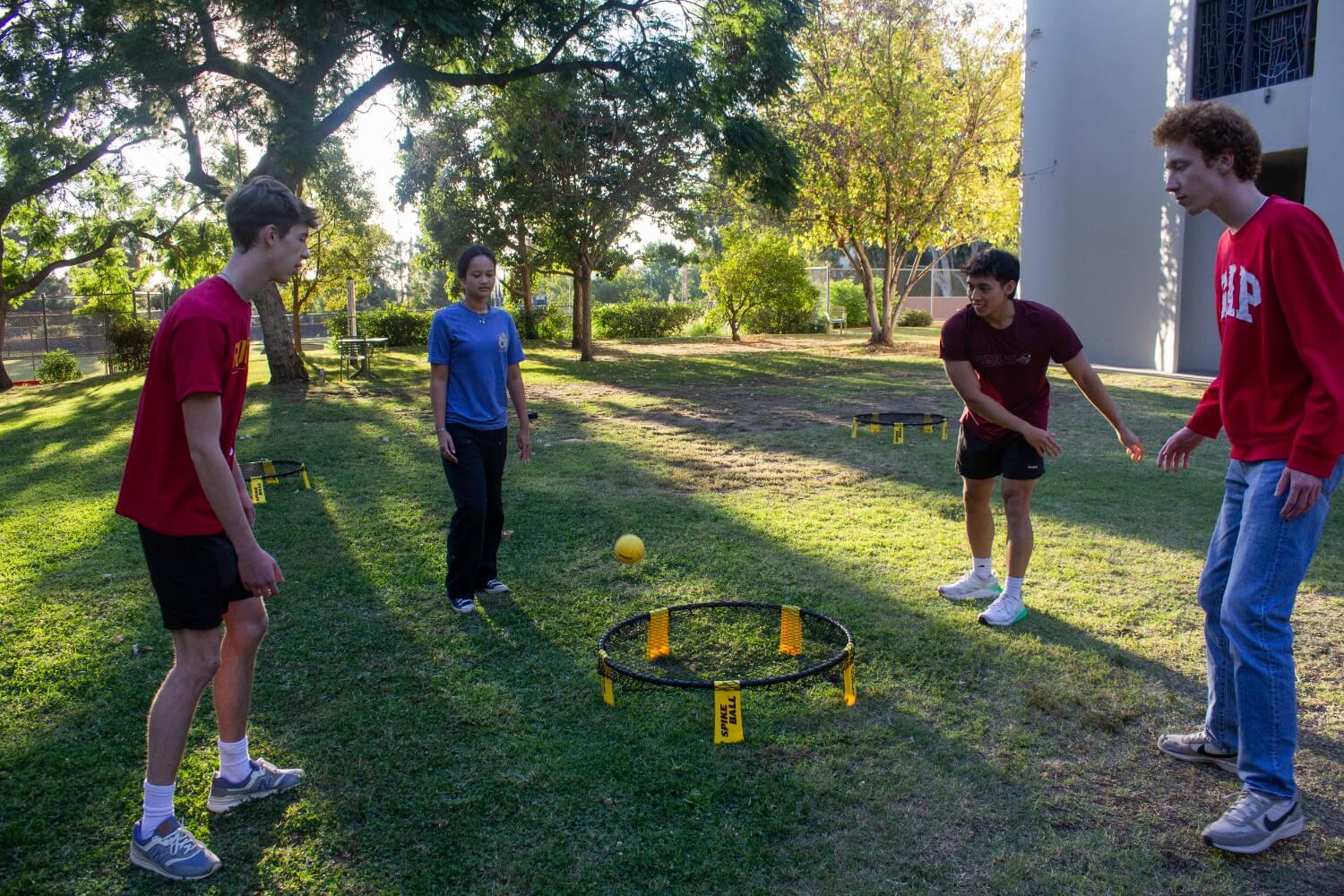
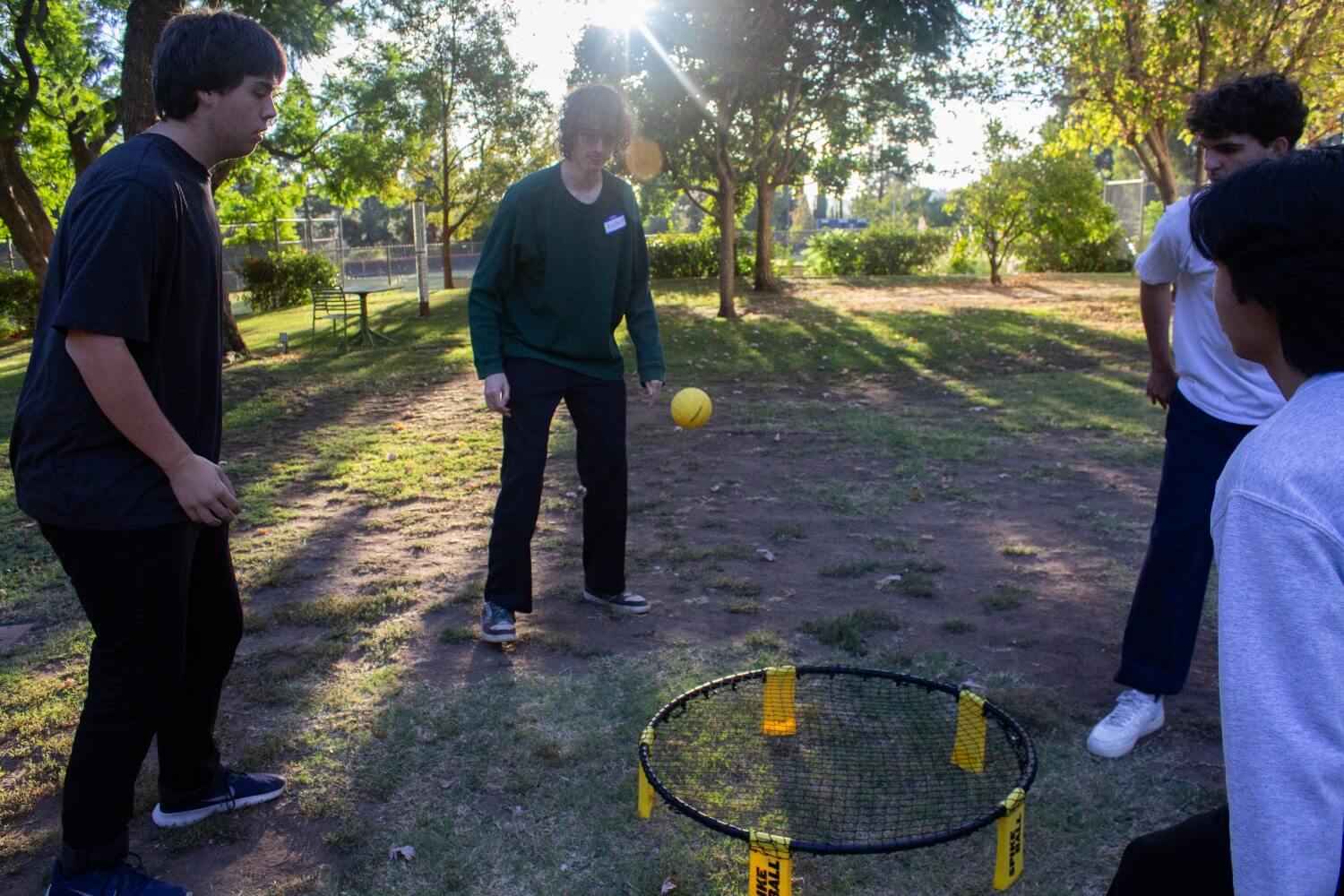
OXYSpike co-presidents Karis Yim (sophomore) and Elise Coffey (sophomore) met during theirfreshmen orientation week while playing a game of spikeball together. One year later, the two of them — along with their friend, Cal Kreuter (sophomore) — decided to start up a club dedicated to the game.
“Personally, I feel like Oxy doesn’t have too many intramurals here on campus,” Coffey said. “So we wanted to create an opportunity for students to play and have that same experience that we did — meet others and become friends with them.”
According to Coffey, spikeball is a simple game with low stakes that anyone can play. It is typically played with four people around one net, two versus two, and the first team to reach 11 points wins.
“Spikeball is nice because a lot of the intramurals that we have [on campus] are club sports, so sometimes the commitment can seem a little daunting for some people,” Coffey said. “Our club is pretty laid-back and open to anyone to come and stop by.”
Coffey and Yim said the club’s main goal is to help students meet new people and create a space where they feel comfortable looking for new friends.
“Our mission is to foster community on campus through spikeball,” Yim said. “I think Oxy can be a bit lonely at times […]so our club is really hoping to establish a place on campus for people to come and just have fun, because I think that’s what we’re missing.”
Walter Hansen (sophomore), Levi Stine (sophomore), Cintya Roby (sophomore) and Quentin Rappa (sophomore) playing spike ball at Occidental College in Los Angeles, CA. Nov. 1, 2024. Marty Valdez/The Occidental
Kreuter said the club is open to people of all skill levelsand that he is hoping to get as many people involved as possible.
“It’s honestly a really social sport. A lot of the time, you find yourselves talking and bonding between rounds,” Kreuter said. “That’s really what we aim to do with the club — get people to know each other.”
According to Yim, OXYSpike had a turnout of about 40 people at its first event Sept. 20.She said that the club brought snacks and drinks for attendeesand had volleyball games for those waiting their turn to play at one of the four nets.
“Due to resources and funding we don’t have a ton of Spikeball nets, so it was really nice that some of our members were able to bring more nets so more people could play,” Kreuter said. “It was super chill, with good music and good vibes.”
Coffey said they do not have a specific location for their events yet, as they are still trying to gauge what areas work best for them.
“We’re hoping to [eventually] be able to go on the field because then we’d be able to [play] at night with the lights and everything,” Coffey said.
Evan Zeltzer (first year), Kian Lowe (first year), Zane Wilson (first year) and Agustin Fernandez (sophomore) playing spike ball at Occidental College in Los Angeles, CA. Nov. 1, 2024. Marty Valdez/The Occidental
The event times and locations have advertised on the club’s email list and Instagram account. According to Yim, social media is the best way to attract new members because many people use it.
“I think the biggest thing that people shy away from is not knowing where the location is or who is going to be there, so when we post our photos, it helps them see that someone they know is there and inspires them to come next time,” Yim said.
As for the future of the club, Coffey said they are planning to host a few tournaments, and even go on a beach trip in the spring semester.
“We’ve gone to the beach and played spikeball with our friends, and it’s really fun and a great way to get off campus,” Coffey said.
Kreuter said the club is also hoping to branch out more in the future, like getting involved in the greater Eagle Rock community.
“[We’re thinking of going to] some after school programs where we can teach kids how to play spikeball, building that connection between Oxy and the community around us,” Kreuter said. “A simple game like spikeball, it really does go a long way.”
According to Yim, OXYSpike is planning to start hosting weekly open sessions for anyone to come to when they are free and that those who are interested should keep an eye on the club’s Instagram account.
“I can’t emphasize enough that you don’t need any prior experience,” Kreuter said. “Honestly, I think it’s more fun when you don’t have any experience. If you’re interested, just come out.”
While the NFL has made attempts in recent years to increase non-male engagement with their product, few of their attempts have borne fruit. Despite an increase in female coaches throughout the league and the league itself sponsoring a women’s flag football program, engagement amongst female viewers has remained somewhat stagnant. According to a survey conducted by Statista, only 24% of women surveyed considered themselves avid fans of the sport, and 42% claimed that they were not fans at all. Such statements contrast with the male response to the survey, in which 51% of those surveyed claimed to be avid fans, and only 19% said that they were not fans at all.
Since Taylor Swift went public with NFL superstar tight end Travis Kelce in 2023, female NFL viewership has shot into the stratosphere. According to IDX, women have been watching the NFL at rates not seen since 2000. Additionally, a Bears-Chiefs game in September 2023 — which Swift attended — saw a colossal 63% viewer increase amongst the female demographic.
T-Swizzle’s presence has yielded massive off-field success for Kelce as well, as evidenced by his jersey sales increasing by 400%. Kelce’s Instagram following increased by 300,000 the week after Swift attended the Bears game. It’s clear that Swift’s sheer presence in the NFL world has been a windfall for all parties involved.
For the NFL, the goal is to keep Taylor Swift engaged with the sport, turning her legions of female fans into football fans. If the relationship between the two grows, it could culminate in one of the biggest live events in entertainment history.
While Swift being involved with the football scene has had a slew of positive effects, some football purists believe her presence takes away from the experience of the game. Kansas City Chiefs Head Coach Andy Reid has come out in support of both Kelce’s slow start and Swift being a diehard fan. Celebrities across the entertainment industry have also come to the defense of the couple.
In essence, the idea of Swift being a distraction is the heart of the argument against her being shown on TV broadcasts and getting media attention. While the argument may seem harmless, it is indicative of the presence of sexism in the male-dominated football culture.
Fans may be grossly overestimating the amount of time she gets on screen. A New York Times article from earlier this year estimates that Swift only receives about 30 seconds of screen time in a regular game, which usually lasts anywhere between 3 and 4 hours. While these numbers were bigger in the Super Bowl, the amount of time Swift gets is largely dependent on Travis Kelce’s performance on the field.
Burleson’s sentiment paints a colorful picture of Taylor Swift haters, and while there may be some exaggeration, it can’t be too far from the truth. Fans who continually harp on the fact that Swift’s presence is an annoying distraction are the real problem. The complaints of these fans furthers the idea that the NFL has no place for women — a sentiment that is incredibly damaging to the enjoyment and legacy of the game. As the NFL pushes the sport to be more inclusive, this seemingly sexist discourse should have no place in the sport.
Contact Mac Ribner and Ben Petteruti at ribner@oxy.edu and petteruti@oxy.edu
Occidental’s Office of Sustainability hosted the college’s second annual Olive Harvest Fest at Mullin Grove Nov. 1. This year’s participants picked 1,190 pounds of olives, more than doubling the 500 pounds picked during the 2023 harvest.
Assistant Sustainability Coordinator Isa Merel ’23 said several people are to be credited for the event’s success. Merel said Director of Facilities Management Dave Caldwell, Grounds Manager Lola Trafecanty and Associate Professor of Economics Bevin Ashenmiller were integral to the event’s success.
According to Merel, the staff hosting the olive harvest had collectively planned the inaugural event last year to fulfill a longtime wish of the Facilities Management department.
“I think a lot of people knew that we had olive trees and wanted to see something happen to the olives, rather than just letting them fall to the ground as they’ve been for years,” Merel said.
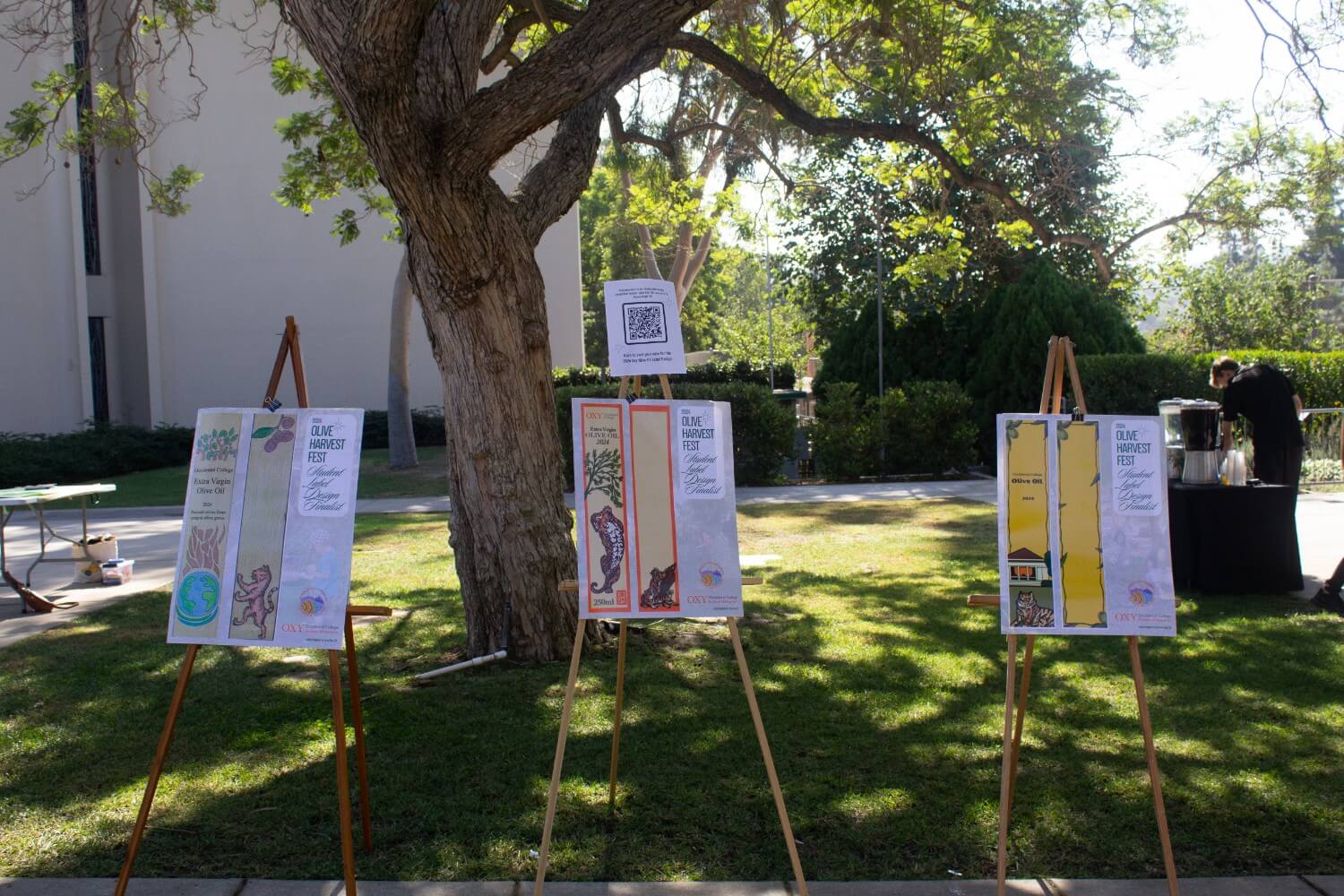
Student label design finalists at the harvest festival at Occidental College in Los Angeles, CA. Nov. 1, 2024. Marty Valdez/The Occidental
According to Merel, the majority of olive trees in Mullin Grove, at the main entrance to campus, were planted in 1936. Others were planted as early as 130 years ago.
According to Grounds Manager Lola Trafecanty, the first harvest in November 2023 was located at the olive trees by Thorne Hall, rather than Mullin Grove. Trafecanty said the olives by Thorne Hall ripened too quickly because of the August 2024 heat wave.
Merel said this also caused the Olive Harvest Fest to be moved up from Nov. 8 to Nov. 1 so the olives could be picked before they were too ripe. According to Merel, a professional tree management team pruned the branches that had the most olives and placed them on tarps for the olive harvesters to collect. Merel said the olives were then driven to Ojai Olive Oil, an olive oil manufacturer in Ojai, California, where they will be cold-pressed and turned into olive oil. This olive oil will be ready sometime in January 2025 and sold at the Occidental Bookstore, according to Merel.
Those who participated in the olive harvest enjoyed a specially curated sustainable lunch that featured olive oil from the 2023 harvest. Merel said she left this task in the hands of Director of Culinary Services Nathan Martinez, who created a menu of grilled carrots with arugula and mint, seared trout with herb sauce, greens and beans with fried bread, blistered tomatoes with marinated feta, radish rainbow salad, olive oil cake and hibiscus agua fresca.
“We wanted to emphasize plant-forward foods [and a] pescatarian Mediterranean diet to really [highlight] the health benefits of olive oil, the uses of olive oil [and the] environmental sustainability of that food and that diet,” Merel said.
Giselle Reyes (first year) said they attended the event because of how fun it sounded and because they were curious about how many olives could be picked.
“It was really relaxing and meditating to be picking olives over and over,” Reyes said.
According to Trafecanty, people enjoy discovering Occidental’s olive trees, what they look like and the benefits of olive oil. She said her favorite part of the Olive Harvest Fest is the community that is built and the label design contest for the Occidental olive oil bottle. According to Trafecanty, Occidental’s olive oil label is made by a student to represent the spirit of Occidental. This year’s olive oil label was created by Levi Lee (sophomore).*
“I think [my favorite thing] is the community building — the bonding between [students and staff] that don’t always work together on campus in a big project,” Trafecanty said.
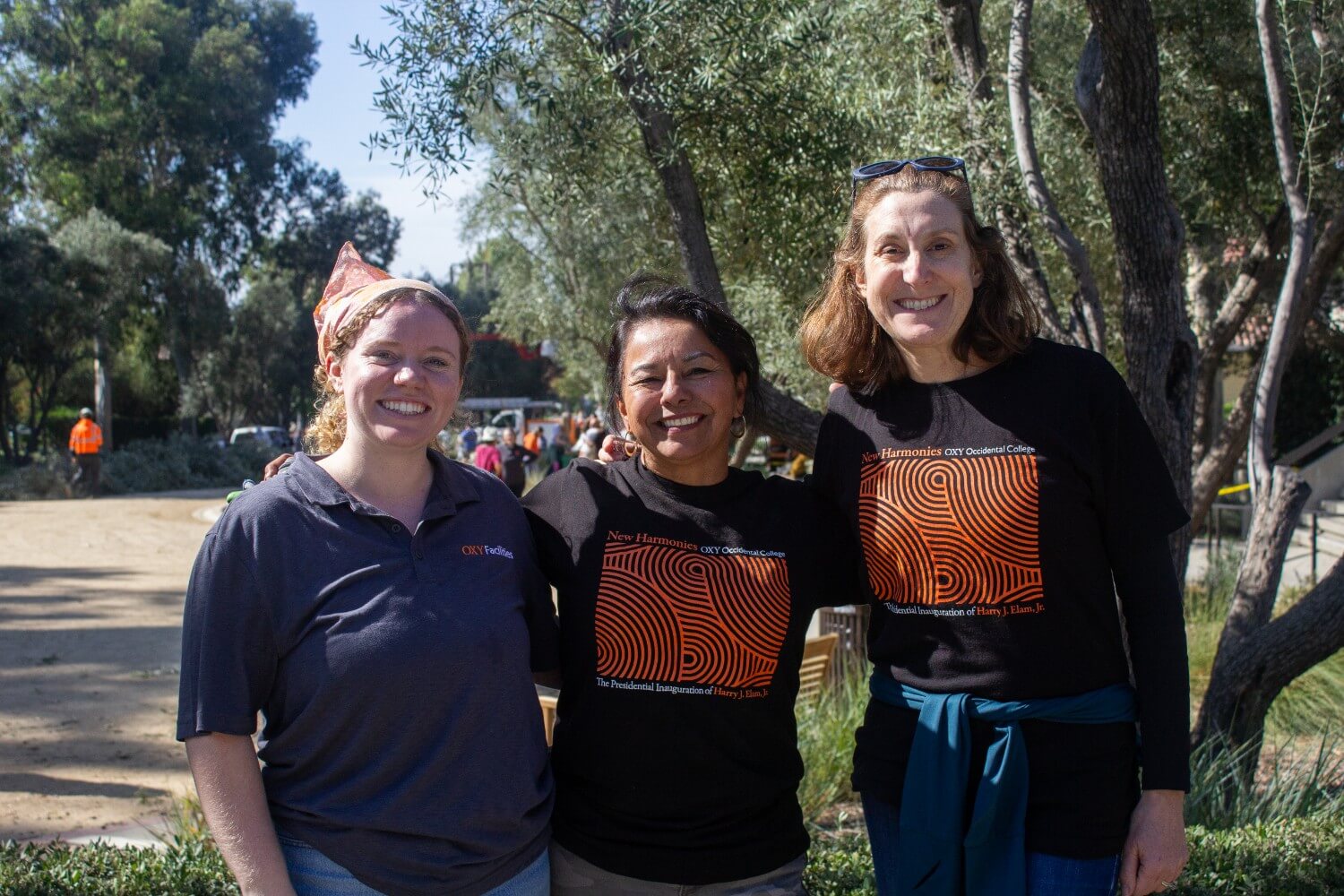
Organizers of the harvest Alison Linder, Isa Merel and Lola Trafecanty at Occidental College in Los Angeles, CA. Nov. 1, 2024. Marty Valdez/The Occidental
Merel said the goal of the olive harvest fest is to foster this community as everyone works together to harvest an unused resource on campus.
“We really wanted it to not just be something where you’re coming and picking olives,” Merel said. “You’re coming, you’re picking olives, you’re meeting new people, you’re having a good time and hopefully you’re learning a little bit about our campus landscape.”
Merel said she hopes the olive trees will become more embedded in Occidental’s culture and daily life. She said she would love it if students used the olive trees and oil to conduct research, specifically about the effect of rainfall, carbon sequestration and nutrient concentrates.
“I would love to see this become a campus tradition,” Merel said. “I don’t just mean that we host it every year, but that people look forward to it every year and that people want to collaborate more each and every year.”
U.S. News and World Report, an education, business and analytics publishing company, released its 2025 list of “Best College Rankings” and “National Liberal Arts Colleges Rankings” on Sept. 24. In the National Liberal Arts Colleges category, Occidental is now tied for 34 with Mount Holyoke College, one spot above Pitzer College. Occidental has jumped three rankings in two years and is now ranked the highest it has been in 15 years.
Senior Associate Dean of Admission Robin Meryl said that rankings are an important way to be recognized and distinguished as a school, especially in higher education.
“It is important to be represented in these rankings,” Meryl said. “Whether we want it to be or not, it’s a place where students go. There certainly is potential in the possibility that we are reaching folks we were not reaching before, through these rankings.”
The rise in Occidental’s rankings could affect the admissions process. Meryl said that the applicants are already very competitive, and an increase in applicants would only make the pool more competitive.
“We have a really strong applicant pool now. We would always love to see that increase,” Meryl said. “If all these folks are qualified to be successful at Oxy, what are the other ways they’re going to contribute to our community with intellectual curiosity and how they think about the world around them?”
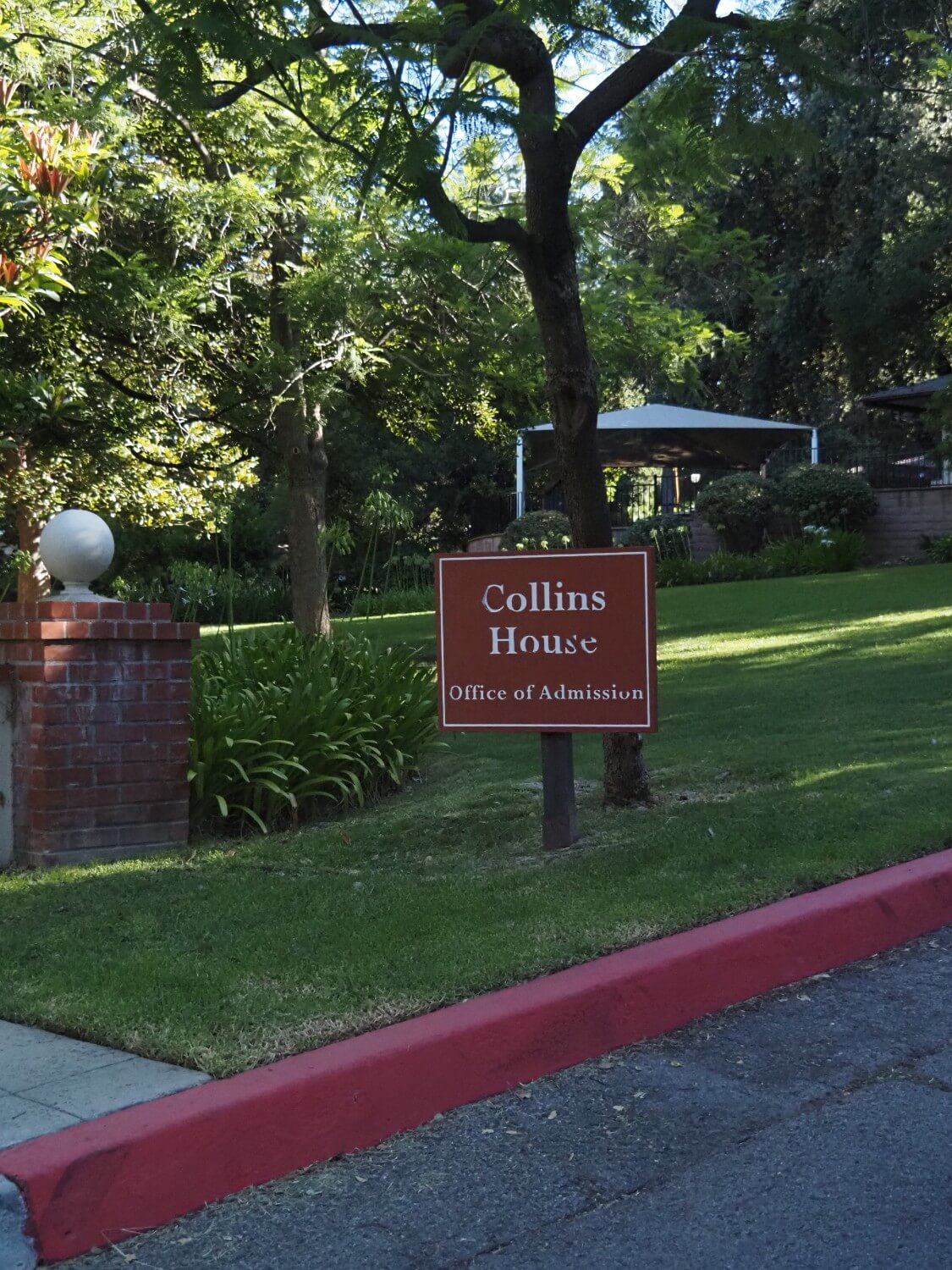
Outside of Collins House at Occidental College in Los Angeles, CA. Aug. 29, 2023. Anna Beatty/The Occidental
According to the Occidental Admissions website, they are looking for students who are well-rounded in all facets of their lives, not just high achievers in the classroom. Meryl said that students have impactful roles in their communities, families and extracurricular events are the most successful during the application process.
According to Meryl, the college’s selectivity has been growing, and the change in rankings can lead students to pay more attention to more applications, for better or for worse.
“Oxy, just in general, is becoming more competitive. The narrative around competitive applications and selective institutions definitely drives more students to apply to more schools, to be more fearful about the process,” Meryl said. “It becomes a self-fulfilling prophecy that students are spending more time applying to schools that are on the ranking lists and less time applying to schools that really fit what they’re looking for.”
Meryl said that it is not easy to predict if Occidental will continue to rise in rankings, and that U.S. News is constantly changing their criteria for their ranking from year to year. According to Occidental’s Director of Communications Rachael Warecki, 17 ranking factors were used to rank colleges and universities.
“Occidental ranked highly in several liberal arts college-specific categories, including Top Performers in Social Mobility, Most Innovative Schools and Undergraduate Teaching Programs,” Warecki said via email.
Although Occidental ranked 18th in the Top Performers in Social Mobility category, 38th in Most Innovating and 42nd in Undergraduate Teaching, Warecki said that she hopes that students don’t lean completely on rankings to determine what school to apply to.
“We hope that prospective students and families use these rankings as a jumping-off point to learn more about Oxy’s unique academic programs and initiatives, as well as the opportunities provided by our reciprocal relationships within the vibrant city of Los Angeles,” Warecki said vai email.
Meryl said that the admissions team works to improve and stabilize important parts of the ranking criteria, such as the college’s retention rate and financial health. According to Meryl the financial strength of an institution is weighted heavily in the ranking process. Meryl said the rankings reflect only a small part of the Occidental College experience, which she said can never be reduced to a number.
“I don’t think they tell the whole story. We are certainly excited about the rankings, and certainly they weigh things that are valuable and important to us,” Meryl said. “I think the student and faculty relationships [and] the experiential learning opportunities students have in Los Angeles are the kinds of things that are never going to be captured in the rankings.”
Contact Peter Krebs at pkrebs@oxy.edu
This article was updated at Nov. 8, 1:45 p.m. to reflect that Occidental is ranked 34 in the National Liberal Arts Colleges category, not the National Universities category.
Every trauma has its origin story. When I was but a wee child — young, naive, oblivious to the cruelties of this world — I remember attending a friend’s birthday party, as a normal child would. My favorite part of any birthday party arrived, which was serving cake, and I didn’t bother admiring the cake’s appearance before taking a large bite out of my slice.As I began chewing, my happiness soon faltered when the texture of something chewy with a supple inside broke loose. Looking at the whole cake that was still being cut, I realized there were bits of raisins sticking out from between the layers.
This moment was a crucial turning point in my life. The cake crumb was soft with a scrumptious vanilla flavor, and the frosting patterns were intricately decorated with swirls and outlines of flowers. I was deceived by its beauty when I realized something as unfitting as raisins were chosen to be placed inside. Ever since that day, I have been extremely cautious when selecting cakes at the store, especially those that contain fruits.
Not everyone likes cakes, and that’s understandable. But cakes are used and eaten for many reasons: displays, birthdays, weddings, anniversaries, 3 a.m. cravings and even songs. They are more integrated into our lives and culture than we think. Fruitcakes, for instance, were commonplace in ancient Egypt and Rome, and in China, where my parents are from, cakes often contain unique fruits like goji berries and dates.
Despite my distressing past experience, I still enjoy eating cake. But to put it plainly, some fruits should not be placed in cakes, whether it’s because they are too juicy, too dry or simply better off alone.
To start off, raisins are a massive ‘no’ in cakes. As a raisin-hater (unless they’re in Trail-Mix), I dislike raisins simply due to their taste. They have a sweet taste that is fermented and funky, something I will never get used to. Even putting them in salads, yogurt or bagels don’t help reduce their taste. In fact, it actually makes the food worse. The texture especially feels very slippery and slimy. I don’t see how you can make raisins taste better by putting them into cakes.
Going off of raisins, I am also against grapes being placed in cakes. They are too juicy, and the feeling of the grape juice combined with the frosting and cake dough creates a strange, unfamiliar, mushy and overall uncomfortable feeling in the mouth. Fruits that are typically very juicy should not be placed in cakes.
Papayas are the second biggest ‘no.’ From the beginning of my childhood, I have always found disgust in papayas. They smell like feet, and while they are soft like mangoes, which I enjoy, their taste has a heavy stench that clogs my throat and makes me want to vomit. And even if I do spit it out, the taste still remains in my mouth, and I have to clean up the piece of papaya I just spit out, which does not look any more appetizing than it did before I placed it in my mouth. The moment I eat papaya, I put myself in a lose-lose situation. Therefore, no one could pay me to eat cake with papayas.
Another type of fruit that should not be placed in cakes is a kiwi — golden kiwis, to be more specific. Golden kiwis are extremely juicy, which will soak up the cake crumb. Not to mention, they are one of my all-time my favorite fruits, and I believe they should be enjoyed on their own.They shouldn’t be applied to cakes, not because they will ruin the cake flavor, but because the cake will ruin the flavor of them.
Lastly, I believe bananasshould not be placed in cakes. Although I don’t enjoy bananas, like golden kiwis, I prefer eating them alone. Plus, I can only take mushy texture to a certain limit. I typically eat bananas one bite at a time. If I eat it all at once, the texture will become too overbearing, which will cause me to gag. Because I’m already careful with bananas’ texture alone, I can’t imagine how they will taste when combined with frosting and cake crumb.
With all the fruits listed, a few might believe that I am just a fruit-in-cake hater. But one fruit that I feel absolutely can never go wrong when applied to cakes is the classic go-to choice: strawberries. You can eat them with chocolate, whipped cream and even caramel. Yes, it’s juicy, but its texture is neither too soft nor too hard, which perfectly balances the texture and the amount of juice it carries. It is not too mushy like papayas and not too hard like apples. When you eat cake with strawberries, you can taste both the fruit and cake itself, allowing you to savor both flavors at once.
Cakes, especially fruit cakes, are meant to be enjoyed — texture and flavor play an important role in our enjoyment of these delicacies. I hope that now, you have better understanding of what fruits do not belong in cakes, so the next time you have some, you can enjoy it too.
The Chinese Ministry of Foreign Affairs announced in a press briefing Sept. 5 that China was terminating its international adoption program, halting all future adoptions including those with already pending applications. The statement lasted no more than a few sentences but marked a monumental shift in China’s history of adoption. This sparked many Chinese adoptees, including those from Occidental, to share their reactions to the policy, which ranged from sadness to relief.
From 1992 to Sept. of this year when the decision was released, an estimated 160,000 babies were adopted internationally from China, over half of whom were adopted into U.S. families. Most of these U.S. adoptive families were upper-middle class, headed by parents over 35 and white. Most of the adoptees were women.
Associate Professor of History Jane Hong said this wave of international adoptions was a direct result of the one-child policy, which limited most Chinese families to one child each from 1980 to 2016.
“The one-child policy effectively created a problem of excess children,” Hong said. “The sheer number of second children who were born forced the Chinese government to have to figure out different arrangements for those kids.”
Hong said the majority of adoptees being female could be explained by the economic benefit of male children in China, as well as some cultural preferences for male children who could carry on the family name.
While Chinese adoptees may share some commonality in origin, their experiences growing up vary immensely.
Courtesy of Jane Hutton
Jane Hutton* (junior) was adopted from the Guangdong Province of China when she was 16 months old and grew up in Boise, ID. Hutton said she has had strong and complicated emotions surrounding adoption for as long as she can remember. Her experience of adoption was heavily marked by growing up in a white household in a predominantly white area, something she said she struggled with as a kid.
“Growing up, it was tough. I wanted to be white because everybody around me, even within my own family, was white,” Hutton said. “There were a couple other Asians in my elementary school, and I remember you were always asked if you were related to the other ones, even if you were a totally different ethnicity.”
Hutton said that while she loves her family, she also thinks they were not always aware of the potential harm adoption can cause.
“I don’t think my parents were properly informed on the idea that there was loss with adoption — you’re losing culture,” Hutton said. “I think there is an understanding that you take this baby, you love it and you’re a family now, and that’s the happy ending.”
Hutton said that a discovery she made in 10th grade further complicated her relationship towards her adoption. After watching a documentary and looking deeper into her birth records, she realized that she was likely trafficked as a baby.
“It’s hard to deem that action good or bad,” Hutton said. “Obviously I’m not dead, so that’s good.”
Hutton said that learning of this possibility challenged the common narrative of adoption as something destined to happen.
“With adoption, you already don’t know a lot, and this meant I knew even less,” Hutton said. “It questions the idea that this was meant to be.”
Courtesy of Abigail Montopoli
Abigail Montopoli** (junior), was adopted from the Anhui Province of China when she was 10 months old and grew up in Tacoma, WA. Montopoli said she did not question her identity too deeply growing up, possibly because of her early exposure to Chinese culture and other Chinese adoptees.
“From age 3, I was surrounded by a lot of other Chinese people, some of whom were adopted, some of whom weren’t,” Montopoli said. “I had a lot of very early interactions with other kids that look like me and who had a similar family structure to me.”
Montopoli said she has observed an assumption that all adoptees will share one perspective or lived experience.
“I have had a different experience than, say, the person who talked to CNN about their experience,” Montopoli said. “There needs to be more diverse discussion about [adoption] because everyone has had such a different experience, no one person who gets approached by the news can determine public opinion about it.”
Courtesy of Jean Meyer
Jean Meyer (junior) was adopted just before her first birthday from the Chongqing Province and grew up in Irvine, CA. Meyer said that while she was raised in a place with a large Asian American population, it was not always a part of her identity that she felt connected to.
“I was in an area that had a lot of Asian American celebration and culture,” Meyer said. “But I didn’t feel a part of it because I didn’t have that connection to it through my family or through people close to me.”
One of the large differences Meyer said she observed between Chinese adoptees has been in their interest or indifference to learn about Chinese culture and in their curiosity about their birth family.
“Some people are really invested in finding where they came from, and finding people they’re blood-related to,” Meyer said. “For me, I just don’t care that much. I’ve really enjoyed how I’ve grown up and the family that I have and the friends I’ve made and the community I found. I’m very focused on this being what my life looks like.”
Meyer, Hutton and Montopoli had varying reactions to China’s decision to end international adoption. Hutton said the decision caught her off guard and that she was not initially sure how to react.
“It just happened so suddenly,” said Hutton. “When people look back on this time, it’s just going to be a thing that happened, and in the broad scheme of things, didn’t happen for that long. It’s just so strange to think that in the future, I’m going to be a product of something that existed for such a small portion of time.”
Meyer said her attitudes towards the decision are complicated, and she empathizes with other adoptees experiencing a range of emotions about the decision.
“Partially it’s really upsetting because there’s a lot of families who were told that they were gonna get this child and they were really excited,” Meyer said. “But on the other hand I think there’s a lot of unspoken trauma that comes with being in a transracial adoption and having parents that aren’t the same race as you. So I think it’s a very nuanced issue.”
*Jane Hutton is a media editor for The Occidental.
**Abigail Montopoli works for The Occidental as a photographer.
Contact Estel Garrido-Spencer at garridospenc@oxy.edu
According to LAist, the LA River begins in the western San Fernando Valley, flows through Burbank and Glendale, along Griffith Park and Elysian Park, through Downtown LA and 17 cities until ending its 51-mile journey at the Pacific Ocean in Long Beach.
In certain sections of the river, such as near Elysian Valley (also known as Frogtown, named for its frogs) there is a shallow, albeit flowing, steady stream — in others, a sweeping flow or a barren concrete basin.
Having previously sustained LA for 150 years as a major waterway, the LA River was constrained to a concrete channel in the 1930s in response to a series of floods that destroyed thousands of homes, killed hundreds of people and flooded one-third of the city. Before being channeled, it was to be a robust water source full of floodplains and wetlands.
According to the LA River Master Plan, the result was the displacement of a quarter-million people in LA County, reinforcement of segregation through the creation of ethnic and racial “enclaves,” as well as poor air quality and a general lack of green space for communities that live near the river.
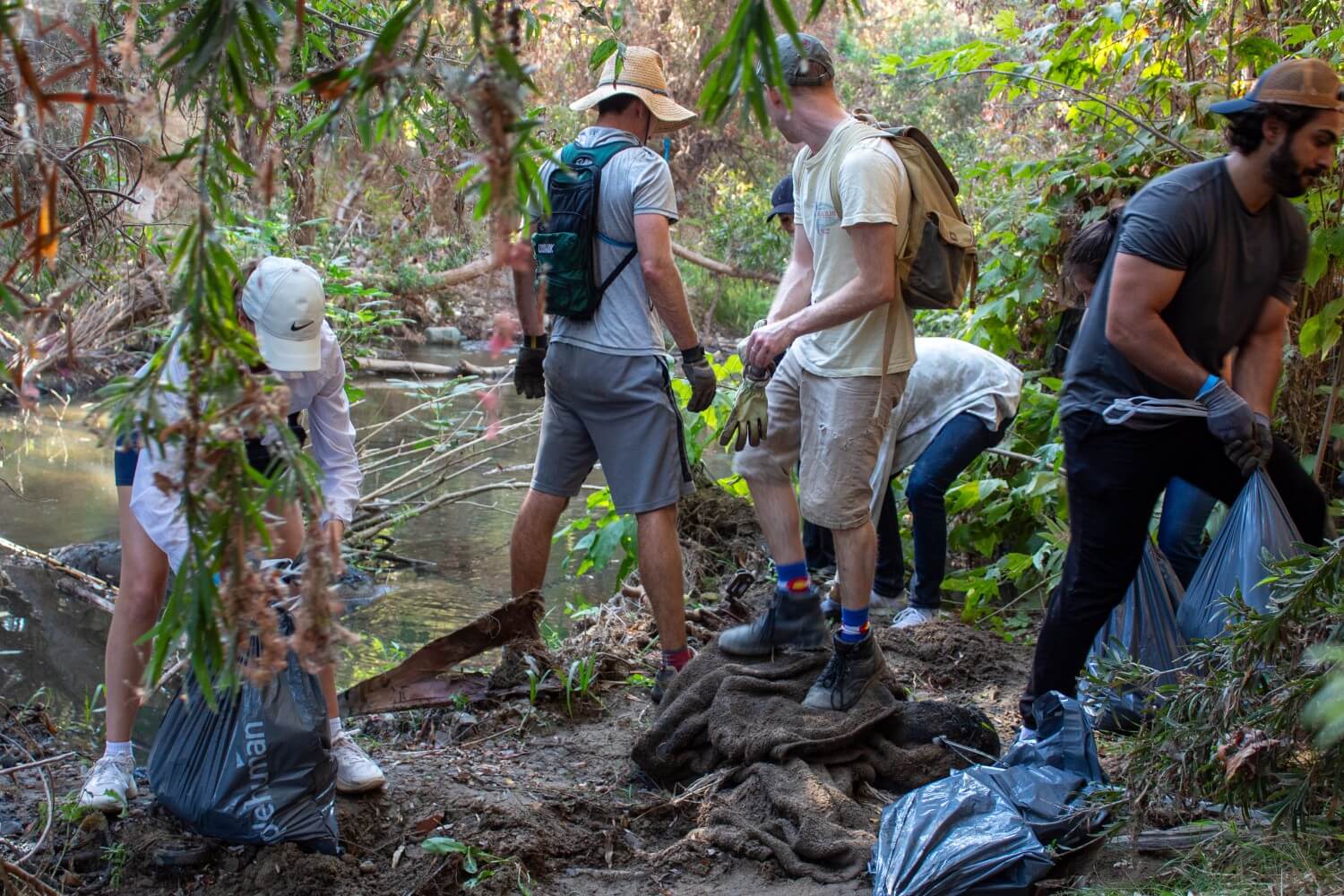
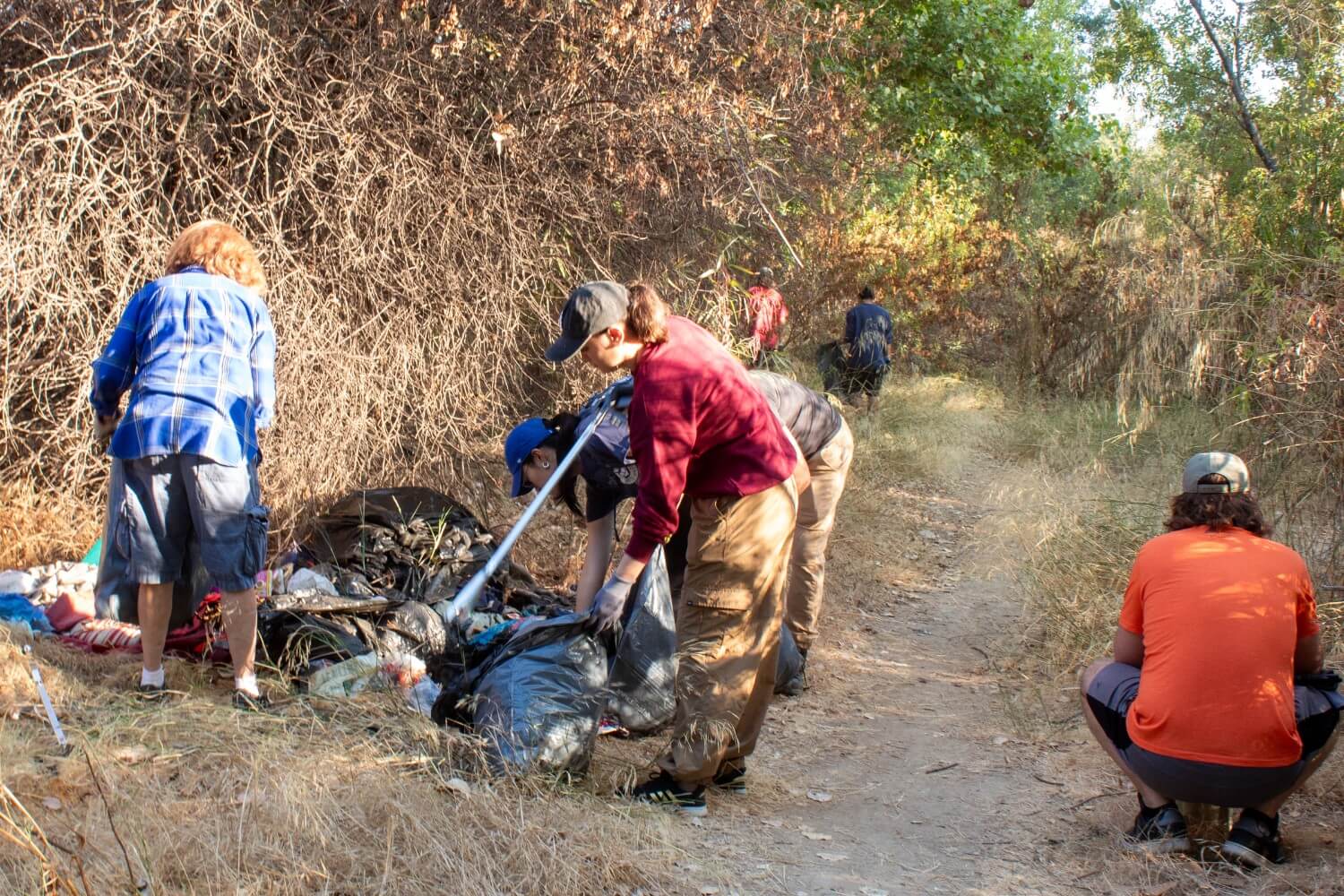
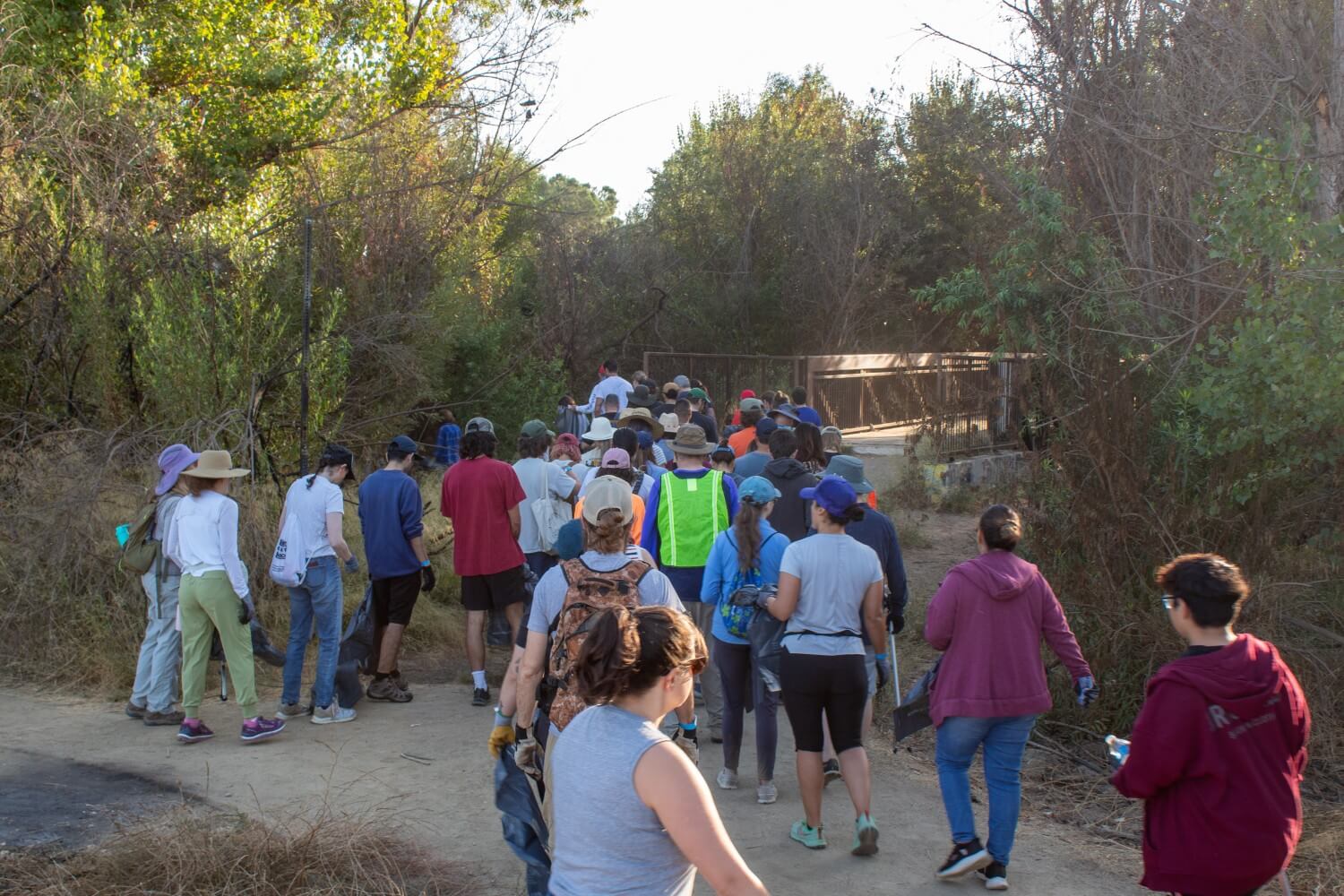
Los Angeles residents at a section of the Los Angeles River cleanup in Los Angeles, CA. Oct. 5, 2024. Evan Lirette/The Occidental
James Grayson (senior) said he has been to the river a couple of times to bike, though he describes it as not much of a river.
“I think [I associate] most of the nature in LA with greenery, and there’s not a lot of green-colored things around the LA River,” Grayson said. “It’s a lot of gray.”
River Restoration
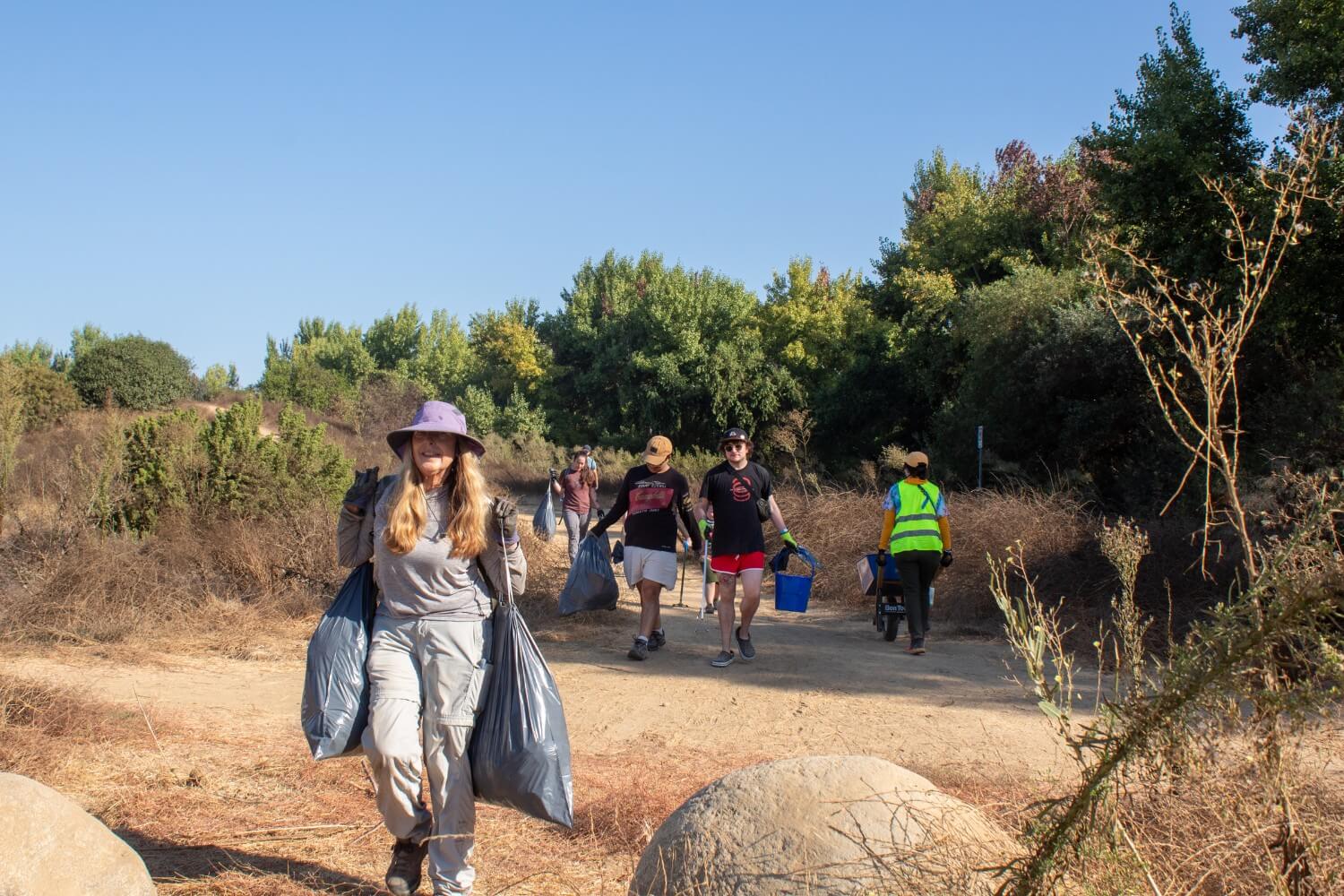
Friends of the LA River (FOLAR) is an organization that dedicates itself to river restoration and education. Saturday Oct. 5, various volunteers gathered together at Bull Creek — one of four sites of the 34th Annual Great LA River Cleanup — to clean up trash and debris for four hours.
Los Angeles residents at a section of the Los Angeles River cleanup in Los Angeles, CA. Oct. 5, 2024. Evan Lirette/The Occidental
Sar Artoonian, a participant in the event, said that it is important to remember that the river used to be a main water source.
“If you think about LA before all of the development, there were these great rivers that were steered for hundreds of years by the indigenous people,” Artoonian said. “[Restoration] is connecting us back to the life force of our city — water.”
While Artoonian said most people don’t see the river as a real river, they said they hoped the cleanup at least created some introspection and that people would be more considerate of their waste.
“Just even bringing people back to the source of life which is the water that sustained communities for so long — there’s something in that,” Artoonian said.
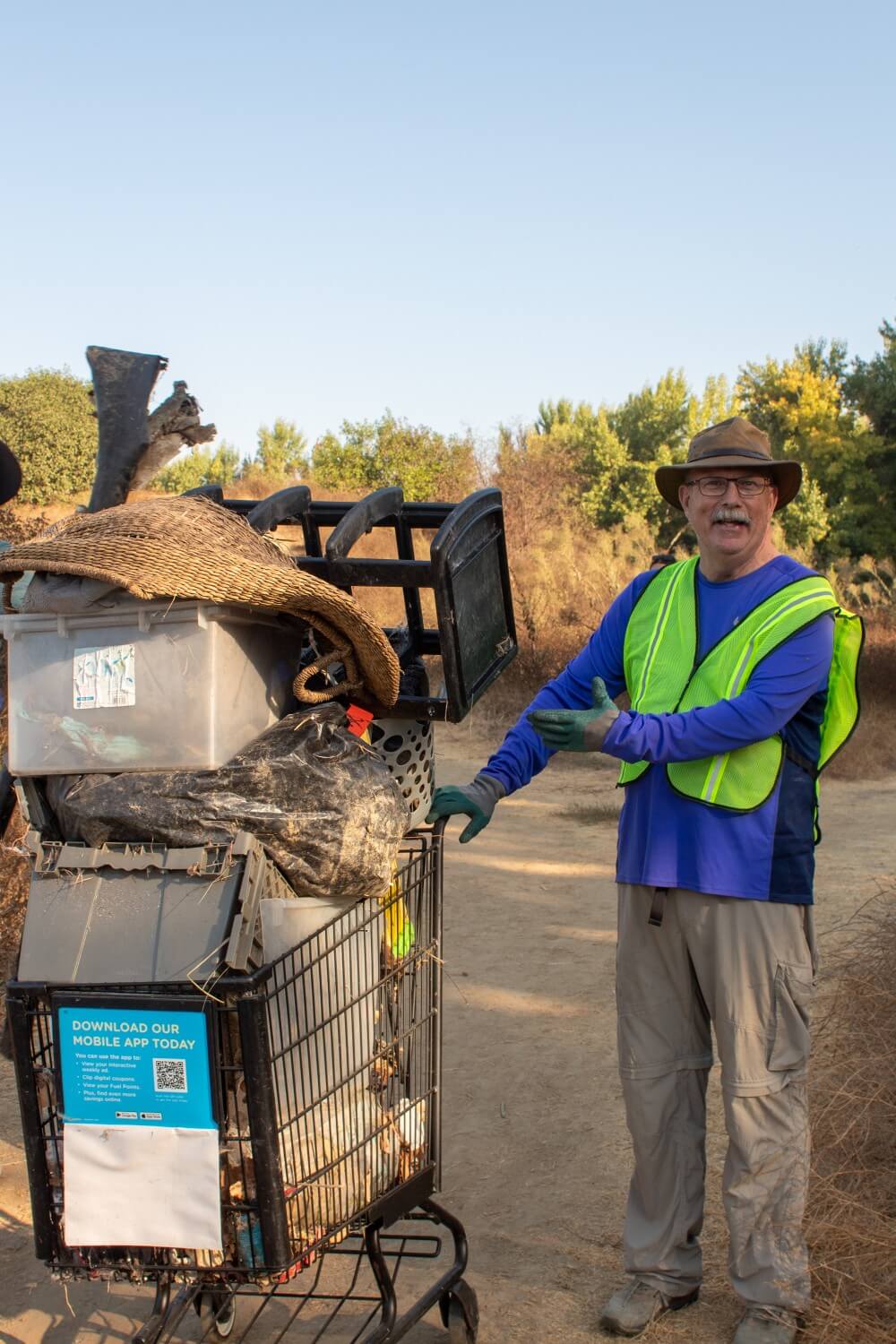
Another volunteer at the cleanup, Dale Griner, said it is good to get waste out of the river before the rainy season begins.
Steve Huntley at a section of the Los Angeles River cleanup in Los Angeles, CA. Oct. 5, 2024. Evan Lirette/The Occidental
“A lot of trash gets buried in the dirt that washes through every year,” Griner said. “There’s layers and layers and layers and layers of trash and dirt.”
Tommy Quick (junior) said that he has driven by the river, but never physically seen it in person.
“It’s not very pleasant to look at,” Quick said.
Quick, whose home state is Maryland, said that while the Chesapeake Bay is not the cleanest body of water, it still seems cleaner than the LA River.
Los Angeles residents at a section of the Los Angeles River cleanup in Los Angeles, CA. Oct. 5, 2024. Evan Lirette/The Occidental
“You usually don’t want to swim in [the Chesapeake Bay], but there is greenery,” he said. “It’s not concrete underneath.”
Community Impacts
FOLAR Environmental Educator Dan Matt said that it is important for people to realize that the displacement of marginalized peoples by the concretization of the river is not a thing of the past, but still affects marginalized peoples today.
“There are still native and indigenous people here,” Matt said. “The Tongva specifically are not federally recognized by the US government, so they don’t get the benefits and help that a lot of the other tribes do.”
Matt said that FOLAR aims to build the capacity for community students and future leaders to advocate for nature, climate and equity on the LA River.
“We’ve been able to advise a lot of projects where developers come in and want to do something crazy,” Matt said. “We’re like ‘Alright, well how many native plants are there going to be? How are we going to impact the river?’ We make sure that wild development doesn’t happen.”
Matt said that while channeling the river has prevented flooding, which was its original purpose, it has also created other climate problems.
“Right now, the concrete just makes our city a lot hotter,” Matt said.
Matt said that he and his team envision a verdant LA River that supports vulnerable communities and climate adaptation.
Los Angeles residents at a section of the Los Angeles River cleanup in Los Angeles, CA. Oct. 5, 2024. Evan Lirette/The Occidental
Currently, the 225-acre Sepulveda Basin Wildlife Reserve is the only designated wildlife area along the river within the city and is one of three areas of the river with a soft bottom rather than concrete.
Assistant Professor of Urban & Environmental Policy (UEP) Karla Peña said that it is important to consider the LA River not only in terms of its biodiversity, but also to consider who the river impacts the most.
“It’s become a safe haven for a lot of folks that are unhoused,” Peña said.
Peña said the UEP department decided to take their students to the river this year, because it is a great teaching point on how to better incorporate community input into urban planning. She said that these kinds of field trips are largely owed to support from the Center for Community Based Learning, which takes students out of the classroom to see how things play out in the real world.
In the first part of her 2006 article “Thirteen Ways of Seeing Nature in LA,” environmental justice advocate Jenny Price wrote that challenging the idea of nature as a romanticized wilderness begins with focusing on familiar natural spaces, such as the river.
“The saga of the concrete LARiver plays out as every brand of nature story,” Price wrote. “First, a ‘what nature means’ tale: Angelenos reimagined the river as nonexistent and banished it from their collective imagination of history and place.”
LA native and attorney Rémy de La Peza said she works with FOLAR and other groups that focus on the intersection between affordable housing, land use, politics, urban planning and social justice.
“Community is so much more than just a home, it’s about parks, open space, nature,” de La Peza said.
She said that efforts to build around the LA River are an example of green gentrification — when investment in green space is not mindful of its impacts and actually inspires gentrification.
Recently, the Frogtown Flea Crawl has received pushback from the local Latino community as it reflects a greater trend of gentrification.
“The flea market was a process by which some people feel like they’re being displaced or excluded from their own community,” Peña said.
With initiatives like FOLAR and efforts to restore the river today, de La Peza said the river is already much better than it was when she was growing up.
“Growing up, the LA River was a joke,” she said. “It’s already so much better now than it was back then.”
Los Angeles residents at a section of the Los Angeles River cleanup in Los Angeles, CA. Oct. 5, 2024. Evan Lirette/The Occidental
De La Peza said that river restoration is a holistic project that requires an interdisciplinary, collaborative effort between environmental science, policy and law.
“There are not a lot of historic green places in LA,” de La Peza said. “[The LA River] is not something of the past, it is something of the current day.”
Yanori Ferguson contributed to the reporting of this article.
Roughly 600 Occidental students flooded the upper soccer field Oct. 19 for FallFest, an annual concert that brings musicians to campus, according to KOXY station manager Jaishri Vidyarthi (senior).The event featured DJ sets by Kreayshawn, Alex Chapman and DJ Mandy, a live performance by Ve’ondre and a drag segment by Sweet Tea. Although FallFest is an Occidental tradition, last year, the school held the event on a smaller scale than usual in an effort to save money, meaning this year’s concert was the first time both first-yearsand sophomores got to properly experience the custom.
According to KOXY staff member Molly Malin (sophomore), booking FallFest has been the role of Oxy Programming Board in past years. Programming Board was formerly a division of Associated Students of Occidental College (ASOC), but Malin saidthat this year, it has become a branch of KOXY.
“In the end, we decided it would make more sense to have everything [music-related] under the same umbrella,” Malin said. “Now we’re working together, and it helps us to have bigger events and a stronger team.”
Vidyarthi said that KOXY partnered with Subculture Party, which puts on monthly raves around LA, to book this year’s FallFest.
“[Subculture] had a lot of connections with artists that were more underground, and we were able to use their credibility to book some cool artists,” Vidyarthi said.
Courtesy of Sophie Weil and KOXY
KOXY Programming Director Keita Yamamoto (senior) said he was excited about DJs coming to campus, a big contrast to last year’s FallFest, which featured local indie artists. According to Yamamoto, the venue also changed; in 2023,FallFest was held on the quad and set up by KOXY, while this year, Subculture set up a massive stage on the upper soccer field.
“I honestly just want to see live music here at the end of the day,” Yamamoto said. “Hopefully everyone’s as willing to dance as I am.”
According to Vidyarthi, FallFest is an important part of Occidental culture.
“I know coming in as a first year can just be hard, moving to a new place and stuff, so I think FallFest is a really great time for the community to come together and have a good time and just support one another through enjoying live music,” Vidyarthi said.
Vidyarthi said that since the last trueFallFest was two years ago, the KOXY team wanted to make sure to bring artists to campus that a wide variety of students would enjoy.
“We wanted to bring back FallFest and really honor the high-energy environment that it’ssupposed to be,” Vidyarthi said.
Alex Chapman, one of the DJs who performed, said he appreciated the crowd’s energy and had a lot of fun.
“When I was in college, I loved going to shows so much and learned about a lot of acts that way,” Chapman said. “It’s really fun to see that people still have that same kind of enthusiasm.”
Courtesy of Sophie Weil and KOXY
During Chapman’s performance, he called a few Occidental students up on stage to dance. Jeancarlos Perez Lemus (sophomore) was one of these students. Perez Lemus said that getting up on stage during the event was a spur-of-the-moment decision, prompted by Chapman’s request for dancers during his set. Perez Lemus said he went up with a fellow Occidental College Dance Production dancer.
“We started dancing and freestyling, doing what we love to do […] dancing on stage at Occidental is nothing new to us,” Perez Lemus said.
Perez Lemus said that seeing peers on stage energized the crowd, but despite encouragement from Chapman and fellow students, KOXY asked him and his friend to leave the stage due to safety concerns.
“At the end of the day, you can clearly tell that we’re Occidental students,” Perez Lemus said. “We’re not trying to create chaos or anything.”
Perez Lemus said that he still had an amazing experience at FallFest, comparing the show to a Coachella setbecause of its outside stage, high energy and big names performing. Perez Lemus said he was excited to see Ve’ondre on stage, having attended past shows of hers.
“It’s amazing to see the outer community of Los Angeles come to our campus, because I feel like sometimes we are living in this bubble,” Perez Lemus said.
Perez Lemus said that he thinks it is great that FallFest gives students the opportunity to meet professional entertainers on campus, especially because of the large number of students hoping to go into music production and the entertainment industry.
Chapman said that shows like FallFest inspire students.
“I know that when I went to school, these type of shows, especially for me, helped me see what I wanted to do on stage and see people kind of do it in different ways,” Chapman said.
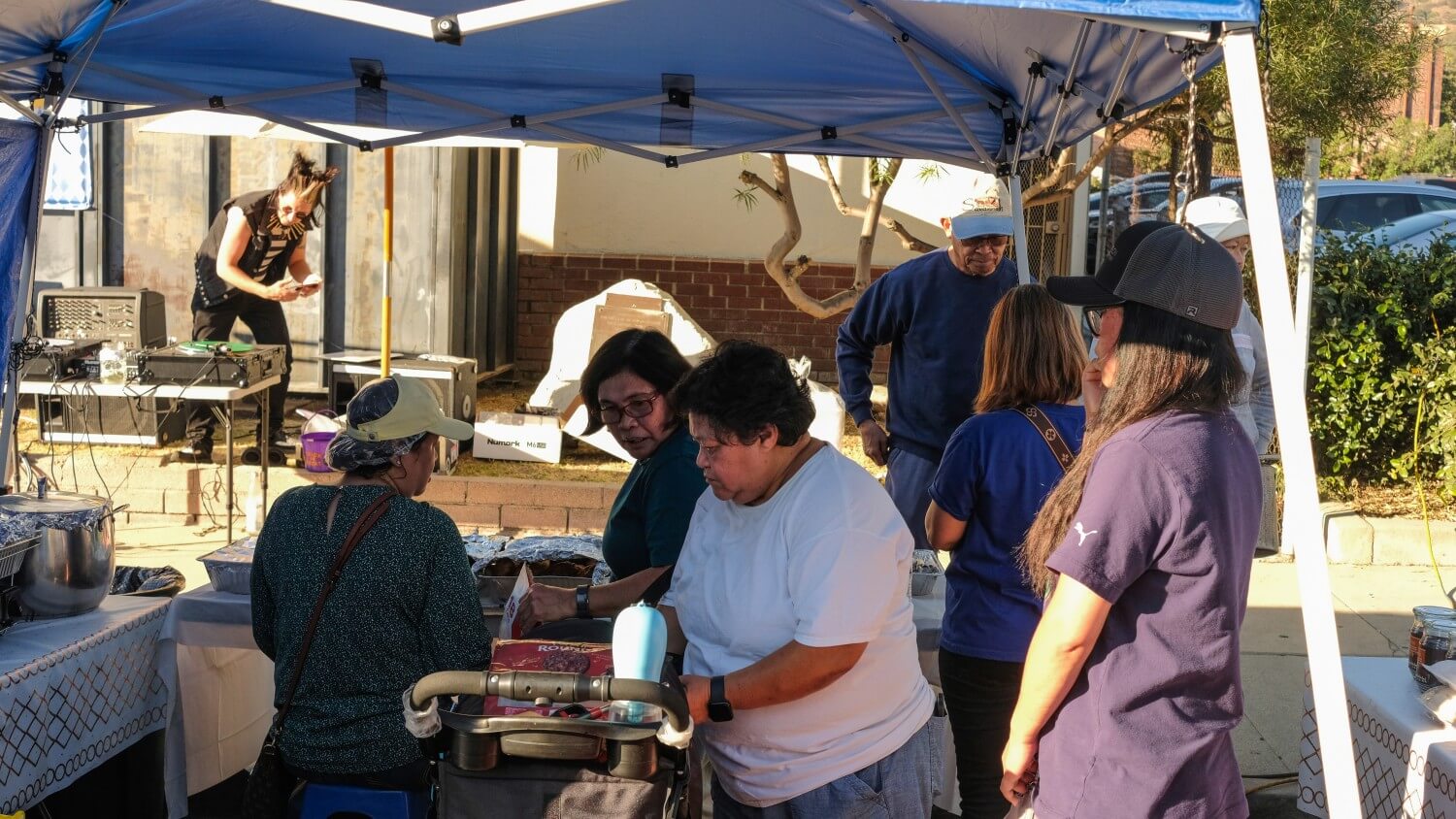
The Eagle Rock Flea Market’s Octoberfest featured local vendors and musicians who wanted to give back to their community, according to event coordinator Denise Lorenz. Lorenz said that she and Michelle Fierro organized the Oct. 25 festival alongside Brian Maneja, who represented American Legion, a veteran’s association that sponsored the event.
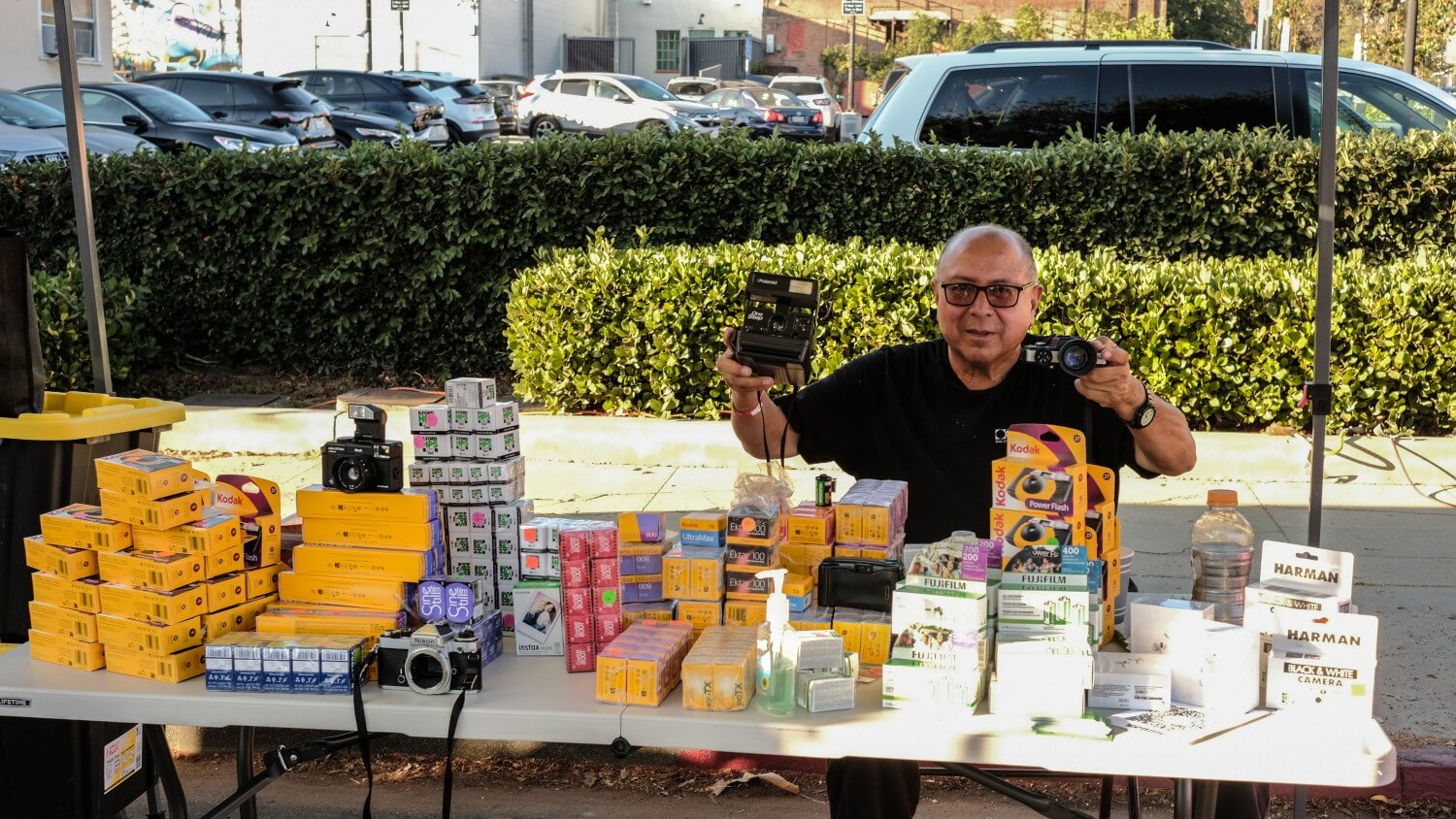
From vintage clothes and repurposed wood to cameras and film, each booth sold various items. George Hurtado, a vendor who said he has been selling film since 1986, displayed a booth with Canon film, Nikon film and disposable cameras.
George Hurtado at City Vintage’s photo stand at the Eagle Rock Flea Market in Los Angeles, CA. Oct. 25, 2024. Marty Valdez/The Occidental
John Minor, a vendor at the market, displayed a variety of records at his booth. The records included almost all genres of music, except for classical.
“I’ve always collected and sold records as a hobby, since I was a child,” Minor said.
Fierro said that the Eagle Rock Historical Society and Eagle Rock Branch Library had free booths at the market. She said that she is aiming to foster connections between the flea market and other organizations in the area.
“There are so many people in our midst that we feel like we’re just trying to engage with a little bit more, and that’s kind of been exciting for me,” Fierro said.
A stand with people at the Eagle Rock Flea Market in Los Angeles, CA. Oct. 25, 2024. Marty Valdez/The Occidental
In addition to vending booths, the market hosted a variety of musical artists who performed throughout the event. One of the featured musicians at the event was Richard Coal, a DJ and multi-instrumentalist from Los Feliz. Coal said that Fierro reached out to him because of his unique, post-punk blend of music that complemented the Oktoberfest and Halloween themes of the event.
“I’ve got pretty eclectic taste, and Michelle has seen me DJ several times over the years. So she knew that I had a lot of Halloween-themed records,” Coal said.
Coal said that he has a variety of musical experience, formerly playing in a band called 13 Sky and running his own production company in LA called Open Up And Bleed.
“We don’t stick with just one genre of music. We’ve done stuff with post-punk artists, goth artists, experimental punk,” Coal said.
Coal said that his wife Laura London, a professional photographer, also had her own booth at the market selling vintage clothes.
“[I DJed] for two hours, but [I also helped] my wife vend,” Coal said. “And [I looked] around. I always have my eyes out, looking for cool stuff.”
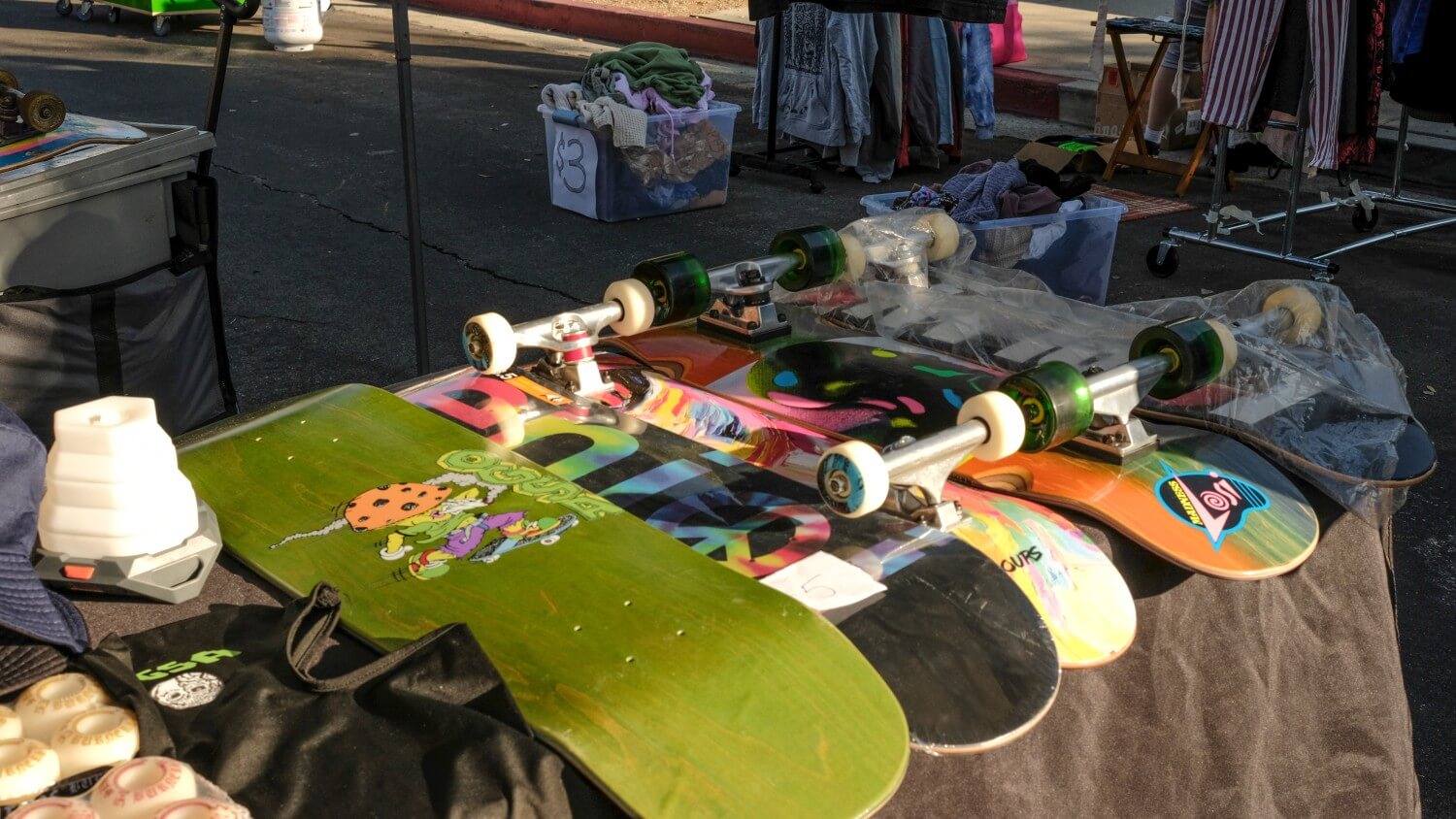
Old Geezer Skate Association (OGSA) skate shop table at the Eagle Rock Flea Market in Los Angeles, CA. Oct. 25, 2024. Marty Valdez/The Occidental
Fierro said that the market had a family-friendly atmosphere and that it was important to give young adults in particular an opportunity to grow their own businesses.
“We had someone as young as nine and her sisters come,” Fierro said. “They’ve been consistent.”
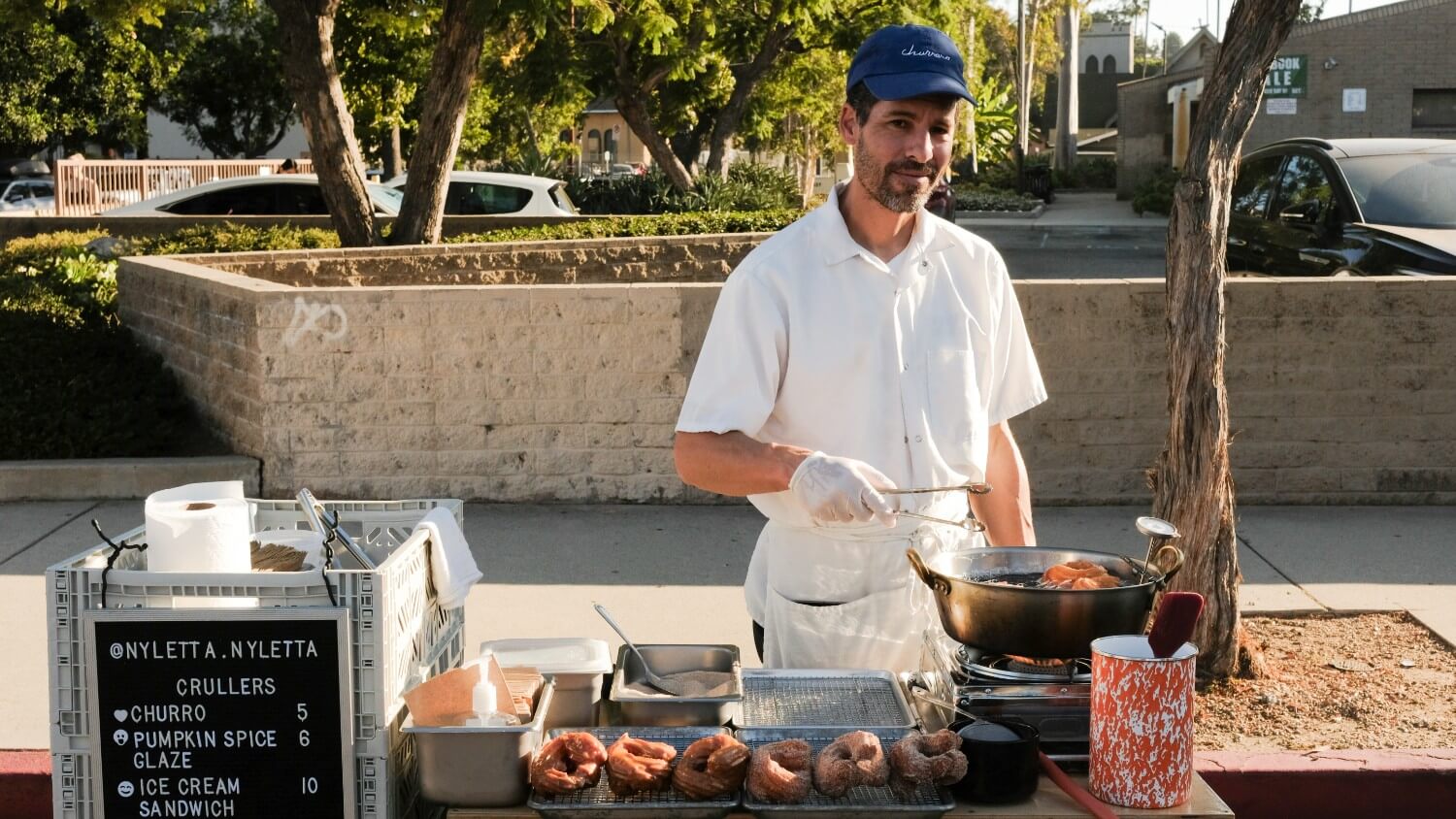
Glenn Robinson at the Nyletta table at the Eagle Rock Flea Market in Los Angeles, CA. Oct. 25, 2024. Marty Valdez/The Occidental
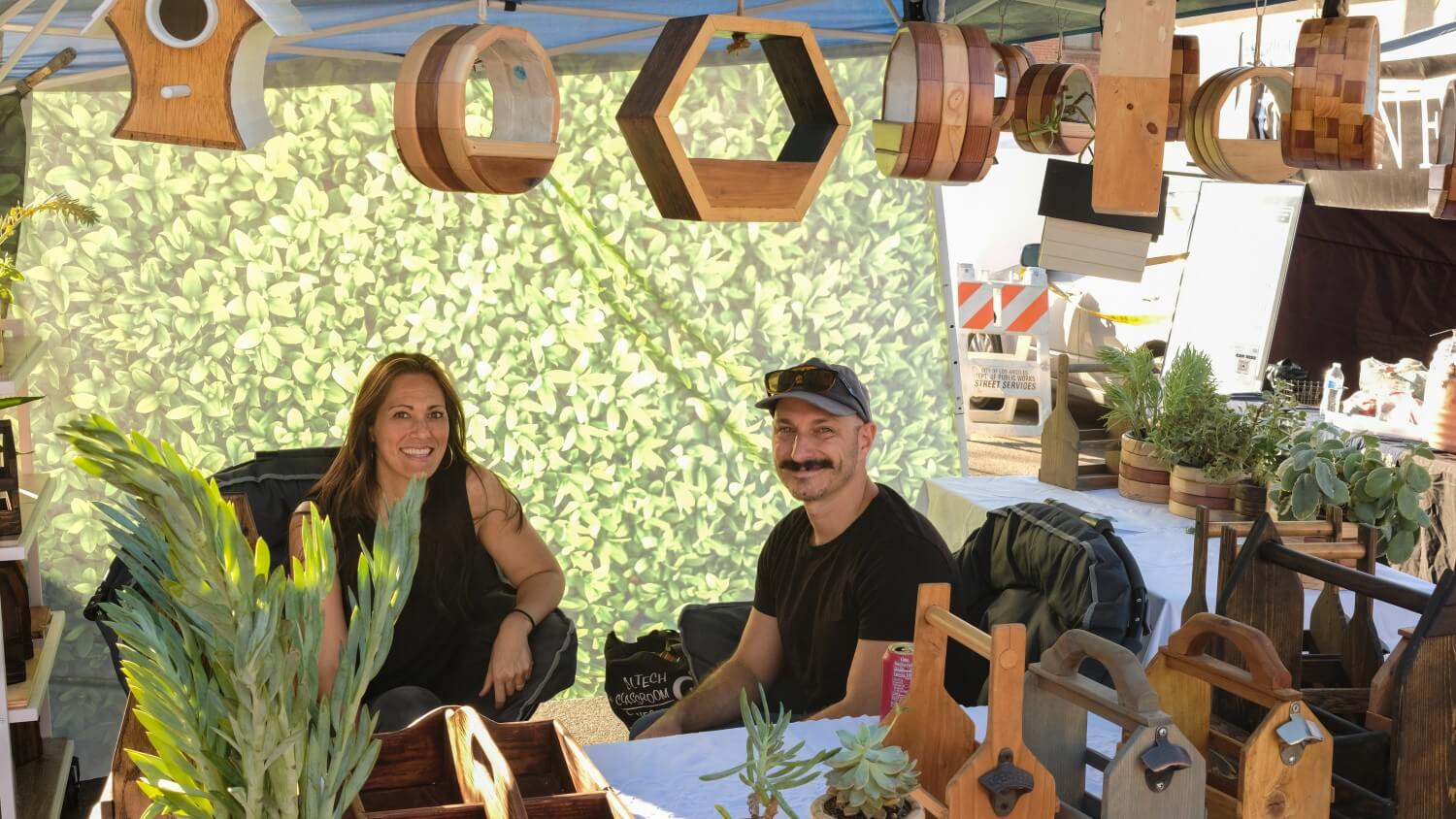
Vendors Jana Orozco and Tony Orozco said they sold succulents grown from their own yard and showcased wooden bird cages hanging from a tent in the middle of the market. Jana Orozco said the cages were made from completely repurposed materials.
“It’s reclaimed wood from Los Angeles, wood [Tony] found on the street,” Jana Orozco said.
Tony and Jana Orozco at the Orozco Wood Work table at the Eagle Rock Flea Market in Los Angeles, CA. Oct. 25, 2024. Marty Valdez/The Occidental
Although both have more than 20 years of vending experience, Maneja said he and Lorenz were unfamiliar with the responsibilities of organizing an entire event until stepping into leadership positions at the flea market.
“It was a challenge, and it’s a learning curve for all of us […] we made a lot of mistakes, but then remedied them,” Lorenz said. “That’s why we’re able to now move forward.”
According to Lorenz, the event and the market as a whole is designed to create a space for people who have lived in the area for years.
“There’s nothing in Eagle Rock for people to do like this,” Lorenz said. “We’re trying to give something back to the community.”
As fall settles in, local bookstores near Occidental College reflect seasonal changes in the community’s relationship with books.
Front of North Figueroa Bookshop in Los Angeles, CA. Oct. 24, 2024. Aung Myat Htet/The Occidental
Horror and literary winters at the North Figueroa Bookshop
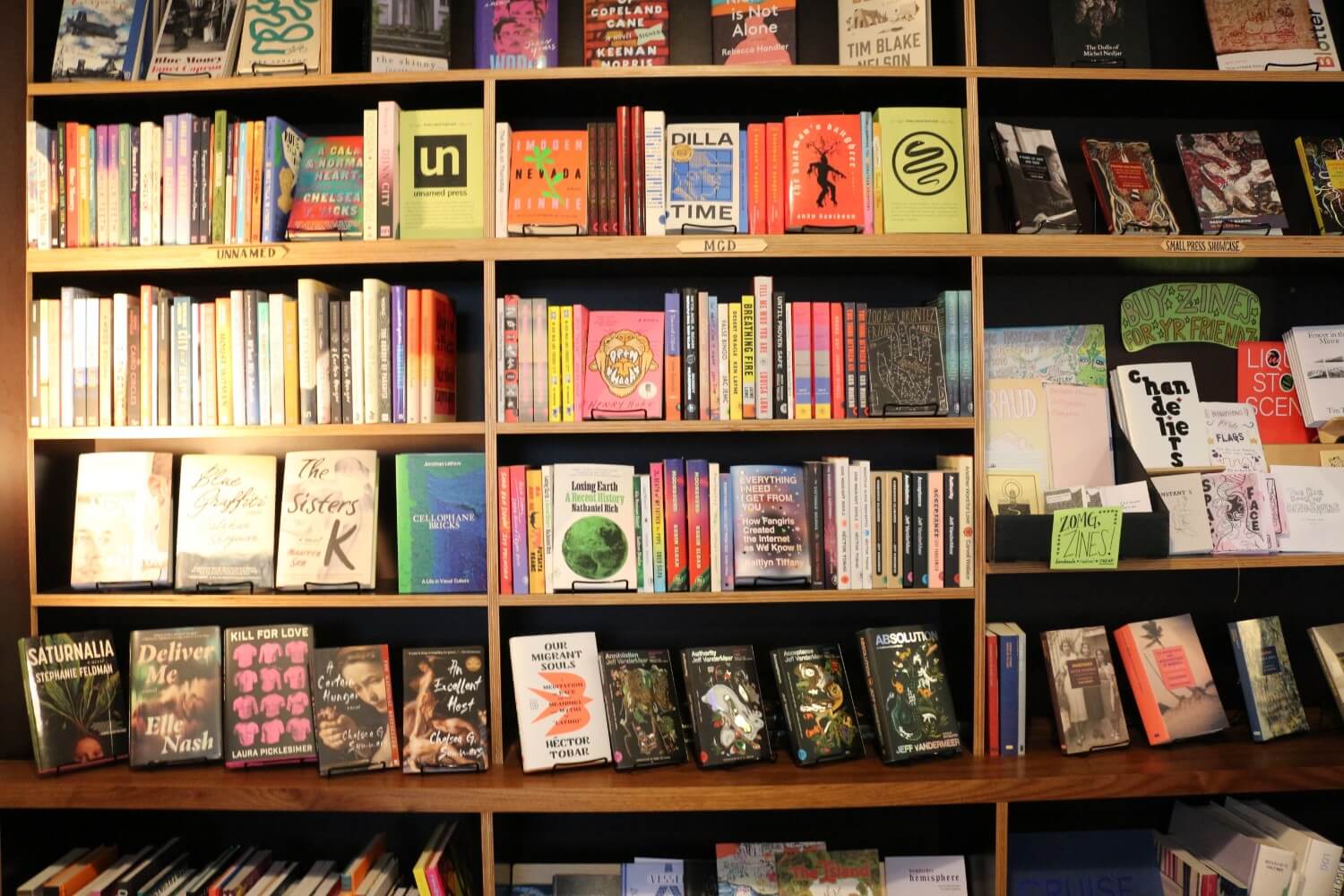
North Figueroa Bookshop is catering to an uptick in interest in horror this Halloween, shop manager Amadeus Fuzz said. According to Fuzz, their publisher Unnamed Press is embracing contemporary works, from pregnancy body horror to sorority slashers. Fuzz said that among these titles stands “A Certain Hunger” by Chelsea G. Summers.
“It’s about a food writer who’s a cannibal,” Fuzz said. “She seduces people to bring home to eat.”
Fuzz said that, in search of a winter experience amidst California’s ever-warming temperatures, he has turned to more melancholic novels.
“I like reading really sad, cozy stuff in the winter,” he said. “Our summers are stretching, and a book can make me feel much colder than the actual weather.”
Interior of North Figueroa Bookshop in Los Angeles, CA. Oct. 24, 2024. Aung Myat Htet/The Occidental
Fuzz said his pick is “Under The Sign of The Labyrinth” by Christina Tudor-Sideri. According to Fuzz, the book follows a woman living in a Romanian forest that previously housed a mental hospital — and she can see the ghosts of the patients. Fuzz said he thinks the writer connects the physical and spiritual well by exploring her own psyche and consciousness.
“When we’re hurt, it impedes our thought process,” he said. “[The author] talks about how throbbing is something mental. You don’t need to touch a wound to feel it throbbing in pain. Our mind is constantly distracted by this wound.”
Front of Read Books in Los Angeles, CA. Oct. 24, 2024. Aung Myat Htet/The Occidental
The election season at Read Books
Jeremy Kaplan, who co-owns Read Books on Eagle Rock Blvd. with his partner Debbie Kaplan, said people had gravitated towards heavier reading, like dystopian novels, after the 2016 election.
“Everyone was so afraid of what was going to happen after Trump became president, so we started getting more people who wanted to read ‘1984’, for example,” Jeremy Kaplan said. “I pushed them towards ‘Brave New World,’ because I thought it was more appropriate.”
Interior of Read Books in Los Angeles, CA. Oct. 24, 2024. Aung Myat Htet/The Occidental
Debbie Kaplan said she noticed distinct shifts in reading preferences during this election season.
“Something I have noticed having to do with this season in particular is lately people have said, ‘I want light reading because the election [has] me so stressed out,’” Debbie Kaplan said. “I’ve recommended Agatha Christie a couple of times.”
Jeremy Kaplan said that because customers are overwhelmed, they typically don’t offer political selections during voting season.
“Their heads are exploding,” Jeremy Kaplan said. “They tend to come in more and say, ‘Give me something where I don’t have to think.’”
Front of The Pop-Hop in Los Angeles, CA. Oct. 24, 2024. Aung Myat Htet/The Occidental
Respite and community at The Pop-Hop Books & Print
In a gift-giving season at The Pop-Hop co-op, customers will find themselves in an environment especially suitable for browsing, according to co-owner Adriana Yogovich.
“It’s kind of part of our magic. We’re not like a typical bookstore where you just go in like, ‘Do you have this book?’” Yogovich said. “Probably not, but we might have something better, or more special.”
Yogovich said this month, Pop-Hop has handmade curios that are spoopy — silly versions of spooky subject matter — as well as photobooks from local photographers and a whole shelf of local poetry.
“I like a spooky theme, or sort of dark gothic, for poetry,” Yogovich said.
Interior of The Pop-Hop in Los Angeles, CA. Oct. 24, 2024. Aung Myat Htet/The Occidental
Noah Smith, an illustrator and regular at Pop-Hop, said that his reading choices flow with the calendar year and the demands of his life.
“Usually in the beginning of the year, I’m thinking about how I want to grow and pivot, change, evolve. So, I read more self-help and uplifting life-lesson-type content,” Smith said. “Then I get a little bit more romantic, maybe around spring and summer, so I’ll read my fiction around those times.”
In the fall, when his illustrations are high in demand, Smith said he either seeks calming content or takes a break from reading altogether.
“I don’t read that many [books] right now because October, August and September are my busiest months,” Smith said. “That’s when audiobooks come in handy.”
Co-owner Kenzo Martinez said that beyond providing books for customers, Pop-Hop is a space for artists to collaborate through selling or swapping zines.
“People find their community that way,” Martinez said. “One of the really beautiful things about our store is people keep making connections to each other here.”
Contact Val Nguyen at vnguyen4@oxy.edu and Yanori Ferguson at yferguson@oxy.edu