Home Blog Page 55

Five protesters subject to conduct proceedings for Rage Week demonstrations

At least five Occidental students who participated in Occidental Students for Justice in Palestine (Oxy SJP) and Occidental Jewish Voice for Peace’s (Oxy JVP) Rage Week are now subject to student conduct proceedings, according to Tobias Lodish (sophomore), the media spokesperson for the protests.

The college administration’s response to the Oct. 7 protest outside of Swan Hall, where a Board of Trustees meeting was taking place, was a marked difference from their days-long negotiations with student protesters last spring. Swan Hall was on lockdown for the duration of the Trustees’ meeting.

Casey Scott (sophomore), a participant in Rage Week, said that demonstrators have remained steadfast.

“There’s more important moral standings at large than you getting a conduct violation from Occidental College,” Scott said. “There’s a genocide happening.”

According to Occidental’s protest policy — officially known as the Right to Dissent and Demonstration Policy — federal law allows the college to limit the time, place and manner of any form of dissent and/or protest. Among other prohibitions, Occidental’s protest policy was changed before the start of this academic year, banning the erection of semi-permanent structures, protests inside buildings and protests between midnight and 6 a.m.

A scholar of social movements at the University of California, Irvine, Sociology Professor David S. Meyer said that Pomona College, where 20 students occupying its president’s office in April were arrested, is an interesting comparison to Occidental. Students occupying Occidental’s Arthur G. Coons Administrative Center last November were not subject to conduct proceedings. Meyer said that he does not know of one university that did not issue new rules this fall to prevent the development of encampments.

“Free Palestine” sign on the Academic Quad at Occidental College in Los Angeles, CA. Oct. 11, 2024. James Miller/The Occidental

According to Louis M. Brown Family Professor in Literature in English Warren Montag, treating protesters as threats, as they were outside of Swan Hall Oct. 7, is a departure from the college’s attitude towards demonstrations.

“It’s certainly a departure from the traditions of Oxy,” Montag said. “And I understand that there are people out there who don’t care about, or don’t like, the Oxy traditions.”

When asked if the prohibition on protests between midnight and 6 a.m. is a first step towards prohibiting free speech on campus, President Tom Stritikus said no.

“Students have a broad range of things that they can do to exhibit their opinions,” Stritikus said.

Montag said the protest policy creates precedents for curbing free speech.

“It’s a very harmful development for higher education. You’re basically telling students not to express their views on these things,” Montag said. “It’s extremely demoralizing, and it’s extremely anti-intellectual.”

Meyer said there is nothing magical about encampments as a protest strategy.

“Once you get used to it, it’s not disruptive anymore. The first time you walk by a set of tents on your way to class, your curiosity’s piqued and you may talk to somebody. The thirtieth time, well, maybe it’s not so interesting anymore,” Meyer said. “And that’s always a challenge for protest movements, because they’re constantly looking for places they can escalate without alienating their base or inviting repression. But you can’t just do the same thing.”

Stritikus said he heard from members of the broader Occidental community who thought that the college should not have allowed protests on Oct. 7.

“Our protest policy is neutral of time, space and content. And our following that policy is neutral of time, space and content,” Stritikus said.

According to Meyer, the litmus test for a reasonable time, place or manner restriction is if it is applied equally to all demonstrators, regardless of their message.

“In real life, we know that the encampments are what spurred this new wave of restrictions. So it’s understandable that students who are protesting against the war think that it’s directed against them,” Meyer said. “So, it doesn’t feel so content-neutral.”

Montag said the changes to the protest policy are part of an authoritarian approach to politics.

“Now, it’s almost taken for granted that if you don’t approve of their speech, you should just go out and try to stop them,” Montag said.

In addition to establishing the President’s Advisory Group on Community and Dialogue, Stritikus said he will continue to meet with different student groups, such as SJP, JVP and Hillel, to create spaces for dialogue on campus.

According to Stritikus, the week of Oct. 7 was challenging and multifaceted.

“There were students who felt very connected to this issue, and there were students who, in some ways, weren’t,” Stritikus said.
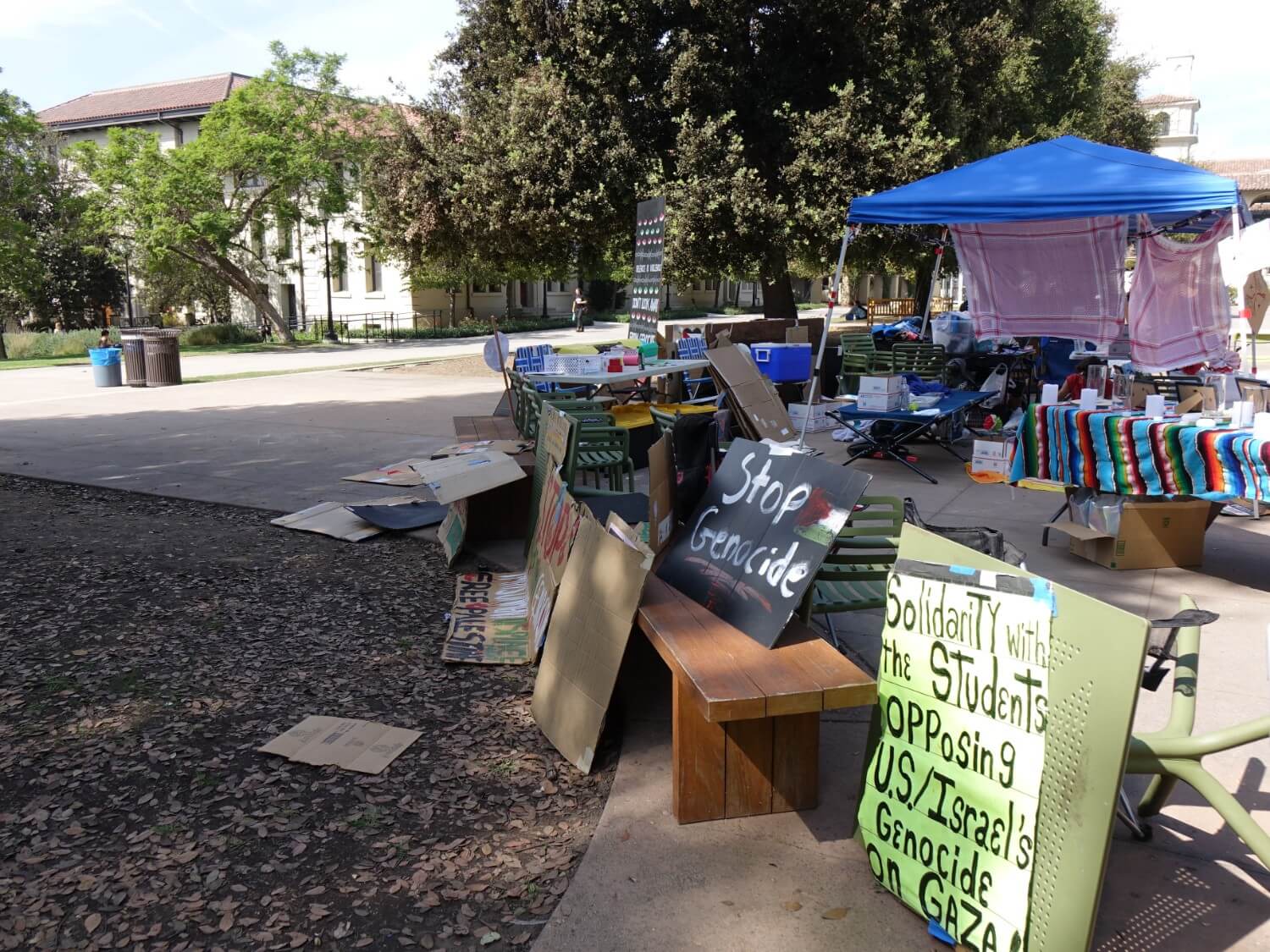
Encampment on the Academic Quad at Occidental College in Los Angeles, CA. Oct. 11, 2024. James Miller/The Occidental

Montag said that California’s Leonard Law, which extends free speech protections to private college campuses in California, is vague enough that there is quite a bit of room for interpretation.

“For attorneys, the question is, ‘Is there enough leeway that we could make a case for repressing this movement?’” Montag said. “The spirit of the law is to allow people to express themselves unless they’re engaged in violence or destruction.”

Meyer said he thought that President Emeritus Harry Elam was masterful in terms of engaging with the protesters and taking their concerns seriously.

“From what I saw, and I’m sure I didn’t see everything, he was really separating the conduct from the concerns. And he treated the students […] as serious, thoughtful people, and he took what they cared about seriously. It wasn’t just the event itself,” Meyer said. “And I think generally that’s a pretty good strategy, I was surprised more presidents didn’t do it.”

Faculty Council President John McCormack said via email that about 10 faculty informed him that they had trouble accessing their own offices in Swan Hall, or that students had trouble accessing professors’ offices, around the time of the protest.

“Communication with faculty is key as our community attempts to balance protections for speech and protest with policies that are meant to ensure a welcoming and productive learning environment for all,” McCormack said via email.

Contact James Miller at jmiller4@oxy.edu

Loading

‘The sky’s the limit’: Occidental College celebrates inauguration of John Branca Institute for Music

Occidental College celebrated the establishment of its newest program with a combined concert featuring a capella, Jazz Ensemble, Glee Club, Symphony Orchestra and a faculty ensemble Oct. 18. The John Branca Institute for Music was first announced in June after partner and head of the music department at Ziffren Brittenham LLP John Branca ’72 gifted the school with $5 million.

The gift, coupled with a recent half-million-dollar donation from the Mike Curb Foundation, will provide the school with improved music production facilities, a series of guest speakers from the music industry, enhanced contemporary music and music business courses and transfer pathways for Los Angeles City College (LACC) students to study at the program.

Associate Professor of Music and Inaugural Director of the John Branca Institute David Kasunic said the music department used to be very different when beginning his professorship at Occidental and that the program had previously failed to connect students to the local music scene.

“I came here, and I saw that the music curriculum in Los Angeles looks like any music curriculum,” Kasunic said. “It didn’t reflect what I increasingly found students were coming to Oxy to want to study.”

Kasunic said that since becoming chair of the music department in 2014, he sought to redefine the program and focus its efforts on the popular music industry and music business, despite his background as a classical music scholar. The program has since been named a “Top Music Business School” for four years by Billboard Magazine, most recently in 2023. It is the only liberal arts college among a slew of graduate programs.

Branca said this happened to catch his attention while scrolling through the news.

“It opened my eyes, because I hadn’t realized [the school] had built such a good music department,” Branca said. “I wanted to help Occidental get the recognition it deserves and also give back to the school.”

Branca said he wanted to establish an institute dedicated solely to the study of popular music and the music industry at the undergraduate level that could couple with the liberal arts experience at Occidental.

“At Occidental you [study in] different departments, whether it’s economics, English, history,” Branca said. “You’re able to bring a different level of knowledge to the study of music. I think that’s important.”

Occidental students and staff performing on stage at Thorne Hall at Occidental College in Los Angeles, CA. Oct. 18, 2024. Evan Lirette/The Occidental

Kasunic, who emceed the inauguration event, said he made sure the celebration was a thank you to all the donors that contributed to the music department, not just Branca.

“I never take philanthropy lightly,” Kasunic said. “It’s a big commitment for someone to give a lot of money like that to an enterprise.”

According to Kasunic, the program will be built around three pillars as a structure for Branca’s vision. He said the first pillar will focus on educational partnerships, which will allow the school to create articulation agreements with community colleges, most notably with LACC.

“It allows us to specify a pathway of courses that [transfer students] would take while at [LACC] that would pave the way for their transferring here as a junior,” Kasunic said. “Because we’ll have an articulation agreement, this will facilitate that happening so that a transfer student then will be able to receive the full complement of [a] liberal arts education, [something that] all Oxy students have.”

Kasunic said he recognized the obscurity of a liberal arts school to most transfer students, noting that students often only recognize several local universities. However, he said he believes the transfer pathway will remove uncertainty and help more students discover the liberal arts experience.

“How we get students to consider what, for me, was a transformative educational experience is by creating these avenues of access,” Kasunic said.

According to Kasunic, the second pillar will focus on industry partnerships. The Mike Curb Foundation’s recent gift will provide the new institute with several speaker series, including workshops and masterclasses with experts in the music industry. Kasunic said it will also enrich internship opportunities.

“The aspiration there is that we will then house all music internships within the music department,” Kasunic said. “We’re hoping that the institute will serve as a way of convening people, current students, alumni and members of the music industry.”

Kasunic said the final pillar will bring guest artists to the classroom through residencies. According to Kasunic, the residences will provide Occidental students with direct connections to professionals in the field.

“[What we are] trying to do is tighten the connections of the college and the music department to Los Angeles, and make permanent our commitment to the study of popular music in the music industry,” Kasunic said.

Occidental students and staff performing on stage at Thorne Hall at Occidental College in Los Angeles, CA. Oct. 18, 2024. Evan Lirette/The Occidental

Assistant Professor of Music Ramona Gonzalez, who teaches Introduction to Music Industry, said she sees great potential with the heightened budget for the department as a whole, especially as her class aims to cover a vast array of topics in a limited curriculum.

“We’ll be able to have a wider curriculum of popular music,” Gonzalez said. “The sky’s the limit with this new institute, and it’s going to do much more than just what one class that I teach can do.”

Contact Hugh Baldwin at hbaldwin@oxy.edu

Loading

New Dean of Students Vivian Garay Santiago supports students through college experience

Occidental’s former Assistant Vice President of Student Affairs Vivian Garay Santiago stepped into the role of Interim Dean of Students for the 2024–2025 academic year, following the departure of Dean of Students Rob Flot. According to Vice President and Chief Operating Officer Amos Himmelstein, when President Emeritus Harry Elam stepped down in June 2024, Elam named Santiago as the next Interim Dean.

Santiago said she sees her new position as an opportunity to be someone students can connect to and build personal relationships with, so that when a student is going through academic stress, they have someone in their corner.

Being the Interim Dean also means working with the Dean of Students Office, according to Santiago. She said she and the Dean of Students Office help students navigate personal issues that affect their academic life, such as mental health issues and struggles with classes — if a student were to miss a deadline due to an emergency, she can notify their professors on their behalf.

Santiago said she does not want students to feel ashamed for asking for help. She said that while the Dean of Students office is incapable of solving every problem that might be impacting students, it is a safe space where students can go for support.

“I worry sometimes that we tend to hide and we don’t want to feel vulnerable,” Santiago said. “We don’t want to acknowledge that things are hard, but things are hard, and it’s okay.”

Dean of Students Vivian Santiago speaking to a student in her office in Berkus Hall at Occidental College in Los Angeles, CA. Oct. 7, 2024. Quincy Howard/The Occidental

Santiago said she encourages students to reach out for support and that it does not make them weak, nor does it mean they will become dependent on support forever. Her own past experiences, she said, have helped inform the culture she wants to uphold as Interim Dean.

“When I was in my 20s, I thought struggle was shameful and did things on my own and that asking for help was weak,” Santiago said. “Find a space where you can be a little vulnerable and hopefully get to the next step.”

Survivor Advocate and Program Coordinator of Project SAFE Stephani Candelaria said Santiago is very dedicated to her role in helping students.

“[Santiago] has always been really great about keeping her office door open for students, even after her promotion to this new role,” Candelaria said. “She’s always been one to host open spaces for students or stop on the quad and talk to a student if someone sees her.”

Santiago said that while challenges are inevitable and can become too overwhelming, it is important that students know the Dean of Students office is there to help.

“We don’t have a magical wand,” Santiago said. “But our hope [is] to have an empathetic person that’s going to be like, ‘Okay, let’s [do this] together [and] get you connected to appropriate resources and support.'”

Santiago said that people want to live exciting lives, do great things and embrace progress — but they need challenge to achieve those aspects. And sometimes, that challenge can be overpowering, she said.

“Know that you’re going to struggle, and if you’re feeling a little bit overwhelmed by that, it’s okay to reach out and ask for help — and there’s lots of places to do that,” Santiago said. “If you’re struggling more deeply, that’s where you come in [to my office].”

Contact Weiran Li and Michelle Teh at vli2@oxy.edu and teh@oxy.edu

Loading

Student census suggests student population is returning to pre-pandemic numbers

Occidental College completed its annual census Sept. 23, which is required of all colleges nationwide, and collects data on student enrollment, according to Registrar James Herr. The data is then sent to the federal government and organizations that report on college student body statistics.

“We freeze off information about how many students we have, how many are full time [and] part time,” Herr said. “We not only report out to different groups, including the federal government, but it’s a way of publishing our statistics.”

According to Herr, the census is important because the statistics help outside organizations report on the college and prospective students learn about Occidental.

“National publications are going to say, ‘Well, we want to be able to compare institutions size-wise,'” Herr said. “They might go to the federal website where they can see the statistics. These are public information where folks can go and take a look, and they should match our fact book.”

Herr also said that the census reports on demographic data, such as students’ race, gender and financial aid received.

“If you’re a prospective student, you can go to a third party source and see what the size of the student body is, the demographic breakdown, to get a sense of, ‘Is this a place where I might feel comfortable?’” Herr said.

The census date is the last day that students may withdraw from enrollment at the college for a 60 percent refund.

“We want to get everybody cleared and everybody situated beforehand,” Herr said. “We want to try to get as many of the additions and the subtractions to student schedules by the census so that we can report accurately about what our student body looks like.”

Herr said that students do not typically drop out before the census date, except for extenuating circumstances.

“We usually have anywhere from zero to three [or] four,” Herr said. “It could be a medical situation. It could be that they arrive on campus and realize this isn’t the place they thought it was going to be. Those are very rare, but can happen.”

Registrar James Herr at the Office of the Registrar at Occidental College in Los Angeles, CA. Oct. 17, 2024. Aung Myat Htet/The Occidental

In addition to the student population, the census also includes calculations for retention and graduation rates. According to Herr, these calculations are made by comparing the number of students who remain at Occidental and who graduate each year to the number of students in the incoming class.

“How many [students] return for their sophomore year, how many graduated in four years, how many graduated in six years?” Herr said. “It’s all based on who were first-year students as of the end of census day.”

According to Herr, there was a drop in student population at the beginning of the pandemic, as the 2020–2021 school year was remote. As time has passed, the population is expanding to how it was previously, with approximately 2,000 students per year.

“We are inching our way back to normalcy, and I would say at this point, we’re not quite there yet, but we’re pretty close,” Herr said. “Fall 2019, we had 2,081 [students]. The remote year went down to 1,839.”

Now, in Fall 2024, Occidental has a population of 1,993 students. Associate Dean for Student Academic Affairs Carolyn Brighouse said that the pandemic posed a challenge to student engagement, with classes being conducted remotely and many students taking time off until classes resumed in-person. She said she aims to make students feel connected with the faculty at the college, even while studying off-campus abroad or during remote learning .

“We had faculty and staff at the institution connect with incoming students as a mentor to help answer questions,” Brighouse said. “We had Calling All Tigers, where faculty and staff wrote each individual student a postcard.”

Herr said the faculty and staff put great effort into connecting with students during the pandemic.

“[Faculty] were reaching out to students that had taken time off because they didn’t feel like remote learning was their thing,” Herr said. “[They] kept in contact with [students] to let them know that we’re still here to answer questions or help them get back on track.”

Herr said the faculty engagement likely contributed to the high rate of students who returned to the college after not attending during the 2020–2021 school year, which was over 90 percent.

“It was a real remarkable achievement,” Herr said. “A lot of different folks that typically don’t have anything to do with student services, they wanted to help out.”

Additionally, Brighouse said she often works with transfer students, who make up about 8 percent of student enrollment and whose needs differ from those of first-year students. According to Brighouse, she started a program for transfer students, Transfer Teas. She said it is a biweekly program where students can meet with Brighouse and other staff in the Swan Lounge for assistance.

“Especially at the beginning, advising and registration can be really difficult because the course work [from other colleges] doesn’t match our coursework,” Brighouse said.

Associate Dean for Student Academic Affairs Carolyn Brighouse at Occidental College in Los Angeles, CA. Oct. 17, 2024. Aung Myat Htet/The Occidental

Lucy Roberts (junior), a studio art major who transferred to Occidental before the fall of her sophomore year, said she enjoyed the Transfer Teas and that another college initiative benefitting transfer students is the transfer housing.

“We all lived on a floor in Norris, and it was really nice to have that,” Roberts said. “It gets us together and helps us find a sense of community.”

Herr said that in the future, the college is aiming to maintain its rate of approximately 2,000 students per year and to continue improving the retention rate, which is already going up.

“We’re getting more and more students finishing their degree,” Herr said. “We want all of our students to graduate.”

Contact Diana Trutia at trutia@oxy.edu

Noah Kim contributed to The Occidental’s reporting.

Loading

Students and faculty weigh in on Occidental Library Fat Bear Week

For its third consecutive year, the Occidental Library has hosted Fat Bear Week inspired by the National Park Service Fat Bear Week, which highlights the bears of Alaska’s Katmai National Park bulking up for hibernation. This year, 128 Grazer, an adult female known for her fearless nature, won in both the national and Occidental competitions.

Arts and Humanities Librarian Erin Sulla said she was inspired to host a competition at Occidental in 2022 as the college transitioned back to in-person learning. Sulla said she saw an opportunity to host a college-wide Fat Bear Week after seeing an empty spot in the library’s lobby and thinking that students would enjoy a campus Fat Bear Week because she personally enjoyed the national event.

“We have this corner and this TV and nothing is going on — what if we turned on the cams and had [a] competition?” Sulla said.

Sulla said that after approving her plan with the other staff, she put up a whiteboard with pictures of each bear and that students loved it. Sulla said this year, she was inspired to build on its initial success and upped the stakes with a ballot box competition where students would win prizes. Sulla said Fat Bear Week 2024 has been its most popular year.

“We really wanted to ramp it up because we heard murmurings that a lot of people liked it,” Sulla said. “We tried to promote it a bit more […] so it’s been successful!”

Fat Bear Week voting station in the Mary Norton Clapp Library at Occidental College in Los Angeles, CA. Oct. 7, 2024. Marty Valdez/The Occidental

According to Sulla, the fat bears win the competition by getting the highest number of votes. Sulla said that students are randomly selected from their votes in the ballot box to win stickers, water bottles and beanies. Arabella Estes (junior) said they were drawn into the competition by the prizes.

“I like free raffles and stuff,” Estes said. “I don’t have any objections to bears. I’d say I’m pro-bear. Nothing crazy there.”

Estes said they have won two years in a row, but their success remains a mystery even to themself. According to Estes, they randomly select the bear they vote for.

“Each time, I’ve only entered one time,” Estes said.

According to Sulla, besides fun prizes and the spirit of competition, Fat Bear Week provides a much-needed break during the stressful activities of the season. Sulla said the week falls amidst midterms and often right before a political election.

“It’s nice to get a break from a lot of things that are happening around the world and just be like, ‘Yay bears!’” Sulla said.

Sign with some of the tournament’s bear contestants in the Mary Norton Clapp Library at Occidental College in Los Angeles, CA. Oct. 7, 2024. Marty Valdez/The Occidental

Sulla said the competition also encourages students to learn about why bears are fat and why it is good for them. Professor of Biology Joseph Schultz said that seeing all of the fat bears in the competition is a good sign, because it means they have the necessary energy stored away for hibernation.

“Bears do a lot of what’s called beta-oxidation, where they break down fats so that they can use that energy to survive the long winters,” Schulz said.

According to Schulz, bears exert very low energy for a prolonged period of time and do not feed during hibernation. He said that in order to support that lifestyle, bears need to fatten up.

“It is especially important for females who are pregnant with cubs,” Schulz said. “When you are thinking about supporting your young, then you really want to be a fat bear.”

According to Sulla, being aware of bears and the importance of food sources are significant for conservation efforts. Sulla said that the Katmai Conservancy raises money for bears and has a large concentration of brown bears with one of the last great salmon runs on earth. Sulla said that this year, the library has promoted further learning by putting out bear-related books next to the bracket.

“There are many different angles for someone interested in the bears,” Sulla said. “Maybe you’re interested [in] conservation or endangered species, about climate change, about different ideas of science or different ideas about nature.”

Sulla said that Fat Bear Week is a great opportunity to have fun while getting a little more connected to nature.

“What I like about it is that it is open to everybody,” Sulla said. “I like to see it as a little celebration. For bears, fat is good, and it also makes us think of how fat is survival and fat is important. I like that message as well.”

Contact Ginny Tomlinson at gtomlinson@oxy.edu

Loading

Students of all ages “Leap Off the Page” in Eagle Rock visual arts class

“LEAP OFF THE PAGE! Be the Hero in Your Own Story,” held at Eagle Rock City Hall, is a free-admission visual arts class focused on photography, photo editing and creative writing. According to her Instagram, the class’ teacher Mary Cheung is an artist, creator, costume designer, inventor and design consultant. Cheung said that the goal of the class is for students to create one final mixed-media project by the end of the two-month long class, which began in September.

Cheung said she devised the class with the goal of bringing together fellow community members to reimagine classic stories and feel empowered by art.

“I thought it would be fun to have people create a character, have their own voice […] take a classic story and show how they see it,” Cheung said. “Not everyone is a Disney princess, white and blonde, so maybe they can reimagine it, or they will see themselves as Cinderella.”

Class instructor Mary Cheung outside Eagle Rock City Hall in Los Angeles, CA. Oct. 10, 2024. Evan Lirette/TheOccidental

According to Cheung, she sent flyers out to people she knew and posted others around the Eagle Rock community. Cheung said she was hoping to keep the class small and selected the first 12 students who registered and despite a growing waitlist. According to its Eventbrite page, the class is free and for anyone 18 to 75 years old.

Cheung said she sought funding from the LA Public Library initially and then found it with Eastside Arts Initiative Council (EAI). She said the EAI funds allowed her to obtain premium access to the photo editing software Picsart for each student.

Wendee Lee, a student in the class, said she is a voiceover professional, choreographer and singer who thought the class would be a good way to learn to use editing softwares that she could then apply to her professional work.

“I was really hoping to learn this software enough so that I could incorporate it into my own socials and personal artistic promotion,” Lee said.

Eagle Rock residents during a class at Eagle Rock City Hall in Los Angeles, CA. Oct. 10, 2024. Evan Lirette/TheOccidental

Lee said she worked using the Picsart software every day in class for her project where she is interpreting the story of The Wizard of Oz with a feminist lens.

“I am exploring a modern take on the days following Dorothy’s first experience in Oz,” Lee said. “The women are representing the phases of womanhood — Dorothy represents maidenhood, Glenda represents motherhood and the witch represents crone, or elderhood.”

Another student, Loriann Beck-Gilmore, said she is doing a portrait of a detective for her project. When not in Cheung’s class, she works as a program coordinator for the Robert L. Douglass Speech and Language Clinic at Cal State LA.

In Beck-Gilmore’s artwork, a female detective walks through a cloud of smoke that fills the frame. Beck-Gilmore said this smoke that veils and hides the detective is her second subject. According to Beck-Gilmore, students are working together to help each other learn how to use this editing software, with many of them teaching each other how to use their iPhone cameras.

Loriann Beck-Gilmore outside Eagle Rock City Hall in Los Angeles, CA. Oct. 10, 2024. Evan Lirette/TheOccidental

Aydee Valle-Amescua, a recently retired Student Support Service Person for the LA Unified School District, said she is an amateur photographer. She said she learned about the class after meeting Cheung in her Sunday tai chi class and that she signed up for the sense of community, as well as to try a new creative outlet beyond her watercolor painting.

Cheung said she recognizes how much work has been to put into the class and that she feels gratified by it because of the community the class has created.

“There’s this camaraderie,” she said. “If I’m busy with something, someone will jump in and help someone else. These are all the things I wanted: for people to connect, learn something, have a good time and discover a side of them, a creative side.”

The exhibit showcasing the 12 finished pieces will be open at Eagle Rock City Hall from Nov. 9 to Nov. 30.

Contact Grace Gonsalves at gonsalves@oxy.edu

Loading

Artist of the Week: @animalsofoxy Instagram creates smiles among students through pet photos and campus cat sightings

Those missing a beloved pet and chronic scrollers alike may come across a few recurring posts on their Instagram feeds featuring dogs, cats, chickens and even a praying mantis or two that can be found around the Occidental campus. The account featuring these posts is called @animalsofoxy, where they highlight the many animals that wander campus every single day. @animalsofoxy began their account last year, amassing almost 200 followers since then.

The face behind the page, however, wishes to remain anonymous in order to not sidetrack from the attention-seeking animals who make up the posts and, according to the account owner, would not appreciate the diverted attention.

“The account mainly includes dogs owned by off-campus community members, outdoor cats, students’ pets and Pierre lore,” @animalsofoxy said.

Enter Pierre, the campus’s most famous cat according to @animalsofoxy, who roams Occidental’s campus frequently.

“It’s mutually agreed by students on campus that his name is Pierre,” @animalsofoxy said. “But no one really knows who he belongs to.”

The account’s owner said that @animalsofoxy was originally a Pierre fan account, taking photos of the outdoor cat exclusively. However, they were unable to find the evasive cat consistently enough to feature only him. The owner of the account said that besides being huge fans of Pierre, they had another reason for starting the account.

“The account started mostly from me missing my dog at home and being homesick because of it,” @animalsofoxy said.

Courtesy of animalsofoxy

The account was soon expanded to include all animals in and around the Occidental campus rather than exclusively dogs, as the account owner was afraid of possible backlash due to the exclusion of favorite animals and pets on campus that were not dogs.

“Cats, dogs, I don’t only do dogs,” @animalsofoxy said. “I don’t want to start beef. This is a beef-less account.”

The account owner said that @animalsofoxy is a great way to help students who may be missing pets and animals while away at college by providing a little piece of home.

“I think [the account] makes people smile and also hypes up the animal,” @animalsofoxy said. “It also makes owners happy to see their animal on the account.”

The Instagram account has had an impact on students and faculty around campus, even helping inspire events such as Mondays with Bailey, according to Eric Robinson, staff therapist for the Emmons Wellness Center. From 2 p.m. to 3:30 p.m. every Monday, students can hang out with an eight-month-old puppy named Bailey in the Intercultural Community Center (ICC) backyard to destress. Robinson said he was also inspired to start Mondays with Bailey after seeing students interact with animals on campus.

Robinson, Bailey’s owner, said he has seen the effects of homesickness and missing pets in many students and has also heard of many students losing their pets while away at college. After seeing how people interacted with the different pets and animals on campus and seeing the effects of community accounts such as @animalsofoxy, he knew Mondays with Bailey was a good choice.

“As I’ve seen, it’s kind of hard to just walk past a cute dog. Stopping pulls them away from the drama of life,” Robinson said.

Like the @animalsofoxy account owner, Robinson said that animals provide connection and happiness between students.

“Animals create opportunities for connection,” Robinson said.

Connection has also been a huge reason for keeping @animalsofoxy running for a second year, the account owner said.

“The account is a great way to get to know the community and faculty and build relationships,” @animalsofoxy said.

Courtesy of animalsofoxy

The impact of the account is not only noticeable through the pets posted on the account but also through the owners of the featured animals. Revi was a dog recently featured on the account. Maggie Hill (first year), Revi’s owner, said she liked the idea of @animalsofoxy.

“If I didn’t have a dog, it would be a really nice way to see other dogs on campus,” Hill said.

Hill said she appreciated being asked to include Revi on the account and that she is glad Revi can contribute to keeping a happy campus environment while they are here.

“It was sweet. If other people see [Revi’s picture] and smile, that would be nice,” Hill said.

The owner of @animalsofoxy said they are thrilled to able to bring inspiration and so many smiles to the faces of Occidental students during the week. They recommend anyone currently homesick for their pets, whether cats, dogs, chickens or other animals, to walk around campus and in the greater Occidental community.

“Take advantage of Eagle Rock being such a good animal area,” @animalsofoxy said. “Seeing animals warms my day, and it makes me happy.”

Contact Addison Wieseler at wieseler@oxy.edu

Loading

Voters at CD-14 Candidate Forum voice their concerns

Incumbent City Councilmember Kevin de León and tenants rights attorney Ysabel Jurado participated in the CD-14 Candidate Forum to address questions residents had concerning community needs.

The event was rescheduled from Oct. 5 to Oct. 9 and provided both Spanish and English translations.

Attendees at the forum included residents primarily from the Boyle Heights neighborhood. The residents expressed concerns about affordable housing, safety and parking availability.

Antonio Garcia: 71 years old, Boyle Heights resident

Garcia said in Spanish that he immigrated to Boyle Heights — where he has been living for the past 51 years — and that he believes de León will win the race because of his greater political experience and wider platform.

“Jurado has never held public office, so she does not have the experience that Kevin de León has, and he knows how to direct resources to address community needs,” Garcia said in Spanish.

According to Garcia, he appreciates de León’s efforts to address homelessness and clean up trash in the neighborhood.

“Imagine how our neighborhoods would look like, they would be filled with trash,” Garcia said in Spanish. “There will always be trash because of the large number of people who reside in Boyle Heights.”

According to Garcia, these actions attest to de León’s commitment to serving his community.

Garcia said in Spanish that he disagrees with Jurado’s lack of support for law enforcement.

“Ms. Ysabel Jurado does not support the police, how is that possible knowing that if we do not have police officers, we will see an increase in crime? We need more police officers,” Garcia said in Spanish.

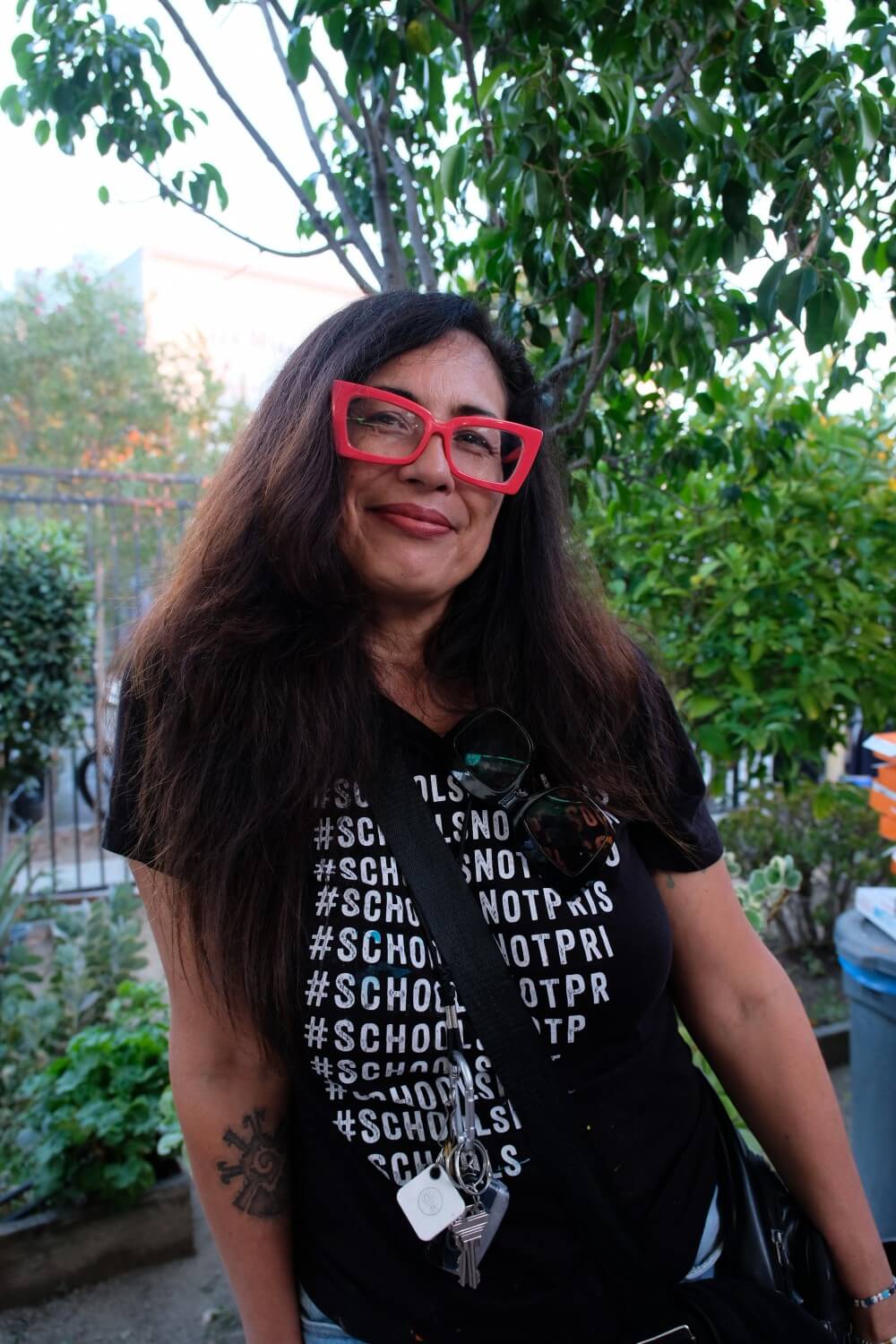
Liliflor Flores: 53 years old, artist and business owner, Boyle Heights resident

Liliflor Flores at the CD-14 candidate forum in Boyle Heights, CA. Oct. 9, 2024. Talia Goddard/The Occidental

Flores said she has been a resident of Boyle Heights since 1997, and that her concerns now are the same as they were in previous elections: gentrification and community violence.

“The building of fast developments in our city allows developers to build without certain protocols and they’re waiving a lot of things that used to have community input,” Flores said.

Flores said she believed that there has been no progress in the community for as long as she has lived in Boyle Heights. She said she would like to learn more about how the candidates will implement solutions to address community violence. This includes violence originating from homeless encampments and elsewhere, she said.

“We have violence against women who are being sexually harassed or even abducted at this point,” Flores said. “Here in Boyle Heights you also have drive-by shootings, our youth are dying in the streets and crime has gone up rapidly. That’s a big concern.”

Flores said she believed that increased community programming is key to youth empowerment.

“One big thing for me, being an artist, is art programming — and I’m not talking just doing art. I’m talking art, music, dance, theater and poetry as an outlet to get the youth off of the streets,” Flores said.

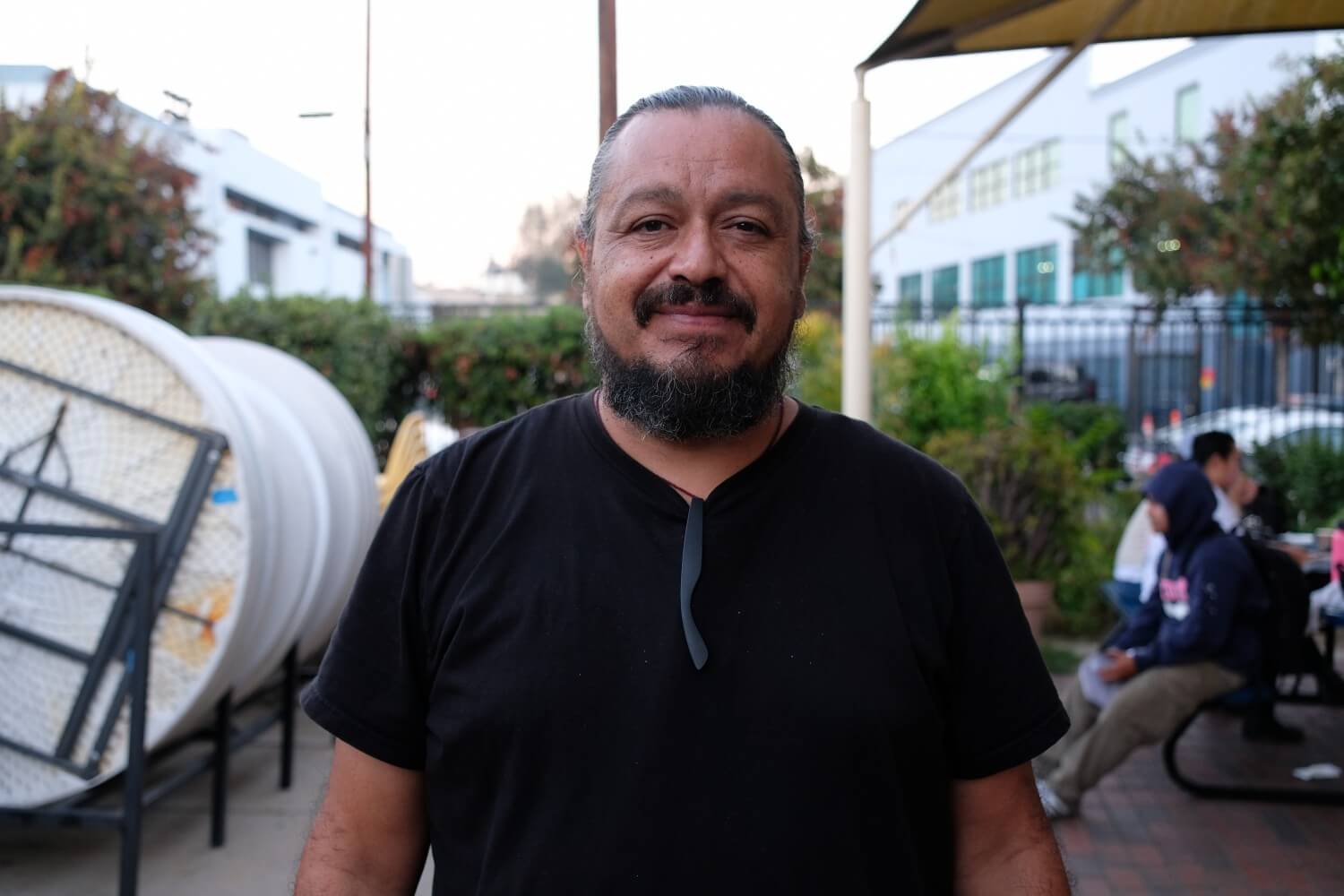
Omeatl Tonahtiuh: 45 years old, Boyle Heights resident

Omeatl Tonatuih at the CD-14 candidate forum in Boyle Heights, CA. Oct. 9, 2024. Talia Goddard/The Occidental

Tonahtiuh said he has been a resident of Boyle Heights for 35 years. He said his main concerns are basic road maintenance, air quality and family safety.

“The candidates are so focused on their political agenda and I haven’t heard a single one of them talk about family development,” Tonahtiuh said.

Tonahtiuh said he has not noted any significant progress under de León. He said he commends Jurado for being able to defend herself from de León, as well as calling him out on racist remarks. He said that although de León is a seasoned politician, he distrusts him because of his political ambitions.

“I don’t think he’s here because he wants to be, he’s here because he lost [the 2022 LA mayoral election]” Tonahtiuh said. “If the state were to offer him the Senate, he would go right back and just leave the community.”

De León was president pro tempore of the California State Senate from Oct. 2014 to March 2018.

Tonahtiuh said he hopes that candidates implement long-lasting change, such as planting more trees to alleviate bad air quality.

“I’d like to see 50,000 trees planted, so even though I’ll be long gone, future generations can enjoy clean air,” Tonahtiuh said.

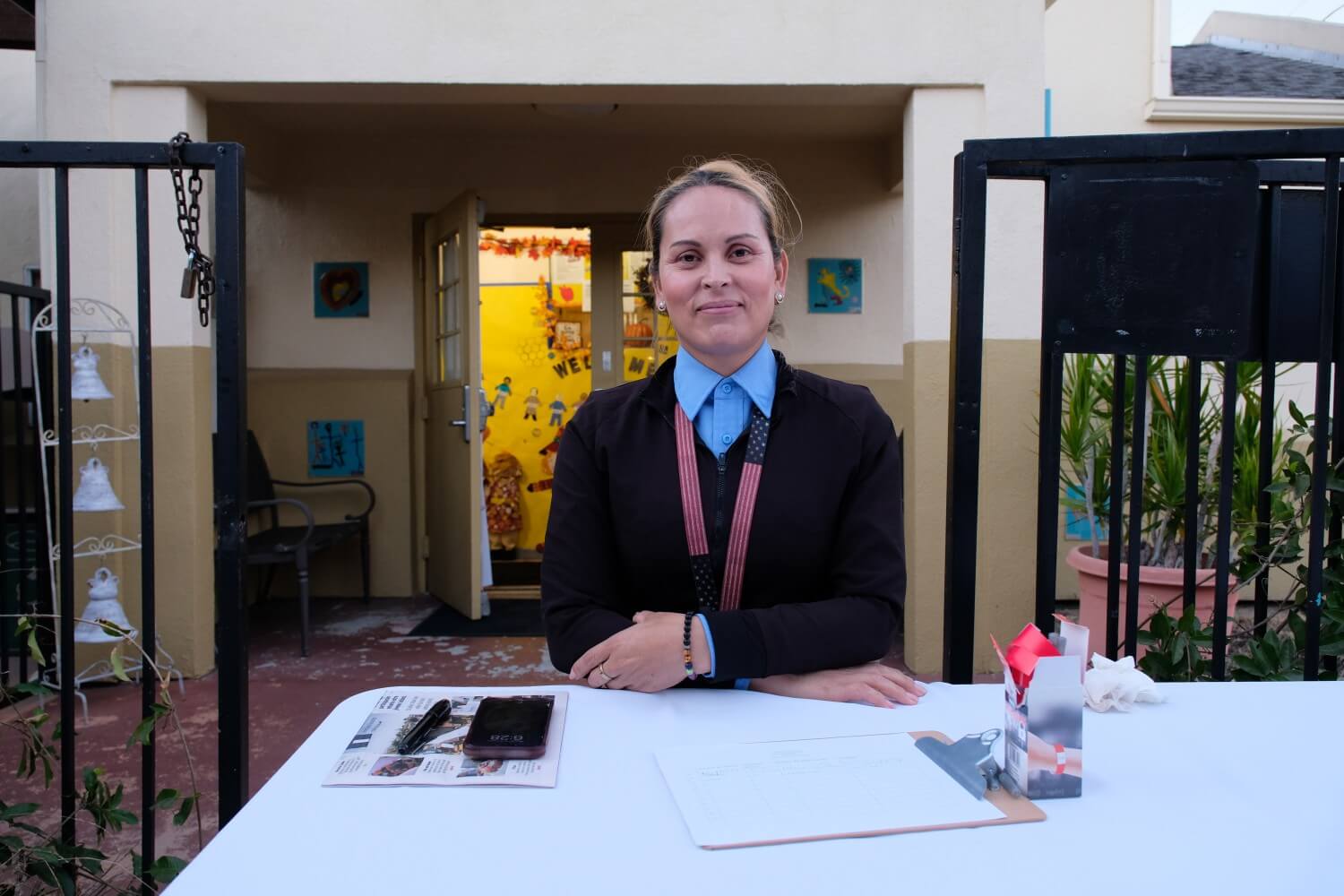
Valeria Aviles: 46 years old, security guard for nonprofit Proyecto Pastoral, Boyle Heights resident

Valeria Aviles at the CD-14 candidate forum in Boyle Heights, CA. Oct. 9, 2024. Talia Goddard/The Occidental

Aviles said in Spanish that she has lived in Boyle Heights for the past 11 years.

“Right now I am working as a security guard for the [CD-14 Candidate Forum], but I am also listening attentively to Mr. Kevin de León and Ms. Ysabel Jurado, because it is important for me to know what both candidates have planned for the future of the Boyle Heights community,” Aviles said in Spanish.

Aviles said in Spanish that her main concerns are how the candidates plan to limit crime and help the elderly.

“There have been some changes, but there is still a lot of change left to do,” Aviles said in Spanish. “The candidates have to make a commitment to improve our communities.”

Aviles said in Spanish that for her to gain trust in the candidates, they should go beyond speaking about action and instead take action.

Jamaal Muwwakkil, PhD: 38 years old, academic researcher, University Hills resident

Dr. Jamaal Muwwakkil at the CD-14 candidate forum in Boyle Heights, CA. Oct. 9, 2024. Talia Goddard/The Occidental

Muwwakkil said he has been a resident of University Hills for three years. He said his main concerns for this election are how the candidates will approach affordable housing, parking and the plan to allocate funds to support efforts for the 2028 Olympics, which are to be held in LA.

“I’m interested in how the community [is] orienting to that increased investment, what community members are isolating as issues that need to be solved and how they solved them,” Muwwakkil said.

Muwwakkil said that when he first arrived at University Hills, there was concern over a large amount of RVs parked in the area. He said this was an immediate remedy for those who are housing insecure, but also limited an already restricted amount of parking space.

Muwwakkil said one of the approaches to housing insecurity that he likes is the building of tiny homes. The Tiny Homes Village shelters serve as interim housing and aim to alleviate homelessness.

“I appreciate more engaged conversations around what are sustainable answers to that [affordable housing] question,” Muwwakkil said. “I would, of course, love to see more long-term and large-scale affordable housing being built.”

Muwwakkil said he wanted to hear more about new proposals from both candidates, because it would help clarify a vision for the future.

“You have a lot of possible answers for fixing and addressing homelessness, housing insecurity and parking,” Muwwakkil said. “There’s a lot of options. I don’t know which ones each candidate wants to do.”

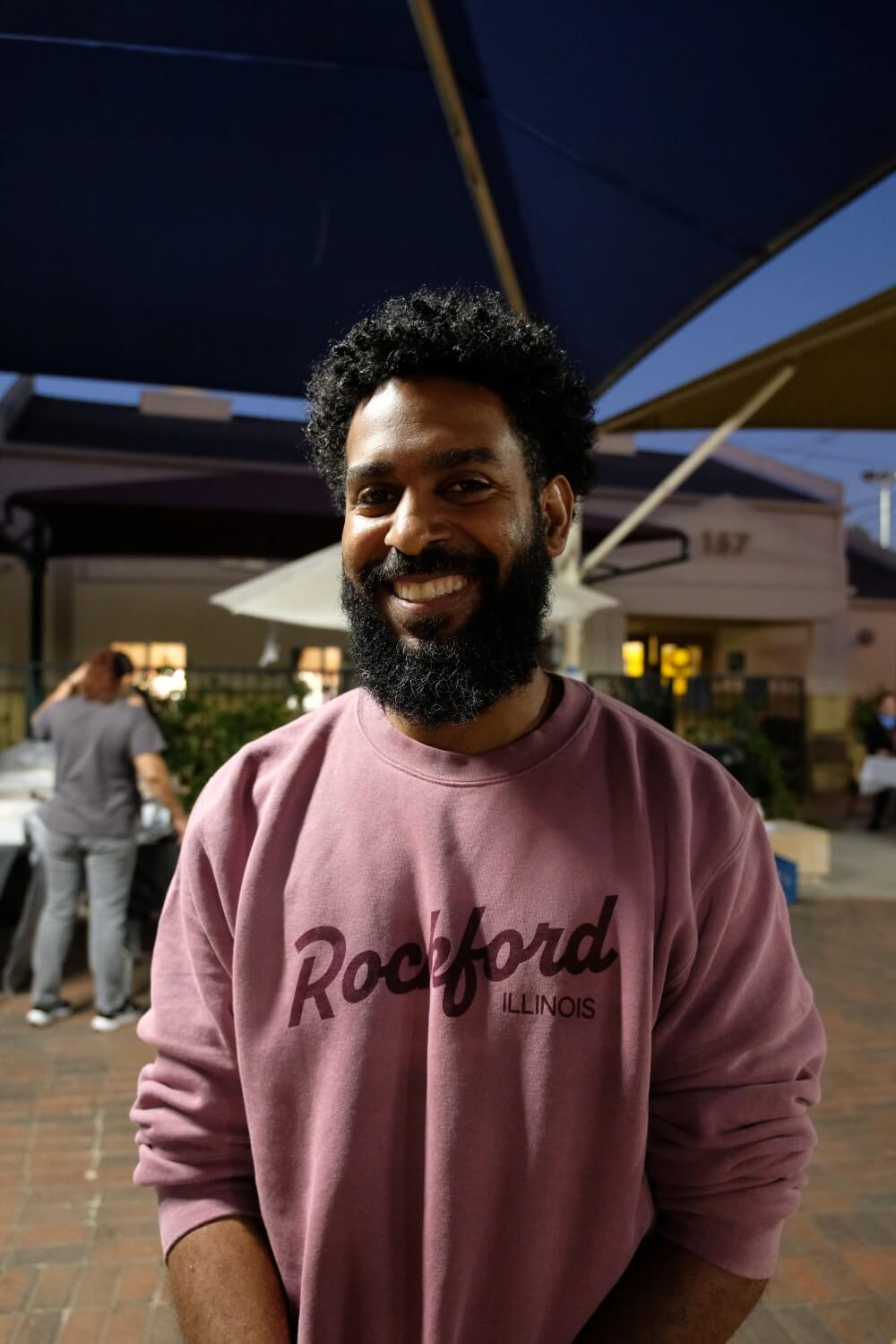
Crista Campos: 37 years old, marketing manager, Boyle Heights resident

Crista Campos at the CD-14 candidate forum in Boyle Heights, CA. Oct. 9, 2024. Talia Goddard/The Occidental

Campos said she has resided in Boyle Heights for the past 15 years. She said that this year, she became a citizen and voted for the first time.

“I definitely wanted to see Kevin de León and Ysabel in the same room and see how they connect with the community,” Campos said.

According to Campos, one of the positive changes she has seen was the installation of a traffic light in between 4th Street and Clarence, which came after multiple car accidents.

Campos said her main concerns for this election are immigration, safety and homelessness.

“Boyle Heights has a great population of Mexican Americans,” Campos said. “We have immigrants from Latin America and from different places of the world.”

Campos said she was pleasantly surprised by the passion that voters have demonstrated in being vocal about community needs.

“People came out wanting to either change something or keep something,” Campos said. “That shows that people can really make a difference in the community.”

CD-14 residents will be able to cast their vote in the general election Nov. 5.

Contact Karen Palacios Echeverria at palacioseche@oxy.edu

Loading

Tiny home tenants face barriers moving into affordable housing

An affordable housing development opened in 2023 at 2451 E. Colorado Blvd. According to LA Housing Department Communications Director Sharon Sandow, the development was opened to combat housing insecurity and homelessness.

Jane Demian, a member of the Eagle Rock Neighborhood Council (ERNC) Housing and Homelessness Committee, said she worked with residents from the Union Station Tiny Homes, a temporary housing development in Eagle Rock, to transition them into being permanent residents at 2541 E. Colorado. She said six residents were given tours of the development and were assigned units, with two — a mother and son — successfully moving into the development.

Exterior of the new housing development and adjacent building on Colorado Boulevard in Eagle Rock, CA. Oct. 19, 2024. Talia Goddard/The Occidental

Demian said the remaining four residents were denied housing at the development without warning.

“[The Tiny Homes residents] were given the room number where they were going to be staying, ready to go, and then they got the news that they couldn’t go in,” Demian said. “They weren’t given much information why.”

Sandow said via email that the property management company evaluates possible tenants, so that she could not speculate why they were denied housing. The development houses tenants aged 55 and older who make 30% or less of the area median income, according to Sandow. The building, Sandow said via email, is a mix of one-bedroom and two-bedroom housing with 41 total units. Five units are accessible to people with mobility disabilities and two units are accessible to people with hearing or vision disabilities, according to Sandow.

According to Sandow, the process of approving an applicant must be complete before move-in.

“Potential applicants work with case managers to make sure they have the required documentation to verify they meet the project tenant requirements, including income limits,” Sandow said via email.

There are still many challenges involving housing access as a whole, according to Anne Shapiro, a former member of the ERNC Housing and Homelessness Committee. Shapiro said the issue of limited temporary and permanent housing for low-income earners is partly because resources such as mental health support, police buildings and social workers are in short supply.

“There is not one resource that is needed to solve the problem [of limited housing] where there isn’t acute scarcity,” Shapiro said.

Demian said this scarcity of resources is the biggest issue in addressing the LA housing shortage.

“There’s a dire scarcity of resources [for] interim and permanent housing and case managers and anything you can think of,” Demian said. “And yet, billions of dollars are being spent. So we don’t really know the accountability aspect of this situation.”

Demian said she is concerned that a misallocation of funds is putting people at risk of homelessness.

“People are waiting for interim housing, and people who are already living in interim housing — maybe they’ve been waiting […] for permanent housing for almost three years,” Demian said. “Other people are just waiting on the street.”

Exterior of the new housing development on Colorado Boulevard in Eagle Rock, CA. Oct. 19, 2024. Talia Goddard/The Occidental

According to Sandow, the Housing Authority of the City of Los Angeles (HACLA), the Los Angeles County Department of Health Services (DHS) and the Los Angeles Homeless Service Authority (LAHSA) all contributed to the project.

Shapiro said bureaucracy can also present a barrier to housing people, such as the myriad documents required to move an individual into housing.

“The obstacles are enormous to be able to get people into interim housing,” Shapiro said. “And then from interim housing into permanent housing, it takes months and months.”

Demian said that through her volunteer work, she and her teammates have assisted with tasks that should have been the work of case managers, who she said also have scarce resources.

“We would help [housing applicants] get their birth certificates for other states,” Demian said. “For example, the case manager wouldn’t be able to pay for it.”

Demian said she sees many opportunities for housing expansion in the city, but they are not being capitalized on.

“We don’t know why a lot more interim housing is not being created when we have vacant buildings,” Demian said. “Maybe it’s because it’s difficult to get developers to do the transition. There’s a lot of permitting involved, there’s a lot of money involved.”

Demian said she does not blame the workers themselves, but rather the structure of the system and those in positions of power.

“It’s really the people who are managing them and the people who are funding the case managers, who are not giving the money to the people,” Demian said. “It’s not trickling down.”

Contact Diana Trutia at trutia@oxy.edu

Loading

Opinion: The structure of my foreign language classes crippled my desire to learn

Growing up, I always enjoyed the concept of being able to speak another language. I often fantasized about opportunities to connect with others from different cultures, writing stories outside my (honestly boring) native English and, of course, impressing my mom by achieving one of the many academic goals she set for me. When the opportunity to take a Spanish class finally presented itself, I eagerly enrolled in an introductory course to make my younger self proud.

I’m not going to say that taking Spanish was a mistake, because I did have some positive experiences in my classes. However, I’ve found that the way the American school system teaches foreign languages is not only ineffective, but utterly soul-crushing.

Starting with the elephant in the room, why is it that so many instructors lecture their students in a language they’re unfamiliar with? There are many studies that demonstrate how lecture-style teaching is often less effective than active learning (which the Cornell University Center For Teaching Innovation defines as a hands-on learning style that asks students to engage with their learning by thinking, discussing, investigating and creating). Why ruin the little effectiveness lecturing has by making it more confusing (and more tempting to give up and check my phone)?

While it’s important to hear a language to familiarize yourself with it, this strategy doesn’t work if my brain can’t process what’s being said. Aside from not having good knowledge of the vocabulary, I’ve found listening to others speak in foreign languages is insanely difficult when every word seems to move at sonic speeds.

In addition to the often incomprehensible fast-paced lectures, the textbooks are often not much help. Textbooks I’ve used in the past have often been less-than-engaging, often difficult to follow and hardly worth the price, especially in comparison to various free language-learning resources online.

This brings me to my third critique: helpful learning methods are never utilized in class. My high school Spanish teachers often told me that in order to get better at a language, the best thing to do was to engage with it in any way possible. Listening to music, watching shows, reading foreign newspapers, listening to podcasts and more. This was good advice, but the teachers didn’t implement their own suggestions as much as I would’ve liked.

Language classes should be a mix of different activities. This would not only help maintain students’ focus, but also help them discover what learning method works best for them. Like any subject, there’s no one-size-fits-all approach to learning. Personally, I find it more helpful to review flashcards or test myself using Quizlet or similar websites. Other students may find conversation or reading to be better ways to learn. The point is, if we’re all stuck with the same approaches to learning foreign languages that don’t benefit the majority of the class, then maybe it’s time we try some new methods.

But how, exactly, do we create change? After all, restructuring a well-established component of the American school system doesn’t seem easy to do. But in the case of foreign language instruction, the solutions aren’t complicated or far-fetched. We should motivate students to learn a new language by bringing excitement and real-world engagement to the classroom, or even leave it sometimes. After all, the incentive for language courses is to connect with others. Why not take advantage of the diversity of LA and hone language skills with native speakers?

In addition, classroom-based foreign language instruction is more interesting when students are exposed to the language though art. For example, by listening to Spanish-speaking artists sing about heartbreak, partying and the joys of life, my high school classmate and I were able to gain a deeper understanding of each unit’s vocabulary (along with an appreciation for Spanish-language music, which I can confirm is amazing). I was also able to learn (some) of a language through Duolingo, which has an almost game-like style to its learning activities. Through arranging sentences, practicing pronunciation and reading silly stories, I was able to speak a good amount of French — until I forgot it after abandoning my lessons.

Overall, we’re not going to get very far if we keep prioritizing traditional teaching standards over what truly works best for students. Lectures and textbooks may be the typical way to teach, but when it comes to more challenging and unfamiliar subjects such as foreign languages, creativity is not only preferable, but it makes or breaks a student’s understanding of the topic in the long run.

Contact Kamaria Williams at kwilliams4@oxy.edu

Loading