Home Blog Page 7

‘The Tuba Thieves’ depicts ‘Deaf gain’

Occidental College hosted a screening of the 2023 film “The Tuba Thieves Feb. 22. The screening, co-presented by Oxy Arts and Oxy Disabled Student Union, is a part of Occidental College’s Media Arts & Culture (MAC) Department’s long-running MAC Cinematheque series. The screening was attended by the film’s director, Alison O’Daniel, and producer, Maya E. Rudolph, who stayed for a Q&A hosted by James Irvine Professor of Media Arts & Culture Broderick Fox.

Director Alison O’Daniel shows her website “HOW TO CAPTION” during post-screening Q&A beside producer Maya E. Rudolph and professor Broderick Fox in the Choi Auditorium in Johnson Hall at Occidental College in Los Angeles, CA. Feb. 23, 2026. Shelby Kernisant/The Occidental

The film outlines the years from 2011–2013, when several schools in the SoCal area were robbed of one or more of their tubas. Rather than focusing on the tuba thefts themselves, the story focuses on a handful of diverse hard-of-hearing and Deaf characters and the ways in which they engage with each other and the world.

This small group of Deaf characters, based in LA, includes a high school student directly affected by the thefts, a pregnant musician and her partner. The three navigate life, love and listening, even without sound.

According to O’Daniel, “The Tuba Thieves” seeks to shake up many misconceptions about the Hard of Hearing and Deaf communities. According to O’Daniel, the process of getting the film made was a long and hard-fought one.

“‘The Tuba Thieves’ was such a process-oriented project and it did start with the story of the tuba thefts,” O’Daniel said, “It emerged from a story that I had heard in November 2011 about tubas that had been stolen from Jordan High School in Watts, and the second was Centennial High School in Compton. I knew when I heard the first story that I was gonna make a movie called ‘The Tuba Thieves’ and I made this decision right away that it wasn’t really gonna be about the thieves, and then I wanted to try and figure out what it means to listen.”

According to O’Daniel, who identifies as Deaf herself, this film and the story behind it is incredibly personal.

“The reason I had been so drawn to this story was because, in deaf culture, there’s this very empowered turn of phrase where we say we have ‘Deaf Gain’, whereas in hearing culture and in audiology, we are told we have hearing loss,” O’Daniel said, “It’s such a big deal to turn that, and for me, this film was this real recognition of grief, when grief is imposed on you because something is taken or you’re told always that you’ve lost something.”

Director Alison O’Daniel answers a question beside her ASL interpreter in Choi Auditorium in Johnson Hall at Occidental College in Los Angeles, CA. Feb. 23, 2026. Shelby Kernisant/The Occidental

Assistant Professor of Cognitive Science Shengyun Gu said she has experience researching ASL as well as Shanghai Sign Language and is currently teaching the class “Language and Culture in Deaf Communities.” Gu said the screening led her to reflect and reconsider some of her curriculum.

“I’ve been very excited to see some representations of Deaf folks and artists that I’ve seen somewhere else in my past years and encounters with the deaf community as well as the research community,” Gu said.

Sophia DeLuna (sophomore) outside Tiger Cooler at Occidental College in Los Angeles, CA. Feb. 25, 2026. Shelby Kernisant/The Occidental

According to Sophia DeLuna (sophomore), she attended the screening as part of her position at Oxy Arts, but was also influenced to attend by her Aesthetics of Cinema class, where it had recently been discussed.

“It’s not a very traditional movie, but I thought it was super cool how it put you in the subjective point of view of a person who is hard-of-hearing,” DeLuna said. “As someone who is not hard-of-hearing, that was just something new to me that you don’t see often in film, so I thought it was a cool new concept.”

According to DeLuna, sound was used to build space in the film, with background sounds being brought forward as the main focus.

A lot of the time, hard-of-hearing and deafness is portrayed as the absence of sound and something that you don’t have,” DeLuna said. “But I thought it was really cool how it used elements of film to tell the story with the absence of audio.”

Mia Fasick (sophomore) in Green Brean at Occidental College in Los Angeles, CA. Feb. 25, 2026. Shelby Kernisant/The Occidental

As guests entered the screening, Mia Fasick (sophomore) was stationed outside of Thorne, handing viewers balloons with the words “THIS IS NOT JUST HOT AIR. ACCESS FOR ALL!” inscribed on them. Prior to the film starting, viewers were asked to clutch the balloons to more deeply engage with the sound choices made throughout the film, feeling every vibration thoroughly.

According to Fasick, the film’s techniques and portrayal of ASL served to make it more powerful.

“[A protagonist takes] the hearing test, and then he just starts going into poetry and ASL, and I thought that was so beautiful,” Fasick said. “It was like language poetry, but also like visual poetry. I guess I never thought about ASL that way and so that was really cool to see.”

Contact Shelby Kernisant at kernisant@oxy.edu

Loading

Author Tony Tulathimutte accepts rejection

Tony Tulathimutte visited Occidental for a reading and Q&A centered on his short story collection “Rejection,” organized by the English department Feb. 28. The book follows a cast of deeply neurotic characters navigating humiliation, longing and social failure across the internet and beyond.

Professor Claire Grossman and author Tony Tulathimutte at the “Rejection” book event in Choi Auditorium in Johnson Hall at Occidental College in Los Angeles, CA. Feb. 26, 2026. Maile Brucklacher/The Occidental

“Rejection” began not with a grand thematic vision but with a collection of shorter pieces, Tulathimutte said, growing into a book that moves from romantic rejection in its first three stories into weirder formal territory: forum posts, spam, Reddit threads and a final story that is itself a rejection letter addressed to the book.

“I was almost shocked that there wasn’t just a book called rejection,” Tulathimutte said. “It’s like setting up an Instagram handle and just getting the name ‘Adam,’ or something like that.”

According to Tulathimutte, the book shifts from cringe comedy to psychological horror to satire depending on the story, creating tonal instability.

“You can call it range,” Tulathimutte said. “I would probably call it just inconsistency.”

Author Tony Tulathimutte at the “Rejection” book event in Choi Auditorium in Johnson Hall at Occidental College in Los Angeles, CA. Feb. 26, 2026. Maile Brucklacher/The Occidental

Tulathimutte said the challenge of writing about rejection is that it resists conventional plot structure.

“If you try to map out the structure of a rejection story, it’s terrible,” Tulathimutte said. “It begins with an anticlimax and then nothing happens. It’s just like, I want this thing. I didn’t get it. My life is the same.”

What interested him, Tulathimutte said, was the gap between how rejection looks from the outside, like nothing happened, and what it feels like from the inside, where an entire imagined future collapses.

“You’ve been building up this fantasy, this thing in your head that you’ve wanted, that embodies all of your best hopes and aspirations,” Tulathimutte said. “Talking about it and clinging on to it just makes you seem completely pathetic. Because nothing material has changed.”

Associate Professor of English Ross Lerner said he was stunned when he first read the book over the summer.

“I hadn’t read anything quite like it. [It] really kind of innovated formally in terms of what is possible in fiction writing to capture something about lives lived online,” Lerner said. “I was struck by how clever it was — the level of craft felt precise and genuinely creative.”

Author Tony Tulathimutte at the “Rejection” book event in Choi Auditorium in Johnson Hall at Occidental College in Los Angeles, CA. Feb. 26, 2026. Maile Brucklacher/The Occidental

According to Tulathimutte, social media promises a kind of answer to the question of how to be a person, a window into how others behave and what gets rewarded and then delivers something entirely false.

“Everything that’s online is a performance, and it’s one that passes through many, many layers of algorithmic filtration before it reaches us,” Tulathimutte said. “It is like watching television and being television at the same time.”

At the Q&A, Tulathimutte said people would rather have certainty than happiness. It is why, he said, some of the most self-defeating characters in “Rejection” cling so hard to narratives that guarantee they will never win.

“It’s because you at least know where you stand,” Tulathimutte said. “You know your place and then you can make sort of solid and concrete decisions and actions. You will know that the feelings that you have are legitimate.”

According to Tulathimutte, this same dynamic explains the internet’s surveillance pull. For neurotic people, he said, other people’s feeds function as a kind of social instruction manual.

“For people who are very neurotic and very ‘what is wrong with me,’ they’re going to be really thirsty for this kind of social instruction,” Tulathimutte said. “How are other people acting? What gets rewarded? You’re basically just casting about for role models.”

Tulathimutte said representation in fiction is not a matter of choice — moving through the world with a body visibly marked by race or gender automatically implicates a writer in those discourses. Neither, Tulathimutte said, is rejection.

“No matter how impersonal the rejection, it always feels personal,” Tulathimutte said.

Lerner said Tulathimutte’s commitment to craft is one of the things that makes him singular among writers working today, combining a precise formal attention to what sentences and structures can do with a genuinely rare comic ability.

“There’s not a lot of people who can bring together this really sophisticated attention to style and humor,” Lerner said. “I think Tulathimutte does it so successfully that it really challenges people to write more formally interesting fiction and also to think with humor and the absurd.”

According to Tulathimutte, writing for yourself is a higher bar than writing for publication because you cannot condescend to yourself or make your characters less complicated than you are.

“You can tell when someone’s trying to pander,” Tulathimutte said.

During the Q&A, an audience member asked why the book’s characters seem stuck, unable to move past their own rejection. Tulathimutte said the answer is simpler than it looks.

“Shame will kill you,” Tulathimutte said. “When everybody is not going to be honest about things like their own failures or their own humiliation, it seems like it’s not very common. And then when you experience it, it seems like you’re the only one who experiences it. It’s very isolating.”

Marley Marshall (senior), who attended the event, said the talk reframed how she thinks about shame.

“One thing that I’m taking away from his talk is to encounter more shame and be less ashamed of shame in a weird way,” Marshall said.

Marshall said the event felt timely given technology’s inescapable presence in daily life and its growing role in how people read, write and connect.

According to Lerner, what draws him to the book is its argument that the feelings rejection produces are not new, but the internet has given them somewhere to go.

Lerner said he hopes students left feeling like Tulathimutte is someone they could actually become, a writer who started from the same place they are now and figured out how to do something new with the form.

“I hope they would feel inspired to read more, write more, imagine what it might be to try to be a writer,” Lerner said.

Contact Samhita Krishnan at krishnan@oxy.edu

Loading

Eric Garcetti speaks about ambassadorship and leading an ‘imperfect paradise’

Eric Garcetti, mayor of Los Angeles from 2013–2022, President Biden’s Ambassador to India and a former professor at Occidental, spoke about international relations and his career in Choi Auditorium Monday, Feb. 23.

Garcetti discussed his LA roots, his experiences in India and his political evolution with Emeritus Chevalier Professor of Diplomacy and World Affairs Derek Shearer, who served as the US ambassador to Finland from 1994–1997.

Garcetti opened the conversation about his upbringing as a fourth-generation Angeleno. As a child, Garcetti’s parents used their savings to take him and his sister on trips to places like China, Rwanda and — when he was 14 — India.

When Garcetti taught at Occidental, he said he told students that you can see the face of the world on the streets of LA.

“But if you grew up in LA, you [have] the inverse, too,” Garcetti said. “You see the face of LA on the streets of the world. So that I could be in Cairo, I could be in Mexico City, I could be in Tokyo, and it looked familiar.”

Garcetti said growing up in a global city led him into human rights activism as an undergraduate at Columbia University, and eventually to Myanmar (then Burma), where he worked with pro-democracy dissidents.

“I went two summers to the jungle, and taught the members of the underground about a nonviolent resistance, and how to scale up an operation to overthrow the government,” Garcetti said.

According to Garcetti, he got class credit for his activism in Myanmar.

“But the second time, I just went for fun,” Garcetti said.

As a 29-year-old Occidental professor, Garcetti decided to run for LA City Council on a progressive platform.

“When I ran, people said, ‘Well, aren’t you a professor of international relations? What are you doing running for city council?'” Garcetti said. “And my response would be, ‘Have you seen LA?’ And if you understand LA, you understand that local politics is global politics.”

Former LA Mayor Eric Garcetti speaks with ambassador Emeritus Chevalier Professor of diplomacy and world affairs Derek Shearer in Choi Auditorium in Johnson Hall at Occidental College in Los Angeles, CA. Feb. 23, 2026. James Miller/The Occidental

In his answer to a student’s question about ethnic discrimination in Myanmar towards the end of his talk, Garcetti said, “you can’t let your idealistic values trump your effectiveness.”

“You’re not going to be very effective in this world, even outside of government, if those values are so principled that you can’t engage with people you dislike,” Garcetti said. “Nobel Peace Prizes have been given to the most horrible people, who are the only people who can sometimes make the peace. And the whole point of it is to reward them when they do. And that’s a tough lesson.”

A student asked Garcetti how academic international relations paradigms such as realism, liberalism and constructivism helped him in his career. Garcetti said even the most realism-based politicians are not devoid of values.

“They still got into this because they want to actually accomplish some things,” Garcetti said. “So they’re idealistic in that sense.”

Garcetti said the human skills needed in diplomacy — and life — are not taught enough.

“Diplomacy isn’t a profession,” Garcetti said. “Diplomacy is something you all need to — whether you major in DWA or not — have, in life. If you’re not diplomatic, you’re not going to be successful in your family. You’re not going to be successful in your love.”

Garcetti said Indians are great negotiators, and that in some weird way, President Trump has negotiated with India like an Indian.

“Trump is getting more breakthroughs than the polite Democratic and Republican administrations that came before,” Garcetti said.

Garcetti said that when he was the president of the LA City Council, someone told him to treat the rest of the council as 5-year-olds to understand their true essences.

“Not treat them condescendingly, but when you’re 5, one person wants to be in the sandbox,” Garcetti said. “Another person wants you to see the art piece they’ve created. Somebody just wants to not be bothered. Each of our personalities is different, and so often, we project our personality onto others, thinking they’re not understanding when they don’t respond the way we want […] and we often do that in a cultural way instead of a personal way.”

Garcetti said he is not done with public service.

“I’m here to state I have no secret plan — there’s still two weeks left where I could declare for governor, if the governor’s race was a year or two from now, I might have jumped into it,” Garcetti said.

During his talk, Garcetti called LA an “imperfect paradise.”

“It gets to the optimism and the positivity without whitewashing or trying to overstate that we’re perfect,” Garcetti said, explaining his nickname for LA.

According to Garcetti, after having “been to the mountaintop” as a politician — which he said comes with a huge personal cost — he doesn’t have the itch to be in the limelight.

Garcetti said President Trump has thrown a “volatile cocktail” into a “building” —made of “all the international institutions you study” and “the way we do government” in the US. Garcetti said that even if Trump never came along, it was time for the “building” to “come down.”

Building on his building metaphor, Garcetti said political thinkers need to act like engineers and architects, instead of being firefighters.

“What are we going to build next?” Garcetti said. “It’s not going to be as big and grand and stable as what we’ve lived through in our lifetimes. But it’s necessary for some thinkers who aren’t running for office, and who aren’t in office, to be thinking about what that looks like.”

Contact James Miller at jmiller4@oxy.edu

Loading

Hot Corner: Can team USA reclaim WBC glory?

As much as the Dodgers try to put a stop to the sport of baseball as we know it, life goes on. With spring training in full swing, everyone’s eyes are turning back to the diamond. As teams assemble and new acquisitions meet their teammates for the first time, another question looms: Who’s playing in the World Baseball Classic (WBC)?

The WBC is a global tournament that assembles players of all talent levels to compete in a pool format. The top four teams from the 2023 tournament have already secured their spots, while underdog countries have had to earn their participation by playing in qualifying games.

The WBC’s eclectic mixture of superstars and nobodies has produced some of the most shockingly entertaining moments in recent baseball history. It’s enjoyable to watch Shohei Ohtani blast a 450-foot home run, but it’s downright enthralling to see a Czech electrician strike him out a few innings later. For many of the WBC’s participants, baseball is just a side job. But for a few weeks, they get to occupy the same stage as the game’s goliaths, and even get the better of them.

Due to insurance issues, some of MLB’s best will not be allowed to participate in the WBC. Jose AltuveCarlos CorreaFrancisco Lindor and other stars are being turned away due to injury risk. Despite Bad Bunny’s offer to pay their insurance, these heavy-hitters will be cheering on their respective countries from the sidelines. Thankfully, this year’s tournament has plenty of star power to go around.

In 2023, Team USA certainly did not roll out the best available roster. Despite an amazing lineup, their pitching staff left much to be desired. Even Trea Turner turning into the second coming of Christ for the duration of the tournament was not enough to get them a victory over Team Japan in the final.

In 2026, the roster vastly improved on paper. A rotation that depended on a ragtag group of geriatrics during 2023’s tournament now features some of the league’s best. The two-headed monster of Paul Skenes and Tarik Skubal, both Cy Young winners in 2025, is an absolute force to be reckoned with on the mound. The lineup is even deeper than 2023’s team, headlined by AL MVP Aaron Judge and slugging maestro Cal Raleigh.

Even with a bevy of superstars at its disposal, a Team USA triumph will be easier said than done. The 2026 iteration of the tournament features a gauntlet of imposing threats, including the Samurai Japan squad that dashed America’s title hopes back in 2023.

Shohei Ohtani will be making his return to international competition, hoping to add a second WBC title to his overflowing trophy case. He’ll be flanked by two of Japan’s premier power hitters in Kazuma Okamoto and Munetaka Murakami, and star outfielder Seiya Suzuki will look to maintain his momentum after a fantastic 2025 season in MLB.

Japan’s pitching staff will be missing their most electric hurler in Rōki Sasaki, who was blocked from participating in the tournament by Dodgers management. However, Japan’s rotation still boasts a stellar one-two punch of Yoshinobu Yamamoto and Hiromi Itoh. While not nearly as star-studded as team USA, Japan’s chemistry and championship experience will be tough to beat.

The most dangerous lineup in the WBC might belong to the Dominican Republic, who are sporting an absolute murderer’s row of hitters headlined by Juan SotoVladimir Guerrero Jr. and José Ramirez. Outfielders Julio Rodriguez and Fernando Tatís Jr. make for a lethal power-speed combo, and the infield boasts a litany of offensive talent including Ketel Marte and Manny Machado.

Unfortunately, the same praise can’t be lauded upon the pitching staff. If the Dominican lineup is a supercar, the rotation is akin to a lemon held together with duct tape and prayers. Cy Young runner-up Cristopher Sánchez is penciled in as the top starter, but the rest of the pitching staff is unproven on the international stage. Luckily for the DR, their monstrous lineup is capable of keeping them in any contest.

Rounding out the slate of contenders is team Venezuela, who are looking to reach the WBC semifinals for the first time since 2019. Venezuela’s lineup is led by former MVP Ronald Acuña Jr., but the squad has embraced the youth movement in this year’s tournament, sporting exciting young talents like Jackson Chourio and Wilyer Abreu.

Venezuela’s pitching is characterized by depth and versatility, with veterans Pablo López and Ranger Suárez leading an experienced rotation. If players like Eduardo Rodríguez and Germán Márquez can survive the dangerous lineups of opposing contenders, Venezuela’s balanced squad could sneak its way into the finals.

It’s a tumultuous time for the world in many respects, and baseball itself is seeing its own share of troubles with 2027’s potential lockout looming. Despite these tribulations, the WBC arrives at a perfect time, as the tournament allows longtime fans and newcomers alike to enjoy the beautiful game on the global stage. Right now, the world could use a fairy tale, and come April, the best place to find new legends in the making will be on the baseball diamond.

Contact Ben Petteruti and Mac Ribner at petteruti@oxy.edu and ribner@oxy.edu

Loading

Occidental Dance Team places third at nationals

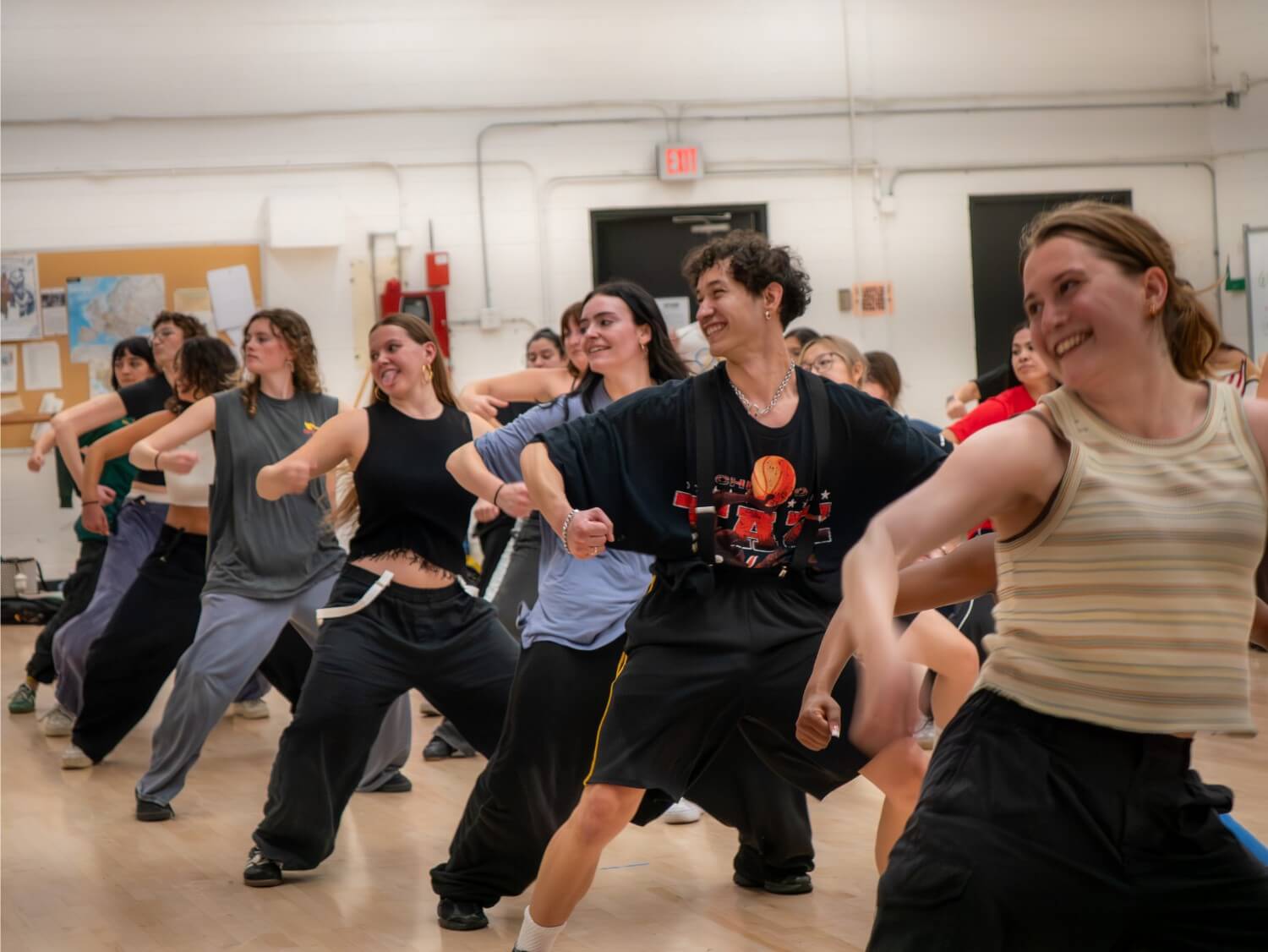
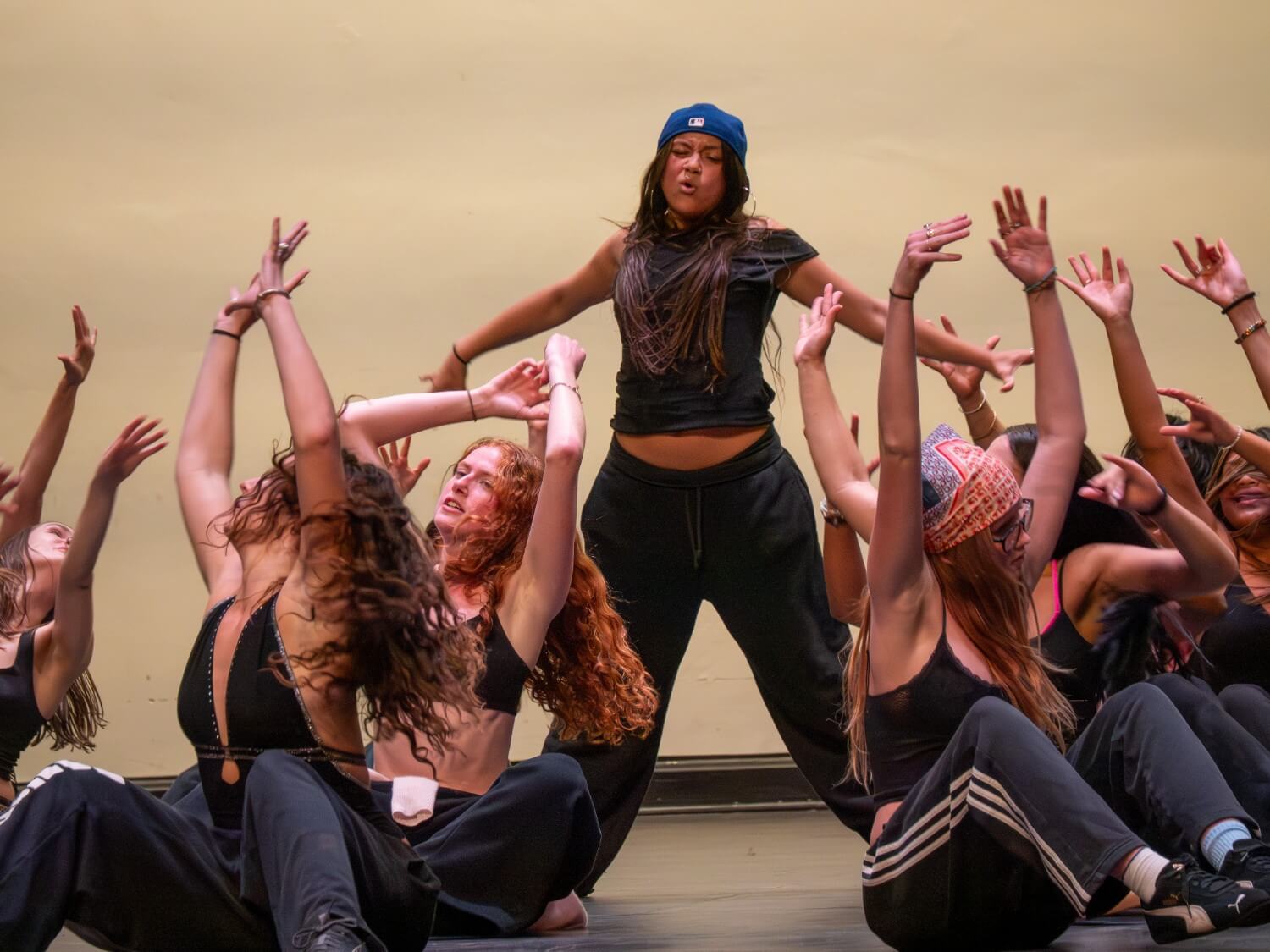
The Occidental Dance Team (ODT) placed third in the 4-Year College Pom Division II/III category of the United Spirit Association (USA) National Championships Feb. 22. This was the first time ODT competed at the national level in program history, according to co-captain Kenna Mueller (junior). Mueller said the team had been preparing for this competition since October and spent around eight to ten hours each week rehearsing their dance.

Courtesy of Kenna Mueller

“The choreographer came in Oct. 5 and 6 and we worked on it all the way up until the day of nationals,” Mueller said. “We came back a week early from winter break and practiced for 8 hours each day, just running it over and over.”

ODT previously attended the SHARP competition in spring of 2024, but Mueller said nationals requires an entirely different level of preparation.

“We’re up against teams that have coaches, people that got recruited for dance and people that are majoring in dance,” Mueller said. “Here, we’re fully self-run.”

Ariella Trost (first year) said she had competed at USA events while in high school, but that competing as a collegiate team felt different.

“The atmosphere was more communal,” Trost said. “You’re talking to teams more than you would before. It was also interesting to not be there with a coach. We got to make decisions as a team which I liked a lot.”

Grace Sullivan (sophomore) said she had also been to the same competition before. According to Sullivan, not having a coach this time made a big difference.

“I learned a lot about the behind the scenes and what goes on that I never got to see because my coach always did it, and also all the preparation that goes into it,” Sullivan said.

According to Mueller, the administrative work and logistics are the responsibility of the captains, which placed a lot of pressure on them.

“Imposter syndrome definitely hits when you’re up against teams with coaches; teams that are really good,” Mueller said. “Every other team had been there before. We had no idea what we were doing but we knew we deserved to be there.”

Kenna Mueller (junior) in the Academic Quad at Occidental College in Los Angeles, CA. Feb. 25, 2026. Kadence Bernard/The Occidental

Kaylee Nguyen (sophomore) said being entirely self-run brought the team even closer together.

“It was a little more stressful because there was more responsibility on our shoulders that we had to navigate,” Nguyen said. “I also felt a closer connection with everyone because we had to go through that by ourselves.”

According to Mueller, the team felt extremely proud of themselves just for dancing on the stage at preliminaries. Mueller said they did not care about the results.

“There’s an instant replay backstage, so when we watched the video I was sobbing because I was just so happy,” Mueller said. “All of the hard work was for that moment.”

Nguyen said finding out they had qualified for the finals was mind-blowing, and that the team jumped up when their name was called.

“It felt good that we came all this way,” Nguyen said. “We put in all this work and it felt like we had earned that moment. People don’t see how much work goes into a twominute dance even though we drill it over and over to make it look effortless.”

ODT ended up coming home with a third place trophy – which only motivated them to work harder next year, according to Trost.

“Third is amazing, but how can we get to first?” Trost said. “Going into [the competition] this year we all thought, ‘Let’s just go and see what happens.’ Now we know we can do it, so what else can we do?”

Courtesy of Kenna Mueller

Sullivan said the team is planning to return to the competition next year, hopefully performing two routines instead of one.

“We’re learning from this year how to manage time more efficiently in order to be able to compete with two dances and place with both of them,” Sullivan said.

Mueller said she hopes this achievement will bring more recognition to the team on campus and get more people to join.

“I want Oxy to know about us, and I think they finally do,” Mueller said. “We competed in DII/DIII and we did everything ourselves. The overall goal is to announce that we’re here and we’re here to stay.”

Contact Izzy Shotwell at shotwell@oxy.edu

Loading

Grant brings home SCIAC hardware, Wilde leads in scoring as Athletes of the Week

Connor Grant

Connor Grant (sophomore) broke his previous school record at the four-day SCIAC Swimming & Diving Championships Feb. 21, repeating as champion of the 200 freestyle.

Recovering from a shoulder injury, Grant said he feels lucky to have been able to compete at a high level again.

“With my injury it feels really good to get back to where I was,” Grant said. “I swam a little faster, which kind of surprised me […] I was really happy with it.”

According to Grant, he prepares extensively for races both physically and mentally.

“There’s a lot of physical preparation with the taper, managing my sleep, physical therapy and fuel,” Grant said. “These are all things I’m very conscious about.”

Grant said he has superstitious practices before every race.

“I live in Wylie and I always touch the street bollards outside for good luck,” Grant said.

According to Grant, anticipating success while ignoring his doubts is crucial to his success.

“I think it’s important to visualize the outcome where you win or you get your goal,” Grant said. “If you visualize all the negative outcomes, then you’re manifesting them.”

Connor Grant (sophomore) in the Academic Quad at Occidental College in Los Angeles, CA. Feb. 25, 2026. Kadence Bernard/The Occidental

According to Grant, the men’s swim team also broke the 800 free relay record, something he said he’s proud to have accomplished alongside his friends.

“It’s always fun to break a record with some teammates because it feels monumental,” Grant said.

Head coach Haley Meryl said Grant’s trophy is a result of his determination.

“Connor’s super committed and very dedicated to the sport,” Meryl said. “He goes to bed at a reasonable hour, he eats well and does all the things – as a DIII athlete – that are not as controlled for you.”

Courtesy of Haley Meryl

Meryl said Grant’s best performances come when he is put under pressure.

“Connor’s at his best when he’s racing,” Meryl said. “I got several compliments from other coaches after his 200 — [it was] a really clutch race.”

Meryl said Grant has found a new, playful side of himself.

“He has grown so much from last year and is not taking himself too seriously [now],” Meryl said. “I’ve seen him joke around with his teammates and dance on the pool deck.”

Meryl said she hopes to see Grant continue to grow and be a role model for the arriving underclassmen next year.

“He really leads by example,” Meryl said. “Being yourself is a huge part of leadership. The underclassmen seeing him be vulnerable or joyful is really sweet.”

Bella Wilde

Bella Wilde (junior) in the Academic Quad at Occidental College in Los Angeles, CA. Feb. 25, 2026. Kadence Bernard/The Occidental

Bella Wilde (junior) scored three goals during the women’s water polo game against California Institute of Technology (CalTech) Feb. 2. Wilde’s defense as a guard coupled with her offensive efforts led the team to a 13-2 victory, their first win of the season.

According to Wilde, the team’s games against CalTech are normally back and forth contests.

“I don’t remember us winning a game against them by such a large margin,” Wilde said. “Normally against Caltech it’s pretty tight so we’re happy to come away with such a big win.”

According to Wilde, listening to intense music before games helps to drown out any outside noise.

“To prepare, I listen to intense music before games,” Wilde said. “If the music is loud, then my thoughts are quiet. I’m trying to get out of my head.”

Women’s water polo head coach Lindsey Garcia said Wilde plays best when she is not striving for perfection.

“If she’s having fun, she plays really well,” Garcia said. “When she’s trying so hard to be perfect she won’t [play] as [well].”

According to Wilde, in the game against CalTech she was satisfied with her ability to stop the Beavers from scoring.

“I’m a guard, so I could play the best game of my life and have a zero line of stats,” Wilde said. “If I do well, my mark doesn’t get the ball.”

Wilde said Coach Garcia has been invaluable to her development as an athlete.

“[Garcia has] definitely done a lot for building my confidence,” Wilde said. “[She understands] not just the physical aspect of water polo but also the emotional aspect.”

Garcia said Wilde’s work ethic is admirable. Wilde is constantly working outside of practice hours to improve her play, according to Garcia.

“Wilde is someone who always wants to go above and beyond,” Garcia said “She has continuously worked hard, and has put in the time and effort to become a leader.”

Courtesy of Bella Wilde

According to Garcia, the current roster does not have many upperclassmen, so Wilde’s role as a leader on the team is vital.

“We only have three seniors [and] two juniors,” Garcia said. “Bella has been really key to the team’s dynamic.”

According to Garcia, Wilde was the first person on the women’s water polo team to achieve an award based on team values.

“We have […] our H.E.A.R.T: hunger, energy, accountability, respect and a team player,” Garcia said. “Wilde does a really great job of demonstrating those values.”

Contact Cole Banks at cbanks@oxy.edu

Loading

Photo Essay: L.A. Chinatown Celebrates Lunar New Year with Firecracker Run


Lion Dancer during the firecracker lighting in Chinatown in Los Angeles, CA. March 1, 2026. Amy Wong/The Occidental


Runners starting the 10k run in Chinatown in Los Angeles, CA. March 1, 2026. Amy Wong/The Occidental


Immortals Lion Dance Group performing in Chinatown in Los Angeles, CA. March 1, 2026. Amy Wong/The Occidental


Two runners posing for their friend before the 10k run in Chinatown in Los Angeles, CA. March 1, 2026. Amy Wong/The Occidental


Immortals Lion Dance Group performing in Chinatown in Los Angeles, CA. March 1, 2026. Amy Wong/The Occidental


Runner with a toy monkey finishing the 5k run in Chinatown in Los Angeles, CA. March 1, 2026. Amy Wong/The Occidental


Runner celebrating as she finishes the 5k run in Chinatown in Los Angeles, CA. March 1, 2026. Amy Wong/The Occidental


Immortals Lion Dance Group performing in Chinatown in Los Angeles, CA. March 1, 2026. Amy Wong/The Occidental


Runner celebrating as she finishes the 5k run in Chinatown in Los Angeles, CA. March 1, 2026. Amy Wong/The Occidental


Immortals Lion Dance Group performing in Chinatown in Los Angeles, CA. March 1, 2026. Amy Wong/The Occidental


Runner during the 5k run in Chinatown in Los Angeles, CA. March 1, 2026. Amy Wong/The Occidental


Runner celebrating as he finishes the 5k run in Chinatown in Los Angeles, CA. March 1, 2026. Amy Wong/The Occidental


Runner posing with a Lion Dancer in Chinatown in Los Angeles, CA. March 1, 2026. Amy Wong/The Occidental


Loading

Men’s 4×100-meter relay team chases college record

At the Pomona-Pitzer Salo & Crenna Invite Feb. 21 the men’s 4×100-meter relay team, made up of Collin Glick (sophomore), Shane Kawakami-Williams (junior), Emerson Ames (junior) and Zachary McGraw (junior), ran the relay in 40.97 seconds — a personal best and the fourth-best time in program history.

Collin Glick, First Leg

The 4×100-meter relay is exciting, according to Glick, because it is a team race that relies not only on talent, but also on team chemistry.

“There is always some sort of ambiguity to [the race],” Glick said. “You can always improve handoffs, you can improve how you run on the curve. Everyone puts in the work and you know that it’s a team effort.”

During meets, such as the Salo & Crenna Invite, Glick said the relay team completes a group warm-up and then a separate relay warm-up.

“We warm up a little bit earlier than some of the other events,” Glick said. “A lot of relay teams will still [practice] handoffs [at meets]. We don’t really do that, I think we have good chemistry [as a] team.”

Before the race begins, Glick said he checks in with his teammates, but that once he is on the starting blocks, he focuses only on his job — running a hard opening leg.

“As the first leg, I’m thinking ‘Alright, I just need [to] hand off the baton [and] execute what we’ve been doing in practice,’” Glick said.

When he is done running, Glick said he hands off the baton to Kawakami-Williams, who takes off on the straight-away for the next 100 meters.

“I trust [Kawakami-Williams] when I give the baton off to him,” Glick said. “I know he is really fast, and will catch some guys. Usually, we get that lead and once I see it go over to [Ames], that’s kind of when the race ends and I am not worried. That’s the difference between individual events and the relays, you need to have faith not only in yourself but [also] in your teammates.”

Shane Kawakami-Williams, Second Leg

According to Kawakami-Williams, the baton hand-off from Glick is often quick and that the team is looking to improve upon the fast transition.

“Sometimes I have a very poor reaction, so I’m thinking: ‘Let’s react,’” Kawakami-Williams said. “I’m watching [Glick] and then as soon as his foot hits the line, I just run while keeping calm.”

At the NCAA 2025 Track & Field Nationals, Kawakami-Williams placed 19th in the 100meter dash. However, Kawakami-Williams said he sometimes struggles with the relay in comparison to the solo events.

“There’s so much pressure [during] the relay because you’ve got your three other teammates depending on you,” Kawakami-Williams said. “That would get to my head and I’d somehow run worse.”

Kawakami-Williams said for this season, he is trying to focus on the mental aspect of running his leg.

“I try to get out of my own head — low stress, low cortisol — just keep as calm as possible,” Kawakami-Williams said. “I am reminding myself that this is the same distance [as my solo runs]. It’s 100 meters. Even though I have a baton in my hand, it’s the same distance. It helps.”

After his leg, Kawakami-Williams said he tries to run through the spot where Ames is waiting for the baton, in hopes for a smooth and quick hand-off.

“After I pass, I consistently will yell at [Ames] something like ‘Go, go,’” Kawakami-Williams said. “I scream at a very loud volume, louder than everyone else in the race.”

Emerson Ames, Third Leg

Emerson Ames (junior) at Jack Kemp Stadium at Occidental College in Los Angeles, CA. Feb. 26, 2026. Addie Fabel/The Occidental

Once the baton is passed from Kawakami-Williams, Ames said he tries to remain intentional about running through McGraw — their anchor.

“Focusing on that one goal allows [me] to execute properly,” Ames said. “Track is very mental. You need to keep your head in the race instead of scattered.”

According to Ames, the relay team’s recent success at the Salo & Crenna Invite is a culmination of all of their off-season work.

“We’re stronger [and] faster than we were last year,” Ames said. “And we’re all returning to the same team, so we’ve got that chemistry already there.”

Ames said the relay team’s personal best of 40.97 seconds is just the beginning for this season.

“We have almost four more months of training and we’re already running faster than we’ve ever run as a group,” Ames said. “Our goals [for the season] are definitely going to be very high.”

One of those goals, according to Ames, is to make nationals.

“[I want to] make the finals at nationals,” Ames said. “It’s been a very long time for our coach, and it’s never happened for us.”

When he runs, Ames said he only focuses on the race and getting the baton to McGraw. Once he completes the hand-off, Ames said he also shouts encouragingly at McGraw.

“We all just put our faith into each other,” Ames said. “[Shane’s] yell kind of exemplifies that faith. I definitely do the same thing.”

Zachary McGraw, Anchor

Since McGraw is the final leg of the race, he said he is normally set up in a position to succeed.

“It’s been lucky for me since [the first three legs] have been able to get leads most of the time,” McGraw said. “I haven’t really had to worry about competition as long as I’m able to get the baton, which is good.”

Especially when it comes to executing the small details of the race, such as receiving the baton, McGraw said he relies on the team’s experience and training.

“We’ve done basically the same order [of legs] all of our time at Oxy,” McGraw said. “It’s about trusting the work we’ve done.”

McGraw said his goal for the relay team is to win SCIACs and qualify for nationals, but that for now, they are focusing on beating the clock. McGraw, Ames, Kawakami-Williams and Glick all said that a time of 39 seconds is their ultimate goal — the Occidental record.

“We’ve been doing the [4×100-meter relay] for a couple of years, and we’ve been kind of waiting for a breakthrough,” McGraw said. We got that at [Salo & Crenna]. We have a lot of chemistry and these guys are so much faster than they were last year […] I am so excited.”

Contact Nora Youngelson at youngelson@oxy.edu

Loading

Esmé Brown ‘19 adds Super Bowl performance to impressive resumé

Occidental alumna Esmé Brown ’19 took the stage for the victorious Seahawks Dancers at Super Bowl LX Feb. 8. Brown said this is her first year as a dancer for the Seahawks, having gone through three years of rejection from other NFL cheerleading teams to get to this moment.

“It was surreal, incredible and beyond rewarding — one of those experiences where the only way you can describe it is as a blessing,” Brown said. “Rejection is divine intervention. Standing at the Super Bowl as the cannons went off was the culmination of that truth.”

According to Brown, dancers need to re-audition at the beginning of each season. Brown said she wants to dance with the team for as long as possible.

“The first year I tried out I made it all the way to finals. Even though I didn’t make it, I had such a positive experience that I kept trying until I finally made it on my fourth attempt,” Brown said. “Beyond having the greatest experience I could have imagined, I absolutely plan on coming back.”

Brown said she wanted to try out for an NFL dance team because her fiance’s mother spoke so fondly of her own days with the LA Rams.

“My fiance’s mother was a cheerleader for the LA Rams in the 80’s-90’s and she spoke so highly of her experience that it inspired me to try out for pro cheer,” Brown said.

Ellen Prince ‘20 said she and Brown became close after college while they were living as roommates in Santa Monica. Prince said Brown deserves to have won with the Seahawks, especially after all of her attempts to join an NFL dance team.

“She tried out for the Rams and made it to finals but didn’t make the team,” Prince said. “Since she is very goal oriented she tried out for NFL teams until she finally made the Seahawks […] I knew this was her dream come true.”

Brown said being in Seattle has been especially fulfilling.

“Through it all, I’m so grateful that I ended up in Seattle,” Brown said. “My grandparents were inaugural season ticket holders with the Seahawks, my dad grew up here, and now I get to live here with my sister. I’m exactly where I’m meant to be, and exactly where it means the most to me.”

Ethan Glass ’19, currently the CEO of Ocra (a commercial AI Parking system) and a member of the Forbes 30 under 30 list, said he and Brown met at Occidental’s January Term (J-Term) program. Glass also said he worked with Brown to workshop business ideas during J-Term as both were program leaders.

“We grew close during our time at J-Term, a one week entrepreneurial bootcamp where students would come back to campus and think through potential business ideas,” Glass said. “[The] idea for Ocra was sparked [during] J-Term our junior year.”

According to Glass, Brown joined his team at Ocra as Account Executive in 2025, prior to auditioning for the Seahawks Dancers.

“She was looking for a career change and was willing to work with us,” Glass said. “She is extremely personable, has a keen brain for operations and is one of the strongest leaders I have had the chance to work with.”

Brown said the stability of working from home with Ocra allowed her to pursue professional cheerleading at the same time. Brown said she was looking for a job that allowed her the flexibility to try out for a pro-cheer team which requires a lot of travel.

According to Brown, her previous job as studio manager at the Nike Running Studio in Santa Monica had a very rigid schedule. Brown said after a year at the studio, she was ready for a career change.

“I helped start the first running studio for Nike ever,” Brown said. “I cut the ribbon for its opening day Aug 3. 2024.”

Glass said he is proud of Brown for becoming a Seahawks Dancer and being a part of the Super Bowl winning dance team.

“We were fortunate that Occidental brought her, myself and our other friends together,” Glass said. “We were all rooting for [the Seahawks] to win the game. Watching her achieve her goals was truly special. I hope she inspires more Oxy students.”

Brown said dance was a big part of her life growing up, and that LA was the ideal city for dance. Brown said she ultimately decided to major in Kinesiology and minor in Physics at Occidental.

“I’ve been a dancer my entire life,” Brown said. “It is not just something that I love – it’s a part of who I am. I think my passion is exemplified not only in how many dance clubs I’ve been a part of, but also in how my major was the study of movement.”

Brown said she was inspired by current Occidental professor Stuart Rugg, who gave an anatomy lesson during Brown’s yoga instructor training at Occidental.

“His human anatomy class was one of the greatest classes I’ve taken […] simply because of the passion he brought,” Brown said.

Brown said she was also involved with Dance Production, HyperXpressions and PULSE Club at Occidental.

“I was a four-year member of Dance Production, a treasurer for my last two years and a choreographer for one year,” Brown said.

Brown said she hopes to become an instructor after her dance career is over.

“Longer-term it would be really rewarding to teach professional cheer classes,” Brown said. “I want to pass on the idea that you should keep going and trust the process.”

Contact Miriam Arenal at arenal@oxy.edu

Loading

Nathan Jay Crawford, senior, ‘Mr. Consistent’ to friends and family, dies

Nathan Jay Crawford (senior), 22, died Feb. 18, in Seattle, Washington, from a DMG Brain Tumor.

His mother, Alexa Crawford, said that Crawford chose to stay in school in spite of being in and out of cancer treatments.

“He wanted to be at Oxy,” she said. “We’re super grateful for that.”

Crawford also volunteered to be part of an experimental cancer drug trial. The experiment was a triple blind, so he never knew if he got the drug or a placebo, his mother said.

“He for sure wanted to contribute to science,” she said.

His father Ron Crawford called the years at Occidental a total gift.

“He wanted to be a normal college student […] he didn’t want to like, go climb Mount Kilimanjaro or jump out of an airplane or anything like that,” his father said.

His parents said that he was always excited about Occidental and his Urban & Environmental Policy major. Crawford’s childhood best friend Cade Evered said he cared about the climate problem deeply and wanted to leave the world better than he found it.

“Over the pandemic, he would go completely alone, drive up to hiking spots in Washington [and] go on hikes,” Evered said. “He was super passionate about nature and natural beauty in general.”

Crawford took part in the Community Organizing course where he interned with SIEU Local, quickly building the trust of organizers and sitting in on union negotiations.

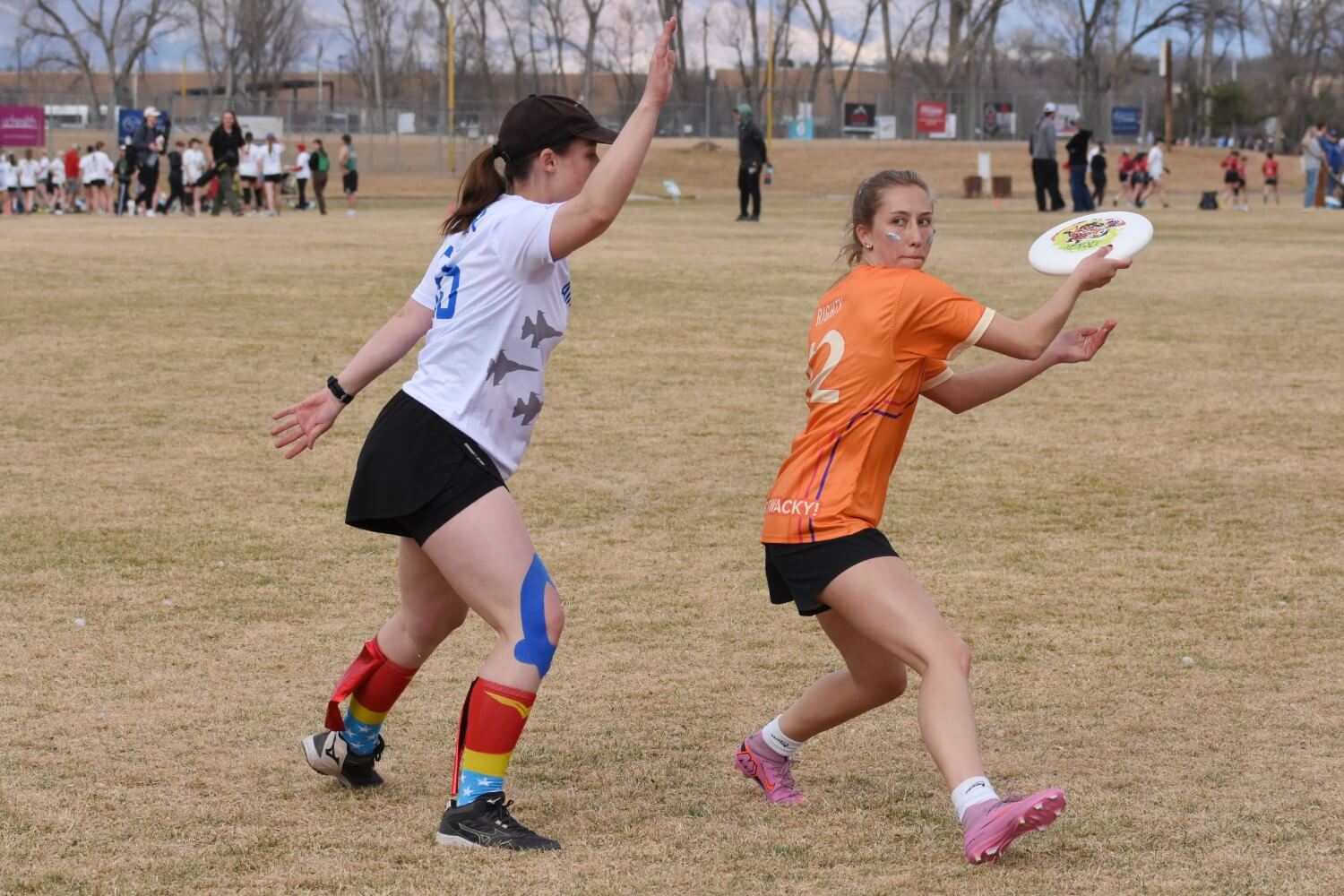
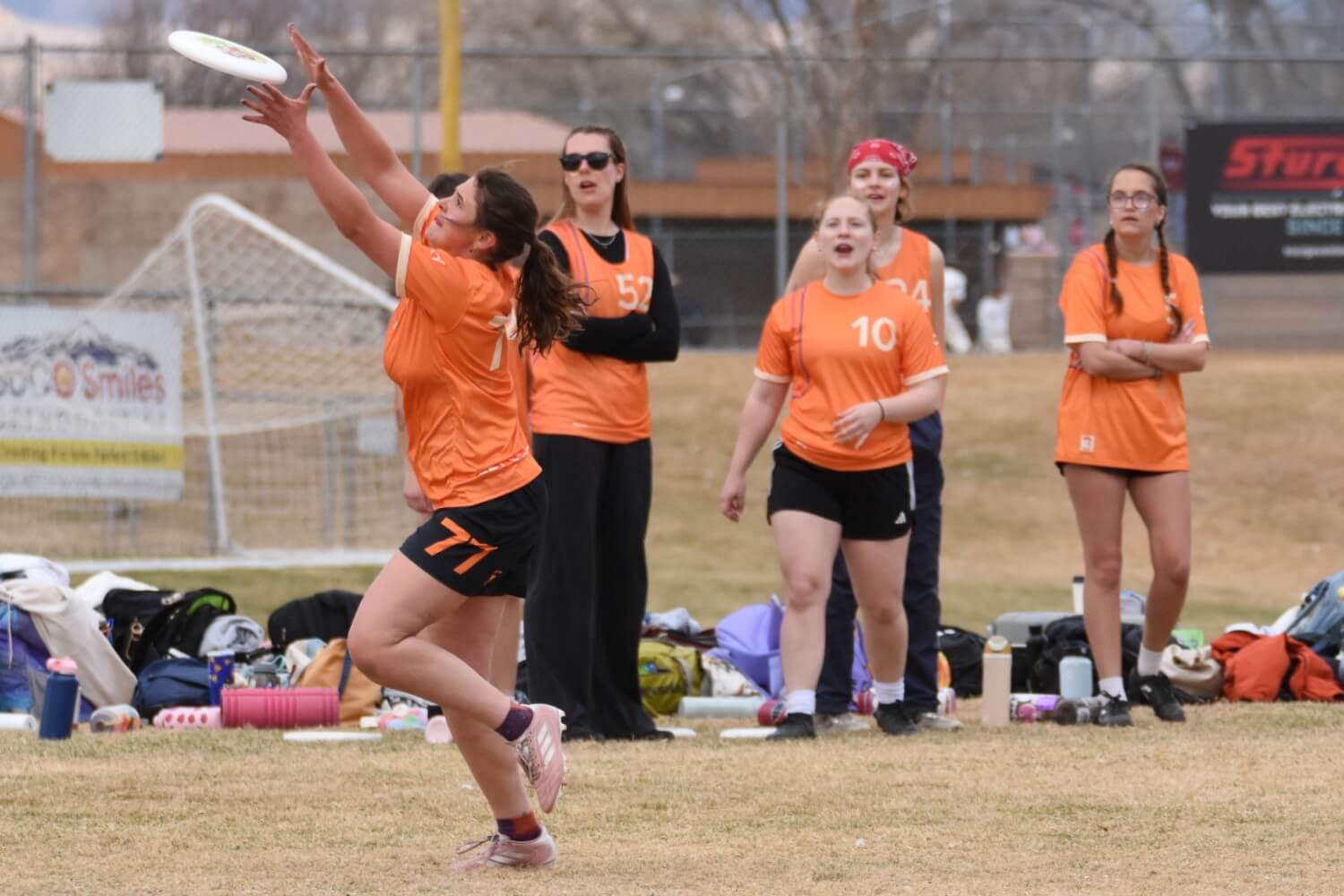
Crawford was co-captain of the Ultimate Frisbee team. His friends said he was someone who would always catch your throw. On Detox, Occidental’s Ultimate Frisbee Team, captains are elected by their teammates every year. Crawford earned the title his sophomore and junior year and did not take that responsibility lightly.

“He’s the one who would sit down with you and really go in depth with how to throw and all the techniques that he uses,” teammate Luke West (senior) said. “He didn’t really cut too much. He wasn’t the guy scoring, but he was always the guy setting people up […] if you were open, he would find you.”

Crawford’s nickname on the Ultimate Frisbee team was “Mr. Consistent,” Ian Terrell (senior) said.

“It really kind of stemmed from him just being really consistent with his throws, but I think it applies more so to his personality in general,” Terrell said. “He might be one of the most consistently positive people I know.”

Dylan Kuskin (senior) remembered Crawford saving the day after being locked out of his room one morning in nothing but the pants he slept in.

“I put my head against the door, and I say, ‘Hey, Siri, call Nathan,’ and he picks up, because we’re supposed to go mattress shopping in 20 minutes,” Kuskin said. “I walk down to the lobby of Berkus, I walk outside shirtless, no shoes, nothing, and I get in Nathan’s car, and he gives me everything.”

Crawford was a fervent Seattle Mariners baseball fan, attending games with his family throughout his childhood. A baseball player himself, Crawford was coached by his father from Little League up until high school. In his freshman year of high school, he made the game-winning diving catch in left field for the state championship.

“In his bedroom at home, lining the roof of his room […] he has the hats of every baseball team in the MLB,” Kuskin said. “If he was in a common room, he was oftentimes watching a baseball game.”

Within his circle of friends, Crawford was known to have a superb taste in music which he inherited from his dad, his former roommate Alex Witten (senior) said. His taste spanned from ’70s bands like Boston, Pink Floyd, Led Zeppelin and REM to modern indie bands The Marias and Still Woozy. Crawford played instruments both independently and with others.

While he grew up playing guitar, his high school’s jazz band lacked a bass player. Crawford’s mother said her son stepped in and learned to play the bass for them.

“I think that was a perfect instrument for him because he could just be […] consistently in the background doing the right thing all the time,” Alexa Crawford said.

Crawford was an unwavering confidant for the people he cared about, always inquiring about his friends before mentioning himself. According to his quadmate, Amare Askerneese (senior) Crawford was a great listener.

“He has the ability to make other people comfortable in their own skin and make them feel appreciated for how they are without feeling like they have to explain themselves,” Askerneese said.

Crawford’s sly humor was beloved, and his laugh was unforgettable. Kuskin recalled cracking jokes sometimes with the sole purpose of hearing him laugh.

“His laugh, it was incredible,” Evered said. “You [couldn’t] help but laugh when he laughed.”

On the night of Crawford’s death, his group of friends from Occidental invited Evered to their house to spend time sharing stories about their dear friend.

“He does live on through them,” Evered said. “He chose the nicest, most positive [people]. Everyone in his circle resembles him.”

Nathan Jay Crawford was born Dec. 12, 2003. In addition to his parents, he is survived by his younger sister, Claire, a junior at Bowdoin College. His family also has a dog named Izzy.

Contact Lucinda Toft at ltoft@oxy.edu

Loading