Many students at Occidental are currently observing Ramadan, which began Feb. 17 and ends March 19. Ramadan is a holy month celebrated annually based on the Islamic Lunar calendar.
During Ramadan, practitioners fast during daylight hours to practice piety, gratitude and empathy for the less fortunate.Individuals and student affinity groups affiliated with the Occidental Muslim community observe and accommodate those fasting for Ramadan.
“Finger Foods, which was co-sponsored with the South Asian Student Association and also the Latine Student Union, happened after sundownso that people who do fast are able to come to Finger Foods and actually have finger foods,” Kazemi said.
Kazemi said she is Muslim but not fasting for Ramadan, and that it is a common misconception to believe all Muslims fast for Ramadan.
“The most common [exceptions from fasting] are because someone’s a kid, sick, has some sort of disability or is pregnant,” Kazemi said. “Not a lot of people know that you don’t have to fast when you’re traveling too.”
According to Kazemi, she checks in with the people who she knows are fasting, Muslims and non-Muslims.
“There’s also a great amount of people who are just fasting [in] solidarity, even though they aren’t Muslim,” Kazemi said. “I try to engage in more prayer because I’m not fasting.”
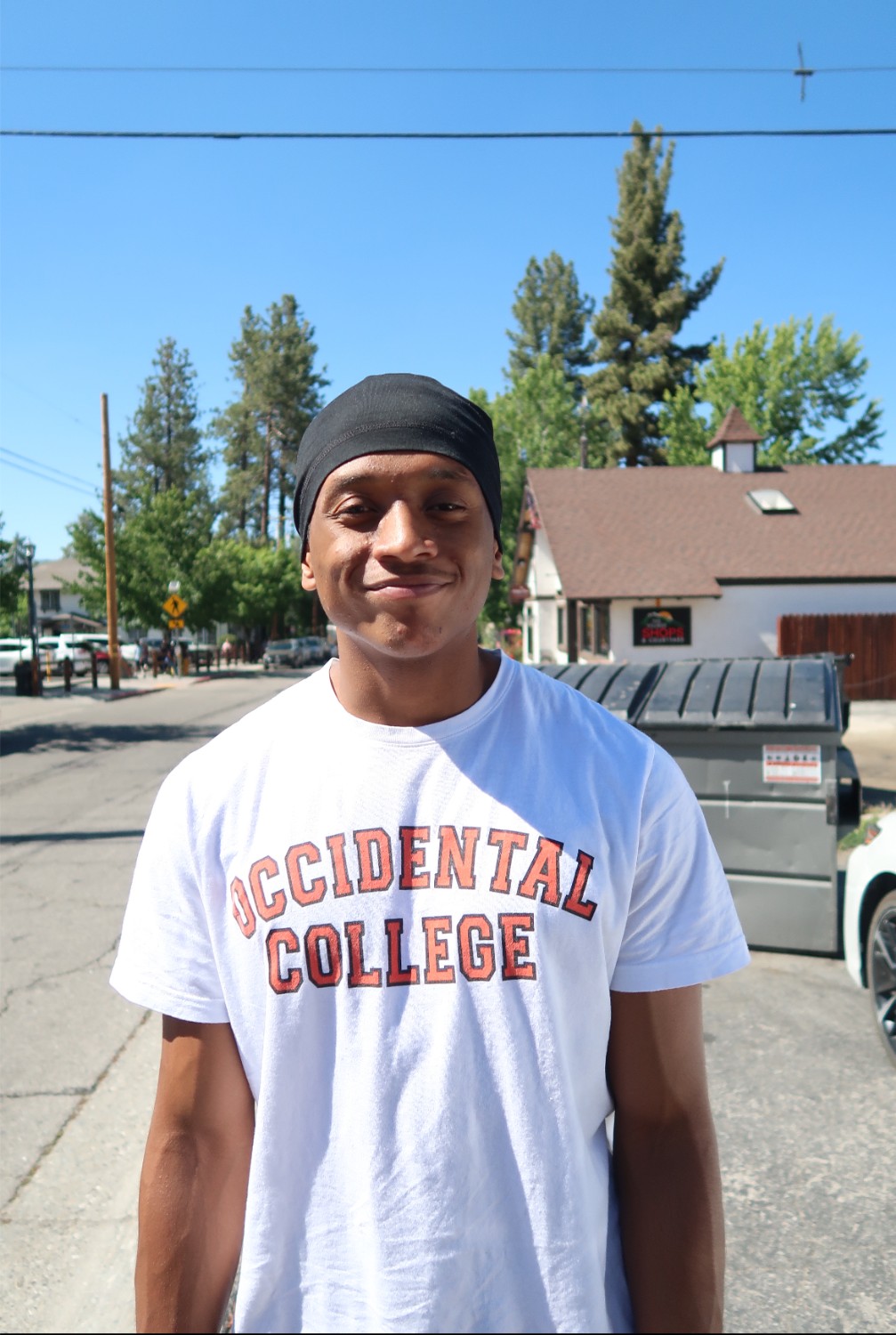
Haegan Malone (junior) Courtesy of Haegan Malone
Muslim Student Association (MSA) member Haegan Malone (junior) said it is his third year fasting at Occidental with MSA.
“Since my freshman year, we’ve been hosting iftars,” Malone said. “We get catering and funding from outside sources. Any time a student expresses interest in joining during the night, when they want to break fast, they’re more than welcome to come by for a meal and take some food back with them as well.”
Malone said MSA does on-campus fundraising, which helps pay for their iftar meals.
“You might have seen us early in the semester, selling baklava in front of the MP, trying to just raise a little money for a reserve fund,” Malone said.
MSA is inclusive of everyone, Malone said, not just practicing Muslim community members, and events are open to all students in the Occidental community.
“We welcome students of all faiths and backgrounds to come and join us to either learn about [Islam] or participate in Ramadan,” Malone said. “They’re more than welcome to come by [or] eat with us.”
Robert Drennan (junior) on the Academic Quad at Occidental College in Los Angeles, CA. March 5, 2026. Lila Weiner/The Occidental
Robert Drennan (junior) said he was fasting a couple days per week with Malone, his roommate.
“He’s been very open about being Muslim,”Drennan said. “I’ve never been particularly religious, but I do hold an interest in [practicing together]because they’re some of my closest friends.”
Drennan said he had never intentionally fasted before and is mainly fasting with his roommate and another friend. According to Drennan, he anticipated meeting a diverse range of people in terms of religion and culture at Occidental and ina big city like LA.
“My roommate offered for me to [celebrate Eid] with him and his family,” Drennan said.
Malone said MSA is looking into collaborating with the greater LA community, including possible events with other MSAs at USC and UCLA for Ramadan.Malone said MSA wants to engage the greater Occidental community as well.
“We’re hoping […] to see if we can host something, possibly for [Eid al-Fitr] or extra Ramadan activities, maybe a community-wide iftar or a Friday prayer,” Malone said. “We’re also trying to organize an Oxy all-student iftar night, where we host students either of the MSA or [who] are interested in MSA — a larger community event where they gather together, get to know each other and really integrate new members into the community.”
The first protest I ever attended was an anti-Trump march in 2016 in Houston, Texas. What struck me most wasn’t the chants or the signs; it was the tension. Cars drove past honking — not in support, but in anger. Some people spit out their windows, yelling profanities as they drove away. At that moment, the protest felt confrontational and uncomfortable. We weren’t just expressing a political opinion; we were directly facing people who believed our rights and identity did not deserve protection.
Fast-forward several years, and I attended ananti-ICE protest outside the federal courthouse in downtown LA. The atmosphere felt different; the shouting from passing cars this time was in support and the honking didn’t make me flinch. Instead, hundreds of people stood together in solidarity, holding signs calling for immigrant rights and the end of deportation raids. The protest in LA began peacefully, with a sense of unity among those gathered to challenge government policy. In Houston, the atmosphere felt far more confrontational. It wasn’t simply citizens standing up to power; citizens were turning against each other.
In recent years, protests have become one of the most visible forms of political expression in the U.S. and around the world. Demonstrations against immigration enforcement, rallies for women’s rightsand marches supporting movements like Black Lives Matter have filled streets nationwide. International conflicts — including wars in Palestine and Iran — have sparked protests thousands of miles away as people express solidarity with those affected. But the sheer number of demonstrations has also led to a growing skepticism about their impact. This raises a question that many activists ask themselves: Do protests actually change anything?
Legal scholar Richard Thompson Ford argues in his 2020 essay “Protest Fatigue” that protests have become so common they risk losing their effectiveness. He writes that while protests have historically driven social change, their overuse can dilute their power and turn them into events that “preach to the choir,” orgatherings where everyone already agrees with one another.
Ford warns that demonstrations sometimes function more as “morale-boosting experiences” for participants than as meaningful political interventions. In cities where the majority of residents already support a cause, protests may do little to persuade those in power or change policy.
It’s a fair critique. In many progressive cities, protests against racism, immigration enforcement or gender inequality often occur in communities where those values are already widely accepted by residents. Marching in those spaces can feel symbolic rather than transformative.
Yet dismissing protests as ineffective misses an important psychological and political reality.
Even when protests don’t immediately change laws, they can reshape how people understand themselves and their communities. Psychologist Lauren Duncan, who studies activism and civic engagement, argues that participation in protests helps people feel politically empowered and connected to others who share their values. In moments when the political system feels unresponsive, collective action can provide a sense of agency that neither voting nor posting online can.
Social media, of course, has also changed the scale of activism. Platforms like Instagram, TikTok and Twitter allow movements to spread rapidly. What once required months of planning can now begin with a single viral post. While this accessibility helps mobilize large crowds, it also contributes to the sense that protests have become routine rather than extraordinary. However, standing in a crowd of strangers holding signs about something you believe in does something that scrolling through social media can’t physically do: it reminds you that you are not alone.
Historically, protests have always played a crucial role in social change.The civil rights movement, the women’s suffrage movement and anti-war demonstrations all relied on public mobilization to force political leaders to confront injustice. Ford notes that the most effective protests shared three characteristics: legitimacy, efficacyand self-sacrifice. Movements like the March on Washington and the Montgomery bus boycott worked because they not only challenged unjust systems but disrupted everyday life and involved real risk for participants.
Today’s protests may look different, but the underlying motivations remain the same; they are participating in a long tradition of using public space to demand accountability. The challenge is not whether protests should exist; it is how they can remain meaningful.
Part of the answer may lie in recognizing that protests are only one piece of political engagement. Demonstrations raise awareness, but they must be paired with voting and policy advocacy to produce lasting change. Protests can ignite movements, but they cannot sustain them alone.
Another lesson is that protests can serve different purposes depending on context. Sometimes they aim to pressure those in power directly. Other times,they build solidarity among communities facing discrimination or political uncertainty. In moments when progress feels impossible, simply gathering in public can be an act of resistance.
That was the feeling I experienced at the anti-ICE protest in LA. No law changed that day. Yet people stayed for hours, chanting and sharing stories about family members affected by deportation raids. As a Latina, it reminded me that hundreds of others share my concerns, and that anger and fear can be directed elsewhere rather than doomscrolling.
Protests help keep democracy alive. They may not always lead to immediate change, but they contribute to the collective pressure that eventually pushes societies toward greater justice.
Occidental’s Tiger Cooler serves as one of two dining facilities on campus, along with the Marketplace. In addition to traditional sit-down dining and freshly-served meals, the Cooler provides numerous grab-and-go style food options. In recent years, the Cooler has undergone numerous changes to its schedule and menu, particularly regarding the closing time.
According to an email interview from Assistant Vice President of Hospitality and Auxiliary Services Erik Russell, the Cooler’s schedule is dependent on numerous factors.
“Operating hours are not arbitrary,” Russell said via email. “They are contingent on our ability to staff the Cooler consistently and the demand patterns we see by day and time. We regularly review traffic patterns and peak periods, setting the operating hours around the service windows we can deliver reliably and safely while also maintaining a strong student experience.”
Russell said the timetable alterations are made with consistency in mind, ensuring that students have a schedule they can count on.
“The priority is not simply adding hours for the sake of adding hours, but it is about making sure any schedule we offer is consistent, well executed and sustainable,” Russell said via email. “My goal is to continue building toward a schedule that expands access where it makes sense, while making sure students can trust that when the Cooler is open, it is fully staffed, operating smoothly and delivering a strong experience.”
Cooler employee Renée Matos said the Cooler’s scheduling changes tend to alter its peak hours, since many students dine at the Cooler around its closing time.
“We get a rush later at night because we close at a different time now,” Matos said. “Right when we’re about to close the grill or the Cooler, we’ll get a bunch of kids trying to get in.”
Russell said that while student feedback often shapes menu decisions, many other factors are at play.
“Because the operation has a small production footprint, every item has to be something the team can prepare consistently and safely while also balancing student demand with gluten free and other allergy related needs,” Russell said via email. “That makes menu development more complex than it may appear from the outside, so changes are made thoughtfully with a focus on quality, consistency and what the space can realistically support.”
Paul Finn (junior), a current student worker at the Cooler, said operations have been altered often throughout his time as staff.
“Less breakfast sandwiches, no special dinners, a lot of reduction happened at the start of the school year,” Finn said.
Finn said the Cooler’s staff consists of some long-term members, but is often subject to turnover.
“Since my freshman year there’ve been quite a few new faces,” Finn said. “People come and go […] I can count the people who have stayed since freshman year on my hand.”
Matos said the Cooler’s menu tends to change from year to year.
“Last year we had more entrées during the day,” Matos said. “We had more lunches and different meals. This year, we took some stuff off of the menu.”
According to Finn, some of the Cooler’s menu changes were due to vendor-related issues as opposed to Occidental itself.
“Sushi has been inconsistent throughout [the years],” Finn said. “I think we’ve had three separate vendors. The reason why we had it last semester and don’t have it now is because the vendor shut down.”
According to Russell, the biggest challenges the Cooler faces are related to balancing student expectations with the operational realities of a compact space.
“Students understandably want convenience, variety and consistency, but delivering all three at a high level requires the right combination of staffing coverage, equipment capacity and a menu that fits the space,” Russell said via email. “My focus is on strengthening consistency first, because that creates the best foundation for improving the overall student experience.”
Russell said his main goal for the Cooler is to maintain its dependability.
“My main focus in the near future is stabilizing the operation so the Cooler can deliver a more consistent and dependable experience for students,” Russell said via email. “That includes strengthening staffing coverage, and making sure the schedule and menu are aligned with what the space can execute well.”
Finn said he believes Cooler management should prioritize making its menu as accessible as possible for those with dietary restrictions.
“I’ve noticed that a lot of the issues that get closer attention aren’t that big of a deal,” Finn said. “I think there are more pressing things that students have brought up, especially accessibility on the menu and gluten-free options.”
As high school seniors finalize college decisions this spring, Occidental’s admissions team is reviewing a record 7,904 applications to build the class of 2030, according to Vice President of Enrollment in the Office of Admission Maricela Martinez. The college has a target enrollment of 535 students, Martinez said.
This admissions cycle comes as Occidental deals with an estimated 15 percent dip in enrollment for the class of 2029. In a May 2025 message to the campus community, Occidental President Tom Stritikus wrote that the significantly smaller incoming class reflects enrollment trends affecting private liberal arts colleges nationwide.
Martinez said recruitment begins long before applications arrive.
“I feel honored to be part of the team that represents Occidental to high schools and students across the country and across the world,” Martinez said. “It takes years to recruit and enroll a class.”
Martinez said students begin exploring colleges at different points in high school — some start as sophomores, while others learn about Occidental during their senior year.
“Our job is to help students and families understand a liberal arts education, distinguish Occidental from other institutions of higher education and encourage students to explore and learn more about our academic offerings and community,” Martinez said via email.
Martinez said the college’s broader mission shapes enrollment goals.
“Our goal each year is driven in part by Occidental’s mission to ‘provide a gifted and diverse group of students’ with the highest quality education,” Martinez said via email.
According to Martinez, as the committee reviews applications, it evaluates how students might contribute across campus — in classrooms, residence halls and extracurricular spaces.
“We look for students with intellectual curiosity that we believe will thrive in a liberal arts setting, students who would engage in our undergraduate research, contribute to our musical ensembles, participate in our varsity sports, start a new club, join the student government, etc.,” Martinez said via email.
According to Martinez, institutional needs can also influence decisions. One year, the college may prioritize recruiting more athletes. Another year, a department may seek more musicians. Martinez said those considerations inform the process but are not the sole factor.
“In the end, our hope each year is to bring together a group of students that will thrive and flourish in our community,” Martinez said via email.
Martinez said two qualities that consistently stand out are curiosity and the desire to engage with a diverse, tightly-knit community.
Although Occidental received its largest applicant pool to date, Martinez said the number of college-bound high school seniors is declining nationally. At the same time, students are applying to more institutions than in previous years.
“Twenty years ago, students may have applied to 5-7 colleges,” Martinez said via email. “Today, students are applying to 20+ colleges.”
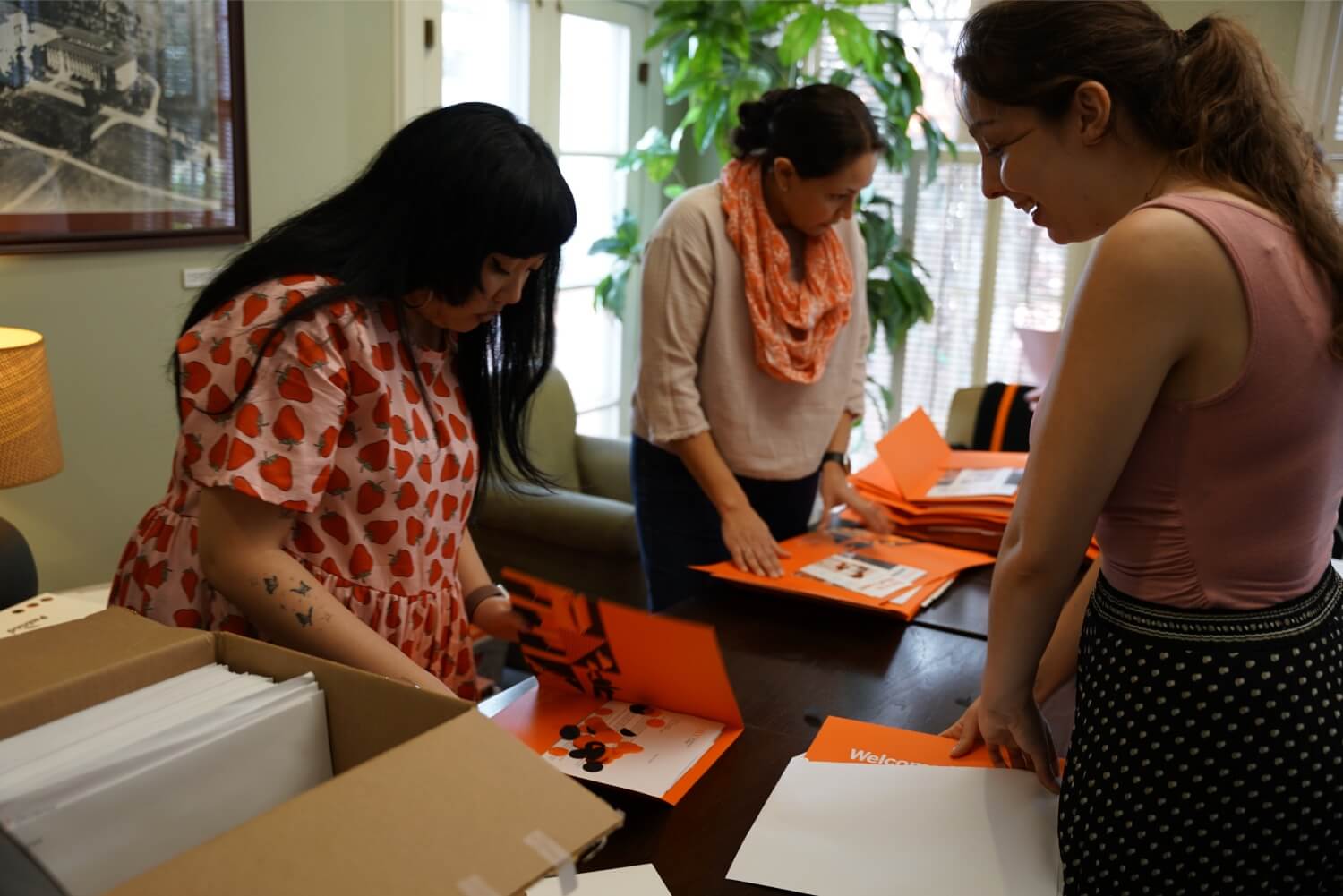
Occidental staff and Vice President of Enrollment Maricela L. Martinez (middle) pack admission acceptance packets for the class of 2030 in Collins House Office of Admissions at Occidental College in Los Angeles, CA. March 2, 2026. Anthony Cordova/The Occidental
Martinez said campus visits can play a key role in students’ decision-making.
“We often hear from students that even a small interaction on campus can leave a lasting impression, sometimes impactful enough to shape their decision to attend Occidental,” Martinez said via email.
According to Martinez, recruitment is not limited to the admissions office.
“Every member of the Oxy community has a role in recruiting the next generation of Occidental students,” Martinez said via email.
According to Senior Manager of Digital Communications Jasmine Teran, while admissions officers evaluate applications and host admitted students, the Marketing and Communications team works to ensure prospective students encounter Occidental long before arriving in Eagle Rock.
Teran said prospective students often begin researching colleges online.
“We know that beyond the viewbook and a campus tour, prospective students are likely doing their own research on YouTube, Reddit, Instagram and other social media sites,” Teran said via email.
Teran said her strategy focuses on highlighting student life across platforms.
“I want to make sure that I’m actively highlighting different aspects of the student experience in a variety of ways on those platforms, from irreverent trends and ‘fit-checks’ on TikTok to long-form Week in the Life videos on YouTube, as well as photos of events and campus life on Instagram,” Teran said via email.
Teran said peer-to-peer communication online is also very important for recruitment and that students tend to trust other students more than institutional voices.
“It’s my job to meet them where they’re at, but I’m also aware that my voice as an Occidental employee doesn’t carry the same weight as a current student who goes here,” Teran said via email.
Vice President for Institutional Advancement Melissa Mount said choosing Occidental means joining a broader network that extends beyond graduation.
“Oxy is a community that truly invests in your success, not just while you are a student, but for life,” Mount said via email.
Mount said alumni serve as mentors, internship hosts and volunteers, helping create opportunities for current students and graduates.
“Prospective students should know that when you choose Oxy, you are not just choosing a college,” Mount said via email. “You are joining a lifelong community that stays connected and believes in your potential, invests in your growth and inspires you to make a meaningful difference in the world.”
The purpose of life is a daunting question. Existentialists have long tried to find an answer, turning to philosophers like Martin Heidegger or Søren Kierkegaard. Out of all the ways great thinkers have approached the question of life’s purpose, I don’t think any can compare to my favorite animated film of all time: Pixar’s “Soul.”
It’s been a while since I first watched this movie during the COVID-19 pandemic. With May right around the corner, many seniors — myself included — are graduating soon, and the current job market isn’t the best. I think now, more than ever, “Soul” is an important reminder of what is truly important in life.
The film’s protagonist, Joe Gardner, dies almost immediately. The aspiring musician finally gets the musical gig he’s been dreaming of his entire life, before falling down an open manhole. Joe wakes up in The Great Beyond (the movie’s representation of the afterlife), but manages to escape to the You Seminar (formerly known as The Great Before), where souls prepare for life on Earth by filling out their Earth pass. Souls here receive mentors to help them find their spark, but no one explains what a spark is. Joe is mistaken for a mentor, and is partnered with a soul named 22. 22 has been at the You Seminar for quite some time, unable and unwilling to find her spark. Joe takes this as an opportunity to help motivate 22 to find her spark, so that he can use her completed Earth pass and return to his body in time for the gig.
At first, a spark appears to be what a person is most passionate about in life. Joe and the other mentors watch a montage of various souls exploring interests in the Hall of Everything, ranging from archery to photography. Joe — much like the viewer — believes that a spark is equivalent to a purpose: what you’re meant to do in life. It’s comforting to know that you have a purpose in life, whether or not you know what that purpose is. Maybe that’s why we, as viewers, are so inclined to align with Joe’s interpretation of a spark.
However, the definition of a spark is never confirmed. Rather, the connection between a spark and a purpose is ridiculed towards the end of the film. I find it fascinating that we are never explicitly told what a spark is, and yet we immediately assume that it’s a soul’s purpose (likely influenced by Joe’s own interpretation of the term). I think the best part of this film is the creative choice to keep the meaning of a spark undefined. All we get are glimpses, teases as to what it could be. The only thing we know for certain is that a spark isn’t a purpose. Like Joe, we’re left wondering. If a spark isn’t a purpose, then what is it? What is my spark?
There’s something so beautifully ironic about omitting an explicit definition of the spark. Joe’s arc teaches us that attributing our life’s purpose to a single goal doesn’t mean you’ll magically become happier once you achieve it. Joe finally achieves his dream: he absolutely kills the jazz show, but he still isn’t happy. This moment of realization was when it all clicked for me. I wasn’t necessarily as passionate about anything as Joe was about music, but I could relate to that heavy feeling of unmet expectations.
I attended the University of California, Santa Barbara (UCSB) for my first year of college, and I thought college would make everything fall into place. Up until that point in my life, college was the goal. But once I achieved that goal, it wasn’t at all what I anticipated. Along with the heavy imposter syndrome and debilitating homesickness, I realized I had been blinded by the idea of college and that admission to UCSB wouldn’t suddenly make me happier.
After Joe returns home from his gig, he sits at his piano bench and tries finding solace in music, as he always has. He places his fingers on the keys, and they drag as he’s unable to bring himself to play anything substantial. But then he looks over at his side table with all the things 22 collected during her journey in his body: a seed, a pizza crust, a mostly-eaten bagel, a lollipop and a spool of blue thread. Things neither he nor we would’ve thought 22 would keep, and yet she did. He reminisces about the memories she made associated with each item and goes further still to his own life. He remembers his mom helping him take a bath, listening to records with his dad and watching fireworks with his parents on the roof of their New York apartment. This recollection of nostalgia is Joe’s epiphany.
That’s what we have to learn from “Soul.” Whatever purpose we might have on this planet is unimportant. If we become obsessed with a perceived purpose or with trying to find one, we’ll become disconnected from life and ignore all the little things that give it meaning. There’s nothing wrong with having goals or wanting to strive toward some perceived purpose, but the minute it becomes an obsession is when you’ve become disconnected from life. That is our purpose: to wander aimlessly, unaware of whatever purpose we might have.
As a senior, I’ve applied to jobs like crazy for the past month, but I haven’t let my desire for stability get in the way of everyday moments. I don’t know what a spark is, nor do I want to know, but what I do know is that I’m going to live every single moment of my life.
**This article will contain slight to moderate spoilers for all the films mentioned**
This time last year, having jumped freshly off the stage from an incredibly joyous Apollo Night, I spent 24 hours straight taking part in the AMC Best Picture Showcase.
And because I decided I hadn’t suffered enough, I decided to do it again. Only this time, I had just performed alongside my partner-in-crime, Zach Lipsett, and the showcase was split over two weekends.
First up on the docket was “Train Dreams,” a Netflix film, one of the two screened because this year (unlike the film that must not be named), Netflix and AMC decided to get along. In any case, the film was a sobering portrayal of a man’s life, his triumphs, his tragedies and the way the relationships he formed shaped him. It’s a very quiet and wistful film, sporting some ingenious cinematography, a remarkably strong effort indeed.
“The Secret Agent” was awash in gorgeous colors and heartbreaking drama. It perfectly portrayed the vast cultural richness and diversity of Brazil, while also exhibiting a demanding leading performance by Wagner Moura, a man on the run from his past, pursued by trouble around every corner. Not one to be missed, that’s for sure.
“One Battle After Another” was the first rewatch, and just as enthralling and stressful as it had been the first time. As a Black female viewer, this film leaves me with many questions about representation and revolutionary ideals that I’ve yet to answer for myself, but it’s one I’ll be glad to watch again and again.
“Hamnet” was definitely my most anticipated first-time watch on day one. My theater experience made my own connection with the material more personal, and ultimately, it was an engrossing experience. The concept of loving someone so much that you create an immortal artwork so that you’ll never lose them had tears streaming down my face by the end. Jessie Buckley is a master of her art and delivers a performance that generations to come will recognize.
“Frankenstein” was a third-time watch in theaters, and it just keeps getting better. The set design and costumes are breathtaking, Oscar Isaac’s Victor is so thoroughly scummy that you grow to hate and love him, and even though I watched him speak at Vidiots, part of me will never accept that the Creature is Jacob Elordi. Transformative doesn’t even begin to describe it. A joy through and through.
Beginning the second weekend of films on a strong note, “Sentimental Value” resonated deeply with me, focusing on the broken relationship between an accomplished director and his two daughters, both of whom deal with the trauma of his absence differently. The film carries a similar quiet energy to “Train Dreams” and is natural and lovely throughout.
I had zero expectations going into “F1,” and wasn’t left seething by the end. One thing’s for sure, Damson Idris and his beautiful face make this entire experience worth it. That and the pulse-pounding race sequences, which actually stressed me out. Still, this film felt far less organic than pretty much every other nominee. The corporate, sterilized, “This was made by Apple” feeling doesn’t really go away at any point, and the several cameos by real-life F1 champion and film producer Lewis Hamilton were so jarring that they took me out of the film. Vroom, vroom.
“Marty Supreme” was a pleasant rewatch, but the hype from Christmas Day failed to carry over for me. It’s a chaotic, mildly terrifying affair of horrible people that you can’t help but root for anyway. As much as Timmy Tim delivers in this film, it lacked a lot of what the other films had to offer and left me feeling so-so by the end. I hope you got more than 14 cents in revenue from this one, boys.
My second-to-last watch, “Sinners,” left me as awestruck as ever. In all honesty, there’s not much I can say about this film that hasn’t already been said. I was fully consumed by joy for the entire runtime, and I don’t know what was in the air, but by the midway point, I found myself choked with sobs, probably the hardest I’ve cried ever in a theater. I was comforted that my fellow guests were emotional as well. Multiple factors fueled my response; both the sheer gravity of this ode to Blackness, resilience and love for music, and the fact that this may very well be the last time I get to experience this masterpiece in theaters. I cannot describe this film as anything more than miraculous.
I was anxious about ending with a new watch, but “Bugonia” was so odd and twisted that I found myself feeling shocked and distressed in the best way. I won’t say much about it except for this: Would it be too much to ask for Jesse Plemons to play a kind, warm-hearted character for once? I swear, in everything I’ve seen him in, he is always the scariest person in the room. “Breaking Bad,” “Killers of the Flower Moon,” “Civil War” (well, the trailer, I didn’t actually watch the film, but my point still stands) and now this. Goodness. He’s starting to become a genuine phobia of mine.
AMC Theaters: I come to this place to spend copious amounts of money on snacks and feel engaged, enraged and ultimately changed. Somehow, a splitting headache and an empty bank account feel good in a place like this.
Matthew Reagan ‘21, Documenters Assignment Editor of the LA Documenters and journalist at the LA Local, brought Documenters to Occidental College March 2025. The organization works to keep the public informed about local politics across the nation by assigning and paying reporters to cover public meetings and publishing the notes on the official Documenters website.
Documenters helps further connect Occidental with the surrounding Northeast LA (NELA) neighborhoods, Reagan said.
“It’s a dual mission of providing opportunities for students while also providing a community service to the residents of Northeast LA,” Reagan said. “[It says] ‘Hey, we’re here at Oxy. We’re not just here to learn, but to really be neighbors with y’all in East LA.’”
According to the Docs@Oxy application, student documenters have the opportunity to develop their notes into stand-alone news stories for publication in The Occidental and the LA Local after attending meetings, but do not need to be staff writers for The Occidental.
According to Reagan, his main role within the organization is to see which meetings should have a documenter and ensure the documenters who attend them are supported throughout the note-taking process.
“I’m working with [students] to fact check, edit and then eventually publish their notes on the site so regular residents or advocates or our journalists at the LA Local, can know what happened if they weren’t able to attend themselves,” Reagan said.
According to Reagan, he brought Documenters to Occidental to give students similar experiences to ones which helped launch his own career in journalism after his time as The Occidental’s Editor-in-Chief.
“My start in professional journalism really happened covering a neighborhood council meeting,” Reagan said. “I really got a great opportunity through a local paper to get my feet wet and cover neighborhood councils.”
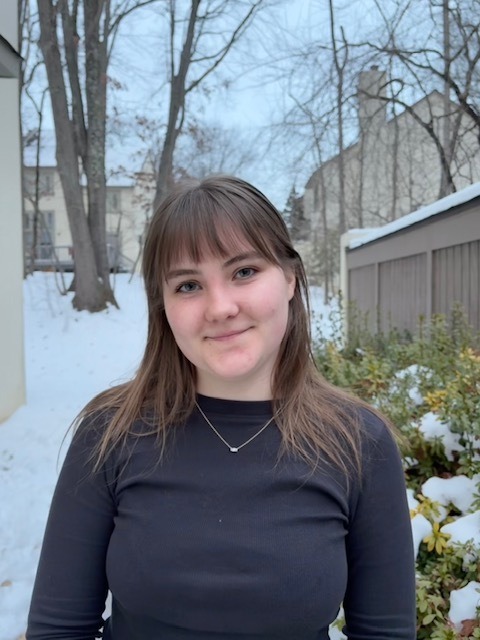
Courtesy of Claire Wilson-Black
Claire Wilson-Black* (senior) attended an Eagle Rock Neighborhood Council (ERNC) meeting March 3 at the Eagle Rock City Hall as a documenter. At the meeting, Wilson-Black took notes on the meeting, which she later uploaded to the Documenters website.
Wilson-Black said she already had an interest in government and got involved with Documenters after receiving an email from James Miller** (senior), explaining the Documenters program.
“I was thinking about the ways I wanted to spend my time in my last semester and I saw [the] email from [Miller],” Wilson-Black said. “It sounded right up my alley because I am super interested in local government and haven’t gotten to do anything quite this local before.”
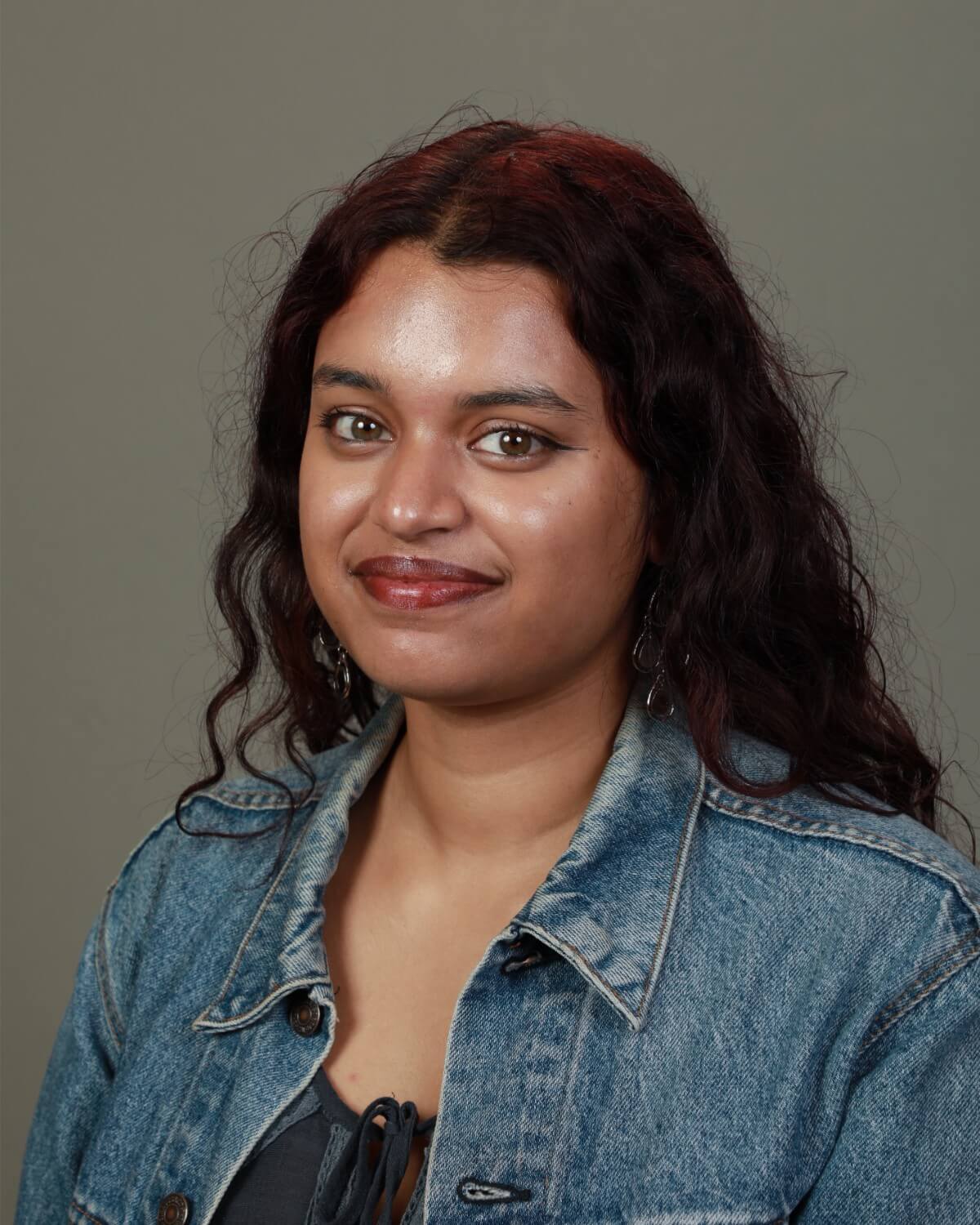
Documenter Samhita Krishnan* (first year) said she got involved with Documenters because she thinks people need to pay more attention to local politics.
“I feel like [local politics] need to be taken with the same consideration that national politics are, because a lot of the small decisions that are made here at these council meetings impact our country and even our state,” Krishnan said.
Courtesy of Samhita Krishman
According to Wilson-Black, Documenters provides a record of notes taken at local government meetings to help keep the general public informed of what community members can enact change on.
“Ultimately, it’s not just about exactly what is happening, like each motion or who seconds the motion or whatever,” Wilson-Black said. “It’s also ‘What’s the story there, who’s showing up, who’s not showing up, what are people interested in, what are the issues community members care about?’”
Wilson-Black said the process of selecting what aspects of meetings she includes in her notes was a learning curve.
“Sometimes meetings can be tense or sometimes they can be super easy and super quick,” Wilson-Black said. “[It’s] learning how to tell a story in your notes.”
Reagan said although the Boulevard Sentinel, where he began covering local politics, has shut down, he wants to continue to support Occidental students.
“I want to make sure that students at Oxy who are interested in journalism or research or writing have those similar opportunities that really helped me launch my journalism career,” Reagan said.
Contact Mars Gallati at gallati@oxy.edu
*Claire Wilson-Black and Samhita Krishnan are staff writers for The Occidental
**James Miller is a Senior Editor and former Editor-In-Chief for The Occidental
Occidental students submitted their First-Stage Writing Portfolios March 1. The portfolio essays are part and parcel of the First-Year Seminar (FYS) curriculum and prime students’ writing, research and critical thinking abilities.
Each first year’s portfolio is comprised of three argumentative essays from their FYS classes and a 750-word personal reflection about their writing skills. Two of the three thesis-driven essays must include evidence from scholarly sources. The entire portfolio must be between 5,000 to 6,000 words — and submissions more than 500 words above or below the word limit must be justified in the personal reflection sections.
The Writing Center
According to professor of American Studies and Director of the Writing Center Julie Prebel, the Writing Center supports students through all stages of the portfolio process, from outlines and first drafts to revisions. Prebel also said the Writing Center — located on the ground floor of the library — hosts workshops informing students about the Portfolio’s requirements, such as the reflective essay, which is often an unfamiliar academic writing style for students.
Occidental’s Writing Center faculty includes Prebel, as well as Assistant Director Charlyne Sarmiento and Department Coordinator Audrey Navarro. The Writing Center employs 34 students as writing fellows and writing advisers to help students plan and edit their academic papers, for the portfolio or otherwise.
While students associate the portfolio with their FYS classes, the seminars predate the portfolio, Prebel said.
“The mechanism for completing the portfolio essays happens through FYS because we want a stable base, so to speak,” Prebel said. “A set of consistent expectations that students have when they enter Oxy about first-year writing that they’re hopefully getting through their FYS classes, and then they produce essays to submit for the portfolio that way.”
As the college’s former Writing Program Director, Prebel managed the portfolio process and communicated FYS expectations and resources to faculty members. Occidental’s current Writing Program Director is associate professor of education La Mont Terry.
“[The Writing Program Director] is somebody that is providing opportunities for faculty to learn how to teach writing, to support student writing, to support the portfolio, all of that,” Prebel said.
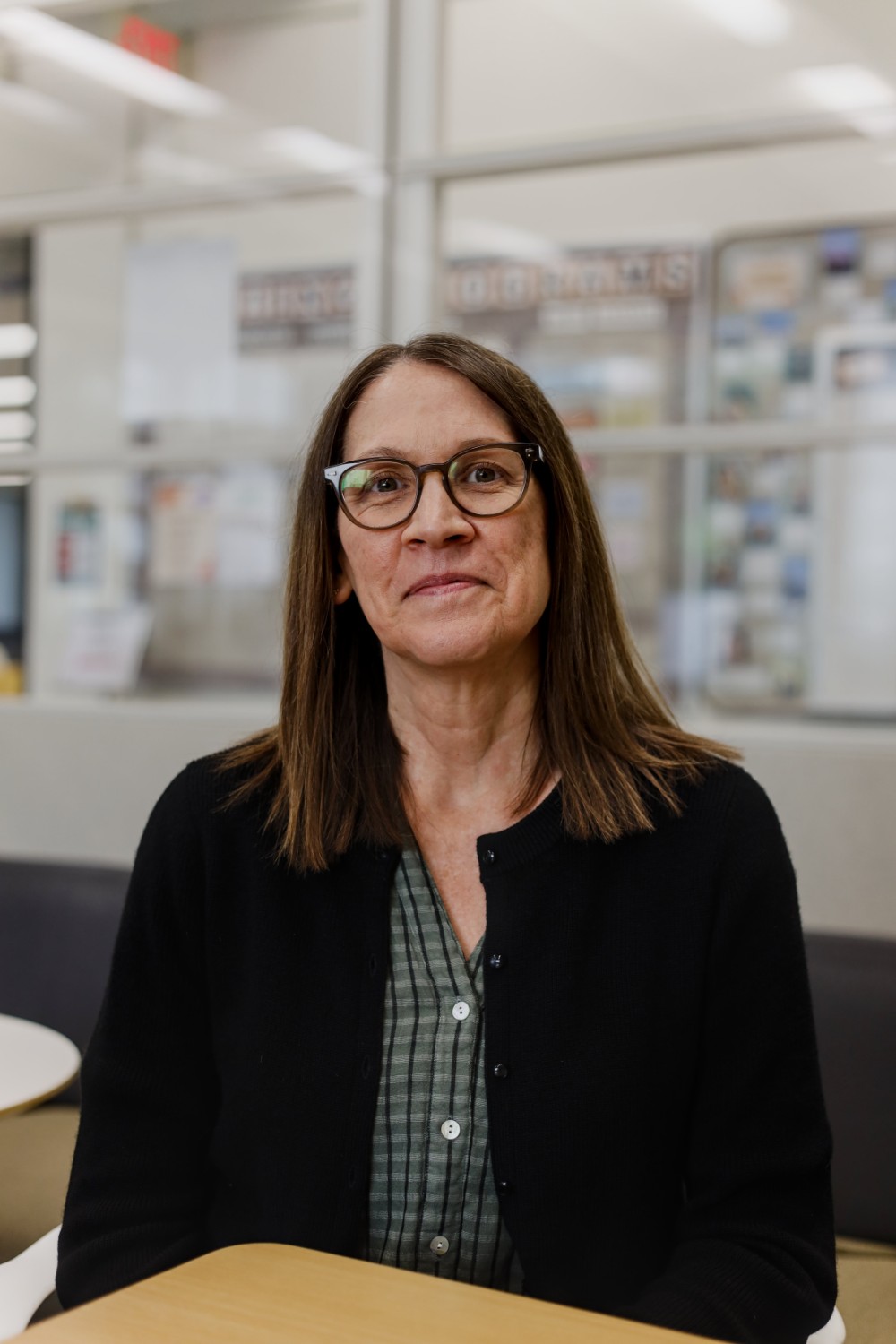
Writing Center director professor Julie Prebel at the Writing Center in the Mary Norton Clapp Library at Occidental College in Los Angeles, CA. March 3, 2026. Maile Brucklacher/The Occidental
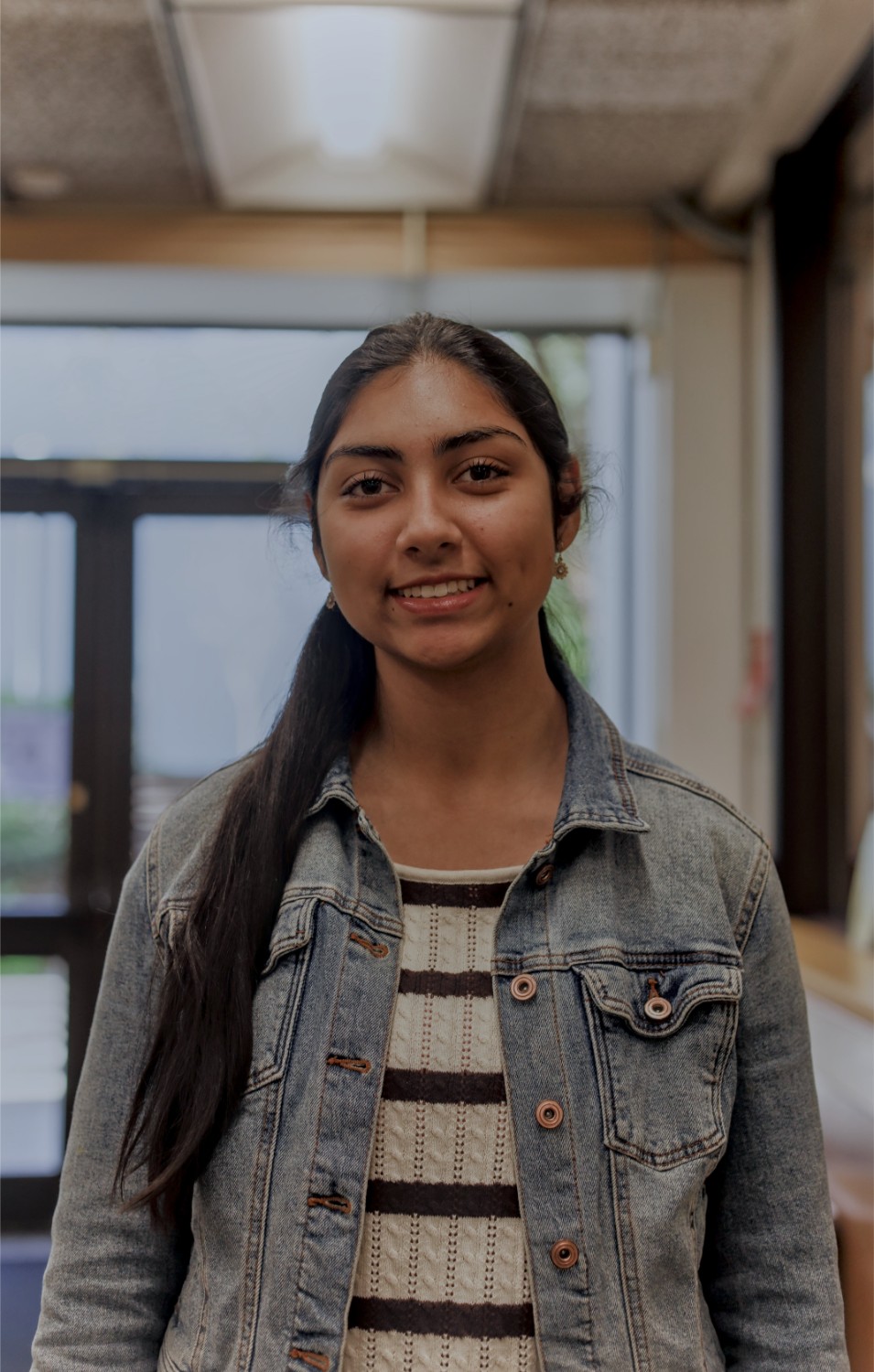
Shikha Iyer (first year) said her FYS classes have taught her how to write at the college level. Iyer said Occidental professors have different expectations than her high school teachers.
“In my high school, we learned how to write in the five-paragraph essay structure,” Iyer said. “In college you can’t really follow that structure because your ideas are more expansive.”
According to Iyer, the writing workshops in her Fall FYS helped her understand the structure of college papers, and she practiced her new approach to writing in the three required essays for that class.
“It was really nice to review them because I got to see how my writing improved,” Iyer said of those essays. “My first essay was very much in that five-paragraph structure, and then as [my essays] went on I was able to express my ideas more freely.”
Iyer said her Fall FYS professor provided extensive individual feedback and notes on each student’s essay, including comments on specific segments written in the margins.
“It was very helpful to be able to visually understand what parts of my writing needed improvement and how I could do so,” Iyer said.
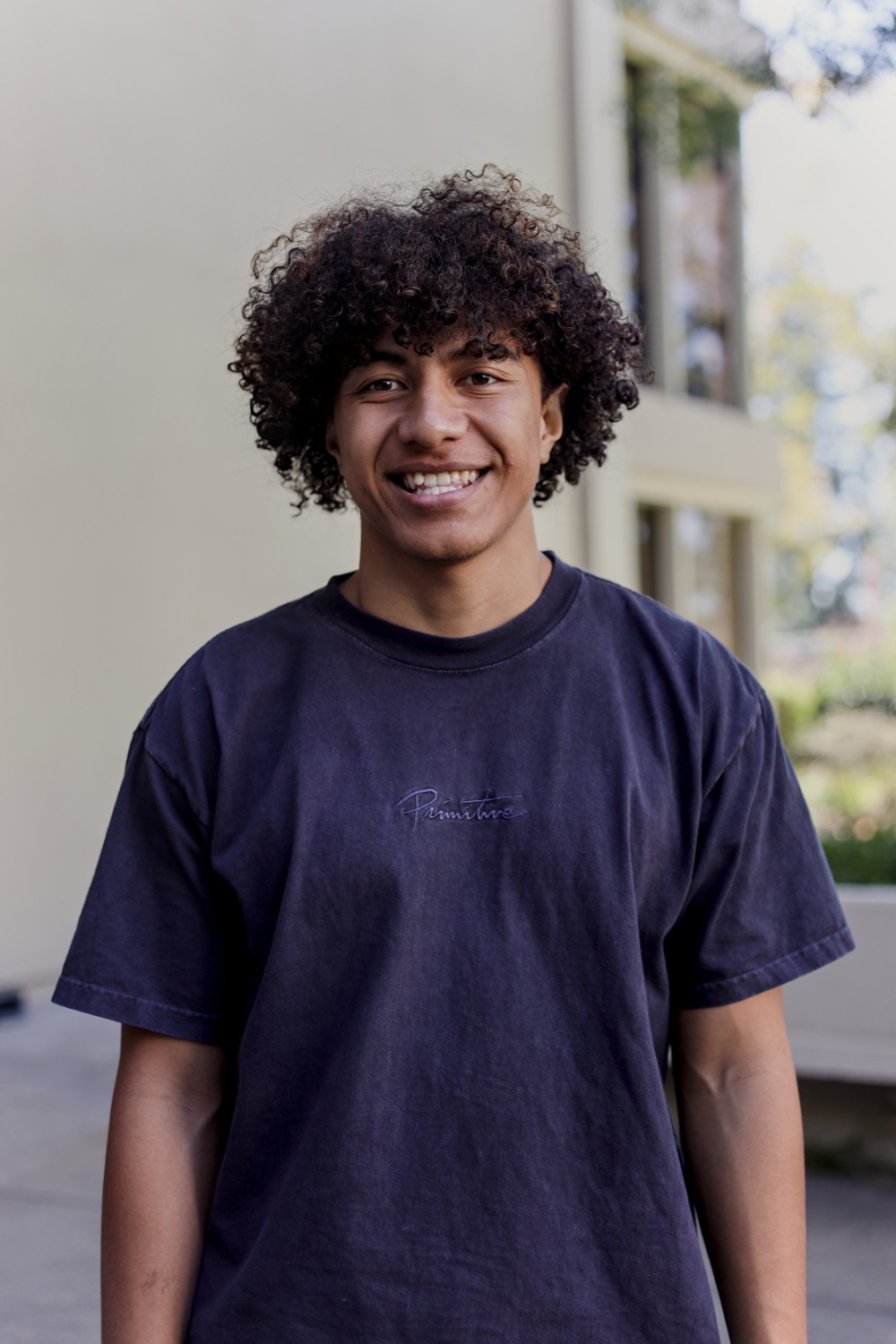
Lelea Tuitupou (first year) also said comments given by his FYS professors helped him improve his writing. According to Tuitupou, another beneficial aspect of his FYS class was the opportunity to read his peers’ writing.
“Continuously writing in FYS has increased my confidence in my writing,” Tuitupou said. “The portfolio motivates students to work hard on the essays that they write in freshman year.”
Jillian Rosset (senior), a biology major, said subject selection was a positive aspect of her FYS experience. According to Rosset, choosing her FYS classes to be science-focused gave her the chance to pursue topics that she was interested in while feeling less pressure due to the FYS classes being pass/fail.
“It was more about building up your writing skills, especially in science, where you have to review articles and write research papers,” Rosset said. “It gave me more experience on how to do that without stressing out about my grade.”
While Iyer praised her FYS experience, she said many of her friends took FYS courses that did not prepare them as well for the portfolio. According to Iyer, all FYS courses should incorporate the portfolio’s expectations. She said that currently, students’ preparedness for the portfolio vary vastly by FYS class.
According to Rosset, certain FYS classes have writing assignments that are less applicable to portfolio assignments, limiting how useful these classes can be for the portfolio.
“There is a lot of variation in what you’re writing,” Rosset said. “I do think it should be more generalized and have more guidelines.”
Shikha Iyer (first year) at the Writing Center in the Mary Norton Clapp Library at Occidental College in Los Angeles, CA. March 5, 2026. Maile Brucklacher/The Occidental
Of the portfolio, Iyer said she would like the college to be “integrating more of it specifically into the first semester FYS rather than leaving it up to the professor.”
While the portfolio has not changed since its introduction in 2020, Prebel said that the FYS program itself has evolved in recent years.
“In the last couple of years [changes] include more community-based work and outward facing projects,” Prebel said. “Maybe more funding because of those [new] aspects of the course.”
According to Prebel, the prevalence of AI has not led to a noticeable decrease in student use of writing centers at Occidental — or other colleges.
“In communication with the other writing center directors nationally, we’re not seeing a big drop-off,” Prebel said. “We’re pretty consistent in our own usage [of the Writing Center] at Oxy.”
Writing adviser Lex Meyer (sophomore) said the Writing Center is busiest leading up to the portfolio deadline. Students’ questions about the portfolio vary, Meyer said, but often involve the structure and framing of their essays — especially due to the portfolio’s unique formatting requirements.
“You have to bold your thesis statement in each of your thesis-driven essays,” Meyer said. “People usually aren’t sure what to put in the [personal reflection essay]. Sometimes there’s citation questions that people come in with. It’s really a mixed bag.”
Meyer said students coming into the Writing Center tend to be very stressed about the portfolio — which Meyeralso remembers hearing from peers as a first year. If students fail the portfolio, they must take an additional class to fulfill the First-Stage Writing Requirement: CWP 201, or “The Art of Essay Writing.”
“[Occidental] kind of catastrophizes it, makes it seem like it’s a really big deal,” Meyer said of failing the portfolio. “In reality, if you fail the portfolio, you take a class, you get better at writing.”
The portfolio is the first major writing requirement for first years at Occidental, which compounds their stress, according to Meyer.
“Coming in as a freshman, you’re going to be anxious,” Meyer said. “A lot of freshmen ask questions like, ‘Do you think this is good? Do you think my writing is up to college standards?’ and I think that’s a normal worry for people, but I think we’re currently doing a good job of curbing that anxiety, telling people it’s OK if you don’t pass.”
Writing adviser Lex Meyer (sophomore) at the Johnson Student Center at Occidental College in Los Angeles, CA. March 5, 2026. Maile Brucklacher/The Occidental
According to Meyer, less students than expected visited the Writing Center before the portfolio deadline — which Meyer believes is an indicator that first years are on the whole less stressed about the Portfolio.
“I think the anxiety has gone down a bit, which is a great thing because we don’t want people to be freaking out over something that they don’t need to be freaking out about,” Meyer said. “If you’re there with your writing skills, you’re going to pass, and if not, that’s okay. We’re gonna work in CWP to get you to the place you need to be.”
Meyer failed the portfolio and encourages students not to fear their results. According to Meyer, taking CWP 201 was not a setback but rather an opportunity, providing them the chance to improve their writing.
“I still work at the Writing Center,” Meyer said. “So you can be totally fine if you fail the portfolio.”
AI and first year writing
Prebel said the Writing Center has a published AI statement detailing policies around AI. Although the use of AI is explicitly banned in completion of the portfolio, writing advisers or faculty do not penalize students for utilizing AI, according to the statement.
In the statement, the writing center specifies that “if relevant, we may ask about the AI policies and guidelines for courses, but it is not our role to enforce or report violations of course policies.”
Rather, Prebel said the Writing Center’s focus is helping students improve, wherever they are as writers or in the writing process.
“If a student comes in to work with us […] and they say, ‘I started this essay using AI and now I have reached a challenge I can’t get past,’ we are just going to start working with them where they are at that moment,” Prebel said.
Meyer has worked with many students in the Writing Center who admit to using AI, although the rise in AI’s capabilities is making it more difficult to identify AI writing without disclosure.
“We’re not always able to tell if something is AI or not,” Meyer said. “If a student comes in with an AI-like essay, hypothetically it shouldn’t be for an FYS, because it’s against the guidelines.”
Tuitupou said that AI can take away from the writing process by giving students the opportunity to skip essential steps, such as brainstorming and research.
“I believe AI can be helpful, but the way it is widely used hinders students’ writing abilities,” Tuitupou said. “If you ask AI to help you fix grammatical errors and small edits to your paper, that is helpful. But if you ask AI to write you a thesis or core parts of your essay, then you gain nothing.”
Lelea Tuitupou (first year) outside the Writing Center in the Mary Norton Clapp Library at Occidental College in Los Angeles, CA. March 5, 2026. Maile Brucklacher/The Occidental
According to Prebel, writing advisers are allowed to ask students about AI use, but students are not required to disclose whether they have used AI. However, Prebel said disclosing AI use can help students and writing advisers move forward to best shape the student’s work.
“We’re going to say, ‘OK, let’s think about how you might start to revise this essay using your own thinking,’” Prebel said. “Going back to your notes or your sources, reviewing ideas about the readings and starting there.”
Prebel said while she sees how AI is changing the landscape of hiring, particularly in business and science, she is not concerned that AI will overpower humanities-based fields.
“Where certain jobs might be replaced because AI can do that work, I still believe that, at least in writing and in the humanities, people want to be their own thinking beings,” Prebel said. “They want to express and articulate their ideas on the page.”
Prebel said she encourages students to prevent AI from clouding their independent thoughts.
“Now, if you do an editor check in Microsoft Word, that’s AI. Some of that can be useful,” Prebel said. “I think that it has to be combined with really thinking, ‘Is this representing what I want to do? My thoughts, my viewpoints, the way I want to structure this argument?’”
Learning after COVID-19
According to Prebel, many teenagers didn’t pick up foundational writing skills while attending school virtually due to COVID-19.
“Pre-COVID there was a somewhat standardized curriculum across most US high schools and even middle schools where certain aspects of the writing process were taught,” Prebel said. “I think that some of what was not included during the virtual years of schooling were aspects of writing that had to do with things like how to diagram a sentence and why that’s important, or to know that you need one subject in a sentence and not two.”
Tuitupou, who was in eighth grade during the COVID-19 pandemic, said “learning during the COVID year of school did not feel mandatory.”
“Trying to learn and stay in engaged with school when you are in a place of comfort like home is not optimal,” Tuitupou said. “Re-adjusting to in-person school was difficult for me, because I felt that I was thrown into high school.”
Tuitupou said that returning to in-person school made him feel discouraged in learning capabilities that he was previously confident in.
“Quarantine was a time when I would write to complete assignments, not to improve my writing,” Tuitupou said.
Prebel said she believes in educating students no matter their abilities, and treating improvement as the goal for young writers.
“Once you learn it, you learn it, and then you don’t make that mistake again,” Prebel said. “In the Writing Center, we go into our work assuming that students have had these experiences where they might be missing some key knowledge.”
According to Prebel, writing advisers share their knowledge about the portfolio and writing in general without quizzing students about what they might not know.
“They are not going to hold back knowledge,” Prebel said of writing advisers. “They’re here to give you that.”
Prebel said that although the idea of a peer critique may seem daunting to many students, the Writing Center provides a supportive space for improvement.
One student, Prebel said, was afraid to come to the Writing Center, but once she did, she blossomed as a student and researcher.
“We used to have a writing adviser who was extremely successful in her role here,” Prebel said. “Butshe talked about how she came down and walked around the Writing Center for several weeks before she came up to the desk and asked to meet with somebody because she was so nervous.”
Prebel said she later co-authored a journal article with that writing adviser.
“[The Writing Center] was a pathway,” Prebel said. “I want to tell people that anecdote because it is hard to share our work with other people and it feels very vulnerable at times.”
According to Prebel, when a student comes to the Writing Center and sparks a conversation with a writing adviser, they might discuss an aspect of the writing process or a topic that they might have overlooked.
“You can have a conversation with someone that really presses you to think more deeply or more radically than you did before,” Prebel said. “You might be pushed at times intellectually or in your writing, but we hope that in a way that helps you grow and makes you feel more comfortable and confident in your abilities.”
Apollo Night, the yearly talent show hosted in celebration of Black History Month, took place Feb. 27 at Thorne Hall. Organized by the Black Student Alliance, Apollo Night showcases students looking to make an impact through their performances.
Zuriyah Smith (senior) was an emcee at this year’s Apollo Night along with Rose Ngalamulume (sophomore). Smith said the event was originally inspired by Amateur Night at the Apollo Theater in Harlem, New York, a historical site that served as a haven for Black artists and performers in the 20th century. According to Smith, Occidental has been hosting Apollo Night since 2008.
“Amateur Night would have children, singers, dancers, all kinds of performers come on stage […] and they would compete for a first place prize,” Smith said. “Someone 18 years ago decided that Oxy could use some showcase like that and could input some form of activity or event on campus that really heightened Black voices, Black identities and Black rituals and traditions.”
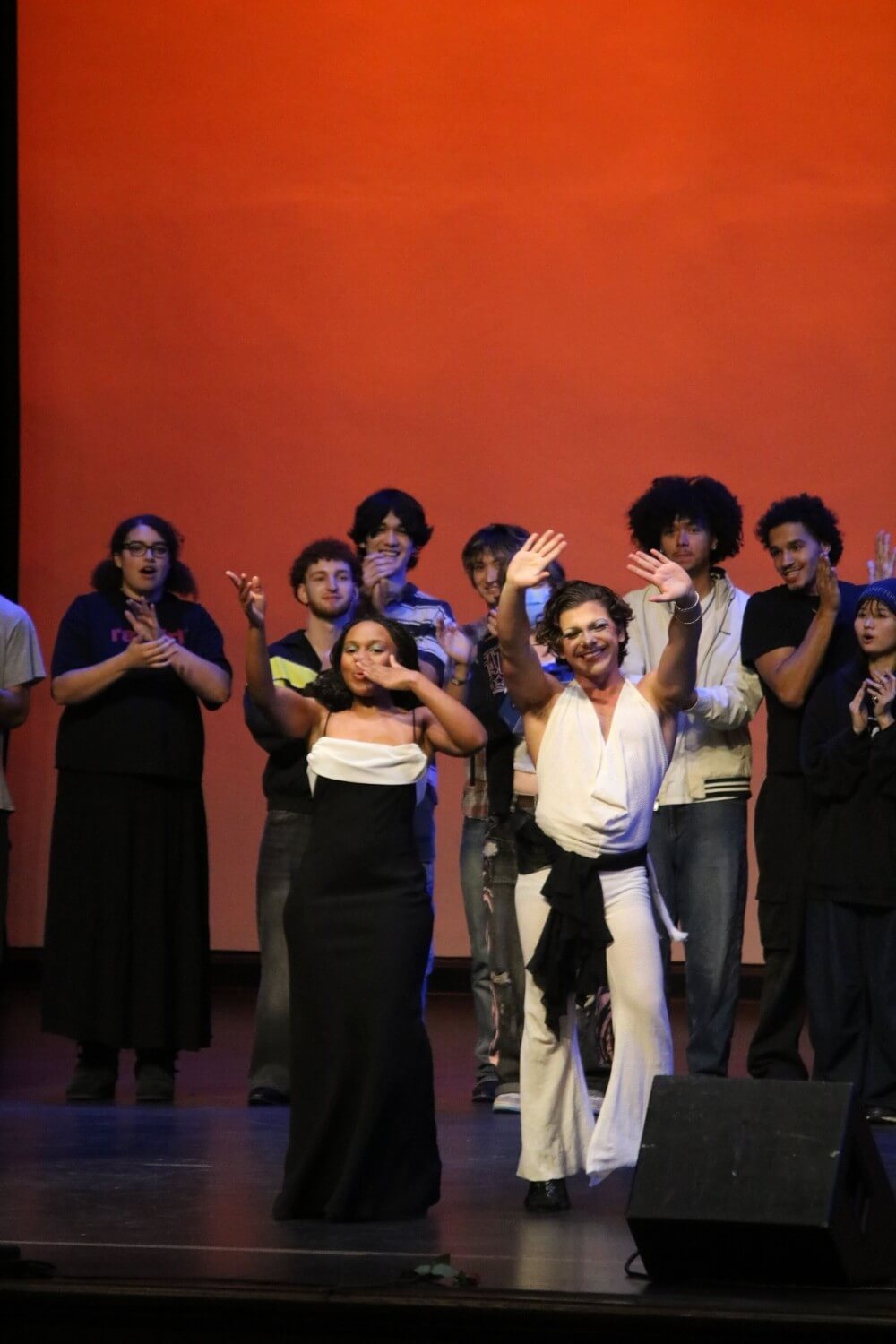
Shelby Kernisant (junior)* won first place at Apollo Night for the second year in a row, along with Zach Lipzett (junior), who placed second last year. The pair performed a duet, featuring Judy Garland’s “Get Happy” from the musical “Summer Stock” and Barbara Streisand’s “Happy Days Are Here Again.”
Kernisant said the pair drew musical inspiration from multiple genres and styles.
“[Zach and I] both have a real big love of classic music. Whether it’s jazz or more in the ballad style, we really love a big song you get into,” Kernisant said.
Courtesy of Maxwell Eve
Kernisant said music and performance can be a welcome distraction from constant depressing news.
“When we come together we’re able to create, [and] it allows us to feel a sense of peace,” Kernisant said. “We wanted to give the audience something to feel joy about, even if only for a moment, because it can be hard to not feel bogged down, but that’s what art is for. When times are at their darkest, you do what you can, because that’s the power of the human spirit.”
Kernisant said the message of unity she was trying to convey is more important to her than being a back-to-back winner.
“I couldn’t go up and sing unless I said something to the effect of, ‘We see you, we love you and we’re all here fighting this battle together,’” Kernisant said. “None of us are alone in this […] what history shows us is that in times of strife and hardship people come together, especially through art.”
Valeria Rosas (sophomore) took home second place for her rendition of Adele’s “Someone Like You.”
Rosas said she was shocked at the crowd’s reaction to her performance.
“When the song ended […] I looked up, and people were clapping […] and then eventually people stood up and I was like, ‘Oh, my God, people are standing up,’” Rosas said. “I started freaking out […] I hadn’t been on stage by myself like that in a really long time so knowing that they were clapping for me made me feel very proud of myself.”
Rosas said Apollo Night means more to her and her fellow performers than just competing.
“Being in that environment […] was more [about] just having fun and expressing yourself, showing your talent and showing off what you got,” Rosas said. “It’s a night filled with love, passion, excitement and happiness. I don’t doubt that people know that but it’s something that I really enjoyed and that really made me feel safe the entire night.”
According to Ngalamulume, the participants stepped up their game from previous events.
“This year’s performers realized that after last year’s Apollo Night, they were definitely going to have to have some sort of ‘It’ factor, something that was going to set them apart,” Ngalamulume said. “I really appreciated the fact that people genuinely went above and beyond.”
Ngalamulume said Apollo Night feels more like a collaboration than a competition.
“[Apollo Night] is a celebration of talent,” Ngalamulume said. “That’s what makes people want to come back here year after year […] it shows up with the amount of camaraderie that the performers are able to show each other.”
Courtesy of Maxwell Eve
Smith said Apollo Night is about highlighting Black perspectives, but all students are welcome to perform at and attend the event.
“We wanted to amplify Black voices but we also didn’t want it to be restricted to our community,” Smith said. “We wanted to find a way to connect Black traditions with the broader Oxy community, and that’s why the event is open to anyone.”
Smith said part of the importance of Apollo Night is to pave the way for students of color in the future at Occidental and in the LA community in general.
“We have [Apollo Night] held in Black History Month because we’re making more Black history here at Oxy,” Smith said. “Hopefully, we get more Black students that come over the years and they actually have something to look forward to. Also, it’s just a way to connect us as an institution to the broader Black community in LA. I look forward to having a rich opportunity to connect with something bigger than what we see and what we experience on this campus daily.”
*Shelby Kernisant is a staff writer at The Occidental.
Contact Angus Kapstein Parkhill at parkhill@oxy.edu
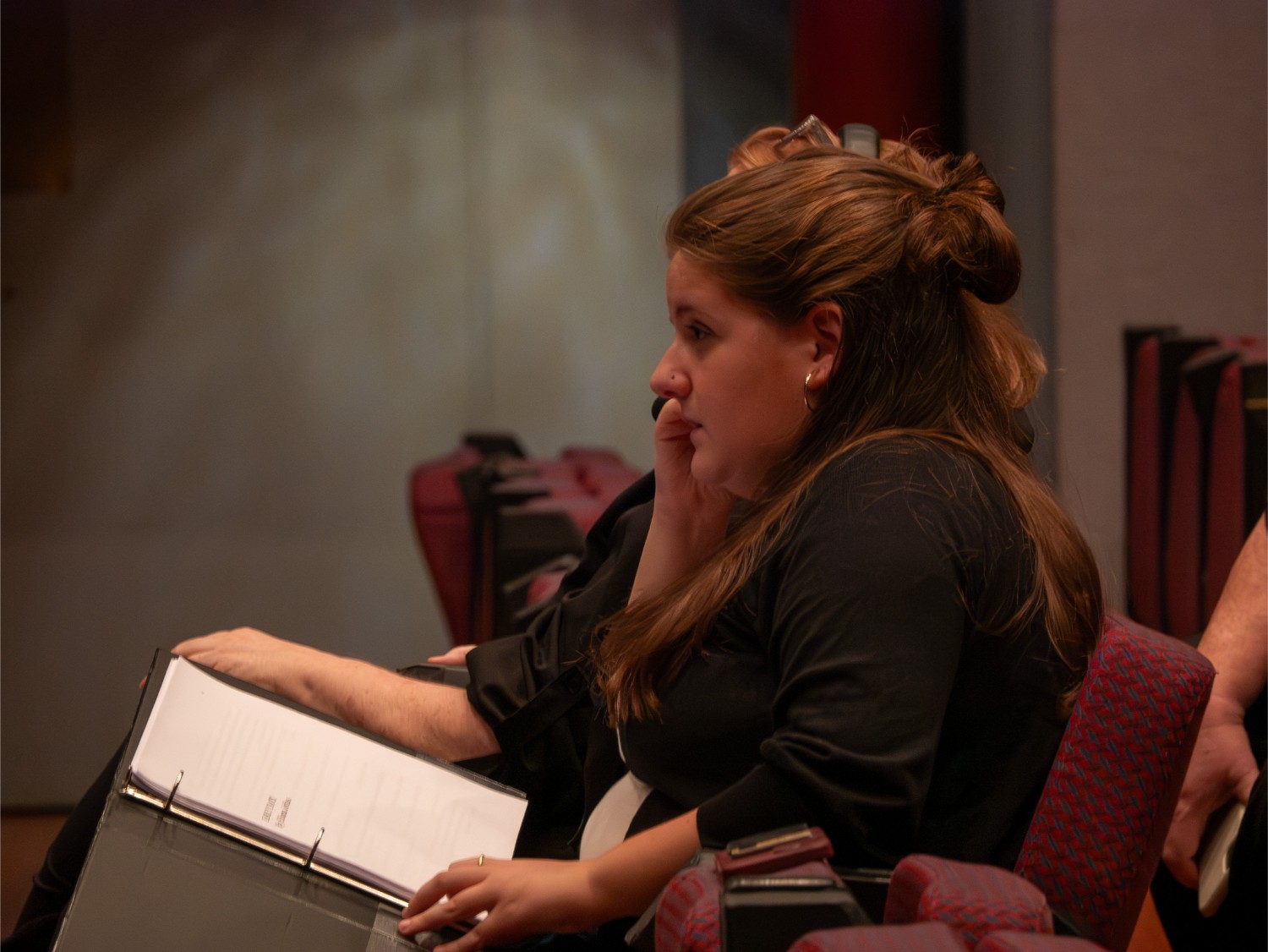
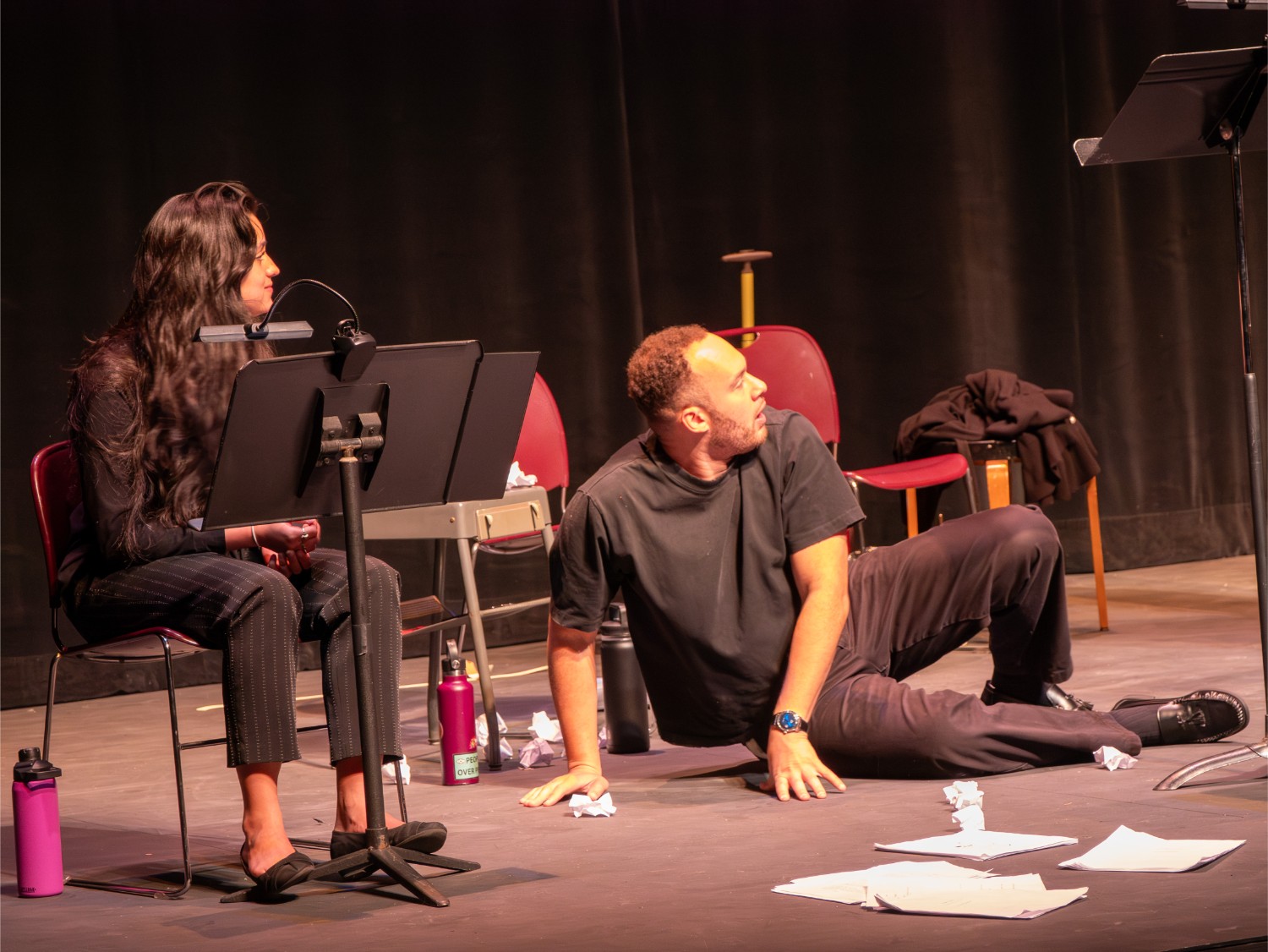
For 26 years, the Occidental New Works Festival has paired student playwrights with LA performers, student actors and professional guest directors. Performed at Keck Theater Feb. 21-22, this year’s festival featured a comedic trifecta — “Early Days” by Eliana Joftus (junior), “The Water Cooler” by Quinn Patwardhan (sophomore) and “Oh, Clarence!” by Alexandria Wells (junior).
Resident Professor of Theater & Performance Studies Laural Meade said she has been involved with the festival since its inception, serving as the faculty producer. Due to her concurrent involvement in Occidental’s spring musical — “Head Over Heels” — Meade said this year’s festival presented a more streamlined lineup than years past. According to Meade, the slimmed-down slate enriched each play’s depth, technicality and quality.
“Usually we do four or five plays, this year we’re doing three,” Meade said via email. “In light of that, though, I scheduled more rehearsals than we normally do for each of the plays, and we added design elements beyond lighting — costume looks, props, a few set pieces.”
According to Meade, while most of Occidental’s Theater and Performance Studies program nurtures budding actors and technicians, the New Works Festival spotlights the people who seed it all — the writers.
“Playwrights are, in many forms of theater, the only originating artist,” Meade said. “They write the recipe or design the blueprint that all of the other artists involved are going to interpret.”
Courtesy of Jane Hutton
Finn Crumlish (sophomore), a student actor in “Oh, Clarence!” said he enters each role with a deep-seated respect for the script. While actors interpret, inform and impact a production, Crumlish said their work ultimately stems from the playwright’s vision — every choice onstage rooted in the words of the page.
“I think a lot of times in theater, film — any medium that has actors in it — we have a tendency to highlight actors because those are the people who are seen,” Crumlish said. “But I see acting as the conduit to get to what is written and perform it live.”
According to Crumlish, the New Works Festival intensifies his commitment to the playwright.
“I feel like I have a special responsibility because this is the first time this piece has been performed and it’s by a new writer, and I really want to help bring their vision alive,” Crumlish said.
Two-time New Works Festival playwright Patwardhan said that while his script grounded the live staged reading, it was the actors’ engagement with the text — adding complexity and uncovering plot possibilities — that built upon his foundation.
“Getting all of this feedback from actors is really helpful because they really see the character and see the world from their character’s lens,” Patwardhan said. “Sometimes when I am trying to think of the world from everybody’s angle, I kind of forget about one person’s motivations.”
Raised on a ’90s sitcom comedy media diet, Patwardhan said he credits his parents for his farcical flair. Patwardhan said he caught the comedic bug early, and it hasn’t let go. Across video games, satirical articles, graphics and screenplays, Patwardhan said his absurdist, comedic style infects every medium he touches.
“Pretty much everything I’ve done is comedy; I could never write drama and I would never want to write drama,” Patwardhan said.
According to Meade, this year’s submissions skewed comedic, with many starring a trio of young adults. Interpreting it as a sign, Meade said she decided to embrace the “resonant kismet” — much to Crumlish’s delight.
“It feels good to make people laugh; like that’s one of the best feelings in the world: tell a joke and have people laugh at it,” Crumlish said.
Courtesy of Jane Hutton
According to Crumlish, comedy is not only about engendering joy. Crumlish said the genre offers a low-lift way to confront convoluted, unsettling themes that audiences might otherwise avoid. Whether interrogating social injustices or critiquing authoritarian regimes, Crumlish said laughter carries political power.
“Comedy has such a unique way of negotiating hard themes with levity while not dismissing the truth of the circumstance,” Crumlish said. “Oftentimes, the only way we can truly criticize something or understand it is to laugh at it.”
After revisions, table readings, professional feedback and world debuts, Meade said the Keck curtain has closed on the 2026 New Works Festival — but the stories’ impact, and the collaborative spirit that brought them to life, linger. According to Meade, the festival is more than screenwriting and professional experience: it’s a testament to the creativity, dedication and empathy that define Occidental students.
“In the words of playwright Thornton Wilder, [theater] is the greatest of all art forms because it is ‘the most immediate way in which a human being can share with another the sense of what it is to be a human being,’” Meade said. “I remain grateful for how Oxy students support each other, how they commit to pushing boundaries and how they care about the world in all its parts and pieces.”