The Eagle Rock High School (ERHS)band is requesting a Neighborhood Purpose Grant (NPG) from the Historic Highland Park Neighborhood Council (HHPNC) to fund their annual performance at Knott’s Berry Farm. NPGs fund local public schools and nonprofits to help with activities that benefit the LA community, according to the website of the LA City Clerk. Changes to Proposition 28, a California initiative ensuring public schools have access to arts education, have caused the band to seek funding from outside sources.
Darren Gold, the president of the HHPNC, said NPGs arean opportunity for the neighborhood council to take the funds they receive from the city and return themto the community.
“[NPGs have to go to] projects that are in the boundaries of the neighborhood council,” Gold said. “They have to be free and open to the public. If it’s an event, they have to benefit the public. They have to be something that we as a neighborhood council […] believe is going to give back to the community in some way.”
Ainsley Drake, a member of theERHS band and former Youth Seat on the HHPNC, said his time on the neighborhood council helped him understand NPGs were available to the community.
“I’ve been on the back end of the process before, sitting on the council as we deliberated which programs we would be giving our money out to,” Drake said. “I know what is appealing to […] the Highland Park Neighborhood Council […] I’m using my knowledge of that to create a proposal that’s as appealing as possible this year.”
According to Gold, budget cuts to the neighborhood councils have affected their ability to grant NPGs.
“If we really feel like we believe in something, and we think it’s going to be good for the community, we want to give some money,” Gold said. “Because we’re giving so much money to NPGs, we’ve had to tighten our operational budget even more and spend less on our own activities.”
Lauren Silverman, the instrumental music director at ERHS, said a change of language in Prop. 28 has restricted the band’s ability to perform at Knott’s Berry Farm.
“Our students are incredibly competitive,” Silverman said. “In the last handful of years, we were able to utilize what Proposition 28 funds to […] balance out the accounts to make sure that these students have the opportunity […] to attend these competitions, [which] are adjudicated by industry professionals at the university level and allow them to receive feedback from someone besides myself.”
According to Silverman, the lack of funding from the current version ofProp. 28 is detrimental to her students’ learning capability.
“[These competitions allow] students to hear critiques and feedback from industry professionals in order to improve and expand their abilities in numerous different capacities, as well as see where they fall in the playing field with other […] ensembles from Central and Southern California,” Silverman said.
Drake said he is disappointed the band has to rely on outside resources for funding.
“We shouldn’t have to be in this situation,” Drake said. “We should be able to receive the money from the state like we’re supposed to […] The money that is reserved for neighborhood councils is supposed to be able to serve community projects and people […] It shouldn’t have to go to public schools, but we just live in a really screwed-upsystem.”
According to Gold, the HHPNC is aware of the funding limitations within LAUSD.
“Because LAUSD does not cover so many of the essential programs at schools, we do try to supplement,” Gold said. “Schools are always a priority because […] we want to make sure that [the kids in our neighborhood] have the best possible resources. We do tend to give funds to schools, but it’s unfortunate that LAUSD can’t cover […] the things that should be covered. Luckily, we’re able to help out where we can.”
Silverman said every student has worked hard to reach a performance level and should be able to attend this trip regardless of financial status.
“I won’t attend these events if I can’t bring all my students,” Silverman said. “That’s just not equitable.”
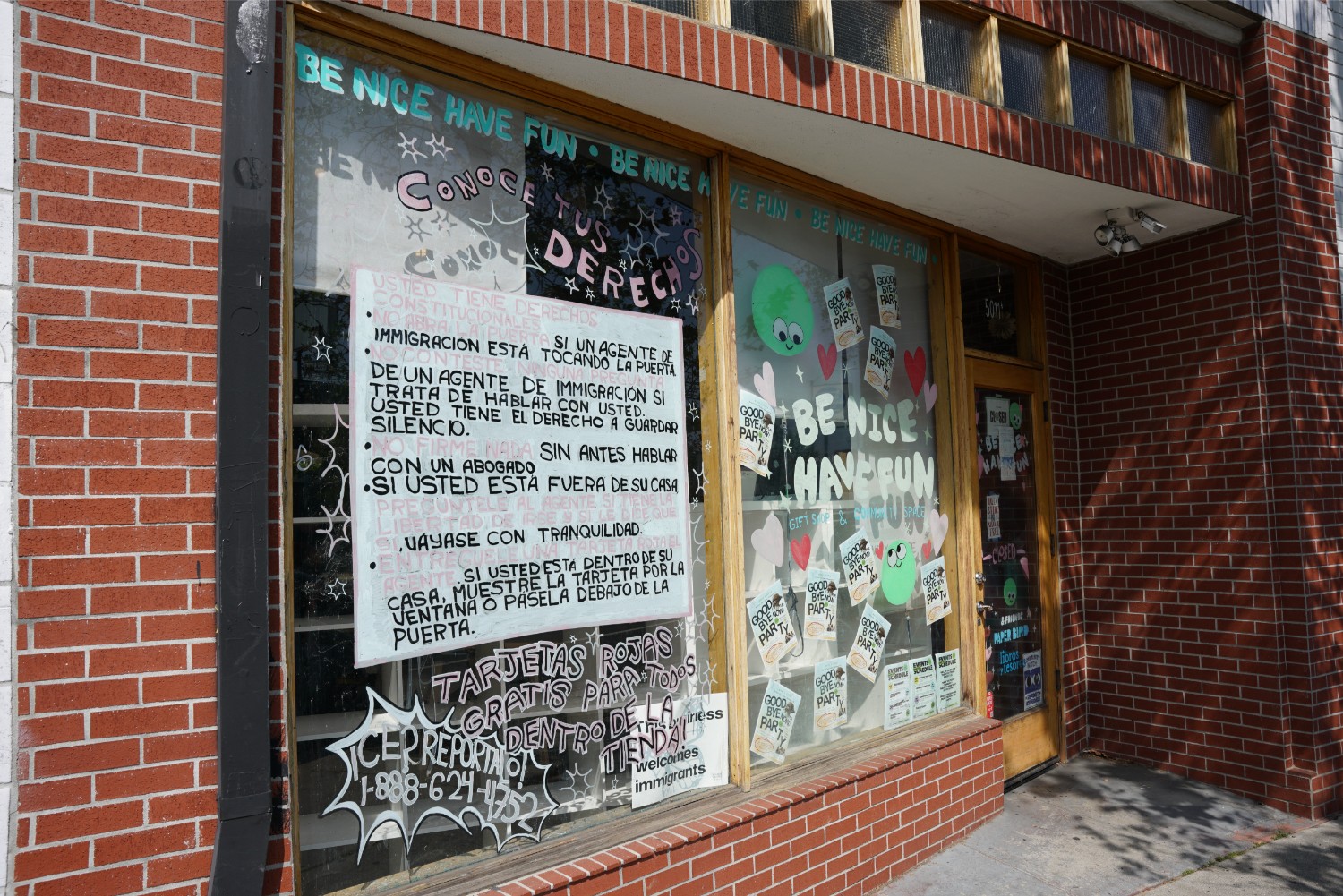
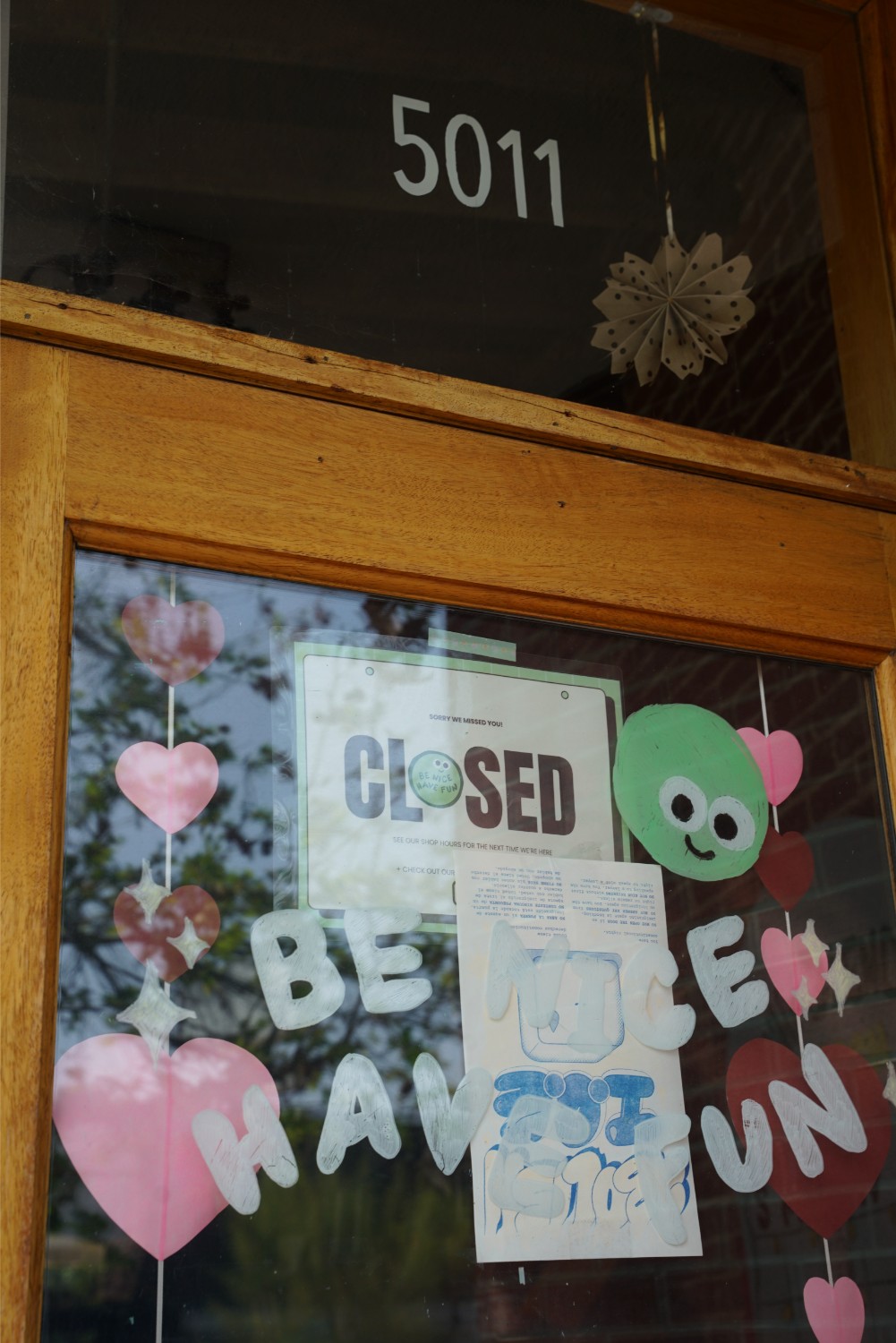
Be Nice Have Fun closed its doors on York Boulevard March 22. Shop owner Destine Escobedo said even though the shop’s brick-and-mortar store is closed, the shop remains open online. Be Nice Have Fun let the building owners know that they wanted to renew their lease in December 2025, but were never given the opportunity to do so, Escobedo said.
“We received a notice from our owner that ownership was changing, and that they would not be renewing our lease,” Escobedo said. “We never received a response until February […] They said they would not be renewing our lease at all and that we had to be out by the end of our lease, which is March 31.”
Escobedo said she was never offered the option to pay a higher rent to stay in the shop and that she was told Be Nice Have Fun had to vacate the store by March 31.
“We want to make sure to stay within this community, which we value so much, so we do want to stay in the area,” Escobedo said.
According to Escobedo, the shop opened in 2019 at a different location on York Boulevard, with the mission to provide service and accessible workshops for the neighborhood.
“It has been such a challenge from the beginning, being an in-person shop owner, because it was right before the pandemic when we opened,” Escobedo said.
The shop is full of small trinkets and has a table in the middle where patrons can do hands-on crafts, which Escobedo said includes bringing half-finished works to complete in a different environment.
“We have hosted a slew of different workshops, everything from understanding finance to crafting,” Escobedo said. “It really is just whatever the needs of our community are at the moment.”
According to Escobedo, shoppers at Be Nice Have Fun typically align with the political statements featured in their storefront, such as the“Know Your Rights” cards painted in the window.
“We believe that no one is illegal – especially on stolen land, everyone belongs,” Escobedo said. “Everyone who comes into our shop has really understood where we stand from the get-go because all the different things that we do carry here feel influenced by our stance on things.”
Be Nice Have Fun gift shop and community space in Los Angeles, CA. March 23, 2026. Anthony Cordova/The Occidental
Be Nice Have Fun hosted their ‘Goodbye for now’ party March 21, packing the shop and street outside with vendors, food, coffee, a photobooth and a DJ. The line stretched down York Boulevard between Avenues 50-51, and tickets sold out online. According to returning visitor Aro Zhou, the shop features local artists and hosts community events Zhou has attended.
“I saw on their Instagram that they were getting evicted, which is really unfortunate, because as I understand, they [Be Nice Have Fun] are immigrant-owned and we live in crazy times,” Zhou said. “It’s very unfortunate that we are losing another community space.”
According to party attendee Nicole Nidelian, Be Nice Have Fun and other locally-owned shops on York Boulevard have created opportunities for different people in the Highland Park neighborhood to connect.
“This street as a whole is a really great space and it’s not something that is easily offered in many of the little suburbs within Los Angeles,” Nicole Nidelian said.
According to Escobedo, the party served as a way to help the shop move on and get closer to their goal of reopening a brick-and-mortar in Northeast LA (NELA).
“We really want to secure another space, so on our party day, we’re taking donations and really wanting to sell through the inventory that we have, just to be able to land on our feet in our next move,” Escobedo said.
Be Nice Have Fun gift shop and community space closed sign in Los Angeles, CA. March 23, 2026. Anthony Cordova/The Occidental
Nicole Nidelian said hearing that another neighborhood shop is facing closure due to a landlord situation is frustrating, especially when it comes to small businesses that work to do public events for the community.
“This is actively negatively working against the community, and working against local businesses and people who have been here for a long time,” Nicole Nidelian said. “Long term, you’re bringing in new businesses that are part of corporations or not locally run.”
According to Amanda Nidelian, an urban planner and resident of LA, locations such as Be Nice Have Fun are third spaces that serve as cornerstones of neighborhoods such as Highland Park.
“This is a community location, this is somewhere that is a big facet for everybody here,” Amanda Nidelian said. “So to take it away is taking part of Highland Park away.”
The March 21 event served as a way to celebrate the store, and sell out the items Be Nice Have Fun still has in stock, Escobedo said.
“We opened our space with vendors and celebration, and we want to close our space in that way as well,” Escobedo said. “We’re bringing other vendors and the community to the forefront and sharing a space with them.”
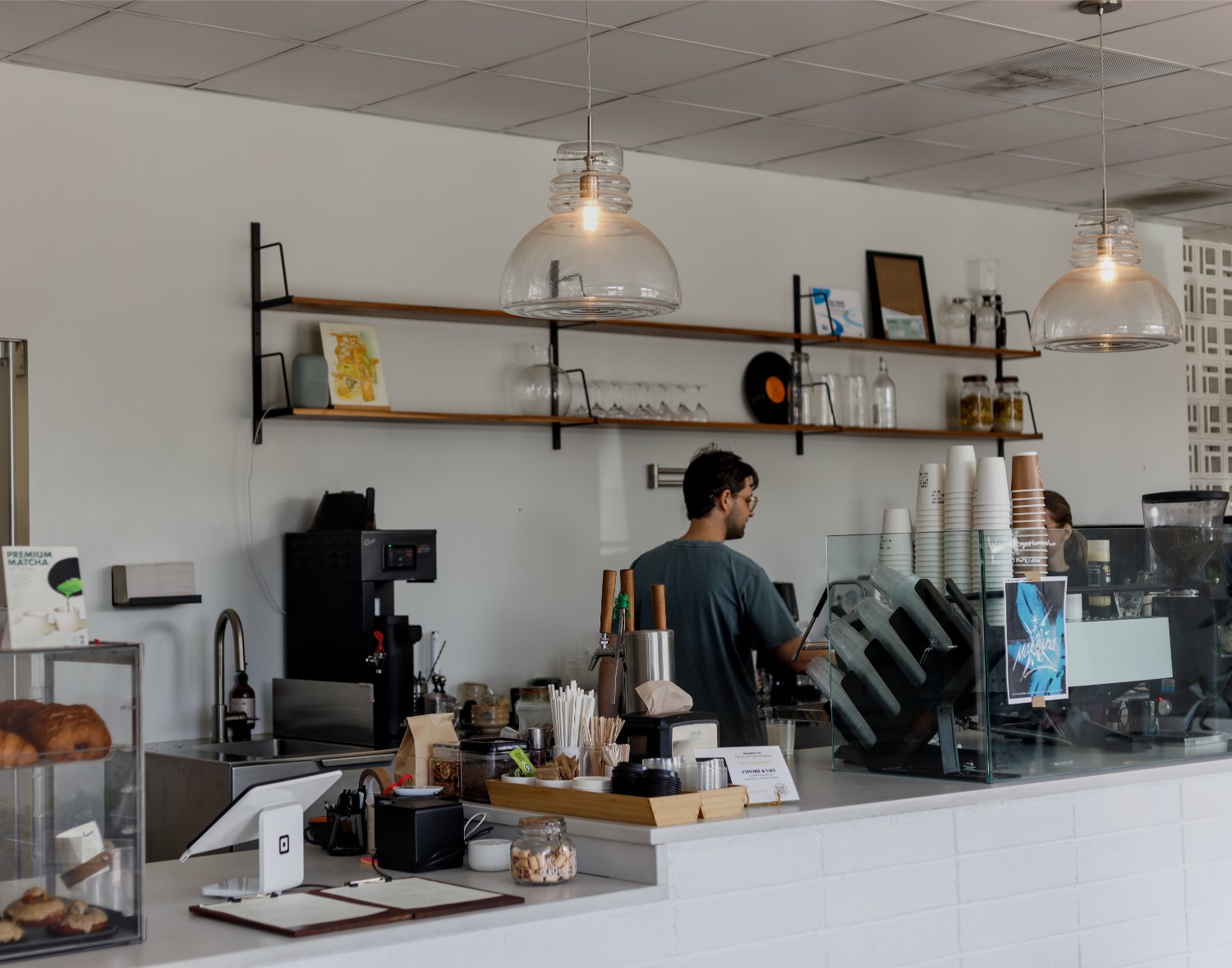
Melissa Spolar, the creator of the Highland Park Coffee Passport, described it as a booklet meant to highlight the unique features of certain local coffee shops and to support the community. According to the website, all participating coffee shops offer a discount or have a special offer for customers through the passport.
Spolar said some of her decisions about which coffee shops to include came down to her personal experience from visiting the shops.
“What comes to mind [is] that I know [the coffee shops] consistently have good quality, kind staff [and] a good space,” Spolar said.
Alexandro Morales, the owner of Civil Coffee, partnered with Spolar for the coffee passport. Morales said he enjoys the idea of coffee shops being traditional spaces where people can connect, and the coffee shops on the passport are a good alternative space for people of all ages to gather, especially for those who don’t drink.
“The idea was to create a space where there was approachability in mind,” Morales said. “Hence the name civil: to be courteous, to be kind, to be hospitable.”
Regent Coffee in Eagle Rock in Los Angeles, CA. March 6, 2026. Maile Brucklacher/The Occidental
According to Spolar, she lived alone for most of her 20s and would go to coffee shops once or twice a week to get out and be with others, leading friends to describe her as a coffee shop encyclopedia.
“Even though it’s not like I was making friends left and right, it was just nice to go be around other people,” Spolar said. “That’s where I really started to fall in love with not just the drink itself, but the coffee community around LA.”
Morales said when Spolar approached him, she was very flexible with options for how Civil Coffee could be involved with the passport: they could offer discounts, have fun offers and more.
“Cafés have been institutions where folks have gathered for community, for conversation, for philosophy, for discussion, for art, for creativity, and I think they still continue to be in play of that culture,” Morales said. “Today, it’s spaces where folks can feel comfortable to explore.”
Spolar said she started the passport in the Pasadena area last year, but this year decided to create one for Highland Park. According to Spolar, the Highland Park coffee scene is influenced partly by the gentrification within the area.
“You have the clash of people that have lived there for years, and they just want a decent cup of coffee, and then you have all of these hip and trendy people that want all the coolest new drinks and ceremonial grade matcha,” Spolar said.
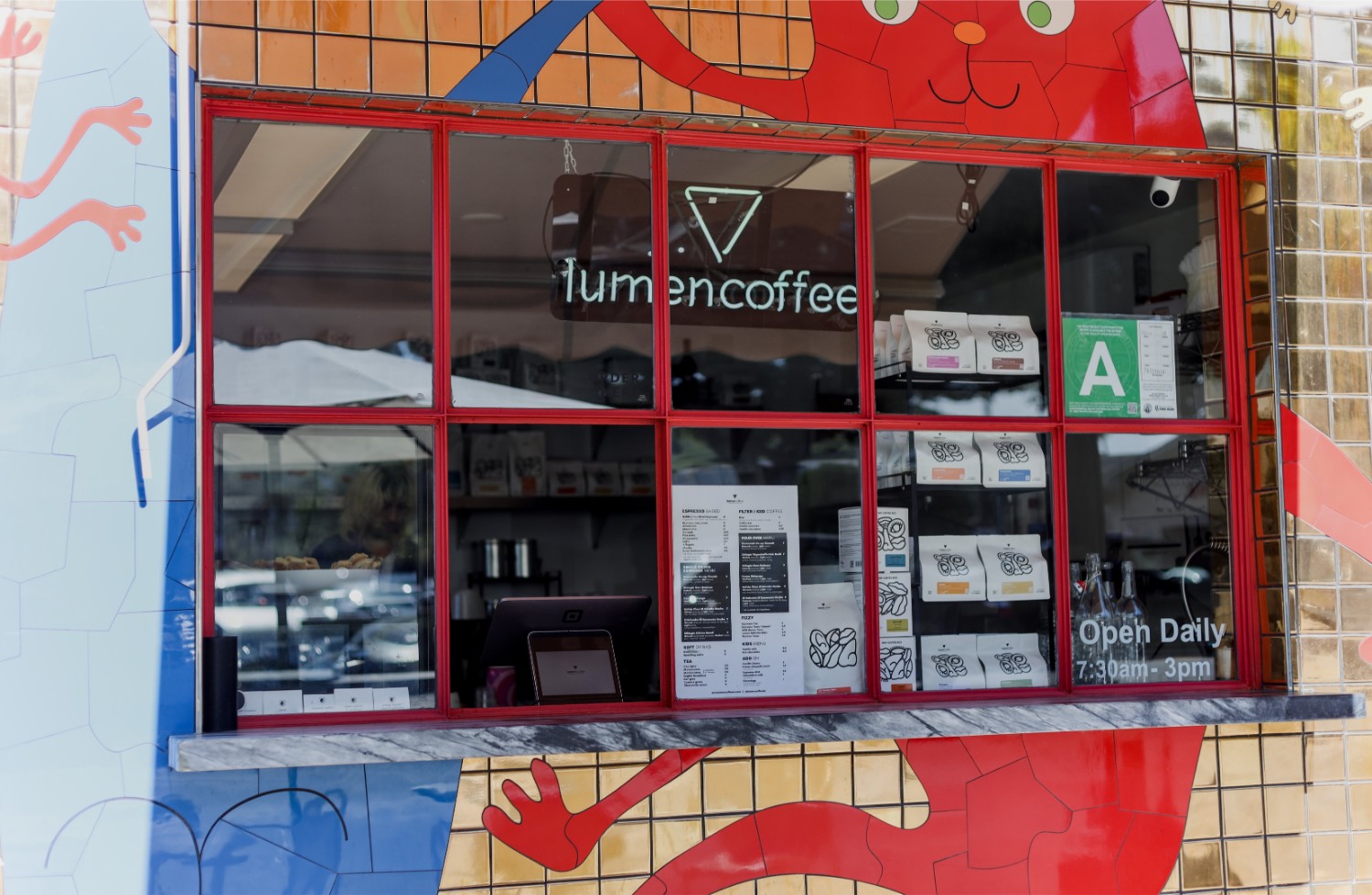
Lumen Coffee in Highland Park in Los Angeles, CA. March 6, 2026. Maile Brucklacher/The Occidental
Angelica Solis, a barista and former intern at Rosebud Coffee, said the passport emphasizes human interactions rather than technological ones.
“You can get a good cup of joe at any of these places, but it is nice to talk to a real person and not a tablet,” Solis said.
According to Spolar, the walkability of Highland Park means many of the coffee shops on the passport are within walking distance of each other. Spolar said she enjoys seeing people come together over something physical: a passport you can lend to a friend, exploring its offerings as a group activity.
Morales said that the passport allows for different coffee shops to highlight their main offerings.
“I think it’s really beautiful and exciting to see people continue to be interested in coffee, and its different iterations, and I love to see entrepreneurs and other business owners step into the coffee scene and give it their own spin,” Morales said.
According to the Occidental Athletics website, the baseball team secured a three-game sweep against Curry College March 14.
Third baseman Benjamin Fitzgerald (junior) said this season has been a vast improvement from last season.
“It’s just a different vibe and a different level of confidence,” Fitzgerald said. “We learned how to play for each other.”
Fitzgerald said his key to success is maintaining a clear head and focusing on having fun.
“When I’m on the field, it’s just me against the pitcher,” Fitzgerald said. “I like competition, so if I can have fun on the field it maximizes my performance.”
Benjamin Fitzgerald (junior) watches the play in the Illinois Institute of Technology game on Anderson Field at Occidental College in Los Angeles, CA. March 17, 2026. Olivia Adams/The Occidental
Fitzgerald said he has been playing baseball since he was 4 years old.
“When it becomes too serious, I think back to when I was […] with my dad coaching,” Fitzgerald said. “That little guy would love to see where [I am] now.”
Baseball head coach Luke Wetmore said at the collegiate level, team chemistry matters more than anything.
“Vibes matter a lot,” Coach Wetmore said. “How connected are the guys? Do they support each other?”
Wetmore said this year, their success has been dependent on the team vibe.
“They know their teammates have their back and are pulling for them to be successful,” Wetmore said.
According to Wetmore, the team has come back stronger after a 2025 season riddled with injuries. Wetmore said younger, less experienced players had to step up this season, and their hard work is paying off so far.
“Ben was one of those guys [and now] his true ability is coming through, especially with the bat,” Wetmore said.
Wetmore said Fitzgerald is a coachable player; he makes quick adjustments in his swing, shows the awareness to ask questions and implements coaching points quickly.
“He knows what’s going on and when he doesn’t, he’s willing to ask,” Wetmore said. “In a game of adjustments, that is very important.”
Coach Wetmore said the team has been playing exciting, hard-fought baseball.
“It’s been a little ugly at times, but it’s exciting,” Wetmore said. “There’s a lot of fight in this team.”
Delphine Way
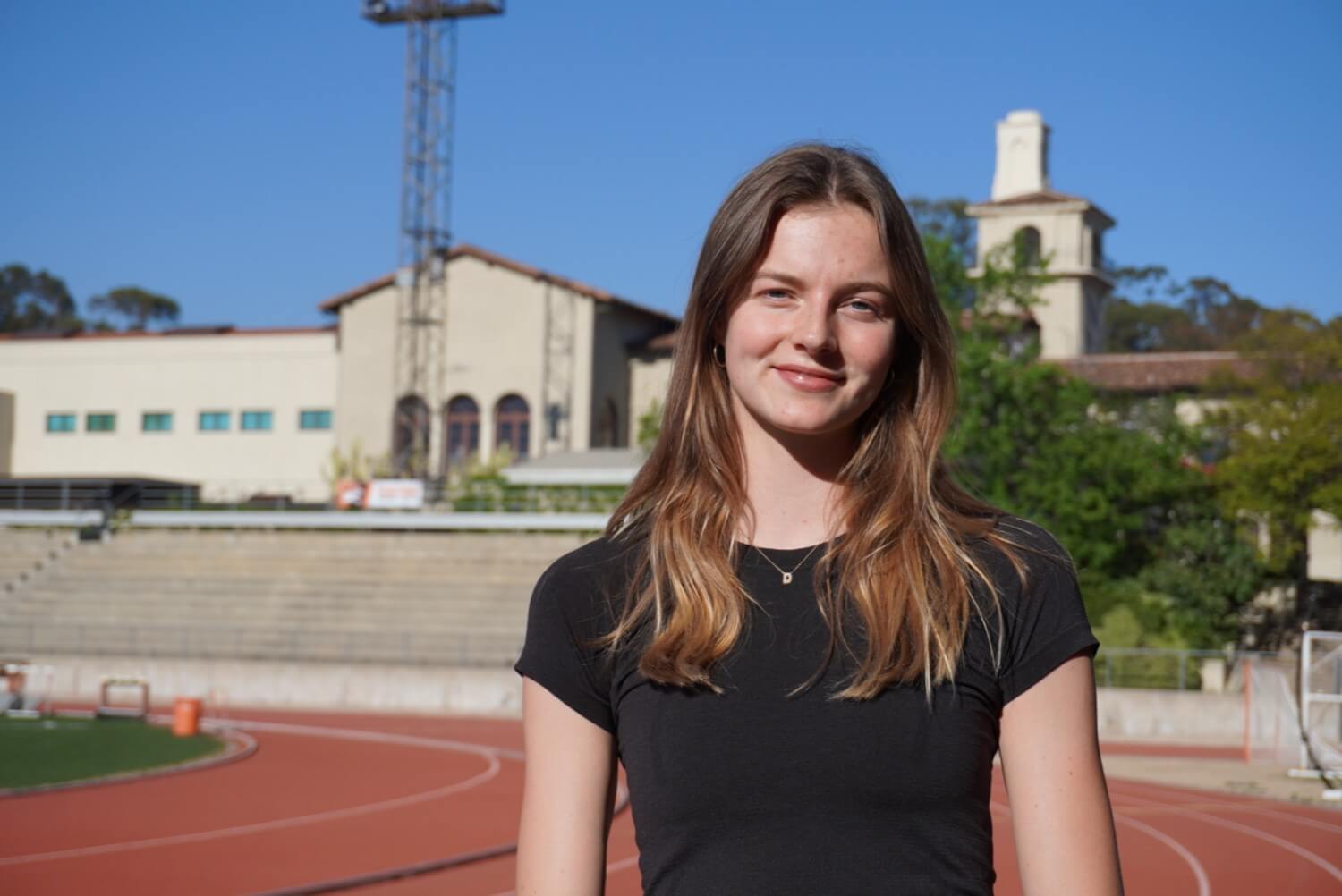
Delphine Way (junior) running sprints during practice on Patterson Field at Occidental College in Los Angeles, CA. March 19, 2026. Olivia Adams/The Occidental
Delphine Way (junior) clocked a Top 4 Occidental record time with the best DIII performance in the 800 meter at the Oxy Distance Carnival March 9. Way said she is using her collegiate ranking as motivation for the rest of the season.
“I am really excited for the second half of the season [and to] keep working on that time,” Way said.
Way said her first time doing track was in sixth grade, but she didn’t return to the sport until her junior year of high school.
“I went to one track practice, went home and told my mom I quit because running in circles is stupid,” Way said. “My mindset [has] definitely changed since [then].”
Way said she attributes most of her success this year to her change in mindset after a whirlwind of injuries her sophomore year.
“This year for the first time […] I’m competing instead of just running,” Way said.
After returning from an injury caused by a 25-pound kettlebell falling on her foot, Way said she was ready to compete in the conference championship at the end of her sophomore year. However, according to Way, she suffered a stress reaction in the same foot just one week before the competition.
“It was honestly one of the most heartbreaking things I’ve ever gone through,” Way said. “It meant so much to me to be able to race.”
Delphine Way (junior) on Patterson Field at Occidental College in Los Angeles, CA. March 19, 2026. Olivia Adams/The Occidental
Way said the setback showed her how much the sport means to her.
“It makes me show up a little more on race day this year because nothing is guaranteed,” Way said. “I could get hit with another kettlebell any day now.”
Way said she is motivated by her teammates, who show up for each other every day.
“It looks like I’m racing alone […] but I could not do any of what I’m doing now without [my teammates],” Way said. “It’s what makes [me] show up and compete well, and it’s what makes us the best team in the SCIAC.”
According to women’s track and field assistant coach Tyler Yamaguchi, despite Way being abroad in the fall, she has notched remarkable performances recently.
“She’s absolutely delivered on what she said she was going to [do],” Yamaguchi said.
Yamaguchi said Way takes care of her body, gets enough sleep and is very diligent about scheduling out her day.
“She takes care of the little things,” Yamaguchi said. “That’s pretty unique.”
Assistant Professor of Anthropology at Princeton University Hanna Garth spoke about the social dynamics of the food justice movement in South Central LA at her book talk for “Food Justice Undone: Lessons for Building a Better Movement” March 16. The event’s sponsors included the departments of Latino/a & Latin American Studies (LLAS), Urban & Environmental Policy (UEP) and Food Studies, the Mary Norton Clapp Library and the Dean’s Office.
Garth said growing up in small town Wisconsin surrounded by farms, she was exposed to small-scale farming via her family’s gardens and gravitated towards food justice naturally. According to Garth, her personal life gave way to her familiarity with food insecurity.
“I grew up in a relatively low-income household, and there were times when we were food insecure and there was no food in the fridge, and I can remember going around with my parents, usually my dad, and he would figure out how to put a meal together, whether that was going [to] a bakery outlet near our house where you could get day-old bread for 25 cents a loaf,” Garth said. “He knew to go to the back corners of the grocery store where you could get 50 percent off food.”
According to Garth, while volunteering at a community garden in South LA shenoticed that other volunteers were not locals. Garth said particular individuals and groups created solutions that misaligned with the problems of the locals, shifting the conversation of food justice into alleviating the status quo instead of pursuing systemic change. While recounting her time with other activists, Garth said many envisioned community gardens, apps and other interventions were not particularly relevant to residents’ food issues.
“A lot of the activists that I worked with assumed that people in South Central don’t know how to cook,” Garth said. “They assumed that because there’s a lot of fast food restaurants in South Central, that people were just eating at fast food restaurants. But they ended up presenting a basic cooking demonstration to a set of mothers and grandmothers who cook every single night, cook more than them and who know a lot about how to utilize the ingredients that are available in South Central stores.”
Assistant Professor of UEP Karla Peña said it was opportune to invite Garth to speak about her book.
“Faculty in the Food Studies program thought it was a great opportunity to bring in a scholar who’s working on local [food justice] issues,” Peña said.
Peña said she teaches a class titled “Los Angeles and the Global Food Economy,” so the talk wasparticularly relevant to her students.
“A lot of faculty here on campus work locally and globally like myself,” Peña said. “Bringing scholars like Dr. Garth, who does on the ground research, is really important to showcase to students, especially on a topic like this where it helps students think about their own role here at Oxy and in the local community.”
Associate Professor and Chair of the Department of Society, Environment and Health Equity at UC Riverside Dana Simmons said that she came to Occidental particularly to attend Garth’s talk.
“Dr. Garth is one of the most brilliant scholars in food studies today,” Simmons said. “This talk is so important; it’s not a joke.”
According to Garth, well-mannered actors and their actions may seem innocent, but cause harm through co-optation of words like justice, empowermentand health. Garth said organizations formed by outsider activists create ineffective programs that undo the radical potential of organization, and compete with grassroots organizations committed to improving community lives.
“There are organizations that have been based in South Central for decades, run by people who are from South Central and live in South Central,” Garth said. “The organizations that are successful will change their programming to cater more to the community that they want to serve.”
According to Garth, the challenge for grassroots organizations to navigate power dynamics affects their capability; for example, nonprofit funding is often a challenge. Garth said that often, nonprofit funding grants are awarded based on how established the nonprofit is, and for grassroots organizations, grants may have to be secured through a larger nonprofit organization that can control the funding.
Garth said despite these challenges, she wants to showcase the potential for radical organizing in the food justice movement and offer these oversights as lessons for other social justice movements.
“Before you try to go into some other community that you don’t live in to create an intervention or a solution to their problems, you should stop and you should learn more about the problem because you probably don’t understand it or don’t understand it enough,” Garth said. “You should reach out to the people within the community who are already working to solve the problem and see what they’ve been doing.”
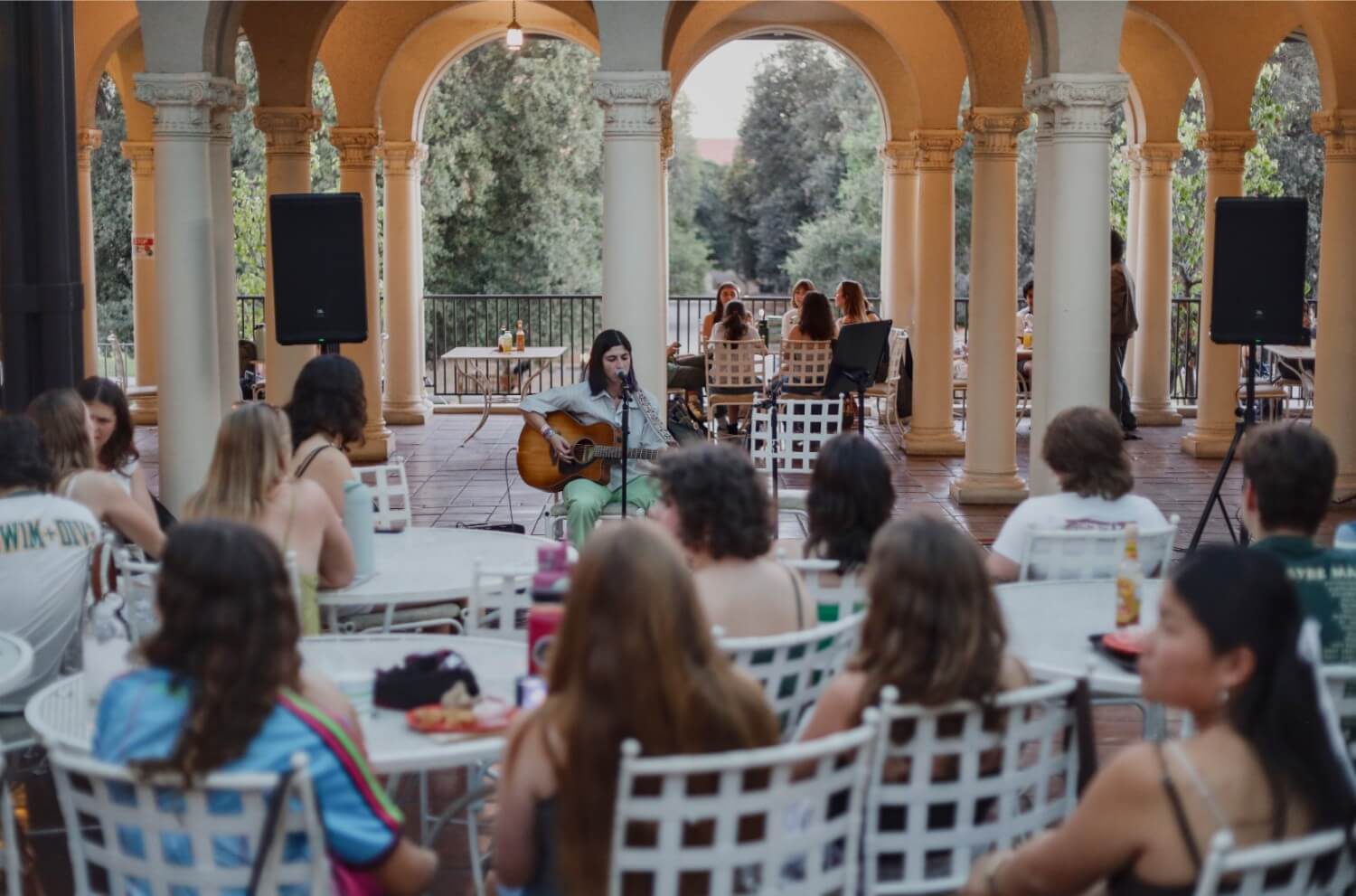
Occidental College’s student-run radio station KOXY began hosting student artists/singer-songwriters on Tuesday nights at the Branca Patio by the Marketplace, Feb. 10. These “MP Patio Shows” feature sets including covers as well as original songs, typically lasting from 6 p.m. to 7:30 p.m. According to KOXY Station Manager Clare Kennerly (senior), KOXY chose Tuesdays to help create a low-pressure atmosphere for newer musicians to perform, while providing convenient access for students already enjoying dinner.
“I know [Tuesdays are] busy but [it’s meant to] to be a casual part of our everyday week and it [being] low stakes, low pressure, helps a lot of newer musicians feel comfortable performing,” Kennerly said. “So if it’s just during the MP dinner rush, it’s really nice and then we schedule the exact day based on staff availability because it’s a pretty big time commitment.”
Promotional Staff member of KOXY Lily Pesikoff (senior), who performed March 17, said she remembers another club previously using KOXY’s sound equipment and staff to plan and host regularly scheduled student performances on the Marketplace patio.
“When I was a first year, maybe a sophomore too, there was a club on campus [that] basically hosted Tuesday night live shows like the patio shows […] and they would use all of KOXY’s sound equipment and we would tag along by doing sound support, but the president graduated last year,” Pesikoff said. “Her name was Leslie Garcia, and when she graduated, the club kind of fell apart. We wanted to continue with that legacy of having a really chill place for students to perform.”
Lily Pesikoff (senior) performing for KOXY’s Marketplace Patio Acoustic Set at the Marketplace patio at Occidental College in Los Angeles, CA. March 17, 2026. Maile Brucklacher/The Occidental
According to KOXY programming staff person Elizabeth Oakley (sophomore), KOXY wanted to bring back regular student performances to recapture the relaxing atmosphere they provided for students during dinner.
“We wanted to bring [the performances] back to highlight student artists,” Oakley said. “Our tag line for the MP patio shows is ‘You’ll already be there, so why not enjoy it?’”
Kennerly said during her time as station manager, she has seen students grow into performers and musicians and develop new projects.
“It’s super cool to see people sign up and then after doing it for four years, you start to recognize people and notice when there’s a new band or if somebody has developed from a band to a solo project,” Kennerly said. “I really like seeing what people come up with and then getting to meet them.”
According to Pesikoff, she has been writing songs for around five years. Pesikoff said what qualifies as having written a good song is whether she is able to confidently enjoy it with friends.
“To me, a good song stands the test of time for my life […] and the other thing is playing it for my friends and not getting cringed out by myself,” Pesikoff said. “I love so much of the music I make and then the second I show it to someone, I’ll always caveat it by being like, ‘Oh that’s not supposed to be there’ or ‘Oh my voice sounds bad here.’ But when I’m listening to it on my own, I love it.”
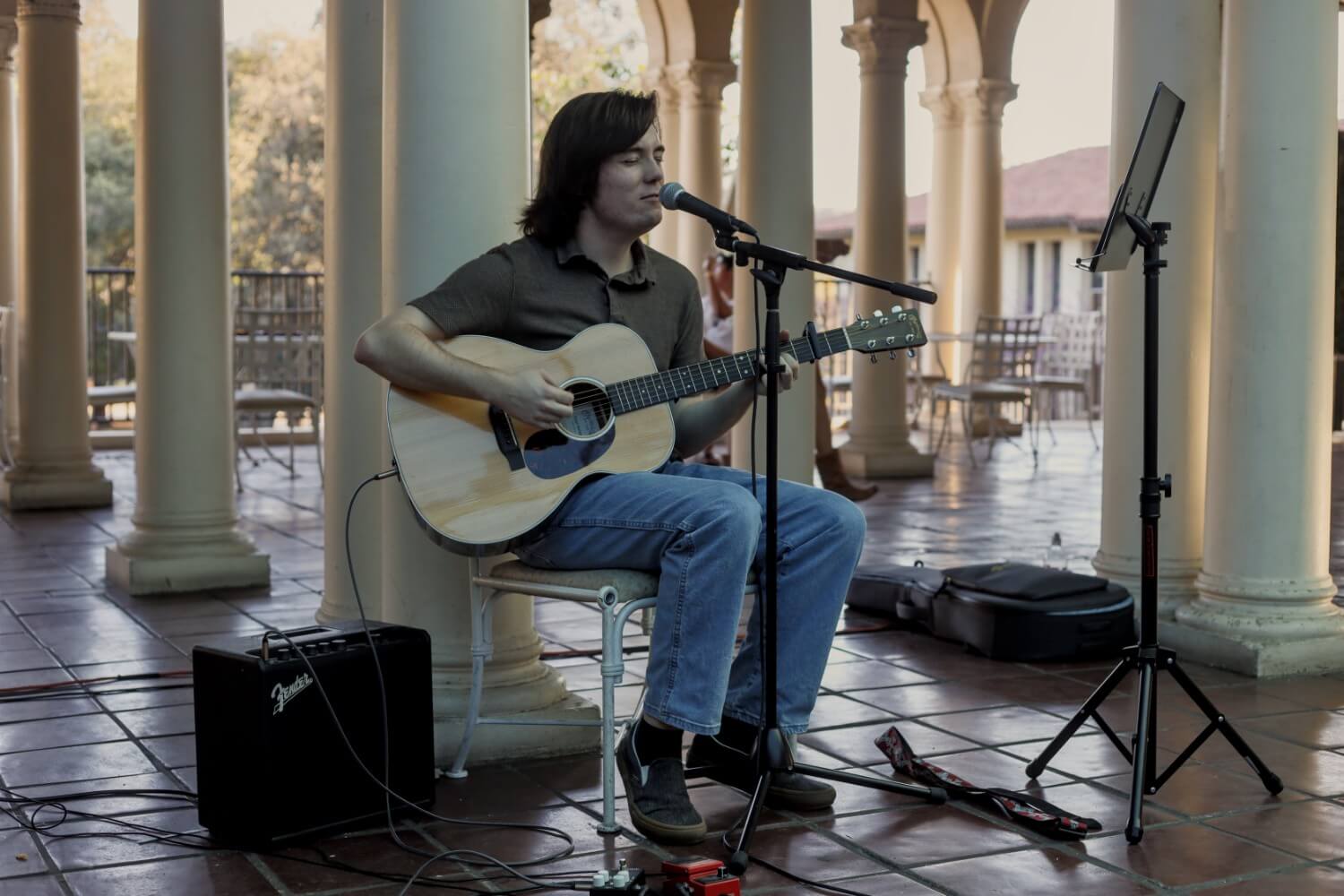
According to Nicholas Martini (senior), who performed in the series March 24, he started performing when he got to Occidental.
“I haven’t done many performances,” Martini said. “I played an open mic night in the Green Bean last semester […] I just sang one song, and that’s the only Oxy performance I’ve done.”
According to Martini, he views his music as a way to help people through daily struggles and obstacles.
“I think to connect with people through my music would be such a gift,” Martini said. “[I want] to be able to have songs out there in the world that people connect with and that help them in some way, because I think music actually can be a really good thing in the world.”
According to Martini, he believes people don’t grow up perceiving music as a career that can help people.
“It helps people get through their daily lives and understand their experiences,” Martini said.
Adam Sunderman (junior) performing for KOXY’s Marketplace Patio Acoustic Set at the Marketplace patio at Occidental College in Los Angeles, CA. March 17, 2026. Maile Brucklacher/The Occidental
According to Kennerly, students should attend KOXY Marketplace Patio nights to better connect with fellow students and integrate music into their everyday lives.
“I guarantee that you’ll know at least one person performing on Tuesday. It’s really cool to see who walking down the hallway, in your class, in your dorm is actually a musician,” Kennerly said. “The sets are really good, and well put together, and there’s a lot of variety. So if you eat dinner at the MP, which I’m sure you do, you should just make sure you sit on the outside patio on Tuesdays, and there will be live music.”
The bottom floor of the Academic Commons contains the Critical Making Studio (CMS), a makerspace open to all Occidental students, faculty and staff. According to User Services Specialist Benjamin Mendez, the CMS provides free access to workspace and equipment including a 3-D printer, cricut cutting machine, two sewing machines, audio recording equipment and a sound booth.
Mendez said the doors of the CMS remain open throughout the day for use in personal and school-related projects, and all of the resources besides the audio booth are available on a first-come, first-served basis. Mendez said students come in to keep the space tidy and are available to help visitors from 4 p.m. to close.
“We rely heavily on our student assistants to help out,” Mendez said. “It’s almost impossible for one person to know everything in there, so everybody has their own specialty.”
Lizzie Barr (sophomore) said she specializes in visual art and has been working at the CMS since August 2025. According to Barr, there are a wide variety of arts and crafts supplies available for students to use in the CMS.
“[We have] markers, paints, watercolors, colored pencils; anything that students would use to draw,” Barr said. “We have a lot of magazines for collaging, we have yarn and thread for embroidery or crochet. We have hot glue.”
Barr said she is continually impressed with the wide range of materials available in the CMS. Barr said she appreciates the CMS as a space which provides a creative outlet for students.
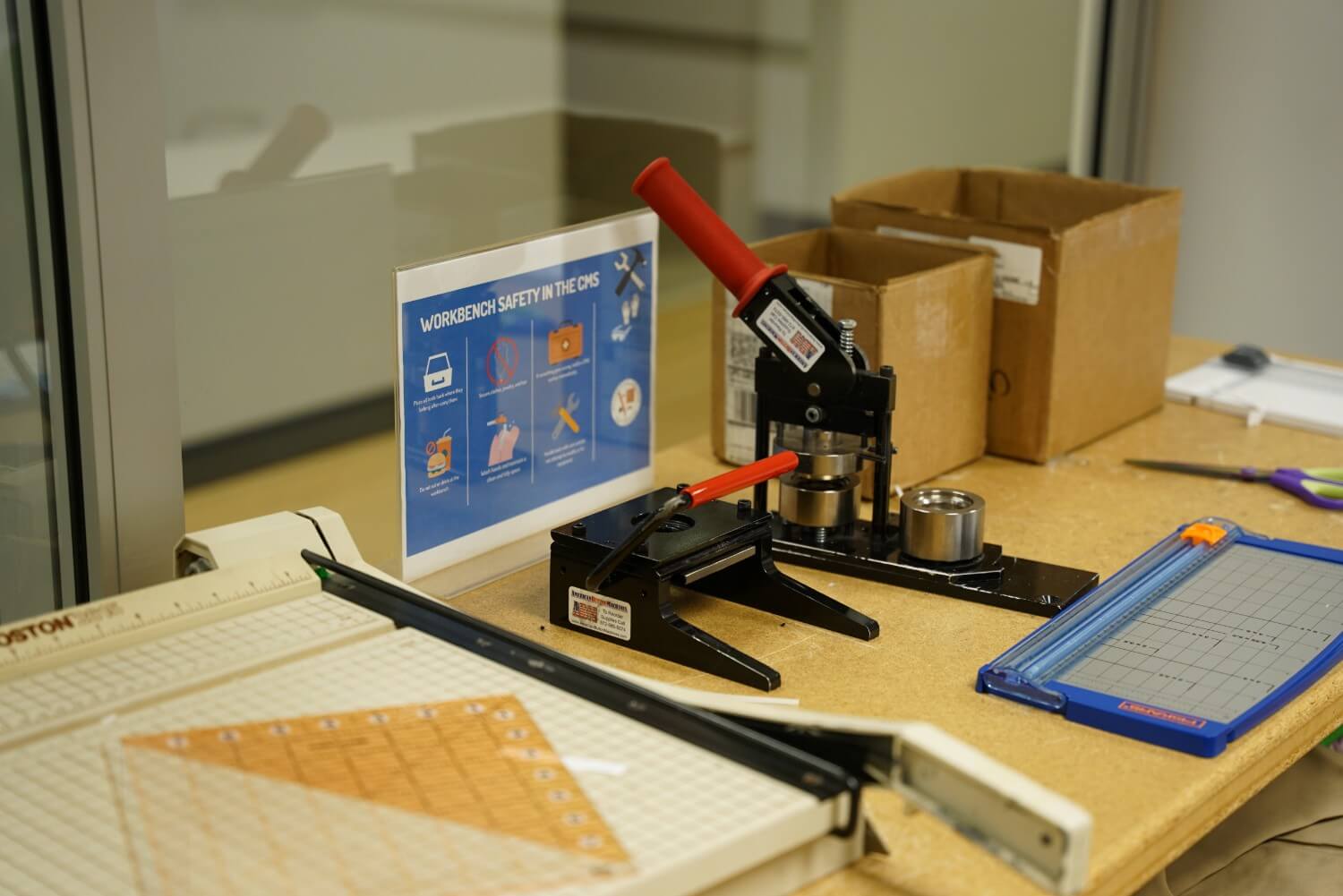
Pin maker workbench in the Critical Making Studio on the first floor of the Academic Commons at Occidental College in Los Angeles, CA. March 22, 2026. Anthony Cordova/The Occidental
“[Lots of students] don’t really have the resources to make art every single day, but the CMS is helpful because it provides those resources for them,” Barr said.
According to Barr, every student worker at the CMS is supposed to host an event in the space based on one of their specialties.
“I always find [the events] very helpful to highlight the CMS and bring more people in, because a lot of people, especially freshmen, just don’t really know that the space exists,” Barr said. “[Students] can come here and just take a few hours to not really think about school or homework, but maybe learn a new skill.”
Mendez said the CMS tries to host a collage night every semester. Magdalene Selin-Williams* (sophomore) said she recently attended a collage night at the CMS.
“There were a bunch of magazines, and I got to express my creative side through collage,” Selin-Williams said.
Selin-Williams said she frequented the CMS while enrolled in a costume construction course, since the sewing machines in her classroom weren’t always available. Barr said she sees students sewing in the CMS during every one of her shifts.
3D printer and supplies in the Critical Making Studio on the first floor of the Academic Commons at Occidental College in Los Angeles, CA. March 22, 2026. Anthony Cordova/The Occidental
“I’ll ask [students sewing] what they’re working on, and they’re fixing a piece of their own clothing or helping out a friend,” Barr said. “It’s just really cool to see because sewing is a really unique skill.”
According to Mendez, the CMS recently held a sewing workshop, which was very popular despite there only being two sewing machines in the space. Mendez said he believes students appreciate such opportunities to learn new skills, and the workshops open the door for students to be more creative.
Mendez said the CMS uses a sign-in system to collect statistics on how students use the space.
“Data shows that students are more frequently coming in to do a lot of sewing and physical projects compared to something more technology based,” Mendez said.
According to Mendez, the CMS has a form available for students to submit supply requests. Mendez said he consults sign-in data and supply requests when making purchasing decisions. Barr said there is a form for workers to make requests as well.
“It has been cool and interesting to see what has been in high demand. We’re getting an embroidery machine soon because a lot of students have been asking for it,” Barr said.
Audio booth in the Critical Making Studio on the first floor of the Academic Commons at Occidental College in Los Angeles, CA. March 22, 2026. Anthony Cordova/The Occidental
Mendez said the CMS’ audio booth is a draw for students. Mendez said while the recording studio in Booth Hall is only available for music students, the CMS’ booth is open to students of any major for use in any purpose.
“We revamped our audio booth because we saw a ton of usage a year prior,” Mendez said.
Barr said students frequently record podcasts and their own music in the CMS’ audio booth.
“Sometimes when I’m sitting at my desk I can hear what they’re working on and it’s nice and refreshing,” Barr said.
Mendez said going forward, the CMS is looking to collaborate with more groups across campus and expand their space to best support student needs. Barr said she sees value in the multipurpose nature of the CMS.
“A goal is just to have more people come in and use the space, and even if they’re just coming in to work on homework, that’s always kind of nice too,” Barr said. “We have the couch, and [the CMS] feels like a more chill, less structured space than the rest of the library.”
Selin-Williams said she would love to see the CMS expand and see similar spaces pop up across campus.
“I think [the CMS] is important for Occidental because it allows students to get help on things that they need to do for their classes and also just to express themselves creatively, and have the resources and support for that,” Selin-Williams said. “I’m a lot happier at this school knowing that there is, say, a sewing machine I can use.”
*Magdalene Selin-Williams is the business manager at The Occidental.
Read Books will be leaving their location at 4972 N. Eagle Rock Blvd. after the rent for their store, approximately 600-700 square feet, increased from $1,200 to $2,805 — a jump of more than 133%.
Husband and wife Jeremy and Debbie Kaplan co-own Read Books. Jeremy Kaplan said their used, general-interest bookstore has been on Eagle Rock Boulevard since opening in 2007 under a month-to-month lease.
According to Jeremy Kaplan, he and Debbie Kaplan found out their building had been sold Feb. 17, when a representative from the new owner’s property manager dropped off a letter. Inside was an ultimatum — sign a 3-to-5-year lease for $2,805 per month or get out by March 30.
“At that point, we kind of panicked, because we were like, ‘Oh my god, we can’t move all of this stuff out of here,’” Jeremy Kaplan said, gesturing to the books overflowing the store’s shelves. “We knew we couldn’t afford that rent.”
According to Jeremy Kaplan, Read Books should have received a 90-day notice due to California Senate Bill 1103, which provides tenant protections for small businesses in California. After informing the property manager — Systems Real Estate — of their rights, Debbie and Jeremy Kaplan now have until June 1 to find a new space for their collection of roughly 30 thousand books.
“There’s a time for commiseration, and there’s a time to say, ‘Ugh, this sucks,’ and be tired, but I figure that time is more like when we’re done,” Jeremy Kaplan said.
Jeremy Kaplan said Read Books’ building houses other tenants, including Jennifer Montgomery Child Therapy and Owl Talk, a clothingboutique. According to Jeremy Kaplan, the new owner upped Jennifer Montgomery Child Therapy’s rent from $1,600 to $2,255, and Owl Talk’s rent more than doubled, from $1,200 to $2,450.
Read Books stocks a little bit of everything, Jeremy Kaplan said, including his collections of boxing books and Holocaust books. The couple’s store also sells a selection of cookbooks curated by Debbie Kaplan.According to Jeremy Kaplan, the sous chef at Mozza, a well-known Italian restaurant in LA, has bought cookbooks from the store.
Beyond finding a new place, Jeremy Kaplan said he wants to connect with other businesses in Northeast LA who are facing astronomical rent increases.
“My main priority is combating this trend of people looking at our neighborhood — looking at neighborhoods in general, looking at America — as a place for them to make investments [at the expense of our culture],” Jeremy Kaplan said.
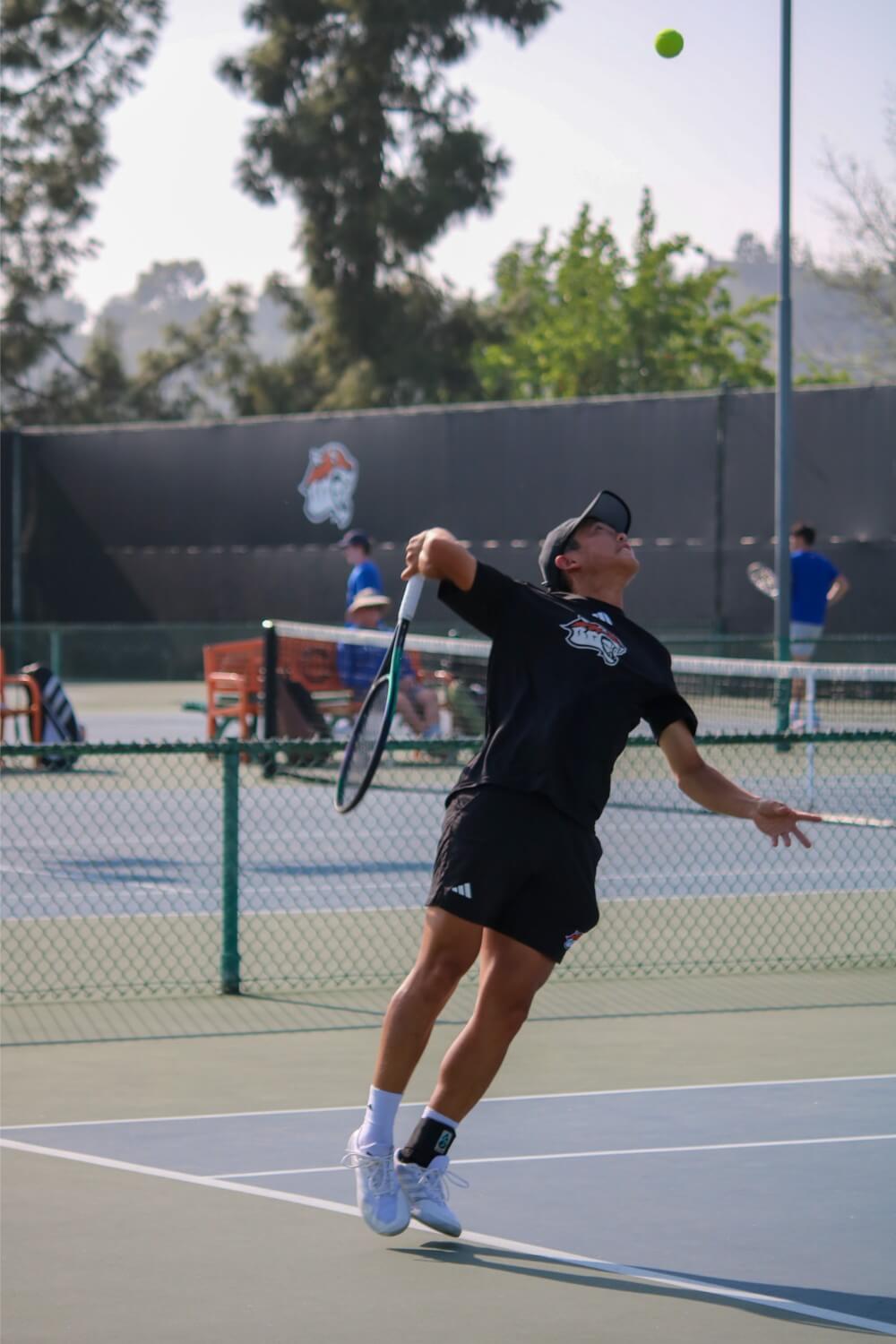
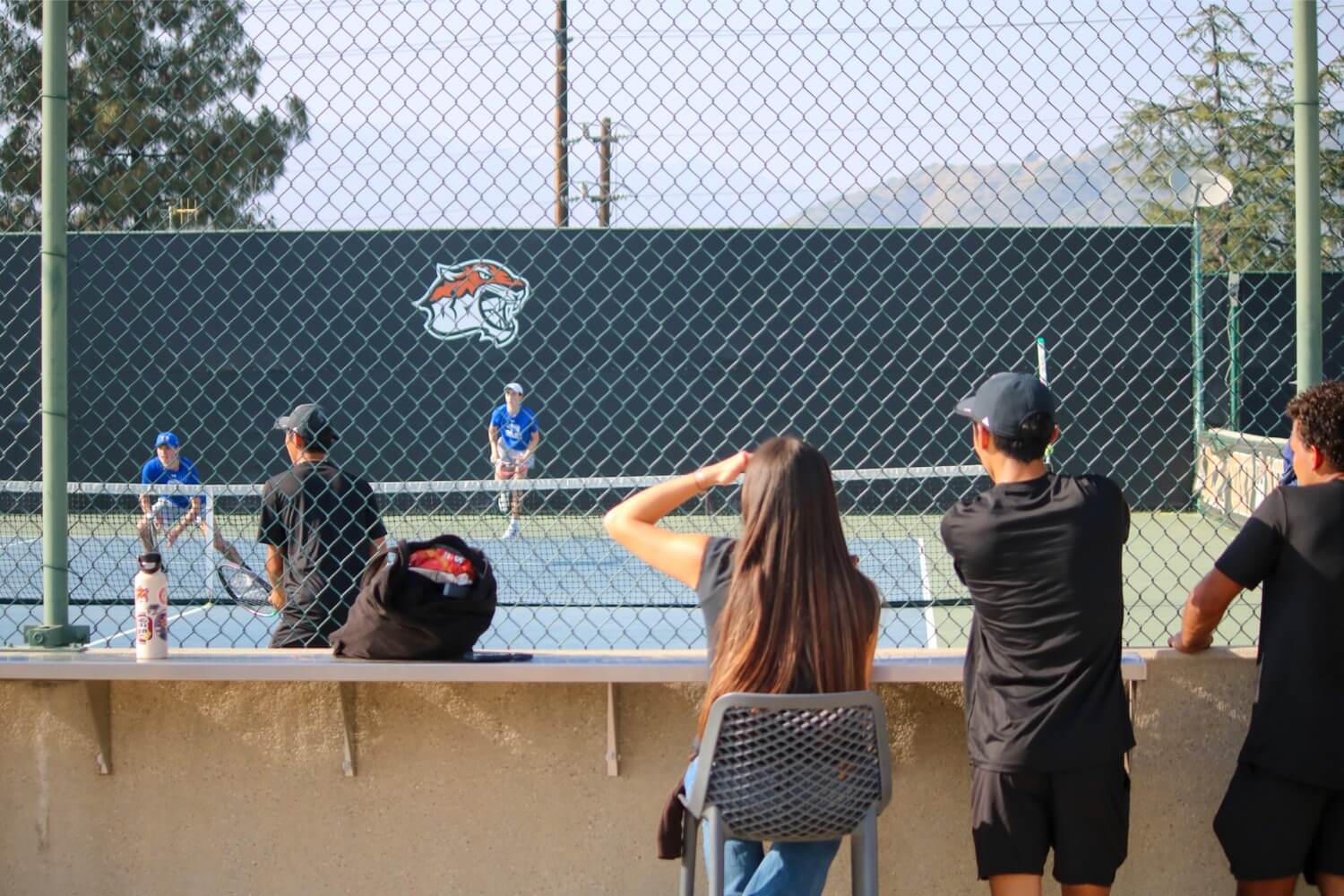
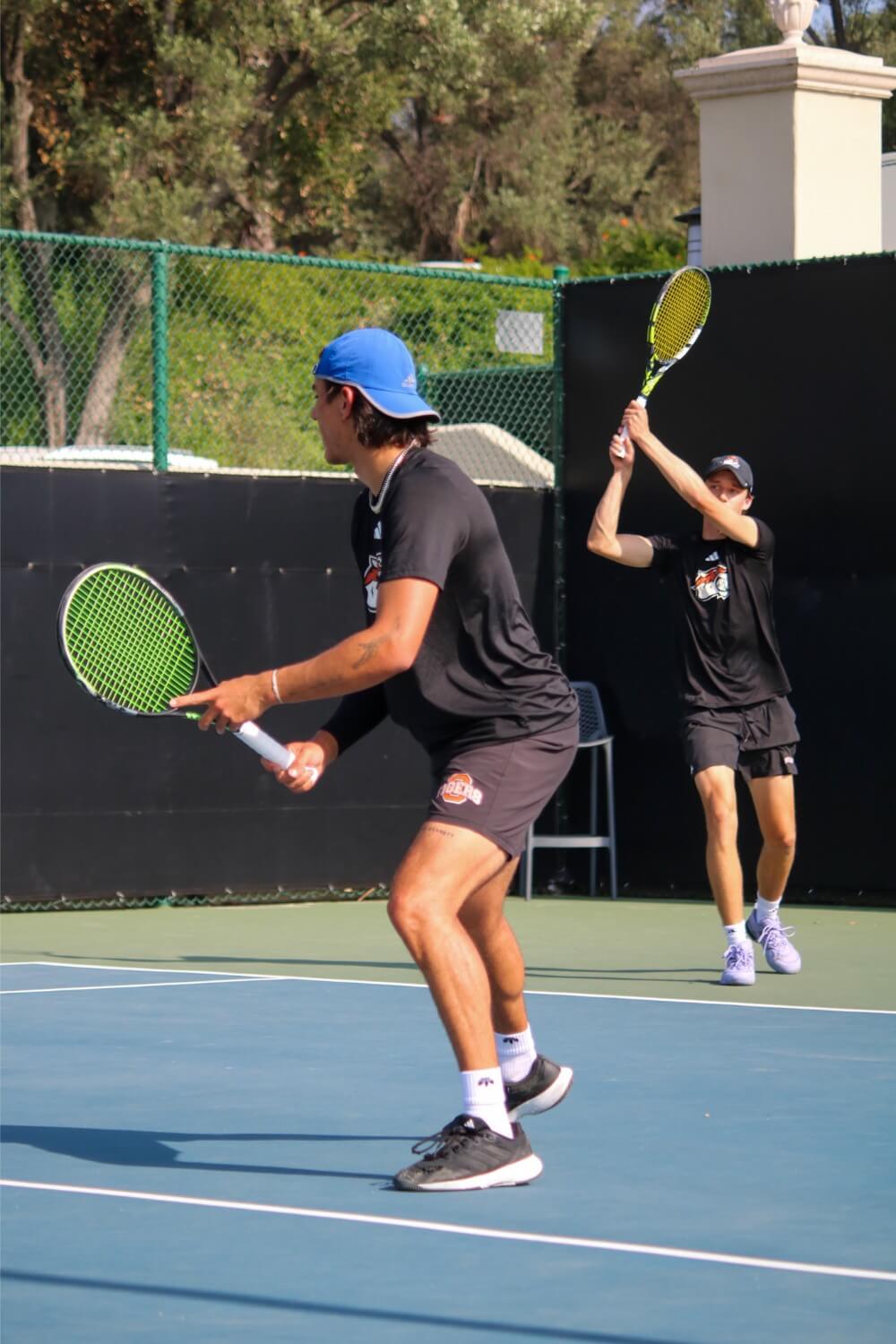
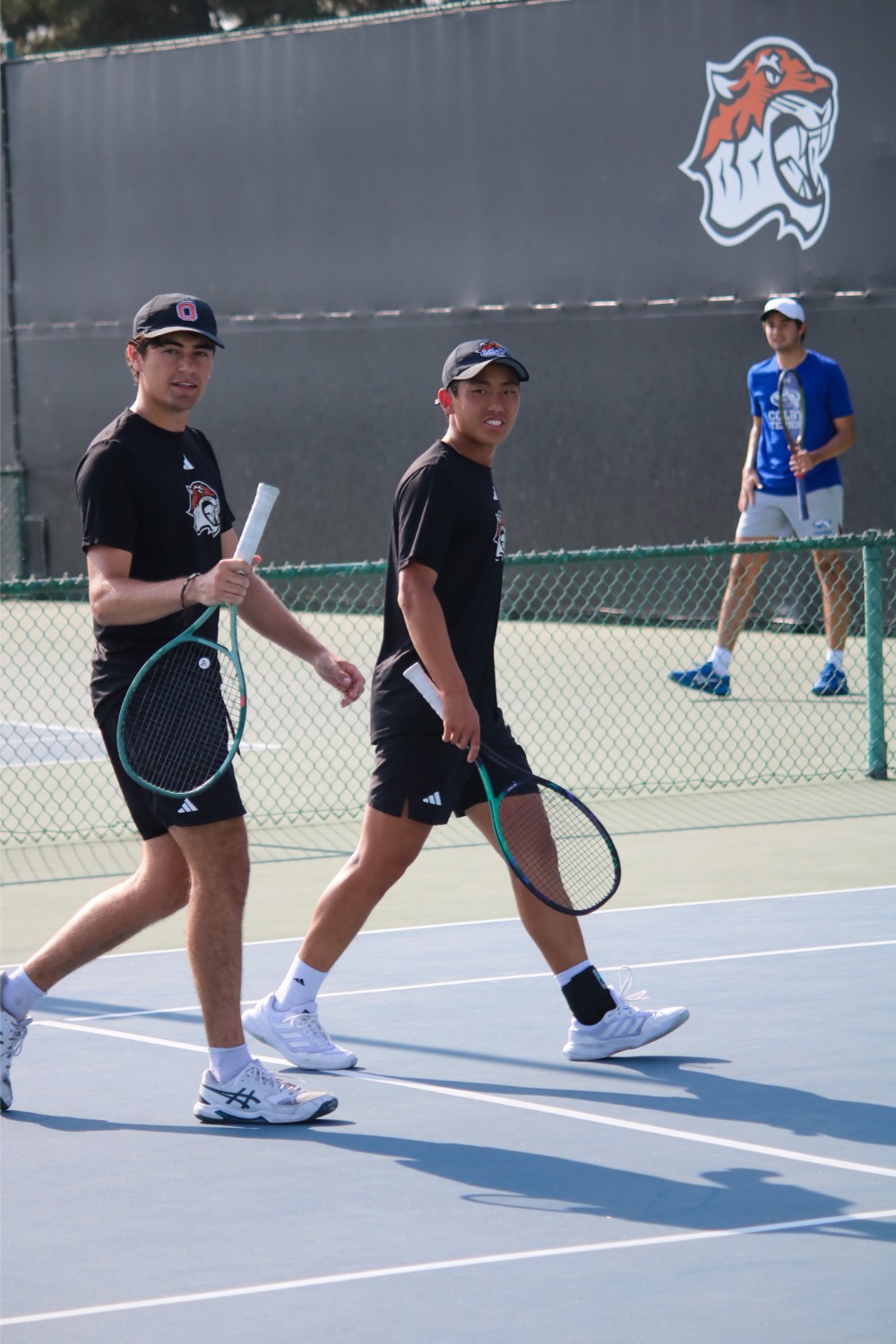
Ronald Chen (senior) serves at the McKinnon Family Tennis Center at Occidental College in Los Angeles, California. March 23, 2026. Maxwell Eve/The Occidental.Students watch Occidental match up against Colby College at the McKinnon Family Tennis Center at Occidental College in Los Angeles, California. March 23, 2026. Maxwell Eve/The Occidental.Ronald Chen (senior) serves at the McKinnon Family Tennis Center at Occidental College in Los Angeles, California. March 23, 2026. Maxwell Eve/The Occidental.Mason Hart (senior) and Tate Ransom (sophomore) compete in doubles against Colby College at the McKinnon Family Tennis Center at Occidental College in Los Angeles, California. March 23, 2026. Maxwell Eve/The Occidental.Ace Andres (senior) and Ronald Chen (senior) speak with director of tennis Stephen Perkins at the McKinnon Family Tennis Center at Occidental College in Los Angeles, California. March 23, 2026. Maxwell Eve/The Occidental.Ace Andres (senior) and Ronald Chen (senior) celebrating after a point at the McKinnon Family Tennis Center at Occidental College in Los Angeles, California. March 23, 2026. Maxwell Eve/The Occidental.
Walking into the Ahmanson Reading room on the main floor of the Mary Norton Clapp Library, one of the first sights students come across is a low bookcase containing a collection of books dated to the early 20th century. These are original issues of La Encina, the college’s yearbook.
These yearbooks from Occidental’s early years contain descriptions of many things one might expect to find in modern issues of La Encina: club activities, fraternities, athletics and other aspects of student life. However, among the descriptions of the Occidental literary society and men’s baseball team, the yellowed pages of the old yearbooks also contain an aspect of the college’s past that has been largely forgotten a century later.
In issues of La Encina from the early 1920s, sections concerning the Associated Students of Occidental College (ASOC) contain a short description of the “Men’s Tribunal,” an exclusively male body of upperclassmen headed by the president of ASOC.
In the 1923 edition of La Encina, the tribunal is described as follows: “The men’s tribunal is the court of upper classmen which administers the affairs of the Ku Klux Klan. All cases of insubordination of freshmen and all violations of the rules of the Ku Klux are brought before this body for trial. Punishments are inflicted publicly upon the Upper Quadrangle, and extreme offenses are punished by periods in the stocks.” Elsewhere in the 1923 edition, a faded photograph shows a flyer depicting a hooded rider dressed in Klan garments and headed by the word “BEWARE” in gothic lettering.
References to the Klan are scattered throughout other issues of La Encina from the 1910s and 20s. Often, the group is mentioned in passing and referred to as an integrated part of college life, appearing everywhere from college calendars and old flyers to the annual section on ASOC.
These frequent and casual references to the KKK raise a range of questions. What was this organization, where did it originate and what was its purpose? How long did it last? Did it face opposition from the student body or faculty? And was this group affiliated with the racist organization which terrorized Black Americans for decades, or was it an unrelated organization appropriating the name and iconography of the infamous hate group?
Men’s Tribunal page of the 1920 issue of La Encina kept in the Occidental College Collections Archives. Feb. 18, 2026. Nora Youngelson/The Occidental
Professor Erica Ball of the Black Studies Department said the group was almost certainly not directly affiliated with the national KKK. According to Ball, the group’s use of the name “Ku Klux Klan” was likely an attempt to emulate the Klan due to their notoriety and prominence in popular media rather than a signal that the group functioned as a subsidiary of the national organization.
Ball said this phenomenon was not unique to Occidental College. During this period, groups at other universities also sought to imitate the Klan by using their name and imagery.
“Eight years ago, I had a chat with some other historians at the American Historical Association, and I mentioned that at Oxy we had this Klan club,” Ball said. “Two other historians told me that yeah, they had one at their campus too.”
According to Professor Ball, the 1910s and 20s were periods when many of the traits now commonly associated with American college life were developing for the first time. At an almost exclusively white institution, as Occidental was at the time, a group which called itself the KKK was simply a secret society trying to intimidate other students.
“Teenage culture as we know it is coalescing in this time period at the beginning of the 20th century,” Ball said. “Young people are creating secret societies, fraternities and sororities for the first time, and so within this context it makes sense that students would create a secret society with a mandate to keep freshmen in line as a kind of hazing institution. The question then becomes why they would choose the name of this terrible racist organization.”
Ball said a likely culprit for the group’s name is the volume of popular culture which celebrated the Klan during the early Jim Crow period.
“They were characterized as romantic heroes, all-American in many respects,” Ball said. “There are several popular novels by Thomas Dixon which helped shape that narrative: books like “The Clansman,” “The Leopard Spots” and “The Traitor.” Those were made into traveling plays, and eventually in 1915 into the blockbuster film ‘The Birth of a Nation.'”
Ball said one of the most unusual things about the group at Occidental is that its existence predates the release of “The Birth of a Nation,” which was the longest and most profitable film ever made at the time of its release. Its popularity among white American audiences spurred a national revival of the Ku Klux Klan, which grew to an organization with millions of members by the mid-1920s.
As such, it would make sense if the Ku Klux Klan at Occidental had first come into existence around this time. However, Ball said this is not the case.
“When I first learned of the Klan club it was shocking, but also intellectually interesting,” Ball said. “The iconography was not that which we typically associate with the 20th century Klan — the lettering was different. I remember seeing the date of the material and thinking, ‘Oh my God, this club predates 1915.’”
Men’s Tribunal page of the 1920 issue of La Encina kept in the Occidental College Collections Archives. Feb. 18, 2026. Nora Youngelson/The Occidental
The Ku Klux Klan existed in several main iterations. The first came into existence in the immediate aftermath of the American Civil War, during the Reconstruction era. According to Ball, the main purpose of this first iteration of the Klan was to conduct political terrorism against Black Americans to prevent them from voting. The second, which grew into prominence after the release of “The Birth of a Nation,” had a much larger membership than the first and sought to achieve a broader variety of goals.
“The Klan re-emerges at a time when two things are happening. One, it serves to legitimize and entrench the Jim Crow system and the elaborate architecture of racism that is woven into Southern state constitutions. It’s a celebration of a new kind of white supremacy and system which dominates the Southern states,” Ball said. “It also serves as an organization that pushes back against new waves of immigration that are reshaping American lives in other parts of the country. They’re anti-immigrant, they’re anti-Catholic, they’re anti-Jewish — they’re very busy.”
According to former Director of Communications Jim Tranquada, the fact that the Oxy KKK predates the rise of the second Klan supports the hypothesis that the group was founded as a hazing organization, not as a chapter or subsidiary of the national organization.
“On October 12th 1910, The Occidental reported that: ‘The Ku Klux Klan is an organization of nursery instructors who devote their very lives for the benefit of the raising healthy, right-minded Freshmen,’” Tranquada said via email. “The acceptance of a student organization with such a horrific name was seen not just on campus but in the larger community. Los Angeles-area newspapers — notably The Express — routinely reported on the Oxy Ku Klux Klan’s activities between 1910 and 1919.”
According to Special Collections Archivist Alanna Quan, the year 1910 seems to have been when the organization was first established, as that is when it is first mentioned in college archival material. Quan said 1910 may have held significance for upperclassmen of the college as the year when a rigid separation between classes was first established. According to Quan, the hazing dispersed by the Oxy KKK could have functioned as a tool for building intraclass solidarity between students, who for the first time viewed their status as under- or upperclassmen as significant to their identity.
“Early in 1910, the Occidental Academy was dissolved. The Academy was essentially like the high school equivalent of Occidental College,” Quan said. “There is probably a lot of identity founding happening in these years, and I’m wondering if there is a correlation between the college becoming a strictly four-year institution in the same year as the establishment of this hazing organization which served to enforce a strict freshman to senior hierarchy.”
Materials released by the Oxy KKK during the years of their existence point to hazing as the primary function of the body. Flyers released by the organization contain a set of rules for incoming freshmen, the breaking of which would result in public humiliation rituals like spanking or time in a set of wooden stocks set up on what is now the Academic Quad.
Professor Ball said that although the group likely did not view itself as a political organization, its name is still indicative of the racist political environment at Occidental College at this point in history.
“The fact that the head of ASOC was the head of this group as well really demonstrates just how comfortable society was with this romanticization of the antebellum South and all the anti-Black violence which came with that,” Ball said.
Acceptance of the Oxy KKK by the wider Occidental community did not last forever. An article released by The Occidental in 1924 shows the group was forced to change its name that year due to pressure from both parents and members of the college administration, which at the time was headed by President Remsen Bird. According to the article, some parents threatened to withdraw their children from Occidental if the group’s name was not changed.
Class of 1920 Oxy KKK Ultimatum seal kept in the Occidental College Collections Archives. Feb. 18, 2026. Nora Youngelson/The Occidental
Quan said the group’s eventual name change from “Ku Klux Klan” to the less politically charged “Inquisition” is further evidence in support of the conclusion that the KKK moniker was chosen for its controversial and inflammatory quality, rather than as an explicitly political statement.
“The name change to the ‘Inquisition’ is what leads us to conclude that the naming was really more about the kind of mythos and power that this organization wanted to create around itself than any connection with the national organization,” Quan said.
According to Tranquada, the Oxy KKK’s name change in 1924 should be viewed in the context of wider political developments that were happening as the Klan expanded its influence throughout the United States.
“The Klan did not have a formal presence in LA until March 1921, when Grand Goblin William S. Coburn opened an office in downtown Los Angeles. Coburn went public that May, and by that summer he claimed there were six Klans in LA County: Los Angeles, Hollywood, Glendale, Covina, Venice and Culver City,” Tranquada said via email. “In April of 1922, an Inglewood police officer got in a shootout with a group of Klan members, wounding two and killing one — who turned out to be fellow Inglewood police officers.”
Tranquada said this incident in Inglewood led to a major scandal when the LA County District Attorney’s Office seized a cache of KKK membership records as part of a subsequent criminal investigation.
“KKK membership records embarrassingly showed the extent of Klan membership in law enforcement, local government and elsewhere,” Tranquada said via email. “All the negative publicity no doubt played a role in the controversy that led to the Oxy KKK changing its name.”
According to Professor Ball, another factor that soured opinions on the KKK among the wealthy white demographic dominating Occidental in the 1920’s was an incident in which the Grand Dragon of the Indiana Klan was charged with the kidnapping, rape and murder of a white woman, Madge Oberholtzer.
“This happened right around the time when the national organization was at its peak and had millions of members,” Ball said. “This state leader in Indiana brutally kidnapped, raped and abused a woman, and he was convicted of it. In the process, he and the organization lost credibility.”
Ball said an important source of the Klan’s legitimacy in the eyes of white America was the organization’s supposed defense of traditional moral values around sex and sexuality.
“In interviews with people who joined small town chapters of the Klan, they often say that they did so because the Klan kept people in order, they’d catch you if you were out on a date and so on,” Ball said. “So when this high-ranking leader was convicted of a brutal sexual crime, the organization lost any kind of credibility as a moral arbiter.”
By the late 1920s, any references to the Men’s Tribunal or any other ASOC body in association with the name “Ku Klux Klan” were absent from La Encina. In the 1928 edition of the college yearbook, the Men’s Tribunal is described as an organization of upperclassmen that “functions solely with the intent of acquainting the frosh with the customs and traditions of Occidental.”
Interclass hazing continued for many decades after the Oxy KKK ceased to exist. According to Tranquada, it was not until the 1960s that the practice began to decline in importance for the Occidental community.
“Tradition had a much stronger influence than it does today,” Tranquada said via email. “As each entering class participated in the hazing ritual, it was a self-perpetuating practice that lasted until the 1960s, when college traditions of all kinds fell by the wayside amidst the major cultural shifts taking place at the time.”
Among the cultural shifts that occurred on campus over the course of the 1960s was an increasing demand for greater representation of non-white students at Occidental. According to Tranquada, the small number of Black students who attended Occidental at the time played an important role in pushing for that increased diversity.
“In January 1968, at a forum held in Lower Herrick, Black students openly critiqued Oxy’s lack of diversity,” Tranquada said via email. “That April, the first joint student-faculty meeting on race relations was held, and five college task forces were created, each to deal with a different aspect of racial justice. In May 1968, the Black Student Caucus, unsatisfied with the college’s approach, presented a list of demands, including new academic and support programs for Black students and a greater focus on recruiting a diverse student body. A two-day sit-in at the AGC was held in support of the demands.”
Still, according to Tranquada, the work of transforming Occidental from an almost exclusively white institution — as it was at the time of the Oxy KKK — to a more inclusive and diverse college was a project that took several decades and did not conclude in the 1960s.
“The number of students of color didn’t really begin to change until the latter part of the 1970s and the 1980s,” Tranquada said via email. “As Jesus Salvador Treviño wrote in his 2001 memoir, ‘Eyewitness: A Filmmaker’s Memoir of the Chicano Movement’: ‘At Occidental College I was one of only a handful of Mexican-American students. Of the 400 members of the Oxy Class of ’68, only a half dozen of us were Mexican Americans. … At the end of my freshman year in college, I was very close to dropping out. The alienation I felt from the predominantly white Occidental environment and my profound sense of inferiority about being Mexican had been overwhelming during the fall semester.’”
Vice President of Marketing and Communications Perrine Mann said that today, Occidental College remains committed to maintaining programs focused on diversity, equity and inclusion, despite recent minimization or elimination of these programs at universities across the nation.
“Oxy remains steadfast in our belief that our differences both strengthen our learning environment and prepare our students to have an impact on the challenges that plague our global society,” Mann said over email.
Ball said that from her perspective, the story of the Oxy KKK says less about the institution of Occidental College itself than about the culture of white America as a whole in the 1910s and ’20s. According to Ball, the existence of student clubs emulating the Klan at college campuses around the nation speaks to how normalized and socially acceptable anti-Black violence was in this period.
“By the late nineteenth and early twentieth centuries, the violent history of the Reconstruction-era Ku Klux Klan had been sanitized by popular novels and fantasies for stage and screen,” Ball said. “In this context, the romanticization of the antebellum South and denigration of Black Americans was so pervasive that college students at Oxy and elsewhere around the country easily incorporated the mythology of the Lost Cause into their campus culture. Whether they did so unthinkingly or with malicious intent, this appears to have been a national phenomenon. And this, to me, is a sobering example of the long reach of Jim Crow culture.”