Home Blog Page 52

Haley Solar to ‘make a change in the world’ through local fashion

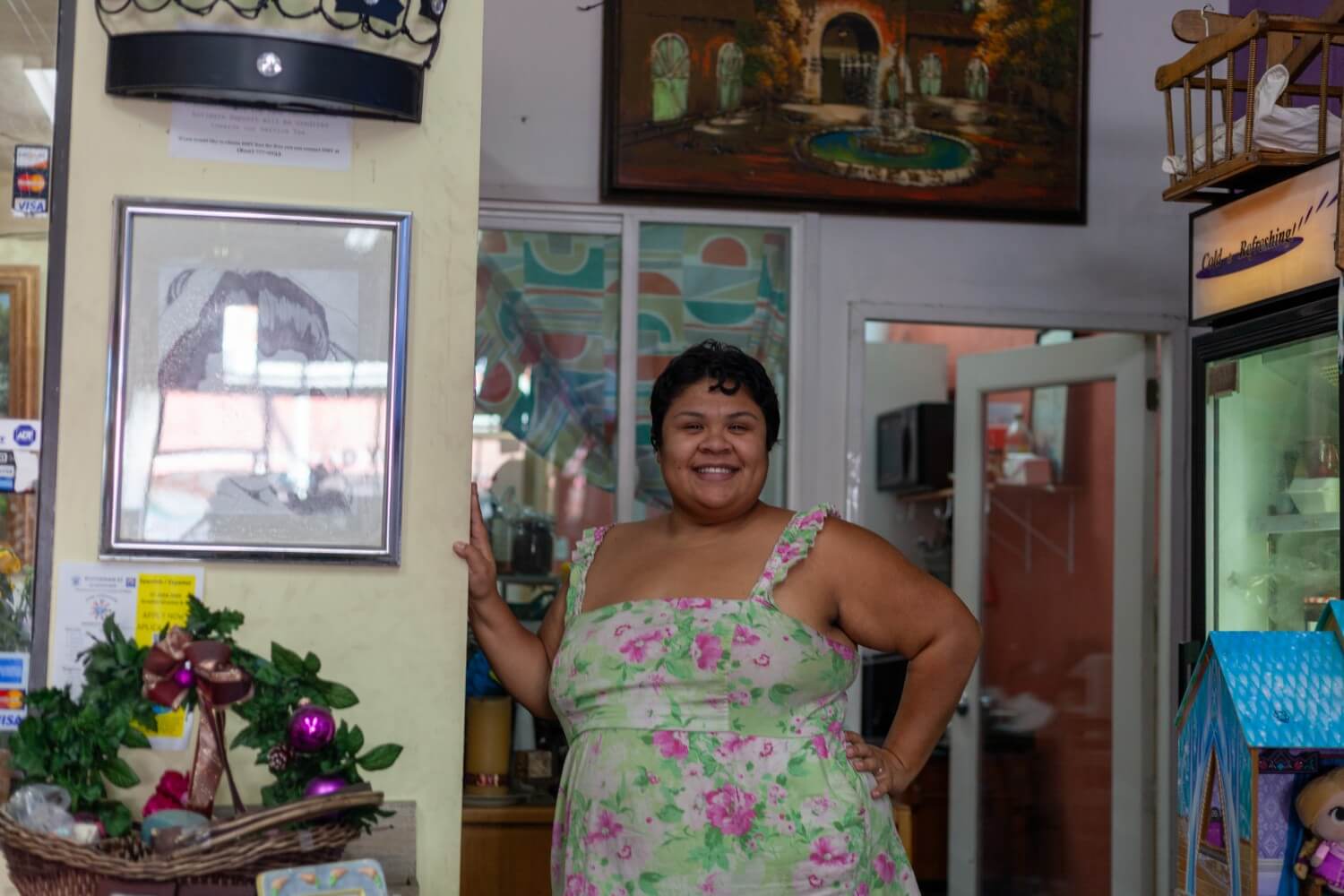
Between Muddy Paw Cafe and the Capri Club on Eagle Rock Boulevard, clothing boutique Haley Solar offers locally-made women’s clothing, sewing classes and fashion design workshops. Haley Solar, who founded the boutique, said its emphasis on eco-friendly, upcycled clothing grew naturally from her decades-long career in the garment industry.

“We’re so disconnected in our society on how clothing is made,” Solar said. “Since I first started working in factories in Downtown LA [when] I was 18 years old, I’ve seen so much of that industry collapse around me.”

Solar said she started sewing when she was 5 years old and since then has used her skills to help her community in innovative ways.

“I went from selling costumes in high school around Halloween time and hemming my friends’ pants for money to designing a handbag line,” Solar said.

Interior of Haley Solar in Los Angeles, CA. Oct. 31, 2024. Lupin Nimberg/The Occidental

Solar said that when she started her eponymous brand out of her apartment, one of the primary ways that her pieces gained traction was through Instagram, which, according to Solar, was starting up around that time.

“I had some really nice success pretty quickly,” Solar said. “There were a lot of bloggers buying my product and stores wanting to carry it, because this person bought it from this store and they posted about it.”

Solar said she wanted to connect more with customers after the initial buzz the brand received on social media died down. Solar said that after moving the business out of her apartment, she worked nights as a waitress to afford the rent on the space.

“I opened my store and closed it, changed my outfit in the bathroom and went to work,” Solar said. “I got my expenses down to $500 a month just so I could do it, and I lived like that for about two years.”

According to Solar, the boutique sewing classes she began hosting at her Eagle Rock location eight years ago, when she was hand-making dresses for around $125, were started partly to educate customers about the labor involved in making clothes.

“I’d occasionally have customers come in and say, ‘Why is this so expensive?’ and I’d get really frustrated,” Solar said. “Instead of getting despondent, I decided that if I offered these classes, I could really make a change in the world by showing people just what goes into making their clothes so that when they’re buying them, they can have a little more respect for the maker.”

Scarlett Miranda, who is Solar’s design assistant, said she teaches the beginning sewing class as well as a pattern-making class.

“I teach people how to use a sewing machine for the first time, and we make a tote bag,” Miranda said.

According to Miranda, the rise of fast fashion has led to customers often forgetting where clothes come from and how they’re made.

“Especially with sewing, it can be really challenging,” Miranda said. “People were like, ‘Hey I’m interested, I love clothes but I don’t really know how they’re made,’ so we teach them about the machines, cutting and fabrics. I think it gives people a better understanding of why a shirt might be priced a certain way.”

According to Solar, customers should be willing to spend more on their clothing.

“The race to create a cheaper item is not good for us,” Solar said. “When you spend a little bit more on a piece that you value, you’re going to hold onto it, you’re going to wear it and you’re going to use it.”

Interior of Haley Solar in Los Angeles, CA. Oct. 31, 2024. Lupin Nimberg/The Occidental

After moving to the current location in Eagle Rock in 2016, Solar said the business started to grow enough that she was able to start bringing in other brands. According to Solar, one of the most important parts of her job is finding and building relationships with other brands that share similar values.

“Our number one line, other than my own brand, is a brand called No Less Than,” Solar said. “They are two sisters who run the factory in Downtown LA, their parents run the production and they really care about the same locally-sourced, locally-made upcycled production that I do.”

Solar said she is particularly proud of the store’s display and the amount of effort that goes into its curation.

“Every year twice a year, we completely switch over the display,” Solar said. “We paint walls, we move furniture, we create massive art installations and we have a theme every season.”

According to Sara Beard, the brand’s visual director, creating the display is a very involved process.

“We start with inspiration boards that we fill with photos of a theme that we like for the season, and then we look at what’s realistic for our space,” Beard said.

Interior of Haley Solar in Los Angeles, CA. Oct. 31, 2024. Lupin Nimberg/The Occidental

According to Beard, the store’s current theme is based on the movie and TV show “Twin Peaks.”

“If you go around the store, there’s very deep references of characters and story lines,” Beard said. “Each little area of the store is a different part of the show.”

College students and newer customers need not be afraid of boutiques, Solar said, though she said she understands why they might be.

“There might be a little misconception that a boutique is a snobby place, or a place where you’re not welcome, or a place where you might be priced out of,” Solar said. “Completely ignore all that.”

According to Beard, even in the era of online shopping, brick-and-mortar boutiques have immense value.

“We want to have a very human experience, and that you feel comfortable and welcome,” Beard said. “You can try things on and touch them and make a mess.”

Contact Avinash Iyer at iyera@oxy.edu

Loading

Rosa’s Registration and Old York Vintage share a roof and customers

Rosa’s Registration and Old York Vintage occupy the same building on York Boulevard, offering customers a vehicle registration service and a place to shop curated vintage styles from various eras in time.

Current owner Elizabeth Throckmorton said that her mother first started the car registration business 19 years ago, when Throckmorton was 13 years old. Throckmorton said the business started out in a little office in the back of the building.

“We’ve been lucky to be able to rent the whole space, which has been amazing,” Throckmorton said. “We’ve been able to develop this whole community space.”

Elizabeth Throckmorton in Rosa’s Auto Registration Services in Los Angeles, CA. Oct. 24, 2024. Allen-Zachary Lipsett/The Occidental

Fashion designer Angel Gentle is the current manager of Old York Vintage. He said he went to Throckmorton’s store to fix his motorcycle, where he and Throckmorton came up with the idea to have Old York Vintage share a space with the auto registration store.

“I went to Elizabeth’s auto registration, and she was telling me that she would like to have the front of her store be more inviting,” Gentle said. “I built my team and she hired all of us, and then we just started to curate the space and get everything going.”

Gentle said that when selecting vendors, he considers their prior business experience and commitment.

“I see if [vendors] would be good to run a store and to organize one. How well do they keep up with their projects? Are they able to supply good quality pieces?” Gentle said. “It’s also the presentation of the products, the quality of the products and the time they put into it.”

Promotional stickers for Rosa’s Auto Registration Services and La Familia Insurance Solutions LLC in Los Angeles, CA. Oct. 24, 2024. Allen-Zachary Lipsett/The Occidental

Juan Castro, one of the vendors at Old York Vintage, said that he admires his co-workers’ unique styles.

“[My co-worker] used to be a skater, and he used to be a graffiti artist, so he’s more an urban, streetwear kind of guy,” Castro said. “But then he also loves the ’90s and 2000s.”

Gentle said he believes a large part of the business appeal is the diversity in what each vendor has to offer. He said that one of the vendors selects items that have a Southern aesthetic, such as cowboy boots and suede jackets.

“I pretty much love everyone’s stuff in the shop, and that’s why they’re in there,” Gentle said. “I love their curation and how they find their stuff and the whole package.”

Exterior of Rosa’s Auto Registration Services in Los Angeles, CA. Oct. 24, 2024. Allen-Zachary Lipsett/The Occidental

Throckmorton said that at Rosa’s Registration, despite first starting with a primarily Spanish-speaking client pool, customers have diversified over the years.

“[Our clientele] is anyone that could use our services.” Throckmorton said. “Over the years, we’ve definitely expanded and [now] help all kinds of people. I’ve had people [that are] immigrants. I’ve had people that are locals.”

Castro said the clothing shop prioritizes keeping their clothes affordable, which is a big part of why there is a thrift store section in addition to the vintage clothing section. Castro also said he believes the business as a whole — including the registration services — supports people on a budget through their accessible pricing.

“There’s all kinds of people that go [to Rosa’s Registration], and they need a jacket or a button up. They can always stop by,” Castro said.

Gentle said that in the future, he aims to expand the items offered to include books and vintage action figures.

“Maybe students are wanting to find nice used school books that are unique,” Gentle said. “I think the vintage toys hit on nostalgia, where you walk in and you see an action figure and you’re like, ‘Oh, that was from my childhood. I want to capture those moments.’”

Throckmorton said there has been a lot of change in Highland Park over the years, but the down-to-earth atmosphere of both Rosa’s Registration and Old York Vintage is what makes the business unique.

“What I honestly think makes it so special is the grit,” Throckmorton said. “I feel like a lot of the newer businesses are a little too polished, a little too clinical feeling. And that’s not real, you know. That’s not grit. That’s not human and local, and we’re human and local.”

Contact Allyson Chan at achan2@oxy.edu and Diana Trutia at trutia@oxy.edu

Loading

Gen Z rabbi Alex Weisz leads generational change at Temple Beth Israel

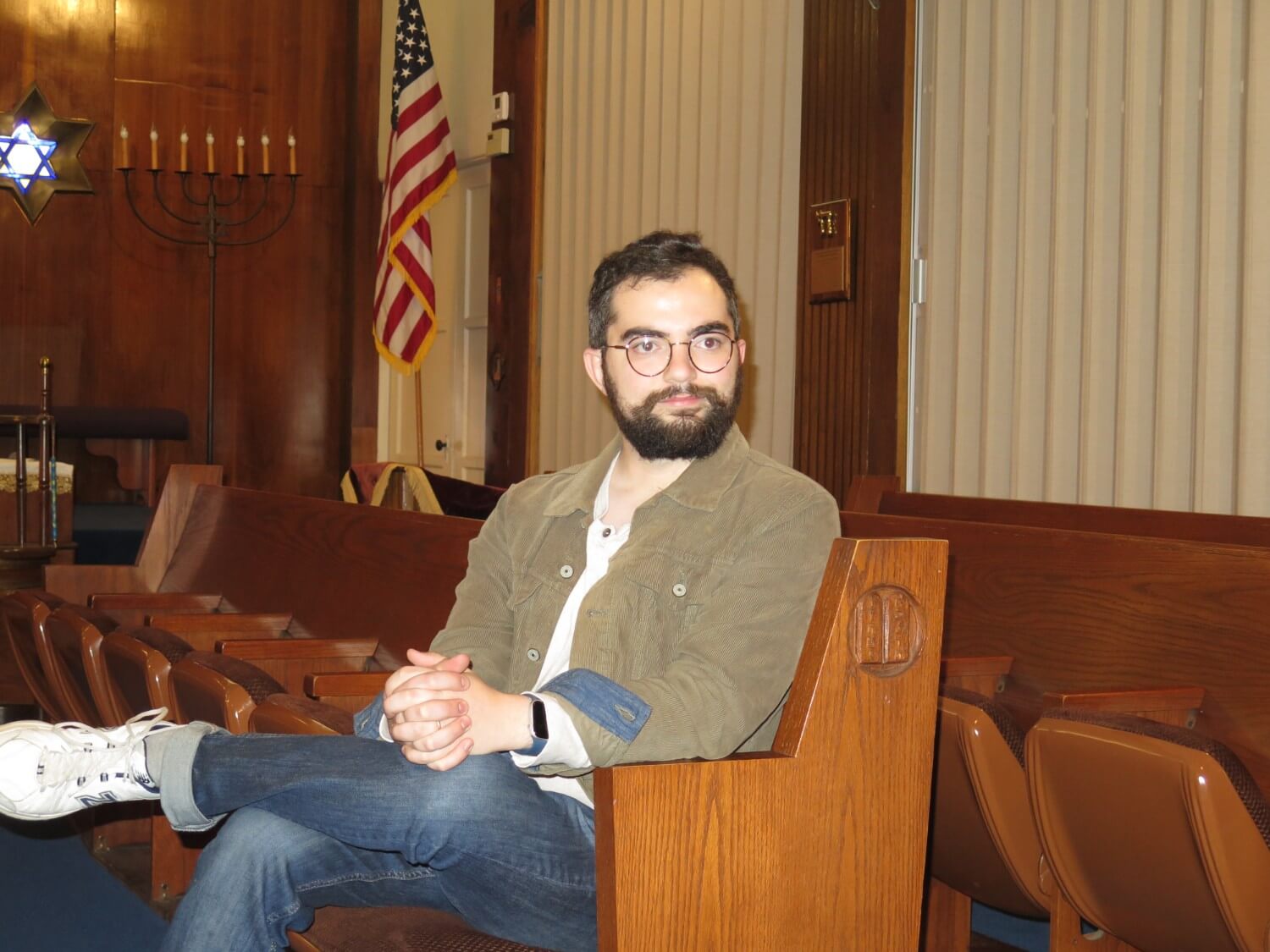
Rabbi Alex Weisz, senior rabbi at Temple Beth Israel in Highland Park, is the first Gen Z rabbi to lead a synagogue in the US according to Beth Israel’s website. Weisz, who is 28 years old and was raised in Pasadena, said that he knew since his childhood that he wanted to become a rabbi.

“[I] was very inspired by my childhood rabbi, who was relatively young, who really showed me that one can be an active member of the Jewish community and still be cool,” Weisz said.

Weisz said that during his tenure, which started in the summer of 2023, the community at Temple Beth Israel has grown from 85 to 175 families. According to Weisz, Beth Israel is intergenerational and does not sort people into boxes based on their age.

“It’s a community that is very warm,” Weisz said. “This is a community that has gone through decades of really not very many Jews in the area. And so when new people come in the door, we don’t take them for granted.”

Weisz said that after graduating from Loyola Marymount University, he attended an executive program that allowed him to gain work experience and receive a rabbinical education simultaneously. Weisz said he took classes over Zoom while serving communities across the West Coast.

“I love the work,” Weisz said. “It would feel so selfish to set all of that aside so that I could study all day.”

Rabbi Alex Weisz of Temple Beth Israel of Highland Park and Eagle Rock in Los Angeles, CA. March 27, 2024. Tessa Burnett/The Occidental

Weisz said via email that he attended the executive program for five years, and that his schooling was unconventional.

“That was a very intense way to go to school, but it allowed me to be in the community [and] to become a seasoned professional,” Weisz said. “That has allowed me very quickly to have the life experience to be able to serve lots of different folks, even people twice and three times my age.”

Occidental’s Associate Director for Jewish Student Life Ben Greenberg said ideas about conventional rabbis being older are still widespread.

“There’s this conception that the only people who could sort of tap into [Jewish leadership] are rabbis with old, white beards,” Greenberg said.

Weisz said the rabbinate has become more diverse over time as younger people take leadership positions. He said he believes that diverse representation in Jewish leadership is vital for positive change within communities.

“In the same way that having someone of a new generation is impactful, it’s also important that we have women, nonbinary and trans rabbis, that we have queer rabbis, that we have rabbis of color, that the person in the office brings different things to the table,” Weisz said. “The diversity of the rabbinate is a great thing.”

Rhiannon Lewis, who leads prayer at Beth Israel as a nonbinary cantoral soloist, said the community at Beth Israel is accepting of their identity, even though there are occasionally some challenges to navigate. Lewis said Weisz encouraged them to explore reciting a gender-neutral version of the Hineni prayer, which only provides options for the singer to use male or female pronouns.

“[Weisz] was like, ‘I know that there are people working on a gender-neutral version of the Hineni, is that something you’re interested in?'” Lewis said.

Exterior of Temple Beth Israel of Highland Park and Eagle Rock in Los Angeles, CA. Nov. 2, 2024. Aung Myat Htet/The Occidental

Lewis said that Weisz connects well with attendees at his services, regardless of how long they have been coming to Beth Israel.

“I really, really admire his conversational skills and his way of connecting to people,” Lewis said. “He is always in conversation with someone.”

According to Weisz, about 70 percent of new attendees at Beth Israel who joined in the past year are under 45 years of age. Lewis, who at 24 is the youngest member of the clergy, said Weisz’s presence is encouraging younger people to attend services and become part of the community.

“I feel like there was a group of young people, and then it sort of dissipated,” Lewis said. “The energy has started to come back again with Rabbi Weisz, which is really, really nice.”

Greenberg said that younger rabbis can be an energizing force in their communities.

“It’s also important that there’s young leadership in all communal spaces, people who can bring fresh ideas and new perspectives,” Greenberg said. “I think we all get entrenched in our orthodoxies, not just around religion, but anything.”

Weisz said that the Israel-Palestine conflict has dominated his tenure at Beth Israel. According to Weisz, in-person spaces for Jewish people to gather and converse with one another are essential now more than ever, when online spaces foster misunderstanding and leave people angry. Weisz said that it is easier for congregants at Beth Israel to constructively converse on the Israel-Palestine conflict when not confined to online forums.

Exterior of Temple Beth Israel of Highland Park and Eagle Rock in Los Angeles, CA. Nov. 2, 2024. Aung Myat Htet/The Occidental

“I’ve seen conversations happen between people who would be ripping each other to shreds on a forum,” Weisz said. “They come to realize that they may have different sensitivities and things that are upsetting them in discourse but that when it comes to the actual conflict that’s going on, they agree.”

Weisz said that while he doesn’t speak about his personal beliefs around the conflict while he is on the pulpit, he engages in conversations around the Israel-Palestine conflict with his community after the official service is over.

“It’s important that we have communities that are diverse and are not monolithic,” Weisz said. “This is a Jewish community, but it’s not an echo chamber.”

This article was updated Nov. 8, 3:40 p.m. to reflect that 70% of new attendees at Temple Beth Israel are under 45, not that 70% of all members are under 45. 

This article was updated Nov 11, 3:38 p.m. to clarify details about Rabbi Weisz’s executive study program. 

Contact Ruby Gower at gower@oxy.edu

Loading

Latine Student Union hosts Día de los Muertos events

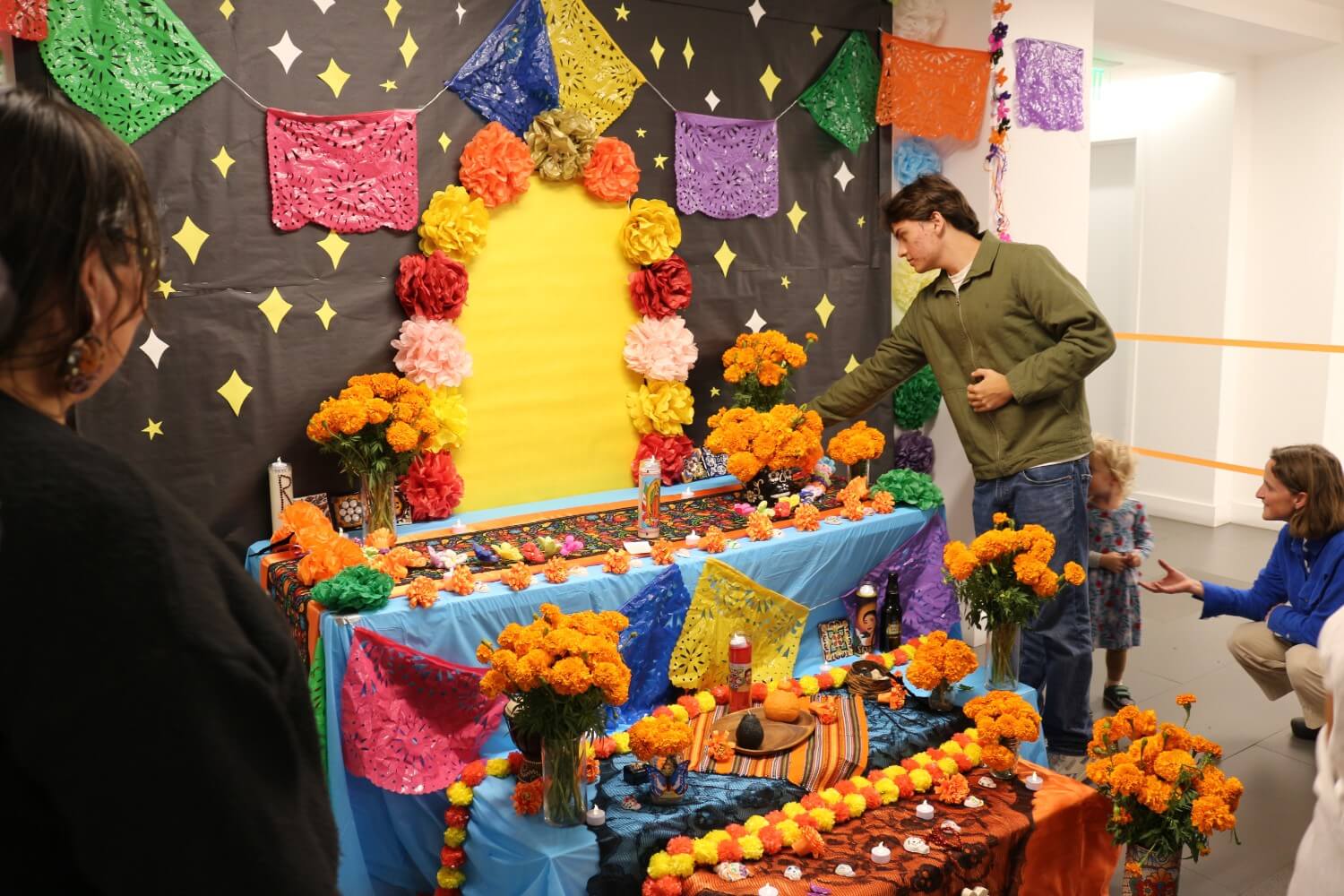
Following the end of Latine Heritage Month last week, Occidental’s Latine Student Union (LSU) organized a week of events in collaboration with the Latino/a and Latin American Studies (LLAS) department. The events included a Fall Fiesta Oct. 25, a Día de los Muertos celebration Oct. 28 and a Día de los Muertos workshop and dinner Oct. 29.

Founded in 2017, LSU was created to foster an inclusive space for students who identify as Latine on campus while honoring and celebrating each individual and their unique identity, according to LSU co-president Jimmy Mendoza Hernandez (senior).

Mendoza Hernandez said that he joined LSU during his first year in 2021. Now as a senior and co-president of LSU, he said he has been able to use his experiences in the club to help it grow and change.

“We sort of learned what works and what doesn’t and what changes need to be implemented, as well as what we can keep doing the same,” Mendoza Hernandez said.

Día de los Muertos, also known as Day of the Dead, is a traditional festival where families reunite with their departed loved ones sharing food, drink and celebration in their honor. According to Mendoza Hernandez, celebrating Día de los Muertos for a week at Occidental has been a lasting tradition for LSU.

Día de los Muertos celebration in Johnson Student Center at Occidental College in Los Angeles, CA. Oct. 29, 2024. Aung Myat Htet/The Occidental

Community Outreach Liaison Yolitztli Torres (sophomore) said LSU is working on a new project for next semester, which is mural painting.

“I’m still sketching ideas from everybody. Once I have done the sketch, we’re [going to] project it on a canvas and trace it. Then, we will have everybody paint on the canvas,” Torres said.

According to Torres, the mural painting will take place in the Latine Reading Room on the third floor of the library.

Mendoza Hernandez said he wants to continue hosting events that bring students and faculty together, which he thinks is important for building welcoming spaces in the community.

“We did a soccer game between the Latine faculty and staff versus LSU members last year, and that was a big success. And now we want to do a different sport, different activity, sort of bring that connection between staff and students and help them to get to know each other,” Mendoza Hernandez said.

Torres said LSU e-board meetings always have strong participation from first years.

“It’s been cool to talk to a lot of freshmen. Most of our e-board meetings are open to anyone who wants to share any ideas with us or just wants to witness what LSU meetings are like,” Torres said.

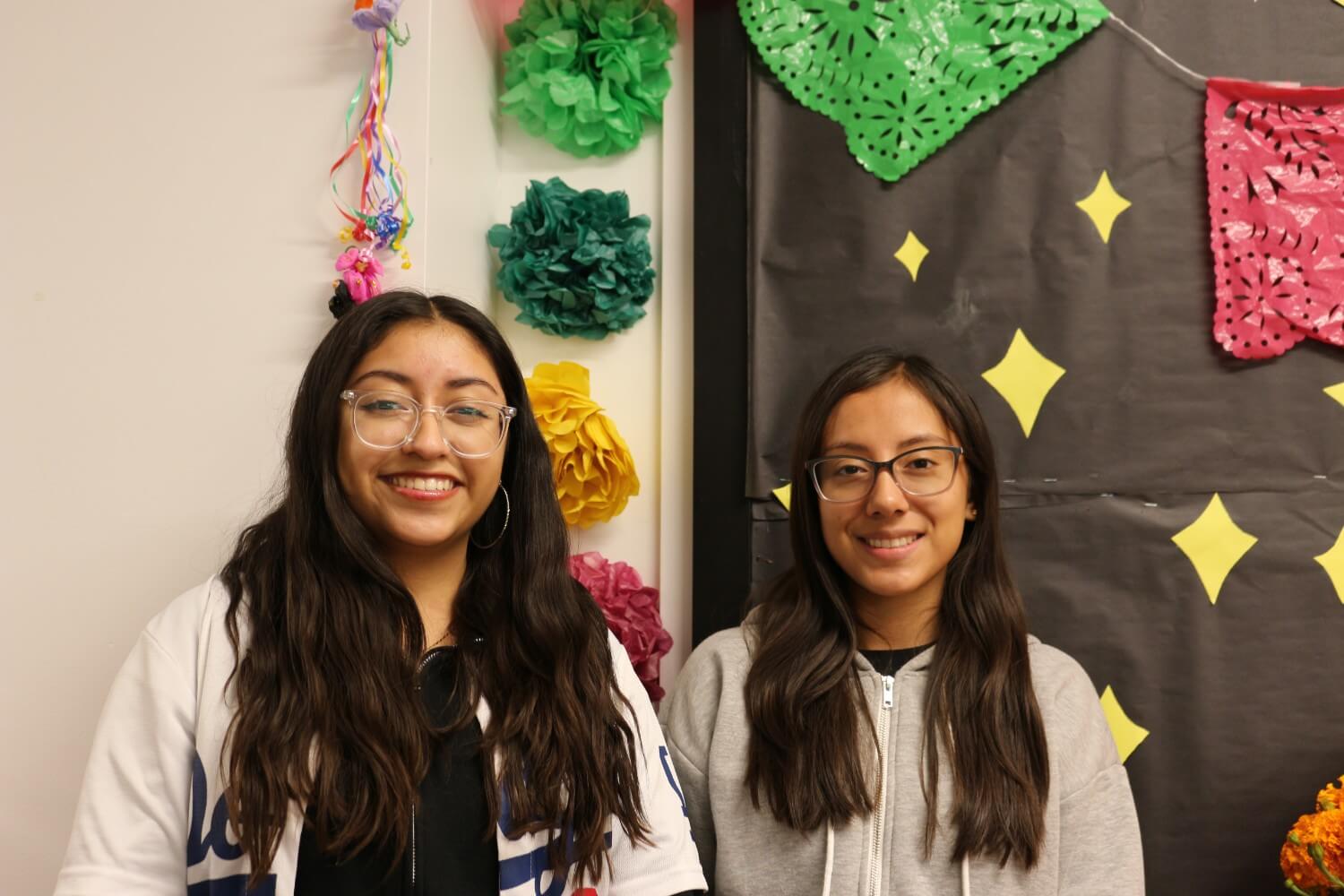
Yolitzli Torres (sophomore) and Jeselyn Lara (first year) in the Johnson Student Center at Occidental College in Los Angeles, CA. Oct. 29, 2024. Aung Myat Htet/The Occidental

Jeslyn Lara (first year) said LSU always puts effort into promoting first-year involvement in the club.

“We get a lot of motivation from LSU members which encourages us to keep coming back to the meetings and events. Now, we have more friends and more connections,” Lara said.

Mendoza Hernandez said LSU members emphasize keeping in touch with the club, regardless of their class years or busy schedules.

“Currently, our e-board consists [mainly] of sophomores, which shows that they are willing to not only come back to the club, but also be a bigger part in it,” Mendoza Hernandez said.

Torres said she joined the e-board to help create spaces for marginalized students to find a like-minded community, something she has been passionate about.

“I think it’s important to have a community, especially in […] [a] predominantly white institution,” Torres said. “It’s so important to relate to people who are missing experiences with the people who speak the same language as you do.”

Lara said friendship is a big part of LSU.

“They’re just really friendly and welcoming just to anyone. Even if they don’t know you, they’re like, ‘You’re my friend now.’ They offer you their friendship just right away,” Lara said. “This is the safe space to connect with them and hang out with them, which is what I really love and I appreciate.”

Mendoza Hernandez said LSU invites all Occidental students to come and support the club whenever they can.

“Even if you don’t see it all the time, like you’ll find yourself making a new friend and you’ll find yourself enjoying these events and looking forward to coming back,” Mendoza Hernandez said.

Contact Aung Myat Htet at ahtet@oxy.edu

Loading

Opinion: Black Myth: Wukong — what makes a video game so compelling?

Black Myth: Wukong is a recent action game developed and published by Game Science in 2024. The game is heavily inspired by the Chinese classical novel “Journey to the West,” which tells the story of the anthropomorphic monkey, Sun Wukong, or the Monkey King.

The story of “Journey to the West” dates all the way back to the 16th century and is one of the most famous fairy tales in Chinese history. There have also been various adaptations that re-tell different versions of the story, not just in Chinese, but in other languages such as Japanese and Korean. For instance, the animated character Son Goku from popular Japanese anime “Dragon Ball Z” was inspired by Sun Wukong.

First and foremost, who is Sun Wukong? Sun Wukong is the main protagonist of “Journey to the West” published in the 16th century. As mentioned before, he is an anthropomorphic monkey who consumed a large amount of magic peaches that granted him immortality and other special abilities. He has supernatural strength, a body hard as stone, he can duplicate himself, transform into 72 animals and objects and much more. He even has an unbreakable staff as his weapon that weighs 17,550 kilograms that can both shrink and grow to any size. Despite his power, Sun Wukong nonetheless carries flaws in his personality — such as a mischievous nature — that often lend his power to counterproductive ends.

As a child, I was captivated by the story of Sun Wukong and constantly rewatched the 1985 animated film “Monkey King Conquers the Demon,” but I eventually outgrew the film and hadn’t thought about Sun Wukong for a very long time. That is until Black Myth: Wukong released Aug. 20.

To be frank, I’m not a very involved video game player — however Black Myth: Wukong caught my eye as it released and I saw many people enjoying the game. The game quickly gained massive global recognition and outsold other concurrently released games, such as the first-person shooter Concord. On Metacritic, Black Myth: Wukong has a metascore of 81 percent from 91 critic reviews and a user score of 8.3 out of 10 based on thousands of user ratings. Clearly, Black Myth: Wukong has done something right in its ability to adapt a centuries-old story to the modern day.

One of the main attributes that makes a video game successful is its story. Sun Wukong already has around 500 years worth of being told over and over again to many generations. The video game itself even dives into the story through beautiful animations.

Many players express how they admire the game showcasing and bringing Chinese mythology to life.

“The story is rich, immersive and filled with layers of cultural significance that draw you in, making you feel like you’re part of a grand, mythological tale,” one Google review said.

Another review expressed how much they were captivated by the visuals and graphics of the game, underscoring the importance of another feature — art.

The second biggest component to drawing players in is the presentation of the game. This includes character designs and backgrounds crafted to make the players feel as if they are within the game’s atmosphere. According to MetaEngine, a website devoted to helping developers create engaging video games, immersion into a game doesn’t just involve the visuals alone, but also sound effects and music. Sound effects help build tension or ambience while music sets the mood of the game and provides “emotional cues” for the player.

Another key factor is giving characters diverse movements, providing challenging levels and delivering satisfactory awards as a result. In general, people typically crave progress and achievements. In video games, developers want their players to have the freedom to explore their surroundings and perform impressive feats, especially in combat games like Black Myth: Wukong. Additionally, having more freedom to move around in a video game gives players the chance to explore and admire their surroundings. It allows players to feel more in control of their characters instead of the game controlling them. This sense of freedom is bolstered by creative in-game opponents that test the player’s limits.

For instance, the Scorpionlord is one of the hardest bosses to beat in the game, according to IGN. The Scorpionlord is — as the name suggests — a massive scorpion man who carries a tail full of venom and one pincer strong enough to pop your character’s head. In addition to the Scorpionlord, there are various other bosses that not only make the game more entertaining, but also encourage players to engage in strategic thinking and quick reflexes to avoid a terrible fate.

While the cost of Black Myth: Wukong can range anywhere from $30 to $60, I encourage anyone to take the time to try it out, or at least watch a few videos that explain the concept of the game and how to play it. The game is a great way for people to not only learn about famous Chinese mythology that has been retold for centuries, but also observe the qualities of what makes such a story so popular. Black Myth: Wukong is a great resource for anyone looking for inspiration on how to create a successful video game, or simply write a good story.

Contact Weiran Li at vli2@oxy.edu

Loading

The Haunted Library tour brings Halloween spirit to campus

The scent of lavender drew library-goers into the mysterious Braun Room on the evening of Oct. 29. When students walked into the dimly lit room with the stacks of books decorating the walls, their eyes were drawn to the portrait of Mary Norton Clapp found on the first floor of the library. Next to it was Clapp in the flesh, wearing a white dress with puff sleeves and pink ribbons, her blond hair in a bun. She looked the exact same as she did in her portrait.

Around Clapp the faint eerie music of the theremin played, preparing the students and a few others in the room for what they had signed up for — the Haunted Library Tour.

The Occidental library hosted an event called “Mary Norton Clapp’s Haunted Library,” created by Senior Director of Administration Brian Chambers, the college archivist Alanna Quan, Special Collections Librarian Helena de Lemos and Director of Teaching, Learning and Research Support and Interim Director of Special Collections and College Archives Sarah Paramore. Director of Academic Advising and Core Program Coordinator Edmond Johnson played the theremin during sections of the tour.

The first part of the tour started in the Braun Room, with Quan sitting in an armchair dressed like Clapp alongside the real Clapp’s portrait on the first floor of the library. Johnson was playing the theremin, and the tour-goers were chatting quietly, waiting for the event to begin.

The ghost of Mary Norton Clapp Alanna Quan during the Haunted Library performance at the Mary Norton Clapp Library at Occidental College in Los Angeles, CA. Oct. 29, 2024. Marty Valdez/The Occidental

Chambers walked in wearing a shark head. He called himself the Library Loan Shark and gave a short opening speech. The loan shark (Chambers) told a library tale of a Special Collections book that was loaned 50 years ago and just recently returned, and then, he began telling Clapp’s story.

Clapp (Quan) cut off the loan shark, telling her own tale — when and how she died, her mother being the anonymous donor for the building of the library named after her and the strange things that the construction people had noticed happening.

In that moment, everyone in the room turned around to the scream of Miss Havisham (de Lemos), a character from Charles Dickens’ novel “Great Expectations,” standing in the back of the Braun Room wearing an old, tattered wedding dress.

Clapp asked the audience to meet her on the third floor of the library. The library staircases were decorated with spiderwebs and other spooky decorations. A cardboard cutout of Danny Devito poked out of Chambers’s office.

Clapp told the audience the second haunted story. It was about the 1959 College Librarian, Andrew Horn, who heard suspicious and eerie sounds from inside the library walls. Clapp said no one believed him.

“He knew with certainty that the scratching was a manifestation of the library’s secrets and that they were not going to let him go so easily,” Quan said as Clapp.

Clapp asked the audience to go to the library’s fourth floor tiers, where she then reappeared suddenly. She told the story of a reporter for The Occidental, Margaret Fisher, who found an old book containing firsthand accounts of Occidental’s past while looking through the stacks in Fall 1950. Suddenly, Margaret was stuck in the darkness of the labyrinth that the tier had become. She was unable to escape the stacks, just like all of the people from the book she had picked out to read.

The event ended with Johnson demonstrating how to play the theremin and allowing some members of the audience to come up and try it out.

According to Chambers, this was the second time the library planned the Haunted Library event, the first time being in 2019.

“We threw out the idea last year about maybe doing it, but this year we got serious about it,” Chambers said.

Chambers said that while in 2019 just 33 people signed up for the tours, this year they had 50 students signed up and another 50 on the waitlist.

Speaker and lava lamp during the tour at the Mary Norton Clapp Library at Occidental College in Los Angeles, CA. Oct. 29, 2024. Marty Valdez/The Occidental

According to de Lemos, one of the reasons she and her colleagues organized this event was to showcase the library as a more fun setting and to show a different side of the librarians.

Chambers said they were also inspired by the legends and myths that exist surrounding the library and its haunting history.

“We all hear them from students and we joke about them, and it’s fun so we kind of wanted to give life to that,” Chambers said.

Some of the stories that Clapp told during the tour were inspired by true events, according to Quan. Quan said the names of the characters, places and the dates are all true facts.

“Obviously, we’ve embellished a little bit to make them proper, spooky stories. In that way, it’s kind of also a fun way to introduce everyone to some of the history of the library as well,” Quan said.

The library staff said they are thinking of making this a yearly event. Quan said she would love it if they did the event on a regular basis to make it an anticipated tradition. De Lemos said in the future, they will try to accommodate more people and have the event over a couple of nights.

Mina Jenab (senior), who attended the second tour, said she would go to another event if the library hosted it.

“I was surprised by this event,” Jenab said. “It was fun and a nice change up to my routine. I also liked that it was sort of a small group, it felt intimate.”

Contact Francine Ghazarian at ghazarian@oxy.edu

Loading

After performing at The Hotel Cafe, Artist of the Week August James enters ‘next chapter’ of his music career

August James (senior) is a musician at Occidental who currently has just under 25,000 monthly listeners on Spotify and most recently performed at The Hotel Cafe in Hollywood Oct. 29. According to James, while the songs he makes now are mainly of the indie pop and indie folk genres, music first caught his attention in middle school when he discovered GarageBand and started creating his own beats on the school iPads.

“[Making music] slowly evolved into producing, writing my own stuff and the genre changed a little bit,” James said.

In addition to writing and producing his own music, James said he has worked alongside other musicians within the Occidental community and has more recently started to engage with other producers in the LA area.

James said that one of the musicians at Occidental that he has worked with the most throughout his musical career is fellow student and longtime friend, Teddy McGowan (senior). After meeting in high school in their home state of Minnesota, James and McGowan immersed themselves in writing and creating music with one another and have helped each other grow as musicians since the beginning, according to James.

“I feel like [McGowan] has always just been somebody I’m talking to about music, and I trust his opinion and feedback,” James said.

McGowan said he and James spent a majority of the COVID-19 pandemic together, writing their own pieces and sharing them with each other. Now living together, they said they are able to constantly support each other as they each continue to pursue music.

“He cranks out a lot of really cool, independent stuff and it’s fun to have him run that stuff by me and obviously draw inspiration from not only his music but also the things that we all do when we’re hanging out as friends,” McGowan said.

McGowan most recently supported James at his Hotel Cafe performance, where James and his band performed a set of his original songs.

“I remember seeing him perform in high school, and [the concert] felt like the next chapter in a sense,” McGowan said. “He had a great stage presence, and the band sounded great.”

According to James, he and McGowan have attempted to make songs together, but because of their differing writing styles, they find it more beneficial to separate their music careers and learn from each other in different ways instead. James said that it is also difficult to make music with people he feels closer to.

“I feel like both of our music is so autobiographical that it’s hard to be vulnerable in that way with somebody who’s your friend,” James said. “We don’t really have the same stories to tell.”

McGowan said that because he is not immersed in music classes at Occidental, he enjoys having an environment with James where he can have this creative outlet of writing music.

“It’s nice to be around a lot of people who are making music with me. It’s just sort of August because we are so close. I’m around him a lot and that keeps me sort of wanting to do more and more,” McGowan said.

James said that even though he is not a music major, he wants to treat music as a potential career path. He said he has begun to engage more with the business aspects, such as working with management and producers rather than just creating a song himself.

“I’m an [economics] major, so in some sense, maybe that helps me think about other things that go into being an artist, aside from the actual music,” James said.

James has also worked with Sophie Weil (senior), who he said has photographed a number of his concerts and created cover art for some of his projects. Weil said she also went to support James at his Oct. 29 Hotel Cafe performance, where she photographed for him and edited a video of the night.

Weil said she met James during their first year at Occidental. She said they have been able to work together on so many occasions because of their shared love for music and art.

“I think we have very similar aesthetics, so it’s easy for us to know how to create one vision together,” Weil said. “It definitely helps that we’re close friends, [too].”

James said that while it is hard to plan for a career in music, he hopes to continue writing songs and growing as an artist.

“I’m trying to give [music] some respect or at least pretend to treat it as a career for a year and see what happens,” James said.

Contact Amalia Rimmon at rimmon@oxy.edu

Loading

Opinion: Grief that belongs, reflections on mourning the unknown

I woke up Oct. 7 thinking about nothing in particular. It was a Monday and I wasn’t ready to start the week, but the sun shining through my window shades urged me out of bed.

I checked my phone to reveal a text from my mom, realizing what it was before I opened it. My sleepy eyes skimmed over two paragraphs of poetic words and red heart emojis addressing something I dreaded thinking about: my dad. More accurately, his death, 20 years ago to the date.

I turned my phone off and shut my eyes, wishing to disappear back into sleep, feeling the pressure of tears welling behind my eyelids and the shame that held them back.

For as long as I can remember, my dad has existed to me as an uncomfortable facet of my identity. Though I often thought of him as a little kid, for the past decade I have tried to avoid letting thoughts of him seep into my daily life. It’s not that I don’t have questions about who he was, the country he came from or the things he might have taught me. But dwelling on these questions has increasingly felt like standing at the edge of a huge gaping hole in the ground — even as I’m tempted to peer down for a glimpse at what lies inside, the closer I get, the more perilous the operation feels.

So that day, like many days, I held him for a moment in my mind and then reviewed why it wasn’t my place to be sad: how entitled could I be to grieve for someone I can’t even remember, while people around me suffer real losses everyday? Is my life not filled with enough love and caring people to focus on instead?

I let these swirling thoughts ground me back to normality — this arbitrary date was just like any other, now just with a two-decade buffer between me and a loss that wasn’t even mine to claim.

I pulled on clothes and walked to my first class, curiously noting chanting in the distance and a heavy silence hanging over campus. It wasn’t until reaching my seat that my ambivalence dawned on me. Oct. 7 wasn’t just my family’s day of mourning but an international one for the 1200 Israeli people killed a year ago and the 42,000 (and many more uncounted) Palestinians killed since.

I am well practiced in the art of suppressing emotion. I plant grief deep within myself. I grieve for Gaza, even though I feel privileged when I say that aloud. I bury it with excuses, reassuring myself that it’s not my place to mourn lives taken an ocean away. If my grief can’t save anyone or bring back the dead, why even acknowledge it? I push any traces of empathy further and further down, letting lives fade into numbers and ignored headlines — a tragic but almost inevitable feeling.

But as I sat in the aching numbness of my own discomfort on this strange death anniversary, I was struck by the parallels in my emotions towards the destruction in Palestine and my own quietly held loss.

These are lives I will never know, stories I will never fully understand — but people in every way deserving of remembrance.

While my dad’s death 20 years ago has nothing to do with the genocide happening right now, realizing how I’ve denied grief over both has forced me to realize how dangerous my silence has become. Echoes of the sadness I’ve spent a lifetime suppressing have rendered me less empathetic to the world.

Grief is terrifying, painful and imperative to creating change. It holds immense power. But so does its absence.

Right now I see the world, or at least this country, falling into a habit I have grown too familiar with. We slowly turn away from our grief because it hurts less and we feel out of control.

But our sadness has as much power to enact change as anger or moral indignation. Empathy is quintessential to what makes us human, and in denying it, we deny the humanity of millions of people.

Death is a natural part of life, but not on the scale we are witnessing in Gaza. It is horrific, violent and unfathomably big. To grieve the thousands of lives taken this past year is to resist apathy and indifference to injustice. Our grief isn’t selfish or meaningless; it’s generous and vital.

Grief is wild, tragic, beautiful and worth fighting for. It can’t return life, but it should compel us to defend it. If the feelings I keep buried regarding my dad can teach me anything, it is that an intangible loss is not any less real.

In acknowledging my grief, I refuse to let it turn into indifference. I transform it into a commitment to remember and to act. By grieving, I honor those I’ve lost and learn to reclaim my capacity for empathy. Grief is not a burden, but rather, it is a call to recognize the value of every life and to challenge the silence that surrounds tragedy.

Contact Estel Garrido-Spencer at garridospenc@oxy.edu

Loading

Opinion: Harris and Trump’s closing arguments reflected two divergent paths for the future

As this election concludes, Donald Trump and Kamala Harris’ closing arguments painted two clashing visions for America. In a deeply personal message, Harris has framed her candidacy as one of unity, progress and support for working Americans. Trump, on the other hand, has fallen back on his heavily divisive culture war, amplifying grievances and echoing rhetoric that is openly hostile to many Americans.

Launching her final push, Harris revisited the Jan. 6 insurrection to remind voters of the chaos and violence associated with Trump. Harris’ message reaches beyond party lines, framing the election as “more than just a choice between two parties and candidates; this is a choice about whether we have a country rooted in freedom or ruled by chaos and division.”

She criticized Trump for dismissing the mob’s calls to kill Mike Pence with a cold “so what.” Harris underscored her political commitment to unifying and working on the behalf of every American with the simple phrase: “Trump would walk in with an enemy list; I will walk in with a to-do list,” showing her commitment to Americans regardless of political affiliation.

Trump’s campaign, meanwhile, has doubled down on stoking division and inflaming cultural battles. Just last week at Madison Square Garden, Trump hosted what he called a “lovefest,” though many, including former Fox News reporter Megyn Kelly, described it as “too brotastic” and failing to appeal to voters beyond his loyal base.

The rally, reminiscent of the infamous 1939 Nazi Rally at the same venue, drew scrutiny from none other than Trump’s niece, Mary Trump, who posted side-by-side images of the two events on X with the haunting caption, “So, we’re really doing this again. Eyes wide open.” Radio host Sid Rosenberg likened the rally to a “Nazi Rally.”

At the rally, Trump’s surrogates went after immigrants and minorities with brazen hostility. Speakers took to the stage to viciously assert that “we need to slaughter these other people.” Trump referred to America’s adversaries as “the enemy within,” adding that they “have done very bad things to this country.” Trump’s rallies have been punctuated with derogatory comments about Harris, with some speakers referring to her as a “devil” and the “antichrist.”

The biggest hit came from comedian Tony Hinchcliffe who commented that Puerto Rico is a “floating island of garbage,” which drew condemnation from prominent political figures. U.S. Rep. Alexandria Ocasio-Cortez reminded everyone that “that’s just what they think about you. It’s what they think about anyone who makes less money than them.” While Hinchcliffe later defended his remark as a joke, this excuse falls flat given the harm such rhetoric inflicts. Having comedians known for harsh, roast-style humor at a closing argument speech only amplifies this damage, risks alienating voters and undermines the seriousness of the campaign’s message.

Meanwhile, Harris’ strategy has emphasized connecting directly with marginalized communities rather than alienating them. While Trump was busy making fun of Puerto Rican voters, Harris was in Pennsylvania at a Puerto Rican restaurant, showing solidarity with the state’s 400,000 plus Puerto Rican voters.

This stark contrast extends to key issues that resonate with female voters, a demographic crucial in battleground states. Historically, white women have leaned Republican. But Trump’s lead among white women has shrunk to just one point this year, the lowest margin for any GOP candidate this century. CNN political analyst Harry Enten attributes this shift to issues like abortion, which is a priority for women in these states. More than 80 percent of voters in these battlegrounds are white, and in Michigan, Wisconsin and Ohio, a recent poll showed that 27 percent of women list abortion as their top concern, compared to only 8 percent of men.

In her final campaign days, Harris made abortion access a centerpiece, using figures like Michelle Obama to powerfully reframe it as an issue that affects both men and women.

“To the men who love us, let me just try to paint a picture of what it will feel like if America, the wealthiest nation on Earth, keeps revoking basic care from its women, and how it will affect every single woman in your life,” Obama said.

Instead of a unifying message, Trump’s message to women has been that he will protect them “whether they like it or not,” an approach that will likely alienate voters and deepen the gender gap in this race. It’s yet another instance where Trump has made it clear that he doesn’t believe women should have the agency to make decisions about their own lives.

In the final stretch of the campaign, Trump’s ambiguous slogan, “Trump will fix it,” channels frustration but leaves the issues open-ended, with no concrete solutions on the table. His rallies stoke discontent and anger without offering clarity on how he intends to make Americans’ lives better. This approach relies on vague, resentment-fueled appeals rather than specific policies — a gamble that voters will fill in the gaps based on their own frustrations, whether economic, political, or personal.

In contrast, Harris promotes a forward-looking vision centered on unity and practical plans for the future: “We are not going back.” Her message prioritizes respect over division and purpose over grievance. As she articulated, “The United States of America is not a vessel for the schemes of wannabe dictators; the United States of America is the greatest idea humanity ever devised.” Harris’ emphasis on progress and unity could galvanize the enthusiasm necessary to move away from Trump’s divisive rhetoric and toward a more inclusive, forward-thinking future.

Contact Tejas Varma at varmat@oxy.edu

Loading

Athletes of the Week Max Stanley and Meara Hayes bring positivity to their teams

Max Stanley

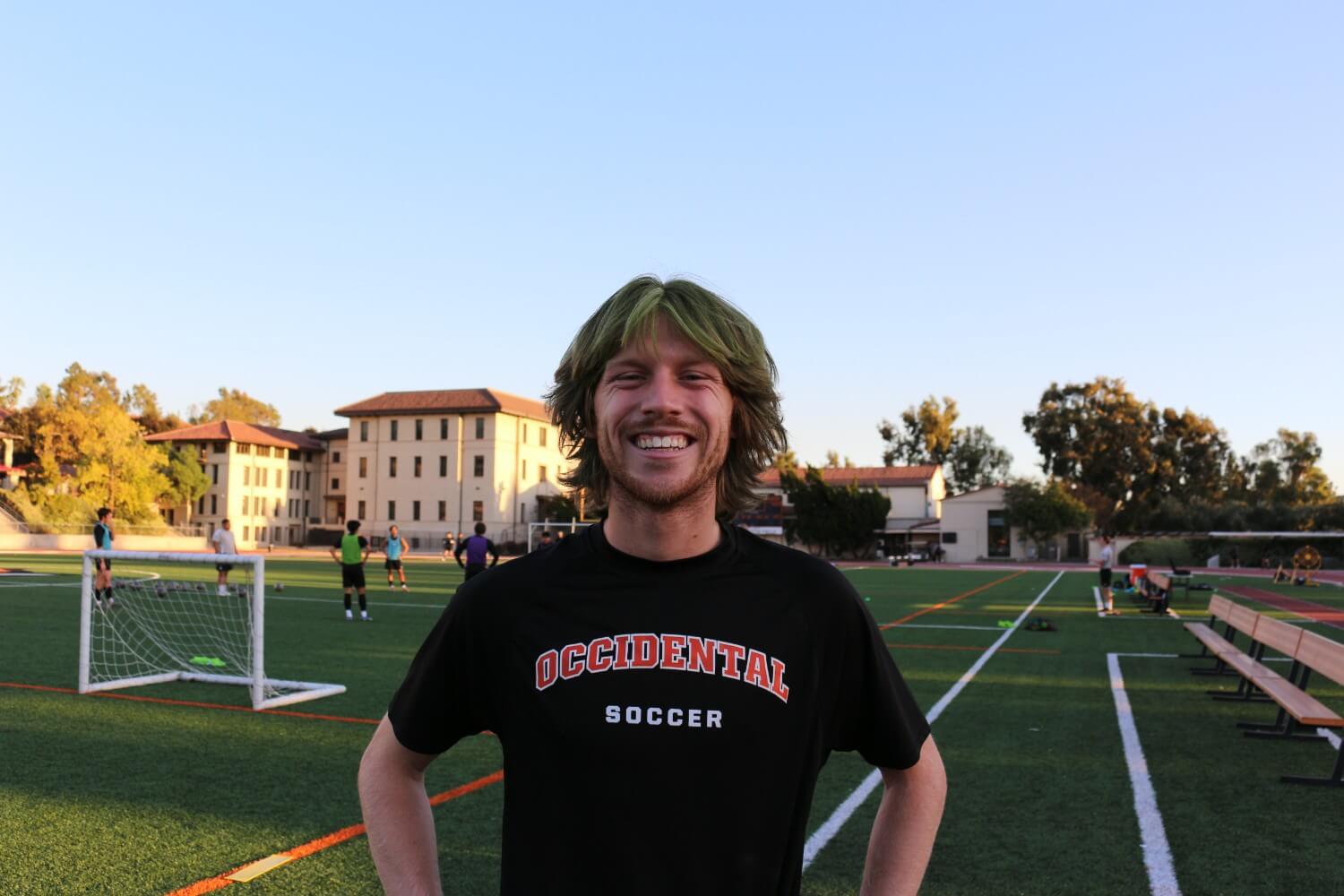
Max Stanley (senior) in Jack Kemp Stadium at Occidental College in Los Angeles, CA. Oct. 31, 2024. Aung Myat Htet/The Occidental

In the opening minutes of the men’s soccer game against Claremont-Mudd-Scripps (CMS) Oct. 23, wingback and captain Max Stanley (senior) scored the game’s first goal, beating two CMS defenders down the right wing. Vicente Navarro (junior) set up the play with a long pass from midfield, finding Stanley as he sprinted into the box.

According to Stanley, he has been playing soccer since he was 3 years old.

“I loved juggling the soccer ball with my feet, and I think that was what drew me to it originally,” Stanley said. “But now, I love everything about it.”

Rod Lafaurie, men’s soccer head coach, said he has seen Stanley grow in maturity while at Occidental.

“He’s always happy, and he’s always energetic, positive and willing to work hard,” Lafaurie said. “That’s always something that’s really valuable to have.”

According to defender Andrew Lee (first year), Stanley — who is his upperclassman mentor — is a skilled player and an engaged leader.

“Each underclassman has an upperclassman mentor and he was actually my mentor […] I play the same position as him and I try to emulate what he does on the field,” Lee said.

Stanley said that he tries to continue the welcoming dynamic that he experienced when he first joined the team.

“I could easily call any one of the guys that I play next to my brother, on and off the field,” Stanley said.

According to Lafaurie, Stanley’s experience is one of his greatest strengths.

“At this point, he’s played so many games, he’s very mature and understands the game very well. It’s highly valuable,” Lafaurie said.

Stanley said his endurance is essential to his success as a wingback.

“It’s a lot of running, a lot of getting up and down the field, which I think is not only helpful for me but also provides an outlet for my team,” Stanley said.

Stanley said he wants to continue playing soccer after college, even playing semi-professionally or professionally if he can.

“My brother currently plays in Berlin. So I would love to go join him for a couple of years while I’m still in the prime age of playing,” Stanley said. “If that’s not in the cards, I definitely will be playing all the time [in a] pick-up Sunday league, especially in the spring when I’m technically not in season anymore.”

Meara Hayes

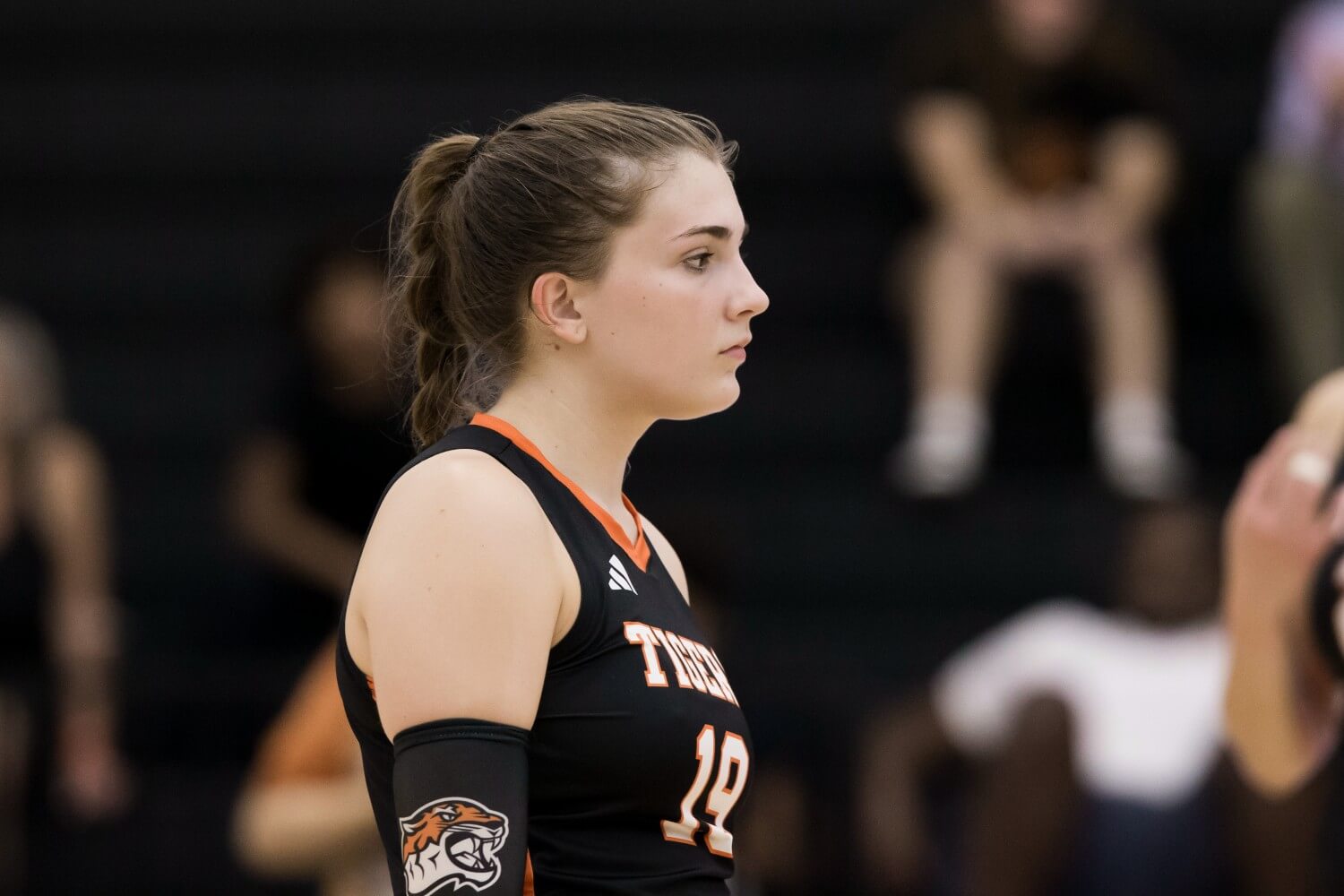
Courtesy of Joseph Perrino

Setter Meara Hayes (first year) leads the volleyball team in assists this season with 268 assists under her belt, including 71 assists in the last 5 games. Hayes said her older sister inspired her to play volleyball.

“My older sister played, and I wanted to be like her, so I started playing. I really liked it, so I kept playing,” Hayes said.

According to Hayes, she was optimistic at the start of the season.

“We have a new coach this year, so my first impression was [that] it’s going to be a fresh start,” Hayes said.

According to volleyball head coach Emily Foster, Meara was initially reserved but has since acclimated to the environment.

“I think that it took her a little bit to warm up to us as a team, but now she’s really come out of her shell,” Foster said.

Foster said Hayes is incredibly positive, lighthearted and always stays true to herself.

“People listen to her when she speaks, because she picks the moments that she talks wisely,” Foster said.

According to Foster, Hayes has improved dramatically this year.

“Her footwork, her communication with her teammates, her confidence, her serve — all of that’s gotten better on and off the court,” Foster said.

Hayes said she prefers to play in a more behind-the-scenes role.

“I don’t really like being the center of attention, but I think that one of my strengths is that I can be stable,” Hayes said. “I’m very focused on what I need to do.”

According to Hayes, although the team started the season with nine new recruits, they were able to establish good team dynamics.

“It shows a lot of resilience, how we’ve actually grown as a team, especially now when we’re so close to the end,” Hayes said. “I’m really excited and really sad, because I feel like we could grow a lot more.”

Contact Tessa Taylor at ttaylor@oxy.edu

Loading