The night of Jan. 7, I was inside my San Gabriel home trying to find something to distract myself from the growing anxiety caused by the extreme Santa Ana winds blowing outside. When I first saw the news of the fast-spreading Eaton Fire in the nearby town of Altadena, my stomach churned. I got ready for bed that night, unsure if I would be able to sleep with the rattling winds outside my window and the fear that I would be the next to evacuate. As I fell asleep, I just hoped the morning would be better.
Unfortunately, when I woke up the next morning, the fire was still rampaging and the devastation had only begun. More than anything, I felt sad. Over the next few days, I remained full of worry for my friends who lived closer to the flames than I did, the smoke-filled sky acting as a constant reminder of what was occurring less than 10 miles away. Thankfully, my family and my home remained safe throughout the week, but the same cannot be said for a few former classmates, teachersand acquaintances.
The Pasadena area has been my home for my entire life, and I have never seen my community as silent and melancholy as it was for that first terrible week. Every time I opened my Instagram, I saw a new GoFundMe being shared around by my old friends. Two people that I used to dance with, the sister of a former classmateand multiple high school teachers and staff members lost their homes, and those are just the ones I am aware of.
A source of light and hope during this tragedy came in the form of the overwhelming amount of mutual aid created by members of the community. So many individuals and organizations stepped up to help; donation shelters like the Pasadena Convention Center, animal shelters like the Pasadena Humane Society, local restaurants providing free mealsand people opening up their homes to the displaced were some of the true heroes of the week. The support was so great that several shelters had to announce they could no longer accept donations because they were filled to the brim.
One of my favorite mutual aid organizations to rise up in the midst of the fires was Altadena Girls, a donation shelter targeted specifically towards teenage girls. The organization was started by an eighth grader named Avery Colvert, 14,who attended a school in Altadena, and it quickly gained attention and support from the community. The Instagram account currently has over 59,000 followers and recently announced a permanent location will be opening in Old Town Pasadena.
I feel a deep bond with my community and the city of LA, so it upset me when I saw the response from certain groups of people outside of California who assumed the only people being affected were the wealthy elite who could afford to rebuild. The lack of empathy from those who held this opinion saddened me, especially as it seemed they were ignorant of the population of areas like Altadena and Pasadena.
The media largely focused on the Palisades Fire, which spread in an area filled with the homes of many wealthy people (although not all who were affected there were wealthy). The Eaton Fire, which affected a greater number of working class people, was not as widely broadcast to the nation, and therefore outsiders did not understand the level of loss experienced there. I’ve seen firsthand how devastating this fire has been, and I don’t believe that those from outside the area truly understood what was lost. Altadena is home to a historic middle-class black community who were disproportionately affected. Residents of apartment buildings that burned down during the fires now struggle to find affordable rent. The ignorance regarding the Altadena and Pasadena community upsets me, but I know how beautiful and strong my area is.
I have always been proud to be from LA, but this tragic event has only made me grow closer to my city and community. Seeing the outpour of support had me on the verge of tears, and I know that people will always show up for each other even when the systems fail us. We are entering a very uncertain and scary period for this country, and we need strength in community now more than ever. What the fires have taught me is that you may not always be able to rely on those who are paid to protect you in your darkest times, but you can always count on your peers to show up and lend a helping hand or shoulder to rest on.
May 9, Senator Bill Cassidy, R-Louisiana, of the Health, Education, Labor and Pensions Committee released a white paper documenting proposals for changes to the National Institutes of Health (NIH), titled “NIH in the 21st Century: Ensuring Transparency and American Biomedical Leadership.” U.S. Rep. Cathy McMorris Rodgers, R-Washington, of the House Energy and Commerce Committee then introduced a framework for change. But the broader danger is in the proposal’s isolationist philosophy.
While framed as a cost-cutting proposal for the NIH, the restrictions on partnerships with “foreign adversaries” will insulate the U.S. research community. By severing ties with the international community based on political interests, the U.S. leadership in fields such as artificial intelligence (AI) may be further at risk, depriving the country of datasets from other nations. If researchers lose access to global datasets with other nations, students entering biomedicine or AI could find their training outdated before they graduate.
International collaboration is not a national security risk; it is imperative to human progress. For example, the mRNA COVID-19 vaccine emerged from decades of global mRNA research, including collaborations with scientists in Germany and Turkey.
The proposed reforms also include reducing 27 NIH institutes down to 15, merging institutes like the National Institute on Minority Health and Health Disparities with other entities (e.g., environmental health). Aligning with the theme of diluted research, the Jan. 20 Executive Order “Ending Radical and Wasteful Government DEI Programs and Preferencing” mandates the termination of diversity, equity and inclusion (DEI) initiatives and grants. This rhetoric undermines the benefits of DEI efforts, such as addressing systematic biases in researching funding and hiring. In fact, this executive order may lead to researchers avoiding topics like gender bias in AI algorithms.
American Psychological Association (APA) chief advocacy officer Katherine McGuire said the making of these proposals happened without stakeholder input or input from NIH scientists. According to McGuire, there were not enough votes to pass the restructuring framework on the House floor.
However, we already see the agenda progressing in real-time. Jan. 27, the Office of Management and Budget issued a temporary freeze on most federal grant programs. According to the memorandum from President Trump, agencies must review all financial assistant programs on a case-by-case basis. Additionally, each federal agency is required to assign a senior political appointee to ensure federal financial assistance conforms to administration priorities.
Given that 2 CFR 200.1 defines federal financial assistance as “[a]ssistance that recipients or subrecipients receive or administer,” this would impact the flow of research funds beyond grants. Larger institutions with bigger labs would be better equipped to monopolize resources and secure exemption from the funding pauses, while smaller colleges such as Occidental and minority-serving institutions like Historically Black Colleges and Universities (HBCUs) face funding crises.
By requiring congressional oversight and allowing political entities to unilaterally cancel funding towards anything deemed politically unacceptable, the memo subjects scientific research to ideological litmus tests. More Principal Investigators (PIs) may find themselves spending time on writing grant applications curated to fit the current administration interests, rather than on research.
Though the order was later enjoined by two federal judges, the uncertainty surrounding federal funding, with policies oscillating between executive directives and judicial injunctions, threatens academia’s long-term future. Academia is forced in bureaucratic limbo with this tension. For researchers, the message is clear: survival over innovation.
The current policies are an escalation of past tactics. Trump EPA’s elimination of climate-related grant programs in 2019 aligns with the current pause on “Green New Deal” funding. Additionally, the withdrawal from Paris Climate Accord and World Health Organizations (WHO) signifies the extension of U.S. isolationism as an entity, going beyond funding cuts in academia.
It is likely that scientific progress will be stifled and reach stagnation, leading to the U.S. falling behind in development, contrary to President Trump’s purported America First ideology. Declining output may then fuel a narrative that “outsider” collaborations are unnecessary while attributing the underperformance to ideological enemies.
When ideology dictates policy, institutions can perpetuate harm through mundane compliance. The U.S. is fragmented into insular, politically palatable domains. When research is driven by politics, the public recognizes scholarship not as for the public good, but for partisans. Academia is thus at risk of falling back under the McCarthy-era scrutiny of research — but now from both the government and the public.
There is a barrier between people, between science and the public, between the U.S. and the world. But education has always been a practice of freedom. Historically, student activism has shaped federal science policy, from protests against Vietnam War-era military research to the March for Science in 2017.
Students must act —not just for their future, but for humanity. Because neutrality in the face of oppression is complicity. Because this is violence against the future, committed with the stroke of a Sharpie pen.
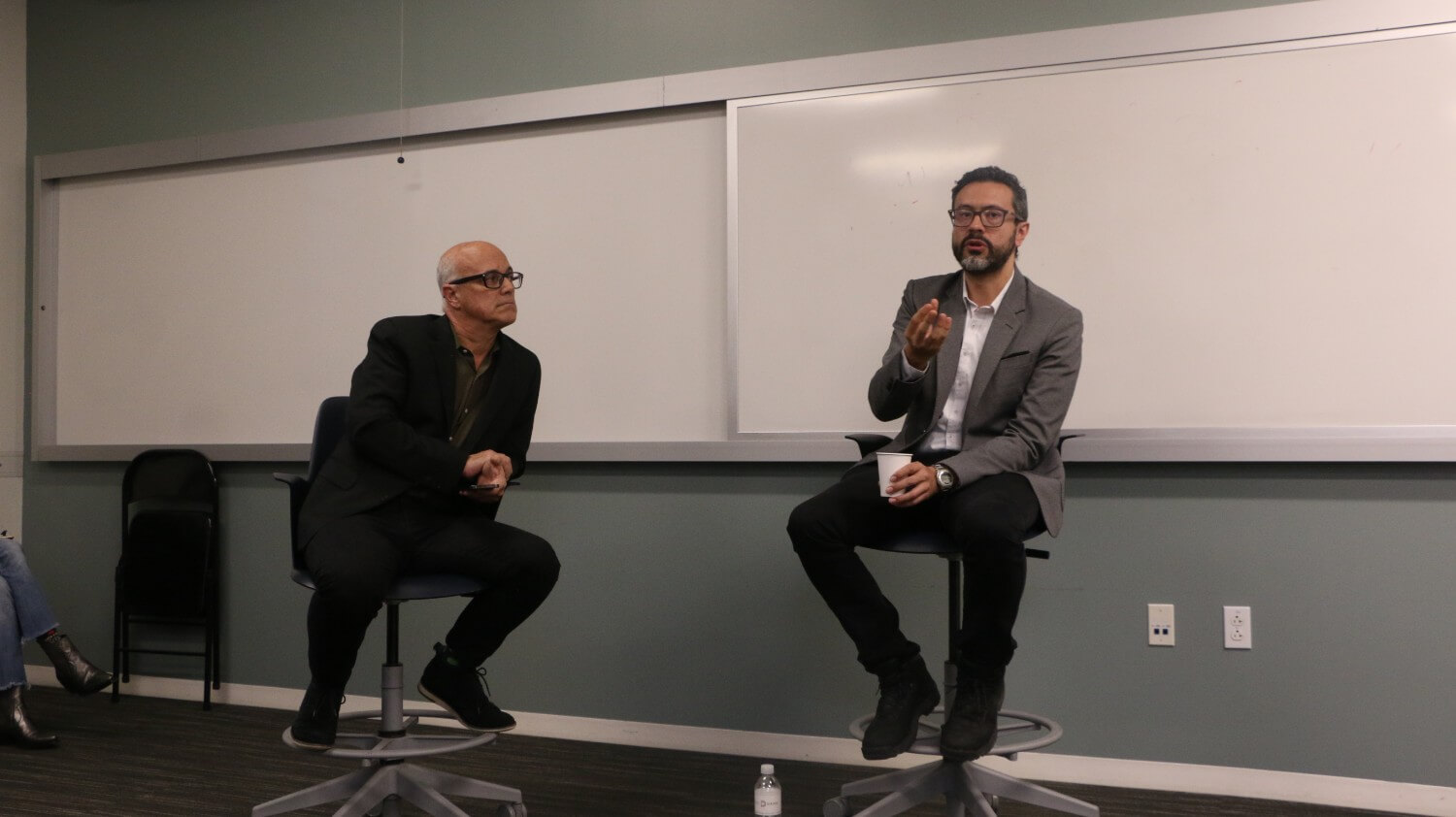
Camilo Umaña Hernández, Colombia’s former Deputy Minister of Justice and Brown University professor, spoke Feb. 4 about his experiences working with restorative justice and peacebuilding in Colombia. The talk was organized and facilitated by Professor Anthony Tirado Chase of the Diplomacy & World Affairs (DWA) department, in association with the John Parke Young Initiative on the Global Political Economy.
According to Professor Madeline Baer, who heads the Young Initiative at Occidental College, the purpose of the initiative’s speaker series is to challenge and encourage students to envision alternatives to the status quo of the global political economy.
“We invite speakers who are experts in their field, particularly if they are doing something that aligns with our mission,” Baer said. “We want students to be conscious of the perspectives of countries in the Global South and to hear speakers who are able to challenge the narrative we’re used to hearing in the west.”
Chase said he initially got in contact with Umaña through Thalia González, a former professor at Occidental. According to Chase, Umaña struck him as an interesting option for a speaker due to his work on the peace negotiations between the Colombian government and the Marxist-Leninist guerrilla group Revolutionary Armed Forces of Colombia (FARC).
“My focus has traditionally been on the Arab world and on some of the failures of transitional justice in the region,” Chase said. “Colombia is an interesting point of comparison because it is a region that, like the Middle East, has been plagued by violence. But in 2016, they had this really ambitious attempt at lasting peace and restorative justice. I think there is a lot to learn from that […] in regard to the Arab world, but also back here in the United States.”
Professor Anthony Chase in conversation with former Colombian Deputy Minister of Justice Camilo Umaña at Occidental College in Los Angeles, CA. Feb. 4, 2025. Jane Hutton/The Occidental
According to Umaña, his work as Deputy Minister of Justice in Colombia has been characterized by a gradual shift away from the traditionally punitive aspects of the justice system toward a system focused on addressing past injustices.
“In my context, where you have these very harsh conflicts, you realize that you need several different ways to deal with them,” Umaña said. “Retributive justice is concerned solely with punishing the past, but restorative justice is concerned about the future and bringing opportunities for people to collectively address social issues.”
Umaña said that although he saw successes during his time as deputy minister, his approach to justice also faced opposition in the context of the 2016 peace negotiations. This opposition came from conservative politicians who opposed any negotiations with the guerrillas, as well as from victims of the long-running conflict, according to Umaña.
“Sometimes restorative justice and human rights are not popular,” Umaña said. “It is problematic to expect someone who has suffered immense violence to naturally be in favor of restorative justice for those who have harmed them.”
Umaña said he is one of the thousands of people who have lost family members due to the decades-long conflict in Colombia. When Umaña was 12 years old, his father was assassinated by a right-wing paramilitary organization for criticizing them in his work. According to Umaña, this loss has not discouraged him from continuing his father’s legacy.
“To me, there is no difference between my professional, emotional and ethical commitment to my work,” Umaña said. “I’ve lived in the only way I’ve been taught to live. My family legacy is built on the struggle for human rights. Doing nothing, I would feel like I’m not a good person.”
Former Occidental Professor Thalia González, Professor Anthony Chase, and former Colombian Deputy Minister of Justice Camilo Umaña at Occidental College in Los Angeles, CA. Feb. 4, 2025. Jane Hutton/The Occidental
Chase said that although there has been an intense push toward peace in Colombia, both at the grassroots and government level, there is still ongoing violence in the country between disparate groups.
“On one hand, it’s difficult to not be pessimistic. On the other hand, there is such a desire for peace on behalf of the victims of the violence that has struck so many parts of Colombian society,” Chase said. “I really do feel that there is such a desire to transform society on a grassroots level that at some point, peace will gain the upper hand.”
Umaña said that when reflecting on his family’s role in the long struggle for peace, he also feels some optimism about the progress of the last few years.
“Both my grandfather and my father were involved with peace negotiations between the government and the guerillas. Today both of them are dead. But if I could have a dialogue with them, I would be able to tell them that I too was involved with peace negotiations, and that in my time, something happened,” Umaña said. “That may not be much, but it’s something.”
Contact Adam Pildal at pildal@oxy.edu
*A correction was made at 8 p.m. Feb. 17 to change “Hernández” to “Umaña” throughout the article. Additionally, in paragraph four, Talia Gonzalez was corrected to Thalia González.
Thai Spirit, a family-owned Thai restaurant on Colorado Boulevard, has been serving authentic cuisine in Eagle Rock for over 40 years. Restaurant manager Saharat Raksanoh said his parents, the owners of Thai Spirit, Chalermkiat and Suteera, are immigrants from Thailand who moved to California to provide a better life for themselves and for their children.
“They began working at other small Thai restaurants to learn the ropes and eventually created their own business,” Raksanoh said. “They received a better income than they would’ve been able to make in Thailand. They wanted my siblings and I to get an American education and citizenship.”
According to Raksanoh, the family has continued to manage the restaurant since its opening in 2004. Raksanoh said different generations take on leadership roles as they age, ensuring that they learn a variety of skills before they eventually manage the restaurant.
“Thai Spirit is not just a business but a symbol of our family’s history, hard work and culture,” Raksanoh said. “Keeping it in the family ensures the preservation of authentic recipes and traditions. It’s about legacy and passing down entrepreneurial values.”
Raksanoh said family members undertake various responsibilities at Thai Spirit, from cooking in the kitchen to managing front-of-house operations and customer service. He said younger family members sometimes assist during busy events and special occasions.
The restaurant is open from noon-3 p.m. and 4-9:30 p.m. every day. Raksanoh said the break from 3-4 p.m. allows the family to reset and prepare for dinner service.
“It gives everyone a chance to recharge during the slower mid-afternoon hours. We have the same family members working everyday,” Raksanoh said.
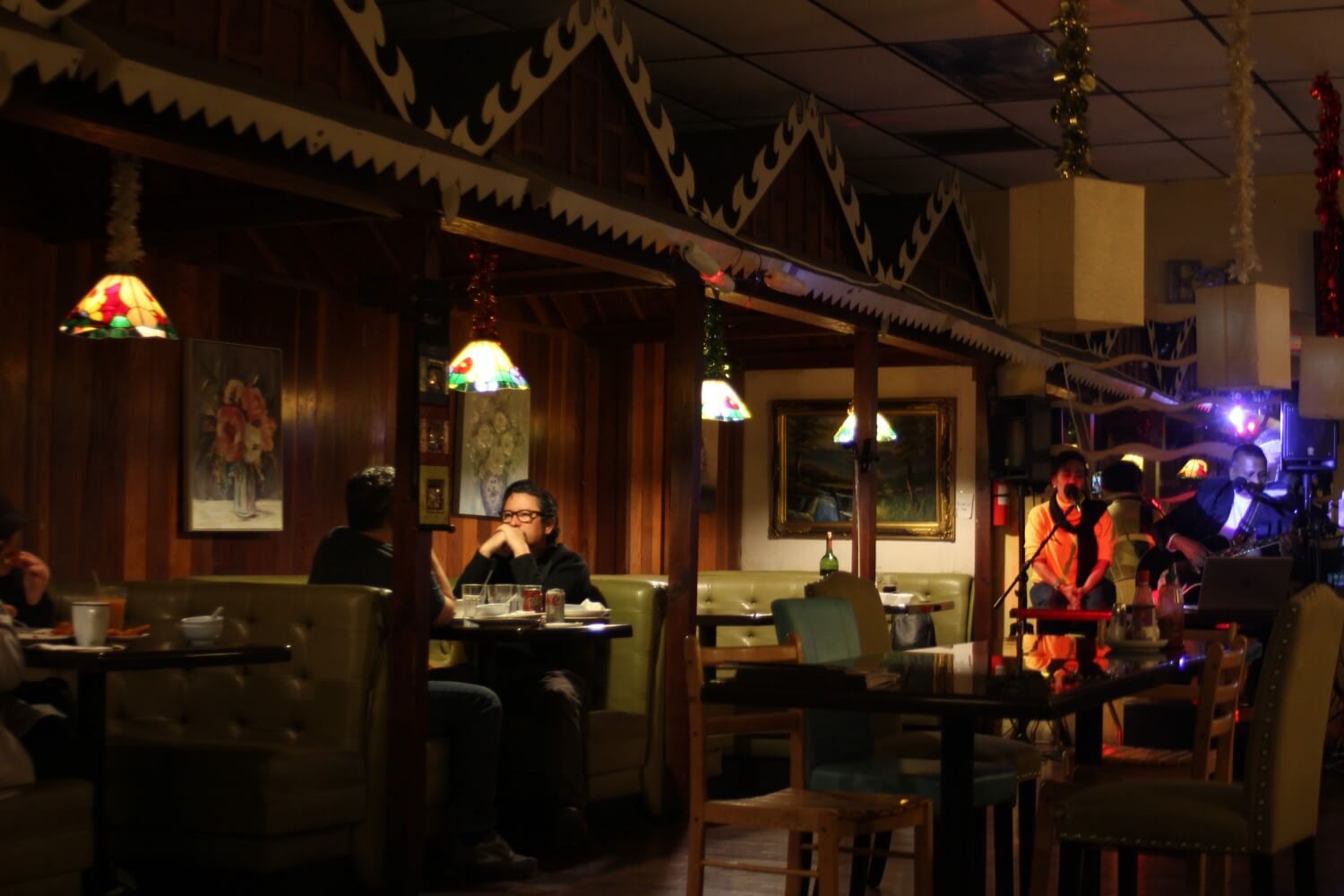
Raksonah said many customers of Thai Spirit are long-time patrons and neighbors—a mix of local families, professionals and food enthusiasts. He said the restaurant hosts karaoke nights every Friday, bringing in a more diverse audience.
Karaoke night at Thai Spirit in Los Angeles, CA. Feb. 7, 2025. Graham Jewett/The Occidental
“Many patrons are regulars who appreciate authentic Thai food, but the karaoke nights also attract younger crowds and groups looking for entertainment,” Raksanoh said.
Raksanoh said the local community has been crucial to the success of Thai Spirit and that longtime regulars have supported the business since its establishment. Chris Caceres, a customer, said he has been coming to Thai Spirit for over thirty years.
“My mom brought me here when I was a little kid. I like to bring my little one here too now,” Caceres said.
Michelle Lupinetti, a customer, said she appreciates Thai Spirit’s inclusive design.
“It’s an open floor plan, and they have seating for kids. It’s wheelchair accessible, too,” Lupinetti said.
Paola Espinoza said she considers herself a regular at Thai Spirit. According to Espinoza, the owners treat their customers like family.
A plate of tom yum veggie soup at Thai Spirit in Los Angeles, CA. Feb. 5, 2025. Graham Jewett/The Occidental
“The owners used to be my next door neighbors. They would bring us dishes to try when we’d get together for celebrations,” Espinoza said. “Jane, the owner, is always greeting customers as soon as they walk in to make them feel welcome. She gets to know her customers on a personal level.”
Dennys Vaca, manager of Mountain View Tire & Auto Service, a neighboring storefront, said he allows customers of Thai Spirit to park in the Mountain View parking lot anytime after 6 p.m.
According to Vaca, employees of the auto shop enjoy the daily benefits of working next to the restaurant.
“We can just go in, grab our food then come back. We sometimes get free food and discounts too,” Vaca said.
Raksanoh said Eagle Rock’s changing population has helped Thai Spirit to adapt and grow.
“Eagle Rock has become more diverse and vibrant, bringing in new customers while retaining long-time locals,” Raksanoh said. “The restaurant has evolved by modernizing certain aspects while maintaining its traditional charm.”
Raksanoh said input from the community has been foundational to the restaurant’s success.
“Community feedback has influenced our menu offerings and service approach. The majority of our customers come from our strong community base,” Raksahnoh said. “They are why we are still here today.”
As some students return from a holiday break at home, others are returning from semesters spent around the world. Claire Wilson-Black (junior) said that despite Occidental’s warm welcome, many students returning from abroad face the negative effects of a housing challenge.
Leaving in the fall to study urban policy, studies and design in Berlin, Germany, Wilson-Black said she did not foresee the housing issues she and her classmates would experience upon returning. However, in the months leading up to her return, she said she started to notice problems with the housing logistics.
“It seems like there’s not enough space; people aren’t getting to go where they want,” Wilson-Black said. “I did kind of anticipate that in the months leading up.”
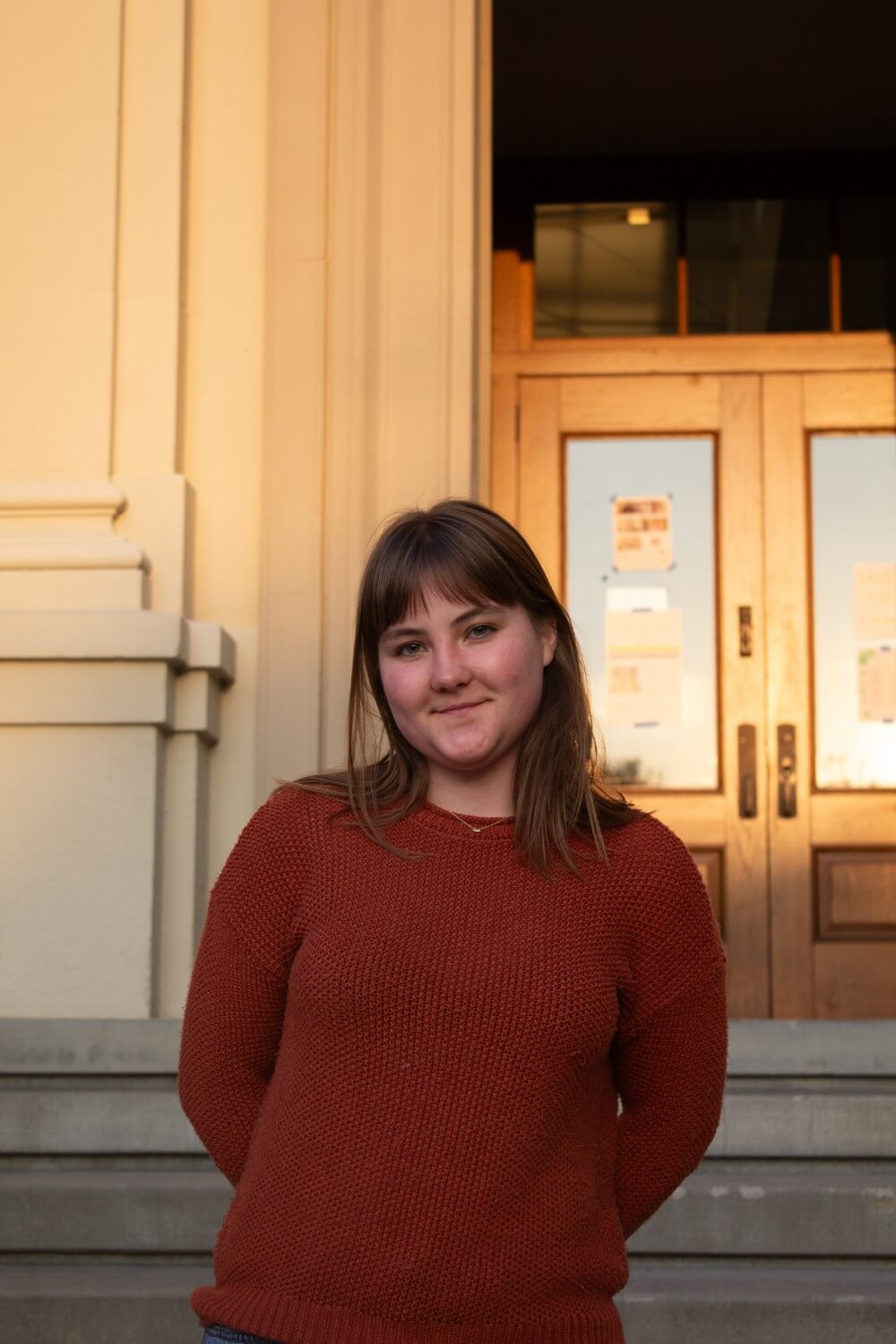
Claire Wilson-Black (sophomore) in front of Johnson Hall at Occidental College in Los Angeles, CA. Jan. 30, 2025. Marty Valdez/The Occidental
Coming back from a semester abroad in Bristol, England, Hannah Lou Rathouz (junior)said she was both nervous and excited for her return but also felt some unease from her peers.
“It seemed that a lot of people were having trouble achieving living situations they were even comfortable with,” Rathouz said via email.
Despite many classmates experiencing less success, Rathouz said she was only in contact with Residential Education and Housing Services (REHS) to request a chosen roommate, which she was able to do. She said that because there are so few beds, if students have a decent housing situation, they should stick with it.
Occidental students received an email Jan. 13from Associate Director of Housing Services Monique Hankerson stating the campus was at full capacity and REHS anticipated every bed on campus to be filled for the spring semester.
Wilson-Black said she sympathizes with students who were left confused and frustrated by placements in vacant rooms in Themed Living Communities (TLCs) that they did not apply to live in or identify with. According to the REHS page on the Occidental website, the TLC housing program is intended to create environments for students with shared values or identities to create community and uplift each other.
“Other people have been placed in less ideal situations than me,” Wilson-Black said. “I just feel like they deserve a bit more of an explanation.”
Rathouz said she questioned her housing placement as a white student.
“I was placed in the Black Soul Collective (BSC) TLC,” Rathouz said via email. “This placement was surprising to me […] [and] it seems like a disrespectful and odd choice considering the [BSC] is supposed to be a space for Black students.”
According to Assistant Dean of Students and Director of Residential Education, Housing Services and Student Conduct, Isaiah Thomas, REHS could only place students where there were already vacancies available and that it is harder to place students returning in the spring since they do not participate in the fall room draw.
“Students who study abroad in the fall and return to campus mid-year are placed in any vacancies available. I do believe one of the challenges we experienced this year was that a very high number of students studied abroad in the fall semester and requested housing for spring,” Thomas said via email. “This number was higher than the number of students who left to study abroad in the spring semester. When there is a difference like this, it does mean that our halls are fuller than what we may have experienced in previous years.”
According to Thomas, these circumstances leave little room for preferences since preferred spaces for juniors and seniors, such as singles or doubles with friends, tend not to be available mid-year.
Wilson-Black said she understands REHS’ job is not easy but feels they could do better.
“I have great empathy for what [REHS has] to do, it’s a tough job,” Wilson-Black said. “[But] I wish that we had had more of an explanation because then I think people could be a lot more empathetic.”
Despite frustration and confusion from students, REHS is clear that they anticipate more changes as the semester continues.
“Typically, we learn of students taking a leave of absence or not returning to Oxy as the semester progresses,” Thomas said.
REHS anticipates changes in room vacancies that would allow for housing adjustments, Thomas said, as well as the official room change process that takes place in the third week of each semester. Thomas said REHS is working with the International Programs Office (IPO) to clarify housing information for students studying abroad in the future, in hopes of minimizing confusion.
As the dust settles, REHS hopes to tackle challenges as they continue receiving feedback.
“We will continue to work with students individually on their housing challenges,” Thomas said.
Faculty and students of the Theater and Performance Studies department convened in the Keck Theater Room Feb. 3 to listen to a tenure-track candidate for an assistant professor in Theater and Performance Studies position as they gave a lecture for the department.
According to Cognitive Science Professor and Director of the Center for Teaching Excellence at Occidental College Carmel Levitan, these candidate lectures are held about 50 times a year and occur every time a tenure-track candidate visits campus.
Levitan said teaching demonstrations are useful for discerning a candidate’s soft skills, like keeping students engaged.
“People can look great on paper, and a lot of people do, but to me, it’s super important to be around [when] students ask questions,” Levitan said. “You shouldn’t feel like you’re watching a YouTube video.”
According to Psychology Professor Andrew Shtulman, not all universities hold teaching demonstrations, only research presentations, and Occidental’s requirement to give a teaching demonstration speaks to its emphasis on pedagogy.
“At many institutions, there are no teaching talks,” Shtulman said. “It’s just research talks. So here, the added talk is the teaching talk because teaching is a big part of being a faculty member at Oxy.”
Samantha Lam (sophomore), who is a Theater and Performance Studies and Media Arts and Culture (MAC) double major, said the qualities she looks for in a new professor are confidence, organization and, specifically for the Theater and Performance Studies department, willingness to collaborate.
“You’re going to be working on shows with so many people and a bunch of students, and if there is a disagreement, you can’t expect to have everything go your way,” Lam said.
David and Mary Gamble Professor of Religious Studies Kristi Upson-Saia,who is also the Associate Dean for Faculty Affairs, said via email that teaching demonstrations are the last stage in a hiring process that narrows from a pool of around 50-150 applicants.
“The search committee will review all applications using the evaluation criteria to winnow down to the top 10-12 applicants whom they will then interview,” Upson-Saia said. “And then they will invite the top three candidates to campus for a one- or two-day campus visit.”
Upson-Saia said student feedback on teaching demonstrations provides valuable information for the hiring process.
“Although students are not in the room when decisions about who to hire are made, their comments are referenced directly in that deliberation process,” Upson-Saia said.
Shtulman said Occidental College is particularly attractive for its small size, which allows professors to be involved in both research and student engagement. Shtulman, who taught at Harvard before Occidental, said Occidental’s model creates greater student attendance.
“What amazes me about Oxy students is that they really all come to class all the time, and if they don’t, they let you know they’re not coming to class,” Shtulman said. “That never happens at a big school — like the lecture hall will be half-filled.”
Lam said she is very active in forming helpful relations with her professors and sees a lot of broad student-professor engagement within the Occidental community.
“I feel like Oxy students in general do a good [job] at keeping their responsibilities and communicating with professors,” Lam said. “I think that’s why we all choose to come to a small school to have that connection with our professors.”
Like Lam, Theater and Performance Studies Department Chair Professor Sarah Kozinn said that since the department also has its own separate theater company, creative collaboration is key for new candidates.
“The faculty collaboration isn’t just curricular faculty meetings where we’re reviewing curriculum,” Kozinn said. “It’s also building a show with the faculty.”
Kozinn said she believes the quality of Occidental students is a draw for professors because students at Occidental are more likely to be varied in their interests due to their liberal arts background.
“The students at Occidental [are] passionate about theater and performance and also about their chemistry classes, biology classes, their UEP [Urban and Environmental Policy] classes,” Kozinn said.
According to Levitan, Occidental attracts many potential professors, but the cost of living in LA can lead some candidates to hesitate.
“It’s a good place, but it’s also an expensive place,” Levitan said. “So, I think it helps and hurts us a lot.”
Levitan also said teacher pay at Occidental is not as strong compared to comparable institutions, which can deter applicants.
“Our pay is not as high as in other places,” Levitan said.
However, Levitan said she believes the quality of Occidental’s students is a big part of why candidates work for the school.
“Oxy students actually want to participate,” Levitan said. “I think teachers come to Oxy because of the students.”
According to Shtulman, Occidental is attempting to follow through on a goal to have 170 tenure-track faculty on staff, a pledge made under President Elam from the Occidental Promise. Shtulman said hiring initiatives are ongoing but faculty turnover makes positive progress difficult.
“The faculty has maintained the same size for many, many years,” Shtulman said. “And every year we hire more faculty, but at the same time, faculty leave.”
According to Kozinn, faculty turnover is a difficult obstacle to overcome, but there have been increases in new hires as of late.
“There [are] something like 17, and that’s an increase from previous years,” Kozinn said. “When I came in, I think [there were about] five or six tenure-track hires.”
She said Occidental’s unique makeup makes it a great place to work.
“It’s a small place where people get to teach what they’re passionate about,” Kozinn said. “I think that’s incredibly desirable.”
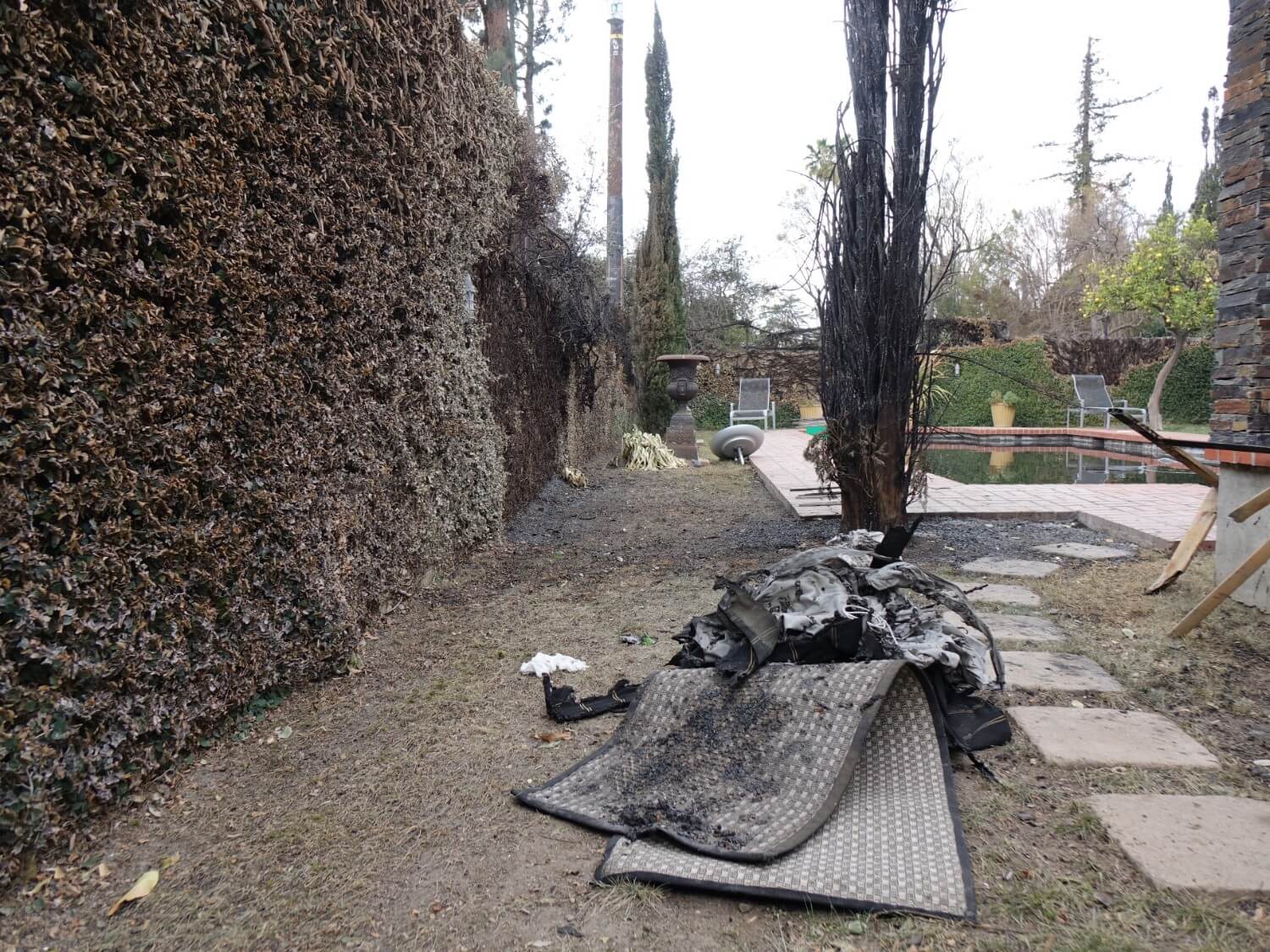
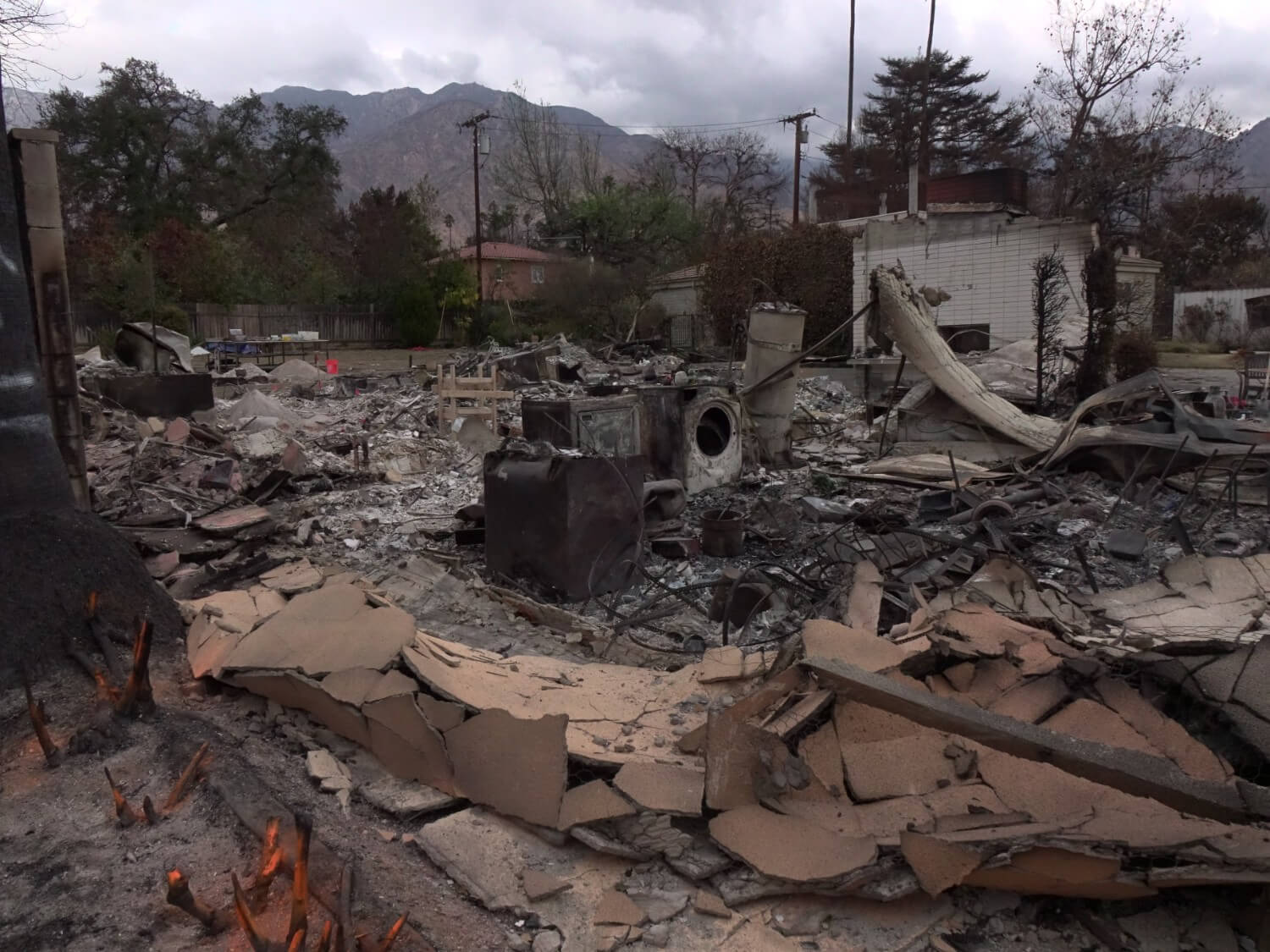
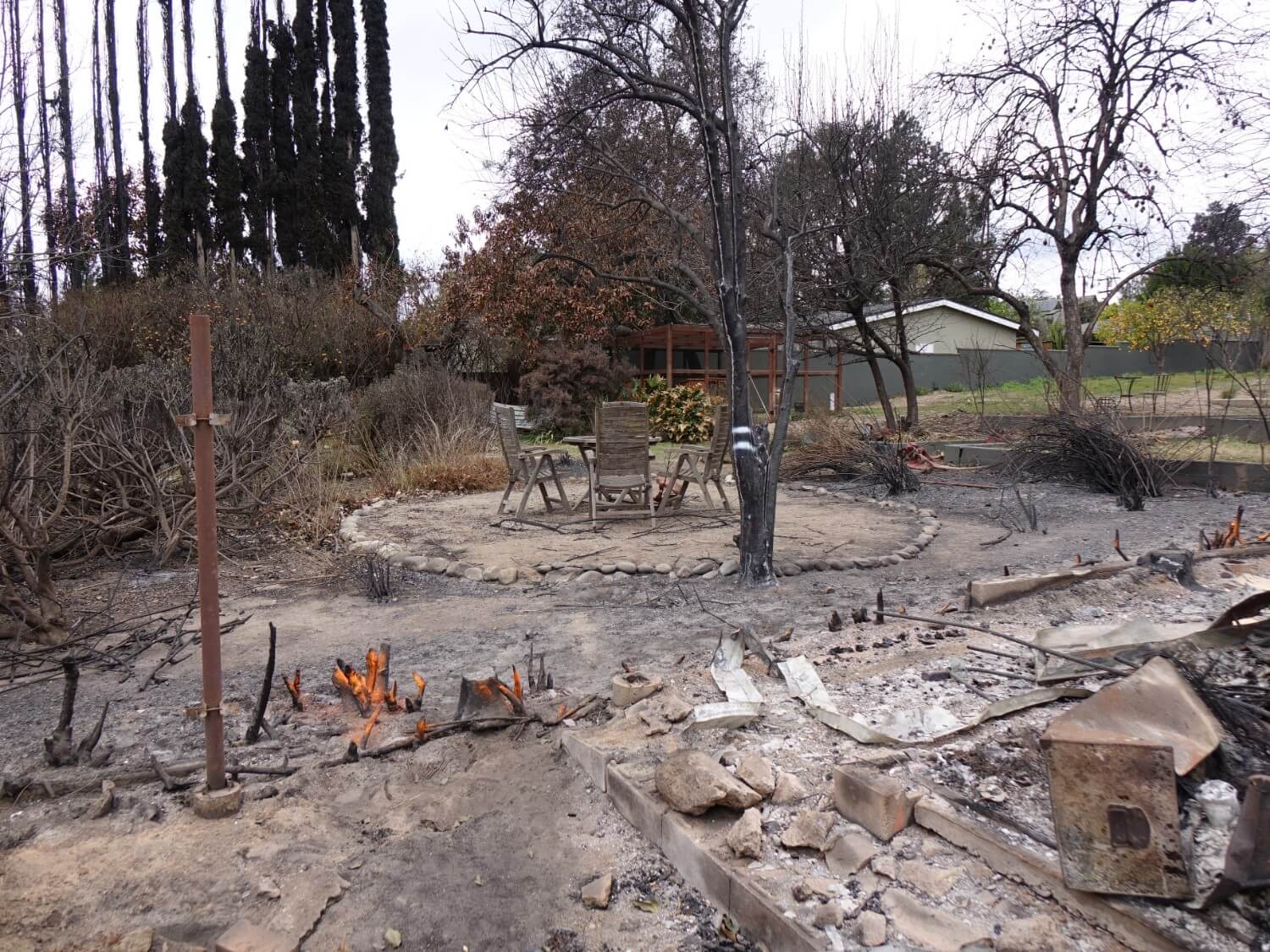
In Birkenstocks and sweatpants at his home in Altadena, Wiley Calkins (junior) turns up a long driveway between four homes, three of which were turned to rubble when the Eaton Fire ravaged his neighborhood on the night of Jan. 7. He could be navigating the remains of a prefab neighborhood staged at a nuclear test site, if it weren’t for suburban accouterments dotting the hellscape: charred citrus trees, garden furniture sets, hammock stands and umbrella bases. A wooden chicken coop stands intact on an adjacent property, serving as a refuge for a half dozen chickens since the fire. Calkins has walked this path to feed them every day.
“They’re mad cute, and they give us eggs,” Calkins said nonchalantly.
He said he has no clue why the coop didn’t burn.
“A lot of it’s pure luck,” Calkins said. “Some of it’s just human intervention, like our house, with my dad and I.”
Debris in Wiley Calkins’ (junior) backyard in Altadena, CA. Jan. 25, 2025. James Miller/The Occidental
While Calkins’ house emerged from the Eaton Fire mostly unscathed — but with a plethora of safety hazards and health risks — at least a dozen current or former Occidental employees and multiple students lost their homes to the Eaton Fire.
Calkins was working his usual kitchen shift at Chick-fil-A around 7 p.m. Jan. 7 when his manager told him that parts of Altadena east of Lake Street, where he lives, were under an evacuation order. Calkins rushed home and added his Playstation and clothes to a car his parents were packing full of their art and valuables. He left to help his aunt and grandmother evacuate their home, which burned down that night. Around 9 p.m., Calkins’ mom, Guadalupe, evacuated with the family’s cats and dogs — Chapo, Pablo, Whopper and Indy — to a relative’s home in Chino Hills, outside of LA County. But Calkins’ dad, John, wanted to stay. Calkins joined him.
“I can’t leave my dad, you know,” Calkins said.
They cracked open beersand watched TV together for about an hour, before his dad went to bed. At midnight, Calkins woke his dad up and they went for a drive to check out the fires. Calkins’ said his dad wasn’t too worried since the fire was still fairly high up the foothills.
Calkins, who has wanted to become a firefighter since high school, stayed up watching the news and constantly checking the progress of the fire. He woke his dad up at 3 a.m. for a second time.
“You could tell he was a little nervous, which I don’t see,” Calkins said. “Ever.”
Wiley Calkins (junior) at his home in Altadena, CA. Jan. 25, 2025. James Miller/The Occidental
They began hosing down the outside of their house. The fire was everywhere.
“The sky was orange and black, and I was coughing and my eyes are burning,” Calkins said. “I could barely see too […] I’m covered in water and my burns.”
To protect himself from embers, Calkins put on a jacket, but he still burned his hands. At one point during the night, his dad was standing on a sandbag trying to water something down and fell onto a pole, likely cracking one of his ribs. Water pressure began to decrease after about an hour, and the pair began filling five-gallon buckets with water from their pool. Calkins kept the sides and roof of his house, the pool house and the backyard damp while his dad watered the front of the property.
“I did the backyard, clearly didn’t do a good enough job since it all burnt down,” Calkins said jokingly.
While running down his driveway during the firestorm, a 40-foot branch from an oak tree fell near Calkins.
“It almost fell on top of me. I was running through with the hose and it fell and I literally looked behind and it just missed me. It was nuts,” Calkins said.
Calkins said that around 6 a.m. the fires seemed to intensify, and he and his dad left in separate cars, driving towards Chino Hills to meet his mom. On the freeway, Calkins got a call from his dad, who had decided to turn around because he believed the fire would be easier to fight after daybreak. Calkins stayed the course, sleeping four hours in Chino Hills before promptly driving back to Altadena to help extinguish the remaining fire on his property.
“The second I woke up, I got in my car and whipped it back here,” Calkins said.
While his family’s home remained mostly intact, Calkins found the pool house and backyard significantly damaged when he returned. Among other health hazards, the family does not have potable water and needs to replace their ventilation system.
“We can shower, but not for more than like five minutes because it’s bad for your skin supposedly, because the flame retardant got into the water and that causes cancer,” Calkins said. “Granted, I’ve been showering, so we’re just going to have to wait and see what happens.”
They are considering leasing a home, though Calkins said his dad, a set designer, is less enthusiastic about doing so because he built much of theirs.
Calkins said he received an emergency relief check and free food from work, a $1,000 relief check from Occidental and free meals from local restaurants. While he feels comfortable sharing his experiences from the fire, Calkins said others in Altadena might be more reluctant, not because they do not want to talk, but because they physically cannot.
“I’ve seen a lot of adults who I’ve barely talked to who live nearby cry in front of me because their houses are gone,” Calkins said.
“I’m not in this hell by myself” — Arthur G. Coons Professor in the History of Ideas Amy Lyford
In her 25 years of living in Altadena, Amy Lyford said she had never experienced winds stronger than those blowing Jan. 7. At around 3:30 a.m., Lyford woke up to the sounds of the strong wind and trees scratching her windows.
“The wind was so loud that I got up to get yard furniture out into the house so it wouldn’t blow and break windows,” Lyford said. “I’m in my bare feet by myself with this long chair, like holy shit, it’s blowing around, but I got everything inside.”
That afternoon, Lyford went to her car to pack a blanket, sleeping bag, some dog food and her computers. At around 6:20 p.m., Lyford said she went to add dog treats to the back of her car — but when she went outside, Lyford could see the Eaton Fire about half a mile away. An evacuation order would not come through until about an hour later, according to Lyford.
The moment she saw the flames, Lyford said she knew that she had to leave immediately.
“I think I was in denial that it was really going to happen because I ended up grabbing really random things, like what was in the laundry basket that I hadn’t put away yet,” Lyford said.
Even though there was not enough space in Lyford’s car to put boxes of belongings, there was still some room for regret.
“I wish I’d saved some photos, even just grabbed a handful […] or my mother’s jewelry, or jewelry I really treasured that’s small,” Lyford said.
Lyford locked the door, drove to the top of the driveway and turned around to say goodbye to her home.
“I wasn’t sure if it would be there when I came back,” Lyford said. “And it wasn’t.”
Lyford has returned to her property three times since the night she evacuated. The day after, Lyford said it was still smoking, with mini fires still ablaze on the property. Since visiting again Jan. 23, Lyford said it looks “like bombs were dropped” on the neighborhood.
Remains of a home on Wiley Calkins’ (junior) block in Altadena, CA. Jan. 25, 2025. James Miller/The Occidental
“My house is gone, my neighbors are gone, my community is gone,” Lyford said. “There’s this feeling of being adrift and alone.”
Since evacuating, Lyford has stayed in three different places — a hotel in Burbank, President Tom Stritikus’ house for four days and now a place in Silver Lake she rented for herself and her two dogs. As the fire forces people to find shelter elsewhere, Lyford said her friends are scattered everywhere. Despite the efforts of Altadena residents to keep in touch over social media groups or Zoom calls, Lyford noted the difficulty of losing the physical proximity of Altadena’s community.
“We didn’t just lose our house — we lost our community,” Lyford said. “Somebody’s in Berkeley and somebody’s [with] family in South [Pasadena] and somebody else is in Joshua Tree. I haven’t seen my friends.”
In light of this, Lyford said the Altadena town council has been an amazing hub of information and that community leaders have been instrumental in helping people get through the initial process of losing their homes.
The communication, or lack thereof, from Lyford’s friends has helped her learn about her relationships and the people close to her. Lyford said she appreciates those who have reached out, and it has been amazing to realize how many people care for her.
“Even just saying, like, ‘I’m thinking about you’ […] That has been helpful to me, just realizing I’m not in this hell by myself,” Lyford said. “That somebody [is] thinking of me and they want to help me and they don’t necessarily know how, but just knowing that they’re there and that I can reply to them or not — it’s helpful.”
Lyford expressed uncertainty about the rebuilding process, as she is currently preoccupied with the immediate future.
“I don’t know what percentage of people are going to rebuild, who knows,” Lyford said. “Because first you have to figure out where you’re gonna stay, and you need clothes. So it’s sort of like the rebuild is maybe down the road, at least in my mind.”
Slowly but unwaveringly, Lyford said that her past has prepared her for this current situation; the destruction of her home is not the first time Lyford has had to face a devastating loss. In 2017, Lyford’s husband was killed in a motorcycle crash.
“That was terrible,” Lyford said. “Sudden death of your partner — I mean, it was bad.”
The trauma of this fire, although different, reminds her of that experience eight years ago.
“In a way, the house that I lost was also his house,” Lyford said. “I guess I’ve learned in this situation, ‘I could survive that, so I’m probably gonna survive this.’ Whereas that first time, I was not sure I would make it.”
“I couldn’t even find our house at first” — Associate Professor of Music Shanna Lorenz
When Shanna Lorenz stepped outside of her home the evening of Jan. 7, the palm trees were practically horizontal. As she stood there, Lorenz could see a giant wall of flames in the distance: the Eaton Fire, quickly being pushed by the wind. She was shocked by its sheer size.
“You really had the sense that you were in the presence of something unknowable,” Lorenz said. “Something really big, something really powerful.”
After Lorenz and her mother evacuated to a friend’s house in South Pasadena that night, Lorenz said she wanted to stop by the house the next day to grab a few things. When she woke up the morning of Jan. 8, Lorenz was unsuspecting of the events to follow.
“I really did not think our house would have burned down,” Lorenz said.
At noon, Lorenz left her friend’s house and drove back. Driving through her neighborhood, about four blocks from her house, Lorenz could see that houses were actively on fire, and flames were shooting up on both sides of the street. At that point, Lorez realized this was a bigger problem than she had expected. Then, she arrived at her block.
Ruins of Wiley Calkins’ (junior) neighbor’s backyard in Altadena, CA. Jan. 25, 2025. James Miller/The Occidental
“We drove past our house and the whole street was just gone,” Lorenz said. “I couldn’t even find our house at first. The piles of ash just all [looked] the same.”
According to Lorenz, differences in class, gender and race shape how people emerge from this disaster and come together as a community.
“On one hand, I’m overwhelmed by the generosity of strangers during this period, but I just have this slight worry sometimes that that generosity is available to me because I’m white,” Lorenz said.
In the aftermath of the fire, Lorenz said she is focusing her efforts less on herself but aiming to direct support to members of her community. For Lorenz, she said it has been important to feel like she is contributing to rebuilding.
“Altadena itself was and is such an incredible community,” Lorenz said. “It’s a place where, really since the great migration, it was one of the few areas where there wasn’t red lining, and so there was sort of a pocket of Black community established and that grew after World War II.”
While Lorenz has been looking out for others, one person has made significant efforts to look out for her — Lorenz’s son, Remy Julian-Lorenz. A student at UC Santa Cruz, Remy has been coming down to visit his mother and grandmother every weekend to help out.
Remy started a GoFundMe for his family, which Lorenz said she initially felt “borderline mortified” about. Asking, in comparison to giving, is something that Lorenz said she is not always comfortable with.
“I’m a private person, and I feel like he’s shared a pretty intimate view of our lives that I don’t know if I would have shared on my own,” Lorenz said. “But in the end, it’s been lovely. We’ve connected with friends and family and strangers — I’m probably more connected with people I’ve known in my life at this moment than I have been at any other point in my adult life.”
Even if one has not been directly affected by the fires, Lorenz said that climate change will eventually impact everyone.
“When you talk about students who maybe can’t empathize or haven’t gone through this, I think that you will be able to, because as time moves forward, we’re all [going to] be increasingly living these effects,” Lorenz said.
“Everybody broke down crying” — Senior Director of Administration for the Mary Norton Clapp Library Brian Chambers
Around 7:15 p.m. Jan. 7, Brian Chambers got an LA County alert on his phone, urging him to be prepared to evacuate. The notification prompted Chambers and one of his daughters to step outside their home, west of Lake Street in Altadena and roughly 2 miles from Eaton Canyon.
“We could see smoke coming through the trees, almost like fog coming through, with a red glow behind it,” Chambers said. “And at that point, I looked at that notification again, it said be prepared to leave, and I said, ‘No, we’re going now.'”
To avoid smoke inhalation, Chambers and his family went to stay at his parent’s home in Burbank for the night, expecting to return the following morning. At 9 a.m. Jan. 8, Chambers got a call from his next-door neighbor, Chris Mangandi, whose daughter is best friends with Chambers’ daughter. Mangandi let Chambers know that his home had burned down. Chambers’ family overheard him on the phone and knew something was wrong.
“I simply said, ‘Our house is gone,’ and everybody broke down crying,” Chambers said. “We all had different thoughts and concerns. The girls were devastated that they weren’t going to be living next door to their best friend, and they were worried about her.”
Chambers said that he and his wife were talking about things they had lost in the fire, and about what happens next.
“Did we just lose everything we’ve invested all our lives into? Are we going to be able to rebuild it? And those questions still remain, but we have a better idea of how things are going to work now,” Chambers said.
After staying with his parents for two weeks, Chambers and his family secured a rental home in Burbank, which he expects they will live in for at least two years.
“It’s going to be crazy to get contractors, to get labor, and it’s going to be really expensive because there’s going to be a shortage of everything,” Chambers said.
According to Chambers, he is waiting on government and insurance agencies before taking steps to rebuild, but that recovery began with getting basic necessities such as clothes and school supplies for his daughters, as well as items to make his new home livable.
“You take a shower and you’re like, ‘Oh, we need a shower mat,'” Chambers said. “We had the forethought to grab towels, but […] you kind of forget how many little things you have.”
He said that his experience with the community’s relief efforts has been amazing.
“I will come out of this a much better person because of the love, support [and] generosity that we have experienced from our friends, our family, our colleagues, our community and strangers,” Chambers said.
Chambers said that his family moved to Altadena in 2022 from Eagle Rock. Among other reasons, they were drawn to Altadena for its proximity to nature and its music community.
“I love jazz, and there’s a strong history of jazz in that area,” Chambers said. “There are a lot of well-known musicians in the jazz community that live up there.”
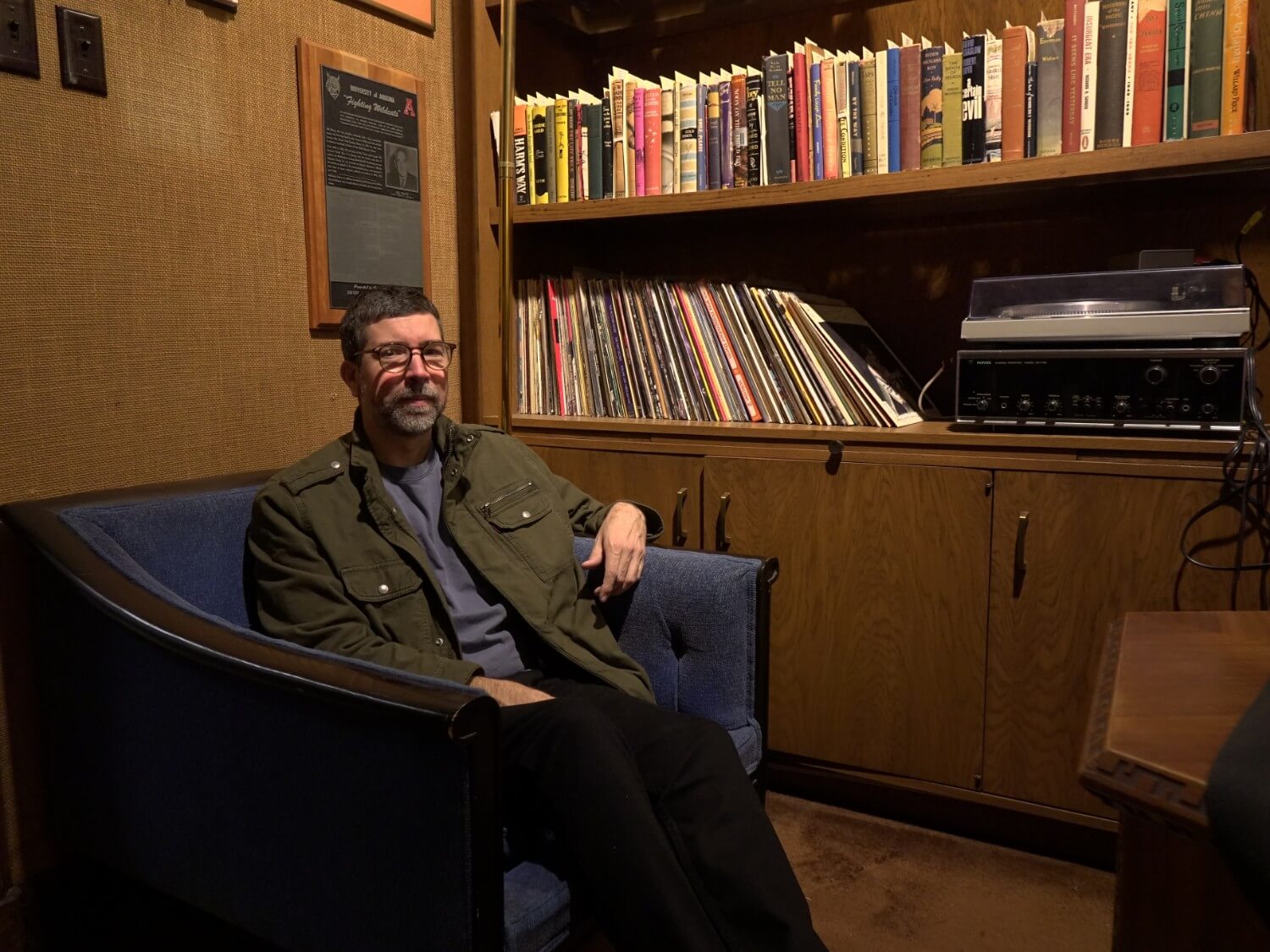
Chambers, a record collector, had made his most recent addition to his collection of close to 900 records a few days before the fire. He keeps about a third of his collection in his office, the Bill Henry room in the library.
Brian Chambers in his office with the surviving portion of his record collection in the Mary Norton Clapp Library at Occidental College in Los Angeles. Jan. 29, 2025. James Miller/The Occidental
“The ones that we had at home are the ones that, for the most part, both my wife [and I] would enjoy,” Chambers said. “These are the ones she doesn’t mind being away from the house.”
Chambers said he is open to talking about the fire and that having folkshe has not heard from in a long time reach out to him has been incredibly meaningful.
“It’s just heartwarming to know that these people are in my life,” Chambers said.
“I thought I was going to work the next day” — Senior Director for Advancement Services in the Office of Institutional Advancement Natalie Greenhouse ’10
When Natalie Greenhouse and her husband left their western Altadena home with their young kids, Eliza and Aaron, they each brought a suitcase and a box of dirty laundry.
“I thought I was going to work the next day, I thought I was coming to campus,” Greenhouse said. “I had clothes for work — I say it laughing because what else can I do? Why did I think that? But also, thisis crazy that it turned that quickly.”
Natalie Greenhouse outside her office at Occidental College in Los Angeles, CA. Jan. 28, 2025. James Miller/The Occidental
When they arrived at her parents’home in Eagle Rock, Greenhouse said the neighborhood had no power.
“LA City turned the power off because of high winds,” Greenhouse said. “SoCal Edison in Altadena did not. There are lawsuits pending about that — the role that SCE had in any of this — their tower exploded in all of this.”
Since losing their home, Greenhouse said she is feeling grief, gratitude and guilt. Greenhouse said that properties in western Altadena, a historically Black neighborhood, were typically large with multiple homes.
“I was in line for a donation, and the woman behind me was describing how her brother lost his home,” Greenhouse said. “And his home had two other units that his two adult children and their families were living in. So there’s this multi-generational impact of the fire on so many people who are from the Altadena community and northern Pasadena community, where they had nowhere else to go.”
In addition to the homes destroyed by the Eaton fire, people lost work. Greenhouse’s landscaper, who had just done a big project for them, was the one who told them their house was gone, and the fire wiped out his clientele.
“People are pouring out support to me and to my family, and I have all of these resources available,” Greenhouse said. “But did those individuals have the same access to resources? And the answer is definitely not. And yet their lives are completely upended by this as well.”
Courtesy of Natalie Greenhouse
Greenhouse said it is important to remember that the rebuilding process will take years. She said she hopes the outpouring of support and publicity the community is receiving will still be available years from now when people are still homeless and financial assistance from FEMA and insurance policy payments dwindles.
According to Jonathan Ahrens, Greenhouse’s colleague and a Sierra Madre resident who lives blocks from now-burnt homes, the fire left him in a state of shock that reminds him of losing a loved one.
“Only after six or eight months do you realize they’re gone,” he said.
Greenhouse,the daughter of Occidental alums and an Eagle Rock native, said that part of her family’s decision to buy a home in Altadena was to be close to the Occidental community. Greenhouse cherished Altadena’s down-to-earth atmosphere, especially the farmer’s market in Loma Alta Park.
“You just let [the] kids run around and be free, and there’s a horse ring and horses walk by,” Greenhouse said. “You just hang out for hours on end, and there’s food stalls and organic produce, and you’re just like, ‘This is a really great little place to be.'”
“There’s no record of a fire inside of 150 years” — retired Environmental Health and Safety Monitor Bruce Steele ’71
Bruce Steele, the FEAST Garden’s official namesake, said that he and his wife are staying with his daughter in Highland Park after losing their home on Alzada Road in western Altadena.
An avid beekeeper, Steele lost all of his 185 bee hives but one, on Mount Fiji.
“They had personalities,” Steele said. “I knew which colonies were pissy and I would work those at the end of the day so they wouldn’t get the alarm pheromones up in the air for the rest of the group.”
Steele kept shipping containers on his property, one of which had lines with drywall on the inside for fire resistance. Inside, he stacked five-gallon buckets with his avocado, orange blossom and wildflower honey from Chantry Flats in the San Gabriels, thousands of pounds all together.He said the radiant heat from the fire inside the container was so intense that it ruined the honey.
“The honey that leaked out of my containers onto the ground, and then the water evaporated out of it — incredibly sticky,” Steele said. “So the roof ratsthat survived, they were a pain in the ass in the attic every once in a while, got stuck to that.”
According to Steele, the Altadena chaparral soil is now hydrophobic, meaning it repels the first rains that hit it. Underground root stalks survived the fire, and the seeds of ‘fire followers‘ in the topsoil are ready to sprout, Steele said.
“Where we were, there’s no record of a fire inside of 150 years,” Steele said. “So there should be a good seed bank there if it doesn’t wash away.”
“We looked after others, they looked after us” — Book Arts Program Coordinator and The Lowercase Printshop charge-de-affairs Jocelyn Pedersen
Jocelyn Pedersen lives in northernPasadena and said via email that her family was evacuated for two weeks before her home was remediated. According to Pedersen, her family’s bonds with neighbors have strengthened during the recovery efforts.
“We were already fortunate to have good relations with our neighbors up and down our street — our dog, Scout, is a great ambassador and conversation starter and friendship maker — but this trust was deepened as we relied on each other and helped each other,” Pedersen said via email.
Pedersen’s husband, Erik, asked their kids to prepare a backpack early in the day on Jan. 7, but never thought they would have to evacuate.
“We watched as the flames were visible from our backyard and decided to leave before an evacuation order. But our first intended place to go in Sierra Madre lost power and then came under its own distress, so we ended up at the home of a relative in Pasadena near Highland Park,” Pedersen said via email. “We got our family out, our pets out.”
According to Pedersen, neighbor-to-neighbor aid has been powerful in the aftermath of the fire.
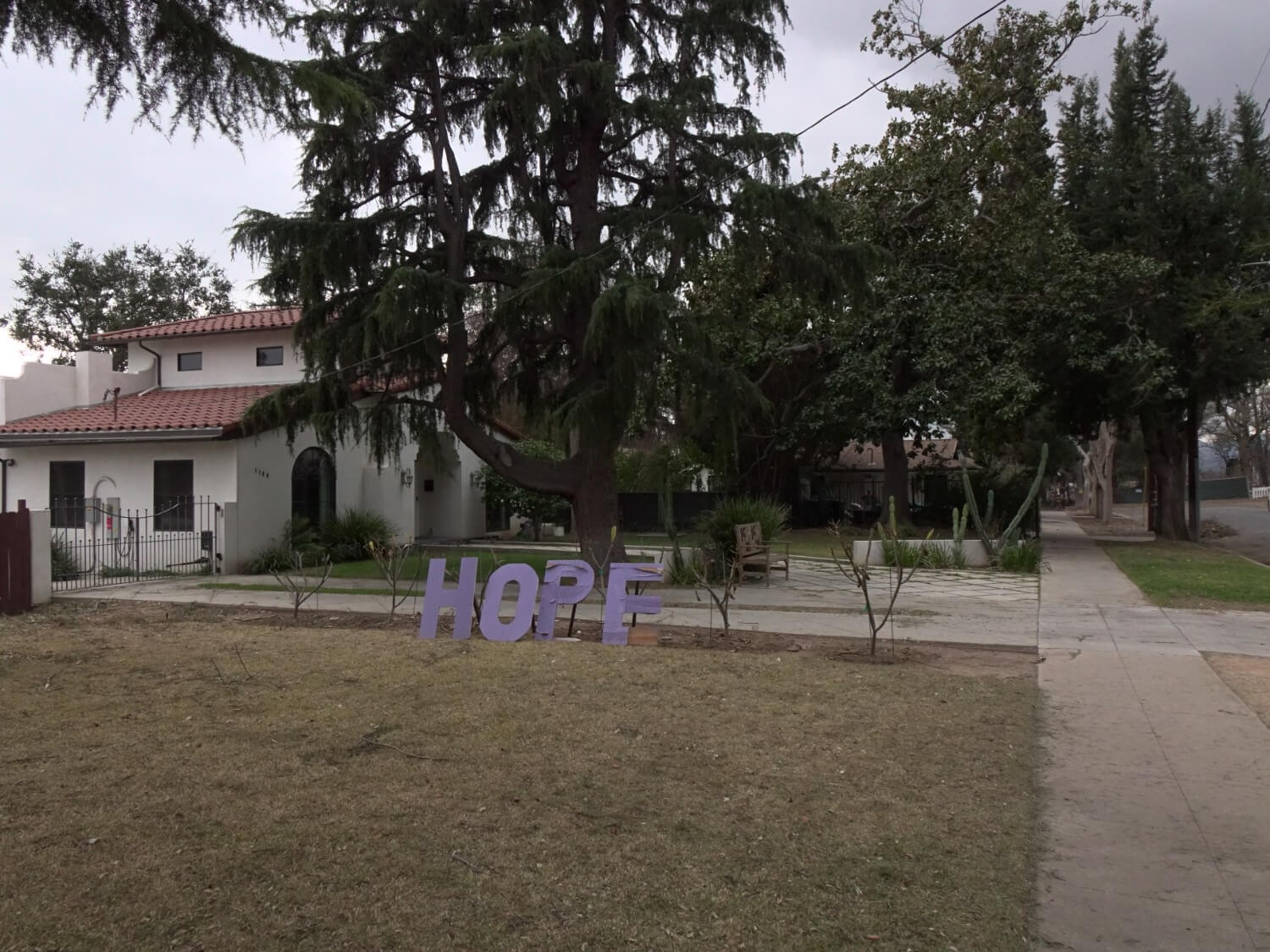
“Hope” sign outside of a home on Wiley Calkins’ (junior) block in Altadena, CA. Jan. 25, 2025. James Miller/The Occidental
“We looked after others, they looked after us,” Pedersen said via email. “Though we often hear and focus on the negative, it’s important to remember: People are good. (Mostly, anyway.)”
Contact James Miller and Emma Cho at jmiller4@oxy.edu and echo2@oxy.edu
Before the pandemic, Occidental students could participate in J-term Oxypreneurship programming before the spring semester buzz filled campus. One of these students was Ethan Glass ’19, a Media Arts & Culture (MAC) major with an economics minor, who said he participated in 2016*. Now, Glass and his co-founder are recognized on the Forbes 30 Under 30 list in the transportation and mobility category.
Both MAC Director of Digital Media and Production Diana Keeler ’09 and Resident Associate Professor of Mathematics Jeffrey Miller helped mentor students in the J-term program, Glass said. Keeler said there were two tracks, a creative track and adata science track, from which students formed teams.
“They would put together an entire […] business proposal, both with statistics and data, and then people in my section would put together the graphics and the pitch deck and the marketing materials,” Keeler said.
At the end of the term, the teams presented their pitches to select members of the Board of Trustees and other alumni entrepreneurs, according to Keeler. Miller said the program ran for about seven years before the COVID-19 pandemic.
“[Glass] was the one who pushed for it to grow and brought me on because he said that it’s not just about creating a business, it’s about being able to do a good pitch,” Keeler said. “He had taken my MAC 110 Digital Design course and was like, ‘This is actually what students need to be able to do a good pitch and a good design deck.’”
This is whereGlass began his current company, Ocra, alongside former Occidental student Nate Dunning. The duo were teammates on the Occidental men’s soccer team under current head coach Rod Lafaurie, who said Glass always proved to be a valuable human being and soccer player.
“We have an 85-page culture book and try to live that out every day, so my hope is that all of the values we have resonate with our players for life,” Lafaurie said via email. “Our core principles are based around Family, Legacy Creation, Integrity, Servant Leadership, The Standard, and Mindset, and starting a company and succeeding requires a high understanding of all of those things.”
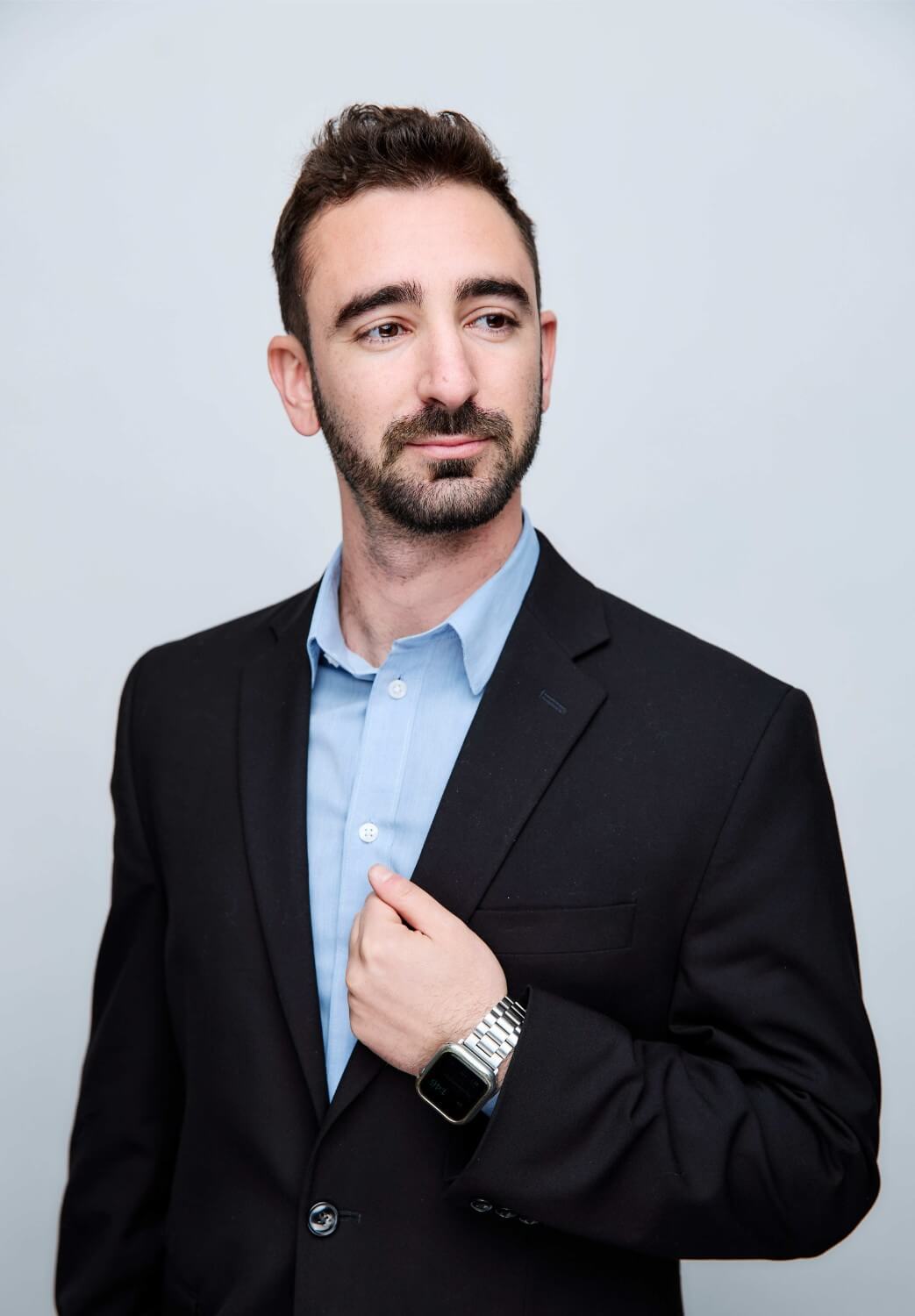
Courtesy of Ethan Glass
According to Lafaurie, Glass made the All-SCIAC secondteam in 2018, and there is currently a photo of him in Lafaurie’s office under “Legacy Creators.”
Off the field, Glass continued his work in Keeler’s digital design class, which, according to Keeler, involved asking about problems in the world and how media can provide solutions or start conversations. Glass said this revolved around the fragmentation of technologies in the parking industry.
“For many years, it’s been excruciatingly difficult for parking companies to communicate with one another because of a lack of APIs in the industry and a lot of legacy equipment and technology,” Glass said. “So, we’ve partnered with all the leading parking technology companies as well as the leading parking operators for us to kind of be the ‘Switzerland’ of the industry and help build an API layer and enable different technologies to communicate.”
Glass also said the interdisciplinary nature of Occidental’s degree aids his work. Keeler said liberal arts education helps foster teamwork by understanding each others strengths and weaknesses, as people from different backgrounds and majors come together to approach a problem.
“Entrepreneurship is very much a multidisciplinary field where diversity of thought, opinions [and] value can take a company to new heights,” Glass said.
As for their recognition by Forbes, Glass said he and Dunning felt appreciative and humbled after learning they would make it on the list.
“It takes a village to raise a business, so Nate and I were happy to be on there, but it’s really a testament and an award that the whole team shares,” Glass said.
Miller said that the mentors in the J-term program knew Glass’s group would be successful from the start.
“I think that it speaks volumes about the amount of talent, enthusiasm and hard work which comes from our students, and what can happen when that talent is mentored and nurtured by faculty and staff who see its potential,” Miller said. “I still receive regular emails from Ethan’s company, which makes my day every time.”
Keeler said that one of Glass’ standout qualities is that he wants everybody to come up with him, as he’s driven for his own success and the success of others.
“I like to hire a team that’s far more accomplished and better than I am at each of their responsibilities, and so over time, now we have an all-star team that can really drive the ship forward,” Glass said. “I’m just here to plug any holes and help elevate where I can.”
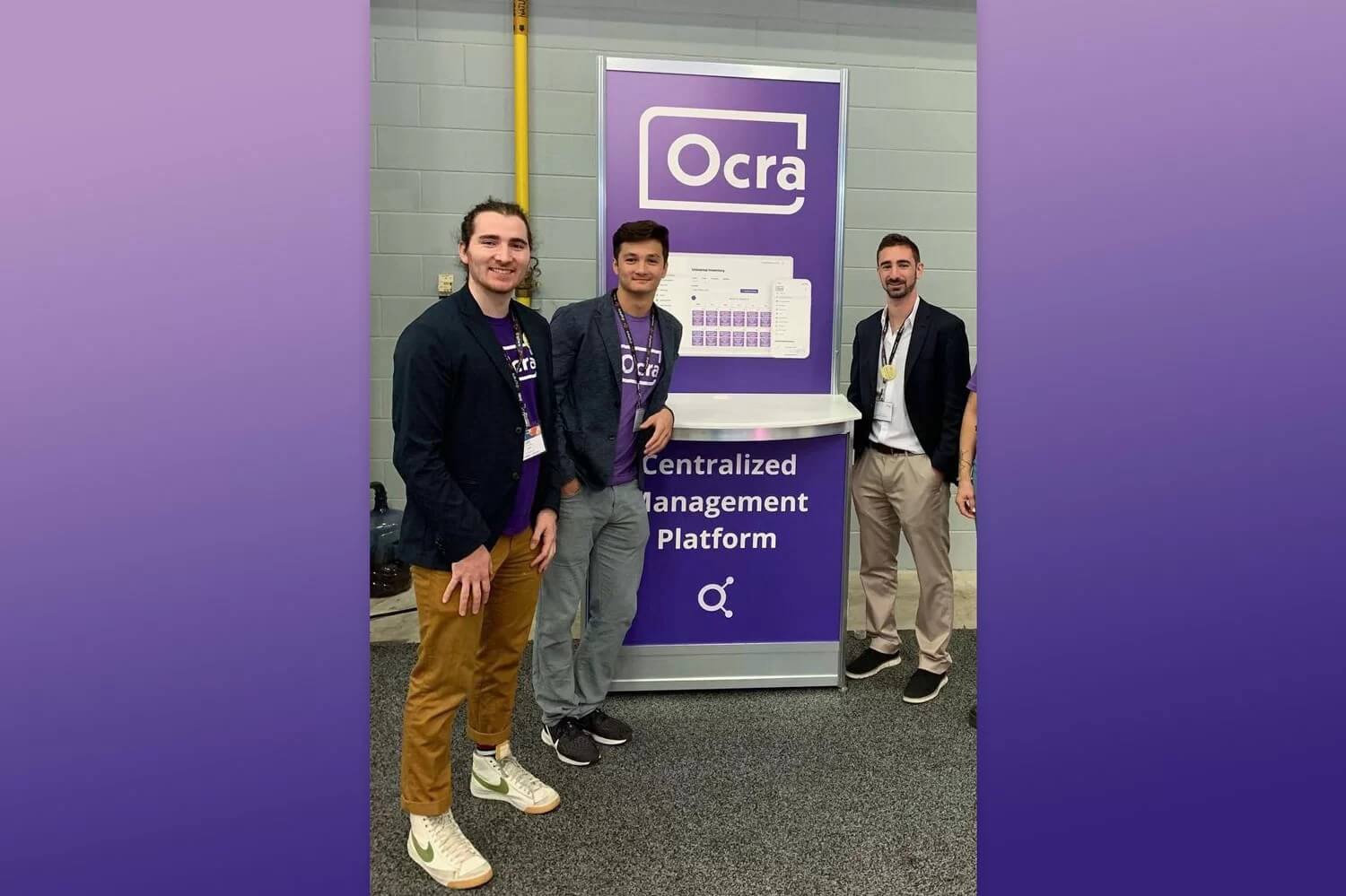
Courtesy of Ethan Glass
Glass said his day-to-day responsibilities at Ocra include sales, partnerships, hiring, raising capital from investors, client success and account management. He said he views his job as unblocking and empowering his team members, including Dunning, to help them succeed.
“I’ve been very fortunate to work with Nate, this has really deepened our friendship [and] our partnership because this is so much about trust,” Glass said. “I feel like I can trust him with my life, and he feels the same way.”
Glass said his company will continue to invest in the Occidental community, as it has hired several other alumni. He also said that he would welcome any opportunity to speak with current students interested in entrepreneurship, building a business, solving a problem and raising venture capital.
“If I were to give advice to Oxy students, it would be to really embrace the relationships around Occidental, not just current students and faculty but also former students and faculty,” Glass said.
Contact Mollie Barnes at mbarnes@oxy.edu
*A correction was made at 12:34 p.m. to reflect that Glass participated in the program in 2016, and led the program in 2017, 2018 and 2019.
Occidental’s Glee Club piled onto a charter bus and headed to Northern California for their annual winter tour Jan. 12–18. The ensemble stopped in San Luis Obispo, Walnut Creek and San Francisco, performing in venues ranging from local Presbyterian churches to the Stanford Memorial Cathedral. For more than 75 years, Glee Club has toured annually, both domestically and internationally.
Charlotte de Mita (senior) said she has traveled with Glee Club four times over the past four years to destinations including the Southern United States and Nevada. During Glee Club’s previous winter tour, the group went to Italy, where most Glee members had not visited, meaning this year’s intrastate tour felt more familiar, according to de Mita.
“It really felt like a choir tour, we were all just on the bus together,” de Mita said. “This one had a homey feel to it.”
Caroline Cole (sophomore) said Glee Club members had positive interactions with alumni who attended the Walnut Creek performance. Cole said she spoke with women who graduated in the ’50s, who told her how different it was to be a female student then.
Noe Barraza (sophomore) said the venues differed in size and style which brought a variety of performance experiences. Barraza said their first venue was a smaller church with a wood ceiling, and the last was Stanford’s Memorial Cathedral, with a domed ceiling that helped sound travel.
“In ‘Ayúdame,’ we shout the words, and at Stanford, you could feel our singing hit the back of the wall, bounce back and then linger in the air,” Barraza said.
Cole said she was impressed by the Stanford Chamber Chorale, who performed a double feature alongside Glee Club at Stanford. Barraza said the collaboration welcomed a wider audience of Occidental and Stanford spectators.
Glee Club’s Winter Tour setlist contained an array of pieces from various composers and cultures, curated by Glee Club Director Desiree LaVertu.
“I think it’s a great representation of not only what Glee Club stands for — like female composers or underrepresented composers — but also, the people in the Glee Club,” de Mita said.
De Mita said that although most of the first semester pieces were chosen by LaVertu during the previous summer, suggestions were welcomed. De Mita, originally from Jakarta, Indonesia, said she brought an Indonesian folk song to LaVertu called “Hela Rotan.”
“I’ve known it since I was a child,” de Mita said, “I feel very proud, not even just performing it, but knowing that I shared it with people.”
After every concert on tour, the ensemble had a group dinner together, Barraza said. The days on tour consisted of a group breakfast, time to explore, lunch and the afternoon dedicated to preparing for the evening concert, according to Barraza.
Barraza said that in San Francisco, Glee Club members took the ferry to Alcatraz, and while in San Luis Obispo, he visited the Madonna Inn. De Mita said she visited the Winchester Mystery House in San Jose.
Courtesy of Noe Barraza
Glee Club had an opportunity to stop inside San Francisco’s Grace Cathedral, renowned for its acoustics, and sing together, according to Barraza. Cole said Glee Club members often sing together for fun, without a planned performance.
“Someone could start singing a song, someone will come in on a harmony,” Cole says.
Barraza said the winter tour allowed him to connect with fellow members, including those from different vocal sections.
Many seniors in Glee Club felt sad throughout the tour, according to de Mita.
“[I thought] ‘Oh my gosh, it’s our last tour. What are we gonna do?’” de Mita said. “I got good memories for it, so I’m not gonna stay in the sadness. It’s a fond memory.”
De Mita said Glee Club helped her find community at Occidental while being so far from home.
“Glee Club gave me people to be friends with, no questions asked. They accepted me,” de Mita said. “That’s nice to have, especially when you’re moving or you feel like life is getting too hard — there are definitely people there that will help you out.”
De Mita said the talent and skill in Glee Club persists, even as several members are set to graduate in May.
“I’ve got no worries for Glee Club after this year,” de Mita said. “I’ll probably go to the concerts again after I graduate, just to support them again.”
De Mita said the club is always looking for new members in the fall and interested students can sign up at the Involvement Fair.
“I recommend anyone who ends up reading the article just come to a concert,” Cole said.
Barraza and Cole, who each have two more years left with Glee Club, both said they are excited for another tour. According to Cole, Glee Club unites under their shared love of music.
“It’s just a lot of fun to make music with people that want to make music,” Barraza said.
This semester, Oxy Arts is offering the Studio Art course Art Outside the Bounds, where students learn from an LA-based artist through the Wanlass Artist in Residence Program. The year-long residency allows artists to develop their own curriculum for students and share their practice with students and the greater Occidental community. The Industry, an experimental performance art and opera company, is this semester’s artist in residence.
Oxy Arts Director Meldia Yesayan said the intention of the Wanlass Artist in Residence program is to provide students and the broader community with an opportunity to engage with a local artist doing interesting, process-based work.
“We are able to develop a strong and intimate relationship with the artist and understand their practice in a new way,” Yesayan said. “The artist is able to fulfill out-of-reach projects or work they wouldn’t otherwise be able to present.”
Yesayan said The Industry will be the first non-visual artist of the Wanlass program. Yesayan said coursework this semester includes listening, reading, discussion and collaborative experiments related to operatic design and that the class also visits locations of past and present Industry productions across LA.
Crescent City by Joshua White
Chohi Kim, a member of The Industry andthe primary instructor of the class, said the class is focusing on site-specific experimental opera. She said the class has watched The Industry’s Invisible Cities in film, an opera staged at Union Station.
“The audience walked through Union Station with headphones, and all the singers had mics,” Kim said. “They [listened] to the opera while walking around with regular people, like kids running around.”
Kim said the class has been discussing the location of the audience, the idea of a thorough line of narrativeand the notion of hyper opera, a term coined by harpist and CalArts Professor Anne LeBaron.
“I think the most rewarding part of this class for me will be seeing what the students make and how they react to and absorb the performances that I show them,” Kim said. “It’s really special for students to be immersed in the real-life performances of LA and for that inspiration to directly inform this collaboration.”
Co-director of The Industry Ash Fure said the class will explore opera not as an abstract musical form, but as an experiment that mobilizes senses and perceptions toward shared experiences that grapple with the complexity of the present. According to Fure, students will analyze and question the power structures and politics at play in what seems like neutral operatic conventions.
“Our goal will be to surface the hidden hierarchies and agendas of modernism and pose new questions about how we might subvert, expand and explode these norms,” Fure said.
The Comet / Poppea by Elon Schoenholz
Lucas Donovan (senior) said he was drawn to the Art Outside the Bounds class because he wants to see and understand unconventional art and new mediums in the LA art scene. Donovan said his favorite part of the class is its emphasis on collaboration.
“Because it’s a super small class, every student has a chance to let their strengths shine through,” Donovan said. “We’re also able to collaborate with people who have a lot of experience in their field. It’s a great opportunity to get into the LA arts and music space.”
Oxy Arts Manager of Education and Community Management Frankie Fleming said she has never encountered a performance art, theateror music company that does anything like The Industry.
“I think they felt like a pretty natural fit. We thought it would be really interesting for students to get to take a course with them,” Fleming said. “Offering a compelling and diverse range of studio practices and artists who make artwork in different ways is important to the goals of the program.”
The Comet / Poppea by Austin Richey
Fleming said she believes the course provides students with a special opportunity to spend time with people who have committed their lives to a multidisciplinary art form.
“I think we have an incredible art department on campus, but The Industry’s work really falls in between [departments]. Each production they do is pretty different from the last one.”
Sarah Wass, the deputy director of The Industry, said one of the things that makes the company unique is its accessibility.
“Opera is for everyone,” Wass said. “It’s a transformative art, and everyone deserves access to it. That is one of the driving ideas of The Industry.”
In June, The Industry will co-present ANIMAL [the underground] with Oxy Arts, an installation and live performance created by Ash Fure that features custom full-bodied sound machines.