Occidental’s Spring 2025 Involvement Fair (iFair) brought students to the Academic Quad Feb. 10. According to Ginny Salazar, Assistant Director of Student Leadership, Involvement and Community Engagement (SLICE) and organizer of iFair, 110 clubs were signed up, with roughly 28 of these groups recruiting members for the first or second time ever.
According to Salazar, the process to start an official club at Occidental requires students to complete a series of four forms: the Club Development Worksheet, the Student Support Petition, a club constitution and the Student Organization Information form. Salazar said each one serves a different purpose, allowing students to decide on a clear direction for their club, show student interest, outline club bylaws and record official leadership.
“Once leadership attendance is verified and paperwork is complete, the club becomes official. They receive a club email, access to RAFTR and begin the process of obtaining a financial club account number,” Salazar said.
Emely Perez (sophomore), Karen Palacios Echeverria (sophomore) and Talia Goddard (sophomore) at the Museum Enjoyers & Explorers table at iFair at Occidental College in Los Angeles, CA. Feb. 10, 2025. Emma Cho/The Occidental
Salazar said new clubs this semester include American Cancer Society, Philosophy Reading Club, Why is That? Philosophy Club, Queer Pro Quo (QPQ), Pre-Physical Therapy Society and Board Game Club and that Chess Club and Oxypreneurship have been reinstated this semester.
According to Salazar, there were at least 20 new clubs formed last semester.
“The sheer number of new clubs formed each year continues to surprise me,” Salazar said.
Emaline Ricketts (junior) is the president of Tea Time. According to Ricketts, Tea Time has been trying to start since last semester.
“The process of starting [Tea Time] was very slow going for us,” Ricketts said. “We actually registered to be a club last semester, but it took so long for us to get started, the semester was basically over by the time we were ready to have a meeting.”
Tea Time e-board members Sasha Wong (sophomore) and Emaline Ricketts (sophomore) pose with their sign on the Academic Quad at Occidental College in Los Angeles, CA. Feb. 10, 2025. Emma Cho/The Occidental
According to Ricketts, Tea Time had paperwork troubles that kept them from officially being recognized, along with later problems accessing the official email account. Now, she said she is looking forward to officially starting meetings and getting to start sampling tea with others.
“Our plans for the moment are basically just to reach out to people and get them excited about learning about new teas and meeting new [people],” Ricketts said. “We really just want [Tea Time] to be a space where people of all backgrounds can come together to hang out and try some really good teas.”
Ricketts said she and her friends wanted to start Tea Time to have a club that focused on meeting new people regularly, rather than at larger and less frequentevents.
“We thought it would be fun to have a club where people could just come and relax and drink tea,” Ricketts said. “Tea [has] this almost global presence as well in so many cultures and [that] can also be a connection point for so many people.”
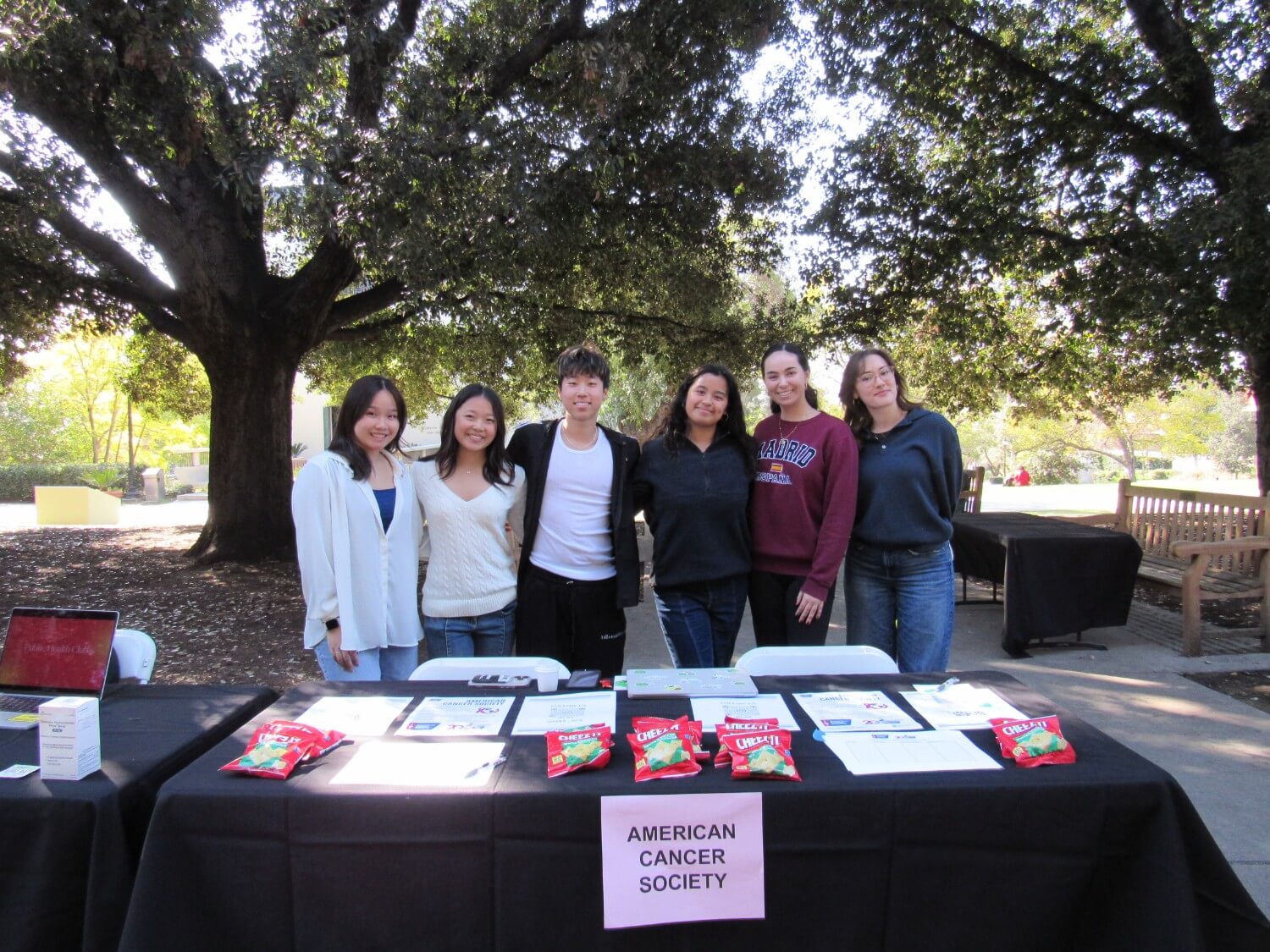
American Cancer Society (ACS), while new to Occidental this semester, is not new to their club president, Amanda Gow (junior). According to Gow, she was a part of the American Cancer Society during her freshman year at Trinity College.
“When I transferred, I thought that starting a chapter here would be impactful and that a lot of the pre-health students would be interested in joining,” Gow said.
According to Gow, ACS is a community outreach club that is currently planning to have fundraisers this semester and is now planning for events in the fall.
“We hope to have our Breast Cancer walk during Breast Cancer Awareness Month in October [and] a toy drive in December for pediatric cancer patients,” Gow said.
Members of Occidental’s American Cancer Society at iFair at Occidental College in Los Angeles, CA. Feb. 10, 2025. Emma Cho/The Occidental
According to Gow, ACS is geared towards students on the pre-health track or public health minor, but anyone interested in helping cancer patients should join. Gow also said ACS is not the only club she started this semester, with Pre-Physical Therapy Society being another that has just begun.
One club that had its first semester in the fall is Oxy Ski and Board, according to club President Jasper Clarkson (sophomore). Clarkson said Oxy Ski and Board began as a way to connect people and make skiing and snowboarding more affordable.
“The Ikon pass is the big pass for Southern California, and you get a pretty big discount if you have a club on campus,” Clarkson said. “It’s a pretty inaccessible sport, so we’re trying to make it cheaper.”
According to Oxy Ski and Board Media Chair Ruby Jeschke (sophomore), Oxy Ski and Board has been going up to Big Bear every Saturday, as well as hosting events on campus. Jeschke said they have a beginners event coming soon where people without an Ikon pass can try out skiing and snowboarding, as well as a trip planned to Mammoth Mountain during spring break.
According to Clarkson, the most difficult part of starting Oxy Ski and Board was figuring out the type of club they wanted to be for the constitution.
“We are trying to [be]a pretty active [club], and so far [we] have been pretty successful in doing that,” Clarkson said.
Salazar said once a club is started, maintaining it is the challenging part, as initial interest does not always reflect attendance. Still, according to Salazar, students at Occidental have been able to create clubs around almost anything.
“The ingenuity of students is always surprising — there’s a club for everything you can imagine,” Salazar said. “I am inspired by the passion students have for building community around shared interests.”
Occidental offers an array of language courses including Chinese, French, German, Japanese, Russian and Spanish. Each language has multiple levels which students can progress through during their time at the college. Some of these languages offer attendance-based conversation courses for one credit.
According to National Endowment for the Humanities Professor Salvador Fernandez, the conversation courses were originally created around the mid-1990s to help students enhance and develop their oral language skills.
“The Spanish conversation courses have been an excellent asset to our Spanish program, and we encourage all students to enroll in these courses regardless of their language proficiency,” Fernandez said via email.
According to Fernandez, the language conversation courses are taught by recent international graduates who bring their real experiences from each respective country to the classroom. Fernandez said this is beneficial for language students as it allows them to gain current cultural perspectives from those outside of the U.S.
“Our Spanish section stresses the importance of the communicative approach to teaching Spanish language. It is our goal that the entire class be taught in Spanish, even at the Spanish 101 level,” Fernandez said via email. “Spanish faculty use a diversity of teaching methods depending on the level of Spanish they teach or the material they examine.”
Visiting Language AssistantBryan Salas, who teaches Intermediate Spanish, said he works to incorporate Ecuadorian culture into his syllabus, as he is originally from Ecuador.
“I do more cultural immersion activities. Since I’m from Latin America, I teach them Latino traditions, cultural traditions such as dancing [and] cooking,” Salas said. “Last semester we had a couple of activities — one of them was embroidery, especially focused on how textile is so important for us in Latino culture.”
Bryan Salas in the Tiger Cooler at Occidental College in Los Angeles, CA. Feb. 14, 2025.
Salas said he works with fellow Visiting Language Assistant Celia Royo Tomás who is from Spain. According to Salas, they have created and organized numerous field trips, textile projects and film screenings for their students.
“I really believe that not only do you need to practice your Spanish, but you also need to know about Hispanic culture,” Salas said. “If you’re planning to travel abroad and you don’t know anything about the culture, it’s going to be a challenge.”
Fernandez said via email that the Visiting Language Assistants enrich Occidental students’ experiences through these cultural events and activities.
“The first two weeks of the semester, we had games in Spanish […] Later on, we’re going to have cooking classes and a field trip,” Salas said. “In my case, I’m organizing a field trip to go to Elysian Park to eat Ecuadorian food and talk with [the] Ecuadorian community.”
Visiting Language AssistantRose Le Goff, originally from Brittany, France, said she teaches students in the French conversation class. According to Le Goff, she has engaged students in activities that are significant to her own French culture.
“The first semester, we cooked twice at the Intercultural Community Center, and we watched a movie at Choi Auditorium,” Le Goff said. “I’m going to cook some crêpes again, and we’re also going to have a cheese tasting activity. My classes are always very different.”
Le Goff said her classes are always completely in French, no matter the topic or activity. Le Goff said this allows students to experience full immersion in the language and develop their language skills through practice.
“Usually with the advanced class, no English is involved because they have the level for that,” Le Goff said.
Peer Language Advisor Julia Carrigan (senior) said the option of taking Arabic classes was one of Occidental’s selling points that sparked her excitement for attending the college.
Julia Carrigan in Johnson Hall at Occidental College in Los Angeles, CA. Feb. 11, 2025. Marty Valdez/The Occidental
Carrigan said Arabic conversation classes had not always been an option until her second semester at Occidental in 2022. Carrigan said she worked to influence Occidental to add the class to the roster. According to Carrigan, she has never been enrolled in conversation courses, but she has observed them and participated in them multiple times.
“I really just love Arabic and the beauty and structure of the language, and I love talking about it, so I really want people to just come and talk with me about Arabic,” Carrigan said.
Carrigan said the material and structure of the courses that she observed were very engaging, such as a focus on hosting someone for dinner. According to Carrigan, the professorwho taught the conversation class encouraged students to engage as if they were part of a dinner event which allowed students to learn phrases such as “Welcome to my house” and “Thank you for having me.”
There are multiple languages that have yet to offer supplemental conversation courses such as Chinese, Japanese and Russian. According to Fernandez, each language department has autonomy to evaluate its curricular needs and if they feel a conversation course would be beneficial.
“Our conversation courses are very valuable as one component of our broader curriculum,” Fernandez said.
In their Feb. 9 season opener, Sophia Siu (junior) helped Occidental’s softball team to a 12-3 victory over La Sierra. Siu, who plays second base, went 3-4 batting with three RBIs.
Siu said she primarily credits her success to the friendship and camaraderie her team upholds.
“We just hang out with each other every day, we have every meal together and all that,” Siu said. “So I feel like being able to play with your closest friends and just to hang out with them every day, practice with them every day, it makes softball so much more fun.”
According to Siu, she feels as though she is stepping into a bigger leadership role as a junior, which she feels had been missing during her time as an underclassman.
“I would say it was a little interesting, because my freshman year we didn’t have any seniors, so it was just our junior class that was the upperclassmen,” Siu said. “It didn’t seem like there was as much [of a] leadership role. So now becoming […] that role, I kind of feel like I am doing what I wanted to see.”
According to teammate Alysha Wagner (junior), Siu has been injured for the first part of the past two softball seasons but has come back this season stronger than ever.
“She’s like a wall,” Wagner said “She’s really commanding the field, and I feel like she really takes initiative as well.”
Siu and Wagner both attribute their personal success to their close relationship, and Wagner said both her and Siu like to challenge each other on and off the field.
“Being able to be with one of your closest friends on the field is really nice, because we’re more intuitive to each other’s emotions,” Siu said.
Siu said she is excited to see the team grow throughout their long season, which lasts until May.
“I think I just want to see us improve from last year,” Siu said. “And I think that all we can really ask for is just to get better, and I think we will.”
Dhruv Verma (sophomore) at Occidental College in Los Angeles, CA. Feb. 12, 2025. Graham Jewett/The OccidentalDhruv Verma
Dhruv Verma (sophomore) went undefeated in his tennis matches Feb. 8. In Occidental’s match against Hope International, Verma and Brett Miller (senior) went 6-1 in doubles. Later, Verma won his singles match against Jessup in overtime, 14-12.
Verma said that his strong relationship with Miller, his doubles partner, helped lead the duo to their win.
“Brett is the oldest guy on the team,” Verma said. “He’s a senior, and I was the only freshman last year, so he kind of mentored me a little bit and helped me get used to playing tight matches.”
Occidental swept Jessup in a 7-0 victory, but fell to Hope International 5-2.
Verma said that despite their loss, the Tigers worked to stay positive.
“I feel like we were just getting started,” Verma said. “We lost our first match, [which was a] real bummer. We realized our energy was really low, and we came stronger in the second match.”
Verma won his match against Jessup in overtime.
“I was [the] last match on, so having my whole team be next to me on the court and just screaming and constantly motivating me, I think just really helped me get that win,” Verma said.
Men’s tennis head coach, Stephen Perkins said via email that Verma performs well under pressure.
“In his singles match, he was down big in the deciding tiebreaker but battled back and never gave up,” Perkins said via email. “Dhruv gets up for the big matches and embraces those opportunities.”
Verma, an international student from India, said coming to Occidental has been a big change, but a positive experience.
“I grew up in India, but I’ve been playing tennis all over the world since I was a kid,” Verma said. “I feel like coming to the U.S. and playing in a college tennis environment is completely different.”
The tennis team will be heading to San Diego Feb. 27 to compete in the Pacific Coast doubles tournament.
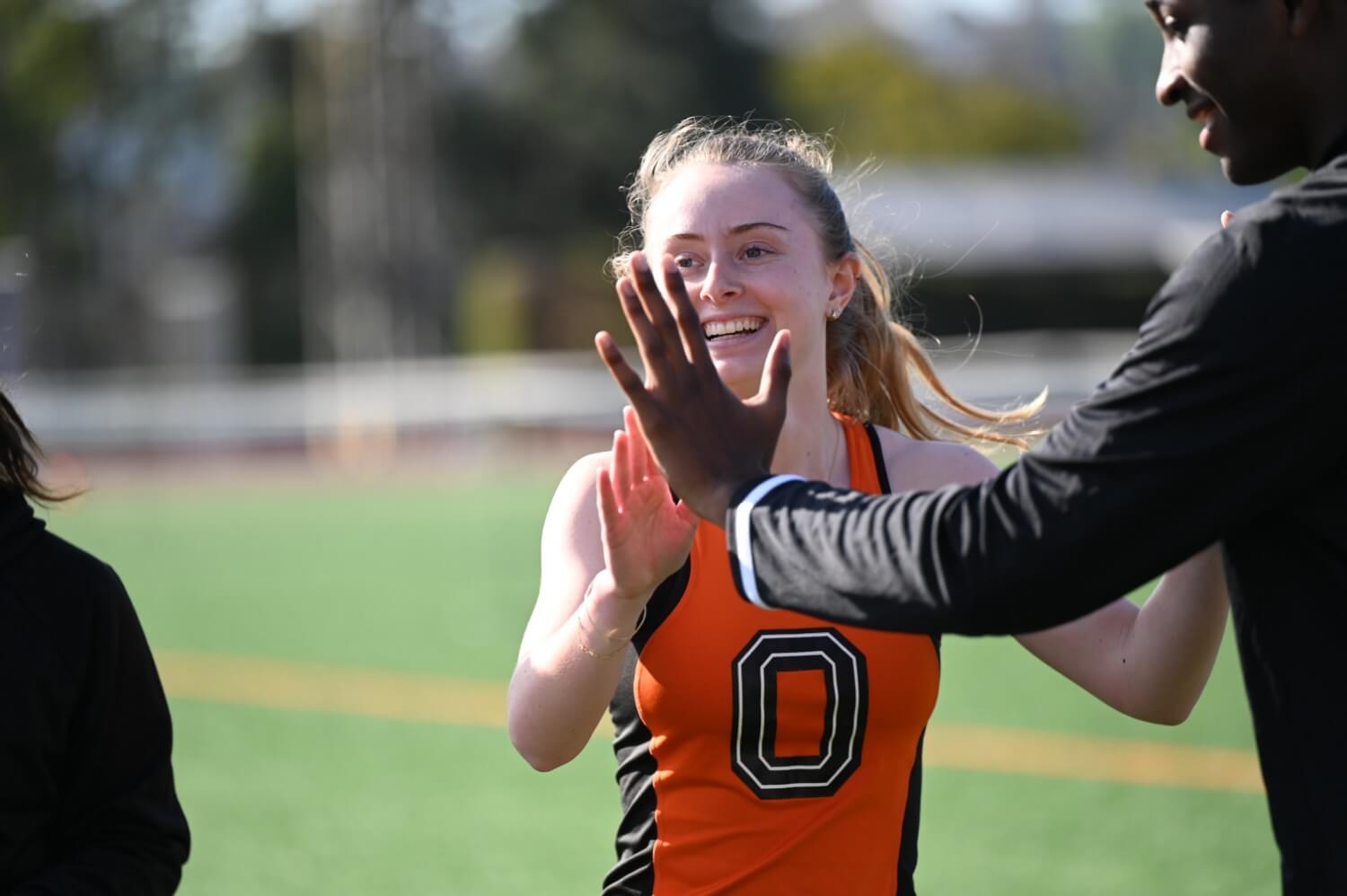
Occidental’s track and field teams defeated Pomona-Pitzer in the schools’ dual meet Feb. 8. It was the 14th dual opener between the two teams, of which Occidental has won seven. The women’s team scored a 58–41 victory over the Sagehens, with the men’s team sealing the deal with a score of 56–49.
According to thrower Chelsea Groves (senior), the supportive atmosphere and sideline participation at the dual was a factor in the team’s success.
“The overall atmosphere was really cool this past weekend,” Groves said. “The running events had finished up a little bit earlier than us, as the throwing events were running a little bit late. So they actually came over and supported us as we were throwing, and it’s just always cool when you’re able to get those people there.”
Groves finished first in women’s shot put with a throw of 11.95 meters, about a foot behind the previous meet record set by Kelly Young in 2010. Groves also secured first place in women’s hammer throw.
Sprinters Shane Kawakami-Williams (sophomore) and Zachary McGraw (sophomore) scored first and second in the men’s 100-meter dash, coming in at 10.9 and 10.92 seconds, respectively. Both bested the previous meet record of 10.96 seconds.
According to McGraw, the team was hungry for victory after their loss to the Sagehens at the same meet a year ago.
“It was a really good atmosphere,” McGraw said. “I think since we lost last year, we really wanted to win it this year. We have the Pomona-Oxy invite every single year as the opening meet, and it was my first meet ever as a college student last year. And we lost — barely — which was pretty annoying. So this year, that was definitely our main goal coming into the season, just as an early benchmark of where we’re at.”
According to Kawakami-Williams, friendly competition between himself and McGraw was instrumental in the pair’s record-breaking sprints.
“Me and my boy, Zach, we saw the meet record and we both wanted it, so that was one of our goals,” Kawakami-Williams said. “The other one was just to beat Pomona. I think we both know that we’re fast and we’re both around similar speed, so we both went out there and we raced and it was close.”
Courtesy of Julietta SeirmarcoSprinter Elizabeth Hawley (junior) won the women’s 100-meter dash with a time of 12.73 seconds. Hawley said she was confident in her ability to win based on her competition’s personal records and was enthusiastic about the rapidity of the event.
“The 100 is super fun, it’s super quick,” Hawley said. “You’re done in a little over 10 seconds. So I get a lot less stressed than running a 400, which is like, sprinting all-out hard for a lap. And then after the race, my teammates are super supportive […] no matter what. So I got a high five — a few high fives.”
In light of his recent success, Kawakami-Williams said his goal is to win a race at this year’s SCIAC championships.
“I got three silver medals last year, so it’s time to finally win,” Kawakami-Williams said. “And [I want] our team, our four by one, at least once to qualify for nationals. I want to do a lot of things this semester that we didn’t do last year.”
McGraw said he aims to run a 10.4-second 100 meter dash this season.
“That’s kind of my main track goal this year,” McGraw said. “And then kind of help out any way I can with the team.I know I’m going to be running a lot of relays, and then hopefully we can win the four by one in conference this year. We got second last year — Pomona beat us. We’re on a good track right now, but I’m hoping we can win a lot in SCIACs. I’m pretty optimistic.”
Hawley said she is excited for the rest of the semester and for the camaraderie between everyone on the team.
“I always feel really good about the team,” Hawley said. “They are unconditionally supportive, always fun to be around. Everyone’s super close, super supportive and everyone’s always hanging out across events.”
According to Groves, a shared attitude to strive for better results has given the team a major boost.
“These next few years, this season — it’s all gonna be really amazing, and it’s all in reflection of the hard work we’ve put in and practiced in the weight room, the research, the film — everything that we’ve done to prepare ourselves for these meets,” Groves said.
Last week’s Super Bowl between the Kansas City Chiefs and Philadelphia Eagles ended in unexpected fashion, with Philadelphia routing the two-time defending champions, 40–22. Occidental students provided their opinions on the outcome of the game and the overall broadcast.
Henry Wilson (junior), a fan of the Kansas City Chiefs, said he was surprised by the lopsided nature of the game itself.
“Being a Chiefs fan for the past six years, that’s the worst I’ve ever seen us play on a big stage,” Wilson said. “I’ve never seen this team be dominated like that.”
Wilson, who watches the Super Bowl annually with his men’s basketball teammates, said he was the lone Chiefs fan in the group.
“Everyone I was watching with was rooting for the Eagles,” Wilson said.
According to Wilson, there are few Chiefs fans at Occidental, but expressed pleasure in being part of a rare group.
“I enjoy being the only Chiefs fan around,” Wilson said. “Especially last year, the Super Bowl against the 49ers […] there are so many Niners fans out here, so it was fun to have that back and forth.”
“It felt like something that couldn’t have been done in the past,” Wilson said. “Kendrick Lamar got the license to do what he wanted […] he didn’t even play a lot of his hits, and I thought it was cool.”
As for the Chiefs’ chances next year, Wilson said he was confident.
“People have been making fun of me, but I know we will be back soon,” Wilson said.
On the Eagles side, two student fans from Occidental’s Alpha Lambda Phi Alpha sorority described how the scene unfolded as they watched along with their sisters.
Isabella Villagomez* (junior) watched the first half of the game on Zoom with some friends before heading over to the Alpha sorority house for a chapter meeting where the game was on in the background.
“It was really cool to see a bunch of women coming together to watch this game that’s been historically seen as men’s entertainment,” Villagomez said.
As an Eagles fan, Villagomez said she was pleased with the teams’ rout of the Chiefs.
“I’m very happy about it. I don’t know a bunch about football but I did do cheer, so I have a bit of an idea,” Villagomez said. “Honestly, I’m still shocked that the Chiefs lost as bad as they did. I couldn’t help but feel a little bit bad.”
Travis Kelce and Taylor Swift’s romance was a factor on the big stage, as we discussed in a previous column. Though not as much attention was divided to Swift’s reaction as it has been at past games, it was still a talking point for viewers.
According to Villagomez, Swift should be partially accountable for Kelce’s comments respecting President Trump for attending the Super Bowl — but not Kelce’s performance.
“For her to get so much slack over Kelce doing poorly since they started dating is unfair,” Villagomez said.
Villagomez said she was also a huge fan of Lamar’s halftime performance overall.
“I really liked the stage setting — of it being shaped like a video game controller,” Villagomez said. “That symbolism of the ‘American Game’ was really true for a lot of Black people in America. Samuel L. Jackson as Uncle Sam was also great […] If you thought it was boring, you didn’t get it.”
According to Lucy Roberts (junior), Kendrick’s halftime show was enjoyable for its authenticity, even if it was minimalist in nature.
“I loved the halftime show, because I think it was so authentically Kendrick Lamar,” Roberts said. “I’ve seen him before at Outside Lands two years ago, and he’s more minimalist. He’s not super commercial about it, he was there to make a point, especially with Trump being the first president to attend the Super Bowl.”
Villagomez said she attempts to bring sports talk back into campus conversation following Super Bowl LIX.
“Now that I’ve joined my sorority, I’ve been talking about sports a lot more,” Villagomez said. “I would like to see more of a sports culture here. I think sports are a great way to bring the community together.”
According to Roberts, it would be nice to have a little more school spirit about sports on campus and beyond.
“I do wish we had more of that community, because it has such a power to bring people together,” Roberts said. “It’s how I bond with my dad. I think it’s interesting because Oxy is more of an artsy school so we don’t find many sports people — I just think it would really help bring the campus together.”
*Villagomez is a former staff writer for The Occidental.
Contact Mac Ribner and Ben Petteruti at ribner@oxy.edu and petteruti@oxy.edu.
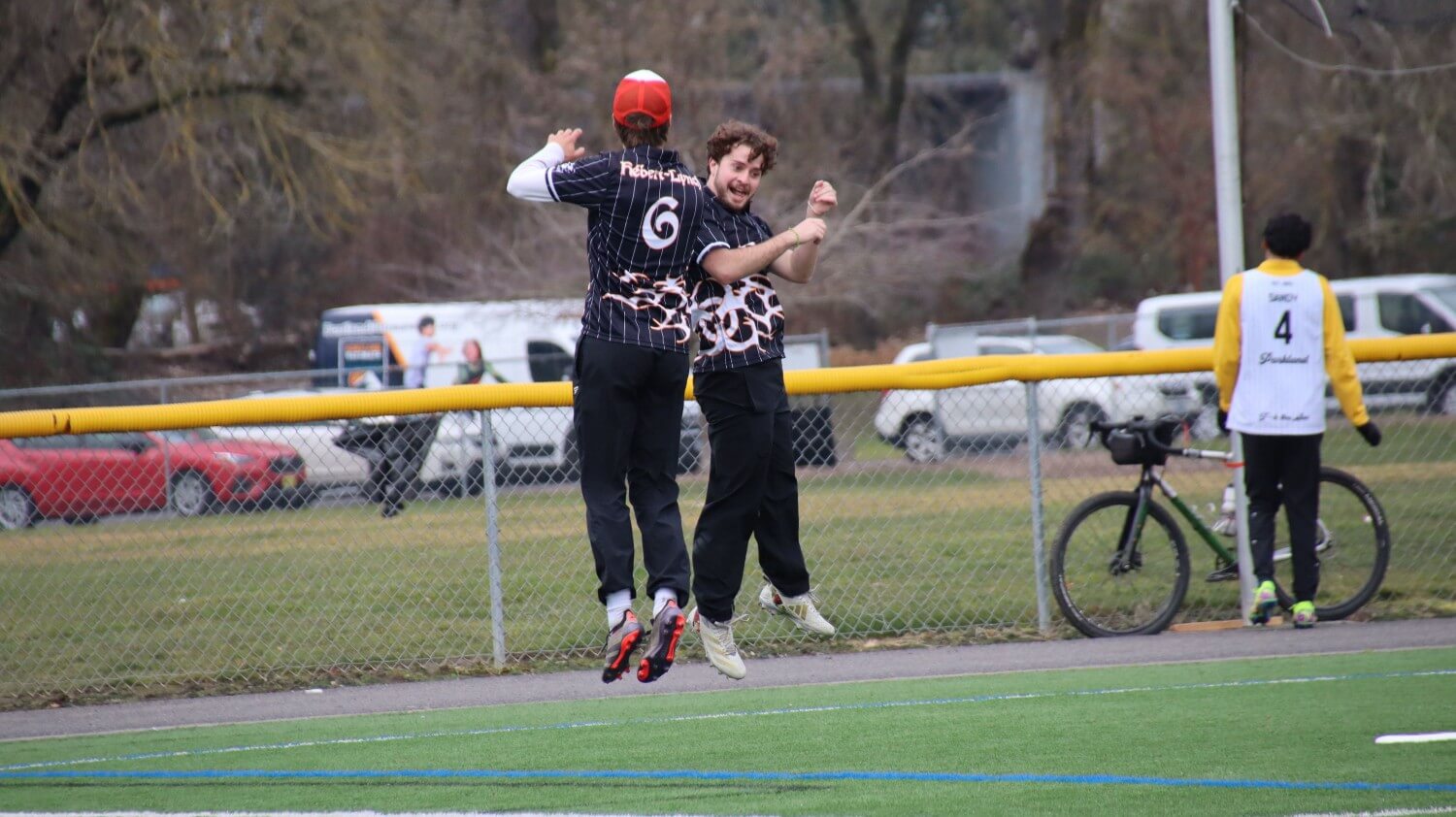
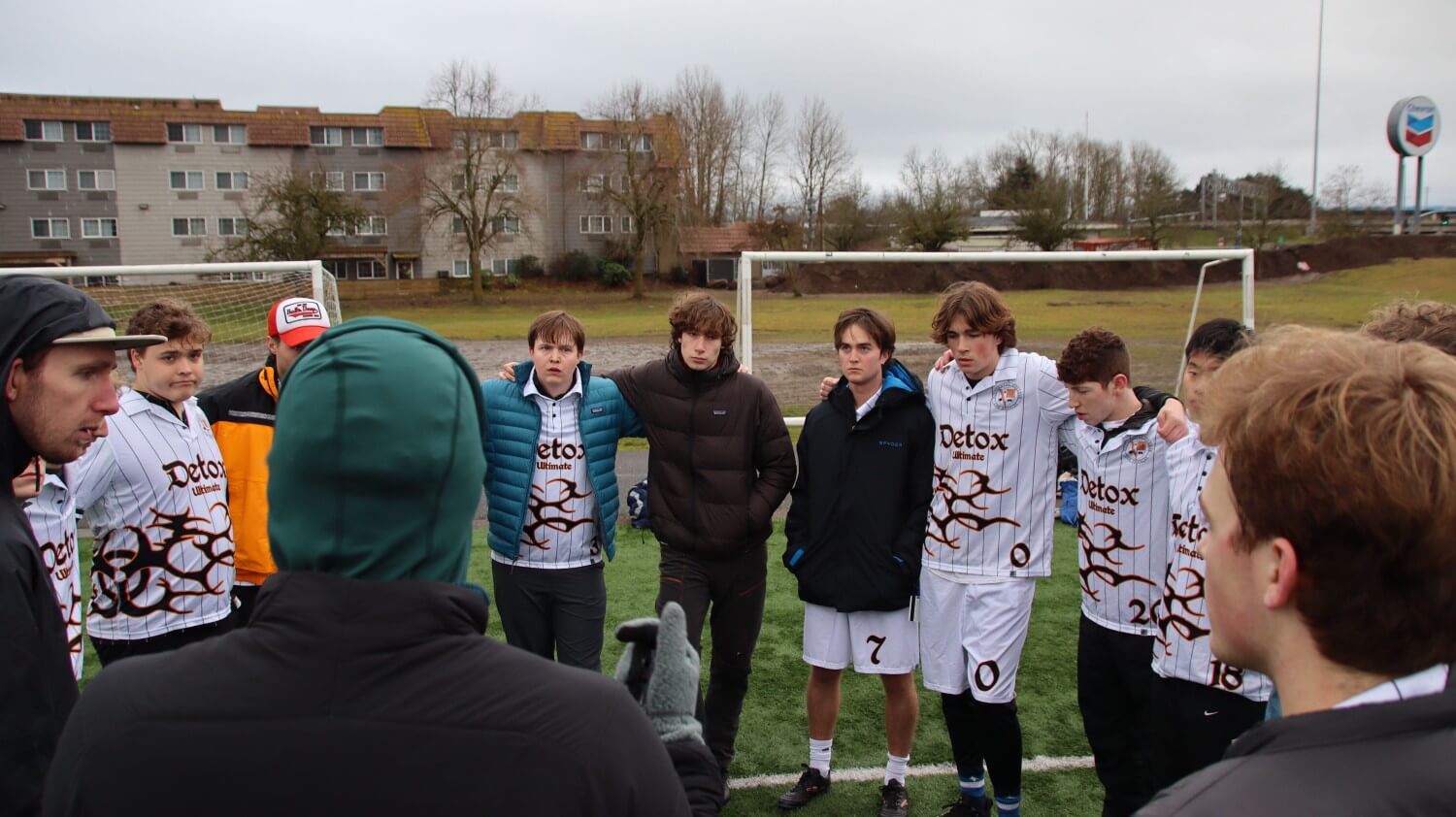
Detox, Occidental’s men’s Ultimate Frisbee team, traveled toPortland Feb. 7–9 to compete in their first tournament of the season, the DIII Grand Prix 2025. The team competed in six games, rounding off the weekend with a 3-3 record.
Liam O’Neill (first year) said the team’s first game on Saturday morning was against Whitman College, the top-seeded team in the tournament. The game ultimately ended in a 10-13 defeat, but O’Neill said it was a hard-fought battle.
“It was really exciting to be able to play in such a competitive game against a good team,” O’Neill said.
According to Ian Terell (junior), Detox also had the chance for a rematch against teams who they had played at nationals in previous years, including Colorado College. Terell said it felt good to play the team again and do better.
“I had smiles most of the tournament because even when we were losing, it was just good competition,” Terell said.
Terell said other standout games included a Sunday showdown against the US Air Force Academy team, with Detox coming out on top, 13-9.
Courtesy of DetoxTeam captain and president Teddy McGowan (senior) saidthe Grand Prix is an annual affair, butthis was the first time Detox had flown to a tournament during the regular season. McGowan said the team came in as the 9th seed and tied for 5th by Sunday’s end.
McGowan said the team adapted in tough moments and made improvements as they competed.
“We played pretty well against some really good teams, and we took care of business against the teams that we were […] supposed to beat, which was good,” McGowan said.
According to Terell, Detox’s main goal for the tournament was not taking first place.
“The reason we went was to get some exposure to some competitive Division III national-level teams, and we accomplished it,” Terell said.
Courtesy of Detox
Terell said he was in charge of booking flights and hotel rooms for the trip. He decided the team would fly to Portland a day early and spend the Friday before the tournament exploring the city.
“Portland’s a cool city,” Terell said. “We just walked around, and it [was] a good bonding activity, especially with our coaches.”
According to O’Neill, some favorite stops included Powell’s Books and Buffalo Exchange. O’Neill said the trip gave Detox members a chance to connect with each other, even in between moments of travel and competition.
“There’s also kind of some mutual suffering doing all the early mornings,” O’Neill said.
According to McGowan, Detox hopes to go to nationals in Burlington, WA this May, to compete on the highest level of Division III Ultimate Frisbee. In order to get a bid to nationals, McGowan said the team must defeat Claremont McKenna and Caltech this coming April in the nationals qualifying tournament.
Courtesy of Detox
According to O’Neill, the future of Detox looks bright. O’Neill said Detox had a decent base of first-year members and that he plans to keep playing with Detox during his time at Occidental.
“It’s fun, just being able to hang out with people that have a shared interest and getting to have some fun upperclassmen friends too,” O’Neill said.
McGowan said he is excited about the talent of Detox’s current first-year roster, especially as the semester continues.
“We really just want to make sure everyone’s on the same page with our system now and make sure we can function as a unit,” McGowan said.
As a captain on the team and a senior at Occidental, McGowan said it has been a privilege to be part of the leadership for Detox.
“The team gave me a great community my freshman year and ever since then, I’ve just been trying to give back and sort of foster that community as much as I can,” McGowan said.
McGowan said that for him, the bonds formed by playing Ultimate Frisbee matter just as much as winning games.
“It’s who you’re doing it with and how you’re doing it together,” McGowan said. “It’s definitely not a secondary feature of the club. It’s sort of hand-in-hand with the competition of it.”
The entire day of Jan. 7 felt eerie, Alan Janoyan said.
The co-founder and roaster of Unincorporated Coffee Roasters said he went into work at the business’ Altadena location, like any other day. But Janoyan said the conditions were anything but normal — it felt like a wind tunnel outside.
“Our furniture was flying away,” Janoyan said. “The wind had already blown the walls of our shopping center down into our neighbors’ yards before the fire was even here, and they’re like 10 foot cinder block walls.”
At 6 p.m., Janoyan said he went to take out the trash and that when he stepped outside, he could see the Eaton Fire across town.
Interior of Unincorporated Coffee Roasters in Los Angeles, CA. Feb. 15, 2025. Lupin Nimberg/The Occidental
At 4 a.m. the next day, Janoyan said he tried to drive back to Unincorporated, but the area had been evacuated.
Janoyan said he owns Unincorporated with his co-founder Arthur Sohrabian. He and his team received two or three false reports that Unincorporated burned down, according to Janoyan.
“It was very nerve-wracking because you can’t get in to check on it. It’s also too dangerous even if you can get in, but we kept getting reports all of Wednesday that the place had burned out,” Janoyan said. “It was weird to wrestle all that information, but then we found out it’s here, so thank goodness.”
2,700 miles away from LA, Lauren Hank, the operations manager for Unincorporated, said she woke up the morning of Jan. 8 to about 50 text messages. Working remote from Philadelphia, Hank said that for the next two weeks, it felt like she did not stop moving — she sent out aid and housing resources to employees, adjusted Eagle Rock’s business hours and made all shifts volunteer-based.
“Because I wasn’t there, that distance kind of allowed me to be like, ‘OK, my safety is secure, let me do everything, try to fill the gaps for others who are actively fleeing or trying to find a place to go,’ and I just sought out as many resources as possible,” Hank said. “I was just constantly monitoring what is within my power to support our team.”
According to Unincorporated’s Instagram, the Altadena cafe was forced to temporarily close, but the location in Eagle Rock continued to operate.
“I came up with a plan for [how] we continue operating the Eagle Rock Cafe in a way that’s safe while also allowing for our staff to not be completely out of work,” Hank said. “Every second was so uncertain. We were living just moment to moment.”
Hank said she and her fellow employees wanted to show up for the Altadena community in whatever ways they could. According to Unincorporated’s Instagram, the business launched a donation drive following the evacuation in partnership with the Altadena Farmers’ Market at the Eagle Rock location Jan. 19–22.
“It’s so rare to see a coffee shop as ingrained in its communities as you see with Unincorporated,” Hank said. “Over the past month, there have been so many Altadenans coming to Eagle Rock just because it’s the only place that they can find Unincorporated now. All of that is a testament to the work that not only Alan [Janoyan] and Arthur [Sohrabian] do, but all of our baristas.”
Barista Jasmine Hughes working at Unincorporated Coffee Roasters in Los Angeles, CA. Feb. 15, 2025. Lupin Nimberg/The Occidental
Hank, who has worked in the coffee industry since 2017, said the environment that Janoyan and Sohrabian foster at Unincorporated is unlike anything she has ever experienced.
“I’ve never worked for people like them,” Hank said. “They’re so human-oriented, like they really care about the people that work for them. They know everyone’s name in the company, they know so many regulars — they’re just such community-oriented people.”
Altadena native Kat Lingenfelser said via email that she is an Unincorporated customer-turned-barista. She said via email that she started frequenting the cafe in 2019 when Unincorporated was about a third of its current size.
“When I started getting my own time and money to spend as a college student, one of my favorite spots to spend time in my town was Unincorporated Coffee Roaster’s Altadena location,” Lingenfelser said via email. “Eventually, [I’ve come] to work for them for about a year now, which has really deepened my knowledge and passion for coffee and the community it has the power to create around it.”
Lingenfelse said via email that she is still unable to fully process the loss in Altadena, but seeing people make differences and help one another has made her incredibly proud to be a part of LA.
“Every time I see it, the destruction, especially in person, it’s hard to understand the deep reality of the situation, especially on a larger scale,” Lingenfelser said via email. “But despite that, never in my life have I ever seen such community caring for and showing up for one another.”
Janoyan said the future is unclear, even though customers want the Altadena location to reopen. Janoyan said the cafe still does not have clean water, and, according to Hank, five Unincorporated employees have lost their homes in the Eaton Fire.
Janoyan said he has hopes for Altadena’s eventual reopening, despite uncertainties.
“Thankfully we have Eagle Rock for people to go to, but I know people will be eager to reconnect in a space around coffee,” Janoyan said. “That bigger moment of everybody coming in [to Altadena] will probably be another emotional moment.”
Hank said what they do at Unincorporated is nothing without the people, and Janoyan said Unincorporated has the best customers in the world.
“The human part of connecting with people in these times was as important for me as it was to make coffee or do business because those are the connections we have with everybody,” Janoyan said. “It goes beyond the coffee.”
This story is one in a series about coffee shops around Eagle Rock.
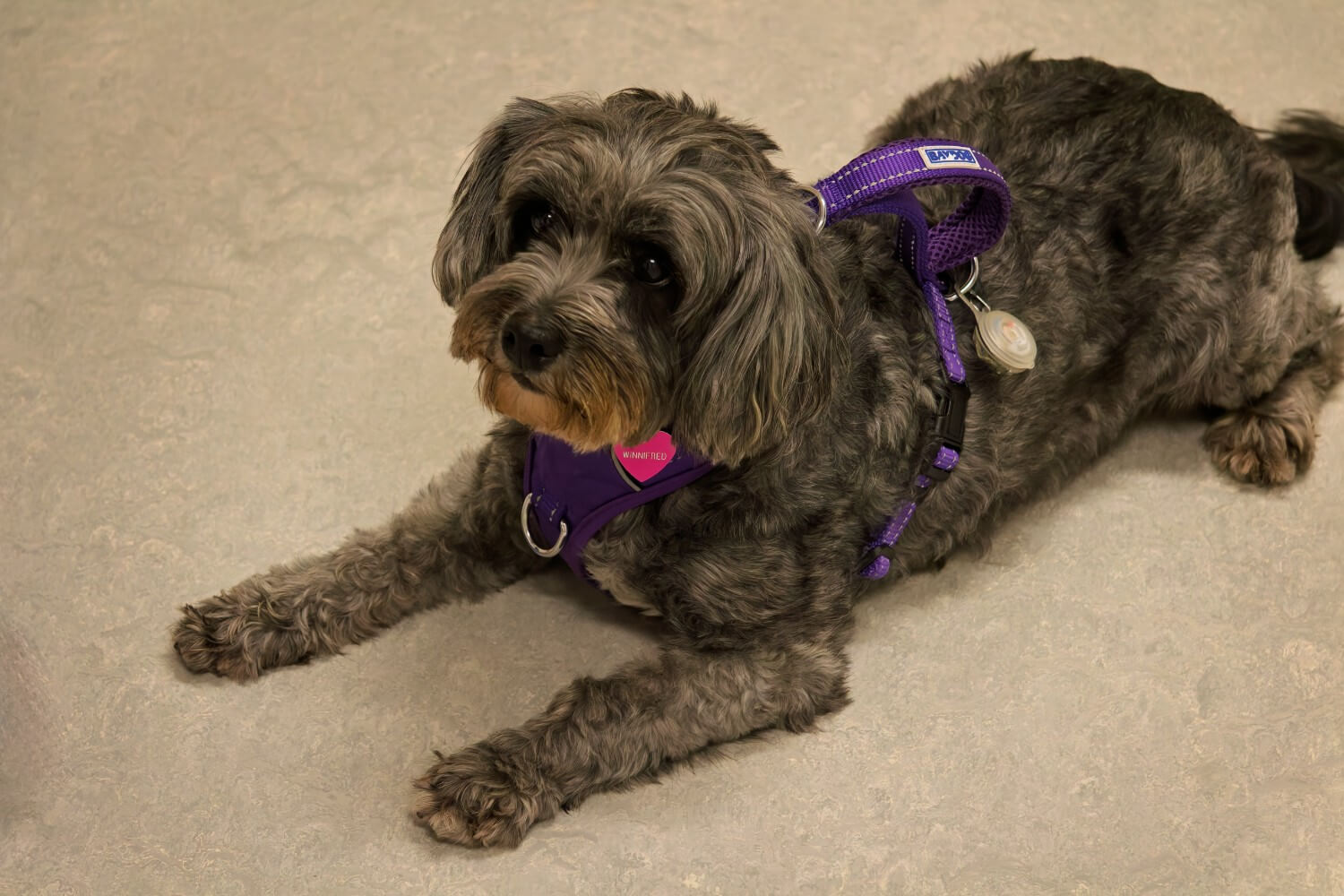
Assistant Professor of Psychology Zachary Silver heads the Occidental College Canine Intelligence Lab, which focuses on observing the cognitive capabilities of dogs and their interactions with humans. In his second year at Occidental, Silver’s research has garnered attention from CBS Los Angeles, LA community membersand the broader scientific community.
Silver said he earned his PhD at Yale University and started Yale’s well-known Canine Cognition Center while working under an advisor that studies primates. Silver said his graduate school studies helped prepare him for his role at the college.
“I’ve been designing projects with undergraduate students [since graduate school], [and] because the field of canine cognition is so young, [there is] so much that we can do,” Silver said. “I’ve been thinking about how I can run my lab as a professor for a long time, and I’ve been really excited and fortunate to be able to do that here.”
According to Silver, humans can gain tremendous emotional intelligence from interacting with dogs.
“Because dogs seem to be so attuned to our emotions, they can help us better understand ourselves,” Silver said. “By responding to our emotional cues, sometimes it clarifies things about what we’re feeling that we might not actually have realized. My dog gives very particular responses to my emotional cues, which can help me see that I’m actually being irrational about why I’m feeling this way.”
Canine participant Winnifred in the Canine Intelligence Lab at Occidental College in Los Angeles, CA. Feb. 13, 2025. Isabel Marin/The Occidental
According to Silver, studying animal cognition should go beyond measuring intelligence and instead focus on understanding different forms of cognitive abilities.
“Dogs are really impressive when it comes to social cognition and thinking about complex interactions between people. In some ways, they rival young humans in their ability to do those sorts of things,” Silver said. “But other forms of cognition like physical reasoning, they’re not quite as impressive compared to other animals that are more evolutionary designed to succeed in those environments.”
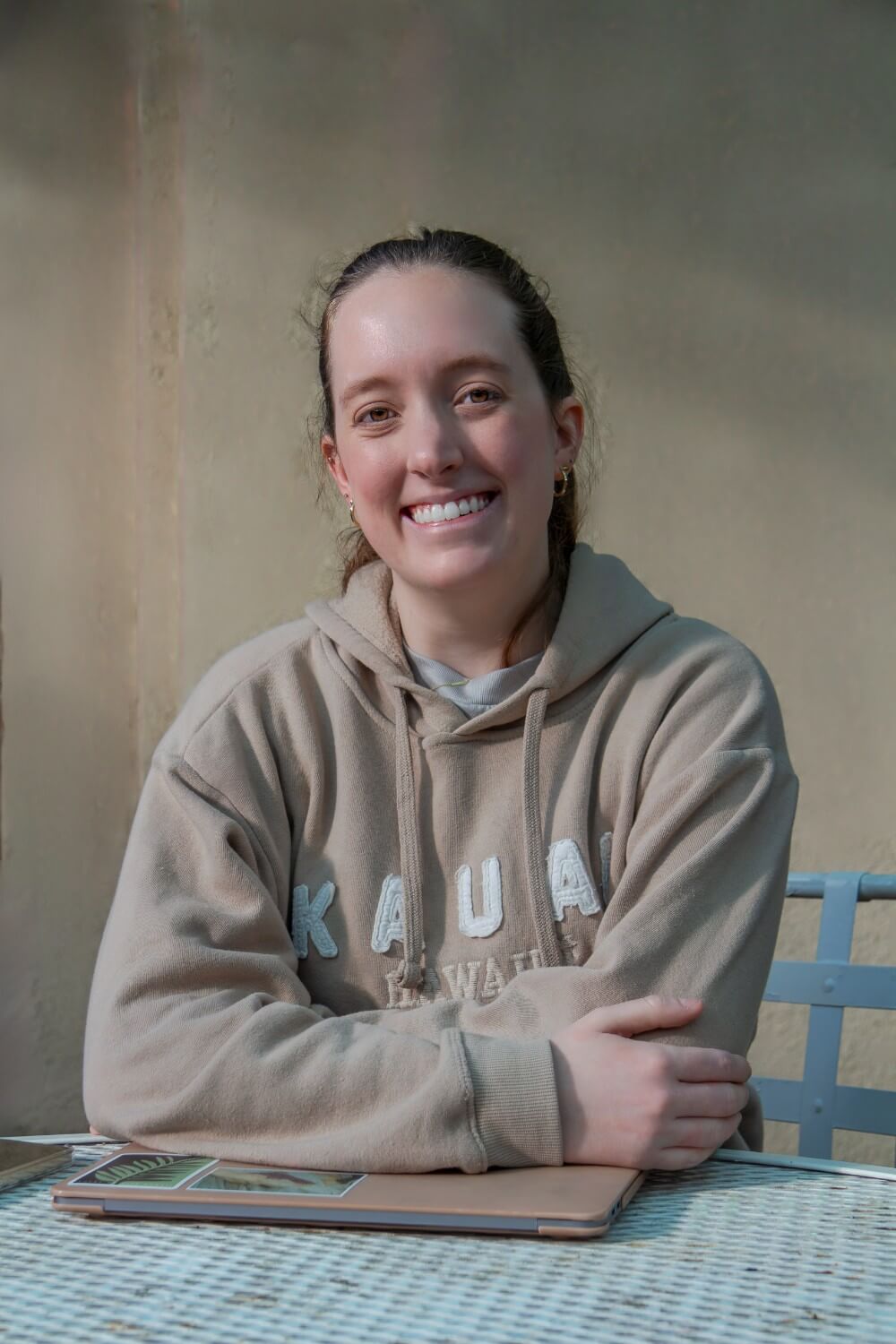
Camden Foster (senior), a psychology major leading her own honors research project within Silver’s lab, said she recommends working in Silver’s lab and taking his classes in evolutionary psychology and canine cognition.
“It’s a very unique lab experience compared to other labs that do more work with people,” Foster said. “I would highly recommend. It’s been one the highlights of my time here.”
Camden Foster (senior) on the patio outside the Marketplace at Occidental College in Los Angeles, CA. Feb. 11, 2025. Isabel Marin/The Occidental
Foster said she plans to accept a return offer at a cybersecurity firm in a project management position after she graduates. While she is not pursuing graduate school for psychology, she said her experience in Silver’s lab has helped prepare her for her upcoming job.
“There’s a ton of transferable skills because a lot of it comes down to team communication and staying organized, [like] the mechanics of keeping a lab and keeping it professional, making sure everyone knows what they need to know and knows when to be somewhere they need to be,” Foster said.
Meera Patel (senior) is a member of Silver’s lab and said via text that she plans on practicing medicine after she graduates. According to Patel, working in the lab has strengthened her communication skills and better prepared her for a career in medicine.
“I plan on eventually practicing medicine and I feel like canine research can be applied because there is a wide variety of service animals in the health community,” Patel said via text.
According to Silver, one of the reasons that canine cognition research works so well with undergraduates who are interested in gaining research experience is because of its novelty — the field is only 30 years old. Silver said previous animal psychology work focused on discovering benefits for humans but that his research seeks to help dogs and humans alike.
“I want to ask research questions that will provide benefits to the dogs as well,” Silver said. “A lot of what I’m looking at right now pertains to things that the implications of which we’d be able to use to optimize dog training practices to help them live more effective and happy lives with humans.”
Contact Bennett Michaels at bmichaels@oxy.edu
This article was updated at 1 p.m. March 4 to clarify that Silver started Yale’s Canine Cognition Lab.
Since the first filming on campus in 1920 for thesilent drama film “Cup of Fury,” Occidental’s beloved tree-lined quad and columned buildings continue to appear on big and small screens alike. Over the years, film icons have walked the same path as students walk on their way to economics class. In 2003, College Secretary and Voluntary Archivist Jean Paule compiled a list of motion pictures filmed on the campus, which is now available through Special Collections.
On the cover of Time Magazine’s August 1932 issue, four Marx brothers chuckle at the camera on Patterson field, filming “Horsefeathers.” Paramount’s “She Loves Me Not” brought “White Christmas'” Bing Crosby to the school in 1934, through which he gifted the “Tiger Song” to the college, which was written for the film and never used. Judy Garland, best known as Dorothy from “The Wizard of Oz,” shot her 1936 film debut on campus in “Pigskin Parade.”Jane Fonda, who recently spoke at the college last fall, debuted her acting career on campus in 1962’s “The Tall Story.” Ronald Reagan and Shirley Temple starred in “That Hagen Girl” in 1947.
Archival image from filming “Cup of Fury” in Special Collections and College Archives at Occidental College in Los Angeles, CA. Feb. 7, 2025. Abigail Montopoli/The Occidental
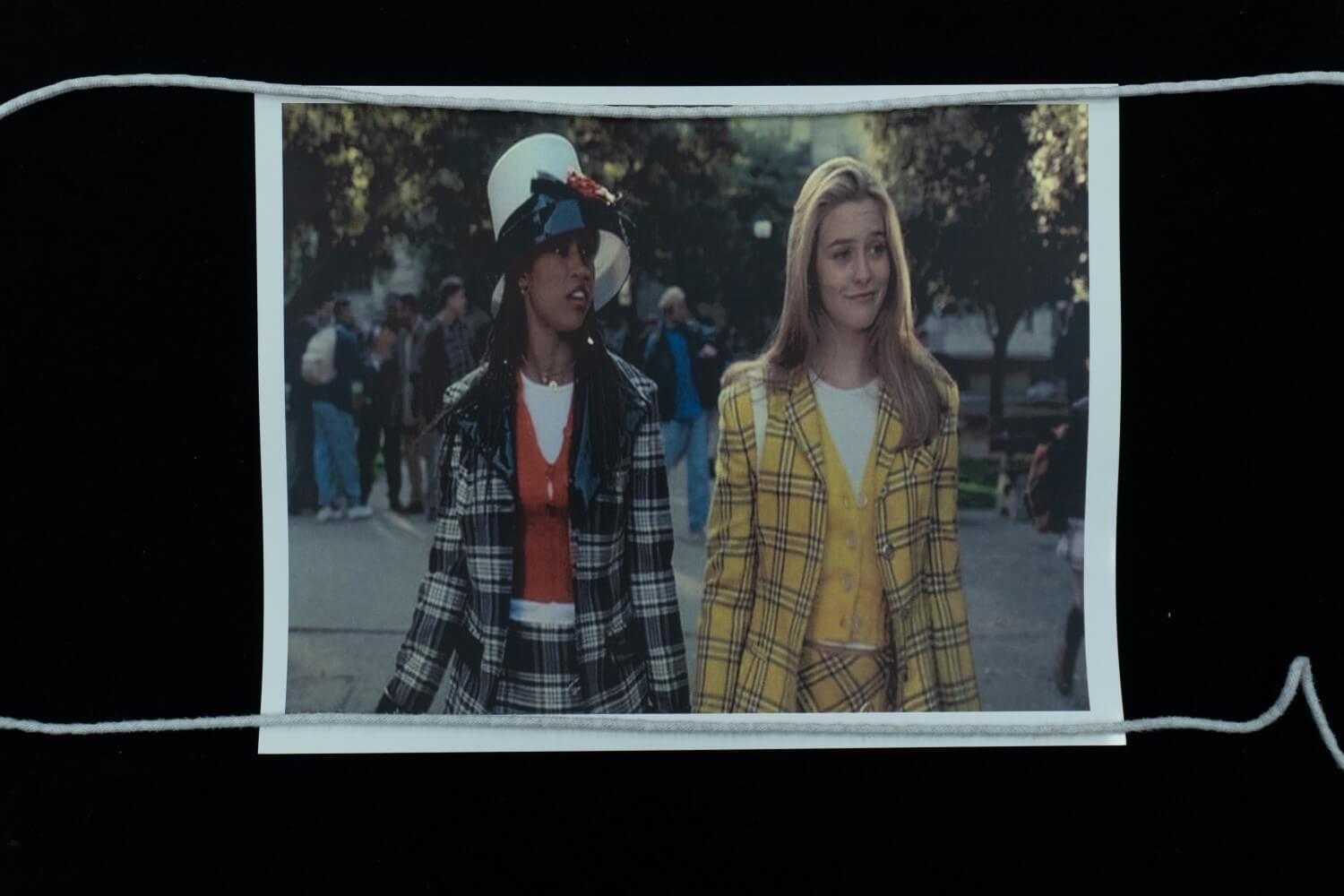
Later on, the 1980s “Back to the Future” star Michael J. Fox filmed Disney’s “Midnight Madness” on campus, followed by the 1984 featureof the Gilman Fountain in “Star Trek III: The Search for Spock.” Ten years later, Cher and Dionne walked the quad in the 1995 romcom, “Clueless,” and the production crew of theteen drama series “90210” transformed Occidental into ‘California University.’
Since the 2000s, romcoms such as “The Holiday” in 2006 and “Made of Honor” in 2007 brought in Patrick Dempsey and Cameron Diaz. Most recently, Steve Carell stood outside Johnson Hall, transformed into a college in Italy, for Apple TV+’s “The Morning Show.” HBO’s “The Sex Lives of College Girls” has changed the campus into Vermont’s Essex College.
Filming Logistics
In 2014, Occidental contracted Unreel Locations to aid in bringing film crews to campus. Co-founders Peg Meehan and Joaquin Nunez said they have a niche part of the location management industry in representing educational institutions and museums and that this type of work is specific to a film-heavy location like LA.
“A location service represents the property, and basically we work as the agent — like an actor has an agent that gets jobs for them and negotiates their contacts — that’s what we do for properties,” Meehan said. “We do it for other properties besides Occidental, but we are known for representing colleges, universities, educational institutions [and] museums.”
According to Program Coordinator at Conference Services and Campus Filming Nicole Sullivan and Director of Catering and Conference Services Jonathan Steiner, Occidental keeps the full amount of charges for any additional or special services requested by production. They said the funds earned by Conference Services go into Occidental’s general operating fund, except for any additional or special services such as staffing Thorne Hall or removing outside banners.
“For example, staffing charges for Thorne Hall Auditorium get transferred to the Theater Department, and Facilities get transferred the fee for the banner removal,” Sullivan and Steiner said via email.
Part of Unreel’s work in the process is managing last-minute, evening or weekend inquiries that may come in and having strong relationships with both the college and the production companies. Meehan said they receive weekly reports of new projects coming up and then reach out to these companies to match them with one of their locations as part of their marketing program. If the production company is interested, they send scouts to the location.
“Scouting is when we bring the location person out, the director, the production designer, the cinematographer — there’s usually a number of scouts for them before they finalize that they want to film there,” Meehan said. “We have a complete file photo of the campus and the different buildings, we send that out to them up front based on what they want.”
Meehan said they work on a commission basis, and Unreel is allocated a specific percentage of the location fee paid to the college by the film’s producers.
Meehan said the turnaround times on filming have shortened recently due to shrinking film budgets, so having a close relationship with Occidental staff and knowledge of the campus is helpful.
According to Meehan, many companies like the columns on Fowler and Johnson Hall, and the most popular locations include the Arthur G. Coons stairs, Johnson Student Center quad, Choi Auditorium, Mosher and Fowler 302.
Archival image from filming on campus in Special Collections and College Archives at Occidental College in Los Angeles, CA. Feb. 7, 2025. Abigail Montopoli/The Occidental
“If we ever can work [at Occidental], it’s usually their first choice,” Meehan said.
Once a production company decides to use Occidental’s campus, Unreel coordinates and manages the logistics and paperwork, including insurance, security deposits and contracts. Sullivan and Steiner work with Master Calendar to review campus events and activities on 25Live and put a temporary hold on locations while waiting for a contract, as well as communicating any information to relevant stakeholders.
“Once things are finalized between the production, the Oxy Conference Services communicates to campus about any parking impacts and if there are specific areas that need to be avoided,” Sullivan and Steiner said via email.
During the filming process, Unreel Locations has site representatives present every step of the way.
“[The site representatives are] there to make sure that they, you know, park only [in] the area that [is] designated for parking, and that everything is done according to the agreed upon contract and that they don’t do more, or if there are any changes, we can check with our contacts at Oxy to see if that’s possible,” Meehan said. “Afterwards, our site representatives there also make sure that everything is put back where it should be and cleaned up. We walk through with our Oxy staff and if there’s anything like, ‘These flowers got trampled by mistake,’ then we make sure they get replaced.”
Part of Unreel’s duties in this negotiation is to ensure the filming remains the least disruptive it can be.
“There’s no denying [it] — when a film crew is there, a film crew is there. They are kind of big, you might have noticed,” Meehan said. “But we try and keep them isolated in special areas.”
While students have been involved as extras in previous productions, such as “The Collegians” and “The College Hero” in 1927, Sullivan and Steiner said many production studios’ policies nowadays do not allow non-production staff to be involved in filming.
“If the production does allow for student shadowing […] [Media Arts & Culture] students can be involved,” they said via email. “Once Conference Services gets notified that the production will allow student shadowing, we notify the MAC Department, and they communicate directly with the MAC students.”
Sullivan said some of her favorite film projects shot at Occidental include “Clueless,” “Real Genius,” “Beverly Hills 90210” and “NCIS.” Steiner also specifically mentioned “Real Genius,” a science fiction comedy film.
“[My favorite is] the ’80s classic Real Genius (1985) with Val Kilmer! I love that it was filmed at Oxy — it brings back childhood memories, and certain parts of campus like the Cooler still have that awesome ’80s vibe,” Steiner said via email. “Oxy feels both nostalgic and current at the same time.”
Meehan said that while filming can sometimes be inconvenient for students, she hopes they enjoy watching the production when it airs.
“When you’re looking something up on a website and you say, ‘Oh, there’s Oxy!’ or you could be looking at reruns of an older show, and you go, ‘Oh, wait a minute, there’s my college!’ […]” Meehan said. “It is fun watching the television shows or movies or even the commercials when you see the final product, and I hope everybody at Oxy feels the same way about that.”
Anywhere, USA
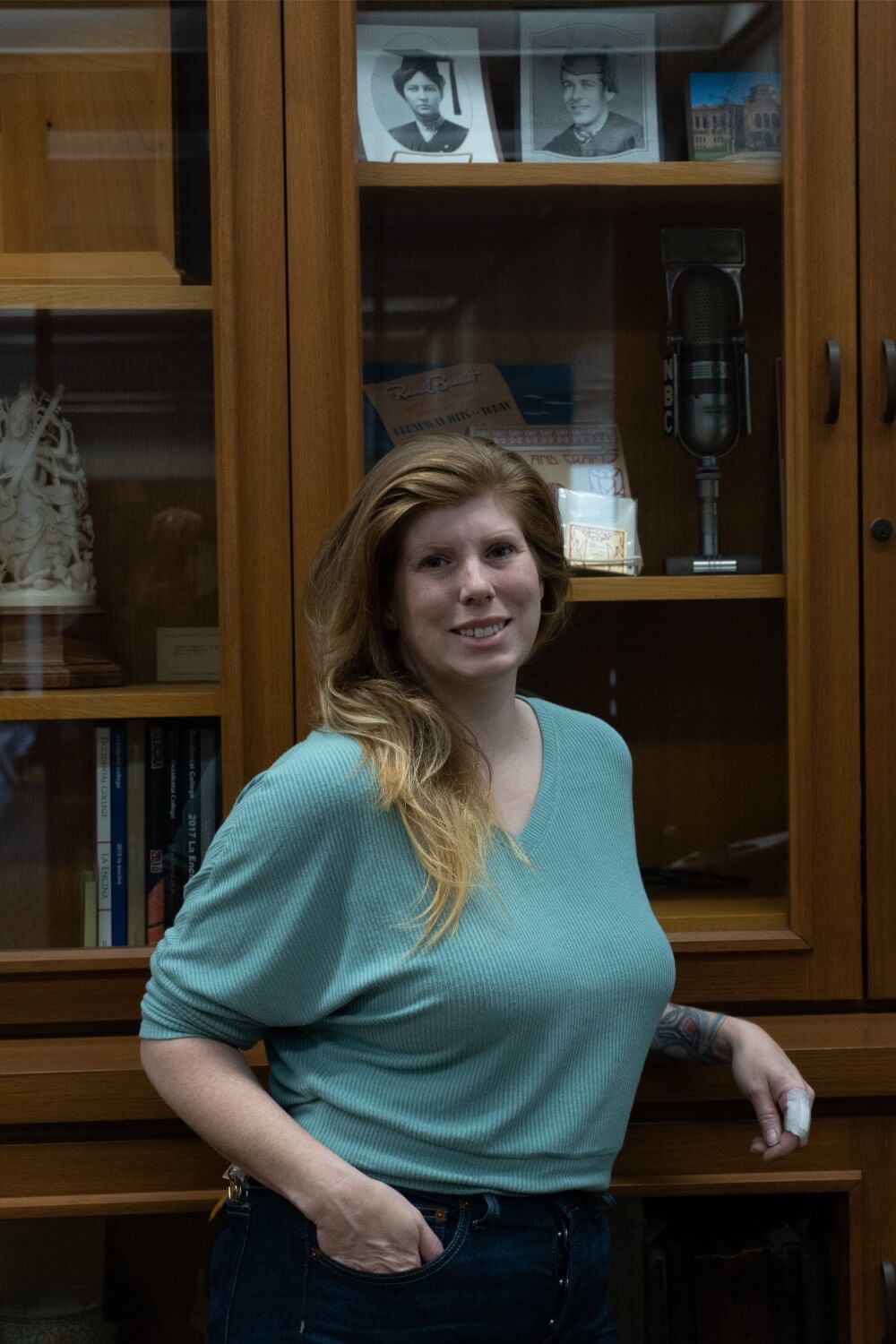
A few months ago, Special Collections Archivist Alanna Quan found herself walking down Occidental’s quad on a sunny day. What she saw, she said, was a young girl roller skating backward with headphones on, friends laying out on the grass and throwing frisbees across the paved walkways.
Alanna Quan in Special Collections and College Archives in the Academic Commons at Occidental College in Los Angeles, CA. Feb. 7, 2025. Abigail Montopoli/The Occidental
“It really did look like the stereotype, in the positive sense, of what LA looks like and what college life looks like. Students on the grass talking to each other, people walking through the quad,” Quan said. “You couldn’t cast it better, and that’s just everyday life.”
Quan said the architectural style of the college is not only iconic of its era, but that it came from a time in the early 1900s when many major institutions were being built.
“The teens through, I’d say, the mid-30s is a lot of the time when they were building schools that looked like this and banks that looked like this and colleges that looked like this all across the country,” Quan said. “There’s something about Oxy’s architecture that speaks to what people think a college looks like, or a bank, or a high school. Which is probably why we get a lot of school-based [films].”
Meehan said the architectural style is not defined by any specific region, which lends itself to the transformation into colleges set in Vermont, Italy or anywhere else.
“Occidental has a beautiful quad, they have beautiful buildings that don’t scream Southern California, they don’t scream the South, they actually can be ‘Anywhere, USA,’” Meehan said. “Occidental has been filmed — besides a general fictitious college, which TV shows do a lot — it’s been NYU, it’s been Berkeley, Yale, the Naval Academy, some Historic Black Colleges.”
Nunez said the look of the main quad, particularly, gives a very strong college look.
“We do a lot of car commercials or Best Buy back-to-school commercials,” Nunez said. “The idea of that is that the parent is dropping off the kid at school […] you’re on the quad and it looks like you’re in a college.”
Quan said this phenomenon of attraction for filming is like the ‘chicken or the egg’ dilemma.
“Is it because it’s in the movies that that’s what [our image] looks like, or is it because that’s what it looks like that the movies want to be here?” Quan said.
Defining the ‘social imaginary’
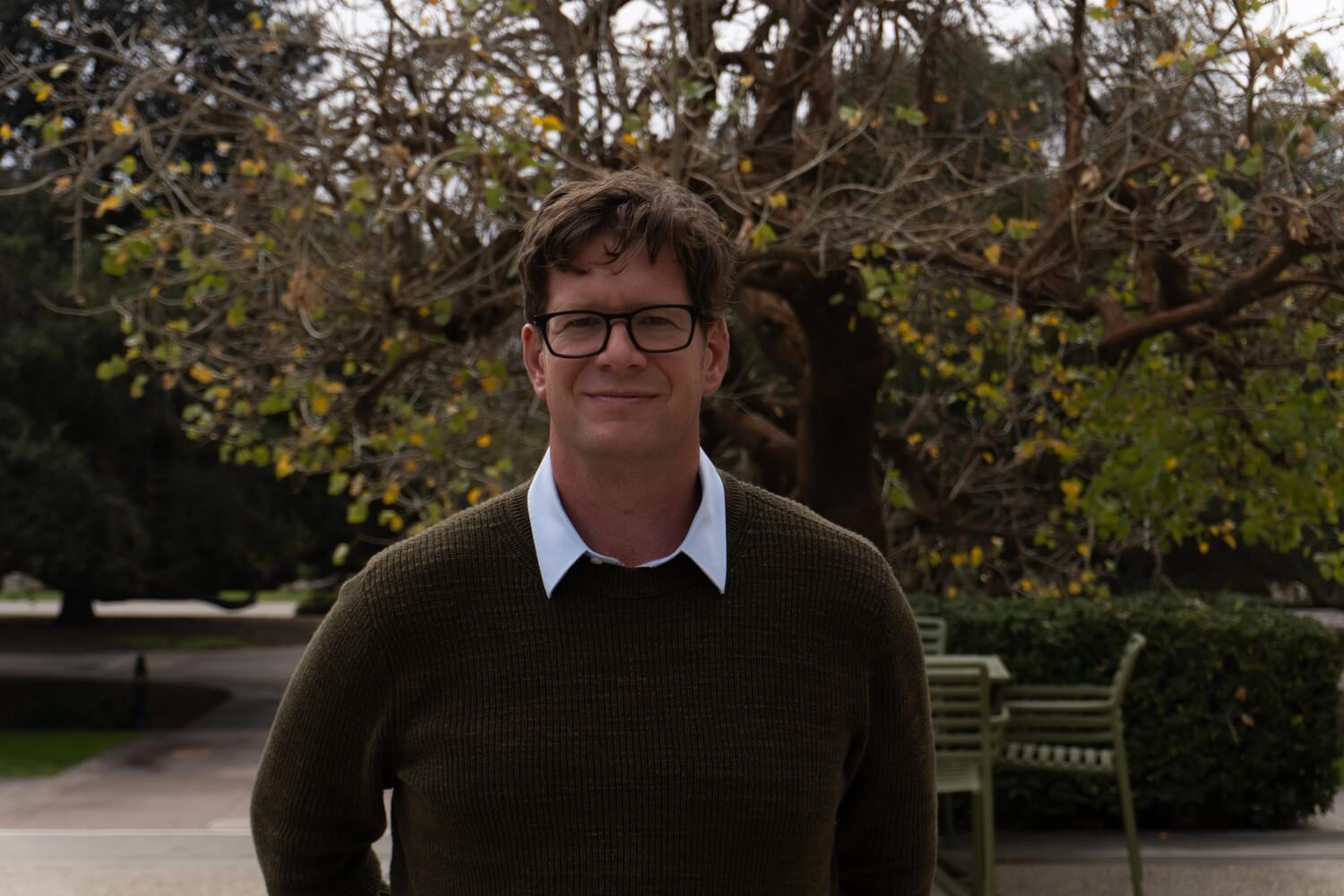
The use of Occidental’s campus in film productions helps to build viewers’ collective vision of the world, whether watching Cher attend Bronson Alcott High School or the cast of “Criminal Minds” solve a college student’s murder. Visiting Assistant Media Arts & Culture (MAC) Professor John Trafton teaches and investigates the relationships between film and history — including how film writes history and tells stories about the past — and how other art and cultural forms shape film.
Archival image from filming “Clueless” in Special Collections and College Archives at Occidental College in Los Angeles, CA. Feb. 7, 2025. Abigail Montopoli/The Occidental
“Part of what I’ve looked at with my work is how Los Angeles, and different parts of Los Angeles, have had their own social imaginaries constructed through film and how film interacts with a constellation of different art forms like painting, photography, tourism, architecture,” Trafton said. “In the case of Oxy, for example, it doesn’t really surprise me that it would be such an ideal filming location for universities.”
Trafton said this social imaginary is part of how our collective vision of concepts is created and evoked.
“Since the beginning of the 20th century, film has shaped what scholars refer to as the social imaginary of places, people [and] time periods,” Trafton said. “The social imaginary is a set of images that are conjured up in our mind when we hear certain words or phrases, or encounter certain image types of visual motifs.”
Professor John Trafton on the Academic Quad at Occidental College in Los Angeles, CA. Feb. 5, 2025. Abigail Montopoli/The Occidental
As for the use of Occidental’s campus in film, Trafton said it provides a vision of an educational experience that does not reflect what the majority of students actually get to experience, especially those in underserved areas.
“It reflects this very idealized educational environment in films and television shows,” Trafton said. “It’s not a very accurate depiction, and it’s worth wondering and maybe critically interrogating why that is — it’s a fantasy.”
Beyond the campus itself, Quan said the frequency of filming in Northeast LA sets a vision often for the ‘average American’ lifestyle.
“When you think of ‘city,’ you’re going to think of the New York City skyline. That’s sort of like any city. When you think of anybody’s middle-class town, you’re going to end up thinking about what Northeast LA actually looks like,” Quan said. “Oxy being one of the oldest institutions of this type in Northeast LA is [some] of why Oxy is a big part of that ‘What does it mean to be American?’”
Quan said the demographics shown living or attending these film settings are not those you would see in real life — college students or couples in their early 20s living in million-dollar homes, for example — and this speaks to a dichotomy between values and lifestyle.
“I can’t help but believe that it informs how American culture conceives [of] the middle-class lifestyle — the promise of the American dream that we’re all supposed to be able to achieve if we work hard enough,” Quan said.
If you have a passing interest in the world of sports, it’s likely that you’ve heard about the LA Dodgers’ recent dominance. After spending over a billion dollars in the 2023 offseason (including $700 million to sign two-way sensation Shohei Ohtani) the Blue Crew had a season to remember, besting theNew York Yankees last October to win their eighth World Series in franchise history.
For most teams, the offseason following a championship is rather uneventful. While 29 other teams scramble to match up to the competition, the champions generally prefer to stand pat, re-sign their key players and wait for the next season to begin. It’s sports conventionalism at its finest — why mess with a good thing? But as we’ve learned in the past couple of years, this Dodgers team is anything but conventional, and their actions this offseason have shown the entire league that the Dodgers don’t just want to win — they’re out for blood.
The Dodgers’ relentless drive to improve has resulted in the team breaking out the war chest and assembling a squad for the ages. Since December, the team has signed two-time Cy Young winning pitcher Blake Snell, added two All-Star closers in Tanner Scott and Kirby Yates and bolstered their outfield depth with Michael Conforto. If that wasn’t enough, the team also landed Roki Sasaki — the most hyped uppitching prospect in years — for pennies on the dollar, as international signing rules limit Sasaki to earning just $25 million on his contract. Couple these signings with the team re-signing nearly every player from last year’s team, and you have a baseball Death Star that makes the rest of MLB look like a little league squad. It wasn’t a cheap offseason by any means (as the Dodgers shelled out nearly $500 million), but it’s a small price to pay to assemble what is quite possibly the most talented baseball team of all time.
Unsurprisingly, the Dodgers’ spending spree has drawn the ire of the baseball world. It’s not shocking that a league full of notoriously stingy owners would balk at such extravagant expenditure, but the past few months have seen an unprecedented level of Dodger hatred. Anonymous executives from other clubs have even accused the Dodgers of colluding with unsigned players — a claim that MLB investigation found to be baseless. It seems that rather than matching the Dodgers’ ambition, MLB executives would rather cry foul as their teams continue to lag behind. The thing is, the Dodgers haven’t broken any league rules. They’ve simply chosen to spend when other teams do not. Nothing is stopping these teams (and their rich ownership groups) from acquiring talent as the Dodgers have — nothing except their own reluctance to open their checkbooks.
Even though the Dodgers have technically operated within the rules, many draw their criticism from other teams simply not having the spending power and franchise allure that they do. Despite Commissioner of Baseball Rob Manfred voicing his opinion that what the Dodgers are doing is not bad for the sport, many are still raising the question of whether the Dodgers have “ruined baseball.”
One valid critique is the argument over deferred money — the idea that a player will take less money in the front end of his contract to allow the team to spend more in the present, creating incredibly backloaded deals that pay players well into their 40s and even 50s. The Dodgers have over $1 billion in deferred payments while no other team has more than $50 million. On average, Dodgers’ stars have between one-fourth and one-third of their contract money deferred, unless, of course, your name is Shohei Ohtani and $680 of that $700 million is deferred (which was actually Ohtani’s idea). While deferrals allow the team to spend more in the short term and continue to field a championship roster, not every team may be willing to take such financial risks. Deferrals are not a new concept and have been commonplace in the Collective Bargaining Agreement (CBA) for decades. However, this may be subject to change as the CBA expires in December 2026. Well-known examples include the contracts of Ken Griffey Jr, Bruce Sutter, and the legendary Bobby Bonilla whose name is enshrined in history for the deferred payments he still receives from the Mets yearly, despite not touching the diamond since 2001.
Deferrals may not be a new idea, but being so flush with cash in recent years has allowed the Dodgers to level up the concept to a new height not previously thought attainable. Interestingly, the Dodgers no longer have the largest payroll in baseball according to Spotrac, after being recently usurped by the New York Mets, who spent $765 million on a 15 year deal for Juan Soto among other smaller signings. Obviously, if you add the deferred money, the Dodgers would blow every other team out of the water. This has prompted some to propose something of a deferred money tax that would function similarly to the regular luxury tax, where the team would be taxed a portion of the deferred money remaining on the contract yearly. Have the Dodgers become so powerful that league rules which specifically apply to only one team need to be implemented?
What’s more likely is that the Dodgers have created such a powerful winning culture in only a few years that other fans simply can’t stand it. Every new free agent that signs with the team has the same reason: it was the best available option to win. Only a year removed from being called “playoff chokers,” the Dodgers behemoth threatens to strong-arm themselves into a dynasty of World Series championships.
Contact Mac Ribner and Ben Petteruti at ribner@oxy.edu and petteruti@oxy.edu