Home Blog Page 44

Oxy Live! with Kip Thorne highlights ‘Interstellar’ and physics advancements

Richard P. Feynman Professor of Theoretical Physics, Emeritus at the California Institute of Technology and co-awardee of the 2017 Nobel Prize in Physics Kip Thorne sat down for a conversation with Paul Holdengräber in the third installment of the 2024–2025 Oxy Live! speaker series hosted by Oxy Arts Feb. 18.

Before the conversation began, Holdengräber played a clip of Ray Bradbury reading the poem “If Only We Had Taller Been” at CalTech to celebrate the landing of the Mariner 9 probe on Mars.

“Let me just say that brings back memories,” Thorne said. “I was in the audience that day, I had just arrived as a professor.”

Thorne said that while growing up in Logan, Utah, his first desired career was that of a snow plow driver, but that changed after his mother took him to a lecture on the solar system when he was 8.

“I just fell in love with the idea of the solar system,” Thorne said. “[My mother] nursed my interests, and we did projects together.”

Thorne said he discovered the book “‘One Two Three…Infinity” in a used bookstore in Salt Lake City.

“I was blown away by the concepts of relativity, warped space-time,” Thorne said. “But, more than anything else, by the understanding that the universe is controlled by the laws of physics and the idea that there was a set of physical laws.”

The conversation then turned to the book “The Warped Side of Our Universe,” with verse authored by Thorne and drawings by Associate Professor of Art at Chapman University, Lia Halloran.

“If you want to really feel like you understand [something] and be able to see well beyond the horizons of human knowledge, you translate the mathematics into pictures and extrapolate,” Thorne said.

According to Halloran, she met Thorne at a cocktail party more than 15 years ago, and Thorne told her that there was a filmmaker interested in making a film about his science.

“[Thorne] was interested in having someone who could conceptually understand what he was getting at and then visualize what he was saying,” Halloran said.

Halloran said she made drawings of Thorne’s descriptions in a scrapbook that Thorne would take to the director of the movie that would become “Interstellar.” Thorne served as a scientific consultant and executive producer for the film.

“I wasn’t part of the making of ‘Interstellar,’ but what I did do is I helped [Thorne] use my drawings as a tool to communicate what he wanted the movie to be like to [Spielberg] and then eventually [Christopher] Nolan,” Halloran said.

According to Halloran, some of the drawings that she made early on in her discussions with Thorne are contained in Thorne’s book “The Science of Interstellar.” Halloran said the book originally came out of an article that Thorne was invited to write for Playboy magazine, where Halloran drew the art for the magazine.

“[T]he paintings and the article were presented to Hugh Hefner, and he personally rejected my paintings because the women weren’t presented in the traditional representation of Playboy,” Halloran said.

After taking the kill fee, Halloran said the collaboration with Thorne grew nonetheless.

During the presentation, Thorne described the merger of two black holes that happened a billion years ago as images that Halloran drew appeared on screen.

Audience members begin to take their seats before “Oxy Live! With Kip Thorne” in Thorne Hall at Occidental College in Los Angeles, CA. Feb. 18, 2025. Talia Goddard/The Occidental

According to Meldia Yesayan, director of Oxy Arts, two pieces in the current Oxy Arts exhibition are from the Laser Interferometer Gravitational-Wave Observatory (LIGO) project. Thorne’s contributions to LIGO were cited by the Nobel committee as the reason he was awarded the prize alongside Rainer Weiss and Barry Barish.

“One is an image of a black hole, and the second is an audio file of two black holes colliding,” Yesayan said via email.

Thorne and Holdengräber toured through Thorne’s early career studying at Princeton University under John Wheeler. The conversation soon turned to a discussion about the challenges Thorne’s team faced when building LIGO.

“The waves could have been so weak that you had to be able to measure motions of these mirrors to the accuracy 100 million times smaller than an atom, or it might be one million times smaller than an atom,” Thorne said.

According to Thorne, the LIGO team was able to measure the mirrors so precisely that quantum fluctuations would affect their measurements. Thorne said to resolve this, a graduate student named Carl Caves and CalTech physicist Jeffrey Kimble figured out a method to control vacuum fluctuations, giving birth to the field of quantum precision measurement.

“[Y]ou go in and you manipulate the quantum state of your instrument in the process of making measurements,” Thorne said. “You have to have control over the probabilities that the mirror is going to be here versus there.”

Alisa Clayton (first year) said the discussion about “Interstellar” piqued her interest.

“They showed a video of [Thorne] working on it, and he was doing all the calculations,” Clayton said. “They made the black holes in CGI, but they wanted them to look real, and so they did all the science to figure out if they were real or not, and I thought that was so cool.”

At the end of the conversation, Thorne said he was optimistic about humanity’s future.

“Overall, in my lifetime, there has been a remarkable journey of learning to understand the universe, learning about the beauties of the universe and using technology to make life better for humanity,” Thorne said.

Contact Avinash Iyer at iyera@oxy.edu

Loading

Artist of the week Andrew Eisenberg moves from improv to stand-up, even if he bombs

Andrew Eisenberg (sophomore) grew up surrounded by comedy, tagging along as a child with his father who taught improv class. He had performed improv throughout middle and high school and is now a member of the Fantastiprov improv troupe at Occidental. Eisenberg said he was inspired to start performing stand-up comedy locally after he saw Margaret Cho’s performance at Occidental.

“One of the craziest experiences of my life was my first open mic on a Tuesday afternoon in Los Angeles, California,” Eisenberg said.

According to Eisenberg, his comedic process has changed over time. He said for his very first open mic, he wrote joke ideas he had been compiling.

“I carry with me a small notebook, and I write down anything that I think is remotely funny and then I will usually write down more of that joke and try to do a voice memo,” Eisenberg said.

Eisenberg said he continues modifying material before, after and even during the show.

“I film every open mic I go to, and then look back at the film and see what got the most laughs,” Eisenberg said. “I’m like ‘OK, I like this part of the joke, and this part isn’t really getting laughs, so it doesn’t need to be there.’”

Eisenberg said he has learned to adapt to the crowd by improvising on stage.

“I do a joke about Romeo and Juliet about the age difference, where its like ‘13 is too young — even for Matt Gaetz,’” Eisenberg said. “I think the way I said his name, it took a minute to recognize who I was talking about, so nobody laughed. Immediately I was like, ‘OK, we like him here?’ and that got a big laugh.”

When writing his own material, Eisenberg said he takes note of how he presents himself to the crowd.

“A lot of times I’ll be reading news articles and that’s where I’ll get an idea for something that’s funny, but trying to figure out ways to not come across as this super-educated 20-year-old who thinks he’s better than everyone,” Eisenberg said. “The Los Angeles comedy scene is oversaturated with white men.”

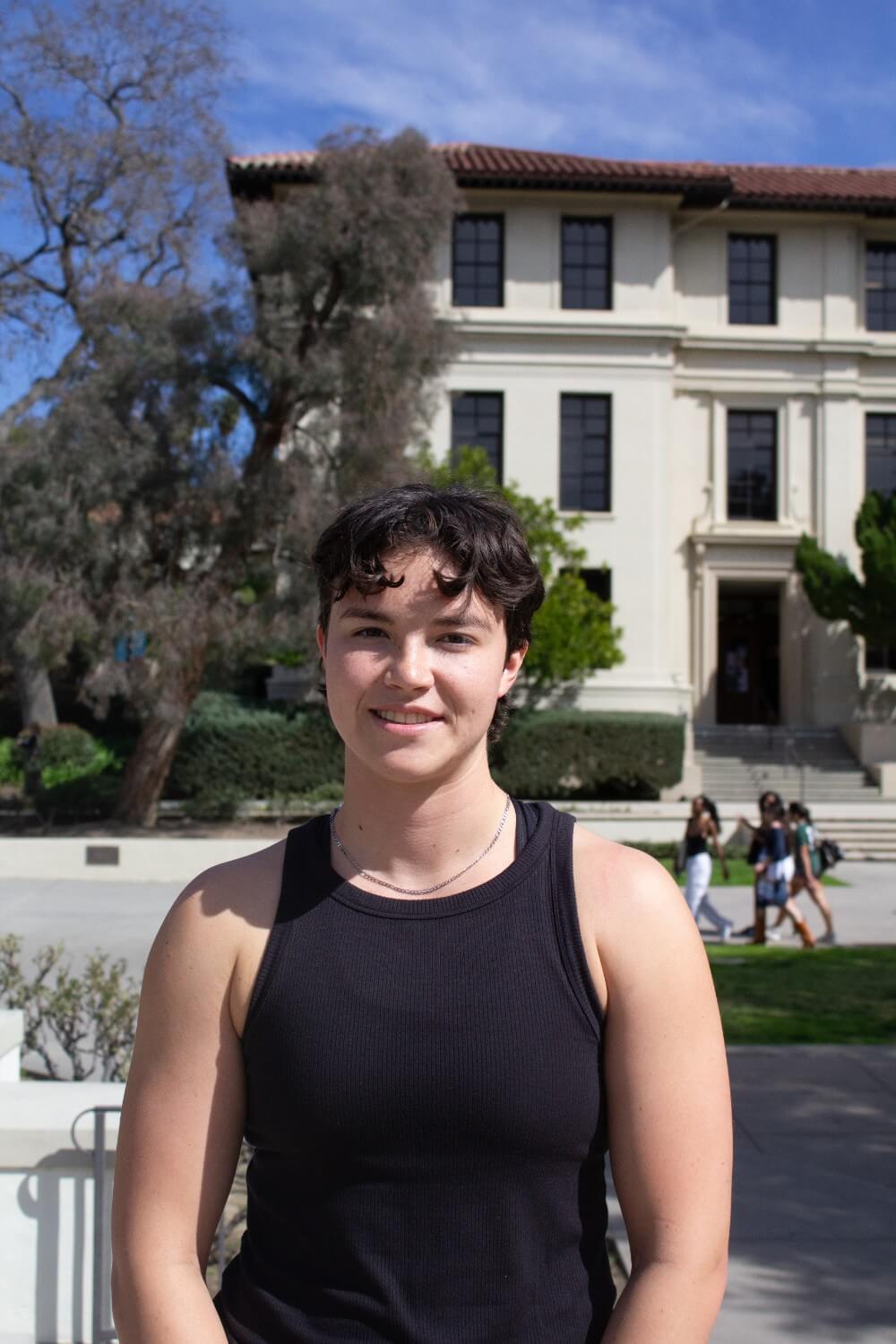
Andrew Eisenberg (first year) outside of the Mary Norton Clapp Library at Occidental College in Los Angeles, CA. Feb. 17, 2025. Marty Valdez/The Occidental

In addition to performing solo sets around LA, Eisenberg is part of Fantastiprov, Occidental’s improv troupe which performs on and off Occidental’s campus. Fellow Fantastiprov member Pika Whitman (junior) said she admires Eisenberg’s creativity and courage on stage.

“He’s one of the more risqué members of the troupe and I think does a little more thought-out jokes,” Whitman said. “It’s just very specific jokes.”

Eisenberg said he takes inspiration from comedians Nate Bargatze and James Acaster, appreciating how they tend not to make jokes at the expense of others.

“I feel like Andrew focuses a lot more on truly finding what’s funny in the world rather than making fun of people,” Whitman said.

Jonathan Henry (sophomore) said he admires Eisenberg’s stage presence after having seen him at his first open mic.

“When he gets up on stage there’s no sense of him being nervous or not knowing what he’s doing, which I think is a sign of good stand-up,” Henry said.

Whitman said it is cool to watch Eisenberg do a different form of comedy that is not improv.

“It’s not my thing, but it’s really cool to see him in his element doing something completely different,” said Whitman.

As a newcomer to the standup world, Eisenberg has developed a method to combat anxiety.

“I know that I’m funny and enjoy the bombing. So whatever happens, I still have worth and value as a human being, and it’s important to remind myself of that,” said Eisenberg.

In starting to pursue something like improv, Eisenberg said he has one piece of advice.

“Just jump into it,” Eisenberg said. “You’re allowed to be new.”

Contact Mars Gallati at gallati@oxy.edu

Loading

Opinion: Multiracial students need a space on campus

Although I might not look like it, I’m culturally Chinese. My mom is Chinese, my dad is white. My sisters and I were raised in a pretty stereotypically Chinese way. We went to Chinese school, took piano lessons, went to weekly math tutoring, celebrated Lunar New Year and spent our summers filling out workbooks to “get ahead” for next year. We frequently went to dim sum, and some of my favorite memories of sharing meals with my family consist of sitting around a lazy Susan and ticking off the boxes of all the items I want to order.

While I take great pride in my biracial identity, it is also an insecurity of mine and a part of my identity that I am trying to feel more confident and comfortable in. As a white presenting but culturally Chinese person, it is hard to feel that I completely belong in some spaces that are designated for people of either one or the other culture.

My sisters and I each look like varying levels of Wasian. On the spectrum of Chinese to white, my oldest sister is very Chinese-looking and my younger sister is somewhat so — and anyone who knows me will attest that I’m solidly on the white end. My sisters and I also each connect with our Chinese heritage in different ways. My older sister, for example, studied abroad in Shanghai over a summer, continued learning Mandarin long after I stopped and wants to live and work in China in the future. She and my younger sister were both leaders of the Asian Culture Clubs in their respective high schools. I was a member of mine, but I didn’t feel comfortable applying to be a leader as I felt the club should have an Asian-appearing figurehead. When I visit China, or even walk through various Chinatowns in the United States, I feel like my mom and sisters look like they belong while I’m trailing behind with my dad, sticking out from everyone else.

At Oxy, we have several racial and ethnic student identifying clubs, like the Black Student Alliance, Latine Student Union and Asian Pacific Islander Desi American Association. But more than 11% of our student body identifies as mixed race, and yet we haven’t had a mixed student club this academic year. There was a Mixed Identifying Student Club (MISC) last year, but it is now inactive.

Especially with Trump’s executive order targeting DEI initiatives in schools, it is more important than ever to ensure students on campus can continue to hold racial and ethnic affinity spaces and clubs. The Trump administration has given schools and universities an ultimatum to disband DEI initiatives or risk losing federal funding. Although President Stritikus assured Oxy students and staff last week in an email that the executive order will not directly affect spaces and individuals on campus, it is obvious that students within these targeted communities may be feeling vulnerable and frightened about the state of affairs in our nation.

Reflecting on my own experience of being multiracial, I am so grateful my parents were able to marry in 2001. It is important to remember that interracial marriage was only made legal in all states in 1967 when the Supreme Court ruled in Loving v. Virginia that state laws banning interracial marriage were unconstitutional. Now, interracial marriages are more and more common. Since the overturning of the miscegenation laws, the percentage of interracial newlyweds has increased by more than a factor of four. And as such, the prevalence of mixed-race people is also shooting up. According to the Pew Research Center, the population of adults with a white and Asian background increased by 87% just between 2000 and 2010.

This increase of mixed people is certainly reflected at Oxy. Multiracial people, even those of the same ‘combination’ of races, can look extremely different from each other. Just like people of one single race, we are varied and have nuances within our mixed-race identity. My personal ethnic identity does not stem from my appearance, but my lived cultural experiences. I view my identity as a lifelong journey where I will allow myself to change how I feel about my mixed identity.

Navigating a mixed identity, whether racial or not, can be difficult, as I’m sure many people can relate to. We may all look different, but I have a feeling many of us face the same challenges of not feeling like they belong in one space or another. And this highlights one key statement: we need to bring the Mixed Identifying Student Club back. Clubs at Oxy come and go as students graduate or turn their interests elsewhere, but having a space where multiracial students can support one another, find a sense of community, celebrate our multiple cultures and find that sense of belonging is necessary.

Contact Ashley MacDonald at macdonalda@oxy.edu

Loading

Opinion: Movie magic lies in the theaters—let’s save them

When I was a young teenager, I loved going to the movies. Every weekend I would check which films were in theaters and buy tickets for the one that sounded most interesting. I would even see the same film multiple times in theaters, finding as many people to go with me as possible. It was, and still is, one of my favorite things to do. Unfortunately, I only went to the movie theater four times in 2024, and I am attempting to rectify that error this year — but this isn’t something that only I have experienced. Many people have been going to the movies less in recent years, and some are starting to worry that the era of the movie theater might be coming to an end.

The decline of the movie theater has been going on for many years, but there is one event that happened to speed up the process: the COVID-19 pandemic. When quarantine first started, no one had any idea how long it would last. With people spending the greater part of a year in lockdown, it was inevitable that an industry so reliant on in-person attendance would struggle. Movie theaters were virtually out of business during this time and have since failed to regain their former glory.

While movie theaters suffered tremendously from quarantine, the opposite was true for streaming services. Everyone being stuck at home unable to watch films in theaters meant that streaming services had more business than ever before. The concept of home viewing was still taking off when the pandemic first hit, with Disney+ and Apple TV+ launching in late 2019. Once quarantine started, there was a surge in streaming sites from companies who saw the opportunity ahead of them. HBO Max (now called Max) launched in May of 2020, Peacock launched a few months later in July and Paramount+ launched in March of 2021. This is no coincidence — the companies knew how to capitalize on a newly housebound audience. And once the audiences got used to streaming, it quickly became their new normal.

As lockdown requirements lifted, people were still largely uncomfortable with gathering in public places, especially ones as tight and enclosed as movie theaters. Streaming services were on the rise with no signs of slowing down. Eventually, films going straight to streaming without a theatrical release became more common. “Glass Onion,” the highly anticipated sequel to “Knives Out” (2019), had a one-week theatrical run in November 2021 before it was released on Netflix that December.

With so many films available at their fingertips, audiences who would have otherwise gone out to the movie theaters began to skip out on theatrical releases and wait for the streaming release. Quarantine is now nearly four years behind us, and movie theaters are still not receiving anything close to the turnouts they once had for most films that are showing.

In recent years, we’ve also been seeing a decline in the separation between theatrical and digital releases for mainstream films. Where audiences would once have to wait months or even a year for a film to be released digitally, the wait can now be as little as a couple of weeks. A recent example of this is the film “Companion,” which was released in theaters Jan. 31 and was available to buy or rent on select sites as soon as Feb. 18. Some films are even released theatrically and digitally on the same day.

If the gap between releases is becoming non-existent, what reason do people have to go to movie theaters?

While there has certainly been a visible decline in movie-going since 2020, there have been several notable films that have managed to bring sizable audiences back to theaters. Perhaps the biggest example of this was the phenomenon known as “Barbenheimer,” the nickname given to the simultaneous release of “Barbie” and “Oppenheimer.”

Barbenheimer quickly became a staple of pop culture in the summer of 2023, with audiences creating memes out of the two seemingly opposite films being released on the same day. Eventually, the joke became an incredible marketing strategy. People started planning to see both movies on the same day, arguing over which one would be better to watch first, coordinating outfits to be pink or black and making an entire day out of it. Audiences came to see both films in droves, causing “Barbie” to gross over 1 billion dollars worldwide and “Oppenheimer” to gross nearly the same amount.

The success of Barbenheimer was a much needed spark of hope for the movie theater industry, although there are fears that it was a one-time achievement that no film will be able to reach in the near future. Still, there is a possibility that movie theaters can be saved and people can be reminded of how magical theaters truly are.

The concept of not having to leave the comfort of your home to watch a film is certainly enticing, but the atmosphere of a movie theater cannot be replicated. I love hearing the reactions of people around me and their initial thoughts as the credits roll. I love how you can feel a sense of community without really having to talk to those around you. I love the smell of popcorn and hearing the laughter and screams from other theaters.

Of course, movie theaters are not perfect and have a few issues of their own — COVID-19 is still a real danger and prices are constantly increasing — but I can only hope that one day movie theaters will return to their prime.

To quote Nicole Kidman’s iconic AMC ad, “We come to this place for magic.”

Contact Izzy Shotwell at shotwell@oxy.edu

Loading

Opinion: We still need zzzzz’s, even on the weekends

It’s Friday night, 9:30 p.m. I’ve just come back to my dorm from a series of long classes and club activities. I live in Braun, so I’ve just climbed from the lowest point on campus to arguably the highest point as well. I’m so, so tired and just want some time to myself — get into bed early, even.

Yet as soon as I open the door into Braun, I hear a cacophony of noises. People shouting, screaming and partying like it’s the last night of their lives. People are banging on doors and the walls with the rhythm of the blasting music. Groups congregate in the narrow hallway, debating where they should go and what they should do, voices stacking on top of each other.

The noise doesn’t get any quieter when I push through the people, quickly swipe my card, enter the code to my door and shut it behind me. It’s just another weekend night at Oxy, right?

I’m not so sure it should be.

Sleep isn’t a trivial activity and shouldn’t be treated like one. It keeps us alive and productive and also gives us the energy to party. Who would want to give that up? Whatever sleep we as students get is precious, and neither you nor I should have to budget hours for such an important function of the body.

What’s the big deal with me wanting to sleep, then?

More than 70% of students get insufficient sleep, and 50% report daytime drowsiness. This not only impairs students’ ability to learn and maintain strong academic performance, but it also causes mood fluctuations and increased risk of car crashes.

Furthermore, sleep has a strong link to mental health and mood. Data collected through the National College Health Assessment shows a strong correlation between insufficient sleep and depression, feeling overwhelmed and heightened anxiety.

Nothing good comes out of lacking sleep, whether it be for your physical health, mental well-being or quality of life in general. You can imagine that partying right in front of your door doesn’t help.

Sleep, then, should not be compromised like it is — and my experience is not an isolated incident either. Many of my friends often complain late in the night about how loud the parties in their respective dorms are.

One friend of mine used to live in Bell-Young and has since moved to Erdman due to accommodations for their disability. They report that the walls in both dorms are incredibly thin. On several occasions, they have heard people yelling both inside and outside the dorms, playing the piano or talking at full volume in the common room where their room used to be next to. Sometimes this goes on until 2 a.m.

This is an age-old issue. People have been complaining about noise affecting their sleep for practically forever, even beyond college dorms — and it seems we’ve just accepted that we’re never going to get good sleep.

The most common response I hear from people whenever I or someone else complain about the level of noise in our dorms is “You live in a dorm, what do you expect?” or “Yeah, but you can’t really control what people do and say in their free time.”

I understand that. It is a college dorm where young adults have agency over themselves, and it is within everyone’s rights to gather and have fun. However, it is ironic to argue for this culture of accepting people’s choices when it takes away the choice of going to bed early. In addition, why should we just “accept” that we’ll never meet a basic need closely tied to our physical and mental well-being? That sounds absurd.

I’m not calling for some crackdown from the administration or raising the responsibility of RAs. In my experience, if anything, stricter regulations usually fail to achieve their goals. I’m also not saying that we should stop partying or gathering at all. I simply would like us to start taking responsibility and upholding some form of basic respect for people who want to sleep. Sometimes, being a bit more aware of our surroundings and quieting down to an appropriate level can be all it takes to create a better, more well-rested community.

Contact Felix Yi at fyi@oxy.edu

Loading

Local book club uplifts QTBIPOC+ voices and holds Black History Month highlight

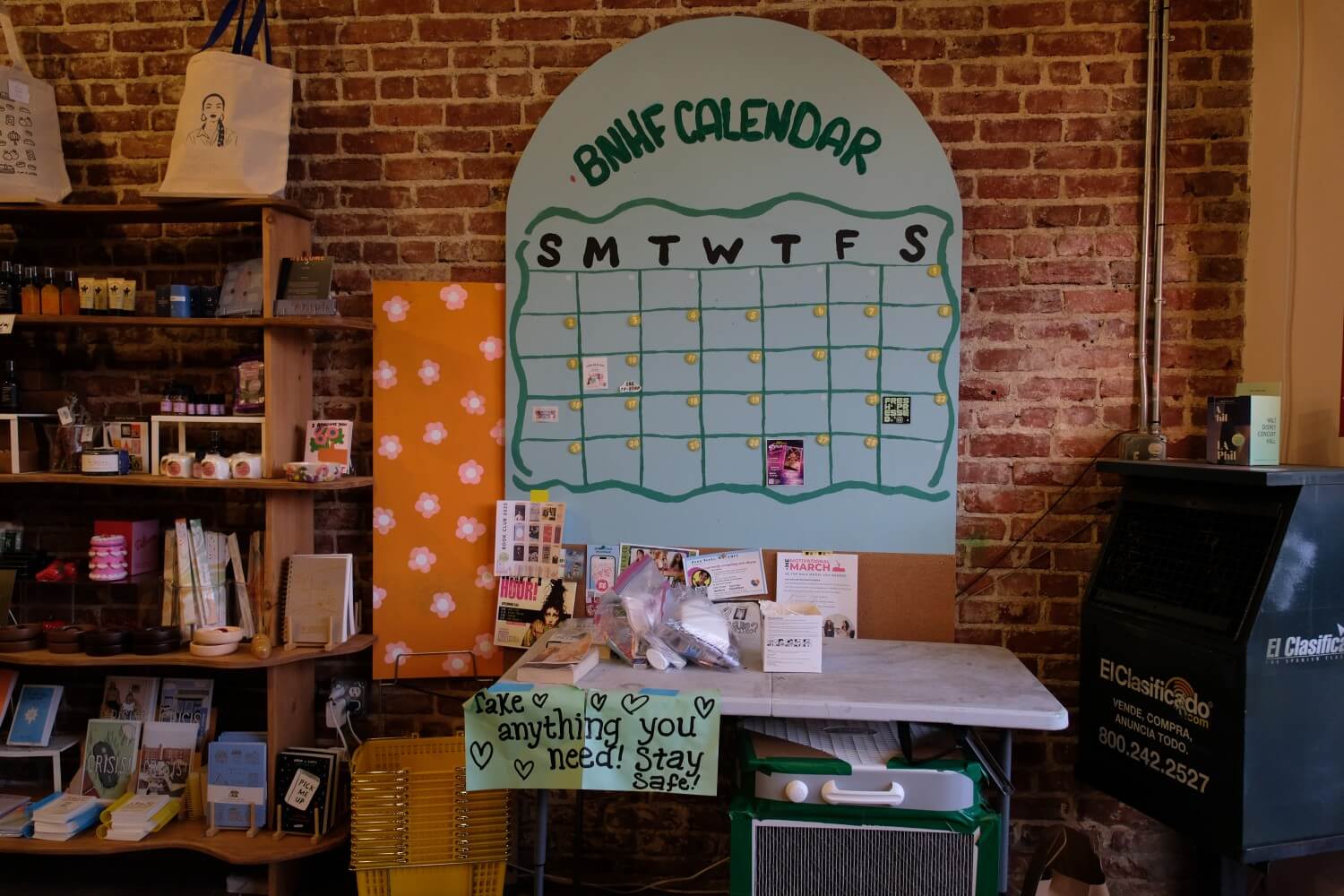
Be Nice Have Fun is a gift shop on York Boulevard that sells products from QTBIPOC+ businesses and hosts community events, according to owner and creative director Destinie Escobedo. As well as artistic clubs and mutual aid events, Escobedo said the shop hosts a monthly book club in tandem with Sarah Reyes, who runs a pre-loved, curated pop-up book shop called Libros Y Tesoros.

“From my own personal standpoint, [the club] exposed me to classic literature or literature that I wouldn’t pick up immediately,” Escobedo said.

Reyes said she started holding book club events with Be Nice Have Fun in November 2023, with consistent meetings since May 2024.

According to their Eventbrite page, this February for Black History Month, the club read Zora Neale Hurston’sTheir Eyes Were Watching God.” Reyes said the book club chose “Their Eyes Were Watching God” because she was interested in how Hurston’s life impacted her writing.

“It’s not just about the book,” Reyes said. “I like to know the background of the book and about the authors.”

According to Escobedo, their book club also highlights queer, women and BIPOC authors year-round.

“We are trying to be conscious and aware of the public sphere, and we want to give credit to black authors,” Escobedo said.

Owner and creative director Destinie Escobedo at Be Nice Have Fun in Los Angeles, CA. Feb. 21, 2025. Talia Goddard/The Occidental

Suni Jade Reid is the owner of Auntie’s Coffee, which she said is a Black- and queer-owned cafe. Escobedo said Be Nice Have Fun has had a growing relationship with Auntie’s Coffee over the past three years.

Reid said she saw a Black History Month display that Reyes had put up at Be Nice Have Fun, which included “Their Eyes Were Watching God.” Reid said they wanted to collaborate with Reyes on a book club meeting and that the pair decided Reid’s idea to make matcha was aligned with the book club’s Black History Month event.

“The mission of Auntie’s Coffee is to nourish, empower and employ folks who hold marginalized identities,” Reid said. “Coming together with people is nourishment, stimulating your mind through reading is nourishment.”

According to Reid, even though businesses have to make money, it is also important to intentionally reflect on why the business exists.

“It’s not about ‘Can I make money off of this?'” Reid said. “These are people that I see in my community.”

Interior of Be Nice Have Fun in Los Angeles, CA. Feb. 21, 2025. Talia Goddard/The Occidental

Reyes said the club welcomes all attendees, no matter how much of the book they read beforehand. Even though they had not read the book, Reid said they were still excited to attend and hear people’s thoughts.

“There is such value in showing up someplace and just experiencing the place,” Reid said.

The book club meeting itself was a tableside gathering with various snacks, including strawberry matcha provided by Auntie’s. At the event, Reyes provided a sheet of quotes, questions and information about Hurston to facilitate the discussion. She said she tried to cultivate a welcoming environment.

“We don’t make it like school,” Reyes said. “People can come and just hang out.”

According to Reyes, there has been a mix of recurring and new people attending book club meetings, which has been impacted by advertising, particularly on Eventbrite.

Theresa Cheng, a first-time member, said she learned about this month’s meeting via an Instagram reel showcasing the club’s future books.

“I just came to check it out,” Cheng said. “I was trying to find community and trying to meet people.”

Interior of Be Nice Have Fun in Los Angeles, CA. Feb. 21, 2025. Talia Goddard/The Occidental

Reyes said she wants to continue to grow the club community and putting the club out there helps her get out of her comfort zone.

“I think this year I’m hoping to have more consistency,” Reyes said. “I know [the club is] something that people do enjoy.”

According to Escobedo, Be Nice Have Fun is an official Northeast LA chapter of the Silent Book Club, which allows people to read independently in a shared space.

“It’s a place for introverts to come together and read your book, whatever it may be,” Escobedo said.

According to Escobedo, the club will highlight women authors for Women’s History Month in March. Reyes said she hopes to hold various “bookish events” in the future, potentially exploring trivia nights in addition to club meetings. Escobedo said partnering with Auntie’s Coffee for this event brought more people to the table to celebrate reading.

“We can all come together and have this sort of ‘book joy,’” Escobedo said. “Experiencing joy together, in different ways, I think is really special.”

Contact Zoe Pedvis at pedvis@oxy.edu.

Loading

Emma Wilderman and Tyler Kubo secure 14-point wins for their teams

Tyler Kubo

Tyler Kubo (sophomore) went three for five with a triple and three RBIs in the baseball team’s 14-12 win over George Fox University Feb. 16. The Bruins jumped off to a strong start with 4 runs in the first inning. Kubo’s first RBI in the game came in the bottom of the first when he hit Daniel Major (junior) home to make it 4-1.

According to Kubo, the Bruins dominated early in the game, but the Tigers were able to turn it around due to the strength the team gets from their 45-man roster.

“A lot of it comes down to once you slip into that mode, and there’s 50 of your brothers behind you that have your back,” Kubo said. “Our coach likes to say it’s like going into war. We knew George Fox [was] going to be tough. The game was really big for our team, because it showed how much grit we have and our strength in numbers.”

Assistant Coach Antonio Andrade ’22, who played on the baseball team while at Occidental, said Kubo’s versatility, consistent hard work and hitting earned him innings on the field last year. Andrade said he expects Kubo to get even more playing time this season.

“Kubo is a well-rounded player,” said Andrade. “He’s got speed, instincts, he can steal bases, good throwing arm, good glove in the outfield, he makes a lot of contact at the plate. He’s a tough player, he’s always gonna dive for you, and he’s the guy that we want. He plays outfield. We have seven to eight outfielders that we [want to] get in there ,and it can be really tough. It’s his ability to do everything.”

Captain and catcher Thomas Munch (sophomore) said he agrees with Andrade.

“Tyler Kubo is one of the best players I’ve ever played with,” Munch said. “He’s a great person overall. I can’t say enough good things about Tyler.”

Sean Elsee (sophomore), also a captain, said Kubo is a leader on the team.

“One of the greatest attributes you can have as a baseball player is being positive in all moments. That’s Tyler,” Elsee said. “If I could make a team with nine Tyler Kubos, I would do it.”

Kubo’s mother Kim Kubo said her son leads by example on and off the diamond.

“We raised him to be humble and easygoing,” Kim Kubo said. “We are proud of the person and young man he is becoming.”

Emma Wilderman (sophomore) in front of the Marketplace at Occidental College in Los Angeles, CA. Feb. 21, 2025. Marty Valdez/The Occidental

Emma Wilderman

Women’s water polo center Emma Wilderman led the Tigers to a 14-11 win over the Austin College Kangaroos Feb. 15. She scored three goals.

Head Coach Lindsey Garcia said she attributes some of Wilderman’s success to her tenacity in the weight room.

“She does a fantastic job lifting,” Garcia said. “She’s one of the heavier lifters on the team and is always pushing herself to lift more. She knows she has to work extremely hard if she wants to get better. “

Wilderman’s high standards for herself extend to her teammates, and according to Garcia, Wilderman is a big motivator of all the women on the 18-person roster. Garcia said her support shows up in the weight room.

“If we are going to go do a hard set, Wilderman always says ‘you can do more,‘” Garcia said. “She’s always pushing her teammates to work harder.”

After a shot from the Kangaroos, a rebound hit Wilderman in the head. Wilderman said she unknowingly suffered a concussion but played the rest of the game.

“It didn’t really bother me until a day or two afterwards,” Wilderman said. “I have a little bit of a headache. Hopefully, I’m feeling better by next weekend. I just need to go through the recovery steps and then I’m good.”

Wilderman said she hopes to be back before they host Merced Feb. 28. Isabella Wilde (sophomore) said that Wilderman will be missed in the practices leading up to the next game.

“We actually haven’t been scrimmaging this week,” Wilde said. “Both of our primary centers are out.”

According to Wilde, Wilderman’s position typically takes the majority of the shots on a team and that it is very physical.

“You are fighting someone in the water the whole time,” Wilde said. “It takes a lot of grit and stamina. She loves to lift and pushes me.”

Courtesy of Emma Wilderman

According to Wilde, she and Wilderman spend time together in the off-season improving their game.

“We swim and lift together in the offseason,” Wilde said. “In the weight room we like to be competitive. She’s always picking up a bigger weight, trying to get another rep, and I think that adds a lot to our team.”

Wilde said the loss of Wilderman is especially substantial to the guards on the team, because they typically face off against other centers.

“I am a guard and she is a center, so we play against each other a lot,” Wilde said. “Emma helps the team. She can lift our spirits.”

Contact Bennett Michaels at bmichaels@oxy.edu

Loading

Contemporary Choral Collective brings new sounds to life

From within a circle of broken glass, a woman kneels, eyes closed and arms outstretched, offering to her audience a fragmented wine glass. Within the glass lie slips of edible paper inscribed by her audience with things they wish to bury or release. As the papers get placed into her glass, she lifts them to her lips, swallows them and raises her glass back up.

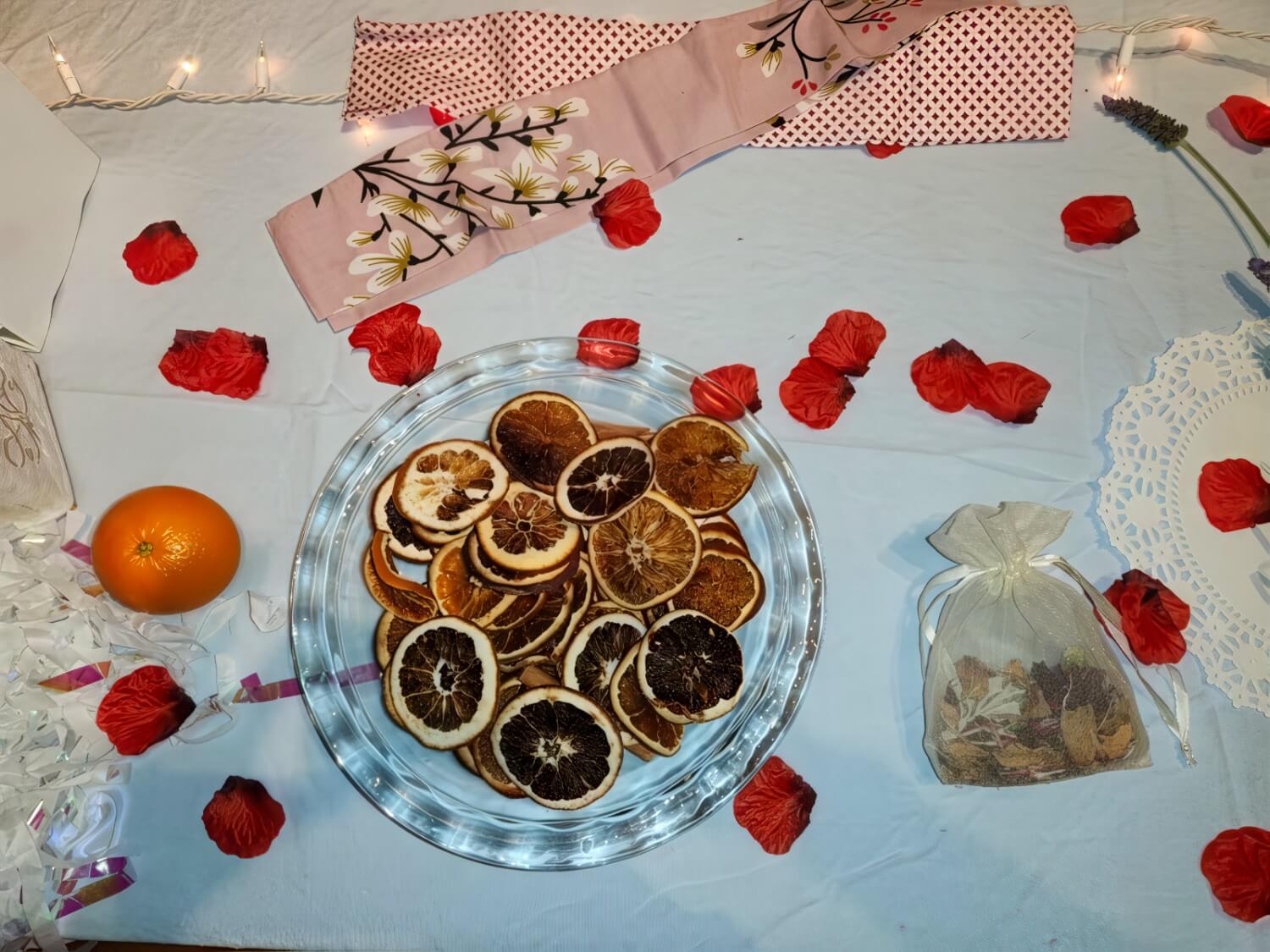
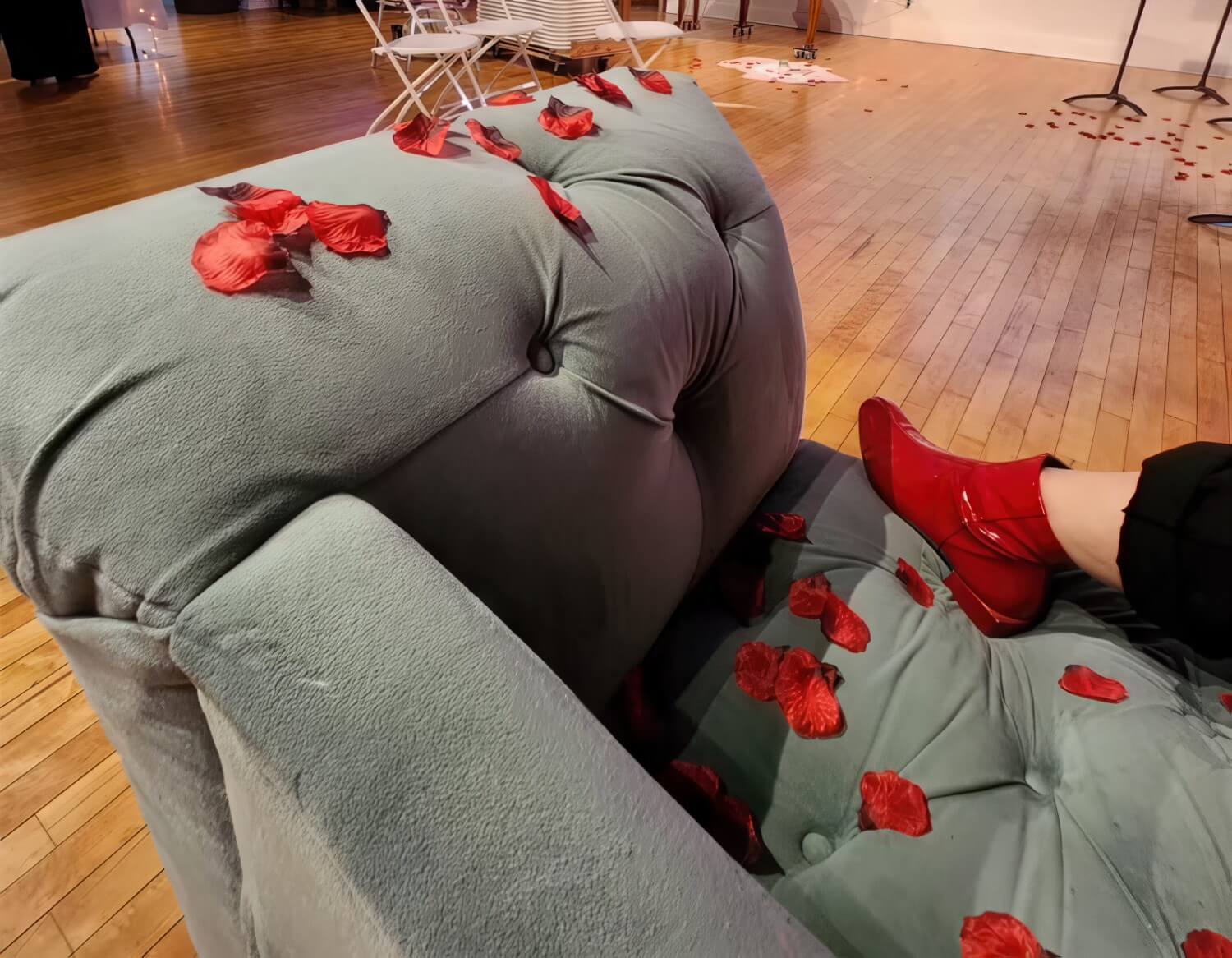
This interactive performance, entitled “The Funeral of Consumption,” was one of eight pieces performed at the Contemporary Choral Collective‘s most recent event, “Love Letters.” The event took place Feb. 16 at The POPera Shop in Highland Park and explored themes of love, sex and intimacy through a mix of choral music, performance art and interactive sensory booths.

Drew Corey is a composer, conductor and founding member of the Contemporary Choral Collective (C3LA), as well as the paper-eating artist in “The Funeral of Consumption.” She said C3LA offers a unique venue to sing and conduct choral music in a new and refreshing way.

“C3LA is a choral collective, so there’s no artistic director; we all decide on things collectively,” Corey said. “It’s basically challenging the hierarchical model of a lot of groups […] it gives the choir world a chance to work more collaboratively.”

Courtesy of the Contemporary Choral Collective

Corey said C3LA’s structure encourages members to rotate who will perform, conduct and compose music depending on the piece. She said this allows members to support each other in different ways and experience different roles within the group.

“I recommend everyone to try to conduct at least once. There’s something just so powerful about moving your hands, and it changes what happens in the room,” Corey said. “As a conductor, the energy exchange that happens between you and your singers is just crazy. It’s very palpable.”

According to Vera Lugo, a C3LA member and performer in “Love Letters,” the group is modeled off of The Choral Composer/Conductor Collective (C4), based in New York. Lugo said that the C4 model is structured around performing new music. She said that C4 often performs music written by members of the choir, something C3LA excels at.

“C3LA is known for doing things that are kind of off the grid and a little bit more weird than a lot of contemporary music,” Lugo said. “We do a lot of stuff with extended techniques and sounds that you don’t normally hear from a choir.”

According to C3LA member Rachel Steinke, C3LA is made up of a very accomplished cast of professional musicians but without the pressure of perfection that often accompanies choral music.

“We have a lot of really smart amazing people, but it’s kind of like we’re all here after hours and it’s just chill,” Steinke said. “No one’s enforcing any kind of musical standards or anything like that. It’s a really nice place to openly explore music without any kind of hard destination or rules around it.”

Courtesy of the Contemporary Choral Collective

Steinke said around 80 percent of the songs C3LA performs are composed by members, something that you cannot find in any other choir.

“It’s a really safe space to try new things,” Steinke said. “Anything that you could possibly do as part of an experience for the audience is fair game, which is awesome.”

Lugo said C3LA seeks to perform three concerts annually, highlighting different members at each event depending on their interest and availability. She said that currently, she estimates they have around 30 active members, but they continue to audition new members and are always excited to hear new voices.

Lugo said the group does not typically need to make back the money they spend on shows because they are a nonprofit organization.

“We get grant funding from the county of LA and the city of LA, and we’ve received a New Music USA grant before,” Lugo said. “We have a development chair whose job it is to look for those grants and apply for them for us, so that’s how we stay running.”

Lugo said that in the future, C3LA is excited to plan events that specifically highlight the unique skill sets each member brings to the group, from opera to folk music. She said the next event they are planning will be on May 31 and will be a performance of original works in collaboration with an orchestra.

“We’re constantly growing and changing, trying to always get to the next level of what we can do as a group,” Lugo said.

Contact Estel Garrido-Spencer at garridospenc@oxy.edu.

Loading

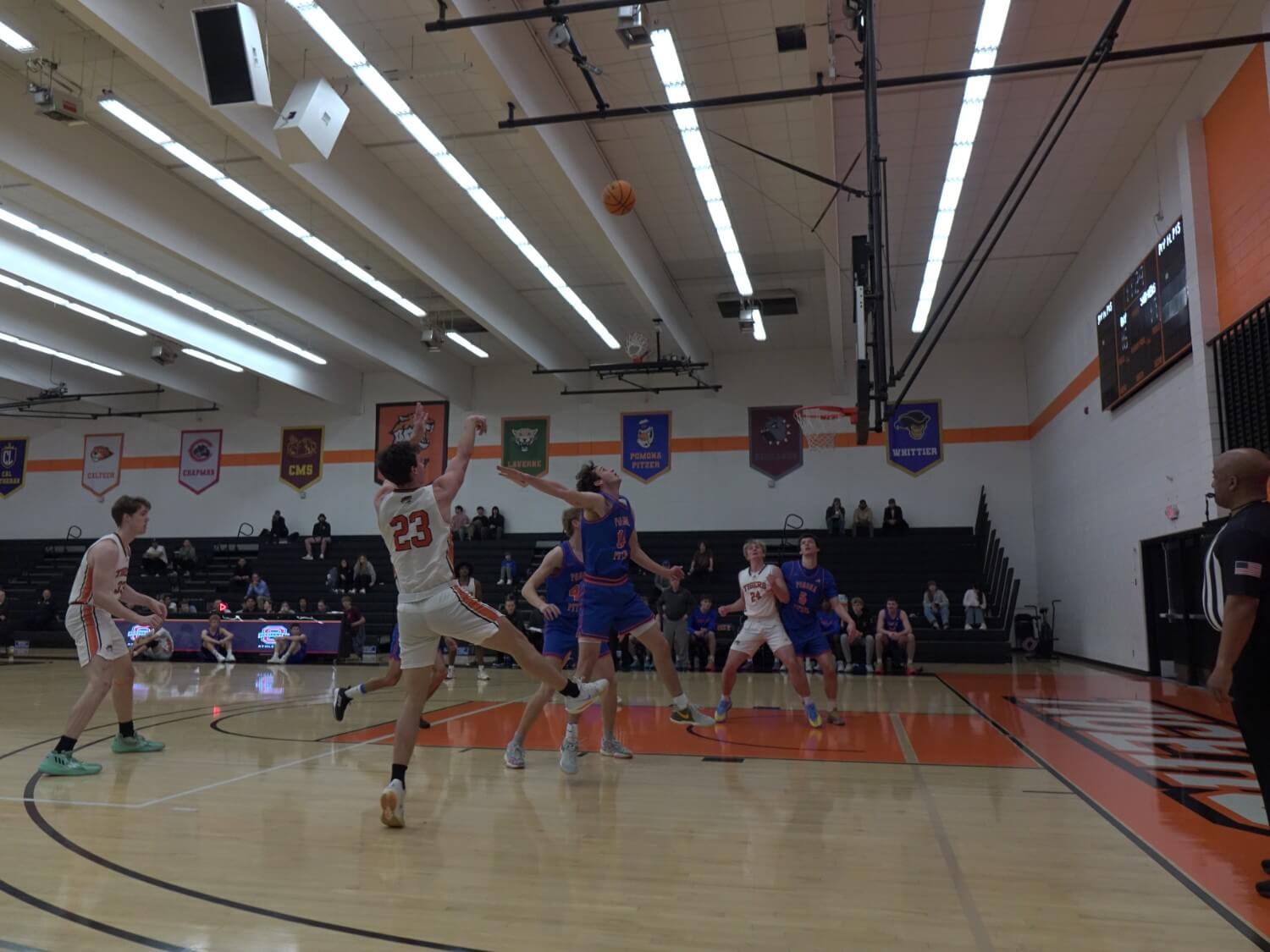
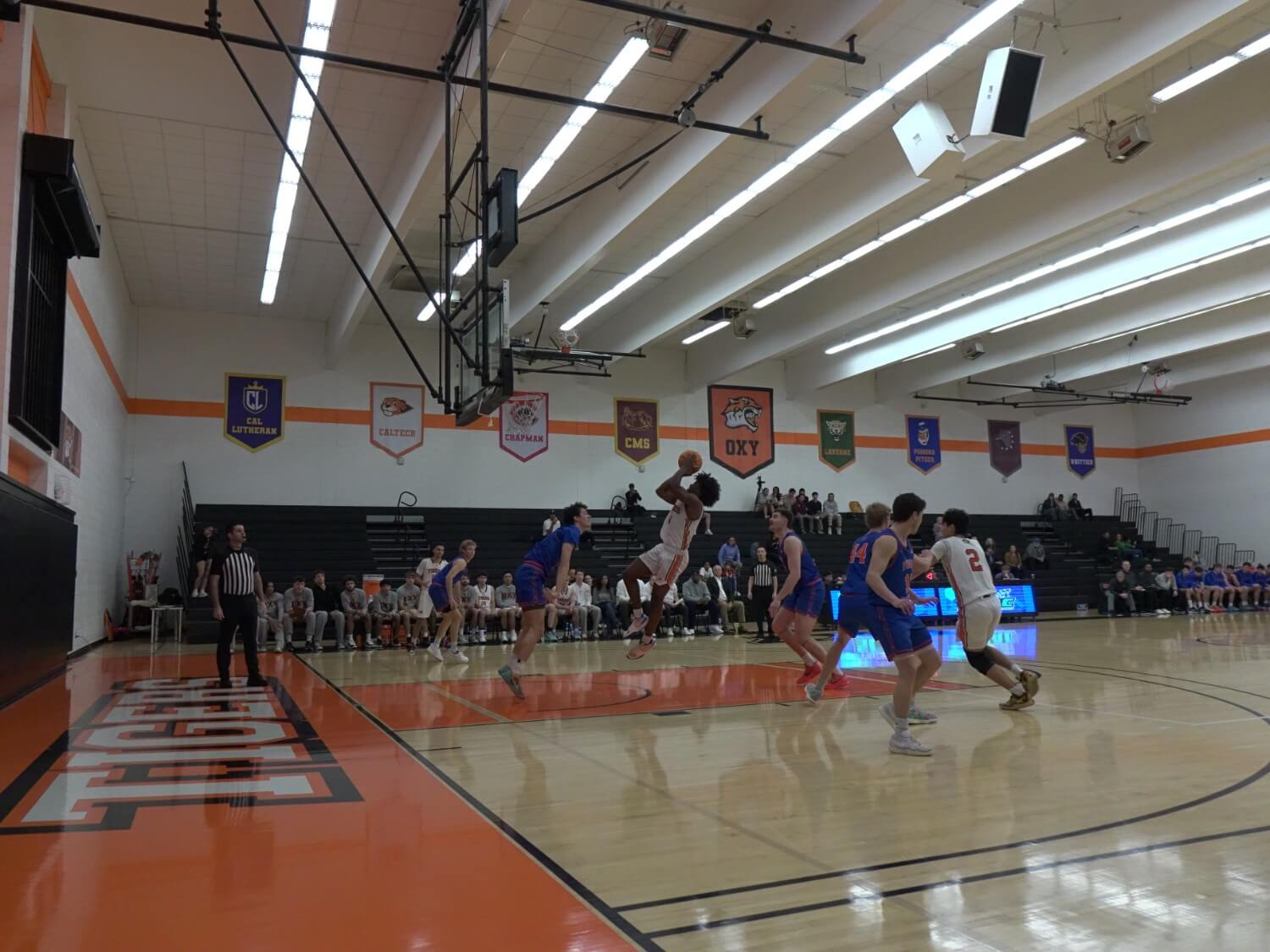
Men’s basketball drops final game of the season to Pomona-Pitzer, 71-85

Occidental men’s basketball lost their final game of the 2024-25 season to Pomona-Pitzer, 71-85. Micah Breaux (sophomore) and Nasir Luna (first year) led the Tigers in scoring with 17 points apiece. Pomona-Pitzer led 40-39 at the half and opened the second half with a 13-4 run. Occidental closed the gap to just 2 points with 8:11 remaining, but the Sagehens responded with a 7-0 run. Occidental finishes with a 7-16 overall record and a 4-12 conference record.

Guard Henry Wilson (junior) said it was a tough loss, but it was fun to play one last game with Bernard Cassidy (senior) and Jacob Hamermesh (senior). Wilson said the season was full of unusual adversity, including the postponing of games and practices because of the LA fires, injuries and a staph infection in the first weeks of the season.

“At one point we had only six healthy players, so we could only play three-on-three in practice,” Wilson said.

Due to the LA fires, Wilson said the team played a condensed schedule the rest of the year, with three games per week. According to Wilson, no college basketball team plays that frequently.

“We were always more tired than our opponents, but besides all that, we had a very fun season,” Wilson said.

Henry Wilson (junior) shoots during a basketball game between Occidental and Pomona-Pitzer in Rush Gymnasium at Occidental College in Los Angeles, CA. Feb. 19, 2025. James Miller/The Occidental

Ethan Hanning (junior) said the team came to fight every game.

“We were losing a lot of close games,” Hanning said.

According to Hanning, the team works hard in practice and supports one another.

“We’re really close as a team, I think that’s pretty rare,” Hanning said. “We all love each other.”

A transfer student, Mateo Tangaan (junior) said he spent the season getting used to the team culture.

“I like it a lot — unselfish basketball, all the guys are cool,” Tangaan said.

Tangaan said most of the guys in the rotation are first-years and sophomores.

“We have a lot of good freshmen,” Tangaan said.

Micah Breaux (sophomore) shoots during a basketball game between Occidental and Pomona-Pitzer in Rush Gymnasium at Occidental College in Los Angeles, CA. Feb. 19, 2025. James Miller/The Occidental

Wilson said the team had several close losses to nationally ranked teams, including a 2-point loss to Redlands, ranked 11th in DIII with a 22-3 record as of Feb. 24. Occidental played with only nine healthy players in their 67-69 loss at Redlands Feb. 15. With only two healthy upperclassmen, Wilson said the Tigers were the youngest team in the SCIAC.

“We’re so young, I just think the takeaway is, ‘The future is bright,’” Wilson said.

According to Wilson, the best player on the team, Nicky Clotfelder (junior), who broke his hand during the 2024-25 season, is returning next season.

“Next year we’re going to be a force,” Wilson said.

Contact James Miller at jmiller4@oxy.edu

Loading

Four Nations Face-Off puts hockey back on the map

If you’re a fan of sports, you’re likely familiar with the sordid state of the so-called “All-Star Game.” While such an event technically qualifies as the greatest concentrated amassment of talent any league will see in a given year, the events themselves are a complete joke, and league management groups haven’t exactly helped the matter. With All-Star ratings in the gutter, leagues such as the NFL have decided to do away with the game entirely, replacing it with a weekend-long set of challenges in which the NFL’s premier players delight fans with… Madden tournaments and flag football games. Yikes. Even in leagues where the All-Star game remains, it’s still a complete joke. The NBA has become particularly notorious for its All-Star festivities, in which players refuse to play defense during the game itself and skill contest participants get disqualified for cheating. With nearly every All-Star event in complete shambles nationwide, fans have begun wondering: how can these events be salvaged?

The NHL has an answer: they can’t.

While other leagues have preferred to make incremental changes to their All-Star events, the NHL has decided to stop drawing from the well of tired ideas and invest in something completely new. Rather than attempt to renovate its own failing All-Star game, the league has taken advantage of its incredible crop of international talent to completely reinvent its All-Star experience through its Four Nations Face-Off tournament. The format is simple: over the course of a week, the top four premiere hockey nations — USA, Canada, Finland and Sweden — duke it out in a round-robin tournament to crown a yearly champion. If that sounds awesome, it’s because it is. Fans have echoed this sentiment in spades.

Since the tournament has already started, it’s safe to say that the NHL’s gamble has paid off. Ratings for the tournament have been through the roof, with over 10 million fans tuning in for last week’s battle between Team Canada and Team USA. Fan response has been stupendous as well, and the players themselves can’t get enough of the festivities. In the span of a year, the NHL managed to turn its All-Star event from a complete afterthought to absolute must-see TV — an astounding feat in a sports industry that often feels as though it’s deliberately trying to get in its own way. And while the NHL deserves immense praise for its turnaround, it wouldn’t be fair to disregard the elephant in the room.

If you take a passing interest in politics, you’re likely aware that relations between the United States and Canada have recently been strained. Since President Donald Trump took office Jan. 20, the U.S. has levied a 25% tariff on all imports from the Canadian border. It’s an unprecedented decision that has sent relations between two historical allies into a tailspin, and its impact has reverberated all the way to the world of sports, with swaths of Canadian fans booing the American anthem before games. With tensions between the two nations at an all-time high, meetings between U.S. and Canadian national teams have become more than an opportunity to play for national pride — they’re all-out wars.

Catch a replay of the Feb. 15 match between the two squads, and you’ll think you’re watching a military-level conflict. After fans inside Montreal’s Bell Centre raucously booed the American anthem, the puck dropped — for all of one second. USA’s Matt Tkachuk and Canada’s Brandon Hagel dropped their gloves and threw fists before slamming each other to the ground as fans went ballistic. Eight seconds — and two fights — later, the game itself finally began. While USA took the contest by a 3-1 score, the on-ice action was arguably the least interesting part of the night. The game drew so much attention that even the official White House social account posted about it. The action and drama of the night — over an exhibition game, no less — put the NHL on the world stage in sports and politics alike. Who says All-Star games can’t be entertaining?

The Four Nations tournament has been a smash hit with hockey newcomers and hardcore fans alike — but the inaugural version of the event may sadly be its sole iteration. In addition to allowing its players to participate in the 2026 Winter Olympics, the league is bringing back the World Cup of Hockey in 2028. These events will be held every two years, leaving little time for other international competitions. While fans may miss the chaotic, at times unhinged nature of the Four Nations tournament, the other international competitions will allow fans to watch a myriad of talented hockey nations on the world stage. So don’t fret, hockey fans — the best is yet to come.

Contact Mac Ribner and Ben Petteruti at ribner@oxy.edu and petteruti@oxy.edu.

Loading