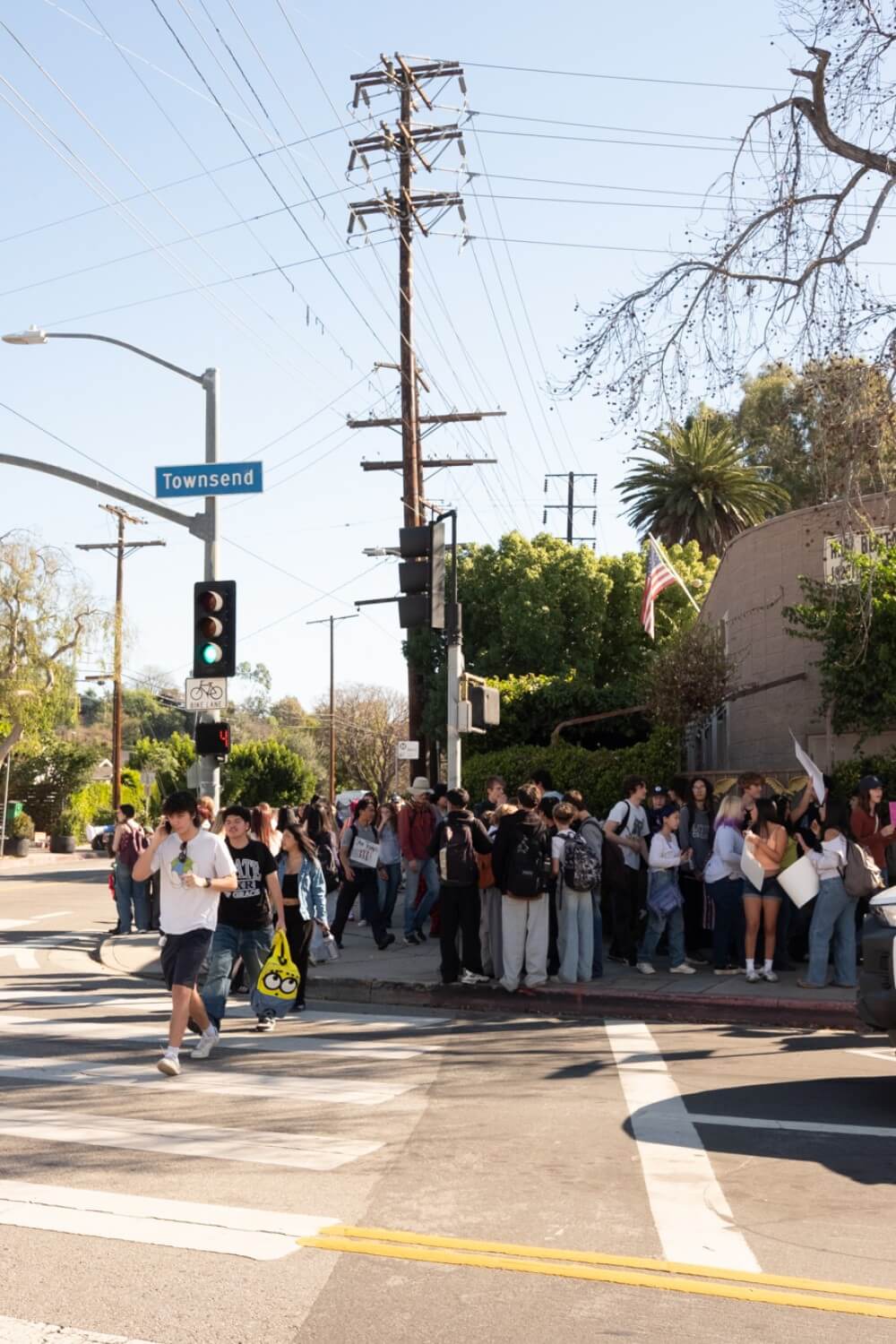
Eagle Rock High School (ERHS) was one of many LA Unified School District (LAUSD) schools that participated in a walkout Feb. 4 in response to the Trump administration’s immigration policies. JC Hizon is a senior at Eagle Rock High School who said she was a lead organizer for the ERHS walkout.
“[This walkout] was actually my first time ever organizing something like that,” Hizon said. “It started from just being furious about everything and knowing there’s a lot that I could be doing, that I should be doing, but I didn’t know where to start.”
According to a student who wished to remain anonymous, students from all over the city met at LA City Hall to protest after walking out of school between first and second period.
Hizon said she used her free first period to make posters, and shortly before the walkout officially began, she gave a speech while the students were walking out.
“I felt myself shaking […], not because I was scared, or anything, but just out of pure, unbridled rage,” Hizon said. “I told admin […] I’ve heard [parents] say that they are afraid of letting their children go to school or walk back from school because ICE [could] get their hands on them.”
Student demonstrators on Townsend Avenue and Yosemite Drive in Los Angeles, CA. Feb. 4, 2026. Marty Valdez/The Occidental
According to an email from a LAUSD spokesperson, the school district hopes to prioritize safety while supporting the rights of students to advocate for causes important to them.
“Schools are providing students with opportunities on campus for student expression, offering additional District resources and guidance for students to engage in meaningful, age-appropriate discussions in a safe and welcoming environment,” the emailed statement said. “They are also allowed to participate in peaceful demonstrations on campus during non-instructional times, within parameters set by administrators.”
Hizon said the student organizers reached out to ERHS administrators to inform them of the walkout. She said they offered alternatives such as a school-wide talk during a lunch period.
“[The administration] is very concerned about our safety and well-being while out there, and the safest place they tell us is at school,” Hizon said. “Before we left the building, we were stopped by a couple of admin and they [asked] ‘are you sure you guys want to do this?’”
Los Angeles Police Department cars surveilling students while on the Highland Park Metro station platform in Los Angeles, CA. Feb. 4, 2026. Marty Valdez/The Occidental
Troy Clark is a senior at South Pasadena High School, in another school district, who said his school had around 300 to 400 students walk out for a student protest on Fair Oaks Ave.
“[South Pasadena High School] came and officially commented on it, and said they were supporting it and leading it along with the students,” Clark said. “It ended up being pretty much a school-sanctioned event, where some whole classes went out together.”
According to the anonymous student, there were four to five main organizers of the event, herself and Hizon included, and they had originally anticipated around 40 to 60 of their classmates to participate. Hizon said she heard from staff at ERHS that between 400 to 600 students walked out.
“I remember being outside and watching everybody come out, and it honestly just kept going,” the anonymous student said. “I think we filled up almost half a block, or maybe even the whole block by our school.”
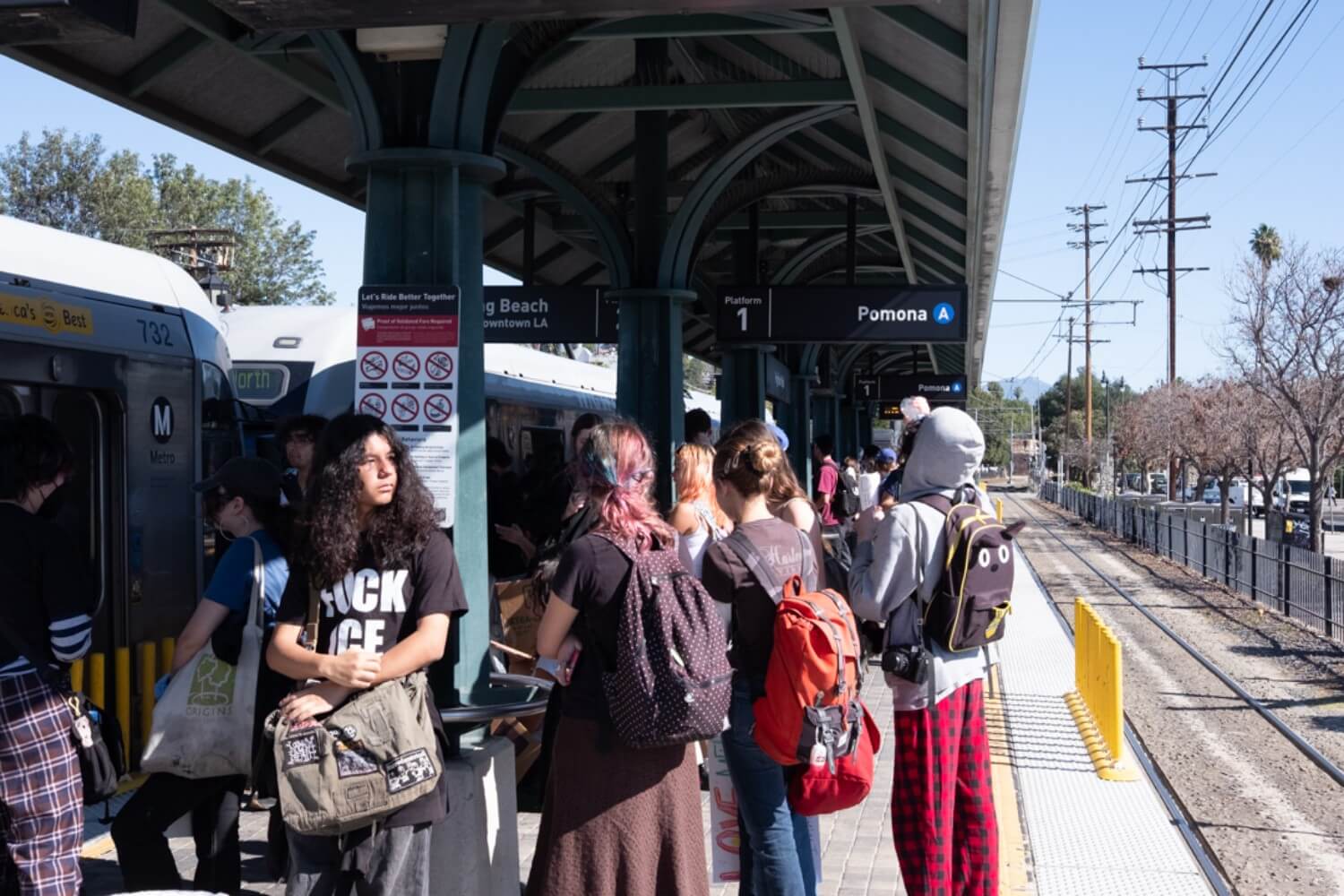
Students on the Highland Park Metro station platform in Los Angeles, CA. Feb. 4, 2026. Marty Valdez/The Occidental
The anonymous student said it was inspiring and encouraging to see how many students wanted to participate throughout LAUSD.
“Everyone put so much effort into making sure that it was safe and that it was organized,” the student said. “You could tell that the crowd was full of passion, and everybody’s there because they care about something.”
Hizon said the organizers planned a route where students could take the bus from ERHS to the Highland Park Metro Station, which would then transport them to LA City Hall. According to Hizon, she feels the work and preparation paid off after seeing the extent of the walkouts.
“I think something that a lot of students who went to these walkouts should know is that this shouldn’t be the end of it,” Hizon said. “This isn’t the end of those walkouts. This isn’t the end of these protests. This isn’t the end of students voicing out their opinions.”
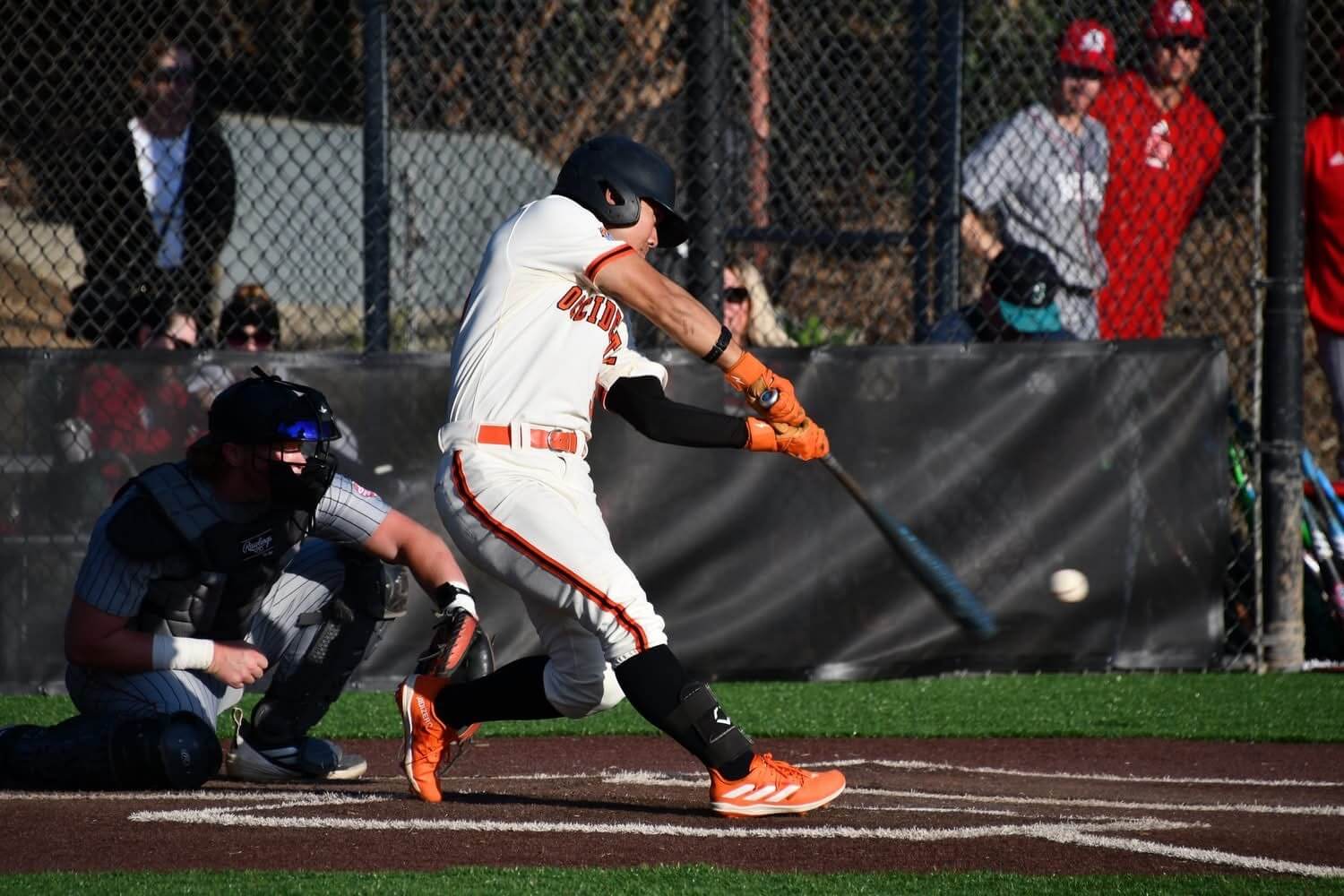
Occidental baseball kicked off their season last Friday with a 7–5 victory against Centenary College. Two-way player Griffen Rogers (sophomore) earned SCIAC Pitcher of the Week honors, throwing two scoreless innings and earning a save on the mound. Rogers also went 5–12 at the plate. The softball team is gearing up for their season opener against Suffolk University Feb. 13. Sporting fresh additions to their rosters, both teams are looking to improve their records from last season.
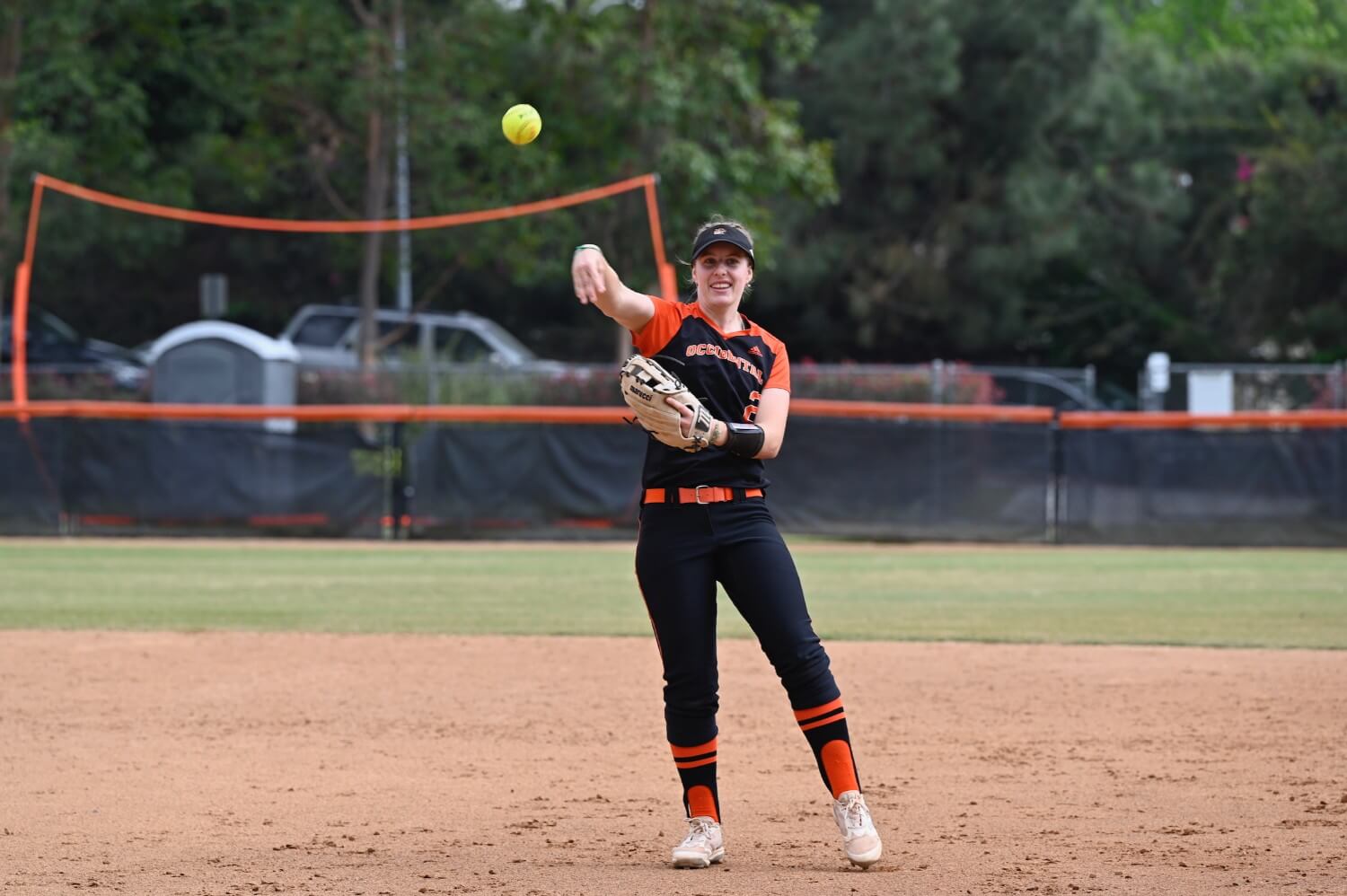
Alysha Wagner (senior) said she’s interested in how the softball team will perform in comparison to last year’s 11–27 season, but that she has positive feelings going into the new season.
“I’m optimistic,” Wagner said. “We lost eight seniors last year, and we’ve gained eight new freshmen. I’m interested to see how [the freshmen] will integrate into the lineup.”
Wagner said she has personally been working on her backhand plays at shortstop and that the team has been improving their hitting consistency.
“That’s what our coaches have been really trying to get us to do […] make adjustments to the pitcher sooner,” Wagner said.
Head coach Christine Hipa said she is striving for a higher standard among the team.
“Each year our practice plans, conditioning and weight training [have] changed to adapt to the team,” Hipa said. “[Our goals are] getting faster, stronger and more consistent.”
Courtesy of Alysha Wagner
Anna Kim (sophomore) said she is excited and feeling more comfortable as a part of the team. Kim said she shocked herself with how well she did last season, after leading the team in batting average and stolen bases as a first year.
“I definitely feel a lot more confident now that I have a year of experience under my belt,” Kim said. “I’m just trying to keep up with the bar that I set last year and improve upon that.”
Sophia Siu (senior) said the team has been preparing for longer series of games.
“We’re trying to persevere,” Siu said. “The coaches have been setting up week-long practices so that we build our endurance and can get through the four-game series during our tournament in Hawaii.”
Rachel Rotunno (first year) said she’s ready to play competitively at the collegiate level and likes how Hipa has been rebuilding the program.
“A big emphasis that our coach is making this year is a championship mindset,” Rotunno said. “Players are certainly starting to buy into it.”
According to Wagner, the softball team has an ongoing motto.
“We like to say that we’re hungry,” Wagner said. “We’re definitely gonna carry it over to this year. We’re hungry for wins.”
Courtesy of Tyler Kubo
The baseball team is also looking to turn things around after a 10–30 season last year. Head coach Luke Wetmore said he’s optimistic.
“We’re doing the right things,” Wetmore said. “Our young pitchers are getting better pretty much every time they go out.”
Wetmore said while the players are entering the season in good shape, much remains to be seen.
“There are a lot of questions to be answered,” Wetmore said. “If guys click and we pitch well, I think we’ve got a chance to make the conference tournament […] We don’t get there from wishing or wanting, we get there from development and recruitment, regardless of where we are.”
Thomas Munch (junior) said he is excited about the synergy of the team.
“I could not be more confident going into this year,” Munch said. “We’re older, we have a lot more talent on the offensive and the pitching side and we have new coaching staff […] This year it feels like [the players and coaches] are working in tandem.”
Matthew Uytioco (senior) said the team is also continuing to improve their mental game.
“It’s a long season,” Uytioco said. “It’s very mentally testing […] Sometimes things aren’t going to go our way, so staying in the present has been really big for us.”
Thomas Woods (senior) said he hasn’t been this excited for a baseball season in a while.
“I’m super excited to see how we’re going to perform,” Woods said. “I speak for the whole locker room when I say that it’s going to be a fun year –– I think we have what it takes.”
Courtesy of Tyler Kubo
Woods and Logan Rooney (senior) both mentioned how player injuries negatively affected the team last season. Rooney said many of those players are now returning.
“I think we have so many great guys who work really hard for what they do,” Rooney said.
Woods said focusing on the team’s health is an important priority.
“Making sure we all stay healthy […] that’s going to be the key to the season,” Woods said.
Uytioco, Rooney and Woods also underlined the importance of fan support for the team.
“If you’re a fan, please come out –– we love seeing fans,” Uytioco said. “It gives us that much more energy, that much more confidence.”
“Feeling like we have people supporting us […] helps us feel like we’re representing the college, and we take pride in that,” Rooney said.
“We love it when people come out,” Woods said. “The hill’s always open.”
Contact Miriam Arenal at arenal@oxy.edu and Julian Levy at jlevy@oxy.edu
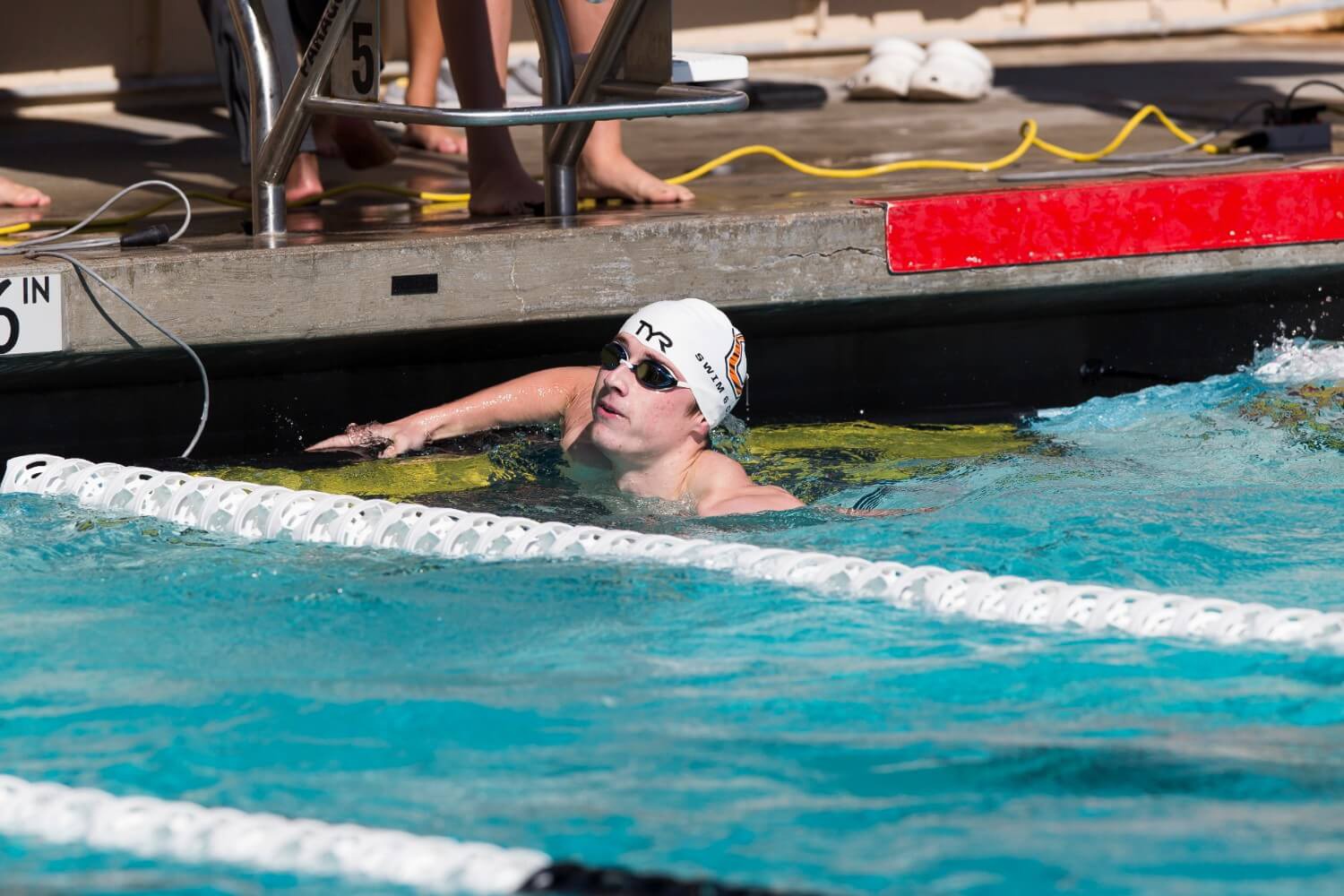
The swim and dive team faced off against Cal Lutheran University for their senior day Jan. 21. A majority of the eight seniors competing posted season-best performances, with three seniors taking home first place in their respective events.
Amanda George (senior) won the 1650 yard freestyle during the meet. George said the emotions of this being her final season haven’t fully hit her yet.
“It was such a whirlwind […] so many alumni came back, a bunch of the seniors from last year,” George said. “I was balancing all of my friends [and] family [as well as] swimming and I honestly didn’t process it at all.”
George said throughout her four years at Occidental, she has seen the growth of the swim team and that it is exciting to celebrate the experience.
“It was a celebration of friends and everything we’ve done together,” George said. “Especially with how long I have been a part of the swim team.”
Katie Dannenbring (first year) won the 200 yard breaststroke. Dannenbring said her favorite part of the celebration was the speeches the juniors delivered to send off the seniors.
“The juniors [gave] senior speeches,” Dannenbring said. “It was so sad. Even though I’m a freshman and I haven’t been here long, I was still crying.”
According to Dannenbring, the intense training all comes to fruition at these big events.
“Swimming can be really hard during practice,” Dannenbring said. “You have very long stretches of a lot of work, and it’s not super exciting. So I feel when we go to a meet, we already put in all the work –– now it’s the time for fun.”
According to Dannenbring, her teammates are both her friends and competitive rivals during practice.
“I feel most of the teamwork part is in practice, which is the hardest part,” Dannenbring said. “That’s when you’re supporting each other most.”
Dannenbring said while supporting her teammates, she is also pushing them to improve.
“You’re trying to beat each other, but in the process of trying to beat each other you both get better,” Dannenbring said.
Courtesy of Occidental College Athletics. Credit: Sam Lee
Connor Grant (sophomore) won first in the 200 yard freestyle. Grant said he looks up to his older teammates both in their athletic ability and in the way they can balance the different requirements of college and swimming.
“Last year, I looked up to Carter Park ’25. He was a great role model,” Grant said. “He also cared a lot about recovery, which influenced the way I planned my whole day: making sure I get my work done so I don’t have to stay up late.”
Grant said several athletes, including himself, have been dealing with long-term injuries. Grant said he continues to swim while he goes through physical therapy.
“You definitely need people to be there, just to know that you’re not the only one who’s going through the hardships and the tough practices,” Grant said. “If you can find someone to race, it makes it a million times better.”
According to Grant, the important things to focus on are what you can control.
“I can’t control the fact that my labrum is torn,” Grant said. “But I can do [physical therapy], make sure I get good sleep, make sure I’m doing my homework on time.”
Dannenbring said the way she visualizes a good meet centers on how her body feels in the moment.
“You’re just staring at a line, going back and forth,” Dannenbring said. “All you have to think about is how you’re feeling; how your body’s feeling.”
Grant said he imagines his movements in the pool beforehand.
“There’s tangibles and intangibles,” Grant said. “I want to hit this many kicks off the walls, but then I also think about how I’ll feel in the water; how I want my stroke to feel.”
According to George, swimming has taught her the importance of community and the capacity to push herself, two lessons she will take with her after college.
“I know when my body can do more,” George said. “Swimming gives you this assurance of your capacity to push beyond pain.”
Much to the chagrin of the other 29 Major League Baseball teams, the Los Angeles Dodgers are at it again this offseason — just as we’ve predicted in past columns. With all eyes returning to MLB after the Seahawks dominated Super Bowl LX, tensions are already running high in offices throughout the league.
Among myriad smaller roster decisions, the Dodgers landed two more big fish this offseason. The team got started early, as they handed out a three-year $69 million deal to star closer Edwin Díaz in early December. Díaz opted out of his remaining two years with the New York Mets to join Los Angeles where he will earn considerably more per year. The Díaz deal set a record for highest annual value given to a reliever, as the closer will earn an average of $23 million during his time with the club.
What really sent MLB fans and owners alike into a frenzy was the signing of 4x All-Star and World Series champion Kyle Tucker, who signed the dotted line on a record-breaking 4-year $240 million deal. Tucker is now the highest-paid player in MLB, making $60 million on average per year. This beats out the previous record holder Juan Soto, who makes an average salary of $51 million. No matter the outcome of the deal, Tucker is laughing all the way to the bank.
Beyond the obvious disparity in quality between the MVP-caliber Soto and the merely all-star caliber Tucker, the responsibilities they have on their respective teams couldn’t be more different. Soto is the guy in the Mets clubhouse. Everyone looks to him for guidance, to live up to massive expectations and to lead the team effectively. Though he’s not the only superstar on the Mets, he’s their best player by a wide margin. Tucker shoulders almost none of those responsibilities. He’s expected to be a top-five player for the Dodgers offense and projects as a middle of the order bat, but the Dodgers’ success is not contingent on his performance. He’s not expected to be a leader in the clubhouse. Everyone knows he’s not going to be “worth the money.” Here’s why none of that matters for the team.
If the Dodgers wanted, they could hand out “bad” contracts until the cows came home. They’ve essentially created their very own infinite money glitch. Despite carrying a payroll of around $400 million (around $60 million more than the second place Mets), money is simply no object.
Perhaps the biggest engine behind the Dodgers money printing machine is their cornering of nearly the entire Japanese baseball market. Shohei Ohtani is to Japan what Taylor Swift is (or was?) to the United States. Coupled with Shohei, the supporting cast of Yoshinobu Yamamoto and Roki Sasaki is enough to turn the heads and gather the spending money of an entire country. Between brand deals and sponsorships, merchandise sales, television deals and tourism the Dodgers have already made back the $700 million given to Ohtani just one year later. This machine is not expected to stop churning any time soon. Beyond the biblical greed this money allows the Dodgers to operate with, this is also great for the growth of the sport. Baseball is quickly becoming one of the most popular sports on the planet, and the Dodgers’ impact on baseball’s popularity cannot be understated.
What makes the Dodgers system so impenetrable is not just their overflowing coffers, but how incredibly well-run their baseball operations are. The mastermind of the machine, Andrew Friedman (President of Baseball Operations), deserves his flowers as one the best executives in the sport. With a background in financial analysis at Bear, Stearns & Co., it’s no wonder that Friedman’s grand plan has been so successful. The Dodgers have an unexpectedly deep farm system, with most consensus rankings granting them a top-five spot in baseball. The Dodgers possess a slew of top-100 prospects despite their constant spending, thanks to prioritizing spending in free agency rather than trading away talent.
When adding players, the Dodgers rarely weaken their farm or remove players from their MLB roster. The last blockbuster trade they made was for Mookie Betts — who signed a massive extension with the team during the 2020 season. Even then, the outgoing talent of Connor Wong, Alex Verdugo and Jeter Downs hasn’t exactly scorned them. Their aggressive free agent spending nearly every offseason actually keeps the longevity of the franchise afloat. Even when signing players with qualifying offers like Díaz causes them to lose draft picks, the Dodgers remain on top.
Another way the Dodgers keep their farm system chock full of talent is through international signings, an area that Friedman’s extremely smart scouting group dominates. Though they have encountered legal trouble for their seemingly pervasive scouting tactics in Latin America in the past, that should not overshadow their prowess in this area of operations.
Of course, no amount of gesturing towards ethical tactics will erase the elephant-sized piggy bank in the room. Following this offseason, the Dodgers have incurred over $1 billion in deferred money. Deferrals have long been a part of MLB’s financial fabric and are historically considered to be beneficial for the sport, but the Dodgers have malformed the practice of deferring contracts to an extent where they’re the only squad capable of carrying the financial burden. Other teams can emulate this strategy if they like, but when the chickens come home to roost, the Dodgers are the only team that could take a financial hit of that size due to their unprecedented money engine. Ohtani is the goose that laid the golden egg, even if every team had a chance to sign him.
Also responsible for LA’s financial supremacy is the team’s TV deal, an $8 billion behemoth signed in 2014. The deal bears a massively inflated value as part of a compromise between MLB and former Dodgers owner Frank McCourt, who was given a figure on his terms in exchange for his immediate sale of the team afterwards. For those not familiar with economic intricacies, McCourt was essentially paid untold sums of money to go away.
Thanks to McCourt running the Dodgers into bankruptcy in 2011, MLB permitted them to evade revenue sharing over the course of the 25-year long TV deal. This means that LA gets to ignore a yearly $66 million tax that every other large market team is forced to pay, placing that cash directly into their pockets.
Even without the exemption, the Dodgers have one of MLB’s most lucrative TV deals — making over $50 million more than the next closest team. This amount may seem paltry to the loaded pockets of the Guggenheim Ownership Group, but it makes a big difference to a team like the Milwaukee Brewers, who make less than 20 percent of what LA does. Big market teams with comparable deals have a chance to compete, and their spending should rival that of the Dodgers, but the last thing that the Dodgers need is another financial leg up on everyone else.
With the Dodgers assembling the baseball equivalent of the Death Star this offseason, fans might be wondering what implications these moves have for the league. The answer may be found in one word: lockout.
If you’ve kept up with the column over the years, you’ll know that MLB spending is currently subject to one of the largest disparities in all of sports. For every high-rolling team like the Dodgers, another 10 teams fail to muster even a third of LA’s spending prowess. And while the league’s best teams don’t always cut the biggest checks, there’s no doubt that MLB’s miserly clubs tend to occupy the league’s proverbial basement.
The desire to curb this losing tradition may be what’s inspiring numerous owners — namely Dick Monfort of Colorado Rockies fame — to call for the league to implement a salary cap in the next collective bargaining agreement. And while Monfort is right that his club lacks the colossal revenue stream of a big market team his complaints overshadow the Rockies’ biggest problem: They spend money wrong.
Back in 2021, the Rockies actually made one of the biggest splashes of the offseason by signing former National League MVP Kris Bryant to a 7-year, $182 million contract. Five years later, one might presume Bryant inked a deal with the devil on the same day, as the following seasons would see the once-lauded slugger succumb to constant injuries. Bryant is practically out of the league today, but his albatross deal is responsible for one-fifth of Colorado’s current salary.
It’s not just the Rockies that have seen spending sprees go awry. Many of MLB’s cellar dwellers are loaded with similar ill-fated deals. Two of the league’s top spenders — the Atlanta Braves and the New York Mets — didn’t even make the playoffs this past season due to a combination of injuries, underperformance and bad luck. Let us not forget the Los Angeles Angels, whose disastrous signing of Anthony Rendon might be the epitome of legalized bank robbing.
Ironically, it was Rendon’s deal that may have prevented the Halos from re-signing Shohei Ohtani in 2024, as Angels owner Arte Moreno allegedly balked at offering another mega-contract following Rendon’s cataclysmic decline. It’s easy to harp on the Dodgers for seemingly having a money pool befitting of Scrooge McDuck, but give credit where credit is due — they spend that money wisely.
Another forgotten but equally important aspect of this recent Dodger dominance is its potential benefit to the sporting world. It’s easy to decry the Dodgers on the basis of the team sullying league parity, but this indomitability has worked wonders for MLB’s ratings. The Dodgers’ 2024 World Series run saw TV ratings surge by 6 million viewers compared to 2023, and 50 million fans worldwide watched Game 7 of this past year’s Fall Classic.
The reason for this ratings explosion is simple — sports fans love having a supervillain to root against. The dynasty-era New England Patriotsset records for Super Bowl viewership in 2015, and the NBA finals ratings took a nosedive following the collapse of the Golden State Warriors empire. As it turns out, the same fans who complain of dynastic sports runs tune in with even more frequency.
Even the most ardent Dodgers defender cannot deny that there are obvious flaws with the current state of MLB. Revenue streams are lopsided, parity often feels nonexistent and the league’s top spenders are essentially set in stone on a yearly basis.
Despite these problems, it’s apparent that a salary cap won’t be an instant fix. Baseball’s richest teams will still have an edge in terms of resources and analytics, and no amount of financial guardrails can prevent clueless general managers from ruining their teams.
It might not be the news that most baseball fans want to hear, and it’s certainly not the news we — as lifelong Red Sox fans — want to deliver. Unfortunately for fans of 29 MLB franchises, the stats don’t lie — and they say that the best way to beat the Dodgers is to simply be smarter.
Contact Ben Petteruti at petteruti@oxy.edu and Mac Ribner at ribner@oxy.edu
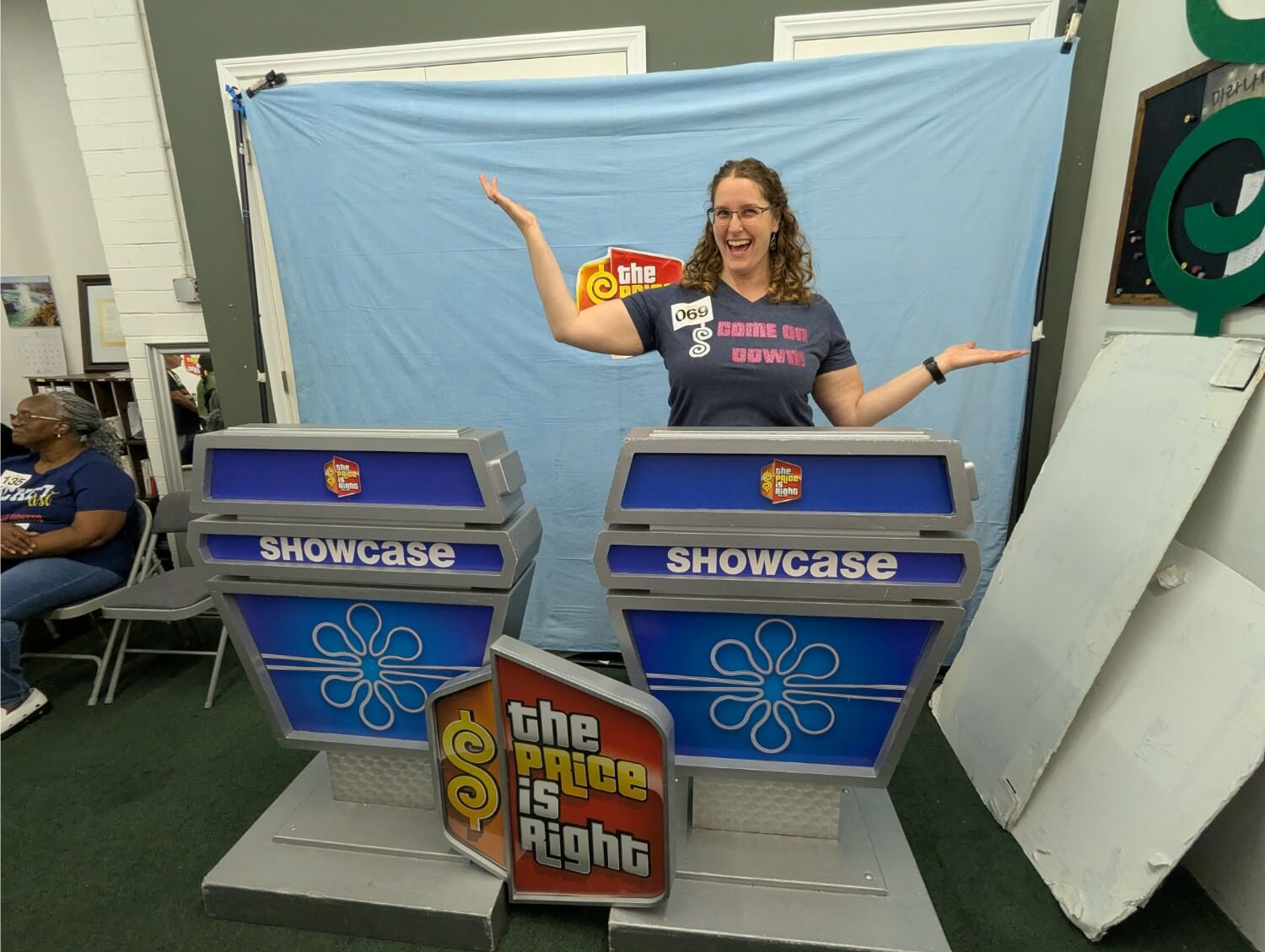
After a car accident last December, Occidental alumna Debbie Weiser ’08 said she did what any game show aficionado would do: shift gears and apply for “The Price Is Right.”
“I went to probably six ‘Price is Right’ tapings last year,” Weiser said. “There are so many different people who work on ‘The Price is Right,’ who are all lovely and wonderful […] and many of whom recognize me, which is hilarious.”
Weiser said contestants on “The Price is Right” guess the cost of items without exceeding their actual retail value. According to Weiser, those who bid closest accumulate prizes and advance through the contest’s rounds — Bidder’s Row, Pricing Game, Showcase Showdown and Showcase. Prizes, Weiser said, range from teqball tables to luxury cars.
Weiser said she sought out episode tapings whenever her schedule allowed, determined to one day leave the studio holding keys to a brand-new car. Despite call times as early as 7 a.m., Weiser said the guaranteed conversations with people hailing from coast to coast curbed her usual morning aversion.
“It feels like a little five-hour, small-town get-together,” Weiser said. “Everyone is in a really good mood usually. I mean, who goes to a game show to be grumpy?”
Weiser said studio audiences consist of 180 people on average, leaving her with about a five percent chance of being selected to play. Luckily, Weiser said, probability favors the prepared.
“I would say getting selected is luck of the draw, but it’s not,” Weiser said.
“This time I changed what I’d been saying,” Weiser said.“I knew that the producer recognized me, so I said, ‘When I’m not attending ‘Price is Right’ tapings, I’m the CEO to a 2-year-old.’”
Although not among the first four contestants beckoned to Bidder’s Row, Weiser said she was the fifth announced to “come on down!”
In preparation for her debut, Weiser said she strategically studied California-based retail pricing, consulted “The Price is Right” blog and sought guidance from former “The Price is Right” elliptical winner, Corey Abbott ’08 — who also happens to be her husband. Once on stage, Weiser said she felt ready to put her preparation into practice, but the rounds proved unpredictable.
“There are games where there is legitimately a strategy,” Weiser said. “And I ended up playing games where it did not matter at all.”
Courtesy of Debbie Weiser ‘08
Round after round, Weiser said she kept on winning. After outbidding her opponent during the Showcase Showdown, Weiser said she won it all, keys to a brand-new Lucid Air included.
According to Dick Anderson, publications editor and editor of Occidental Magazine and Occidental’s annual report, Weiser joins a legacy of Occidental alumni game show winners.
“Nearly four years ago, then-Oxy senior Caleb Reyes ’22 won $24,698 on ‘Wheel of Fortune,’” Anderson said via email. “Over the years, Oxy has produced ‘Jeopardy!’ champions, ‘Family Feud’ winners, past ‘The Price Is Right’ winners and so on.”
Abbott said Weiser did not win by chance: her determination, intelligence and personability propelled her to victory.
“A lot of her best attributes really went into play on how this all shook out,” Abbott said.
Weiser said she grew up with games. At 6 years old, Weiser said her grandmother taught her mahjong. When the power went out, Weiser said her family would pass the time with Mr. Monopoly.
According to Weiser, games have provided an avenue for community and learning since her lower school math days, when she played cribbage with peers.
“We would go out in the hall for 15 minutes while the other kids were doing the multiplication tables that would take us a minute,” Weiser said. “We would do the work, and then we would go and get to play cribbage and work our brains in that way.”
According to Weiser, gamifying education honed her creative critical thinking, a skill she carried throughout her Occidental career.
“I still remember studying for my Geology 105 final; pushing the couches around in the Stewie basement, talking about plate tectonics,” Weiser said.
Weiser said her passion for games led to other lifelong loves. According to Abbott, this included meeting Weiser for the first time over a game of poker.
“Debbie and I met in Braun Hall, where there was a weekly poker game on Monday nights,” Abbott said. “I was a regular in that game, and Debbie came with one of her friends for one of the games and really just kicked everyone’s butt, so I was like, ‘I got to keep an eye on this one.’”
Far removed from their Braun poker days and Tiger Cooler proposal, Weiser and Abbott said they now primarily play the game of life as they navigate parenthood. According to Weiser, both Abbott and she must wait 10 years before reappearing on “The Price is Right,” but remain open to applying to other game shows — especially if their elliptical breaks down.
As a Black woman who grew up with Nicki Minaj’s mixtapes on repeat, her brazen confidence felt like a playbook, a way to be seen, loud and unashamed in rooms that rarely made space for me. Minaj’s public persona wields influence over young Black and LGBTQ+ fans, whose identification with her transforms entertainment and celebrity spectacle into a conduit for political attitudes and norms.
Minaj’s public turn towards conservatism is not solely about policy endorsement but an affective cycle of perceived disrespect. The victim is not Minaj, but the Black and LGBTQ+ youth who have formed a parasocial relationship with her and are being encouraged to vote against their best interests.
The tendency to treat politics as spectacle, converting real-world stakes into performative entertainment, appears early in Minaj’s responses to Trump and helps explain why her remarks often read as theatrical rather than deliberative. In the wake of President Trump announcing his first run for president in June 2015, Minaj commented on the “hilarious” campaign to Billboard Magazine.Although the interview occurred in November 2015, before Trump proposed a Muslim ban, he had already promoted harsh racialized immigration rhetoric. Minaj responded by framing him as entertainment, calling his campaign “the ultimate reality show” and treating his candidacy as a spectacle rather than a political threat, despite the policies already circulating.
After Trump was elected, Minaj ridiculed his immigration stance in her “Black Barbies” freestyle and made a more direct critique in June 2018 via Facebook, writing about her own experience immigrating at age 5 and urging an end to family separation. Here, she adopts a more empathetic stance, linking personal narrative to broader pro-immigrant discourse among young audiences.
After Trump’s first term ended, her focus shifted toward public health, specifically the COVID-19 vaccine. On September 13, 2021, she posted on X recounting an anecdote about vaccine side effects. This personal skepticism illustrates how Minaj’s political takes often emerge through storytelling, social networks, and viral circulation rather than policy analysis. That anecdotal approach parallels how she manages threats to status: personal narrative and parasocial loyalty, rather than institutional argument, shape her responses.
Minaj has also been fiercely protective of her position in the industry, marked by chart dominance, sales success and cultural visibility. Rivalries with Lil’ Kim and Remy Ma helped consolidate her authority within rap, while later tensions with Cardi B and Megan Thee Stallion reflected challenges to that centrality. In January 2024, following Megan Thee Stallion’s release of “Hiss,” which referenced Megan’s Law, Minaj interpreted the lyric as directed at her family and responded days later with “Big Foot.” The song attacked Megan’s credibility and trauma, yet failed to resonate commercially. More significant was the message communicated to fans: perceived disrespect justifies public humiliation. Even without artistic impact, the rhetorical lesson circulated, mockery and retaliation become acceptable defenses of threatened status.
Minaj’s commitment to craft and dominance positioned her as the genre’s symbolic center, reinforced by the inclusive identity of the fanbase, the Barbs. But as the sound and discourse of rap shifted and newer artists gained prominence, she increasingly framed this transition as a sign of disrespect. Rather than recalibrating, she externalized blame onto peers while receiving validation from online supporters, reducing industry competition into a narrative of personal grievance.
This cycle echoes MAGA rhetoric. Contemporary right-wing grievance politics often emerge from perceived displacement within a majority white heterosexual patriarchal order, producing narratives of disrespect, blame shifting and validation by their community. This parallel does not suggest equivalence between Minaj and the white majority; it reveals how one can rhetorically structure their personal grievance to echo broader reactionary narratives. In Minaj’s case, chart defensiveness, conspiratorial framing of criticism and vaccine commentary operate less as policy interventions than as symptoms of melancholic displacement. She manages a loss of symbolic centrality by mistrusting institutions and aligning with validating counterpublics online. The internet accelerates this process, transforming individualized resentment into political identification and making spaces like Turning Point a symbolic site where artists can reframe injury as ideological resistance.
As someone who grew up watching Minaj shape the landscape of mainstream rap and online fandom culture, this rhetorical shift feels consequential rather than abstract. Her persona helped define how my generation understood confidence, spectacle and digital community. Now, seeing that same influence mobilize grievance-centered discourse underscores how easily entertainment logics bleed into political identification.
Some argue that Minaj’s claims are an expression of free speech and that other celebrities should not bow to leftist discourse. Celebrities can apologize for past beliefs, as Kanye West recently did. We can read Minaj’s positioning less as a mode of indoctrination and more as an expression of artistic autonomy within a pluralistic cultural sphere.
However, I believe it is important to recognize that celebrities are hypervisible cultural products that cannot remain neutral. The rhetoric they use circulates and can shape the way audiences view the world. Social media and parasocial identification amplify this circulation, and research indicates that youth voting shifted to the right in 2024, influenced by media ecosystems. Minaj’s platform demonstrates how such rhetoric can reach specific demographics, particularly Black and LGBTQ+ young listeners, drawing them into narratives of grievance and blame shifting.
If we don’t teach critical media literacy, the parasocial power of curated personas will continue to steer youth toward spectacle, grievance and ideological alignment rather than independent thought. I grew up quoting her bars and learning how to perform confidence; I don’t want those lessons to calcify into a politics of resentment. Teaching young people to read spectacle, to ask who benefits from a story and to separate admiration from political instruction is the smallest act of care we can offer the next generation of fans.
Sustainability Fund (Sus Fund) Student Body Officer Aiden Thatcher (sophomore) said sustainability is a core value at Occidental that is highlighted through its eco-clamshell program. An eco-clamshell is a reusable container that utilizes technology to keep people accountable for the containers, according to the company Occidental has partnered with, Topanga.
“The whole goal [of the eco clamshell program] is to reduce the waste, and students are a big part of that,” Thatcher said.
Associate Director of Campus Dining Robert Starec said the use of these eco-clamshells helps eliminate single-use plastics. According to statistics from Topanga, 111,192 single-use containers were avoided over 2.5 years at Occidental so far.
“We average anywhere from 300 to 400 checkouts per day, and our overall return rate over the 2.5 years since starting the program is 98%,” Starec said. “However, we have seen a decline in that number in recent months […] We’re losing 200 to 250 containers a month due to unreturned containers.”
In order to increase returns, Starec said an $8 fee is added to students’ accounts when eco-clamshells go unreturned and that the fee goes toward replacing them.
“You’re expected to return it within three days,” Starec said. “If, after three days you have not returned it, the Topanga automated system will send you a message to let you know the container is now late.”
According to Starec, after 10 days, the container will officially be considered late. This was increased from 6 days, Starec said, to accommodate eco-clamshell users who are only on campus certain days of the week to give more return opportunities.
“Sometimes people do question why they are being charged a late fee when they returned the container,” Starec said. “But in the majority of cases it isn’t actually a charge, but a part of [Topanga’s] automating messaging system to return it or else there will be a late fee.”
After two weeks, Starec said Topanga provides a charge report, seeing how many eco-clamshells were not returned. According to Starec, by implementing this fee into students’ accounts, there is a hope that there will be a more concerted effort to return these containers.
Thatcher said he feels as though there is a fundamental issue with this fee — students might not know they are being charged at all.
“I pay my own student account bills,” Thatcher said. “I feel like a lot of students don’t, so they don’t necessarily see that their account is getting dinged.”
Eco-clamshell box at a Marketplace table at Occidental College in Los Angeles, CA. Feb. 8, 2025. Anthony Cordova/The Occidental
Starec said it is important to educate students about the program and will continue to be moving forward.
According to Professor of Economics and Sus Fund Faculty Advisor Professor Bevin Ashenmiller, a version of the program has been around since 2013, and she attributes the creation of the program to Emma Sorrell ’13, Occidental’s first sustainability coordinator.
Starec said the original program had tokens, which would be traded in for an eco-clamshell.
“One of the challenges with the token system is accountability. So people would take containers but wouldn’t return them,” Starec said. “So we felt that it was important to have a program that had an element of accountability to ensure that the containers always remain available for reuse, which is the sole intention of the program.”
Starec said Occidental then decided to partner with Topanga Aug. 2023.
Starec said he has been at Oxy for 32 years and sustainability has always been important for their community and students. Starec said he feels it is a responsibility for Campus Dining to be sustainable.
“It may require modifying the current program or […] meeting with similar programs to see if there are opportunities where we can improve upon what we are doing,” Starec said.
To find a solution for lost eco-clamshells, Thatcher said he thinks there should be more clearly visible drop-off locations, such as at the library or at the marketplace patio. A culture change is also necessary, Thatcher said, to instill the habit of returning clamshells in users’ routines.
“Clamshells are a privilege, not a right,” Thatcher said.
An online trend suggested that this year is going to be 2016 again, but in this feature we are looking into the future. Members of our editorial board make their predictions for old favorites that will make a comeback, as well as entirely new styles and phenomena.
A reframed mindset around makeup usage and consumption
Anna Beatty, Arts & Culture Editor
I think one of the biggest cultural changes that will happen in 2026 is the way we think about makeup. What is popular in the makeup space is similar to how fast fashion micro trends function — the looks are extremely popular and dominate social media for only a couple months before their decline. However, there has been a shift in how we, as consumers, think about what it means when we buy makeup and why there is an appeal to it more than ever now.
Makeup now, more than in the past decade, is thought about as an item that gives the consumer satisfaction the same way going on vacation or purchasing a new car does — except a new blush costs a minute fraction of the latest luxury bag. Inflation rates continue to rise each year, and it is harder for people to make these larger purchases. Instead, people are turning to smaller luxuries, like makeup or home decor, during their retail therapy sessions.
If people are buying more makeup, this gives way to more opportunities for exploration. I personally am more inclined these days to buy a new eyeshadow palette or lip gloss, even when I didn’t originally intend to, because extreme luxury purchases are not in my budget right now. With the cost of living increasing, cheaper purchases like makeup have the ability to bring everyday excitement into our lives. We are constantly chasing ways to ensure daily happiness, and I believe makeup brands and the beauty industry as a whole profit off that desire.
Makeup is also an art and a form of escapism in our ever-changing and fast-paced lives. It is a form of expression and creativity that is fairly accessible, given that makeup products are sold almost anywhere from drug stores to high end beauty stores. Amid the perpetual stress from hustle work culture, we are constantly looking for little pockets of joy in our busy lives, and something as seemingly minute as exciting makeup looks helps maintain personhood. I predict in the coming year, new makeup products will be looked at as more of a fun toy to experiment with rather than simply a part of someone’s morning routine.
Contact Anna Beatty at beatty@oxy.edu
Renny Flanigan/The Occidental
The revival of physical media
Josey Long, Sports Editor
After 2025 proved to be a year rife with high screen time, overconsumption and AI slop, many of us are seeking an escape from the virtual world, longing to return to a time when iPhones and rapidly cycling trends were practically nonexistent. Many teenagers and young adults are now rejecting the dopamine comas prevalent in our technology-reliant society, after realizing we cannot build real community nor self-esteem while scrolling through Instagram for eight hours a day. I believe this rejection will only increase, with more and more people seeking to reclaim their free time and build new hobbies away from their screens.
Many of us are still interested in the perks that come with using technology. Instead of iPhones, many are switching to flip phones and iPod Nanos. Streaming services are out, walkmans and cassette players are in. Mirrorless, ultra-detailed Canon photography camera? Nope—digital cameras are all the rage. Though many online users have described this phenomenon as “going analog,” the term “analog” to describe flip phone, CD and digital camera use is technically incorrect. These items are still digital—just not the kind of digital we are used to (iPhones, laptops, televisions, etc.).
Part of the reason why many are “going analog” is the oversaturation and overconsumption present across technological platforms. People are tired of excessive Stanley cup hauls, Labubu unboxings and the ever-present feeling that nothing we own is ever enough. Though some of the items returning to mainstream popularity are actually analog, such as cassette tapes, books and journals, this new “analog lifestyle” still promotes excessive purchasing habits similar to those many have been trying to escape. True, reading a physical book is better for your brain than scrolling through brain rot, but spending $500 on new books is equally as damaging to your wallet. As someone who is an avid lover of book stores, I have many books I bought years ago sitting on my shelves unread. CD and vinyl purchases reflect a similar shopping craze. Over winter break I went to a record store and was pushing past crowds of customers to find CDs of my favorite bands.
There are many aspects of technology I still find extremely valuable. As someone who is directionally challenged, Google Maps has saved me countless hours of aimless driving on the freeway. I enjoy texting my friends and family from home to stay in touch while I’m at school. Airpods and Spotify make it easy for me to listen to a variety of music while I am running.
Sometimes it feels impossible to stay away from technology completely. At many of the concerts I attend, for example, the venues require you to download the tickets to your phone and present a QR code to staff when entering. If I did not check my phone or computer for a week, I would miss important emails and notifications about coursework. However, the overwhelming amount of short-form content and banal media permeating online often makes me want to throw my phone in the trash can.
As with everything in life, balance is key. This return to physical media, though it may promote overconsumption, offers many a release from the constant noise online. At least people are trying to read and journal rather than doomscroll. In the coming year I see people returning to physical media as an escape, but also as a substitute for other habits of overconsumption. We must remind ourselves that much of this “analog lifestyle” marketing is yet another ploy to buy more. You do not need a new walkman if your mom has one lying around in your basement. You do not need a new journal that will inevitably end up at the bottom of your junk drawer. We all must do the difficult work of asking ourselves how we can use what we already have to achieve what we don’t: a higher attention span, lower screen time and a sense of fulfillment from living in the physical rather than virtual world.
Contact Josey Long at jlong2@oxy.edu
Amelia Darling/The Occidental
Low-key hobbies
Abigail Montopoli, Community News Editor and Nora Youngelson, Editor-in-Chief
As college students with full Google Calendars, we are making the bold prediction that hobbies will be in for 2026. And we aren’t alone in this prediction. NBC News recently reported that “grandma hobbies” such as knitting, needlepoint and mahjong, are the new trending items. Similar to the analog revival that Josey Long (sophomore) mentioned, these hobbies are meant to encourage the younger generation to get off of their phones.
However, our 2026 prediction for the rise in hobbies has a slight caveat. Our prediction (or hope is the better word) is not that we must fully commit to hours of needlepoint or to a time-consuming game of mahjong. In fact, we have already fallen prey to an uncommitted hobby, maybe because we believed it was the “trending” thing to do. Tangled balls of yarn and half-finished knitting projects litter our floors, reminders of our failed projects. After obtaining knitting needles, yarn and other necessities to create woolen products (what even is a stitch marker?), we realized knitting a scarf, let alone a sweater, may be too big a hobby to take on with our limited hours in a day. For many college students, a hobby that requires hours to complete a final product is not sustainable long-term.
This is why we predict a rise in less involved hobbies, both for us during our final semester of college, and for others in 2026. Absent-minded doodling on the sides of tedious readings, color by numbers on an iPad or filling in simple outlines on printouts help to occupy our minds in ways that allow us to be creative in bite-sized chunks. Instead of committing ourselves to creating a product, 2026 will be the year of testing out many different analog activities, in a way that still allows us to disconnect from our phones.
One of the essential bite-sized hobbies that we predict will take over 2026 is photography. Beyond doing photos for The Occidental, we love to shoot on our film cameras. This easy and portable hobby allows us to document the final chapter of our Occidental careers and adds a little “sweet” to the somewhat bitter idea of closing this part of our lives. Snippets of conversations on the quad, movie nights at home or days exploring LA have immortalized themselves in our camera rolls.
So we encourage you all to join us in our 2026 prediction. Pick up a small hobby and spend time doodling, taking photos or tossing a frisbee—whatever it is that makes you happy. But with these bite-sized hobbies that we are predicting will be in for 2026, we also predict that perfection will be out. Allow yourself to be bad at these hobbies. Make a really bad painting before your 9 a.m. class or take an overexposed photo. Too much time and energy in 2025 was spent on producing a flawless product.
Contact Abigail Montopoli at montopoli@oxy.edu and Nora Youngelson at youngelson@oxy.edu
Renny Flanigan/The Occidental
Innovative fashion
Eli Heringman, Managing Editor
As political and economic conditions became bleaker over the course of 2025, fashion became bolder. Loud colors and patterns rose in popularity. Labubus seemed to spread across the country overnight. Experimental textures — fur, sequins — captivated the masses. Some of these trends, ripe with 2000s and 2010s nostalgia, will surely continue into the new year, dubbed the second coming of 2016 by hometown bars and Norris parties alike. I certainly hope we won’t be saying goodbye to animal print anytime soon. In 2026, I predict stylistic choices will get even bolder, as people try harder to make their voices heard and push the envelope.
Loud patterns won’t be going anywhere. Particularly, plaid will be back in a major way (not flannel shirts; think A$AP Rocky, Paris Fashion Week 2025). In fact, the thing to do in 2026 will be to patternmax: combine loud patterns. An outfit I particularly enjoyed viewing this month was a combination of cheetah print sweats and a colorblocked skate hoodie, tied together by a pink bag dotted with hearts. What better way to put a spin on the ever-popular stripes and camo in your closet than to wear them at the same time?
Gold and silver prices have soared in the past year (until a recent plummet), making gold and silver jewelry all the more exciting. Often, it’s hard to choose between the two. The question I find myself asking recently: why choose? Mixing metals is nothing new. A harmless way to break a rule and have fun accesorising. An easy way to elevate an outfit. When done well, gold and silver accessories complement each other nicely. Both precious metals deserve their time to shine, and I hope those still averse to mixing the two come around this year.
Denim is an essential part of any wardrobe. In streetwear, baggy jeans have been in the spotlight for a long time, and skinny jeans have made a recent comeback. Mom jeans, low rise jeans, selvedge jeans… the list could go on. I predict that fatigue of this staple will set in and alternatives will become increasingly stylish. I love a good pleated trouser or pinstripe pant, and on the other side of the formality spectrum, an appropriately massive cargo short or colorful tracksuit. People want to dress up and dress down. Jeans are a middle ground, an easy but meaningless place to stand.
While drafting this article, I met my fashionable friend Regina O’Rourke for dinner in Santa Monica. She was wearing plaid. In fact, a plaid scarf, and at the time, I had been intending to write about scarves in this section as well. O’Rourke gave me a better idea. In the process of downsizing her closet, O’Rourke said she has been eliminating polyester garments, choosing instead to embrace natural fibers, which are better for us and for the environment. I plan to take inspiration from her story, and to be more conscious of what I’m putting on my body and where it comes from in 2026.
Take all of these predictions with a grain of salt. I am an avid fan of the Canadian tuxedo, and certainly won’t be phasing denim out of my closet. Natural fibers are better for the planet than synthetic fibers, but the lowest impact way to buy clothes is to buy used. The best way to dress is to dress how you want to, and one thing I love about Occidental is how expressive our student body gets with fashion. In 2026, embrace and explore your personal style. If the above ideas encourage experimentation, the aim of this section will have been achieved.
Contact Eli Heringman at heringman@oxy.edu
Jacynda Lindsay/The Occidental
Building community in third spaces
Diana Trutia, Features Editor
In 2026, I predict that people will take the initiative more than ever to step outside and reconnect with friends new and old, particularly in the “third spaces” that exist away from home and work. The term “third space” was first coined in the 1980s, when sociologist Ray Oldenburg defined a third space as “a space for informal, free social interaction, essential to democracy.” Now, U.S. researchers have begun discussing a “loneliness epidemic” where people—especially young people—are only becoming more isolated from each other due to the increased ubiquity of technology, too many hours at work and individualism within American society.
I see this among my own friends and classmates, with our schedules so full and vastly different from one another, planning out a hangout has become challenging. In my own free time, I feel tempted to let go of the stress of my schoolwork and jobs by scrolling on my phone for an hour or two, though at best it doesn’t leave me feeling any better and at worst I get caught in a trap of being unable to look away, only becoming more stressed by the news I see. But when our schedules align, what always does make me feel better is being with the people I care about, whether we’re sharing our concerns or having the silliest conversation.
Not only do we spend more time online, but our political climate is only becoming more polarized and censorship is rapidly increasing, including in higher education contexts where many young adults spend most of their time. Increasingly we feel not just that we don’t have the time to speak, but also that we don’t have the opportunity, making the desire for open conversation even stronger. Only through conversation will we be able to process the changes in our society and figure out what we can do about them. As we do the difficult work of dealing with political turmoil, it will become more important than ever to have spaces where we can simply unwind.
I predict that in 2026, we’ll be doing more than ever to connect with our communities and make time for each other. Whether it’s meeting with old friends at a café, joining a local advocacy group, or indulging in a shared hobby, getting out of the house and spending time with others will be a source of healing, perseverance and belonging.
Occidental alumni and students teamed up for Alumni and Student Trivia Night at the Global Forum in Johnson Hall. Hosted by the Samuelson Alumni Center, teams battled it out across various trivia topics Feb. 5.
According to Associate Director of Alumni and Parent Engagement Kelsey Belli, this was the second time the alumni center hosted the event.
“We were looking to host an event on-campus to make connecting with alumni easy for students and to be able to connect them to alumni in a low-key, fun atmosphere,” Belli said.
Belli said the feedback from the previous Trivia Night event last year was positive and the Alumni Center wanted to continue hosting on-campus events for alumni and students to connect.
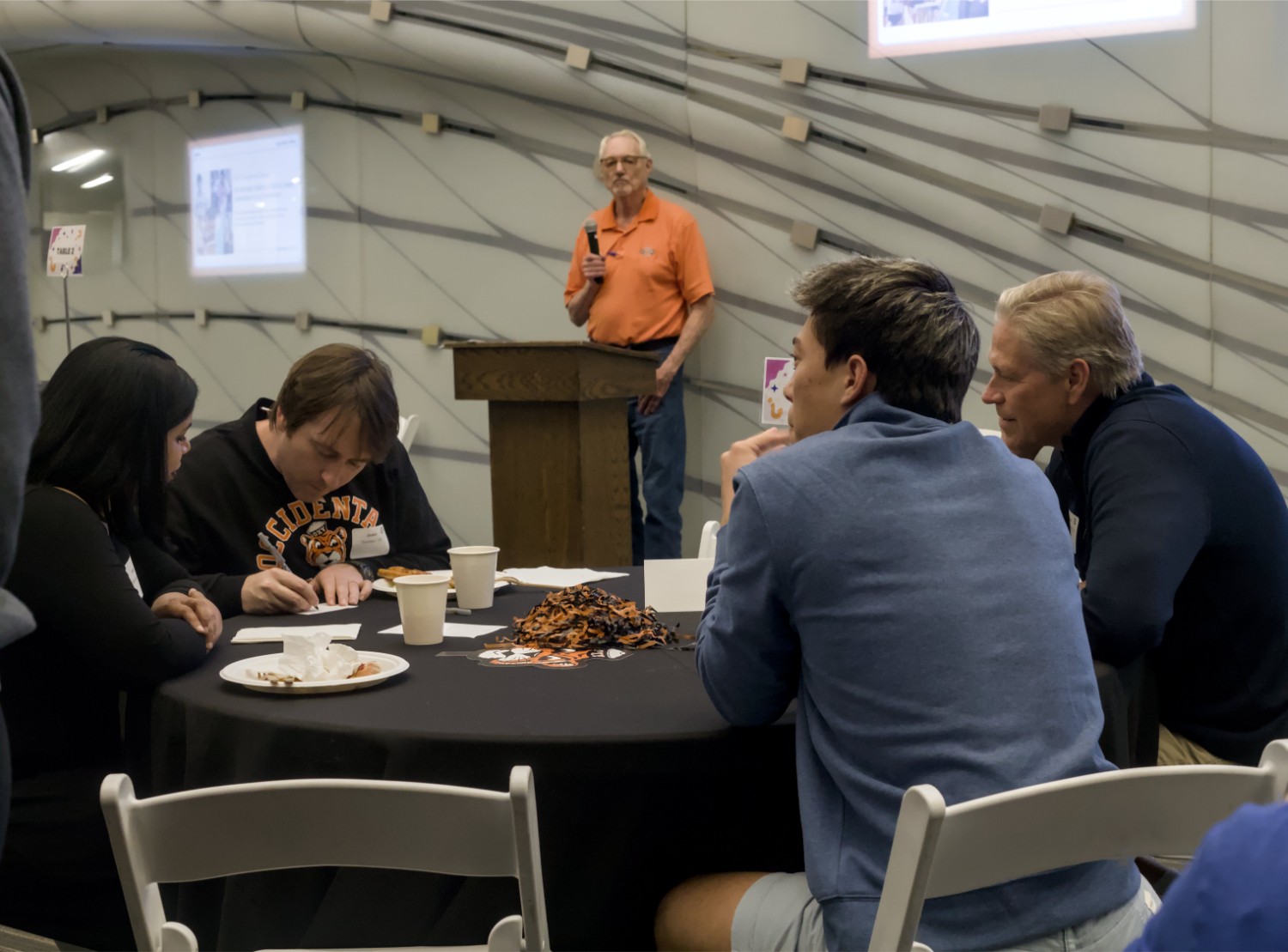
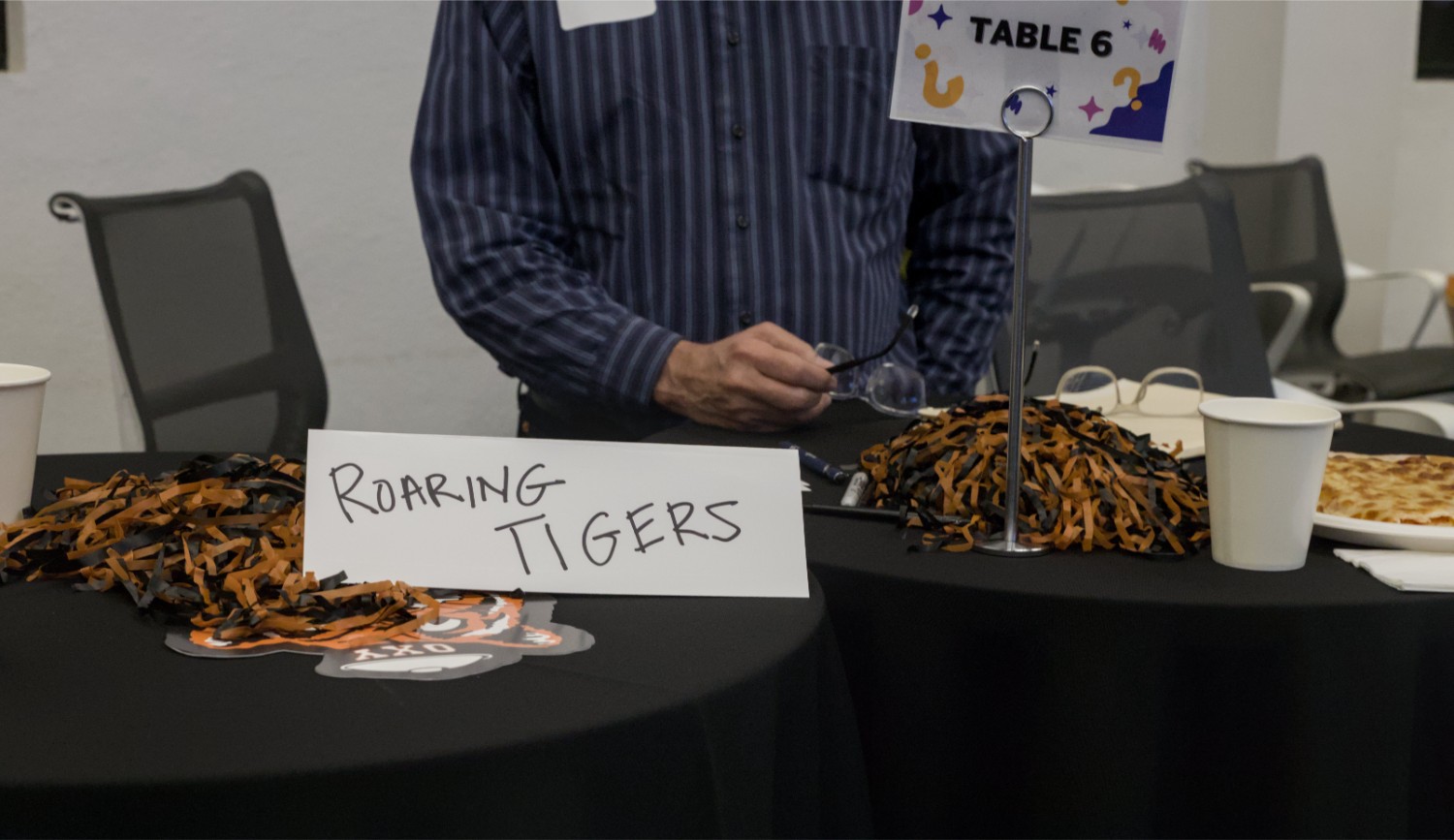
On the day of the event, six teams with four to five people each gathered around decorated tables at the Global Forum. According to Belli, trivia rounds were themed around Occidental alumni achievements, famous tigers and music trivia. There was also a miscellaneous round and a bonus round asking participants to name Occidental’s last 10 presidents. Belli said she designed every question, and her personal favorites were the alumni achievements and famous tigers questions because of the creativity and range.
“I had to do a lot of research,” Belli said. “We have a lot of alumni who’ve done incredible things and I wanted to highlight that.”
Occidental College alumni and current students at the Alumni and Student Trivia Night in Johnson Hall at Occidental College in Los Angeles, CA. Feb. 5, 2026. Maile Brucklacher/The Occidental
Belli said students and alumni who preregistered were teamed up according to related majors, but that there was plenty of room for walk-ins.
The winning team “No Exit” was composed of Victor Mason ’81, Melia Valentine ’25, Amy Wong* (senior), Shelby Kernisant* (junior) and Leah Rosenfeld (sophomore). According to Belli, winners received Occidental merch as their prize for winning. All members said it was their first Trivia Night, and that they wanted to try their best, but did not expect to win first place.
“[The victory] was one hundred percent a team effort because every single person in the group pulled one out of nowhere to get the answer,” Mason said.
The team said there was not a single MVP, especially during the music trivia round. According to Rosenfeld, each member was able to contribute and recall a song on behalf of the group.
“There was a part where Shelby knew the Tupac song because she listened to it at the gym, [and Malia] knew the Will Smith song,” Rosenfeld said. “That was the first time ever where I felt like we were reinventing the wheel. We really worked together.”
Liz Blackman ’80 said she enjoyed playing trivia with her team, and like others, would definitely come back again for another Trivia Night.
“It’s funny meeting students who are obviously so much younger than I am,” Blackman said. “I thought, this is why I came to Oxy: to meet people like this. Being around [everyone], it just reminded me how wonderful the people are at Oxy.”
After the event, Belli said she was proud of the turnout and good energy throughout the night.
“We had a really good mix of alumni and students, and it was fun to see everybody interacting throughout the rounds,” Belli said. “It felt like there was definitely a camaraderie between the teams, even though they just met.”
Occidental College alumni and current student team table at the Alumni and Student Trivia Night in Johnson Hall at Occidental College in Los Angeles, CA. Feb. 5, 2026. Maile Brucklacher/The Occidental
According to Belli, the alumni center not only hosts events like Trivia Night for students to network on-campus or in Los Angeles, but also plans regional events like the Hometown Tiger Mixers for students whose homes or final destinations after graduation are outside of Los Angeles.
Belli said at student-alumni events, it can be nerve-wracking for both alumni and students alike to go into a room where they do not know anybody, but events like Trivia Night are an interactive, low-stakes way for people to get and stay in touch with the Occidental Alumni Center and community. Belli said the Alumni Center seeks to host similar accessible events for students to connect with alumni and utilize the Alumni Center as a resource.
“We just want people to know that we’re here for you,” Belli said. “The community is there, and Oxy will keep supporting you.”
There’s a new language in the Marketplace. The weekly Language Tables sessions — which take place in the Marketplace on Tuesdays from 12:15 p.m. to 1:15 p.m. — hosted an American Sign Language (ASL) group for the first time Feb. 3.
Assistant Professor of Cognitive Science Shengyun Gucurrently teaches Language and Culture in the Deaf Communities.Gu said she thinks the debut of the ASL language table is a milestone for Occidental and a long-awaited addition for many students.
“I think some[students] have been missing this kind of community since there are no ASL classes offered here,” Gu said. “But students want this kind of language environment to nurture them and also stimulate them to continuously learn and practice this language.”
Luz Forero ’98, Occidental’s Language Education Specialist and founder of the Languages Tables program, said the idea of adding ASL to the language tables originated at a meeting of the Accessibility Collective in the fall, when a student approached Forero about taking ASL classes locally and possibly starting a club or table on campus. The Accessibility Collective is a group of students, staff, and faculty who meet to discuss accessibility issues on campus.
This semester, the ASL table is set, with Autumm Battles (senior) at its head.
“Honestly, it was so great, I wasn’t expecting so many people to be interested,” Battles said. “But it was awesome and we had so many different levels of either they wanted to learn or they [had] already taken a class.”
Battles said she learned ASL at her high school in Chicago, which had the largest deaf and hard of hearing population in Illinois.
Battles said she would love to see an ASL class at Occidental, and she sees the new ASL table as a potential avenue for that to happen.
“I just hope that we can build a stronger community and also show to Oxy that there is interest in ASL here so that eventually we could get a class or, you know, faculty that are deaf or hard of hearing,” Battles said.
Gu said she notices growing interest in learning ASL on college campuses across the country and has been asking herself why that is. Gu said she believes part of this increase has to do with our cognition.
“[ASL] revives something that is deep in our mind or deep in our cognition, but we don’t use it since we live in the hearing world, and we use speech mainly to communicate,” Gu said. “But it doesn’t mean that we do not have this ability or capacity for a way to visually use a language or realize a language in a million visual ways.”
“ASL is such a beautiful language and deaf culture is so beautiful in and of itself,” Battles said. “Often, I think we’re very focused on spoken languages, but the manual languages are just as important to us. [People] don’t really understand that you can tell a story with your hands or you can tell a story without even opening your mouth.”
Forero said she wants newcomers to feel comfortable at the Language Tables regardless of their skill levels. She said the Language Tables are the perfect way to learn a new language because it provides students with a low-stakes way to practice.
Battles said she wants to improve her own ASL skills through the new table.
“It’s always a learning process and I don’t think you have to be scared to be here,” Battles said. “If anything, any progress we make in learning ASL is better for the next deaf or hard of hearing person we encounter.”
Contact Claire Wilson-Black at wilsonblack@oxy.edu