Home Blog Page 18

Palm trees, sunsets and traffic: Movies that made me fall in love with LA

LA is the U.S. capital of movies — whether you like it or not. Although the city produces fewer and fewer movies within its borders, it has remained at the center of the industry. Just drive down Sunset Boulevard and take in the high-rise studio buildings and billboards advertising the latest film and television attractions. Before I toured Occidental, I had never been to LA. Before I arrived and since being here, I’ve watched a few movies to get me in the “LA spirit,” or make me excited about this new city I get to experience. Whether you’ve lived in LA for your entire life or you’re new to the city like me, these are some of my favorite movies to help remind you what you love about LA.

LA Story (1991)

“LA Story” is truly a love letter to LA. The opening montage alone illustrates what makes LA great and things that people from inside or outside the city can laugh at: constant tanning, traffic and an annoying sort of blind happiness. One of my favorite small moments that shows how well this movie makes fun of LA: a crosswalk sign that reads “Uh like walk” and then changes to “Uh like don’t walk.”

The film revolves around a weatherman named Harris, played by Steve Martin, who is seeking something greater in his life. The concept of a weatherman in LA is already funny; he’s constantly bored and pre-taping his segments because he knows it will be in the 70s and sunny every day. And let’s be honest, most of the reason people come here is for that sun, even when we pretend it isn’t.

This movie is full of things that I love about LA. Its quirky characters, vibrance, palm trees, city lights and references to rollerblading and dieting are what fill a mostly ordinary romantic comedy plot (specific shoutout to Harris rollerblading through LACMA). Like some of my favorite pieces of humor, the movie’s masterful satirization of LA is what celebrates the city itself. One of my favorite scenes is when Harris tries to make a reservation at a restaurant, only to meet the host and the chef at a bank to discuss his social status and financial situation. Of course, this is not the typical experience of most Angelenos in the city. Still, it pokes fun at the absurd culture of celebrity and status that sometimes overtakes aspects like restaurant culture in this city — something we can all come together and laugh at. And what could be better than that?

One of the most special aspects of this film is the role that traffic and cars play throughout the entire story, something I especially appreciated after experiencing it firsthand this summer during my first real LA commute. Our introduction to Harris is how he masterfully avoids traffic by driving through people’s front yards and on sidewalks. In fact, much of the humor in the film stems from the frustration of driving in this city. But, somehow, most beautifully, one of the main characters in the film is a sign on the freeway that speaks to Harris through subtle hints, helping shape his life (until they are no longer so subtle).

Being on the road is a part of LA life — but we can see it as something more beautiful. We can see traffic as a way to finally have a time to think, reflect on the ones we love and be in transition from one phase to the next. For me, I would use my commute home over the summer to call family members or catch up with a new podcast episode. It was a rare moment in my day when I couldn’t focus on anything else but the road in front of me, a moment of self-reflection and transformation. LA is home to many, but it’s also a place where people travel to with the intention of transformation. This ethos is put most eloquently in a beautiful line in the movie when Sarah, played by Victoria Tennant, says LA is “a place where they’ve taken a desert and turned it into their dreams.”

While “LA Story” is by no means a perfect movie, the love story employs the city as a character and will remind you of the things you love — and sometimes love to hate — about this city.

Jane Hutton/The Occidental

Licorice Pizza (2021)

If there’s any director who celebrates LA, it’s Paul Thomas Anderson, or “PTA.” “Licorice Pizza” is his love letter to the San Fernando Valley, where he grew up. The film is bursting with color and romance, with a dreamy ’70s feel. Just like “LA Story,” “Licorice Pizza” is a film about dreams. Spoiler alert: All of the movies on this list are also about dreams. “Licorice Pizza” is a story about two young people in different phases of life who share a big dream that they’ll do anything to achieve, as long as they maintain their youthful sense of humor along the way.

The film revolves around Gary Valentine and Alana Kane, played by Cooper Hoffman and Alana Haim. Even the casting of the principal roles makes this movie uniquely LA: Cooper Hoffman’s father is the late and great Phillip Seymour Hoffman, making his life uniquely grounded in Hollywood. Alana Haim, in her own right, is an LA icon: she is one-third of the band Haim, along with her two sisters, Danielle and Este. They grew up in the San Fernando Valley themselves, so they have a specific familial tie to the film, along with PTA, who has directed some of their music videos. Haim is loyal to LA, even having a song titled “Los Angeles.” I like to think this familiarity made the film even more homegrown.

Now, many people criticize “Licorice Pizza” for being a movie about nothing. While the film definitely focuses more on aesthetics, mood and an episodic storyline rather than posing critical questions, that doesn’t mean it’s not a really good time. It’s a movie that grapples with innocence, identity and understanding what it means to be an adult. It also just has a lot of fun with its Hollywood scenery. Alana Haim said in an interview that they filmed scenes in real places where people would hang out in the Valley, which made her reminisce about her childhood growing up in the same place.

I watched “Licorice Pizza” for the first time when it premiered in theaters in 2021, before I had even considered attending college in LA. I knew nothing about the city, but something about its magic made me wish I could experience something close to ’70s LA, running around a colorful, music-filled city with big dreams. When I recently rewatched it, I admired the romanticism and celebration of LA, as well as the realistic nature of people trying to achieve their goals. But it’s a movie that focuses less on realism and more on a joyful aesthetic. Maybe that’s what we need sometimes.

Fun fact: The name Licorice Pizza originates from a record store chain from the ’70s and ’80s in LA with the same name. Licorice refers to the color of black licorice, and a pizza refers to the shape of a record. “Licorice Pizza” is all about the pure nostalgia and dreamy joy that comes from this time period in LA.

Jane Hutton/The Occidental

Tangerine (2015)

Sean Baker’s “Tangerine” is a complete departure from the rest of these films. The film is not about the romanticism or joy of LA, but rather about the diverse people often overlooked in LA stories. “Tangerine” revolves around two transgender sex workers, Sin-Dee and Alexandra, as well as a B plot about an Armenian cab driver named Razmik.

The city serves as a backdrop for a worldly adventure, as Sin-Dee seeks revenge on the woman her boyfriend cheated with, while Alexandra seeks a job. Razmik is driving around the city, interacting with various characters, while he is one of Alexandra’s main customers. Oh, and it all takes place on Christmas Eve.

“Tangerine” is exciting, but it also realistically represents the city. Baker does not attempt to make LA look like a place where dreams come true, just a place where people live and conduct their business as usual. And that’s what makes it so special: the beauty lies in paradoxical moments, like an orange-pink sunset during a catfight between two sex workers or glistening lights outside of a donut shop where chaos ensues.

Just like every other film on this list, it also represents people having dreams and using the city as a way to make them a reality. There’s a beautiful scene of Alexandra singing at a dive bar, with only a few people in the audience. Sin-Dee looks at her with admiration, watching her best friend do what she loves. It reminds me of everyone having dreams in the city, and the community (big or small) that comes together to support them. The final scene of the film is one of the most beautiful and memorable moments for me — which I won’t spoil — as it also illustrates this unwavering support through a powerful friendship. It made me think about the kind of support Occidental and its creative community have granted me. Receiving support from my friends in my endeavors and getting to support them in return makes living in a big, unpredictable city like LA a little more worth it.

There are so many stunning accomplishments within “Tangerine,” one of the most notable being that it was all shot on an iPhone 5s. The grainy, saturated look of the film makes every color pop, evoking a time capsule of mid-2010s LA. Additionally, Baker cast his actors off the street and from social media and asked for input from them while writing and directing, employing a more participatory approach in his filmmaking. His creative methods in the process are one of the biggest reasons I love LA: the collaborative and creative process behind a work of art, telling authentic and hilarious stories along the way.

Real Women Have Curves (2002)

Real Women Have Curves” is not a movie distinctly about LA, but it is one of the few on this list that portrays East LA with beauty and vivid color. The film focuses on an 18-year-old girl named Ana, played by the prolific America Ferreira. Ana is a Mexican-American girl living in LA with dreams of going to college. But her family needs her to help at her aunt’s factory. Through working at this factory, Ana learns about the women of her heritage and her city, inspiring her to follow her dreams.

There are beautiful scenes sprinkled throughout this film where Ana walks, takes the bus or gets a ride from her family and we immediately see a colorful world populated with immigrants from all different places. On her commute to school, the audience sees the various communities that make this city what it is. These communities have businesses and lives of their own that we have the pleasure of peeking into, even just for a brief moment. At the time, Hollywood often portrayed Boyle Heights — the neighborhood where the film is set — as a place with gang violence and crime. But the film’s director, Patricia Cardoso, chose to represent the neighborhood as she saw it.

Similar to the other films on this list, “Real Women Have Curves” does not shy away from the difficulties of living in LA, especially as a child of immigrant parents. Ana must work hard, and her family tries to persuade her to sacrifice her dreams of higher education to support them. Ana doesn’t feel like she entirely fits in with either her Mexican or American culture, as the film explores her search for her place in the world. But these reasons are what make this film so beautiful. Whether this experience is relatable to you or not, it offers an honest portrayal of many people in this city. Maybe, for some kids, it will help them feel less alone for questioning their identity, even if it isn’t cultural.

For me, the conversations about Ana’s comfort level in her body and womanhood were what helped me connect to the film the most. In a city that sometimes feels overly focused on aesthetics, getting the opportunity to see a young girl have these conversations in a real and honest way marked it as an essential film in my book.

“Real Women Have Curves” is special, specifically to our community, as it reminds us of the rich cultural context of East LA. When the film premiered, it won the Audience Award at Sundance and became the first Latina-directed film to enter the Library of Congress’s National Film Registry. Now, it’s celebrated as a glimpse into LA culture, with theater adaptations and various celebrations of the film to prove it.

Lupin Nimberg/The Occidental

La La Land (2016)

Okay, now the obvious choice. “La La Land” was the movie that everyone in my life told me I needed to rewatch before I came to LA, as I’m sure everyone else experienced as well. The film is truly a love letter to LA, even if you think (like me) some of it can be cringeworthy. There’s not much I can say about this film that audiences haven’t already said hundreds of times, but what I most enjoy about “La La Land” is how the city plays a character. Its locations are integral to the plot, from dancing on the mountains to the Griffith Observatory.

As a musical fanatic, “La La Land” always felt reminiscent of some of the most celebrated musicals, such as “Singin’ In The Rain” or “West Side Story.” This similarity is not accidental: the romanticism of a specific city and its associated group of people are two factors that make those musicals work so well. Just as “West Side Story” celebrates New York City, “La La Land” celebrates LA, featuring engrossing and colorful dance scenes set against the city’s backdrop.

But “La La Land” does not shy away from some of the complex parts of trying to “make it” in LA. A love story falls apart because of two different dreams — and two different people who have dedicated their lives to their dreams. LA brings these people’s dreams to life while also tearing them apart from each other. It’s sad, yet a real part of cities where ambitious people are constantly attempting to transform. The bittersweet ending of this film is what marks it as something special, as Damien Chazelle asks: What is making your dreams come true without sacrifice?

“La La Land” is not a perfect movie for me. Still, even as a critic, I have to appreciate the way it excels in every aspect, particularly in its romanticization of LA. One day, I’ll venture to one of its iconic locations and get to say, “It’s just like La La Land!”

While I can get nerdy about movies, I by no means claim that these films perfectly represent the city of LA. In fact, except for “Tangerine” and “Real Women Have Curves,” these movies tend to represent a very “Hollywood” version of what makes this city beautiful. But, especially when it can feel exhausting to be in LA, diving into a movie that makes you appreciate its greatness can be the best form of entertainment. I hope this list inspires you to check out one of these films or motivates you to find your own examples of art to appreciate your city.

Contact Eliana Joftus at joftus@oxy.edu

Loading

MAC department partners with Vidiots to screen ‘Nightcrawlers’

Occidental College’s Media Arts & Culture (MAC) professor John Trafton and the video store and movie theater Vidiots partnered to give a screening of the neo-noir thriller “Nightcrawler” Nov. 5th. The screening was followed by an interview with the director, Dan Gilroy.

According to Trafton, he put this event together for his Los Angeles and Film class, where they explore how LA is portrayed in film.

“Every time I teach this class, I do a screening series called Los Angeles in Film,” Trafton said. “The Los Angeles in Film Screening series will hold events at the Choi Auditorium, Oxy Arts and often with special guests who come and do a Q&A.”

According to Trafton, his love of film started with dreams of becoming a filmmaker, but after spending some time in the industry during his undergraduate years, he found that his passions lay elsewhere.

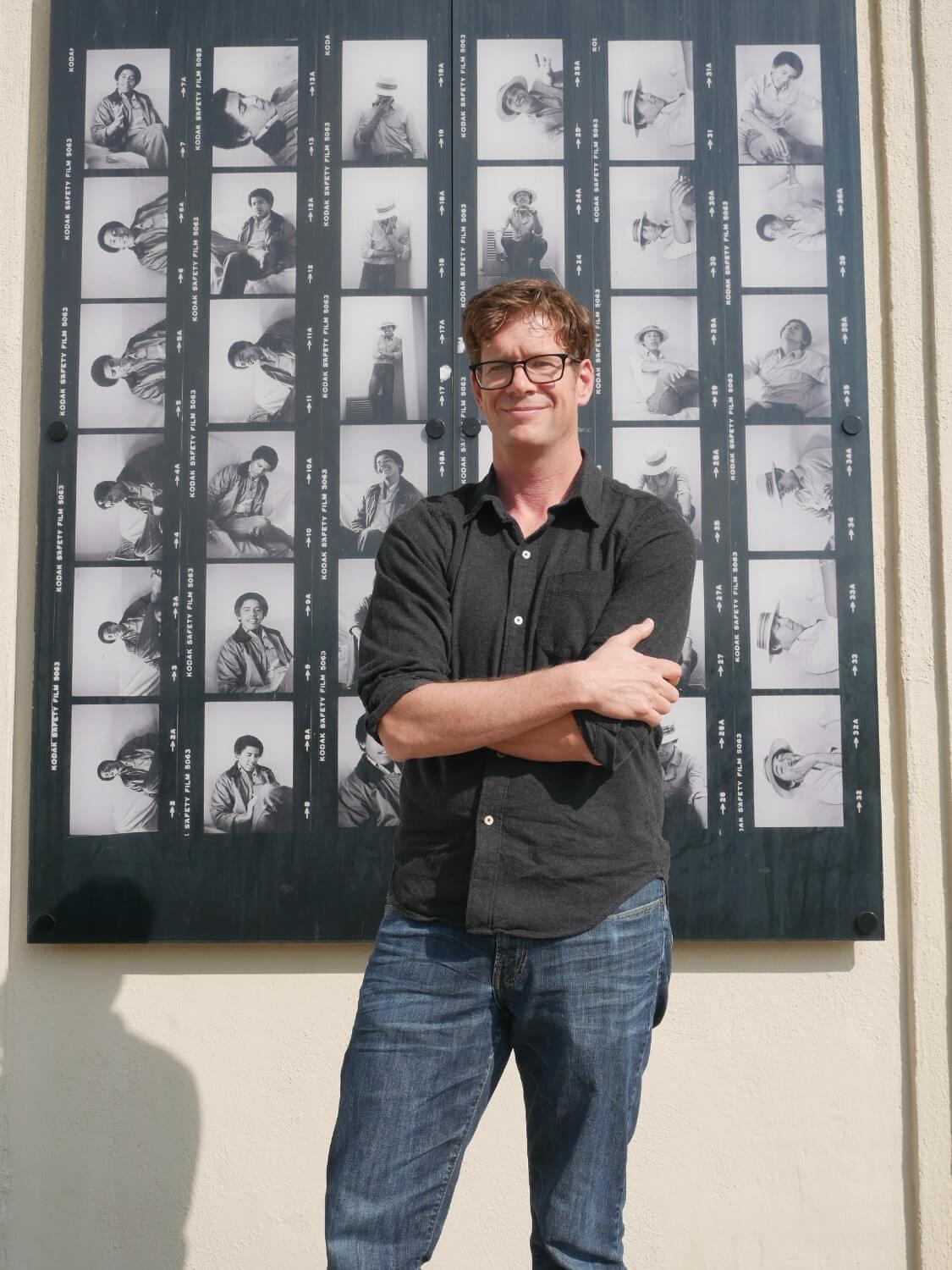
Professor John Trafton in front of Haines Hall at Occidental College in Los Angeles, CA. Nov. 5, 2025. Jane Hutton/The Occidental

“It was really towards the end of my undergrad when I took a course in horror literature that inspired me to take my love for storytelling, especially love for telling true stories, in a different direction,” Trafton said. “After that, I pursued a master’s degree and then a PhD. I’ve been a professor for more than 10 years now.”

Trafton said he grew up spending time at video stores and has been aware of Vidiots since visiting their Santa Monica location. Trafton said he worked with Vidiots many times, and it was during a conversation with people at Vidiots that “Nightcrawler” came up as a good film noir to show his class.

“I really love the people at Vidiots,” Trafton said. “It’s such a wonderful film community to be a part of, and we were chatting about some of the things on our wishlist, and Nightcrawler came up.”

Director of programming Amanda Salazar at Vidiots in Los Angeles, CA. Nov. 5, 2025. Jane Hutton/The Occidental

According to Amanda Salazar, the director of programming at Vidiots, she is a movie lover who believes in film’s ability to create community.

“Movies are everything to me. Film is deeply personal and also communal,” Salazar said. “I believe it’s an art form that is really accessible. The other arts, like classical music, can feel siloed and less accessible. But with film, it’s common ground. Everyone has seen a movie, it connects us.”

According to Salazar, as a community-run theater, Vidiots finds community-connected screenings to be essential. She said the screening of “Nightcrawler” is an example of the kinds of community-connected screenings that come together thanks to their partnership with Occidental College.

“Some screenings tie in to classes and programs happening at Occidental,” Salazar said. We’ve been talking to John about LA films specifically, and we’ve wanted to play Nightcrawler for a long time.”

According to Salazar, Vidiots typically shows older movies, but believes “Nightcrawler” is a film that is very relevant to what is currently happening in society.

“‘Nightcrawler’ toes the line for us because it’s a newer film, from 2014, and we usually play older films. But it’s clearly become a beloved LA film—a raw, dark LA story,” Salazar said. “It’s very relevant today. It’s a provocative film exploring the darker side of humanity.”

According to Trafton, he believes “Nightcrawler” is a relevant movie because of its themes of how kinds of information spreads, the allure of get-rich-quick schemes and the information economy.

“Since the early days of classic noir, this has been a topic that noir films have focused on to some degree, where Hollywood becomes a stand-in for corporate/political power and capitalism,” Trafton said.

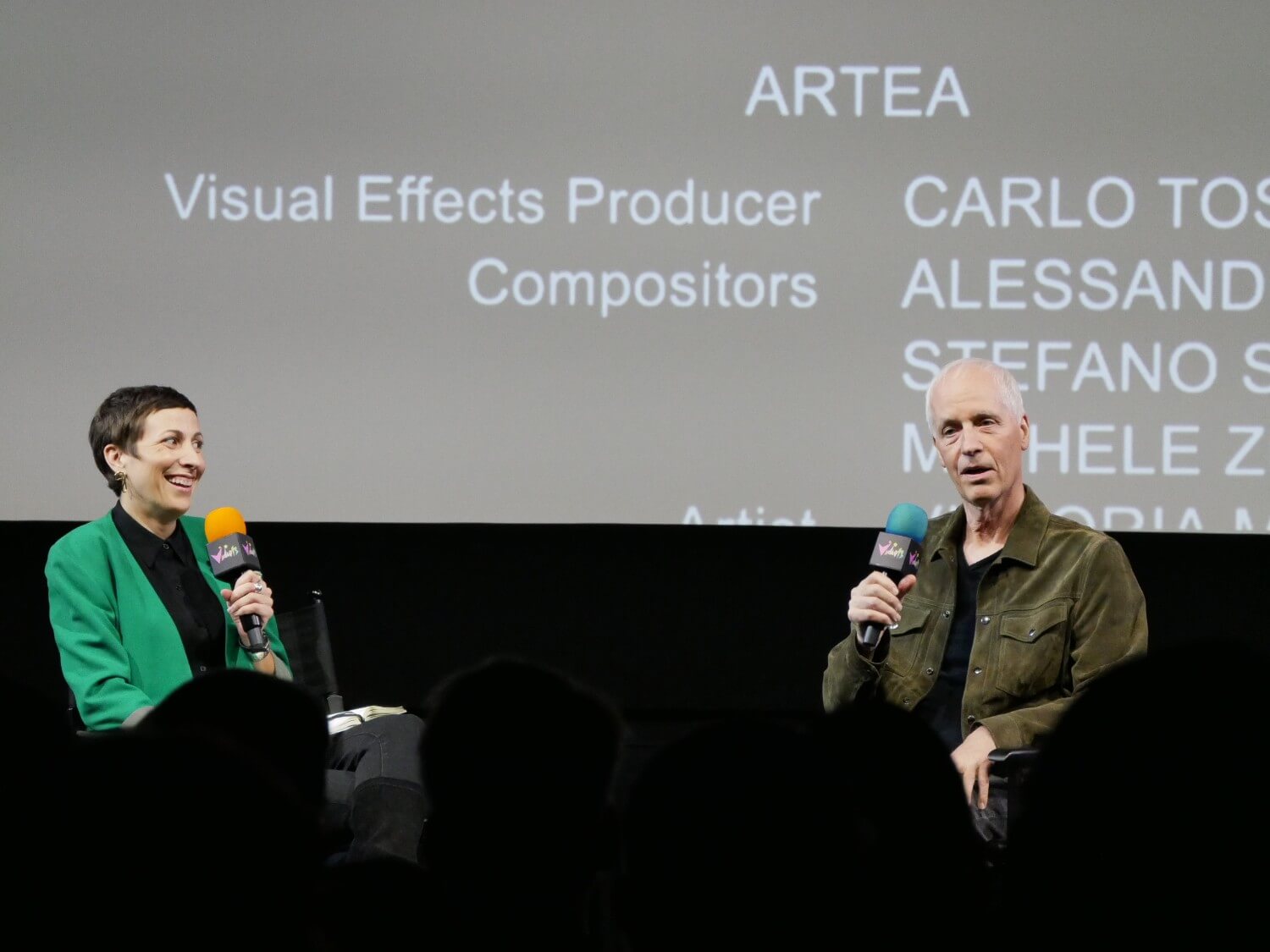
Director of Programming Amanda Salazar and director Dan Gilroy in Vidiots in Los Angeles, CA. Nov. 5, 2025. Jane Hutton/The Occidental

Amelia Darling (sophomore), a MAC student, said she loves being creative and is excited by her major. According to Darling, she was at the “Nightcrawler” screening and has Trafton as a professor. Darling said the movie was very worth watching, and being able to meet the director was also a highlight of the night.

“I was super hyped to see Nightcrawler. It was a little longer than I expected, and I was getting tired by the end, but it was totally worth it,” Darling said. “It was a very interesting plot and a super well-done movie. I really liked the director’s interview too.”

According to Darling, the movie was dark and twisted, but at the same time, it was comedic, and had the whole crowd laughing

“The director said, ‘An antihero doesn’t really change throughout a story. They enter stage right and exit stage left pretty much the same, and they hold up a mirror to the audience.’ That was such a brilliant take and [it] perfectly described the movie,” Darling said.

According to Trafton, he hopes students will come away from the film uncomfortable with their own ambitions and aware of the dangers of the gig economy.

“I hope they look at Jake Gyllenhaal’s character and they see reflections of themselves and their own aspirations and they get really uncomfortable,” Trafton said. “Absorb these picturesque images of LA. It looks so beautiful at night under the street lights and LED lights. And it comes from a very rich tradition of depicting LA at night. A place that is both beautiful and ugly at the same time.”

Contact Edgar Zatarain at zatarain@oxy.edu

Loading

‘You can do it in your backyard’: ERNC Sustainability Committee holds native plant giveaway

The Eagle Rock Neighborhood Council’s (ERNC) Sustainability Committee will hold their annual Native Plant Event at Eagle Rock City Hall from 9 a.m. to 1 p.m, Nov. 16. According to Natalie Freidberg ‘94, a member of the sustainability committee, the event will include a giveaway of a variety of around 200 native plants, as well as several booths and guest speakers.

Freidberg said the giveaway started in 2014, when she was the sustainability director, and has only become more successful since. According to Freidberg, as information about the importance of native plants has become more widespread, people have become increasingly interested in bringing them into their homes.

“Those of us who’ve been preaching about native plants for decades are finally [being] listened to,” Freidberg said. “More and more native plant [nurseries] are opening [and] more and more information about native plants is being spread on social media.”

Denys Hemen, current director of the sustainability committee, said he observed this trend over the past six years.

“There’s been a boom in popularity around native plants here very recently, so they’re getting easier and easier to find,” Hemen said. “You can walk into Baller Hardware in Highland Park and they have a great variety of native plants inside.”

According to Hemen, a native plant is historically found in a certain area and adapted to that specific environment. Hemen said that while exotic plants may survive in a foreign ecosystem, they do not support the surrounding wildlife in the way that a native plant would.

“Animals have evolved to use these plants for food and shelter,” Hemen said. “When you have exotic plants, the animals haven’t necessarily adapted to those, so it doesn’t really offer up the same amount of resources as a native plant would. The exotic plants do take out resources and crowd out some native plants.”

Freidberg said providing native plants is critical for pollinators, especially in Southern California.

“We’re what’s considered a biodiversity hotspot,” Freidberg said. “We have a huge number of native species, pollinators, as well as birds, that rely on native plants. In some cases, they cannot exist without certain native plants.”

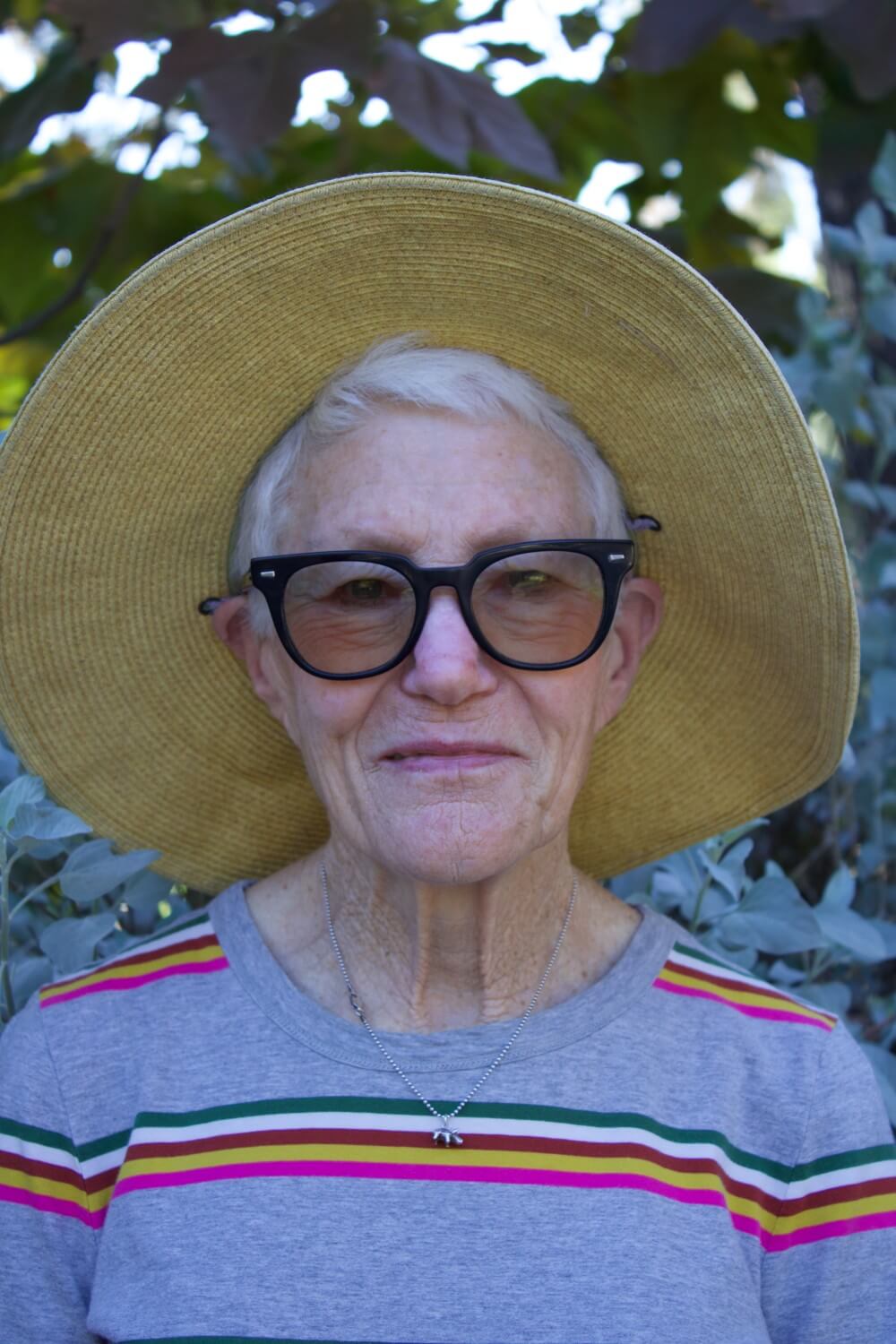
Biology professor Gretchen North in Sycamore Glen at Occidental College in Los Angeles, CA. Nov. 7, 2025. Kadence Bernard/The Occidental

According to Occidental College biology professor Gretchen North, one of the most harmful gardening practices in Southern California is planting lawns. North said lawns waste a significant amount of water and harm other life forms that rely on the native species. Instead, North said we should focus on mimicking the natural environment through a variety of native plants that grow to different heights: ground-level cover, mid-level shrubs and trees. According to North, this diversity of levels is critical to creating the various ecosystems necessary for biodiversity.

“You can do it in your backyard […] it sounds silly, and it also sounds like a typical American solution, right?” North said. “Just do it as an individual and you’ll be okay, buy the right stuff and you’ll fix the environment. But it just shows that organisms are resilient. As long as there’s a source of them somewhere, they can find a restored piece of land, even at a small scale.”

North said some of her favorite native plants are the various sages, as well as drought-resistant crops, such as pomegranates, kumquats and chard. According to North, some other great ways to source native plants and learn how to garden sustainably are by collecting them in accordance with indigenous guidelines and through organizations such as The Urban Homestead and North East Trees.

North said another critical issue in the area is tropical milkweed. Stores tend to point customers towards the tropical species, North said, but the plant carries a pathogen that kills monarch butterfly larvae.

“[Tropical milkweed] really is poisoning the monarchs,” North said. “If you go to the store or the nursery and you say you want milkweed for the monarchs, chances are they’ll point you to this flashy […] milkweed […] it doesn’t lose its leaves over the winter, so it builds up a pathogen that kills the monarch larva.”

According to Freidberg, as Eagle Rock lies in a monarch corridor, it is important for people to plant native milkweed. Freidberg said the ERNC sustainability committee brings in vendors to supply their fall giveaway and their spring events.

“In the spring, some of the vendors will bring some other plants to give away like milkweed, which doesn’t need as much time to get established,” Freidberg said.

For the upcoming event, Hemen said the committee sourced the plants from El Nativo Growers and will bring in organizations, such as the Theodore Payne Foundation, the SAMO Fund and Poison Free Malibu, to host educational booths. Freidberg said the local Dark Sky International chapter and a local zero-waste store will have tables as well.

According to Hemen, there will also be a landscaping expert to answer questions about the plants and help participants plan on how to integrate them into their gardens. He said the giveaway is not just an opportunity to get a free plant, but a chance to learn about the community.

“It’s a great way to meet your neighbors, and it’s a great way to hear their concerns because not everyone can come to a meeting,” Hemen said. “They can bring any kind of concerns that they have to us. We’d love to get the word out about the neighborhood council to more folks. Come ready to learn and come ready to walk out with some complimentary native plants.”

Contact Naisha John at njohn@oxy.edu

*A correction was made on Nov 24 at 11:16 a.m. to reflect the word nurseries instead of groceries

Loading

Pastport Vintage LA’s new storefront: ‘Come for the clothes, stay for the vibe’

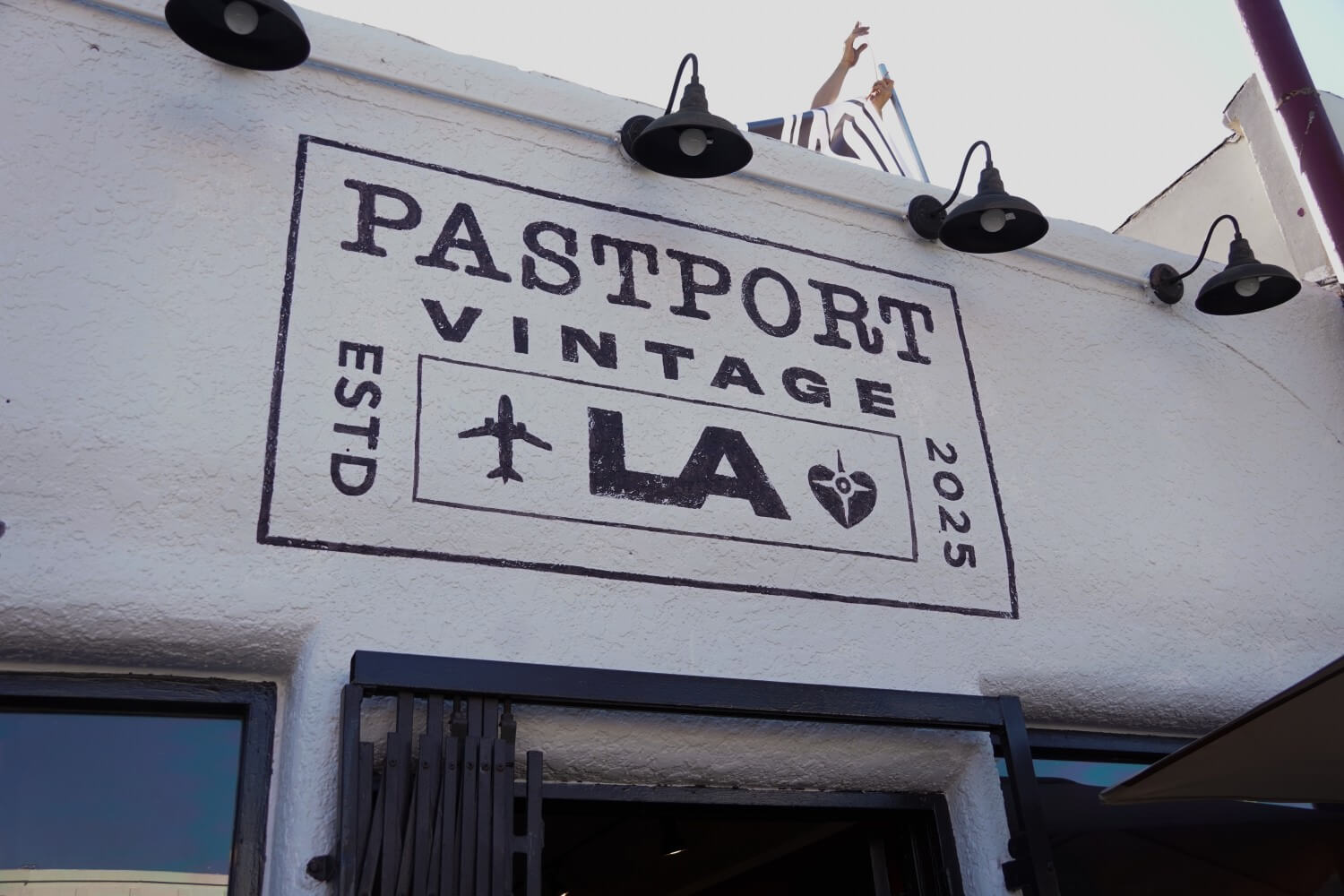
Pastport Vintage LA opened its storefront Nov. 8 on York Boulevard. In the Making CFO and co-founder Edward Chang said the new vintage store is the child of In the Making and Outfits and Oddities. In the Making CEO and co-founder Maribel Valdez said the non-profit works closely with youth development programs, such as LA County’s Youth at Work. Together, Valdez said, these organizations have opened a new store where they can employ people ages 16–24.

“I feel that we’re all in agreement that fun should be the first part and the second part, because it’s so important,” Valdez said. “I’ve known Frank for a while now, and I always knew we were going to work together, but I didn’t know in what capacity. So now that we’re here, and I see the vision come to life, I’m really excited.”

Owner of Outfits and Oddities, Frank Serna, said he partnered with In the Making after meeting Valdez and Chang on Facebook Marketplace.

“I have a history [of] working with youth myself, so I loved what [Valdez and Chang] were doing,” Serna said. “[The collaboration] was a no-brainer for me.”

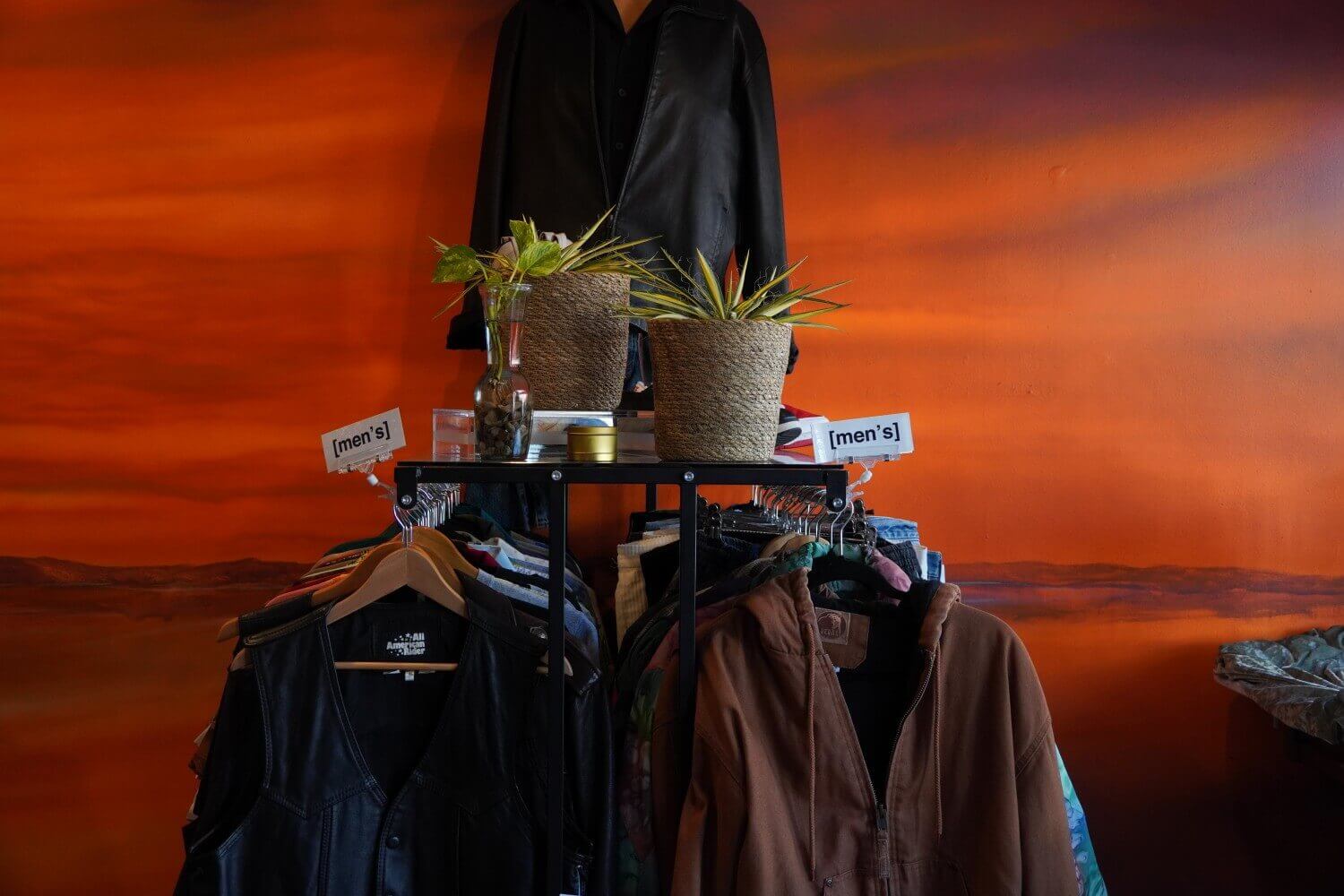
The interior of Pastport Vintage LA in Los Angeles, CA. Nov. 8, 2025. Abigail Montopoli/The Occidental

Serna said Outfits and Oddities started as a vintage adventure, where people could try on his curated collection, and turn the experience into an event, rather than only a shopping trip.

“I turned my house into a giant vintage clothing marketplace and wonderland, like Narnia,” Serna said. “You walk into this random East LA house, and it just opens up to really cool vintage clothing everywhere. I would throw events and have people come, and I was able to have a sound system and a dance floor.”

Ivet Palacios, an employee at Pastport Vintage and intern at In the Making, said she runs an alternative fashion business called Dar Eve, which she hopes to grow into a store similar to Pastport Vintage. Palacios said In the Making has helped her run pop-up shops and create a friendly environment.

“We don’t just want Pastport to be a store,” Palacios said. “We’ve come up with the slogan: come for the clothes, stay for the vibe. We just want people to come by and enjoy the space, play dress up, hang out and just have fun.”

The interior of Pastport Vintage LA in Los Angeles, CA. Nov. 8, 2025. Abigail Montopoli/The Occidental

Serna said he wants to keep Pastport Vintage as reasonably priced as possible, and that pricing items is a group discussion amongst employees. Many items in the store are under $50; however, Serna said some rare items can reach around $300.

“There [are] alternatives in LA for vintage clothing that are really cool, but unfortunately, sometimes it’s something that, disappointingly, a lot of people can’t afford,” Serna said. “You walk in, you fall in love with an item, and then, it’s kind of out of reach. So we do want to try to keep prices as reasonable as possible.”

According to Valdez, the shop intends to host events on the second Saturday of each month. Valdez said she is planning an event, dubbed “Cosmic Vibe,” where the storefront will celebrate the zodiac sign that falls under the second Saturday, and visitors will have the opportunity to prove their birthdate and receive a discount on their purchases.

“We want to have some kind of event that happens on a regular [basis] over there, so [the interns] started coming up with some ideas,” Valdez said. “It’s a reminder that it’s not just about shopping, but hanging out and celebrating and building community.”

The exterior of Pastport Vintage LA in Los Angeles, CA. Nov. 8, 2025. Abigail Montopoli/The Occidental

Chang said Pastport Vintage has already become part of the York Boulevard Business Association.

“We participated a little while ago in the Mercado Festival,” Chang said. “We’re putting lights across the next two blocks […] and they used to have an art walk over here, so there has been a lot of talk about bringing something like that back.”

Chang said he works with the county and government agencies in a way where In the Making can help the agencies showcase their policies, while the non-profit receives some support, creating a working relationship. The government offers support to In the Making, which Chang said can be critical to their operation, but the organization also knows they cannot depend on government funding at all times.

“We found a way to build a boutique that allows us to serve as a training ground for young people to learn everything from retail merchandising to financial planning,” Chang said. “We educate and elevate local youth to get to the point where they, if they want to, [can] become young entrepreneurs. We can give them the actual resources they can use to become self-sufficient down the road.”

Valdez said she enjoys working with youth and offering them services she would have loved to have had growing up.

“Seeing the young adult interns see what we’ve accomplished is so satisfying to me,” Valdez said. “I have found that my thrill is in watching other people’s dreams come true.”

Contact Abigail Montopoli at montopoli@oxy.edu

Loading

Prop. 50 sparks debate among Occidental students

California voters will be able to vote on Proposition 50 (Prop. 50) Nov. 4, a state constitutional amendment that would give the power to redraw congressional district maps to the state legislature, instead of the current independent California Citizens Redistricting Commission. It would likely give California Democrats five new seats in the House of Representatives.

This measure is in response to the Texas legislature redrawing their own district map this summer, likely granting Texas Republicans five new congressional seats.

Leading up to Election Day, reactions to Prop. 50 have varied across California and across campus. These responses were given prior to the results of the election.

Sebastian Gardea (junior) – Hometown: Los Angeles, CA

Gardea said he voted for Prop. 50 because he saw the measure as an immediate way to fight back against the Trump administration.

“As somebody who did vote in the 2024 presidential election and voted down ballot Democrat, we effectively lost a really major battle,” Gardea said. “But battles are never over, and new battles are happening right now.”

Gardea said he saw Prop. 50 as a way to give representation lost over the summer back to Texas Democrats.

“Granted, Texas Democrats are not going to be the constituents of these new California Democratic seats, but it will be a roundabout solution to solving their plight,” Gardea said.

Gardea said he believes independent redistricting committees should be mandated in every state, which made it more difficult for him to vote yes on Prop. 50.

“However, I think it is my duty to vote for [Prop. 50], because it’s better […] than just sitting here reading all the [gloomy] headlines about everything bad happening,” Gardea said.

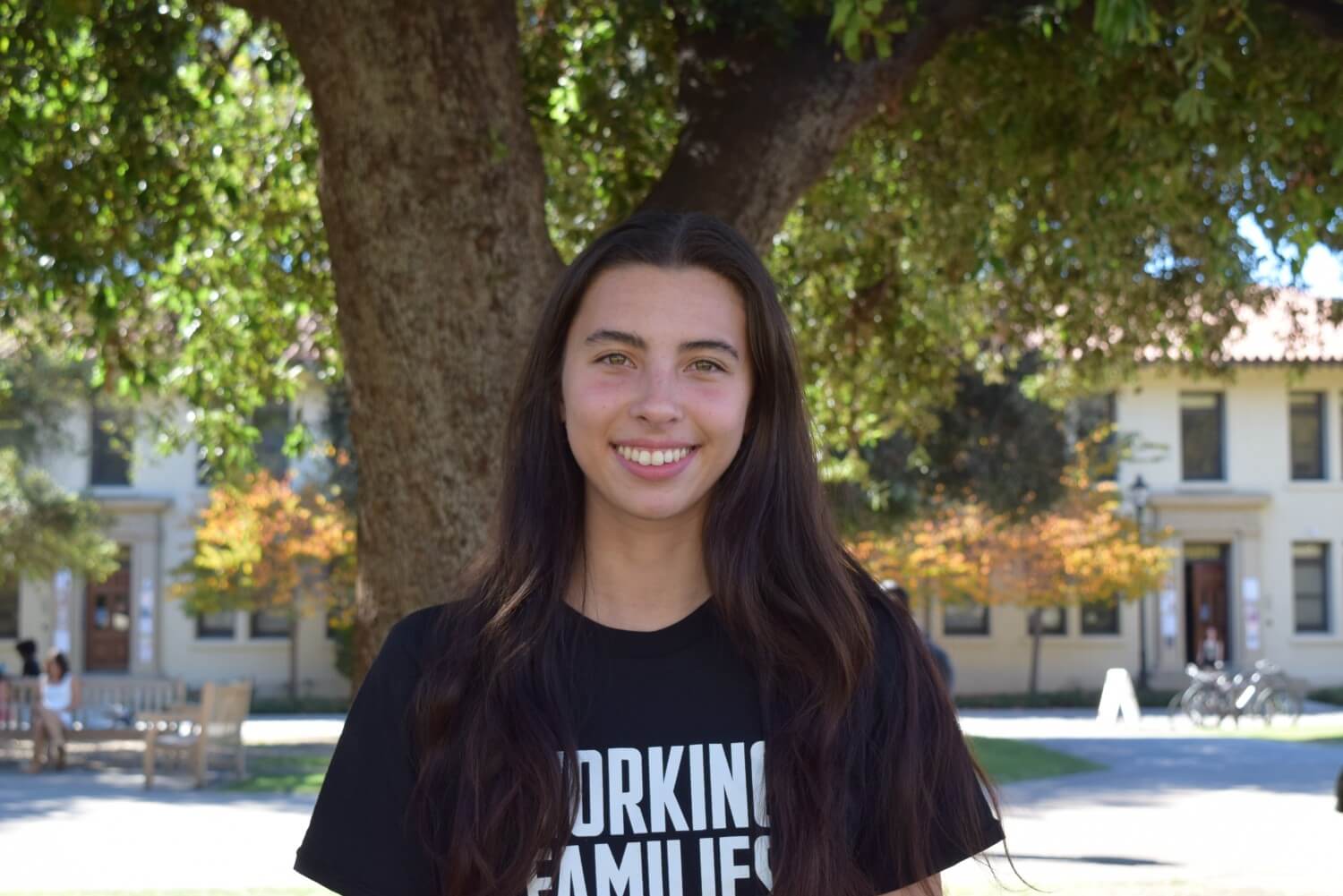
Rosa Hochschild (junior) on the Academic Quad at Occidental College in Los Angeles, CA. Oct 29, 2025. Emma Shiffler/The Occidental

Rosa Hochschild (junior) – Hometown: Berkeley, CA

Hochschild said she is an organizer for Yes on Prop. 50 with the California Working Families Party.

“I see Prop. 50 as a really well-designed response to what is happening in Texas, where you can see that they have already gone ahead and made five new Republican House districts without consulting voters,” Hochschild said.

Hochschild said she appreciates how Prop. 50 has been presented to the voters in California, whereas the measure in Texas was decided by the state legislature.

“I think that [Prop. 50 has] a really good design, because if you are shifting the power over from the Independent Redistricting Commission to the state legislature, you want to make sure that power isn’t constant and will be returned to the independent way that it was before,” Hochschild said.

Jesse McClure (senior) in Johnson Hall at Occidental College in Los Angeles, CA. Oct 30, 2025. Emma Shiffler/The Occidental

Jesse McClure (senior) – Hometown: Santa Clarita, CA

McClure said he will not decide how he is going to vote on Prop. 50 until he goes to fill in his ballot.

“It’s a tricky one with Prop. 50 because it’s naturally partisan, but reactionary partisan, so you have to weigh out what’s going to be the short-term benefits versus the long-term benefits and ramifications,” McClure said.

McClure said as a politics major, he is very methodical in how he votes.

“I understand the purpose, but I don’t like the idea of shutting out certain groups of people,” McClure said. “That is naturally what [Prop. 50] is going to do, even if you’re just talking in the short term.”

McClure said he worries Santa Clarita will be especially affected by Prop. 50, as it is a swing district.

“I understand the nationwide purpose,” McClure said. “But it puts me [between] a rock and a hard place.”

Cassidy Johnson (junior) on the Academic Quad at Occidental College in Los Angeles, CA. Oct 31, 2025. Emma Shiffler/The Occidental

Cassidy Johnson (junior) – Hometown: Fullerton, CA

Johnson said she wanted to research how Prop. 50 would affect Fullerton before she made a decision.

“I was a little skeptical at first, because I wasn’t sure how it would affect me,” Johnson said.

Johnson said she voted yes because Prop. 50 was temporary, and even if she ended up changing her mind, the measure can be reversed.

“I voted yes just to see what would happen,” Johnson said. “I figured I’d […] see if anything good comes of it.”

Zumyna Kabir (sophomore) on the Academic Quad at Occidental College in Los Angeles, CA. Oct 30, 2025. Emma Shiffler/The Occidental

Zumyna Kabir (sophomore) – Hometown: Orange County, CA

Kabir said she voted for Prop. 50, because she saw it as a direct way to counteract the Trump administration.

“If Prop. 50 is […] a step in stopping [Trump], then I think that it’s fine, even if I have my reservations,” Kabir said.

Kabir said she views Prop. 50 as an equalizing measure in response to the new Texas congressional map.

“Prop. 50 is good at garnering enough seats in the House for the Democratic Party,” Kabir said. “That is exceptionally important if other states are gerrymandering to make sure that they have enough representatives in the House […] [Republicans] have unlimited power. Prop. 50 evens it out.”

Kabir said she has felt as though her vote is being influenced by outside actors.

“Politicians are all choosing who they want voting,” Kabir said. “I feel like that defeats the whole purpose of the democratic system […] It troubles me to see the state of what we’ve become as a country.”

Michael Morris (junior) outside Swan Hall at Occidental College in Los Angeles, CA.Oct 30, 2025. Emma Shiffler/The Occidental

Michael Morris (junior) – Hometown: Pasadena, CA

Morris said he thinks Prop. 50 is a necessary measure to combat redistricting efforts in states such as Texas, Missouri and Indiana.

“If Democrats don’t [redistrict,] then they’ll be substantially disadvantaged in the midterms,” Morris said. “It will be detrimental to our democracy if Trump doesn’t have a check […] in the House.”

Morris said he does not like partisan gerrymandering, but he views it as necessary in the current political climate.

“We’re living in an unprecedented time,” Morris said. “In this case, it is a good thing that we are redistricting.”

Contact Quinn Sumerlin at sumerlin@oxy.edu

Loading

Kavat Coffee brings modern Armenian coffee culture to Eagle Rock

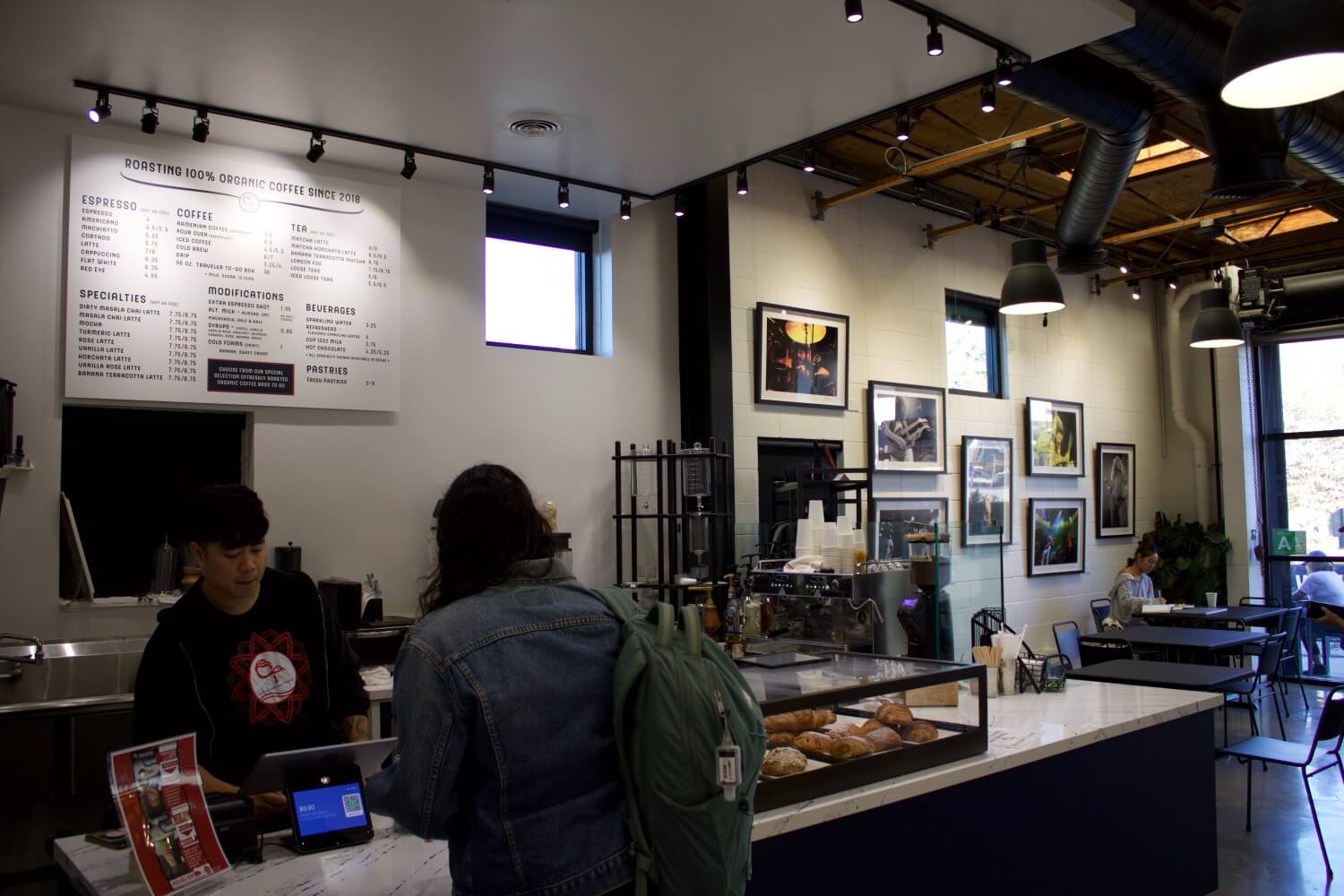
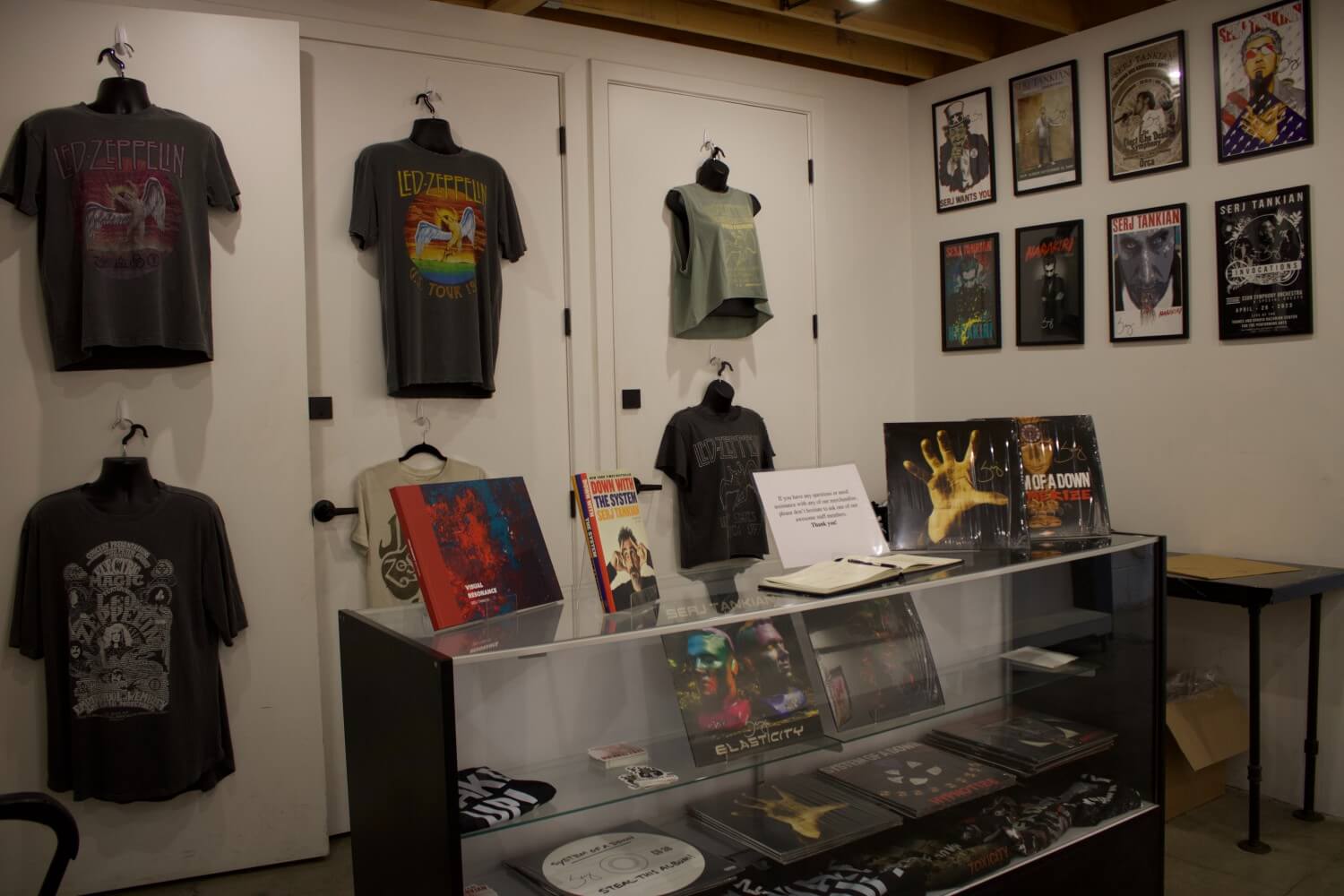
Kavat Coffee, located on Colorado Boulevard, was founded and is owned by Grammy Award-winning musician and lead singer of the band System of a Down, Serj Tankian. According to their website, the coffee shop is introducing “premium modern Armenian coffee” to Eagle Rock.

The Kavat Coffee website says the business is “a band of coffee enthusiasts who have taken our cultural roots and infused them with modern flavors and sensibilities.”

Ara Ajounian, manager of Kavat Coffee, said the brand began as an online venture before opening its physical location last year.

Interior of Kavat Café on Colorado Boulevard in Los Angeles, CA. Oct. 28, 2025. Kadence Bernard/The Occidental

“For six months, we worked on developing our blend,” Ajounian said. “It started as an online product, and now we have the café alongside it.

The coffee draws on a Near Eastern brewing tradition passed down through generations. Ajounian said Kavat Coffee was born from a shared desire to modernize a familiar cultural ritual.

“As Armenians, we grew up drinking coffee in the house with our parents,” Ajounian said. “It didn’t matter how late it was. It was part of spending time together, in happy or sad moments. You can always start a conversation with coffee. That’s how it all started.”

According to Ajounian, the coffee shop also serves as a creative and cultural space.

“Every two to three months, we have a different artist display their work on our walls,” Ajounian said. “When we first opened, we featured Serj’s artwork, which he pairs with original music you can hear by scanning the pieces with an app.”

Interior of Kavat Café on Colorado Boulevard in Los Angeles, CA. Oct. 28, 2025. Kadence Bernard/The Occidental

Ajounian said Kavat Coffee hosts weekly “Acoustic Sundaze,” which feature local musicians’ performances on the shop’s outdoor patio.

“We want to give people a place to gather and be together, somewhere local where they can come and hang out,” Ajounian said.

Anna Knight (senior), a former barista at Kavat Coffee, said Kavat Coffee’s work environment is supportive and community-oriented.

“It’s the closest thing to family I think a workplace could get to,” Knight said. “A lot of the staff are musicians, and Serj always offers his advice and time.”

According to Knight, Tankian has cultivated cultural connections, and the neighborhood recognizes his efforts.

“It’s a great space to work if you ever need to lock in, and I think Kavat’s coffee is some of the best in town,” Knight said.

Knight said Kavat Coffee celebrated its first anniversary four months ago, emphasizing the importance of supporting local businesses as the coffee shop builds its reputation.

“I’m not Armenian, but learning about the culture has been really meaningful,” Knight said. “It’s valuable to have these spaces that celebrate Armenian identity and welcome everyone.”

Serine Bedros (junior), a member of Occidental College’s Armenian Student Association (ASA), said the group has held meetings and fundraisers at Kavat Coffee.

“We partnered with Kavat for a fundraiser for TUMObox, which is an education initiative,” Bedros said. “They donated 50% of the sales from the event and provided raffle items like signed System of a Down albums.”

Bedros said she admires Tankian for his outspokenness on social justice issues.

“I admire Serj a lot for his activism,” Bedros said. “He’s very vocal about Armenian issues, especially regarding Azerbaijan’s recent ethnic cleansing and the remembrance of the Armenian Genocide.”

According to Bedros, the coffee shop also creates a sense of cultural connection for the Armenian population in Eagle Rock.

“It’s nice to have that cultural aspect nearby,” Bedros said. “There’s a lot in Glendale, but not as many in Eagle Rock.”

Ajounian said Kavat Coffee participates in local school and social events to maintain ties with the neighborhood.

“We’re always happy to provide coffee for events,” Ajounian said. “If they call and need coffee for an event, we’re more than happy to provide it. Little things like that let the community know we’re here and we care.”

According to Ajounian, the goal is to share Armenian coffee culture with a broader audience by merging tradition with modern practices.

“Every three to four months, we invite a local vendor to host a pop-up and sell knafeh, a traditional Middle Eastern pastry,” Ajounian said. “Events like these really help bring the people together.”

Ajounian said the coffee shop’s focus remains on quality and building togetherness.

“We don’t cut corners,” he said. “We love what we’re doing, and we want the community to be a part of it.”

Contact Samhita Kirshnan at krishnan@oxy.edu

Loading

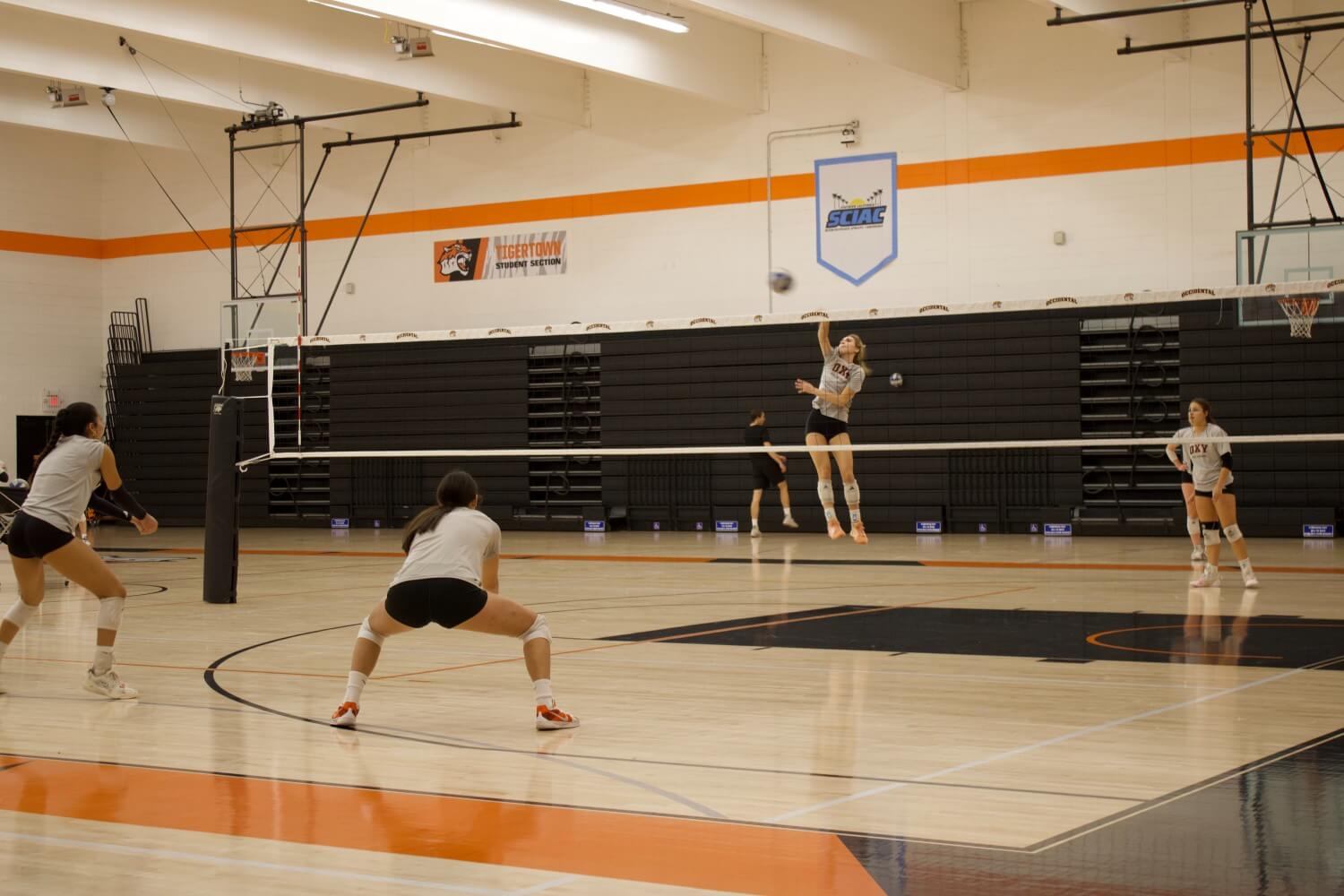
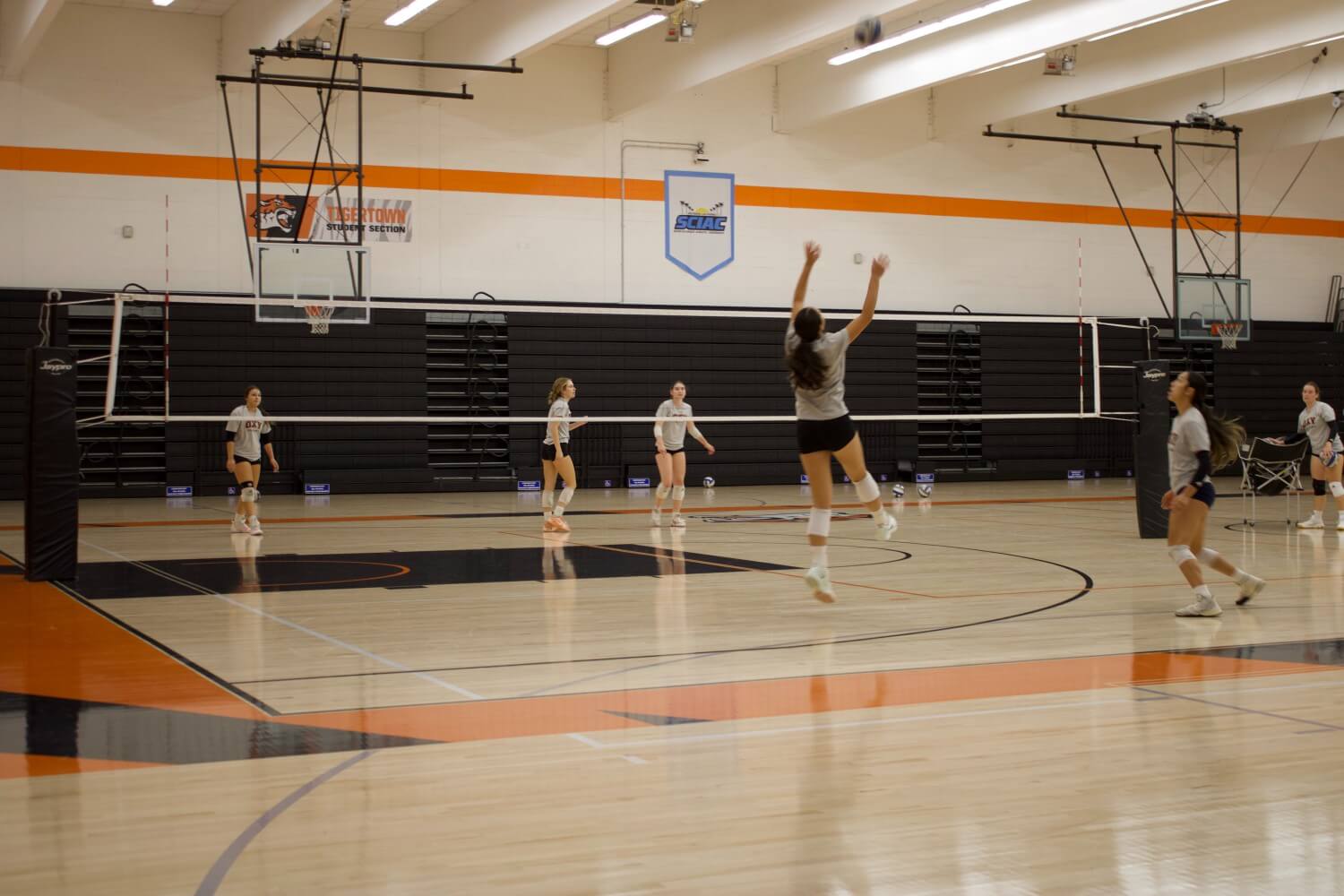
Volleyball makes comeback push after losing two close games and an assistant coach

Occidental women’s volleyball suffered losses in back-to-back games last week, falling to Chapman Oct. 23 and Whittier Oct. 25. The team lost both matches by a final set score of 2-3, and the decisive fifth set ended in a 13-15 defeat for the Tigers in both games.

Head Coach Emily Foster said recent hire Stephen Bernabe is not a coach for the team anymore. Bernabe was hired over the summer, and this was his first season as an assistant coach working for the volleyball program.

“We appreciate [Bernabe’s] time [though] he’s no longer with the team,” Foster said.

Foster said a lack of offensive variability played a role in the team’s struggles.

“A major focus of ours going forward [is] diversifying our offense and being able to get kills from multiple positions,” Foster said. “We were pretty one-dimensional offensively.”

Women’s volleyball practice in Rush Gymnasium at Occidental College in Los Angeles, CA. Oct. 29, 2025. Kadence Bernard/The Occidental

Foster said the losses showed the players’ resilience and helped them develop.

“Even though we didn’t get the result we wanted, [the losses were] a big confidence builder for our team,” Foster said. “[The players’] adaptability and willingness to do their best in whatever role they’re in has been impressive. It speaks to their determination.”

Assistant Coach Trevor Vlaming said he attributed the losses to inexperience and nervousness.

“[As] a product of being a younger team […] in the plays where we are going back and forth and the ball’s not falling, the anxiety rises because you don’t want to be the player to lose that point,” Vlaming said. “There’s so much energy behind it. One of the problems is we lose the aggressive edge because we don’t want to make a mistake.”

Vlaming said he was impressed with how much better the team has gotten recently.

“I remember being [at practice] the first week and just seeing simple mistakes,” Vlaming said. “They really wanted to fix it, and almost every single player would come up to a coach and ask for pointers and notes. I like seeing them wanting to change.”

Women’s volleyball practice in Rush Gymnasium at Occidental College in Los Angeles, CA. Oct. 29, 2025. Kadence Bernard/The Occidental

Vlaming said the players are still very motivated and that the coaches are pushing them even harder.

“Just because the season’s wrapping up doesn’t mean that people are going to stop trying,” Vlaming said. “We’re still going to go hard. We love [our players], but [the coaches] will always be intense in wanting to push [them] 100%. They’re the ones who have to choose that.”

Elizabeth Hulett (junior) said the team’s performances were commendable despite the losses.

“Honestly, I think we played really well,” Hulett said. “They were two really incredible games, especially against Whittier, a team that we haven’t beat before […] In terms of being better, it comes down to little points.”

Despite recent struggles, Hulett said the team’s mindset and goals remain consistent.

“I think getting some more SCIAC wins under our belt would be amazing,” Hulett said. “We’ve improved a lot, especially since last season. We’re in a really good place as a team.”

Hulett said the team has developed a strong bond throughout the year.

“Even just coming into the gym and asking someone about their day keeps you connected,” Hulett said. “Doing the little things, like going to dinner, has built that trust. We’ve made [solid bonds] this season.”

Elizabeth Hermosillo (junior) said the team has remained in good spirits regardless of undesirable game outcomes.

“We’re looking forward to the rest of [the] SCIAC [season],” Hermosillo said. “We want to win the rest of our games.”

Hermosillo said trust between teammates is a key factor to victory.

“Trust is so important,” Hermosillo said. “It could decide a game. If someone doesn’t trust the person behind them to get a ball, that could end a point. [Our trust] has been prominent in the games we’ve played. When we win, it’s because everyone trusts each other.”

Lila Payne (first year) said the team’s belief in themselves is a testament to their dedication.

“Everyone needs to be bought into the program and on the same page,” Payne said. “I came into a program that already has that. The focus and the energy is great. You would never know that we have a losing record right now.”

Payne said she thinks the team is close to turning a corner.

“A couple less poorly timed errors, and we’re coming out on top,” Payne said.

Contact Mac Ribner at ribner@oxy.edu and Angus Kapstein Parkhill at parkhill@oxy.edu

Loading

Jeff Weiss ’03 to speak on new Britney Spears novel-memoir: ‘Jeff is part prophet, part scholar’

Journalist and music critic Jeff Weiss ’03 will speak about his new book “Waiting for Britney Spears” Nov. 6 at 5 p.m. in Mosher 1. The event was inspired by the success of a book talk with Mirin Fader last spring, according to College Librarian and Interim Director of Teaching, Learning and Research Support Sarah Pickle.

“Barbara Thomas, the staff advisor of The Occidental, approached us about it,” Pickle said. “We had a really successful event in the spring with another Oxy alumn[a], and she thought it would be a good opportunity for us to work together again and elevate the work of Oxy alumni.”

James Miller* (senior), a former editor-in-chief of The Occidental who works for Weiss, will interview him for the event. He said he plans on asking him a variety of questions on media and journalism.

“We’ll definitely talk about the book,” Miller said. “But I’m also planning on asking him about his views on the media landscape, which come through a little bit in ‘Waiting for Britney Spears.’”

Miller said he looks forward to people discovering Weiss’ deep knowledge of music and journalism.

“Jeff literally talks about music for a living and has fantastic opinions and criticisms of pop music and especially hip-hop over the last 30 years,” Miller said. “Jeff is part prophet, part scholar — so, if you enjoy listening to an oracle you’ll have a good time at this talk.”

Weiss said he comes back to Occidental frequently to speak to students on journalism, but he said it feels amazing to return to speak about his book given his tumultuous years as a student.

“During my time at Occidental, I did have some wonderful professors — mainly history professors,” Weiss said. “But I did feel kind of alienated, so it feels amazing to have it come full circle and sort of have a prodigal son moment.”

According to Weiss, the path to publishing the book was not easy, but it was validating to see it through.

“I’m lucky that I was blessed with an unerring streak of delusion and faith and some kind of weird cosmic power to guide me in the right direction and eventually get this book out into the world,” Weiss said.

Pickle said she has been listening to the audiobook version of the book and finds his writing and narration compelling. She said she thinks it could inspire students to read more.

“He has such a distinctive writing style,” Pickle said. “It’s a kind of special experience that I could see drawing people into longer form writing […] whether it’s audio or reading a physical book.”

Pickle said the book enables the reader to reflect on the current state of tabloid journalism.

“It felt really wild to me to start seeing tabloids in the grocery store checkout aisles and stuff,” Pickle said. “It’s really an interesting time to reflect on where we are now versus then.”

According to Weiss, the book is 65 percent true and 100 percent honest.

“It’s a blur of the absolute truth and the figurative truth to create something that feels more real than the actual events did,” Weiss said. “This isn’t necessarily supposed to replace Britney Spears’ version of the truth or anyone else in the book’s version of the truth.”

He said people who are thinking of attending the event could benefit from listening to Spears’ music as it inspired his conception of the book.

“Listen to the whole Blackout album — it’s a masterpiece, you know?” Weiss said.

Miller said he has listened to Spears himself.

“I had a phase before the book came out when I had just started working for Jeff when I was playing a bunch of Britney Spears,” Miller said. “I will be pumping Britney Spears before the event.”

According to Pickle, her own experience meeting her school’s alumni speaks to the importance of events like this.

“I think about my own school — the alumni who come out of there and [I] feel pretty inspired by what they’re able to do in part because of the education they received at the school we went to,” Pickle said.

Pickle said she appreciates the opportunity for students to engage with alumni on an intellectual level.

“It’s about building [an] intellectual community on campus,” Pickle said. “And, to do that with an alumn[us] allows us to reflect on what we’re doing here as a college.”

Miller said the event is not just an opportunity for students to learn about Weiss’ book.

“He can speak to students who are interested in having a career in either [music or journalism] in Los Angeles,” Miller said.

Weiss said he has only attended a book signing once in which writer and journalist Hunter S. Thompson vomited everywhere and left early. Still, he said, the greatest form of praise for a writer is when readers want to meet them.

“On some level, I hope that the book would leave people with a feeling that they would want to talk to me,” Weiss said. “So, I guess the notion of a book reading sort of fills that void.”

Contact Nick Dobbs at ndobbs@oxy.edu

*James Miller is a former editor-in-chief of The Occidental.

Loading

Dodgers kick off new era of baseball, repeat as world champions

Nov. 1 the Los Angeles Dodgers went back-to-back and became the first team to win consecutive World Series Championships since the Yankees dynasty of 1998-2000. While the Dodgers were heavy favorites to beat the Toronto Blue Jays, their seven-game triumph should not be understated.

While fans of other teams critique the Dodgers for “buying” a championship, Manager Dave Roberts had a clear message: “We’re expected to win.” Fan-favorite super utility man and postseason legend Kiké Hernandez echoed Roberts during his victory speech at Dodgers Stadium, stating the need to recognize the Dodger’s dynasty. One thing is for certain about baseball: success on the biggest stage isn’t guaranteed, even after spending a truckload of money.

Some of the Dodgers’ biggest moments came from the unlikeliest of heroes — an often overlooked factor in a sport dominated by star players. Game 3 was one for the ages, an 18-inning war that culminated in a walk-off homerun by Freddie Freeman — a replica of his walk-off grand slam in last year’s World Series. Freeman got the glory, but reliever Will Klein provided him the opportunity. Klein was the last man available in the bullpen, pitching four innings of shutout ball to save the starting pitchers for the rest of the series. Klein had been left off the roster until the World Series after being acquired by the Dodgers in early June and pitching in Triple-A. Game 3 lasted six hours and 39 minutes — the second longest game in World Series history, only behind Game 3 of the 2018 World Series, where the Dodgers also bested the Red Sox in 18 innings.

Backup infielder Miguel Rojas delivered the biggest swing of his life in Game 7 to save the Dodgers’ season, taking Blue Jays closer Jeff Hoffman deep on a hanging slider. Rojas had been hitless for the last month; a late addition to the lineup after Roberts decided to shake things up. Hoffman, the loneliest man on earth, stated in postgame media availability that he “cost everybody in here a World Series ring.”

While this World Series allowed myriad unforeseen players to shine on the biggest stage possible, many of the Dodgers’ biggest stars were firing on all cylinders en route to victory. Shohei Ohtani lived up to expectations in his second World Series, slugging his way to a 1.278 OPS and setting a league record by reaching base nine consecutive times in Game 3.

Critics may argue that Ohtani still has to prove himself after he struggled on the mound throughout the series, but even the most virulent Ohtani detractors must acknowledge that his ludicrous résumé just got even better. For those keeping track of the Ohtani versus Babe Ruth debate, it’s worth noting that Ruth only competed as a two-way player for two full seasons. Ohtani just capped his fifth-such season with a World Series trophy.

Series MVP Yoshinobu Yamamoto had the best World Series pitching performance since Madison Bumgarner in 2014. The Cy Young finalist tossed 17.2 innings over the course of a week, going the distance in the second game of the series. He followed that up by pitching on back-to-back nights to help the Dodgers win Games 6 and 7, capturing the World Series crown.

According to Manager Dave Roberts, Yamamoto told him that “losing is not an option” prior to the series. It was thanks to Yamamoto’s herculean efforts that winning was even a possibility.

The Dodgers may have emerged victorious, but that shouldn’t serve to discount the efforts of the Blue Jays, who came tantalizingly close to winning their first championship since 1993. Toronto’s championship push was aided by an absolute murderer’s row of hitters, with two-thirds of the team’s starting lineup averaging an OPS over .800 in the World Series.

Perhaps no Blue Jay deserves more praise than Vladimir Guerrero Jr., who lived up to his Hall of Fame father’s reputation by delivering one of the best playoff performances in recent memory. Guerrero Jr. set the record for single-postseason OPS with an astounding 1.289 mark, and would have broken the record for most hits in a single postseason had he not been one-upped by his own teammate in Ernie Clement.

As MLB wraps up another exhilarating season of baseball, a foreboding possibility looms over the league. With the league’s combined bargaining agreement set to expire in December 2026, all eyes will be on the forthcoming negotiations between team owners and the MLB Player’s Association, which could end in a lockout if an agreement isn’t met. The Dodgers’ wanton spending will certainly be a topic of controversy during league negotiations, but one thing is for sure: they’re the only team lifting the trophy.

Contact Mac Ribner at ribner@oxy.edu and Ben Petteruti at petteruti@oxy.edu

Loading

“Don’t bet on me”: How professional athletes are affected by the sports gambling epidemic

There is no league in the realm of professional sports quite like the National Basketball Association (NBA). The league is a trailblazer in the realm of fan engagement. The NBA community may transcend the sport of basketball itself — the league happens to be home to one of the most profitable gambling markets in the world.

This past year saw the NBA partner with FanDuel, a company that then struck a deal with Amazon that made them the official “odds provider” for all NBA games streamed on Amazon’s Prime Video service. This agreement allows FanDuel to provide real-time odds updates, encouraging fans to try their luck in the world of sports betting as games progress.

This new precedent doesn’t just make accessing sports books more convenient for fans — it also solidifies gambling as an inalienable aspect of the NBA experience. With the basketball industry capitulating to one of the most controversial entities in all of sports, what better time could there be for a massive gambling controversy to make headlines?

To say the NBA is in trouble might be the understatement of the century. While scandals have pervaded the sports industry following the repeal of PASPA, a federal law that banned most states from legalizing and regulating sports betting, the scale of such misconduct has generally been limited to a few players at most. The past week has seen 34 individuals (and counting) arrested in conjunction with gambling suspicions — including two coaches.

FBI Director Kash Patel has referred to the purported fraud as “mind-boggling,” which might be the last words a league with a booming gambling industry wants to hear.

At the center of the controversy are two figures: Terry Rozier and Chauncey Billups. Rozier, a point guard who has accrued a decade of league service time, is under suspicion for manipulating his own performance in games in order to assist bettors. Billups, a member of the NBA Hall of Fame, has been accused of participating in mafia-rigged poker games during his time as the head coach of the Portland Trail Blazers.

While both cases appear shocking in isolation, examining recent context may serve to lessen the surprise. Rozier’s predicament isn’t unique — former Toronto Raptors forward Jontay Porter was ousted by the league following an investigation into his own gambling connections in 2024.

Conversely, Billups’ plight has significantly less precedent — it marks the first gambling-related indictment of an NBA employee (not including players) since former referee Tim Donaghy was sentenced to over a year in prison for his own mafia associations.

While these incidents make for a great public spectacle, the NBA’s laissez-faire approach to gambling renders such controversy as not only feasible, but expected. Sporting organizations would be wise to consider this experience a cautionary tale for their own betting regulations — especially considering the effects that gambling culture has on fans.

As sports gambling scandals and gambling advertisements become incredibly pervasive, player safety has become a huge concern. Across each major sport, players have spoken out about threats made against them and their families by angry sports bettors.

Morally, it’s the product of an increasing detachment from athletes being seen as real people. Betting promotes the dehumanization of players as their value becomes reduced to the numbers they can produce in gambling apps. We all wish we could make the big leagues, but people fail to consider the outside pressures that disgruntled gamblers can mount. If the value of players can be determined by how much money they can make for sports gamblers, then it’s no wonder fans have become so fearless in their attacks. They attack players over social media, after the games and have stalked players in their private lives on account of “selling a parlay.”

Major League Baseball has had its share of issues with fans crossing a line. In May 2025, Lance McCullers and his family received death threats online after a bad start. A month later, it was discovered that the messages were sent by an intoxicated bettor. Red Sox reliever Liam Hendriks (a survivor of non-Hodgkin lymphoma) received threats on his life after a poor appearance versus the Mets. He was told he “should have died from cancer,” which Hendriks called “disgusting and vile.”

Whether gambling is involved or not, players have arrived at a breaking point. Many have abandoned social media completely, especially if they are frequently harassed. The parasocial connection has become too powerful, and like a group of petulant children, bettors deserve to lose privileges.

Teams have attempted to take action against these offenders, but efforts so far have been futile. Teams such as the Astros and Red Sox have provided extra security in the player family section of the stadium during games, while also establishing cyber divisions to identify and remove accounts. Offending accounts can, of course, be removed from social media platforms, but it’s just as easy for the person behind them to simply create more. Hendriks has advocated for more direct action, stating that “nothing ends up happening.”

Unfortunately, as long as fans are motivated by anger, lost bets and a lack of self control, it’s hard to envision a solution. It’s ridiculous the opinions that people have become comfortable with expressing online. Social change may have to come before anything else.

All hope may not be lost, however, because players do have a platform they can use to rebel. Recently, Celtics star forward Jaylen Brown said “Don’t bet on me” during pregame media availability. Brown expressed that he doesn’t pay attention to sports gambling or “any of that stuff,” which is his way of staying disconnected from the drama and ill-meaning fans. Isolation from social media and toxic fan input may be the only way for players to avoid mental torture.

One thing is for certain: as long as sports gambling advertisements continue to grow and scandals keep occurring, out of line fans will show no sign of stopping. If leagues continue to openly endorse sports gambling sites because of the insane profits generated, the downsides must be acknowledged all the same. If lost bets are the main motivator behind unruly fans, it’s hypocritical for the four major leagues to keep accepting piles of money from sports gambling companies when player safety is compromised.

Regulations and warnings need to flash across our screens just as frequently as the promises of immense wealth. Companies like FanDuel own both the broadcasting rights for many sports teams as well as the ability to run countless gambling ads. Broadcasting conglomerate Bally Sports has been taken over by FanDuel and has rebranded as “Fanduel Sports Network.” If monopolies like FanDuel are allowed to rise to power, we may truly be living in a Wild West of sports gambling. Someone’s bound to get hurt.

Contact Mac Ribner and Ben Petteruti at ribner@oxy.edu and petteruti@oxy.edu

Loading