Home Blog Page 17

Opinion: Why double majoring will heal higher education

I like to say I didn’t choose my majors — my majors chose me. The department of Critical Theory & Social Justice (CTSJ) seemed like a natural progression from the Social Justice Pathway, a program I was a part of in high school. But for whatever reason, I didn’t take a CTSJ class in my first semester at Occidental.

I did take a First-Year Seminar about the Greek god Dionysus in the Comparative Studies in Literature & Culture (CSLC) department, which, up until that point, I had no idea existed. After being swept up by the magic of that class, I knew I would be incapable of choosing one major over the other. Less than a month into the spring semester, I had declared my double major.

Double majoring is not uncommon at a liberal arts college like Occidental. While an interdisciplinary approach is built into our graduation requirements, pursuing two distinct majors is a meaningful way of going in-depth into multiple fields. Still, I am questioned about how I reconcile being a member of both CTSJ and CSLC.

I understand why some would think critical theory and comparative literature exist at opposite ends of the humanities spectrum. However, CSLC emphasizes the role of storytelling in creating community, and that is what has the liberatory potential to sustain the social justice movements we work towards in CTSJ. The departments are intertwined and are even more powerful in collaboration with one another.

Double majoring is not only a way of supporting our learning as students, but also a way of forging connections between departments at a time when governmental support for the education system is at its lowest. Still, why would I subject myself to the trials of navigating two major requirements, which essentially pre-determine my schedule for the next three years? Not to mention the terrors of completing two senior comprehensive projects simultaneously.

There are many practical reasons to double major. Students automatically fulfill the required 64 credits outside of their major by virtue of taking classes across two separate disciplines. In specific cases, a class can even count towards both majors simultaneously.

Having two advisors to rely on for advice and mentorship is another incredible benefit. It creates a network of support while also opening up a line of communication between the two departments. My CTSJ advisor is the one who seriously encouraged me to double major in CSLC, with the hope that it will help foster future collaborations.

Perhaps most crucial is the unifying aspect of double majoring. As students representing two or more departments, depending on their minors, we have a responsibility to connect the work we are doing across our varied disciplines. Our coursework must not exist in a vacuum — we must take initiative to bridge the gaps that exist between different schools of thought and start conversations that may not arise without our presence in both departments.

Amidst issues of censorship, funding cuts and outright attacks on higher education institutions by the Trump administration, we cannot afford further division between the humanities and the sciences, and certainly not within departments. Rhetoric that pits majors against one another is harmful to students and faculty, and serves to further legitimize Trump’s plans to weaken the influence of colleges and universities.

The most radical thing we can do as students, while operating within the boundaries of the institution, is to seek out connections between our majors and constantly emphasize the relationships between them. As enrollment drops, each department needs every student it can get, and our participation in multiple areas is one way we can contribute to the preservation of diverse perspectives and ideas.

I acknowledge that fulfilling a double major, especially when the subject matter doesn’t overlap, can be a huge challenge. You have to navigate core requirements, study abroad considerations and personal interests to meticulously craft a schedule that allows you to graduate on time. As tuition continues to rise, the ability to stay enrolled all four years is a privilege, and one that those double-majoring must take into account to complete their requirements.

Despite these challenges, I believe double-majoring is worth the commitment. Not only am I academically exposed to a rich tapestry of ideas, but I also have the privilege of being part of two distinct communities that constantly inspire me.

In their seemingly contradictory nature, my majors actually complement each other by providing two equally integral perspectives. One teaches us the ways our society is unjust and how we can work towards repairing it, while the other reminds us why we are fighting for justice in the first place, and how to imagine a truly liberated world.

It is a labor of love to balance two departments on one’s shoulders. But as my CSLC professor reminds us so often, “χαλεπὰ τὰ καλά” — beautiful things are difficult. If you are fortunate enough to care about two subjects with such a deep passion, do not let campus bureaucracy frighten you from pursuing the departments that matter to you, even if the requirements may seem daunting. You might just be the thread that holds them all together.

Contact Athya Paramesh at paramesh@oxy.edu

Loading

Opinion: Demolishing the East Wing is yet another broken norm in the Trump administration

The East Wing of the White House was a historic building. Constructed in 1902 during Theodore Roosevelt’s presidency, it stood for 123 years until it was demolished last month under the Trump administration. It is now being replaced with a massive, gaudy ballroom.

Spending $300 million on a ballroom is an idiotic response to solve a “lack of event space” problem that was never really there in the first place. This is money that the administration could spend on various initiatives that directly benefit the American people as a whole. From a political point of view, the intelligence of the move does not improve. In a Yahoo/YouGov poll of U.S. adults conducted in October 2025, only 25 percent of respondents approved of the project, while 61 percent disapproved. It’s easy to see these numbers as encouraging news, especially coupled with widespread election losses for Republicans this past week and the ongoing government shutdown. However, they hint at an unsettling reality of this administration: that it is willing to act on its policies in favor of selfish grandeur while disregarding norms and popular opinion. While it may seem harmless in this case, this mindset has drastic effects on the everyday lives of people living in the U.S.

Perhaps the issue where this is most apparent is immigration, where the Trump administration has repeatedly deported U.S. citizens. This is blatantly illegal, but by acting quickly before the judicial system can protect these people, or by outright ignoring the rulings of the judicial branch, the Trump administration has deported these people anyway.

The right to due process comes from the Constitution, and it should protect not just U.S. citizens but also illegal immigrants from being deported without at least having the opportunity to go through the judicial system. Ignoring a constitutional right is not only concerning for the implications it has now, something we’ve experienced firsthand here in LA, but also for what it could mean in the future.

Trump has repeatedly claimed that he would be active in going after his enemies in this administration, going as far as to say, “I am your retribution” while campaigning in 2023. Last month, he went ahead with designating Antifa as a terrorist organization — a designation that has not fallen on groups such as the Ku Klux Klan.

The only thing stopping the Trump administration from outright deporting its political enemies is public approval, rather than morality. Of course, I imagine any moral voice in the leaders of the administration is long dead, as evidenced by cases such as the detaining and then deporting of a 10-year-old American citizen with Stage 4 cancer and her family, without medical care, as they rushed to the hospital. I grew concerned while fact-checking the statement, as I found a similar story with conflicting facts. It turns out that entirely separately, a 4-year-old with Stage 4 kidney cancer, also a U.S. citizen, was deported without medical care.

The Trump administration pushed forward with the demolition of the East Wing despite a distinct lack of public approval for the project, a concerning indication that the administration may no longer prioritize public approval or that it is willing to push through topics that may be less important to U.S. citizens.

The aforementioned designation of Antifa as a domestic terrorist organization is a concerning push in the direction of outright political suppression. This administration is both increasingly willing to operate without public approval and is seeking a win following the recent round of local elections. The designation gives it some cover, allowing it to target its political enemies on the left at a grassroots level if it so chooses. Added to the administration’s previous disregard for due process, and a president who has actively discussed attacking his political enemies, it is a downright scary scenario.

However, I find it unlikely that things will play out in that way. For all its threats and bluster, this administration has accomplished very little in the realm of politics recently. With the elections of this week serving as a damning report card for the administration thus far, the current government may well go in the opposite direction of its current trend, focusing less on its more controversial policies and returning to the center as next year’s congressional elections beckon. While the precedent the administration has set for itself in ignoring checks and balances and, to some degree, public opinion, is extraordinarily dangerous, the political climate might prevent things from going too far. Might.

The 2026 congressional elections serve as a deadline for the current government. The Republican-controlled Congress has been relatively impotent so far, failing to end the ongoing government shutdown, despite holding a majority in both houses of Congress. This next year will likely be the last chance for Republicans to push their legislative agenda, with Democrats looking likely to take control of at least one house in the 2026 congressional election — but those elections remain in the balance, and a good or bad move from the Trump administration could make or break that election. In the face of that election math, it seems likely that the current government will begin to shy away from the norm-breaking, power-grabbing actions it has taken in the early months of Trump’s second term.

Contact Whittaker Perrin at wperrin@oxy.edu

Loading

Opinion: AI is ruining the liberal arts experience

My mother, who attended a small liberal arts college, used to tease my dad about his engineering degree. “You received training,” she’d say, “but I received an education.” She pushed me to attend Occidental for the same reason: it would teach me how to think, to learn for the sake of learning, regardless of whether it was for a salary. Pretentious, yes, but I knew she had a point. Now, nearly three years into my education here, I am surrounded by the message that thinking is overrated.

Until now, I’ve been able to cope with generative AI (GenAI). I’ve looked the other way when I’ve seen my friends using it and stopped picking fights with them when they send me AI content. I refuse to use it, academically or otherwise. Yet making the personal choice not to use GenAI is no longer sparing me from its effects. My professors have been changing their coursework and switching to Bluebook exams to prevent students from using GenAI. Some have spent a disproportionate amount of class time discussing their AI policies or what they consider ‘ethical’ ways of using GenAI. One even encouraged us to use it to prepare for class discussions.

This AI talk has frustrated me to no end. What’s the point of discussing if we’re just regurgitating what ChatGPT told us to say? What’s the point of paying all of this tuition money to have a computer do your work? I’ve been asking myself these questions over and over, feeling like a lunatic. Am I a Luddite doomed to be crushed by the wheels of progress? I want my peers at Occidental to stop using AI. But what will that take?

Researchers are investigating the links between GenAI use and cognitive decline and journalists are sounding the alarm about the potential loss of critical thinking skills. These are obvious consequences; the less you allow yourself to struggle with understanding a challenging text, the less your brain learns to work. Turning to GenAI is like skipping leg day at the gym — it might feel good in the moment, but it makes you weaker and unprepared for future challenges. There is value in going beyond your intellectual comfort zone. In fact, it is part of the very ethos of liberal arts colleges. Occidental’s mission statement says that the school hopes to instill a “lifelong love of learning” and foster “intellectual rigor.” GenAI use is so fundamentally incompatible with these aims that I wonder how anyone at Occidental could consider using it at all.

Besides the cognitive crutch, the massive, environment-polluting data centers required to sustain GenAI models exponentially increases electricity costs and raises demands for fossil fuels. The cost of GenAI is not only our critical thinking skills and education, but also the disruption to our climate and the health of low-income communities where GenAI companies build their data centers. This should make you pause next time you think of having ChatGPT generate your paper. If not for our brains, maybe we’ll stop using GenAI for our bodies and planet — or at least for our wallets.

I know how students try to justify their GenAI use. Many turn to it out of desperation or fear of failure. I’ve been there. I know how appealing GenAI can look in those moments. Yet Occidental’s campus is full of living, breathing people who are eager to help. Peer tutors, professors, classmates and countless other resources have aided me in my education with care and dedication that a GenAI model is incapable of showing. That’s a benefit of the liberal arts experience: being surrounded by community. Use it or lose it, though: if students waste these resources in favor of AI, the college might not be able to rationalize funding them.

Many of my peers, for their part, are fighting back. Even among folks I know who use GenAI, plenty are expressing a desire to quit. My shifts as an advisor at the Writing Center have been busier than ever, which tells me that students are still trying to improve their writing abilities. Many of my class discussions remain vibrant and inspiring, full of people willing to think for themselves even when that means taking chances or being proven wrong. I fear, though, that we are a dying breed.

I’m in college to receive an education. I’m here to think and work, even when it’s difficult or unpleasant. I know that nothing good comes easily, and I caution my peers: as much as GenAI has begun interfering with my college experience, those who use it are the real victims. Unless they start to put in the work themselves, they have forfeited the many opportunities to learn and hone their skills that a liberal arts education provides. The most beautiful thing about humanity is our ability to think, to create ideas out of thin air and turn them into art and arguments for others to grapple with. I love Occidental because it gives me the ability to do just that. GenAI tempts us to give up that ability — but I wouldn’t trade it for the world. I hope you won’t, either.

Contact Jay Ward at jward3@oxy.edu

Loading

Opinion: I don’t want to go to war with Venezuela

October was Venezuela’s month, and it seems like November — and possibly the rest of the year — will be too. Oct. 10, opposition party leader María Corina Machado was awarded the Nobel Peace Prize “for her tireless work promoting democratic rights for the people of Venezuela.” In October, I also began seeing the first predictions of military action against the Maduro regime. Suddenly, Venezuela was everywhere: from reports of rising tensions and inflammatory language in the news to speculation on social media, conflict seemed imminent and inevitable.

From my perspective, concerns about future military action are grounded in reality. Every day, it seems like there is a new report pointing directly to some kind of conflict in the Caribbean. For example, AP News reported that a U.S. warship had docked in the Port of Spain, Trinidad and Tobago, for training exercises, prompting a strong response from the Venezuelan government. The Washington Post reported Maduro drafting letters requesting military assistance from Russia, China and Iran, and Reuters is tracking the buildup of U.S. military staging around Venezuela, including the upgrading of a naval base on Puerto Rico that has been closed for over 20 years.

Nobody knows what a potential conflict will look like at this point, but I can’t help but feel a pit of dread in my stomach at the thought of any form of U.S. intervention.

Growing up, U.S. military action existed at the periphery of my world. The largest operation I remember feeling fully engaged with was the disastrous withdrawal from Afghanistan in 2021, at the beginning of the Biden administration. As an adult, I’m substantially more informed.

As a major power, the U.S. has had direct or indirect involvement in several conflicts, often set against the backdrop of the Cold War or the War on Terror. The Vietnam and Iraq Wars stand out as particularly brutal examples of direct U.S. intervention. But when I think of a potential conflict with Venezuela, my mind goes to Operation Condor. Officially, from 1975 to 1983, the U.S. financed and supported right-wing dictatorships in Latin America to suppress leftist political movements. Military juntas waged “Guerras Sucias” — Dirty Wars — against their own people, and hundreds of thousands of people were murdered, disappeared and tortured. U.S. intelligence agencies were intimately aware of these operations.

When I think of regime change in Venezuela, this is the image my mind conjures. An effective, brutal regime of some kind; a swing from one form of authoritarianism to another. Or even worse, a total collapse of any semblance of order at all, with paramilitary and guerrilla groups fighting each other, like what we currently see in some parts of Colombia.

With this knowledge and image, it’s easy to argue that all forms of intervention into foreign countries other than aid are bad, but it isn’t a position I necessarily agree with. I’m hesitant to sanction intervention, especially military action, but I do believe that in some cases, it’s necessary. Examining the developments in Sudan and the Sahel region, I find it challenging to argue that non-intervention is the correct stance in all scenarios. But I still dread the potential escalation into full-blown military action in the Caribbean.

The U.S. has been trying to prompt regime change in Venezuela for quite some time, from heavy sanctions to coup talks with Venezuelan military officers. The Maduro regime is undeniably awful, if the refugee crisis is any indicator. According to the UNHCR, more than 7.7 million Venezuelans have been displaced, the majority residing in other Latin American or Caribbean countries. The Biden administration granted Temporary Protection Status (TPS) to more than 400,000 people, which is currently in legal limbo due to court cases from the Trump administration.

The plight of TPS holders highlights an odd contradiction: mobilizing military forces and escalating tensions with one hand, while telling Venezuelans that their political situation is not dire enough to warrant protection with the other. It’s rattling that not even humanitarian grounds have been invoked to justify intervention.

This isn’t the only troubling aspect of this situation. In the Declare War Clause of Article 1 of the Constitution, only Congress can issue formal declarations of war and authorize the use of armed force for limited operations. In practice, presidential power in this area has expanded, and several presidents have taken military action without congressional approval.

When I first began writing this, we were in the midst of a shutdown, and several lawmakers reported inadequate communication from above. This secrecy, combined with the singular focus on drug trafficking and the buildup of military assets, all point to direct, open conflict — the direct opposite of where I would like this country to go.

When I first began learning of the potential for war — or at the very least, drone strikes — in Venezuela, it was hard for me to pinpoint why I cared so much. After all, war occurs every day. At this very moment, there are devastating conflicts all over the world, but I’m focused on something that hasn’t even happened yet.

For me, Venezuela represents a complete departure from the world I grew up in and am familiar with. Despite critiquing it in my classes, I’ve always believed in the power of liberal peace, international institutions and the globalist worldview that emerged out of WWII. Irrational, war-mongering behavior was a thing of the past or of far-flung places, not my own government. As I observe the events unfolding, this feels like more than just a child shedding their naivety, and I’m anxious that this will end in a course-altering disaster.

I don’t believe that war is a glorious endeavor. It’s terrible and occasionally necessary, but not something to look forward to or desire. As the situation in Venezuela takes center stage, one can only hope that we don’t enter another “forever war,” and the lives of Americans, Venezuelans and other people in the Caribbean are prioritized over political objectives.

Contact Wura Ogunnaike at ogunnaike@oxy.edu

Loading

Opinion: Academia in the modern world needs to reflect its premodern ideals

Over 2000 years ago, Athens led the Greek city-states in a war against the Persian empire.

The Athenians had grown accustomed to dominance over the Hellenic world, but then a shift occurred towards mediocrity, accompanied by sociological changes within their society. These changes prompted Socrates to think deeply about the way Athenian society was organized, reevaluating the way his fellow Athenians related to each other and challenging the existing power structures.

Socrates’ student, Plato, who was dissatisfied with the Athenian government, established a school in a small grove just outside the city. Plato called his new school the “Akademos.” Plato’s Akademos school was located above and away from the chaos of city life. Looking at the city from afar, the students and teachers of Akademos were able to converse and think freely, free from the stressors and distractions of urban life. Akademos seemed to have meant the “silent district.”

Needless to say, Plato’s experiment was effective — it forever altered the course of human history.

Today, academia gets its practical and etymological roots from Plato, but unfortunately, we have lost some of the most important elements of Plato’s school. In urban environments, the air we breathe, the water we drink, and the food we eat are often polluted, leading city dwellers to feel unnecessarily anxious and to experience physiological compromise.

This notion seems to have been almost completely forgotten by modern doctors and sociologists. However, George Hunter’s “A Civic Biology,” which served as a high school biology textbook in the early 20th century, emphasizes the crucial importance of understanding the detrimental effects of modernity and urbanization on human health. Hunter dedicates the first page of his book to a comparison between “the unfavorable artificial environment of a crowded city with the more favorable environment of the country.”

When colleges are located in dense urban environments, it can be difficult to understand the consequences of urban life. We have largely forgotten that for most of human history (about 300,000 years), we did not live in modern cities, and that some of our new problems stem from our modern lifestyle.

This urban immersion can also lead academics to come to the incorrect conclusion that we have reached the end of science. Because we have a highly competitive academic system and reward redundant publication, the belief that one has “definitive knowledge” becomes appealing and infectious, as people rush to solve the “few remaining puzzles of science.”

This is not a new sentiment; in fact, in the late 19th century, physicists assumed that humans had essentially reached the limits of physics. History proved them wrong.

The most ludicrous example of this belief is Francis Fukuyama’s idea that liberalism is the final political system. He assumed that war would end after the Cold War because everyone would accept liberalism. History has proven this wrong as well.

The mystical belief in the “end of science” is built on layered historical misconceptions, made possible by a higher education system that does not encourage the challenging of accepted truths. The idea of the “end of science” is also favorable to the rich and powerful, echoing Fukuyama’s notion that having an impoverished underclass as an inescapable reality of human society clearly supports this. It makes sense that the oligarchs fight to maintain this mystique.

Prestigious universities are moving away from the pursuit of truth and are losing interest in creating positive change. They now seem more focused on maintaining and increasing their prestige, enriching themselves and enriching their students after graduation.

In the midst of our confusing, painful and vulgar world I see enormous potential for change. Revolutionaries throughout the world have recognized that education is a powerful instrument for positive change. As we move forward as a species, I hope that a new educational system, one that draws inspiration from Plato’s bold vision and is free from the plagues of modern life, can be imagined and actualized.

Hopefully, this new educational system will foster a more humane philosophy, which in turn will make the world a better place. As philosopher Robert Creegan said, we have two choices: “either we shall have more generous order, wisdom-imbued and boldly marshaling all the sciences for healing and for constructing, or we shall have planned disorder, cunningly rationalized and marshaling deteriorating science, to break personalities and to enslave, or to obliterate, thoughtful peoples.”

Contact Bennett Michaels at bmichaels@oxy.edu

Loading

Cross country teams finish strong with All-SCIAC selections, set to compete in NCAA tournament

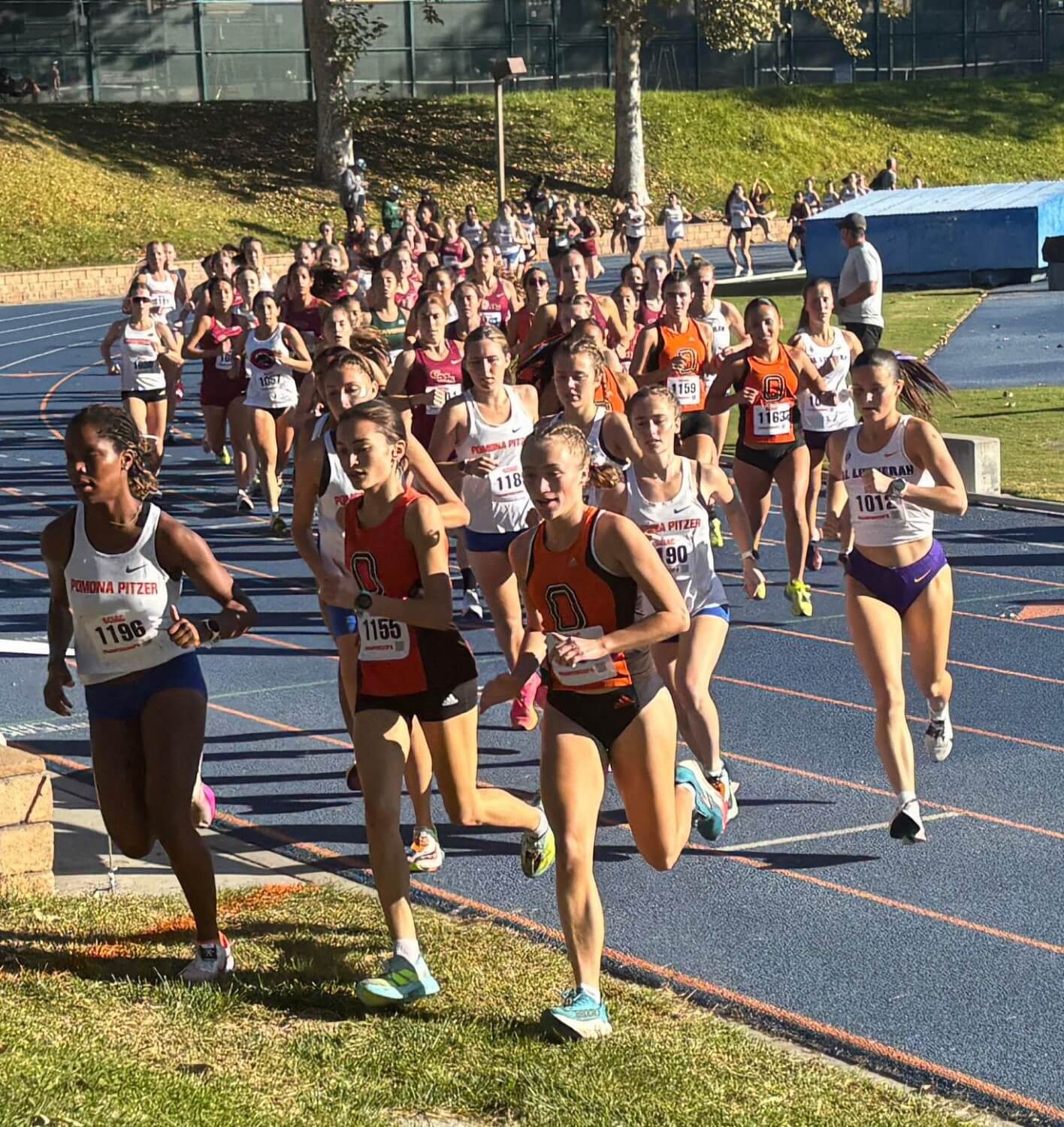
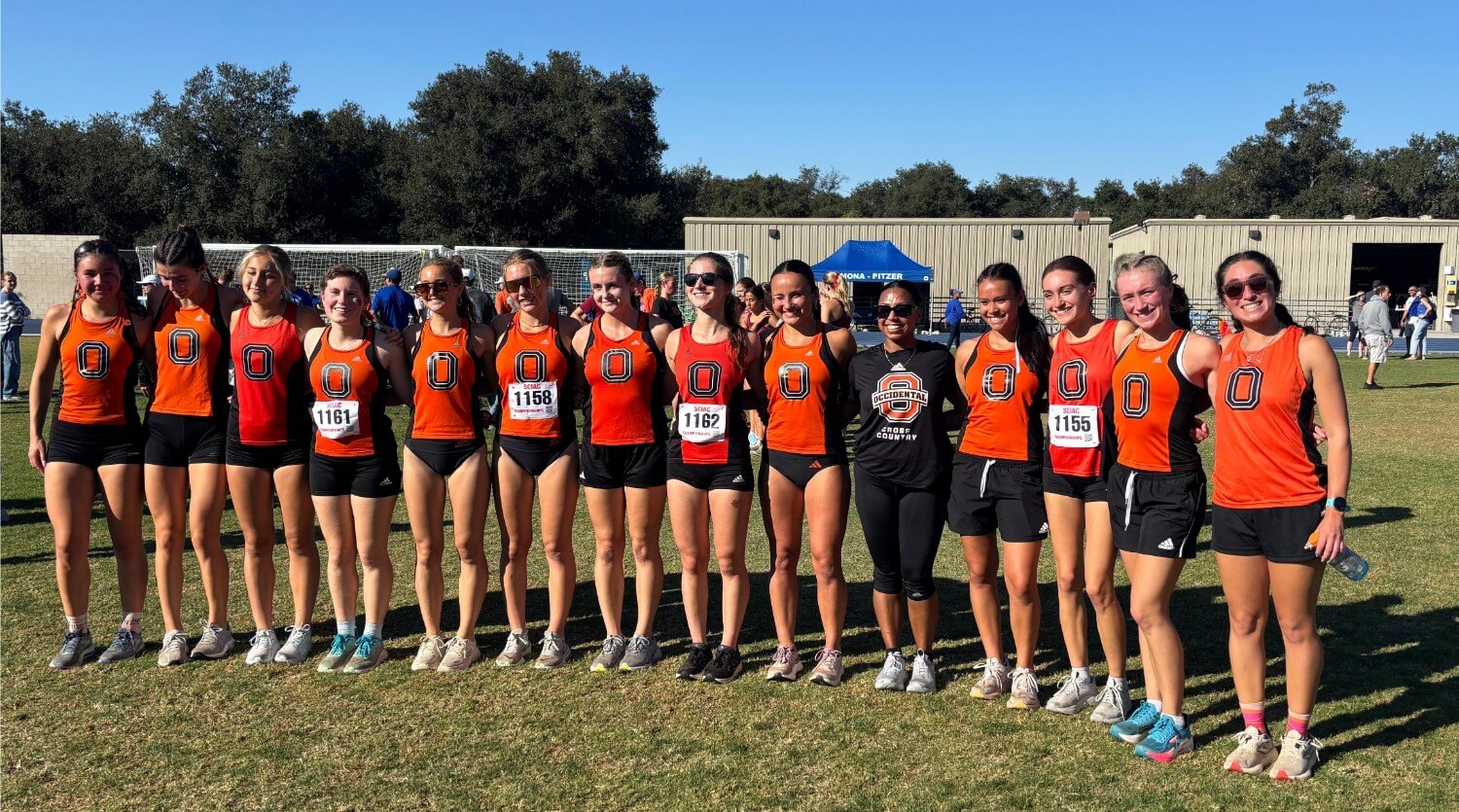
The men’s and women’s cross country teams competed at the SCIAC championships in Claremont Nov. 1, with the men’s team placing sixth and the women’s team placing third overall.

Assistant Coach Demi Marine said this race showed a complete night-and-day difference between where the teams are this year compared to last year.

“I don’t want to say I was surprised, but it was really exciting to see that the team was closer than ever at one of the most important meets,” Marine said.

Courtesy of Anya Agha

Jack Elfenbaum (junior) placed fourth at the event, picking up First-Team All-SCIAC honors.

“It was my focus the entire season — I knew I was gonna be first team,” Elfenbaum said. “I was just working towards it every day.”

According to Elfenbaum, he usually works his way up during the races. He said he started out around 40th during the SCIAC Championship race.

“I won’t lie, the first maybe mile it felt like I wasn’t even racing. I was kind of just jogging, you know?” Elfenbaum said. “I [went] from 40th to 4th … that was pretty far. I think [it was] one of the best races I’ve ever had; something I’ll remember forever.”

Elfenbaum said he raced the last two miles with an Occidental alum who had an extra year of eligibility and is now on the Pomona-Pitzer team.

“I beat him in the last 200 meters,” Elfenbaum said. “We’ve been racing together for a long time, so [it was] a bit of a switch up to race against him.”

Head Coach Rob Bartlett said he is excited to watch Elfenbaum’s athletic future unfold.

“Jack has grown tremendously in his two and a half years with our team,” Bartlett said via email. “Physically, he now runs about 15-20 miles a week more than he used to, but he’s also developed into a team-first leader who cares about everyone else’s success more than his own.”

According to Marine, Elfenbaum’s underdog mentality is going to play a big part in him advancing to Nationals.

Jenna LeNay (senior) placed 17th and earned second team All-SCIAC honors at the race, making her a four-time All-SCIAC selection with two first-team distinctions.

Bartlett said LeNay is one of the hardest workers he has ever coached.

“She holds herself to very high standards in terms of how much she practices,” Bartlett said. “Every little drill is done the right way, every single day.”

Assistant Coach Dave Foley said he’s had a lot of fun watching both Elfenbaum and LeNay work hard to get to where they are now.

“For Jenna, very few women have gotten four All-SCIAC honors over their four-year career at Oxy,” Foley said via email. “That is an incredible accomplishment.”

Anya Agha (first year) placed 23rd in the race, only a few spots short of an All-SCIAC finish. Agha said this was her favorite race thus far because she was able to set a personal record with a time of 23:13.

“This […] was our last race with our whole group and with all the seniors, and so it was very emotional,” Agha said. “Everybody was crying when we finished.”

Courtesy of Anya Agha

Agha said she appreciates the team’s culture and chemistry, with teammates constantly checking in on each other.

Elfenbaum said this year the cross country teams are closer after group discussions about goal-setting.

“We have team meetings with a mental health coach [who’s] seeing all the teams on campus right now,” Elfenbaum said. “We’re […] holding each other accountable and it feels like a very great atmosphere to be able to race [I] have a team that I [can] call my family.”

Marine said she thinks the women’s team will surprise themselves in ways they don’t even know they are capable of at Regionals.

“Me and Rob, […] believe in them a lot … I think our belief is starting to rub off on them even more,” Marine said.

Agha said the top six runners from both the men’s and women’s teams will advance to the NCAA West Regional in Claremont Nov. 15.

“[It’s] our last race of the season, but also my first regional,” Agha said. “I’m going to try and take it all in, and think about it as a fun opportunity rather than [as] a really challenging race, even though it will also be that.”

Contact Ava LaLonde at lalonde@oxy.edu

Loading

WAC and Detox Ultimate teams throw around and bond at San Diego tournament

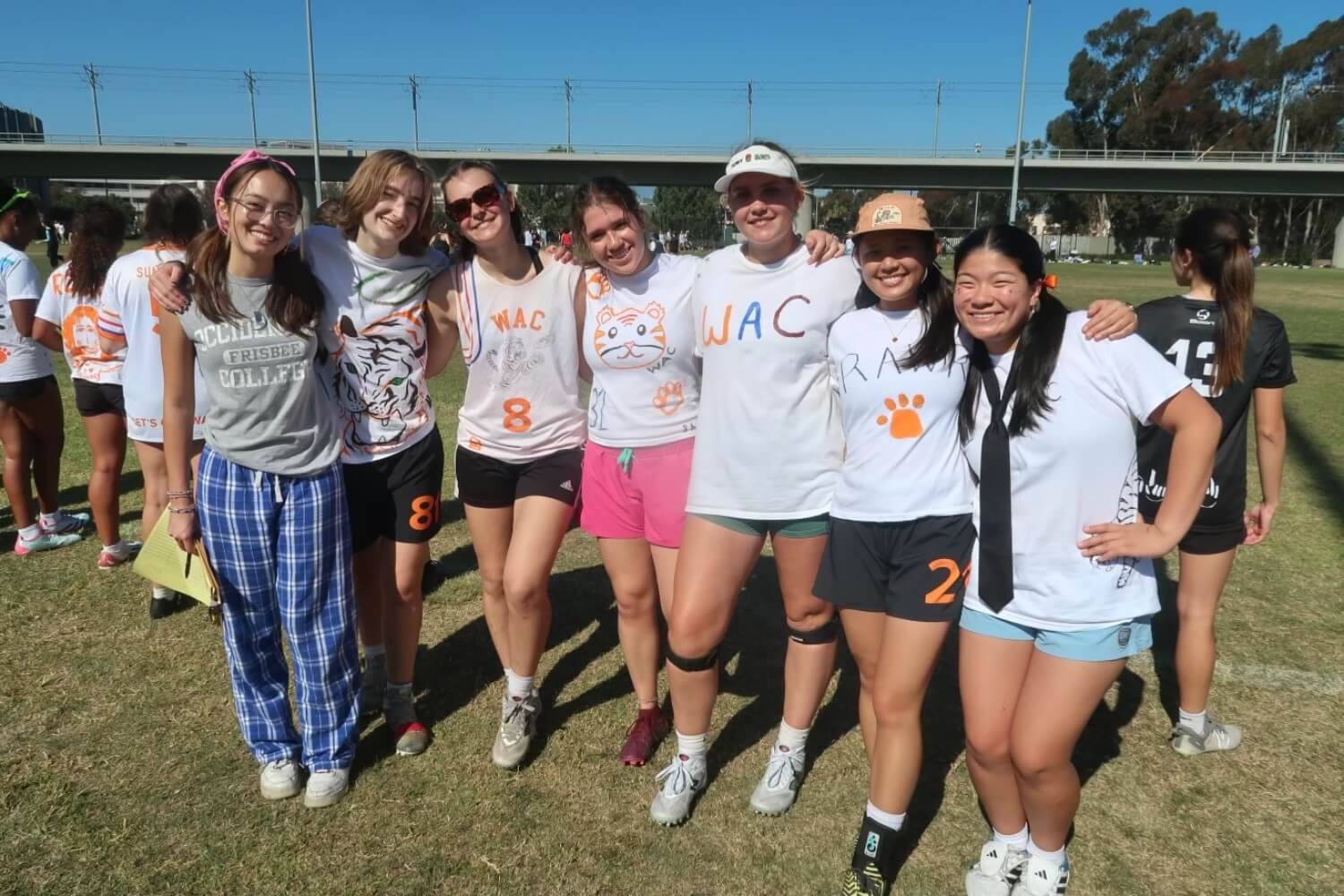
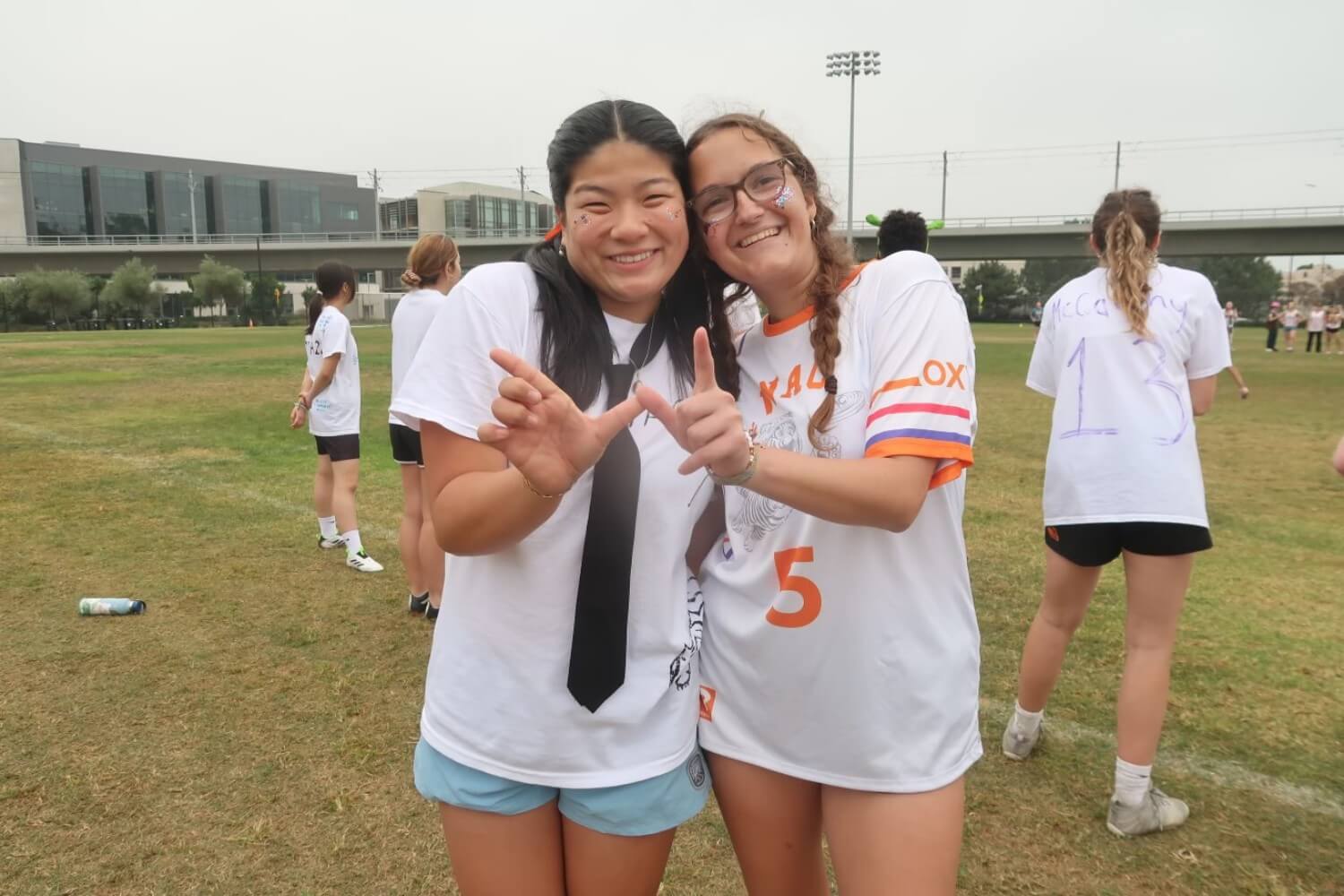
Women’s Ultimate Frisbee (WAC) and Men’s Ultimate Frisbee (Detox) played at the Kendra Fallon Memorial Tournament Nov. 1-2 hosted by UCSD in San Diego. Occidental’s teams competed against other clubs in the Southwest, including UCLA, USC, UCSB and others.

According to Detox captain Liam O’Neill (sophomore), the mix of competitiveness and community was a highlight of the tournament.

O’Neill said he believes more of the games were winnable, but he was still proud of how they played.

“We could have done better […] but we played a lot of good teams,” O’Neill said. “The team that we did beat, USD, [is] in our conference, so that’s a really good game to win. Overall we were getting progressively better […] we just need to come out on the other side of some of these games.”

Detox player Will Carter (junior) said there were many positive takeaways from the tournament.

“I’m always big on taking bigger picture positive things from [games], especially in the fall,” Carter said. “We played up to a really good team. We played UCLA’s A team, and they’re quite good. That was probably our best game of the tournament […] we’ve got a bunch of guys who can make plays, we just have to really dial in on our fundamental stuff, and then we’re going to do great things in the future.”

Carter said he was proud the team fought hard late in the tournament despite being exhausted.

“A specific moment that I’m really going to take away from the tournament was the last game of the last day against San Diego State,” Carter said. “It was the kind of game where we were tired, but we still had enough energy to put it all out there. We were still working super hard despite having five games under our belt in the last two days […] showing that we have the hunger to keep playing despite the game being for 14th place or something like that.”

Carter said the team enjoyed other activities outside of the tournament.

“The team got closer over the weekend, which is something that I care about a ton,” Carter said. “We all went to the beach, did a night swim and hung out by a fire and talked, which is super important for building a great team culture. That has been one of my goals for this team this year.”

WAC captain Audrey AlQatami (senior) said she enjoyed the quality time she got to spend with her teammates in San Diego.

“Tournaments are so fun for all of us to bond,” AlQatami said. “Being in a hotel with people and getting to have dinner together and pile a bunch of people into a room and watch the Dodgers game […] those are my favorite parts of the tournament outside of play.”

Courtesy of Jean Meyer

WAC captain Lily van Linder (senior) said making sure the rookies got more experience was one of WAC’s main goals for the tournament.

“Our goal was to make sure that everyone had a lot of opportunities to get out on the field and learn,” van Linder said. “We came in with around 40 people […] we were hoping to get a lot of our new players some playing time, and we definitely did.”

Van Linder said a highlight was watching the new players take the field on their own for the first time.

“[On] the last point on the games on Sunday, we did a rookie line where we had seven of our new players go, and it was just them playing another group of seven rookies on the other team,” van Linder said. “We [said] ‘Go play, go do what you can,’ and they actually won the point. We were so proud of them […] the future is very bright.”

Van Linder said she wants to help WAC improve for future contests by competing at a higher level.

“I’m [focused on] continuing to grow the team,” van Linder said. “We talk a lot about our baseline and the floor of our team, and we want to make sure we start at a level that we’re happy with and we don’t go below that.”

Courtesy of Jean Meyer

AlQatami said WAC is already training for a tournament coming up next semester in her home state of Colorado.

“We’re doing a tournament in Colorado called Snow Melt,” AlQatami said. “That should be really fun, and that’ll give us four months to really train and practice and hopefully we’ll be very competitive there.”

Contact Angus Kapstein Parkhill at parkhill@oxy.edu.

Loading

DSU hosts screening of ‘Crip Camp’ and Q&A with directors

Oscar-nominated directors James LeBrecht and Nicole Newnham were on campus Nov. 3 for a screening of their documentary “Crip Camp,” organized by the Disabled Student Union (DSU) and Disability Services. “Crip Camp” centers on a group of young disabled people who met at a summer camp for disabled teens at the start of the politically turbulent 1970s. The film follows this group, which includes figures like internationally recognized disability rights advocate Judith Heumann and director James LeBrecht himself, for nearly two decades as they go on to become some of the founding members of the American disability rights movement.

Assistant Director of Disability Services Felicia Flores said the screening of “Crip Camp” was chosen as a way to wrap up the month of October, which is Disability Awareness and Acceptance Month. Flores said that Disability Services wanted to highlight how interconnected the history of the disability rights movement is with the broader civil rights movement, which was ongoing during the period the film covers.

“You had these young individuals who would get together every summer, and discover that they had the same challenges,” Flores said. “Having a disability can be isolating, but by discovering their shared struggles they decided to come together to organize, to fight for the right to accessibility.”

Flores said the disability rights movement grew in connection with broader social changes happening in the United States in the ’60s and ’70s. According to Flores, the disability rights movement, which started at Camp Jened (the eponymous “Crip Camp”), was supported by other contemporary movements fighting for the rights of marginalized people. One of these groups was the Oakland chapter of the Black Panther Party.

“At one point, during a takeover of a federal building [by the disability rights advocates], they shut off the electricity,” Flores said. “So the Black Panthers, who were fighting for the same values, stepped in. They brought food, buckets of water, washing supplies and other things that allowed the activists to take care of their basic needs.”

In the Q&A that followed the screening, Co-director Nicole Newnham also mentioned this moment, which is captured in the documentary.

“I think what made the movement so successful was that so many people in San Francisco really supported the people in [the occupied] building,” Newnham said. “We’ve had screenings where people started applauding during the scene where the Black Panthers showed up. It wasn’t just about charity, it was about human rights.”

The second half of “Crip Camp” focuses on the struggle of the Camp Jened activists to get Section 504 of the 1973 Rehabilitation Act signed into law. Section 504 prohibits discrimination against individuals with disabilities in programs and activities that receive federal financial assistance. LeBrecht, who was part of the 504 movement, said that the progress made back then was recently put in jeopardy by the Trump administration.

“The Trump administration has attempted to deem 504 unconstitutional, but the outrage of many, many people caused such an uproar that they pulled back from that,” LeBrecht said. “We may not win every battle but we win some when we push back on stuff like that.”

LeBrecht said that he hopes the film will inspire young activists to get together and organize for change. He said that when the film first came out in 2020, it was used by some in the Black Lives Matter movement as a template for successful community organizing.

“In Portland and other places where demonstrations for Black Lives Matter were happening, people have shown our film as a way to help teach people how to organize, how to be activists,” LeBrecht said.

DSU President Ellie Chang (senior) said that disability rights organizer Judy Heumann, who is prominently featured in “Crip Camp,” is a longtime inspiration for her own activism. Chang said that she sees the film as an excellent introduction to the rich history of disability rights activism in the U.S., and that it holds a special significance to many in DSU.

“I think DSU has been a space where a lot of people begin to claim their identity as someone who’s disabled,” Chang said. “I was talking with the panelists the night of the screening about how the community we’ve built here at DSU feels a little like a mini version of Camp Jened, in the sense that it’s a space where people can be themselves without feeling the need to mask their disability. I think that’s quite special.”

Contact Adam Pildal at pildal@oxy.edu

Loading

Occidental ranked 151st out of 257 colleges for free speech climate

Occidental College was ranked 151st out of 257 American colleges for its “free speech climate” by non-profit organization the Foundation for Individual Rights and Expression (FIRE) in its 2026 Free Speech Rankings, with an overall grade of 56.6 out of 100, according to the website.

“Student perceptions present a sharp contrast. While Occidental places in the top 25 for ‘Openness,’ it also ranks in the bottom 25 for ‘Political Tolerance,’ indicating student reluctance to welcome speakers with opposing viewpoints,” FIRE writes on its website.

FIRE’s Chief Research Advisor Sean Stevens said FIRE partners with a polling organization called College Pulse, which surveys panels of undergraduate students at various colleges to collect data on a wide range of political topics and demographic information. They target around 125 to 150 students at smaller liberal arts colleges, and 200 to 250 at bigger state schools to collect representative samples, according to Stevens.

The data is based on a roughly 20-question survey that was given to 151 anonymous students from Occidental, according to FIRE’s website. The questions cover the state of administrative support, comfort expressing ideas, self-censorship, disruptive conduct, political tolerance and openness, as well as gathering the demographics of the respondents. Stevens said that while the survey has been mostly the same since 2021, FIRE might add or change questions based on current events or trends.

Stevens said FIRE uses three databases to make the ranking that quantify speech controversies at a school. The first focuses on school events, like talks, performances, movie screenings and art exhibits. The second is called “Scholars Under FIRE,” focusing on professors and researchers, and the third is called “Students Under FIRE,” which looks for students who were targeted for using their freedom of speech, according to Stevens. No significant controversies in 2025 were recorded for Occidental in the ranking.

Associate Professor of Comparative Studies in Literature & Culture Jacob Mackey said he has been a card-carrying member of FIRE since 2020. According to Mackey, it is important that organizations like FIRE exist because First Amendment rights require constant vigilance to be defended, and one cannot count on the government to do that for its citizens.

“[Repressing free speech has been a] very frequent occurrence, especially over the last 10 years. The colleges and universities have violated their own principles of academic freedom and free speech,” Mackey said. “Who is going to step in and attempt to force them to respect their own principles of freedom of expression, if not some kind of civic organization like FIRE?”

Mackey said it is not just the college institutions themselves that suppress the freedom of speech, but also faculty, the administration, students and outside groups that play a role.

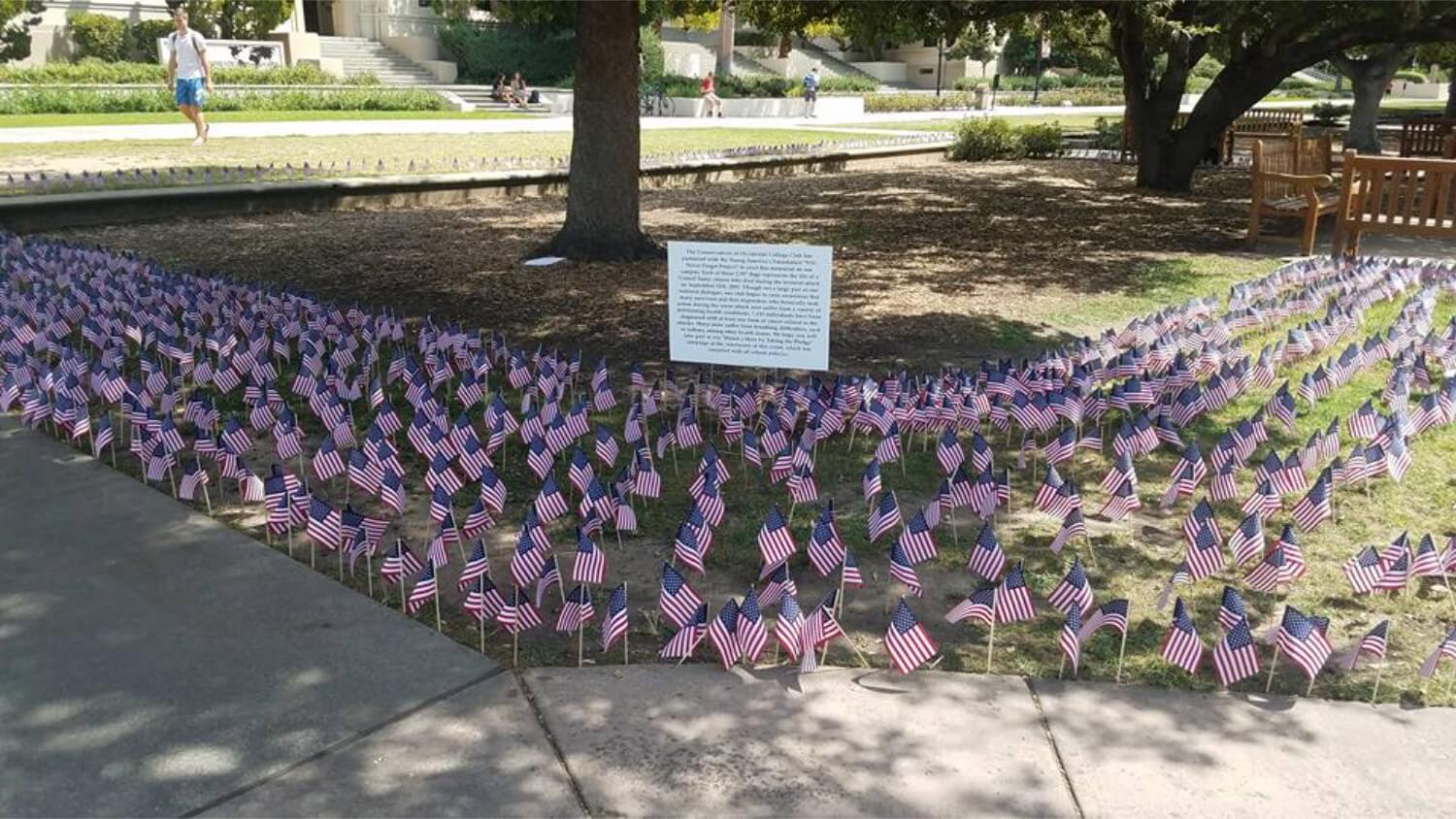
Sumner Schwartz ’18, who was responsible for the passing of the Faith and Conscience Policy in Spring 2017, was an e-board member of the now-disbanded Occidental Conservatives Club. Schwartz said there were many instances — one of which being the vandalism of a 9/11 memorial the club planned — throughout his time at Occidental where he felt that his freedom of speech and that of his peers had been suppressed due to their conservative values.

Schwartz said in his junior year, he and members of the then Republican Club received approval to set up a 9/11 memorial. They planted 2997 flags on the quad for each victim of the terrorist attack. The next morning, the flags had been taken and thrown in trash bins.

Courtesy of Sumner Schwartz ’18

Tejas Varma* (senior) said he believes having political discourse with conservative voices is a beneficial aspect of a college education, even though he considers himself left-leaning.

Varma said he enjoyed having debates with Occidental’s Professor Emeritus of Economics, Daron Djerjian, whose contract the college did not renew. According to Varma, Djerjian strengthened his views on the political economy, despite Varma identifying as a democratic socialist, and Djerjian a free-market economist. Varma said he and many others believe Djerjian’s conservative views may have been one of the reasons why the college failed to renew his contract.

Occidental Students for Justice in Palestine (SJP) spokesperson Tobias Lodish (junior) said he believes the college has not been supportive of on-campus protests that it felt would tarnish the college’s reputation, and has increasingly become hostile toward them.

“Every year the school restricts acceptable policy compliant protest and free speech,” Lodish said. “For example, in [the summer] of 2024 they disallowed protests from the hours of midnight till 6:00 am. They disallowed the use of what they called semi-permanent structures as well as sound amplification.”

Mackey said a point of contention between student protestors and colleges is time and place and that colleges do not respond well to anything that interrupts them from fulfilling their mission of delivering education to students.

“There is this tension where protesters have a motivation and incentive to break rules, but by the same token, the institutional authorities have an incentive not to respond favorably to the breaking of rules, right?” Mackey said.

Varma said the college should recognize that the lack of differing opinions and censorship towards opposing voices is a problem and should make changes accordingly. He said he believes Wesleyan University has set a good example of what colleges should do.

“They devoted $3 million in funding to a specific initiative to help expose students to ideas outside of the liberal consensus,” Varma said. “That’s something that I feel the institution could do.”

The college’s Jack Kemp ‘57 Distinguished Lecturer Series is meant to bring conservative speakers on campus. Mackey said the series has failed in recent years to bring speakers with different perspectives since they have all been anti-Trump conservatives.

“All you want to hear is your own opinion but in the mouth of someone who has conservative credentials,” Mackey said. “I think [the series] is not performing any truly useful service when it comes to viewpoint diversity and educating the Oxy community about what other people in America think.”

Xander Campbell-Singer (first year) is a member of Persuasion Club, where he said club members gather to have productive, rather than combative, dialogue.

Campbell-Singer said he believes the campus overall is a free space for students to express their opinions, but that there is an implied social sanctioning effect because students assume that no one can say anything that goes against the college’s mostly progressive consensus.

“Whatever the dominant worldview is, like the progressive consensus in this case, a lot of people who didn’t agree with that, but they don’t not agree with it for hateful reasons,” Campbell said. “They just don’t agree with it because the way they understand the world objectively is different from what some people do.”

Contact Francine Ghazarian at ghazarian@oxy.edu

*Tejas Varma is a staff writer for The Occidental.

Loading

Occidental students reflect on autumn in the desert

As we once experienced the year shift from summer to autumn with leaves falling and crisp air in our hometowns scattered across the country and world, LA offers a different impression of fall. For those experiencing autumn in Southern California for the first — or last — time, it can bring a seasonal transition in a new style.

Payton O’Hara (senior) on the Academic Quad at Occidental College in Los Angeles, CA. Nov. 4, 2025. Lila Weiner/The Occidental

Payton O’Hara (senior) – Hometown: Carbondale, Colorado

According to O’Hara, the change in time and weather contributes to the collective feeling of how school and those around her feel in contrast to spring semesters.

“Academically, fall is always a tougher season for everyone,” O’Hara said. “I feel like spring here is progressively going up, […] it’s getting warmer and energy gets higher.”

O’Hara said that, having experienced fall in Western Colorado growing up, it doesn’t feel like fall in LA until much later in the year.

“Fall at home, it feels like it lasts for a second […] because the leaves are so gorgeous,” O’Hara said. “It feels weird talking about it, because I haven’t actually experienced it [for] a long time now, but I’m always missing home a lot in the fall time, especially when the leaves are really beautiful.”

Mia Howe (sophomore) on the Academic Quad at Occidental College in Los Angeles, CA. Nov. 4, 2025. Lila Weiner/The Occidental

Mia Howe (sophomore) – Hometown: Cleveland, Ohio

Howe said once the days start to get cooler in LA, she feels she can truly enjoy the beauty of campus.

“Right now it’s the perfect temperature, I’m looking at such beautiful greenery,” Howe said. “My favorite place, the green grass right down by the library and the church, it’s so beautiful. The trees shade the area so well — it really just feels like fall to me.”

According to Howe, she has adapted new fall traditions since coming to Occidental.

“I started getting a London fog from the Green Bean,” Howe said. “It always feels like a nice, cool, deep, fall vibe.”

Weston Harkey (junior) on the Academic Quad at Occidental College in Los Angeles, CA. Nov. 4, 2025. Lila Weiner/The Occidental

Weston Harkey (junior) – Hometown: Fairfield, Connecticut

Harkey said his primary difference between New England and LA fall is the ability to spend more time outside as the months progress into winter.

“I always see falls as brown leaves, colder weather, pumpkins, and that’s less often found in LA,” Harkey said. “Fall in New England gets cold — you want to stay inside. I feel like being outside is so important to enjoying your time wherever you are. I think Los Angeles, and specifically Oxy, makes it much easier to be outside.”

According to Harkey, he thinks of fall in terms of spending time with family and people he loves.

“Although we don’t have, per se, our immediate family always available to us at school, you build these beautiful connections with so many people that […] can last for a lifetime,” Harkey said. “You have family here, and I love spending time with family, whatever that means.”

Sebastian Gardia (junior) on the Academic Quad at Occidental College in Los Angeles, CA. Nov. 4, 2025. Lila Weiner/The Occidental

Sebastian Gardea (junior) – Hometown: Los Angeles, California

Gardea said he has spent every fall since he was born in LA, except for travel.

“I do not have a strong fall experience here,” Gardea said. “I’ve been to other places around the country [during] fall, and they have much stronger ‘fall feelings.’”

According to Gardea, he has noticed a bold change in LA weather since his childhood.

“With climate change, Los Angeles is getting warmer and warmer each fall,” Gardea said. “I start[ed] noticing when I was in high school […] There will be a heat wave that will really mess up the fall feeling.”

Gardea said, growing up, his family would still try to compensate for the lack of autumn weather with festive traditions.

“My family is big [on] pumpkin bread and pumpkin pancake[s],” Gardea said. “When I was younger, all the fall kind of cartoons were playing. My family is really big on decorating their house. All the fall decorations would come out. We used to go to pumpkin patches […] [and] go out of LA proper for it.”

Elina Shalev (junior) on the Academic Quad at Occidental College in Los Angeles, CA. Nov. 4, 2025. Lila Weiner/The Occidental

Elina Shalaev (junior) – Hometown: San Diego, California

Shalaev said before coming to Occidental, she lived in San Diego, and also grew up in Finland for a reasonable portion of her childhood. According to Shalaev, it would already be snowing during the fall months in Finland.

“I put on my Russian hat called a Ushanka, because it’s really cold,” Shalaev said. “Then me and my family go long distance skiing, hit the like snowy fields or walk around and enjoy each other’s company.”

Shalaev said the contrast between Scandinavian and Californian autumns makes her grateful for the sunshine, even for the lack of weather change.

“I am just reminded whenever I go [to Finland] […] it’s dark all the time, it can be a little disheartening,” Shalaev said. “It’s nice to be grateful for the sun and be somewhere where there’s maybe [fewer] seasons, but a more stable climate.”

Lauren Harper (sophomore) on the Academic Quad at Occidental College in Los Angeles, CA. Nov. 4, 2025. Lila Weiner/The Occidental

Lauren Harper (sophomore) – Hometown: Bronx, New York, New York

Harper said the temperature change throughout the day in LA was particularly shocking, in comparison to New York, which would stay the same throughout the day.

“I handle the cold better being here,” Harper said. “I would not realize how cold it would get [at night]. I wouldn’t have a sweater; I would just have to suffer. Now, when I go home [to New York], it’s 50 degrees, and I can handle it.”

Harper said she notices the absence of seasonal colors in the trees.

“There are pictures that I have of the trees on the Upper West Side [with] these vibrant oranges and yellows — it’s not as much here,” Harper said. “I really appreciate those pictures […] I’m gonna go home for Thanksgiving, it’s still gonna be fall, so I get to […] drink it in.”

Contact Lucinda Toft at ltoft@oxy.edu

Loading