Home Blog Page 19

College adjusts spending and admissions tactics in the wake of enrollment decline

According to a message from President Tom Stritikus in May, first-year enrollment declined by nearly 15% for the incoming class of 2029, which led the college to make adjustments to its annual spending and admissions plans.

Vice President and Chief Operating Officer Amos Himmelstein works to oversee the business office, budgeting and finance year to year. Himmelstein said the college instructed faculty to spend less on discretionary items such as food, travel and professional development.

“We’re going to try and go through a more informed process to think about next year’s budget,” Himmelstein said. “But enrollments will play a big role in that too.”

In addition, open vacancies in some administrative positions are being left unfilled rather than hiring someone new, according to Himmelstein.

“If a position is empty, instead of hiring and filling it, we just don’t, versus taking someone who has a job and telling them they no longer have a job,” Himmelstein said.

Beginning this fall semester, student fundraising program Telefund paused operations. Melissa Mount, the new vice president of Institutional Advancement since the beginning of October, said this change is not Occidental-specific.

“This trend mirrors what many higher education institutions have experienced, as traditional phone-based programs have shifted toward digital engagement like peer-to-peer fundraising, crowdfunding and text-to-give initiatives,” Mount said via email. “Our team continues to evaluate what approaches best fit Oxy’s alumni and family community, and we hope to pilot some new student opportunities as early as Spring [2026].”

Senior Director of Communications Rachael Warecki said Telefund’s closure will not have a significant impact on the college’s revenue. She said the college is moving towards alternative methods of philanthropy.

“Telefund has not historically represented a significant percentage of the College’s overall fundraising efforts, and we do not anticipate any funding deficits based on pausing that operation,” Warecki said via email. “Enrollment-based revenue remains the largest contributor to operational revenues, with the next largest contributor being the endowment.”

According to Mount, Institutional Advancement has continued its efforts in fundraising by narrowing in on alumni and families.

“Our communications are focused on sharing impact and inviting engagement,” Mount said via email. “We reach alumni and parents through a mix of digital newsletters, event invitations, direct appeals and volunteer engagement through the Parent and Family Council and Alumni Board of Governors and affinity groups that highlight the tangible outcomes of giving, like scholarships and student success initiatives.”

Mount said the department is utilizing networks of student workers and administrations from surrounding schools to reimagine student fundraising.

“Institutional Advancement still has student workers assisting the college’s fundraising team,” Mount said via email. “The college is benchmarking with other schools, assessing data and evaluating different models to determine what our future student philanthropy program should look like.”

As rising tuition continues to be a prevalent anxiety for college families, Himmelstein said this is not a new or Occidental-specific trend.

“Tuition goes up every year. The only year it didn’t was COVID,” Himmelstein said. “It’s a balance of ‘You need more revenue to pay for things so that people can get raises’ [and other costs] […] but we’re not going to try and make it up through a tuition increase. I think the way we make it up is getting more students.”

With changes to enrollment and revenue, Himmelstein said that Institutional Advancement’s fundraising goals stay the same, going towards current-year spending called The Oxy Fund.

“The objective is to reach the goal,” Himmelstein said. “We set a goal that we’re expecting to receive for the Oxy fund that has not changed [since Telefund closed].”

According to Mount, Institutional Advancement has yearly spending priorities planned with the College’s donors, foundations and corporations.

“For 2025–2026, our priorities include expanding paid internships for Oxy students; increasing scholarship support, including merit-based awards, early Decision and transfer scholarships and the Occidental Affordability Promise; continuing capital projects like the Norris Chemistry Hall renovation [and] advancing student well-being and belonging initiatives,” Mount said via email.

During October, the college introduced the new Occidental Commitment Scholarship, entailing a guaranteed minimum of $15,000 annual scholarship for students who apply early decision and are accepted to Occidental. Himmelstein, who had a decision-making role in instituting the scholarship, said it is an attempt to attract more students to the college.

“It’s going to cost us money, but the purpose of it is to bring more students in early decision,” Himmelstein said. “We’ll review it, and if we think it’s not working, anybody we offer it to this year — they’ll have it for four years […] If it feels like it didn’t have an impact, we can always stop.”

Amidst the changes in enrollment, Himmelstein said he is concerned about the future of Occidental and other similar colleges.

“If it [low enrollment rate] is a larger trend nationally — if students are feeling like they don’t want to go to school or a liberal arts college and would rather go to a large public institution or even a large private institution — then I worry about small liberal arts colleges’ future[s],” Himmelstein said.

Contact Lucinda Toft at ltoft@oxy.edu

Loading

Occidental students get a taste of federal government work amidst shutdown

The Occidental Washington D.C. Internship is a program where juniors and seniors from Occidental spend a semester in the nation’s capital, providing students with the opportunity to see how the U.S. government operates, according to one of the program’s advisors, politics professor Regina Freer.

“You can read about it. But to actually experience it and even influence it has been really valuable for our students,” Freer said.

The Oct. 1 government shutdown has affected the internship program.

Sienna Schmulbach (junior) is one of the students participating in the program this semester.

“I declared my politics major in the fall. At that time the political landscape was changing so much, and it didn’t feel real in Los Angeles,” Schmulbach said. “I thought it would be an incredible experience and opportunity to learn about what’s happening by seeing it.”

Diego Saenz (junior), another student in Washington this semester, said he was drawn to the program by a lifelong interest in government.

“I’ve always been curious about how everything functions, specifically how people’s voices enter a government space and how that is turned into action,” Saenz said.

Schmulbach said that for her, the internship has been a first step into the world of law.

“I want to go to law school, and I want to help with things like restorative or transformative justice, so the Washington Internship Institute suggested I apply to work for Offender Aid and Restoration [OAR],” Schmulbach said.

Saenz says he has been working in the U.S. House of Representatives, mostly dealing with constituent relations.

“It’s a whole array of things. We get emails, phone calls, we even have multiple inboxes that take in different concerns,” Saenz said.

However, Saenz’s work was cut short by the ongoing government shutdown.

“Because of the shutdown, I had to take things into my own hands and reach out to different people, and I am now working at Intersect Public Affairs,” Saenz said. “For a lot of the federal workers who don’t have as much flexibility as interns do, it’s been hard.”

According to Freer, the internship program did not prepared for a shutdown, but the impact was mitigated by the students finding new places to work.

“Ultimately, Diego found and secured his own placement, which was amazing and a testament to his own ingenuity,” Freer said.

According to the students in Washington, the city has changed in their time there, due both to the government shutdown and the ongoing deployment of National Guard troops to the city. Schmulbach said her work with OAR has been much more affected by the deployment than the shutdown, with arrest rates increasing rapidly.

“I think that the Black community in the DMV is going to be very disproportionately affected, and that is mainly who we serve,” Schmulbach said. “The good news is that there’s a lot of resistance, and a lot of people continue to talk about this.”

Saenz, meanwhile, said he has noticed a change in the city’s temperament since the shutdown began.

“Prior to the shutdown, there was not much of a worry,” Saenz said. “Now there’s a bit of tension to get something in place after three weeks, but a lot of people are looking to resolve that tension by volunteering at the food bank, canvassing or going out.”

According to Freer, students often return from the program with a new perspective on government.

“They have a sense of watching theory in action,” Freer said. “I’ve had a number of students who have been able to see nuances in how government operates and how the multiplicity of actors have influence, and that’s really beneficial.”

Saenz said he has learned about the wide range of people and groups influencing politics.

“I think the biggest thing that I found out is that no matter what field you go into, it has a form of advocacy,” Saenz said. “I thought that government was the only way of bringing about change, but I learned that it’s the constituents, the businesses, the artists, even the finance behind them, that voice their opinion to the government. No matter where you come from, you still can have a role in bringing about what you want.”

Schmulbach said that over the course of her time in Washington, she’s come to believe that the justice system is broken.

“Almost every single person I see in court is Black, and they are very often unhoused and in for poverty-related crimes,” Schmulbach said.

Schmulbach said her time spent working with incarcerated people has made her a kinder and more thoughtful person.

Saenz said that he will not just return to Occidental with a greater sense of civil duty, but with relief as well.

“It’s a relief in knowing that, while it’s good to have a plan, it’s also okay to speak up and to chase the feelings that you do have,” Saenz said. “The civil duty doesn’t just have to be within a political sphere, it can be something you have no matter where you go.”

Contact Whittaker Perrin at wperrin@oxy.edu

Loading

Businesses concerned about planned rapid bus line destroying ‘small-town Los Angeles enclave’

The Los Angeles County Metropolitan Transportation Authority (Metro) is building a Bus Rapid Transit (BRT) service, which will pass through Colorado Boulevard, where construction has already begun. According to the Metro’s website, the BRT will run from North Hollywood to the cities of Burbank, Glendale, Eagle Rock and end at Pasadena City College.

Michael Nogueira, the owner of Sir Michael’s Party Rentals and president of the Eagle Rock Chamber of Commerce, said he has been keeping a close eye on the project and how it will affect the community.

The previous neighborhood council was Richard Lowe and Michael Sweeney, who pushed it through,” Nogueira said. “This group, called The Eagle Rock Association (TERA), also pushed it through. And I, as president of the Eagle Rock Chamber of Commerce, opposed it.”

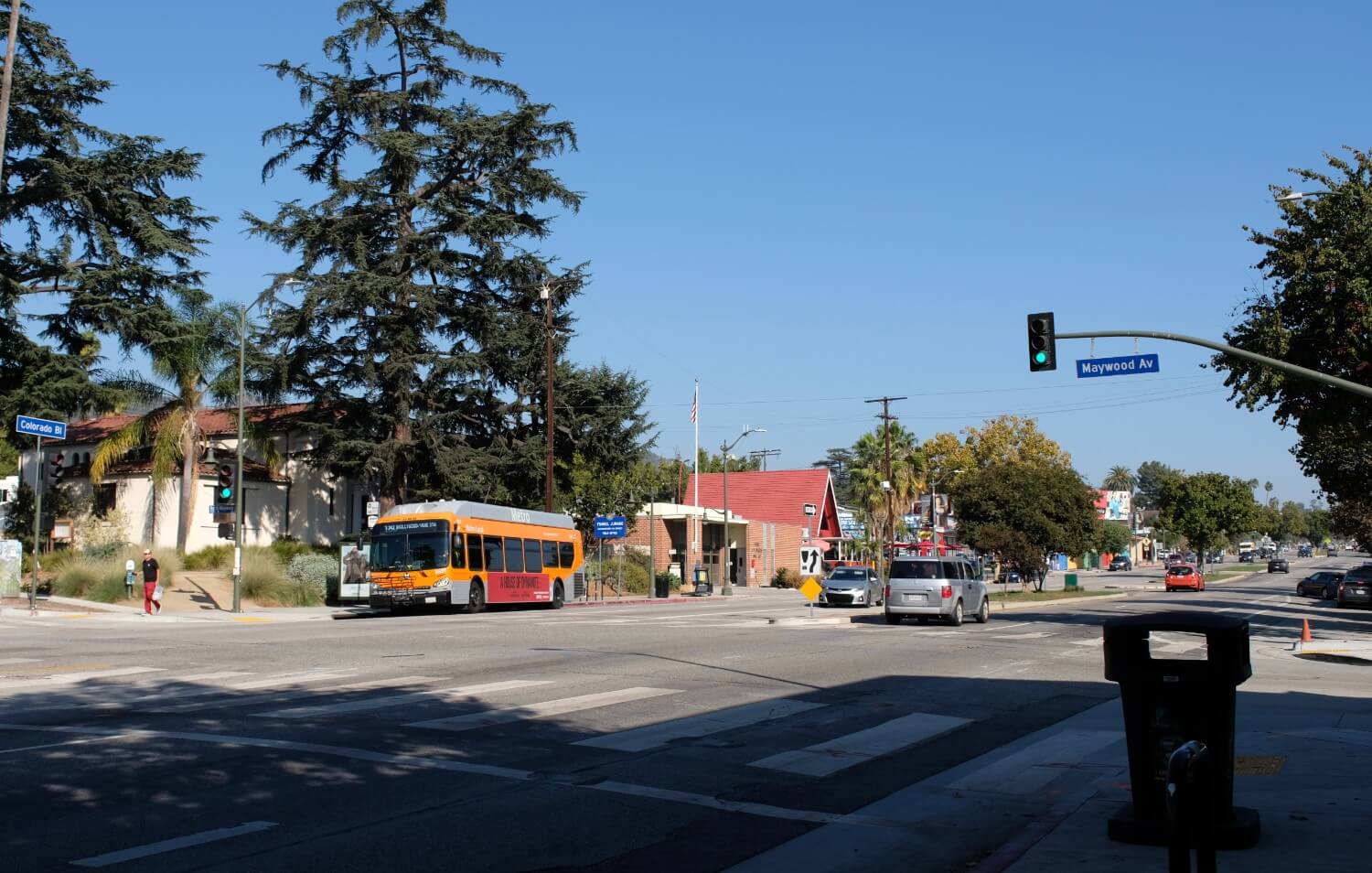
Intersection of Colorado Boulevard and Maywood Avenue in Los Angeles, CA. Nov. 1, 2025. Talia Goddard/The Occidental

Business owners and other longtime residents voice many concerns about the BRT project, such as David Lanza, a mechanic who works on Colorado Boulevard. The plan for the BRT bus lane was not well thought out, and there will be serious consequences for the local businesses in the area, leaving many business owners fearing for their businesses, according to Lanza.

“They set the plan before even consulting residents and businesses here,” said Lanza. “They say they want to make Colorado Boulevard one lane. I mean, with two lanes, we get traffic.”

According to Michelle Cook-Helseth, the owner of Native Boutique, multiple small woman-owned businesses have been voicing concerns about the impact the BRT might have.

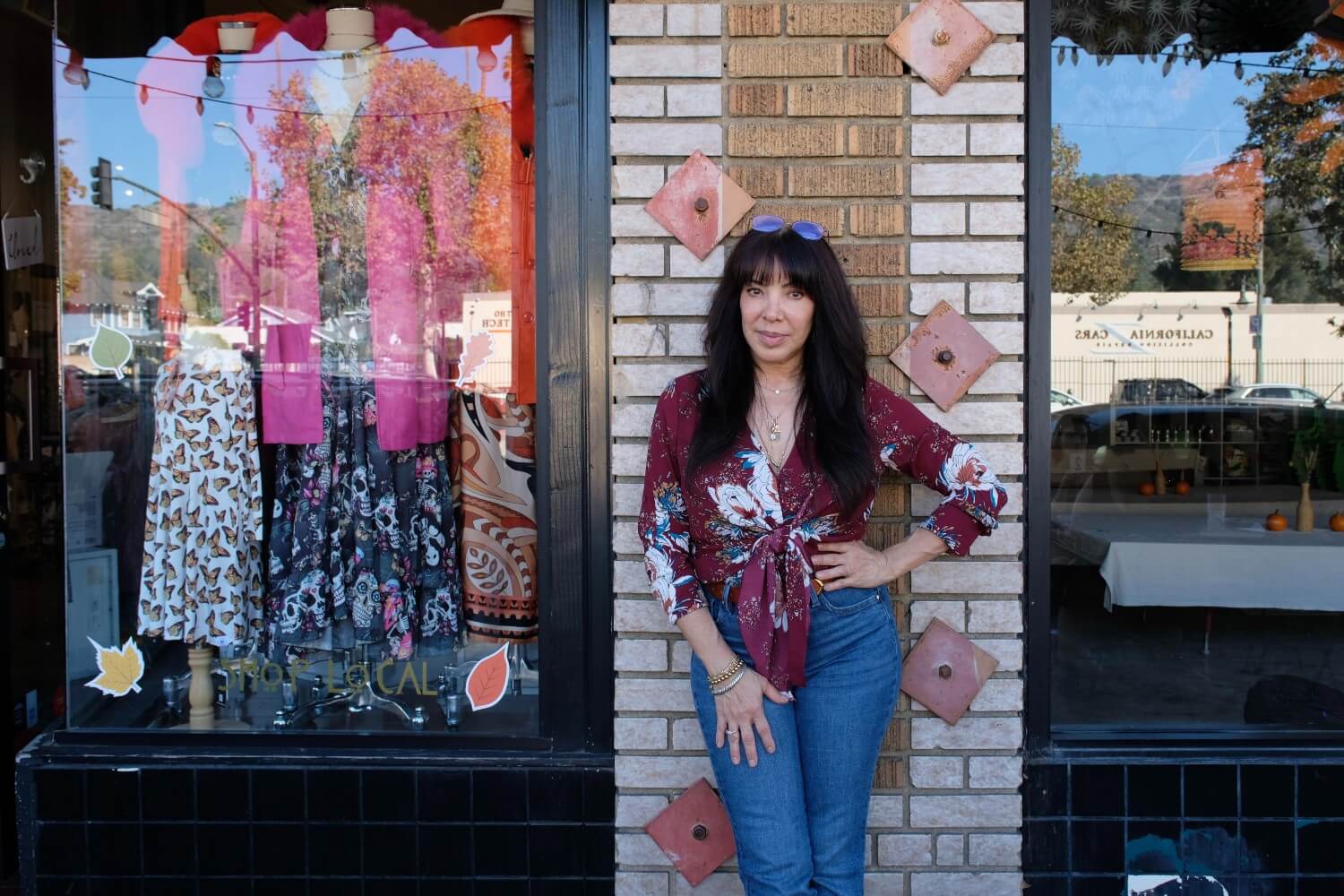
Michelle Cook-Helseth, owner of Native Boutique on Colorado Boulevard in Los Angeles, CA. Nov. 1, 2025. Talia Goddard/The Occidental

“I’m totally against it,” Cook-Helseth said. “It was really shoved down our throats. They claim to have done all of these talks about it and say that we voted for it. That’s not the truth.”

According to Cook-Helseth, around 40 business owners tried to meet with former LA City Councilmember Kevin de León when he was in office, but their calls were never returned.

“We had to answer this questionnaire, which was bizarre and unrelated to our concerns,” Cook-Helseth said.”We weren’t allowed to ask our own questions; we just had to answer their questions. We all knew it was just going to be a cash grab for investors.”

Some residents are hopeful about the possibility of better public transportation in the area, such as Eric Massey, an Eagle Rock resident who said he has been living in the area since 2022.

“There’s no access to trains or subway lines or anything like that,” Massey said. “So I do feel Eagle Rock, compared to a lot of other neighborhoods, is more isolated. If you don’t have a car, it’s a lot harder to get out of here.”

Earlier this month, Governor Gavin Newsom signed SB 79 into law, which allows for a streamlined housing development near public transit stops, meaning investors will now be looking to buy businesses on Colorado Boulevard to use this new law to make a little extra cash, according to Cook-Helseth.

“This is an absolute cash grab,” Cook-Helseth said. “It’s filling the pockets of investors who are going to come in here and build up all of these expensive housing units in our little charming neighborhood. They did the same thing in Portland, Oregon.”

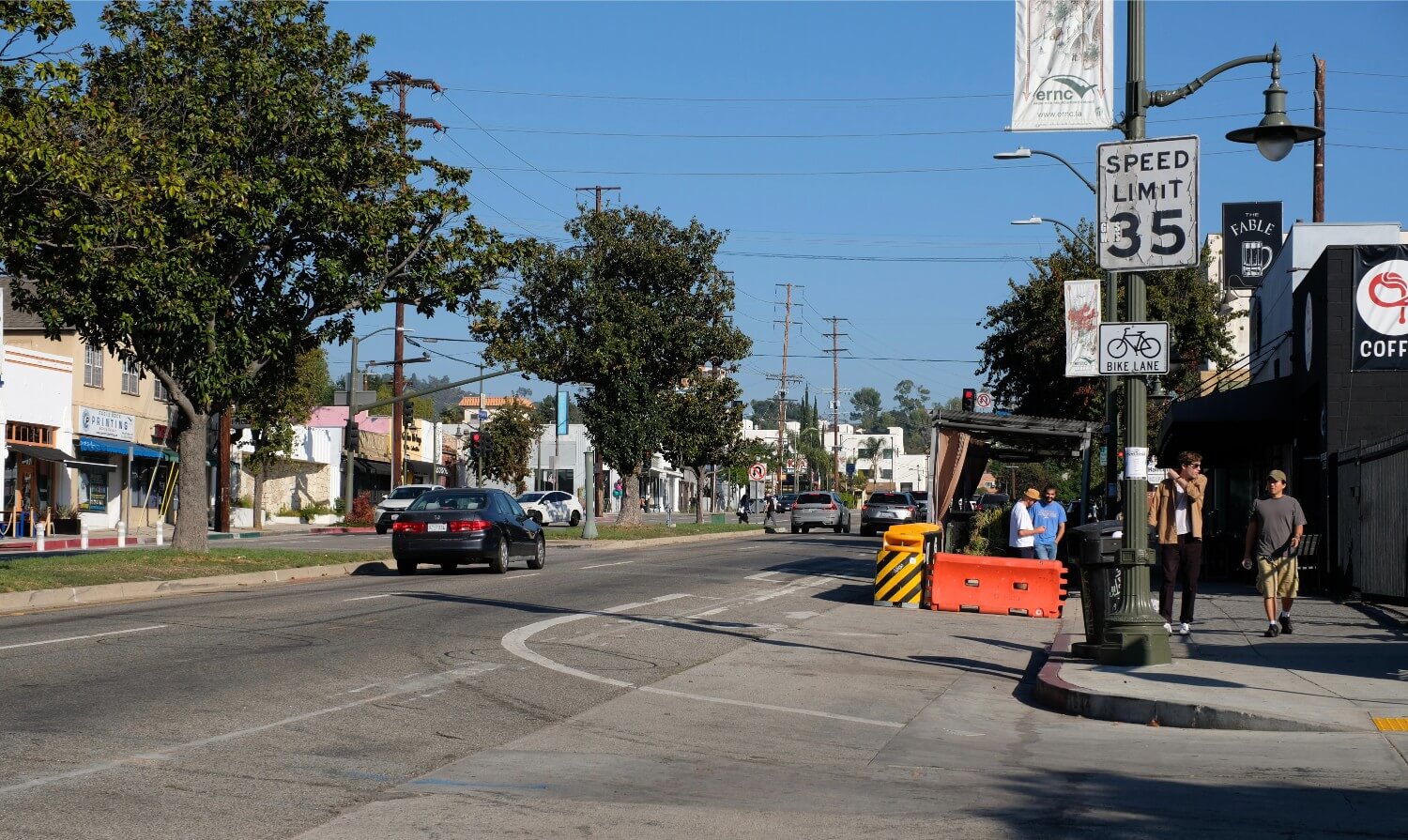
Colorado Boulevard in Los Angeles, CA. Nov. 1, 2025. Talia Goddard/The Occidental

According to Andrea Martirana, the owner of Casa Bianca, a restaurant that has been around since 1955, she is also concerned with how this BRT will affect her business.

“We feel that this will create a lot of parking problems and traffic problems,” Martirana said. “People won’t want to come to Eagle Rock anymore if they can’t park.”

According to Martirana, LA is a vast area, and people mainly drive cars to get around. The BRT project will make driving and parking more difficult, which will lead to a drop in customers for the local businesses.

“The biggest fear, obviously, is that this could put us out of business. Parking here is very scarce, and people can become deterred by that,” Martirana said.

Similar concerns have been voiced by the owner of Games and Cards Superstore, Art Sagamonian. According to Sagamonian, this project goes against everything the community stands for, was poorly planned and small mom-and-pop businesses will be the ones to suffer the most from it.

“I sympathize with the planners about creating bus space and bike space, but they can’t just ignore the drivers,” Sagamonian said. “If they’re taking parking, where are people going to park when they come to visit local stores? They’re not going to get on the bus and come over here. They’re going to drive their cars.”

According to Nogueira, the BRT could create further danger because the left-hand turn lanes will be blocked, which will hurt response times from emergency vehicles such as ambulances and fire trucks.

“It’s going to bring more transients here. It has been proven to bring more crime. The buses are not safe, they haven’t been.” Nogueira said.

According to Cook-Helseth, Eagle Rock is different from other neighborhoods because the people have deep roots in the community, and their businesses have been around for 50-plus years.

“They’re going to destroy this little small-town Los Angeles enclave for money,” Cook-Helseth said. “To line other people’s pockets, not the community, because the community does not want this.”

Contact Edgar Zatarain at zatarain@oxy.edu

Loading

Occidental’s theater department promises laughter in its fall productions

Occidental’s theater department will put on productions of two comedies for their fall season: “Rumors,” written by Neil Simon, and “POTUS: Or, Behind Every Great Dumbass Are Seven Women Trying to Keep Him Alive,” written by Selina Fillinger.

“Rumors” is directed by Wanlass Visiting Artist Tyrone Davis, who said he chose to put on this play because of his love for Simon’s comedic work.

“I thought it fit the student population here; there’s a lot of folks who have experience with improv and comedy,” Davis said. “I thought it would be nice to have a show to start the season that allows folks to have a great night in the theater and laugh.”

Davis said he has prior directing and producing experience at regional theaters as well as teaching at various universities.

“Oxy students have a great sense of comedy,” Davis said. “ A lot of their instincts were spot on, which made the job so much smoother and allowed us to hit the ground running [from] day one.”

According to cast member Finn Crumlish (sophomore), “Rumors” is a very funny and witty play that does not take itself too seriously.

“It’s a farcical comedy,” Crumlish said. “The comparison I always use is the ‘Clue’ movie from the 80s. It’s a very similar vibe of rich people messing around in a mansion, and it’s a lot of fun.”

Caroline Cole (junior) and Finn Crumlish (sophomore) at rehearsal for “Rumors” at Keck Theater at Occidental College in Los Angeles, CA. Oct. 30, 2025. Abigail Montopoli/The Occidental

Crumlish said that although he started acting in middle school, he had never been a part of productions as big as the ones at Occidental.

“I did a lot of Shakespearean acting, but it was very black box, small stage, minimal sets and props,” Crumlish said. “So it’s been very exciting to come here and do these big campus shows with amazing costumes and sets and lighting.”

Davis said he loves coming to rehearsals each day and witnessing the students’ growth throughout the journey of the production.

“It’s been such a joy to be a part of it and to watch the students grow each week, take in the notes, make discoveries and add new things to the world of this play,” Davis said.

“POTUS” is also a comedic play, but unlike Rumors, it contains an all-female cast, according to cast member Shelby Kernisant* (junior).

“It’s a lot of physical comedy, it’s a lot of great character dynamics,” Kernisant said. “Everyone in the show is so brilliant and poised and passionate.”

Kernisant said she had more experience with musicals, so being in a comedy was a bit daunting at first.

“Being in a comedy can be scary because you have to be funny,” Kernisant said. “But we’re at the point now where we’re making each other break. It’s helped us all gain confidence in ourselves.”

According to Kernisant, “POTUS” is a show that the current generation of college students will get a lot out of and relate to.

“It’s very modern, it feels very fresh,” Kernisant said. “This show ‘gets’ Gen Z in a very particular way, more so than any other show I’ve done at Oxy.”

Kernisant said she only knew one other cast member prior to rehearsals, but has since bonded with everyone in the production.

“I’m really lucky to say that everyone in the cast gets along swimmingly,” Kernisant said. “It’s a dream, a cast like this and vibes like this. I love what we’ve made together.”

Annelise Seligmann (junior) is the stage manager for “Rumors” and is in charge of much of the behind-the-scenes work.

“I run the rehearsals, make sure everyone is taking breaks and that we’re on track,” Seligmann said. “I’m really the bridge between the actors, directors and design; I’m doing a lot of that communication.”

Annelise Seligmann (junior) on the Academic Quad at Occidental College in Los Angeles, CA. Oct. 31, 2025. Abigail Montopoli/The Occidental

Seligmann said it is often overlooked how much work goes into putting a production together by those outside of the theater world.

“There’s so many people putting love and effort into this,” Seligmann said. “There’s a million more people involved than you think there is.”

Kernisant said she has hopes of becoming an actor in the future and deeply values her experiences in each production she is a part of.

“I love being on stage,” Kernisant said. “I love working with people who care so much and are so incredibly passionate, kind and giving. When you’re in that space, you’re free to be as you are.”

Davis said he hopes that audiences will enjoy a night of entertainment and good storytelling when they attend the shows this fall.

“In the time that we’re living in right now, it feels like the world is a crazy place,” Davis said. “But you come into this theater and immerse yourself in this world and experience laughter, joy and appreciate really great writing, acting and directing.”

“Rumors” is running from Nov. 6-9 in Keck Theater. “POTUS” is running from Nov 20-23 in Keck Theater.

Contact Izzy Shotwell at shotwell@oxy.edu

*Shelby Kernisant is a staff member at The Occidental.

Loading

Oxy Mutual Aid Club is putting activism in action: ‘Come get fueled with us!’

It takes two to start a club on campus, and that is just what co-presidents Jojo McCabe (sophomore) and Sabine Beale (sophomore) did by founding Oxy Mutual Aid Club (OMAC). Beale said what began as a text conversation between two friends over summer break has led to the creation of a campus organization that aims to get students involved in community projects throughout LA.

OMAC made its debut at Involvement-Fair this fall, and has already gained a consistent membership, in addition to hosting events both on and off campus, McCabe said. According to the co-presidents, the idea behind creating a club centered around mutual aid was wanting to provide more opportunities for immediate action in the face of social and political injustices.

“It can be easy to feel like you can’t do anything, and that can be really paralyzing and intimidating,” McCabe said. “We felt from talking to other students that they also feel this way, and so we wanted to organize and bring people together to just go out and do something.”

According to McCabe, while being in the classroom allows students to address issues from a theoretical perspective, the goal of the club is to put theory into practice by participating in events that actively address the needs of people in the Occidental and Greater LA communities. According to Beale, the framing of the club was intentional in order to center solidarity over performativity.

“Mutual aid is more grassroots than charity or traditional volunteering,” Beale said. “It’s giving your time, effort and resources and not asking for any recognition.”

OMAC holds weekly club meetings every Monday, where students help plan the off campus actions that typically take place on Sundays. According to McCabe, these involve water drops, clothing swaps, food distribution and other initiatives aimed at providing people with basic necessities.

The club has collaborated with Water Drop LA, an organization that seeks to provide clean drinking water to unhoused and underserved neighborhoods in Southern California, according to their website. McCabe said student volunteers were provided with bottled water that they drove to various locations and distributed to people experiencing water insecurity.

According to McCabe, their club chose Water Drop LA for some of the first partnerships of the semester because of how accessible and streamlined the distribution process is.

“It’s very beginner-friendly and very simple,” McCabe said. “I think sometimes volunteering can feel kind of like virtue signaling or there can be other weird dynamics, and I haven’t felt that so far with Water Drop.”

According to e-board member Maxine Wray (sophomore), the personal connections formed from participating in Water Drop is what makes the experience so fulfilling.

“I’ve been on the route which is really cool because you can actually see the people that you’re helping and talk to them, and I feel like I really appreciate that interpersonal aspect,” Wray said.

According to McCabe, OMAC was founded with the intention of participating in an exchange of services, rather than one party acting as the provider and the other the recipient. Another e-board member, Ella Bygrave (sophomore), said mutual aid is defined by the aspect of reciprocity.

“With mutual aid, everybody benefits,” Bygrave said. “And I think a big part of that is not being afraid to ask for help, because to be able to be the receiver and also to give is really important.”

Courtesy of Occidental Mutual Aid Club

This emphasis on shared responsibility is reflected in the way the club operates. There is no top-down leadership, and Bygrave said the e-board meetings are open to all club members. It is a space where students can use their privilege as members of an institution to benefit the community, according to McCabe. This extends into events like education sessions and political advocacy work that contribute to crafting long-term solutions that are being addressed in the short term through volunteer work.

McCabe said privilege can often be a source of guilt, but that participating in OMAC is one way of channeling that guilt into helping others.

“I don’t think guilt is a productive feeling, but it can definitely fuel action,” McCabe said. “And so I would say, get fueled and come hang out with us.”

According to McCabe, one way the club is directly contributing to the student life is through purchasing tools that will be stored in an accessible area for everyone to use.

“We were talking about hopefully fundraising to get pots and pans and do kind of a lending library so that people can actually use the kitchens that no one is using because there’s nothing in them,” McCabe said.

Bygrave said OMAC relies on student input for ideas about what issues need to be addressed. She said she hopes that in the future the club will be a community people can lean on when they are in need of assistance.

The club’s upcoming action is a Santa Monica beach cleanup Nov. 9, a collaboration with Oxy Outdoors Club meant to strengthen connections by spending time in nature and taking the time to slow down at a busy point in the semester, according to Bygrave.

“We just want to really emphasize that it’s low stakes and people can show up how they want to,” Bygrave said. “Everyone is welcome, you could never have come to a meeting before and then show up to volunteering events. We are here and open to everyone.”

Contact Athya Lodhia Paramesh at paramesh@oxy.edu

Loading

A day in the life of Grounds Manager Lola Trafecanty: ‘A driving force’

Under the tennis courts in the Facilities Management office, the Grounds Manager Lola Trafecanty spends her time assigning tasks to the grounds workers, working with outside landscape contractors and using her bachelor’s degree in landscape architecture to add to Occidental’s landscape. According to Trafecanty, her mother inspired her love for plants and the landscape.

“I always loved plants and so did my mother. She was always in the garden with plants and she loves roses,” Trafecanty said. “My mom grew up on a farm in Mexico, so they grew what they ate, so that was in my family.”

According to Trafecanty, she came to Occidental seven years ago after being asked by a previous director of Facilities. Before Occidental, Trafecanty worked at Scripps College for 18 years.

“As a mother, when your children are younger, your life revolves around them, sports and school and events, so I wanted to always be close to them, and Scripps allowed me that opportunity,” Trafecanty said. “I also grew up in Pasadena, and I had family in Pasadena [and] Altadena, and so I knew I had a place to stand.”

Trafecanty said she keeps a broader weekly schedule because working in Facilities is very unpredictable.

“Schedule is hard to keep in this environment — anything in Facilities, really,” Trafecanty said. “We tend to get a lot of little ‘fires,’ as we call them, that we need to put out. Not literally, to be clear.”

6:30 a.m.

According to Trafecanty, her morning routine starts with arriving at Occidental around 6:30 a.m. and walking through the grounds to take note of any areas that may be overgrown or have been overlooked throughout the week. Trefecanty said her favorite spot is the Academic Quad because of its history. She said it was designed by one of the first registered woman landscape architects in the U.S., Beatrix Farrand.

“I like to spend time with my staff out in the fields, so I usually park at the top of the solar panels because it gives me a chance to just walk through the campus and see the lighting and vegetation,” Trafecanty said. “I take mental notes as I come down to anything that is new, things that we need to address down the road.”

1:15 p.m.

Trafecanty said she usually has meetings at 1:15 p.m., and on Mondays, she attends a Facilities Management meeting, where she and her team discuss anything that happened over the weekend.

“We debrief on any emergency calls that came in, and we ask, ‘was it addressed?’ ‘who’s addressing it?’ ‘what’s our goal and what’s the deadline?’” Trafecanty said. “I have set meetings with different departments, different days of the week, and then as special events are occurring on campus. It’s a big thing in planning with the group.”

According to Trafecanty, she doesn’t have a fixed lunch break either, so she eats when it is most convenient.

Trafecanty said one consistent part of her day is the staff’s break schedule, which is a time when she feels it is important for her to be in the office to talk with staff.

“I try to be here when they come in for breaks, so 8:15 a.m., 10:30–11:00 a.m. is their lunch because they come in at 6:00 a.m., and then 1:00 p.m. is their afternoon break,” Trafecanty said. “So, I’m there in case they need to talk to me or reach out for some reason, or I may have something that came up that can be addressed.”

2:30 p.m.

Trafecanty said once her staff leaves for the day at 2:30 p.m., she stays in her office and handles any invoices, project set-up requests and budget requests for special projects, such as the volleyball court in front of Stewart-Cleland Hall (Stewie).

“I have a degree in landscape architecture and that helps me lay things out and plan things from a design perspective,” Trafecanty said. “If you go by Stewie Beach, there are these benches that were poured with concrete by the new palm trees that are going into the building, so they’re wavy, like ocean waves, conceptual — that’s my design world.”

Group of students playing Intramural Beach Volleyball on the beach volleyball court in front of Stewart-Cleland Hall at Occidental College in Los Angeles, CA. Oct. 5, 2025. Olivia Adams/The Occidental

Trafecanty said she believes in including student voices in any big projects that affect residential areas. She said she is currently involving art students from Stewie to help embellish the cement benches that will be put into Stewie’s front walk.

“I believe in working with students and having them partake where they can,” Trafecanty said. “As a matter of fact, we created a flyer with a link, with my student worker and some other students who were working with sustainability, to help report irrigation leaks.”

Trafecanty said she also works a lot with the Grounds Supervisor, Samuel Ludwig, who has helped ease her workload since he came to Occidental in March 2025.

Ludwig said there is a lot of work done behind the scenes to maintain the grounds, besides ground work, like projects that they worked on during Summer 2025, as well as events such as family weekend. According to Ludwig, Facilities worked on creating a volleyball court, a pickleball court and painting the basketball court.

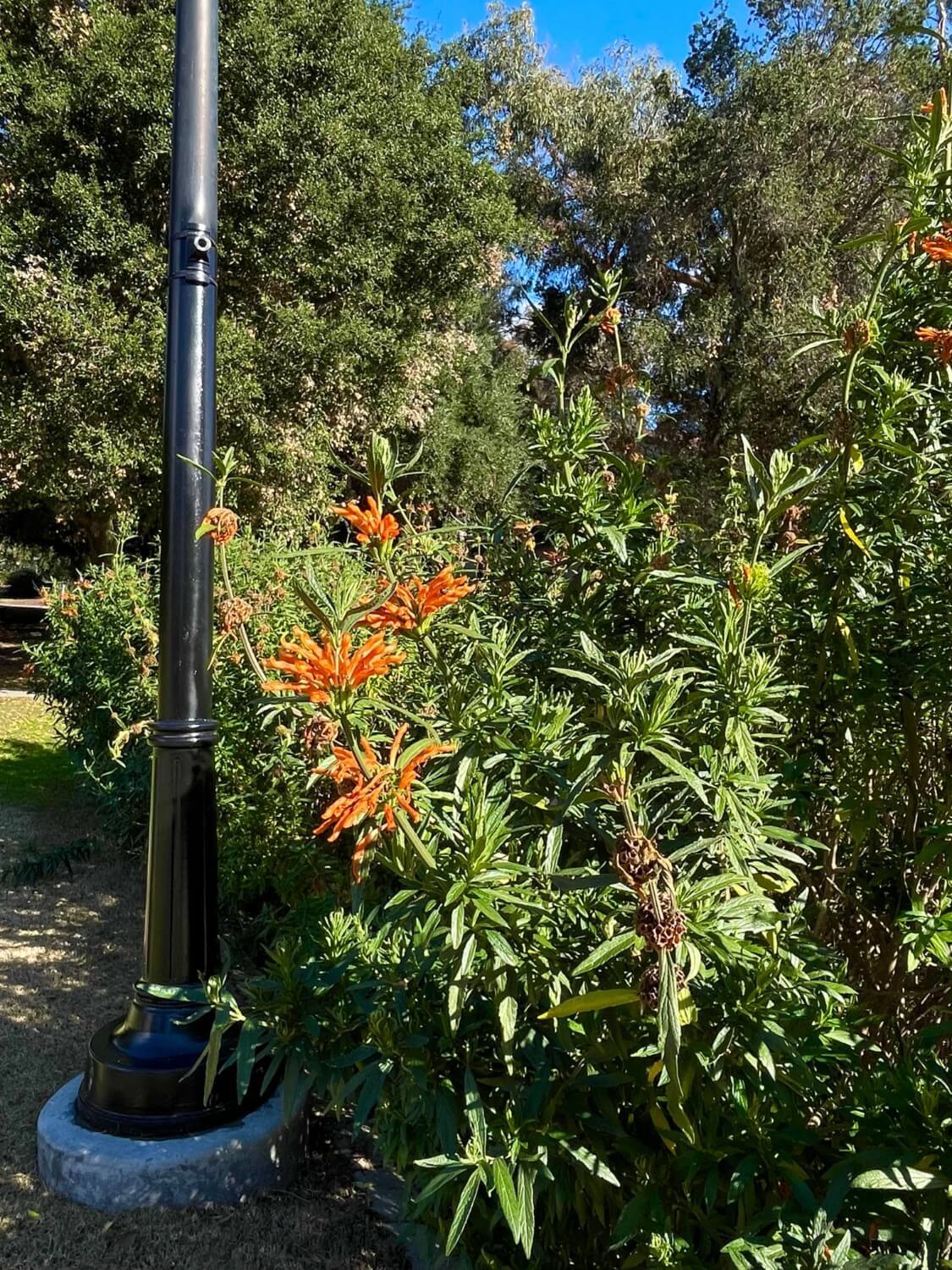
Flowers outside Thorne Hall at Occidental College in Los Angeles, CA. Feb. 1, 2024. Anna Beatty/The Occidental

Lugwig said Facilities routinely performs basic maintenance tasks like cutting down tree branches for safety and growth, as well as takes on larger projects such as planting palm trees in front of Stewie and taking out trees on the steps of the Arthur G. Coons Administrative Center (AGC).

“These are the kinds of things that are above and beyond the regular maintenance of the facility,” Ludwig said. “We work together as a team, we have a lot of meetings where our goals are aligned on what we’re planning on doing and how we’re going to make the place better for students.”

Trafecanty said she had a student worker up until last year, Mariarelis Flores (junior). However, there is no longer enough budget for a student worker, according to Trafecanty.

Flores said when she worked under Trafecanty, it was always busy and Trafecanty was out helping the grounds staff around campus. According to Flores, Trafecanty needed more help on the administrative side. She said an integral part of her job was to be there if work orders came in and to assign urgent ones to members of the staff working in those areas.

“I liked working there because I like organization. That’s just something I’ve always been good at, so I really liked being able to help her in that aspect,” Flores said. “Just being able to have another set of hands was helpful, because Trafecanty was always trying to do a million things at once.”

4:00 p.m.

Trafecanty said she usually goes home around 4:00 p.m., where she unwinds and sets a plan for the week because she can rest at home and just think. She said she also likes to keep her exercise up throughout the week.

“I would say that’s my favorite time because it just allows me to focus,” Trafecanty said. “I do a lot of hiking, walking. I’m supposed to run — my husband and my boys are runners — and so they influenced me.”

Trafecanty said that while preparing for the week, she also likes to think about bigger projects for the campus, like the olive picking tradition, The Olive Harvest. She said she brought this tradition from Scripps College and has implemented it at Occidental a few times. Trafecanty said that it would be nice to have a tradition where the staff is a part of commencement. She said another idea is to have a day where students, faculty and staff come together and help clean up Occidental, in some way to engage students and visitors with the natural flora of the campus.

“I think just engaging with the natural elements is something I’ve always felt was important, ” Trafecanty said. “Being able to share this nature with those who come to campus is why I think it is important for me to maintain the grounds.”

Trafecanty said to please provide feedback on Occidental’s grounds work at jtrafecanty@oxy.edu

Contact Miriam Arenal at arenal@oxy.edu

Loading

Opinion: Prop. 50, saving our people or burning down our democracy?

The Democrats have failed to quell the fire burning down the principles of the country. In the face of what some political scientists have called a constitutional crisis during Trump’s latest term, the Democratic Party has fought continual abuse of power with words and minimal action. It makes sense. Words are what politicians know, and very few times throughout our recent history have we seen such a blatant disregard for our system of government.

In the last few months, the Trump administration has barred news outlets from entering the Capitol Building, deployed the National Guard to major cities, ignored the Supreme Court’s power of judicial review, deported immigrants without due process and, most recently, pressured Texas into gerrymandering to gain more seats in Congress. When the checks and balances of the U.S. Constitution no longer save us, what do we do?

Luckily, California Gov. Gavin Newsom has started to fight fire with fire. Proposition 50 (Prop. 50) aims to counter Texas by placing California’s redistricting council, which normally draws voting maps, on a two-year hold and hands the power back to the state government until 2030. This power will allow California to draw contrasting voting maps, switching some of California’s red congressional districts to blue, offsetting Texas in the 2026 mid-term election. The hope is that this will give Democrats a chance to win the House in 2026, or at least maintain the close split, preventing the Trump administration from passing even more damaging legislation.

After months of watching our government take blow after blow, it is refreshing to see someone take action and use the Trump administration’s tools against them. According to a poll from UC Berkley, 55% of regular voters support the measure, and it has an 87% chance of passing. Prominent political figures and celebrities alike have endorsed the measure, including Occidental’s most famous alumnus, former President Barack Obama.

However, face-to-face with the ballot, my joy for Prop. 50 disappeared. For the last two months of my life, I have spent nearly every day in the classroom as a politics student learning about the importance of precedent and representative government. Our system only works if a state representative addresses the issues of all of their constituents. This ballot measure allows the election of representatives without needing to pander to the issues faced by residents of other parties. The demands of much of our country will go unanswered. If we allow California to gerrymander, will this become a norm across all states?

In this proposed reality, a Democratic vote in a red state and a Republican vote in a blue state mean absolutely nothing. The representatives elected would be further to the right and left of the political spectrum. Polarization would skyrocket, and we would never see the compromise between parties that our founding fathers intended. Faced with these prospects, the proposition starts to make my stomach churn.

Then, there is the question of bending laws. On the front of my mini Constitution, a quote from George Washington reads, “The Constitution: its only protectors, the people.” If Democrats stop taking the high road and start using equally legally dubious measures to counter the Trump administration, who will stand and value our system of government? Much like Tinker Bell, who dies when no one believes in her, without anyone to uphold our Constitution, the rules and norms that outline our system mean absolutely nothing.

In the face of some damning pros and cons, it is tough to balance Prop. 50 out. On one hand, it is a direct, actionable measure that pushes back against a corrupt government. After all, doesn’t it say in the Declaration of Independence that we should protect ourselves from tyranny by any means necessary? On the other hand, it sets a dangerous precedent that reinforces gerrymandering and hurts equal representation. So what is more important? Should we vote ‘yes’ and try to prevent immediate tyranny while degrading democratic norms, or should we vote ‘no’ and stand idly by while our government commits violence in the name of upholding our democracy?

Personally, I am voting yes. While I acknowledge my discomfort with Prop 50, I have come to realize that standing by legality in the face of oppression makes me complicit. Slavery, segregation, Japanese internment and so many of our great American offenses have all been legal. Our system of government executed these offenses, and it was those who broke, bent or otherwise opposed the law that made real change. While it is important to make sure that our voting system represents everybody, we cannot stay comfortable, yelling democracy in the face of horrific deportations, loss of free speech and abuses of power. We must sit with the discomfort of working against the system to ensure that every member of our population remains safe, and ask ourselves: if it is our system of government that allows for continued tyranny and oppression, is it not the system itself we should change?

Contact Chloe Kummerer at kummerer@oxy.edu

Loading

Opinion: Your skinny jeans are not a recession indicator

Over the last few months, videos have filled my phone screen, declaring everything from “quiet luxury” to “the rise of skinny culture” as recession indicators. Lipstick sales? Recession indicator. Conservative wardrobes? Recession indicator. Suddenly, the internet is full of amateur economists diagnosing the entire financial system through trending aesthetics.

But the obsession with spotting the next downturn through fashion or lifestyle trends isn’t new; it’s just gone viral. Alan Greenspan, the former chair of the Federal Reserve, once proposed men’s underwear sales as a gauge of economic health. Before that, the “Hemline Index” claimed that women’s skirts got longer when the economy soured. What’s different now is that the line between economic anxiety and cultural identity has blurred beyond recognition.

When people on TikTok talk about recession indicators, they aren’t just joking about fashion; they’re expressing fear. Fear that the economy is about to tank again, fear that the things that once symbolized abundance and freedom are becoming markers of excess. This becomes a self-fulfilling prophecy: when enough people believe a recession is coming, they start saving instead of spending and voilà, it happens.

Our culture’s reaction to the potential for a recession fuels this conservative culture, rather than an actual recession itself. The weirdest part is how that fear shows up in what we wear. I have noticed a creeping conservatism in fashion, characterized by muted colors, “clean girl” minimalism and the return of ultra-thin silhouettes. Fast-fashion brands are ditching bodycon dresses for beige blazers and gray trousers. The fashion industry, which once felt expressive and diverse, now feels safe. Controlled. Corporate. Even street style has become subdued, as if individuality itself feels like a financial risk.

That’s because fashion, like the economy, mirrors how we feel. When uncertainty rules, restraint becomes the trend. We call it “quiet luxury,” but it’s really just austerity dressed up in cashmere.

Some might say I’m reading too much into a color palette, but I can’t help seeing the bigger picture. The rise of trad-wife content points to a cultural longing for stability, one that often leans backward, toward older, more conservative ideals. We call it “style,” but it is also about who gets to belong in a world that feels like it is shrinking.

The rise of the idea of “quiet luxury” doesn’t just limit itself to fashion; it actually ties into a larger pattern of how consumers adjust their spending in uncertain times. In economics, this concept is the “lipstick effect.” It says that during a recession or an economic slowdown, people stop buying big luxury items like cars or designer bags, but they do not stop spending altogether. Instead, they shift into purchasing smaller luxuries or emotional purchases. They buy tiny treats that make them feel good, without feeling reckless. It’s just indulgent enough to feel like a luxury, but not so expensive that it triggers guilt. And when people feel financially anxious, they downsize their luxuries, not their desire for comfort. It is ultimately a micro-reflection of how we cope with money stress — and maybe a reminder that even fear sells.

Of course, not every TikTok theory deserves an economic think piece. Vogue recently dismissed most of these “recession indicators” as normal trend cycles. Maybe they’re right. Maybe skinny jeans coming back means nothing at all. Maybe it is just nostalgia — a pendulum swing that happens every decade or so. After all, fashion is cyclical by design. To some, reading too much into hemlines and handbag sales turns culture into pseudoscience.

However, in recent news, Trump’s Treasury Secretary declared that some sectors of the economy are already entering recession. It is difficult to predict what this will look like in the long term, or if this economic stint will even last. Measuring and predicting when an economic recession will occur is a challenging task, as it often isn’t realized until it is already underway. What is certain is that these “recession indicators” are in no way, shape or form forecasters of recession.

But even if these aesthetic shifts don’t directly cause economic change, they still reveal something about us. They show how collective fear seeps into everyday life, down to the clothes we wear and the language we use to describe them. That’s why this matters: if our aesthetics reflect our anxieties, then ignoring them means ignoring how we process instability itself. Fashion becomes a kind of emotional data — one that economists can’t quantify but everyone can feel.

I love hyper-analyzing social media trends and placing them within our broader socio-political context. So, when I scroll past yet another video claiming that the horrors of the current job market are a recession indicator or watch another trad wife influencer extol the virtues of “feminine discipline,” I see the cultural version of a market correction — a collective tightening of belts, both literal and figurative.

Maybe the real recession indicator isn’t skirt length or lipstick sales. Maybe it’s how many of us have started living like the crash is already here — saving instead of spending, retreating instead of expressing, dressing for the job market instead of the joy of it. Maybe the biggest signal isn’t economic at all, but emotional: a quiet luxury of fear.

Contact Samhita Krishnan at krishnan@oxy.edu

Loading

Opinion: The passions that keep our loved ones close

Though my grandpa lived a long and fulfilling life, I still felt he went too soon. When he gave me some of his family heirlooms in his last years, I remember thinking it was the beginning of a long and enduring friendship. In truth, he wanted to be the one to give them to me and knew his window of opportunity was closing. While I cherish the personal items he gave me, they are not what connect us most deeply — instead, it’s our shared love of tennis that keeps his memory alive.

How do we stay connected with loved ones who have passed away? I can’t give you a complete answer, but I know it can be more than visiting a gravesite or flipping through a photo album. Because staying close to lost loved ones means more than just paying one’s respects — it means remembering the interests you shared with them. Shared passions are often the bedrock of relationships, and by continuing those passions, we can keep those precious bonds alive.

My grandpa was a stellar tennis player. He played first doubles for Whitman College and competed in club tournaments for the rest of his life, amassing a collection of trophies which he gave to me before he passed away. Most importantly, he taught me how to play tennis — the foundations of my technique and love for the game came from him.

While he died just a couple of weeks into my freshman year of high school, I knew it wasn’t the end of our relationship. From then on, I felt even more connected to him through the game, as if he were sitting on the bleachers at every match, quietly urging me to play my best tennis. As much as I loved playing the sport for my own sake, it served a greater purpose; it kept my bond with him alive. Maybe that’s why I feel a sense of guilt when I take a break from tennis — as if my grandpa is gently reminding me that my rackets have gathered too much dust.

Seven years after his passing, I feel closer to him than ever before. When he died, I was already playing competitive tennis. However, it was the year after his passing that I fell in love with the sport — first by watching it, then by coaching it and eventually by reading every book about tennis I could find. It’s as if his death set something in motion, as though he passed on all the energy poured into the game to me. People often ask how I manage to chase down difficult shots or endure long points. The answer is simple: I’m not just running after balls — I’m playing for my grandpa.

I don’t believe our relationships with loved ones end the moment they take their last breath. As long as we keep living, those relationships live too — they fade only when we stop nurturing them. Every time I step onto a tennis court, I’m not just thinking of my grandpa; I’m deepening my relationship with him. I don’t just feel closer to him in a metaphysical sense — I feel like I understand him better as a person.

We are so future-oriented that we often fail to appreciate what our past has to offer us. Instead of tying our past to our present, we separate the two into discrete categories. This separation leads us to silo our past relationships to the point of neglect. By forgetting our shared affinities, we resign our loved ones to photo albums and family movies. But relationships are not only meant to be reminisced on — they exist on a continuum. We can treat all of our relationships with the same sense of value and care, whether or not the person is still with us.

I know my relationship with my grandpa does not represent everyone’s experiences. Some relationships are more complicated or tumultuous. However, I believe people can mend broken relationships after someone’s death. Death might even be the catalyst for reconciliation, and shared passions can play an important role in that process.

Sometimes, people don’t have much in common with their loved ones. But any pastime can bring people closer to those they have lost. It doesn’t need to be some elaborate, deeply held passion like the one I share with my grandpa. Any small thing is enough to connect kindred spirits, as long as it is truly shared.

Last weekend, I played tennis with one of my former professors. On the surface, it was an ordinary hitting session — we stretched, warmed up at the service line and played together until our legs gave out. However, there was a surreal quality to it. My professor’s old-school playing style, with his one-handed backhand, unblemished slices and sturdy volleys, made me think of my grandpa. In his younger years, he probably played just like him, albeit with a wooden racket.

This hitting session reminded me that my grandpa is ever-present in my life. He’s the reason I play the game — the force that keeps me connected to it. We share something that makes him feel more real to me now than he ever did before. As long as I keep playing, I know I’ll never forget him.

Contact Nick Dobbs at ndobbs@oxy.edu

Loading

Opinion: Who are you going to fight your “One Battle After Another” with?

“I wish I were part of the French 75,” I thought while sitting in my reclining chair at the AMC Americana, watching Paul Thomas Anderson’s newest film, “One Battle After Another” (OBAA). An epic action movie, OBAA follows members of a fictional revolutionary group, the French 75, as they go into hiding to avoid capture or death from the government. Without giving too much away, OBAA shows how the revolutionary mindset can be broken down and later revitalized through a new generation whose need to subvert and survive the U.S.’s dominant power structures requires new methods.

As I watched the film, I could not help but feel inspired. Here was a group of people, albeit fictional, at least doing something. The opening sequence shows the French 75 breaking people out of an ICE detention center, and later in the film, Benicio Del Toro’s character leads us into his underground-railroad-style shelter for migrants. It’s timely, to say the least, and it does not require a large mental leap to imagine reading an article tomorrow describing these very events taking place.

My second reaction to the movie, which took over swiftly after I experienced the first, was to feel guilty. All I had really done was watch a movie produced by a major studio with a $130 million budget. By paying for a ticket and sitting in a theater, eating popcorn and “decompressing” after a long day of school, I was just another supposed cog in the capitalist machine. And, by watching the movie, for a moment, yes, I felt like true liberation was possible. But was that feeling being spoon-fed to me by the culture industry? Is liberation actually possible, or was Hollywood trying to comfort me to believe it was, like parents keeping the magic of Santa alive?

Watching OBAA was a wonderful and enjoyable experience with its striking score composed by Jonny Greenwood, emotional and honest performances and high-paced momentum. But, watching films about people who fight for causes that are meaningful to you is not the same as fighting for that cause. OBAA risks placating its audience by allowing people to reassure themselves that somewhere out there, a group of revolutionaries could be causing chaos. I, as an audience member, however, am free to drink my soda, watch my values reflected on the silver screen and go back home comforted that I can log a film about liberation on Letterboxd. I did my part! (It is worth noting that the movie is peppered with moments of direct political action that are often covert if not illegal, and I would wager that most audience members are not looking to go on the run anytime soon.)

Despite my inclination to reflect cynically on OBAA, I have decided to do my best to return to the first instinctive feeling the movie sparked in me — motivation. As much as the market, culture and capitalism affected the making and message of the film, it is still important what we in the theater bring to it. As an audience, we can be affected by a film in unpredictable ways, distinct from the studio’s intended effect and even from the director/writer Anderson’s intentions.

One of the most powerful parts of OBAA to witness is its sense of solidarity. The French 75 (for the most part) have each other’s backs and trust one another to never back down in the face of the oppressive state. Benicio del Toro’s character also built a strong network of community members to keep his operation of helping immigrants avoid detainment up and running.

Many of the characters in the film exhibit resilience and a sense of hope that feels unreasonable considering their circumstances. One of my favorite moments in OBAA is when Benicio del Toro says to Leonardo DiCaprio’s bumbling, helpless but well-intentioned character, “Don’t go dark on me, Bob.” Here lies an interesting presentation of togetherness; there’s a mutual understanding of how bleak the circumstances are and how easy it is to feel discouraged. But by refusing to feel bad for themselves and refusing to lose their sense of humor, there is at least a chance of survival.

I’ve recently learned the term “political home.” It’s a place where, when times get rough, you have a group of people to make plans with, or at least to talk to. In the same way that you don’t wait until you’re starving to look up the nearest grocery store, you don’t wait until the political atmosphere is completely unbearable to know where and who you’re going to turn to. Whether it’s an established volunteer organization or a group of friends who meet up at a coffee shop to discuss the news, finding a political home is a starting point to build off of when it comes to working for liberatory action.

Slight spoiler ahead, but the last scenes of OBAA depict a teenage girl deciding to go to a protest. I have wondered what the purpose of 21st-century protest even is in recent years, such as the “No Kings” nationwide protests that have no clear demands and lack real societal disruption. I believe people need to make more tangible and formidable challenges to interrupt systems that cause harm. However, in-person gatherings are the beginning of political engagement, not the final manifestation. In a world like OBAA, where social media and cell phones can incur deadly consequences, real-world meet-ups are essential, which seems to contribute to the incredible energy between these revolutionary characters. To build a political home of any size, shape and level of political participation, it is impossible to describe the power of being present in the world together.

I’m grateful to have seen OBAA, and that a movie like OBAA can even be made right now. But, as Benicio del Toro’s character says to himself in the film when he gets pulled over by the police, “Let’s go to work.”

Contact Ava LaLonde at lalonde@oxy.edu

Loading